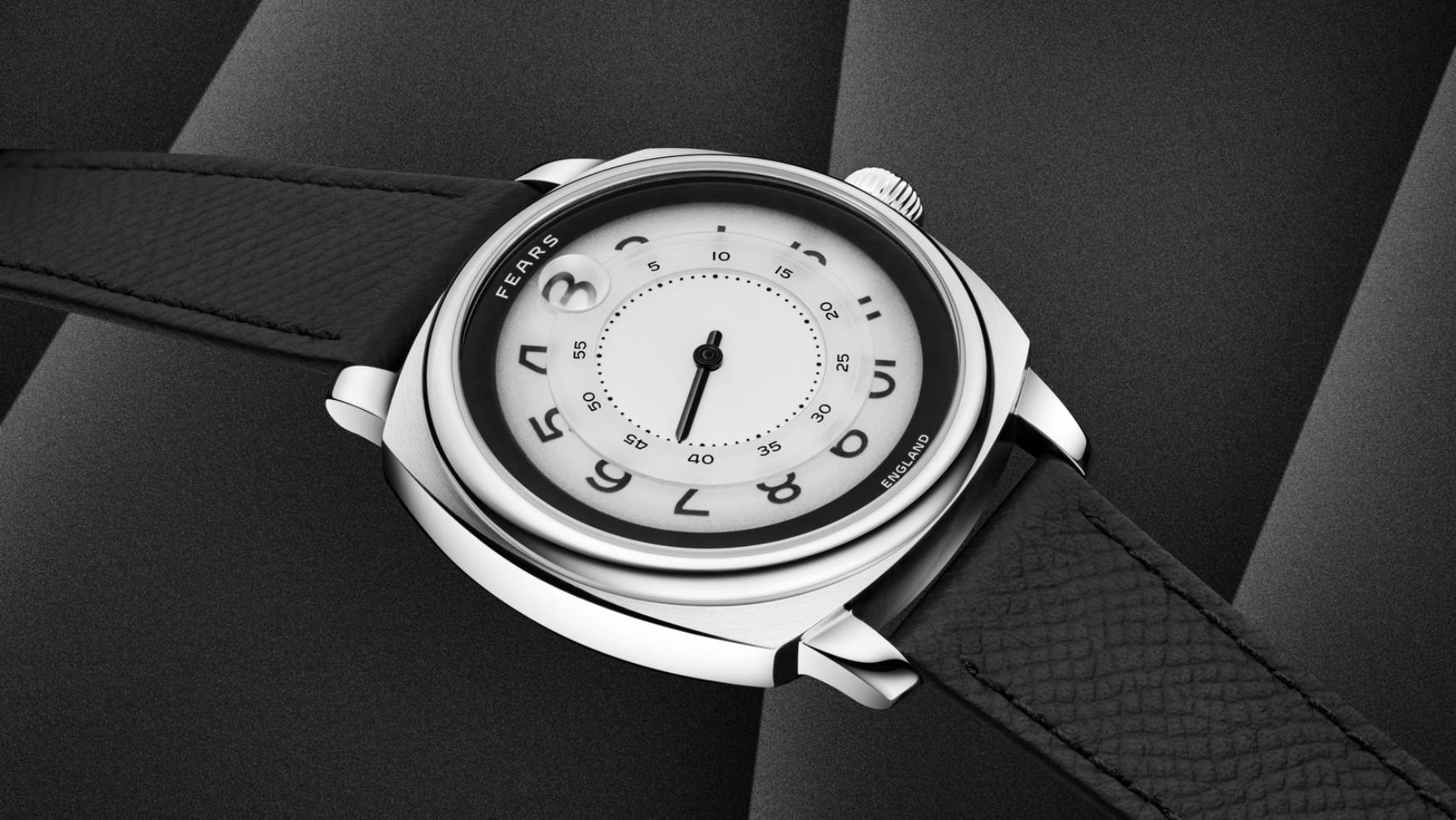
Andrew Morgan & Fears Brunswick 40.5 Jump Hour Ultimus
Citizen’s Eco‑Drive technology, launched in 1976 with the Crystron Solar Cell, marked the beginning of light‑powered watches that could run on both sunlight and artificial light. Early challenges involved developing a compact rechargeable battery and a circuit to prevent hydrogen gas buildup during charging. Over the decades, innovations such as amorphous silicon cells in 1986, larger power‑reserve capacitors, and radio‑controlled accuracy improvements dramatically extended power reserves—from a few days to several months and eventually up to ten years. Precision also advanced, with movements like the A010 achieving ±5 seconds per year and the later 0100 reaching ±1 second per year, while newer Eco‑Drive models now offer autonomy of up to one year on a full charge. Design flexibility grew alongside performance, moving solar cells from visible dial placements to concealed ring‑shaped strips that capture light around the periphery, enabling fully opaque dials. Ultra‑thin movements, exemplified by the 1 mm‑thick Eco‑Drive One, combine sleek profiles with year‑long power reserves. Recent limited editions, such as the ATTESA Light in Black Eco‑Drive 50th Anniversary, the Promaster Dive E365, and high‑end THE CITIZEN pieces, showcase advanced materials like Super Titanium™ and sophisticated complications while maintaining Eco‑Drive’s hallmark sustainability and accuracy.
Buying Time Analysis: This story highlights the pioneering evolution of Citizen’s Eco‑Drive technology, demonstrating how innovative solar power has transformed watchmaking by delivering unprecedented accuracy, long power reserves, and design freedom, underscoring its lasting impact on sustainable luxury timepieces.