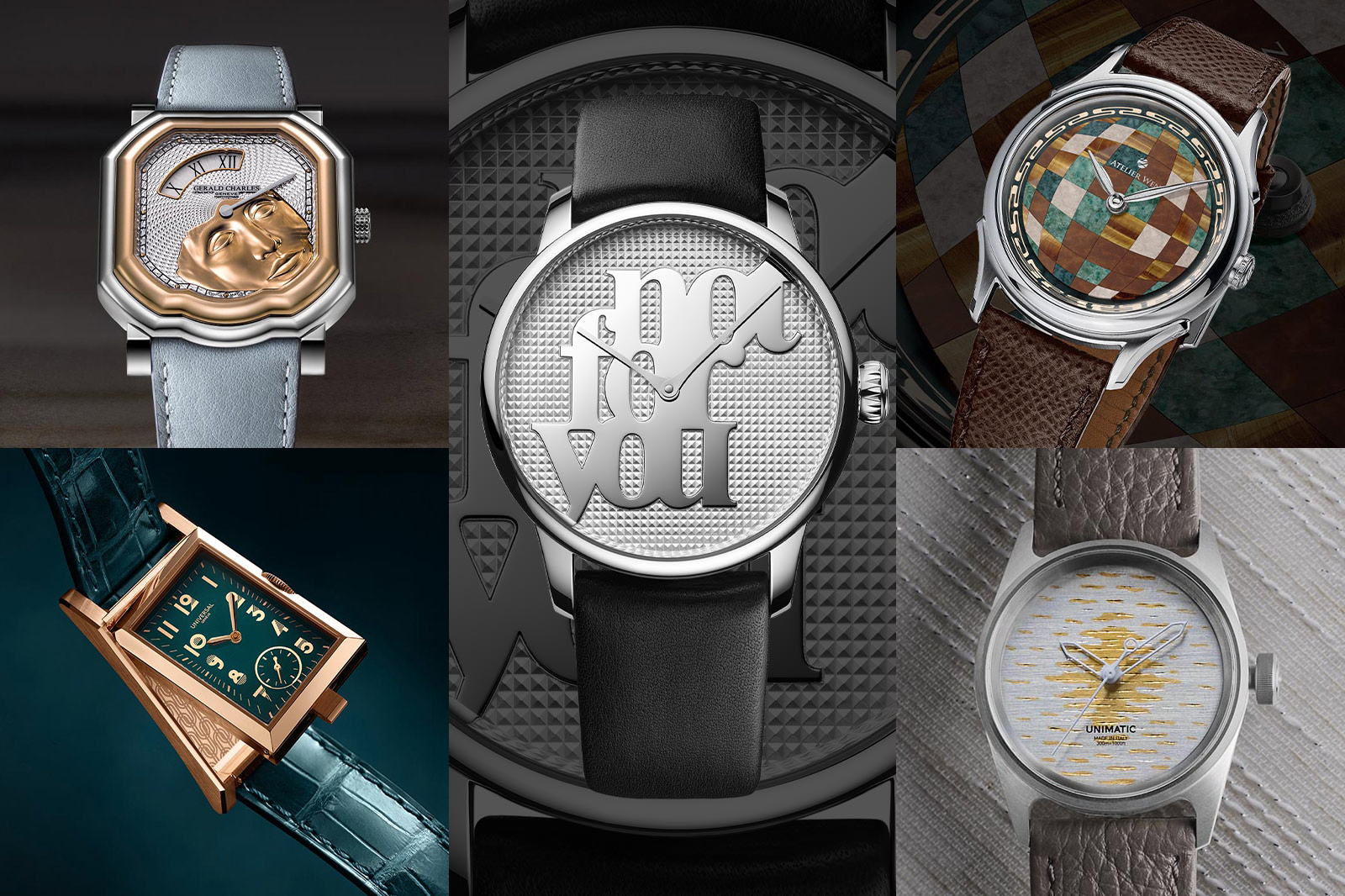
Art Meets Time: How Watches Became the World’s Smallest Canvas

The piece explores how watches have become the world’s smallest canvas, where the dial serves as a miniature artwork framed by the bezel and case. It highlights historic collaborations such as Salvador Dali’s partnership with Piaget in 1967, which produced the “Dali d’or” collection and coin watches, and examines the contributions of architects like Gae Aulenti, whose designs for Louis Vuitton introduced innovative watch forms, and Max Bill, whose work with Junghans created timeless wristpieces. The article also notes industrial designer Nathan Horwitt’s iconic Movado Museum Watch, whose minimalist aesthetic has inspired countless reinterpretations, and showcases how contemporary brands like Swatch and Hublot continue to merge art and horology through limited editions with artists ranging from Kiki Picasso to Jean‑Michel Basquiat. Further, the text details how these artistic partnerships extend beyond individual designers, involving major museums and cultural institutions. Swatch’s collaborations with the Uffizi Gallery, MoMA, and the inclusion of masterpieces by Botticelli and Roy Lichtenstein illustrate the seamless integration of fine art into everyday timepieces. The narrative underscores the enduring appeal of turning functional objects into portable galleries, emphasizing that the convergence of design, architecture, and visual art has consistently enriched watchmaking and expanded the expressive possibilities of the wristwatch.
Buying Time Analysis: This story highlights how the collaboration between art and watchmaking transforms timepieces into portable canvases, showcasing the cultural significance and enduring impact of artistic partnerships on design innovation.