Issue #269 | Buying Time - October 15, 2026
Private clubs, extraordinary mechanics, and cautious bidders: the watch world is selling belonging while collectors reconsider the price of admission.
Buying Time in 30 Seconds
Breitling is expanding the watch-owner experience with Aston Martin exclusives and plans for private clubs in New York and Miami. HSNY welcomes Gregory Brown as executive director, while Vacheron Constantin and The Met explore how traditional craftsmanship travels between disciplines. New releases range from Jack Mason’s Dr Pepper GMT and Mido’s certified chronometer to MING’s moving honeycomb dial and Czapek’s gold tourbillon. Meanwhile, yesterday’s Patek Philippe Nautilus reached $128,500 without meeting reserve—a reminder that desirability and a completed transaction remain different things. Today, an 80-piece Richard Mille sailing chronograph takes its turn, with bidding scheduled to close at 5:05 p.m. EDT.
Time Graphing Today’s Watch Universe
The Price of Belonging
The watch industry has always sold more than a way to tell time. It sells achievement, taste, membership, and the reassuring possibility that something small enough to wear can explain something important about its owner. Today’s issue makes that proposition unusually explicit. There are watches for supercar owners, watches connected to private clubs, watches tied to sailing regattas, and watches that turn a familiar soft drink into a collecting community. The product still goes on your wrist. The sales pitch increasingly asks where it might take you.
Consider Breitling’s plans for private members’ clubs in New York and Miami. Restaurants, rooftop gatherings, music, working spaces, and branded residences extend the relationship well beyond the boutique. A watch purchase becomes an introduction to an environment in which the brand hopes you will spend more of your time. That has obvious commercial appeal: a company that sees you only when you buy or service a watch has fewer opportunities to become part of your routine than one that also serves dinner.
The Aston Martin Valhalla watches take the same idea in a more tightly controlled direction. Ownership of one expensive object qualifies you to purchase another. Customization then makes the second object feel like a personal extension of the first. There is nothing inherently wrong with that arrangement. Collectors have always enjoyed connections between their interests. But it does raise a useful question: how much of a watch’s appeal comes from the watch, and how much depends on the surrounding invitation?
That question becomes harder to avoid when an auction ends without a sale. Yesterday’s blue-dial Patek Philippe Nautilus Travel Time Flyback Chronograph attracted a $128,500 bid and still failed to meet reserve. That is a substantial expression of interest. It is also an unsuccessful transaction. We do not have the reserve figure, so there is no honest percentage shortfall to calculate. What we do have is another example of buyer willingness stopping before seller willingness begins.
The repeated failures we have been following in Losing Time make that distinction increasingly relevant. They do not, by themselves, establish a market-wide crash. They do suggest that collectors should pay closer attention to the distance between an appealing ownership story and an executable selling price. Exclusivity can help a brand sell the original watch. It cannot compel the next buyer to reimburse the first owner for the experience.
Fortunately, today’s issue offers several forms of belonging that have more durable foundations. Gregory Brown’s appointment at the Horological Society of New York puts education, scholarships, and the next generation of watchmakers back in view. The society’s value lies in what participants learn and what its support enables people to do. That is a particularly useful kind of investment in a field dependent on skills that take years to develop.
The same is true of Vacheron Constantin’s work with The Met. A furniture maker, a ceramicist, and a goldsmith gain access to collections and specialist techniques, then bring that knowledge back into their own practices. Here, the relationship produces something beyond a branded occasion. It helps skills travel, ideas develop, and traditional methods find contemporary uses. The benefits can survive long after the launch photographs disappear.
Then there is the community built by the objects themselves. The MING x Massena LAB Secret Honey gives enthusiasts a moving optical puzzle to examine. The Ulysse Nardin Freak discussion returns to the pleasure of mechanical experimentation. At a more accessible price, Mido’s Multifort TV Big Date Chronometer offers a straightforward reason to care: recognizable design backed by certified performance. Those are conversations a collector can continue having even if nobody asks about resale value.
Our Miyota feature adds another perspective. Dependable movements allow a wide range of smaller brands to exist, giving collectors more design choices and more points of entry. That contribution receives less attention than a spectacular launch, but it broadens participation in a practical way. A healthy watch culture needs people who can make, maintain, explain, and afford the watches—not simply people willing to photograph them.
Today’s Richard Mille auction brings these ideas together. The RM 60-01 has a genuine sailing connection, substantial mechanical complexity, and the scarcity of an 80-piece edition. It also has to find a buyer at a price the seller will accept. The chronograph can measure elapsed time beautifully; it cannot make that negotiation disappear.
Enjoy the clubs, the cars, the events, and the stories. They are part of what makes collecting engaging. But give the greatest weight to what remains yours when the invitation expires: the design you enjoy, the mechanics you understand, the people you meet, and the price you were comfortable paying. Belonging can enrich ownership. It should not have to justify the entire bill.
-Michael Wolf
News
Gregory Brown Takes the Helm at the Horological Society of New York
The Horological Society of New York has appointed Gregory Brown executive director, bringing more than two decades of business and nonprofit leadership to one of watchmaking’s most established educational institutions. A longtime member and GPHG Academy participant, Brown has worked across entrepreneurial organizations, creative foundations, and global agency operations. His background combines organizational development with experience supporting communities built around specialized interests.
He arrives as HSNY continues expanding its financial support for the profession. The society recently awarded $450,000 to students, schools, and independent watchmakers, while its 160th-anniversary gala raised $1.2 million. Brown’s task is to build on that momentum through education, research, scholarships, and broader engagement with the people who will sustain mechanical watchmaking.

Breitling Creates Exclusive Watches for Aston Martin Valhalla Owners
Breitling’s Aston Martin partnership moves into personalized ownership with two watches reserved for buyers of the Valhalla supercar. The offerings include a 44mm Super Chronomat B19 Perpetual Calendar Chronograph and a smaller Super Chronomat Automatic 38. Customization extends to dial colors, straps, and selected decorative treatments, allowing owners to coordinate the watch with their automotive preferences.
The appeal is deliberately specific: these are watches attached to an existing relationship with Aston Martin. The perpetual-calendar chronograph supplies the more elaborate mechanical proposition, while the Automatic 38 provides a different size and styling option. Together, they demonstrate how luxury collaborations increasingly seek to create an ongoing ownership experience rather than a single commemorative product.

LVMH’s Results Leave the Watch Business in the Background
LVMH’s latest results provide a broader picture of luxury demand while offering comparatively little detail about the performance of individual watch brands. Watches and jewellery sit within a combined reporting category, making it difficult to separate the contribution of jewellery houses from the fortunes of the group’s watchmakers. Strong activity in one part of that division does not automatically describe conditions throughout it.
TAG Heuer’s Formula 1 visibility and product activity at brands including Zenith and Hublot keep the watch portfolio in the public conversation. But visibility, new releases, and consolidated financial performance answer different questions. For anyone trying to assess demand specifically for watches, the limited detail leaves plenty of room between the headline and the underlying business.

Breitling Plans Private Clubs in New York and Miami
Breitling is taking its lifestyle ambitions into hospitality, with a private members’ club planned for Williamsburg, Brooklyn, in late 2027. Developed with VCR Group, the proposed venue combines dining, bars, music, working areas, and a rooftop lounge in an industrial setting. Selected watch purchases are intended to connect customers with membership, extending the brand relationship into everyday social life.
Miami’s plans are larger still, pairing a private club with the proposed B Residences tower. The announced timetable places construction later in the decade and opening in 2031. Both projects suggest that Breitling wants its customers to spend time inside the brand’s world as well as wear its watches.
Features
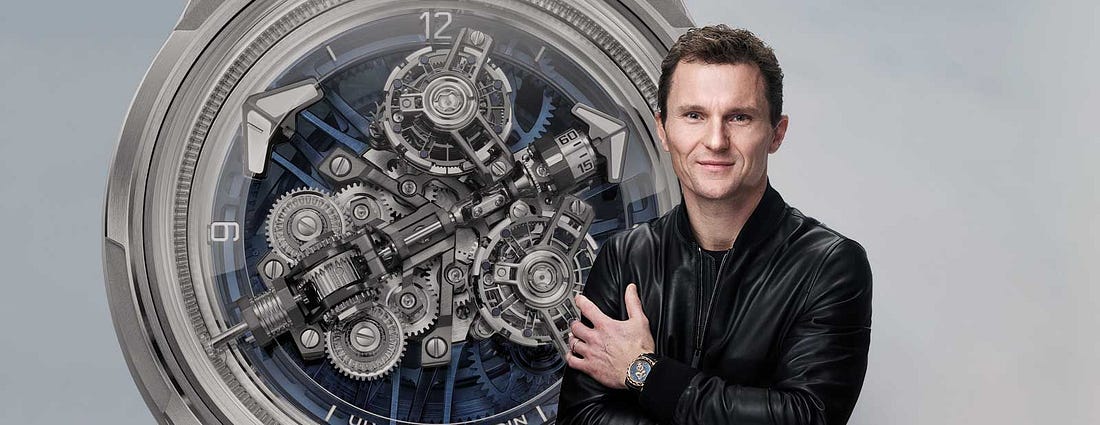
Freaking Out With Matthieu Haverlan
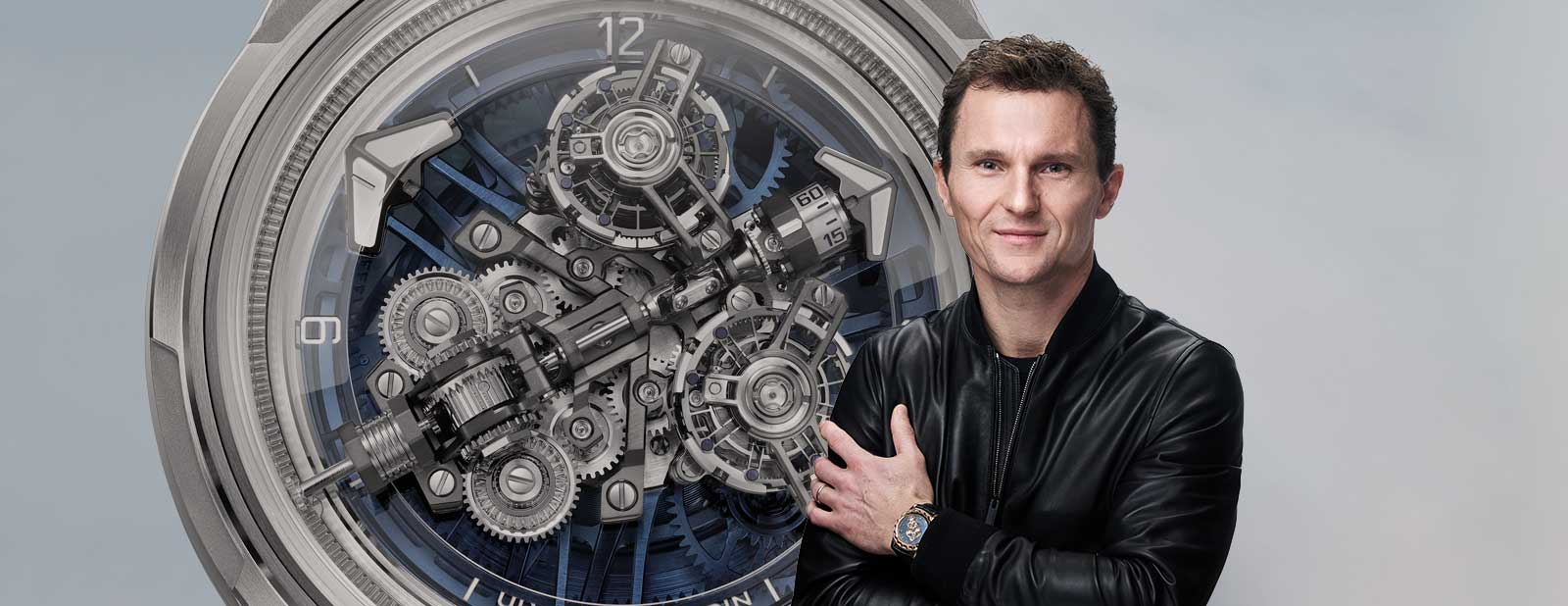
A conversation with Ulysse Nardin’s Matthieu Haverlan explores how the Freak continues to serve as a platform for mechanical experimentation 25 years after the original disrupted conventional watch design. Silicon technology, unconventional displays, and ambitious regulating systems have helped the collection establish an identity built around engineering curiosity. The latest developments pursue both greater complexity and more practical ways to wear the concept.
The interesting tension is between spectacle and usability. The most ambitious Freak creations demonstrate what the manufacture can attempt, while the Freak X offers a more approachable expression of the same restless design philosophy. Together, they make a case for innovation as an ongoing discipline rather than an anniversary slogan.
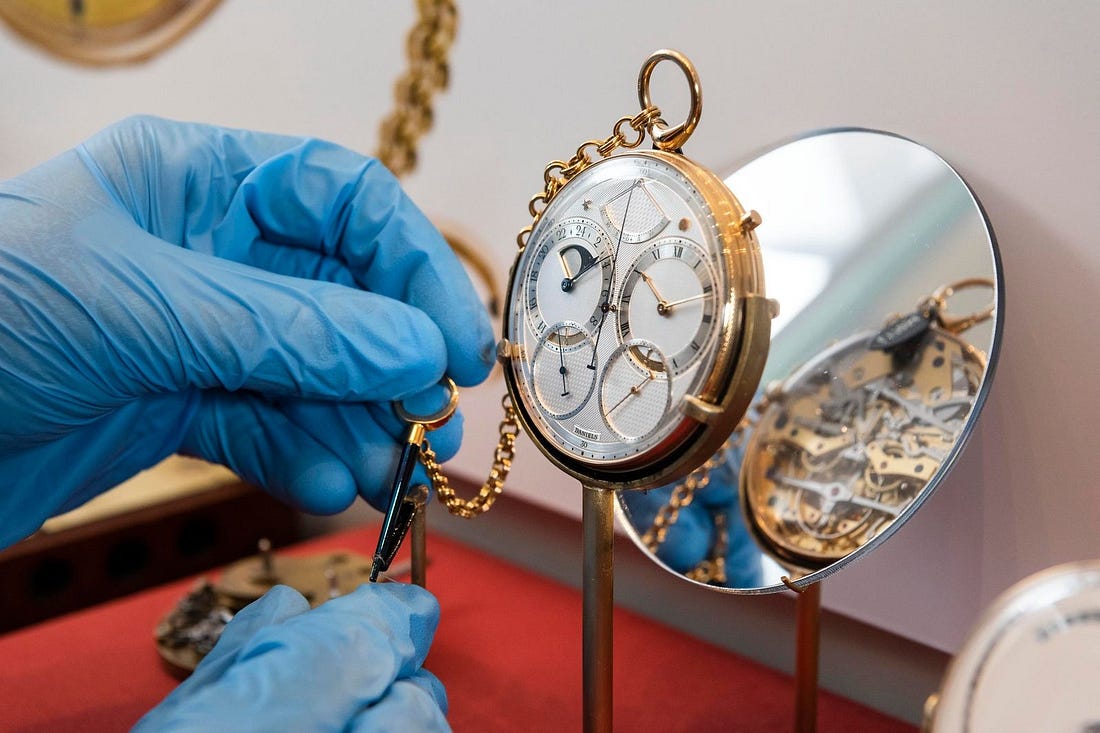
Five Vintage Watches Explain the Time Kept by the Stars
A sidereal day lasts approximately 23 hours, 56 minutes, and four seconds—the time Earth takes to complete a rotation relative to distant stars. That small difference from the familiar solar day becomes significant when using the sky to establish position. Watches built to follow sidereal time therefore occupy a fascinating intersection of astronomy, navigation, and mechanical precision.
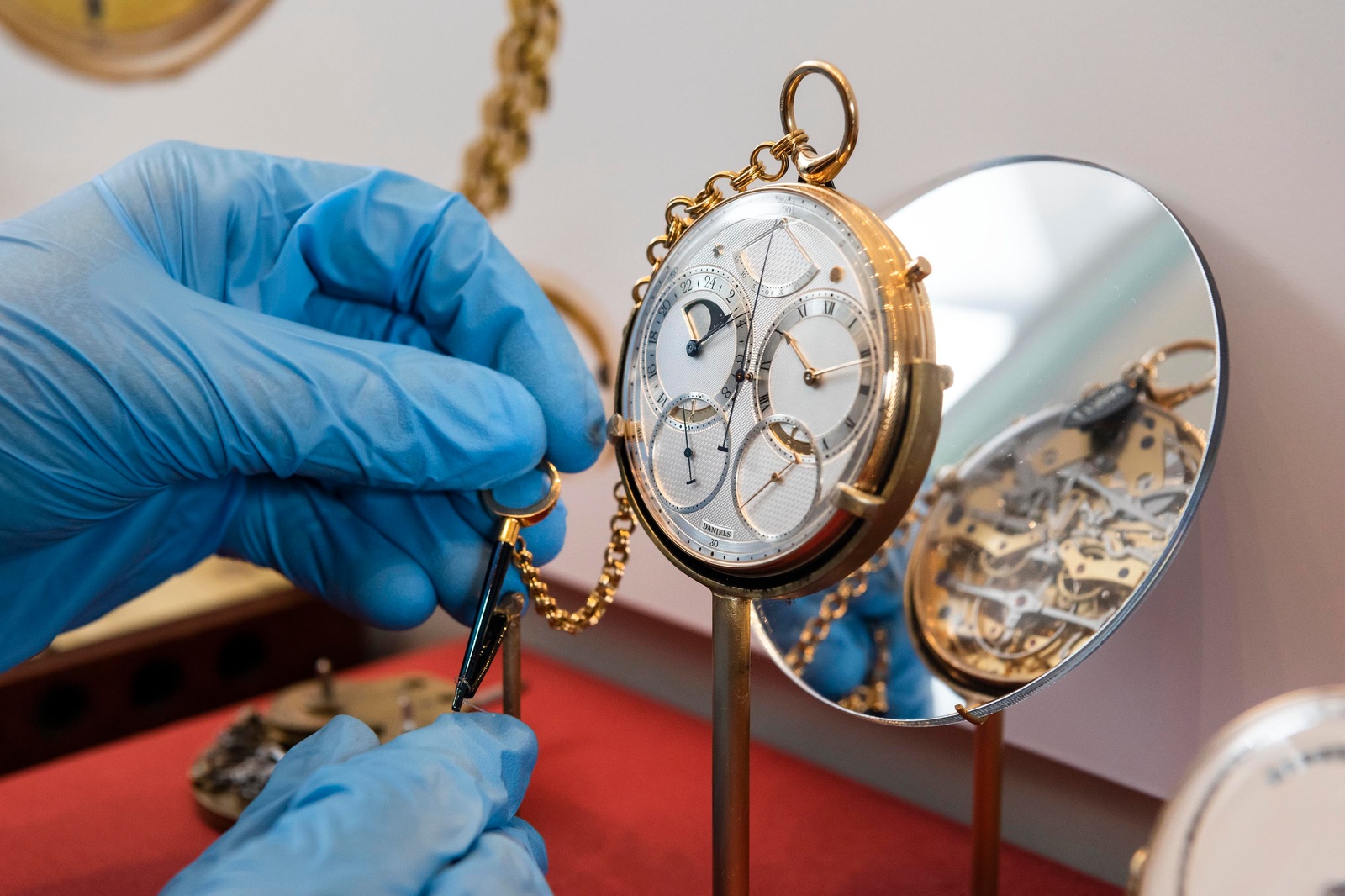
This feature follows that connection through Royal Navy timers, Longines Weems watches, Universal Genève’s HA-1, a rare Heuer military instrument, and George Daniels’s Space Traveller pocket watches. Their forms differ considerably, but each turns an astronomical relationship into a usable display. They are reminders that some of horology’s most unusual complications began with exceptionally practical questions.

Vacheron Constantin and The Met Take Craftsmanship Beyond the Wrist
Vacheron Constantin’s Artist in Residency program with The Met brings three makers into an extended exchange with museum collections and watchmaking expertise. Furniture maker Aspen Golann, ceramicist Ibrahim Said, and goldsmith Joy Harvey develop distinct works while exploring techniques and historical objects outside their usual working environments. The resulting projects range from a large wooden vessel to a ceramic sculpture and a bronze diadem.
The program’s significance lies in the transfer of knowledge. Engraving, enameling, and other specialized practices become starting points for work in different materials and at different scales. It is a thoughtful demonstration of how preserving a craft can involve encouraging someone else to use it differently.
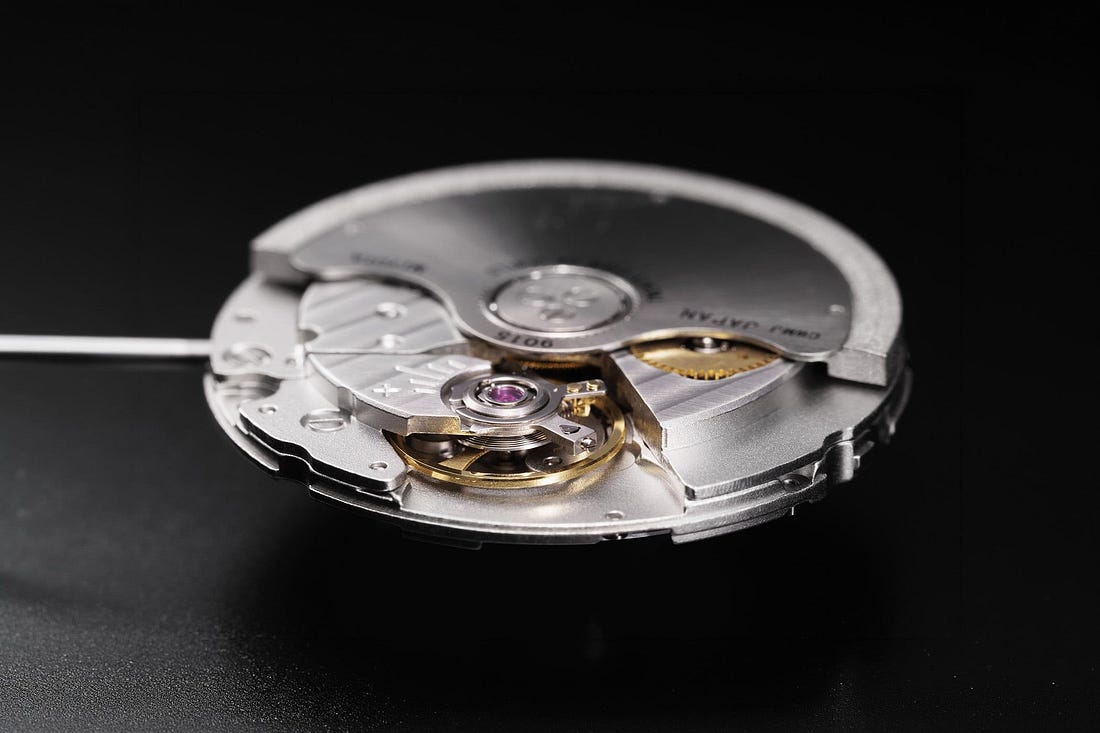
Miyota and the Movement Maker Behind So Many Independent Watches
Miyota’s influence reaches well beyond the name printed on a movement. Its manufacturing capacity and dependable supply allow brands of very different sizes to develop watches without building a movement factory of their own. That role has become particularly important as smaller companies compete through distinctive design, focused collections, and closer relationships with enthusiasts.
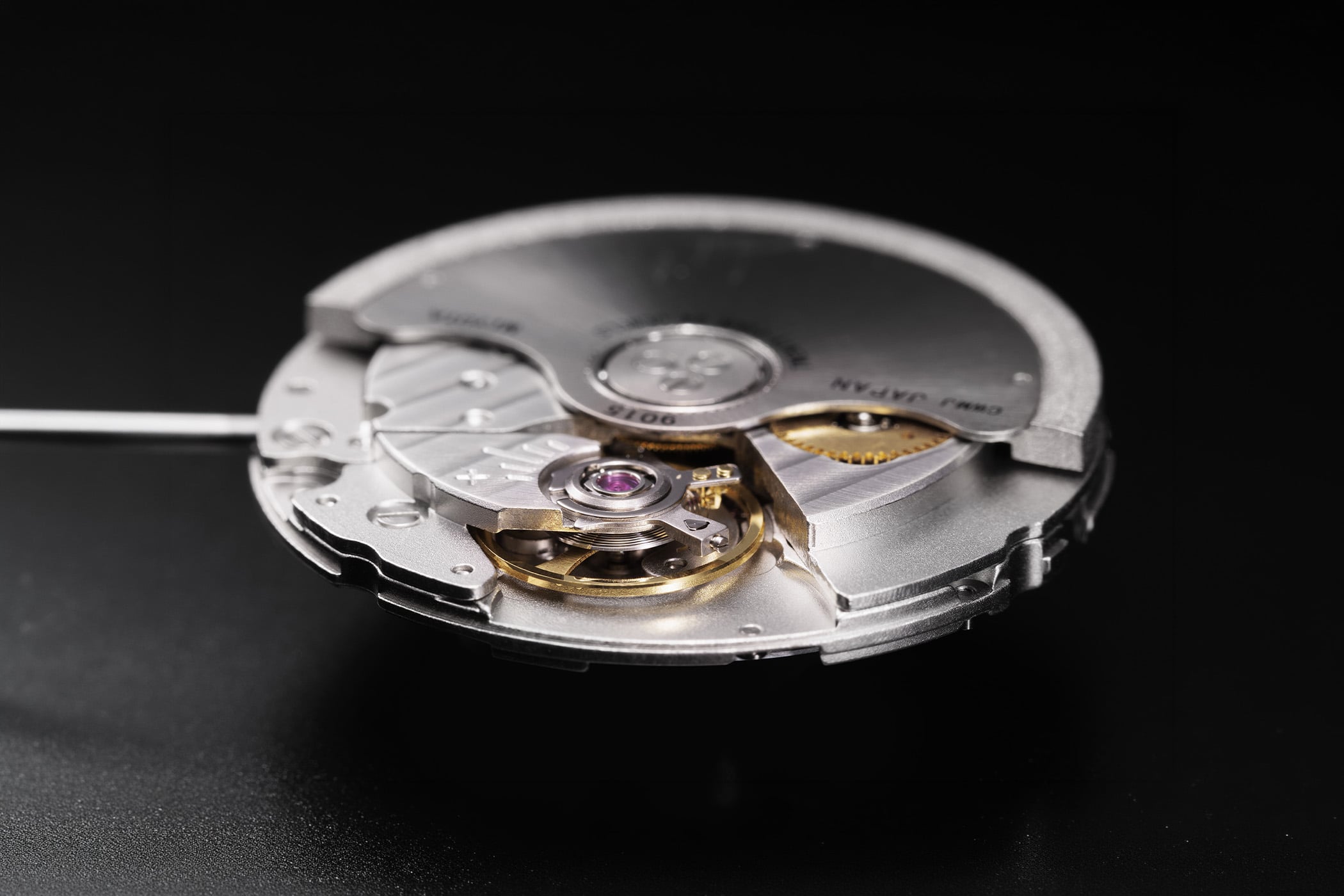
The company’s premium mechanical offerings, including the 9000 series, reflect demand for movements that support more ambitious products. Participation in events such as Windup also brings Miyota into direct contact with the people wearing watches powered by its calibres. The result is a clearer view of a supplier whose largely unseen work helps shape a substantial part of the collecting landscape.
New Watches
Converted prices are approximate U.S.-dollar equivalents, not confirmed U.S. retail prices. Where a price has not been announced, that is stated explicitly.
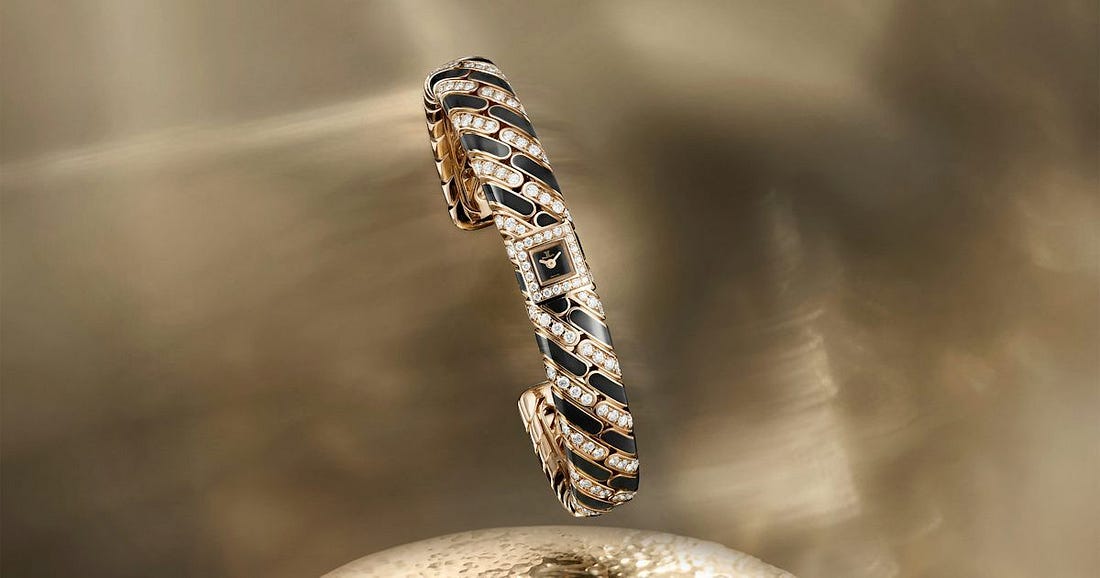
Jaeger-LeCoultre 101 Chain Makes Miniature Mechanics the Centerpiece
Jaeger-LeCoultre revisits a 1955 Duoplan design with a sculptural pink-gold bangle decorated with diamonds and contrasting black HyCeram. Inside is the manually wound Calibre 101, whose exceptionally small dimensions turn the apparent jewellery piece into a remarkable exercise in mechanical miniaturization. The movement provides a 33-hour power reserve, giving the owner a traditional winding ritual within an unusually compact format. Its appeal depends as much on the hidden engineering as on the bracelet’s visual impact. Price: on request.
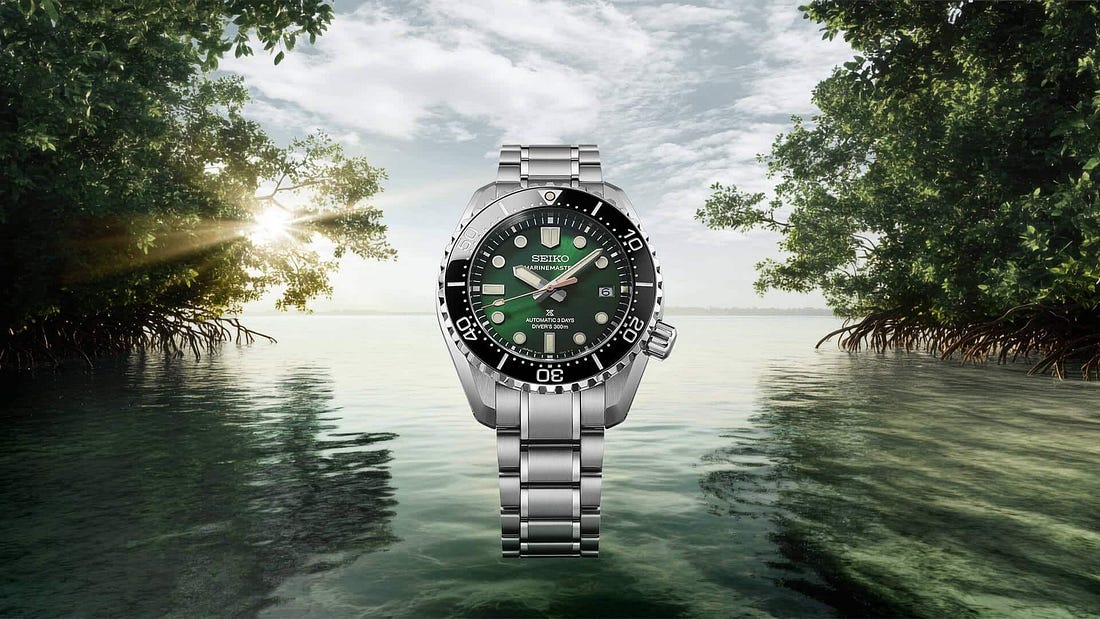
Seiko’s Marinemaster Save the Ocean Takes on Mangrove Green
The Seiko Prospex Marinemaster Save the Ocean HBF003 introduces a green sunray dial inspired by mangrove forests, accented by a pink-gold-colored seconds hand. Its 42.6mm stainless-steel case offers 300 meters of water resistance, while a ceramic bezel and adjustable bracelet support its role as a serious dive watch. The automatic Calibre 8L45 supplies a 72-hour power reserve, and production is limited to 900 pieces worldwide. The fresh dial gives an established tool-watch platform a particularly distinctive identity. Price: U.S. pricing not announced; the supplied reference price for the standard Marinemaster is approximately US$3,600, not a confirmed price for this edition.
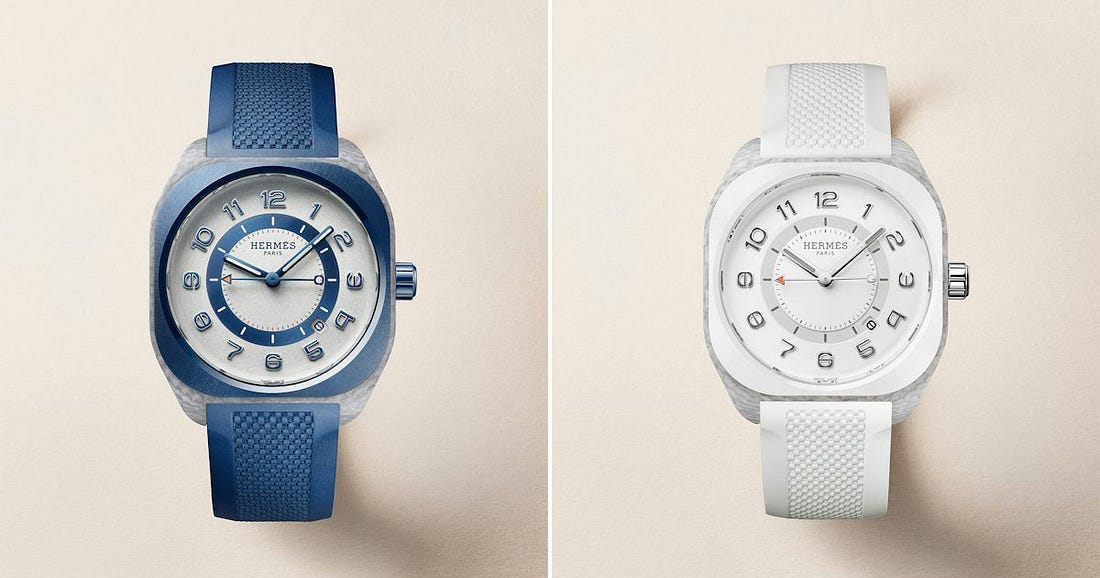
Hermès H08 Brightens Up in Bleu de Malte and Blanc Chantilly
Hermès adds two lighter visual treatments to the H08, pairing braided glass-fiber composite cases with blue or white ceramic accents. The familiar 39mm cushion shape, distinctive numerals, and restrained orange details preserve the collection’s identity while shifting its mood away from darker earlier versions. Both watches use the automatic Manufacture H1837 movement and come on coordinated rubber straps. These are permanent-collection additions for buyers drawn to a sports watch with a strong design vocabulary of its own. Price: US$8,600 each.
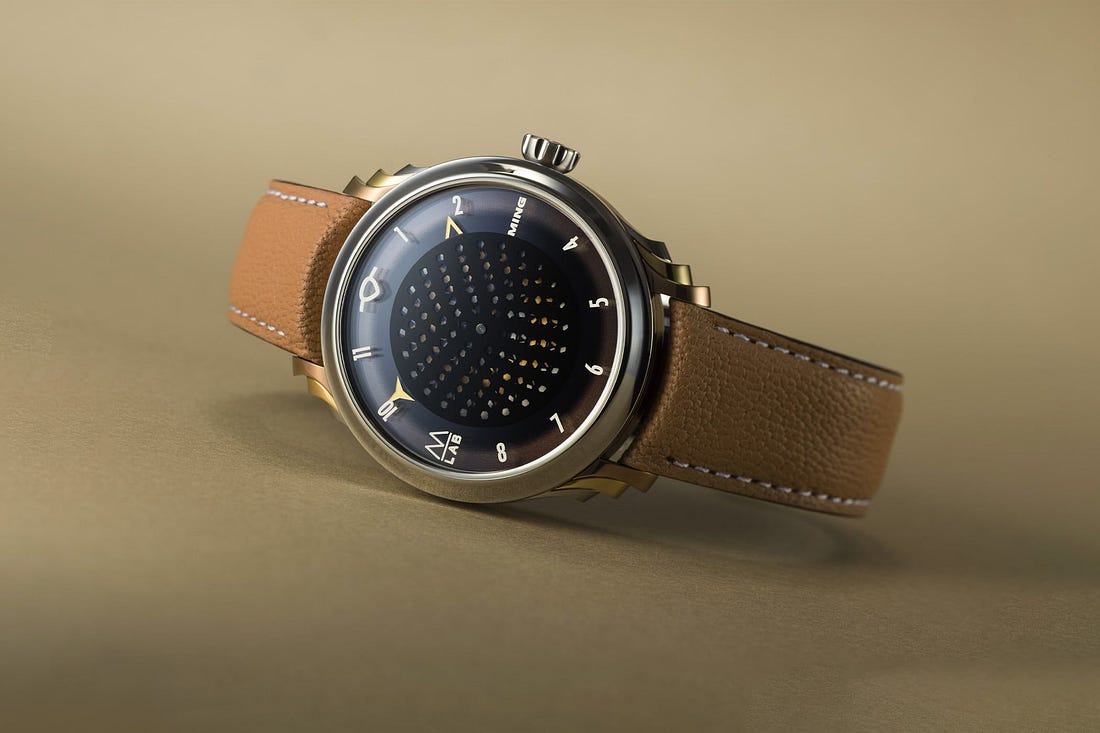
MING x Massena LAB Secret Honey Keeps Its Honeycomb Moving
The MING x Massena LAB 57.09 Secret Honey turns its dial into an evolving optical display using three rotating sapphire discs. Moving at different speeds, the discs create changing patterns beneath luminous orange indications, giving the watch a character that develops throughout the day. A 40mm Grade 5 titanium case with elaborate stepped lugs houses the automatic MING 330.M2 movement, which offers approximately 50 hours of power reserve. Limited to 125 pieces, the watch is scheduled to go on sale today at 13:00 GMT, or 9:00 a.m. EDT. Price: approximately US$8,720, converted from CHF7,250, excluding taxes.
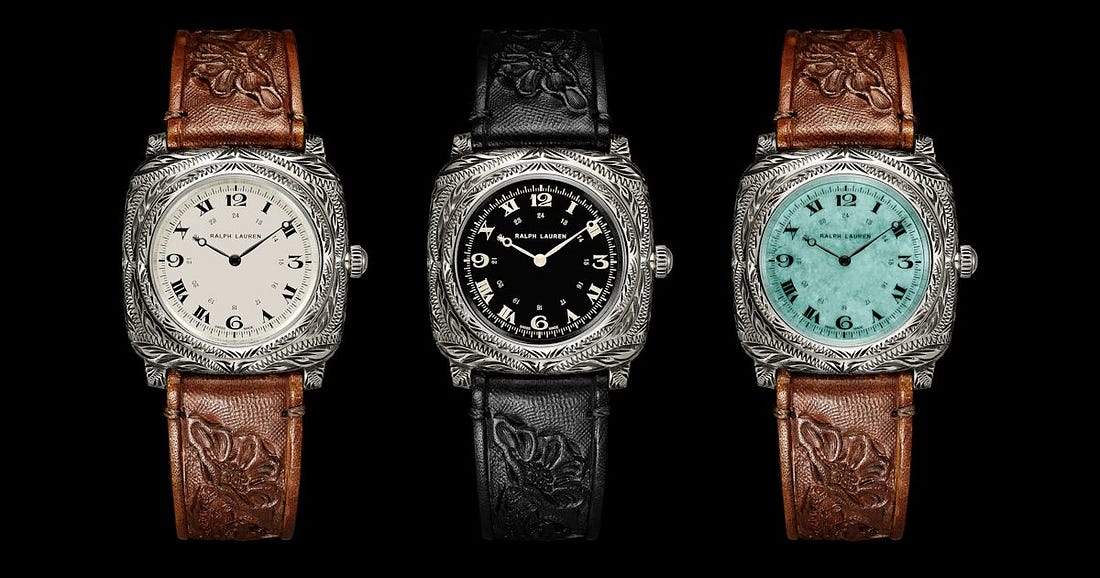
Ralph Lauren’s Western Cushion Returns in Engraved Sterling Silver
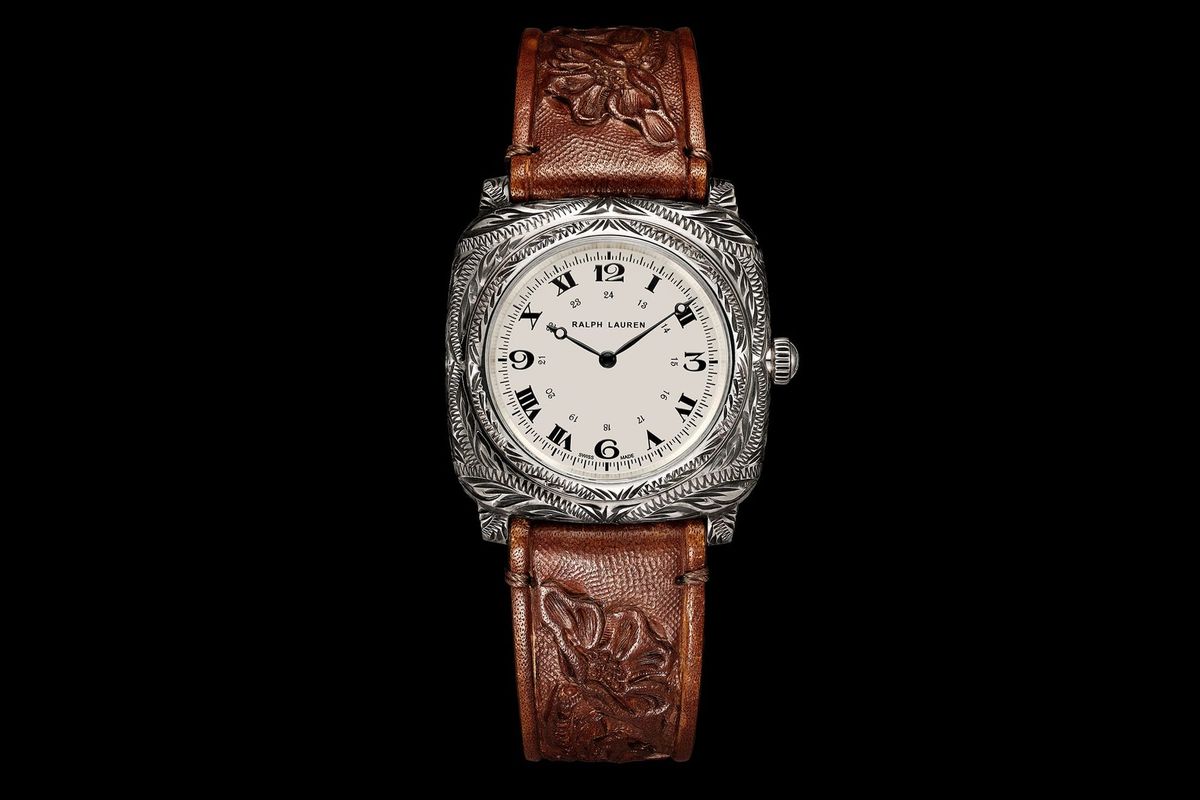
Ralph Lauren brings the Western Cushion back in a 38mm case that retains the collection’s distinctive hand-engraved sterling-silver construction. Black lacquer, off-white lacquer, and natural turquoise dial options combine with a tooled leather strap to reinforce the Western jewellery influence. The automatic RL514 movement, made by Piaget, provides a 40-hour power reserve beneath the decorative exterior. The smaller dimensions make the design more compact without reducing its visual personality or emphasis on handwork. Price: US$26,000 for either lacquer dial; US$29,000 for turquoise.
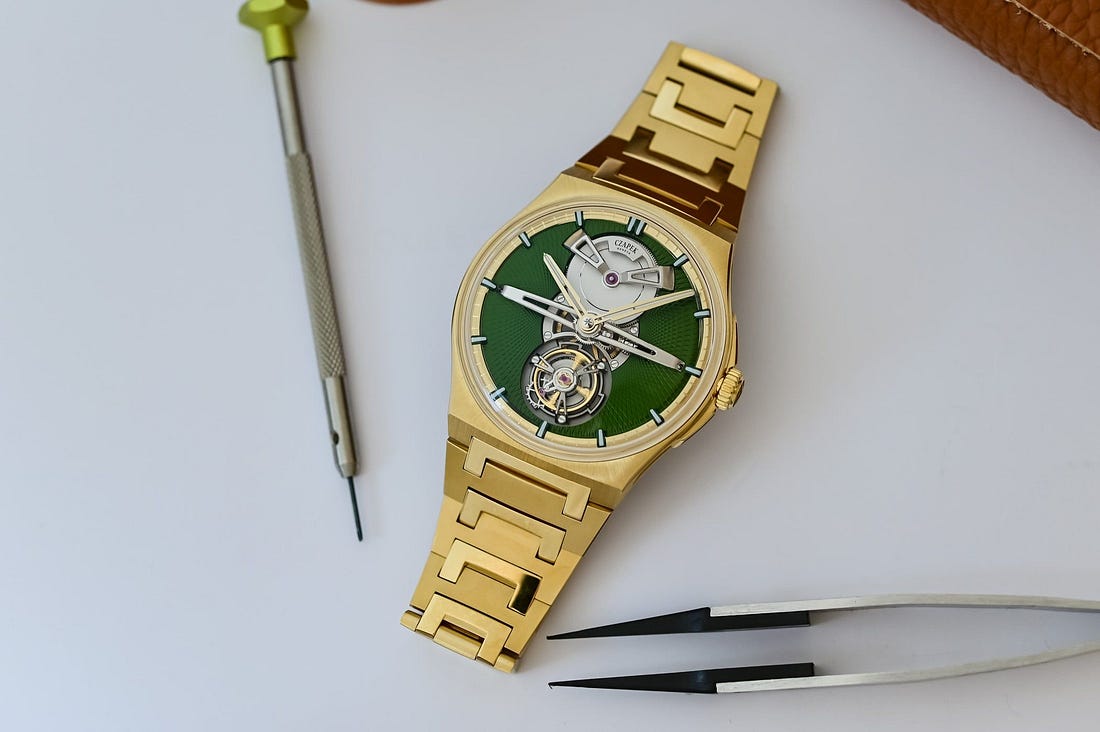
Czapek Antarctique Tourbillon Victory Green Pairs Gold With Guilloché
Czapek’s Antarctique Tourbillon Victory Green combines a 40.5mm yellow-gold case with a deep-green, hand-guilloché dial. The pattern draws the eye toward the vertically organized mechanical display, while the flying tourbillon gives the familiar sports-watch architecture a more elaborate centerpiece. The automatic Calibre 9 delivers a 72-hour power reserve and includes a hand-engraved gold rotor. Production is limited to ten pieces, with bracelet, alligator, and rubber configurations offering substantially different price points. Price: approximately US$117,840 on gold bracelet, US$88,500 on alligator, or US$83,690 on rubber.
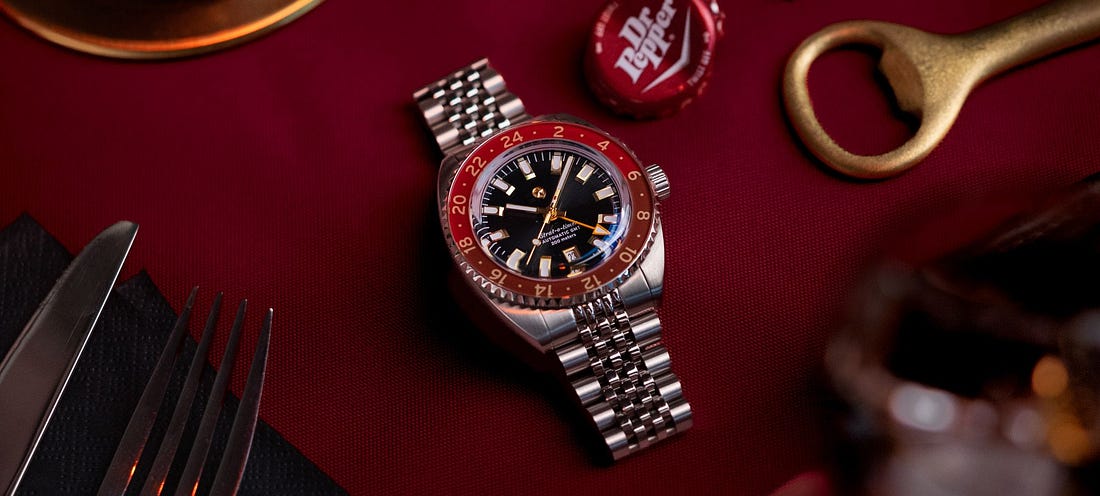
Jack Mason Gives the Strat-o-timer a Fresh Shot of Dr Pepper
Jack Mason’s Strat-o-timer 42 Dr Pepper 2026 Limited Edition combines a black sunray dial with gold-colored details and a red-and-maroon bezel. Its Miyota 9075 automatic movement supplies a separately adjustable local hour hand, making the GMT function useful for actual travel. The 42mm steel case offers 200 meters of water resistance, while a seven-link bracelet includes a micro-adjustment clasp. Limited to 230 numbered watches, the edition also nods to Dr Pepper’s historic 10, 2, and 4 advertising through differently colored luminous hour markers. Price: US$1,299.
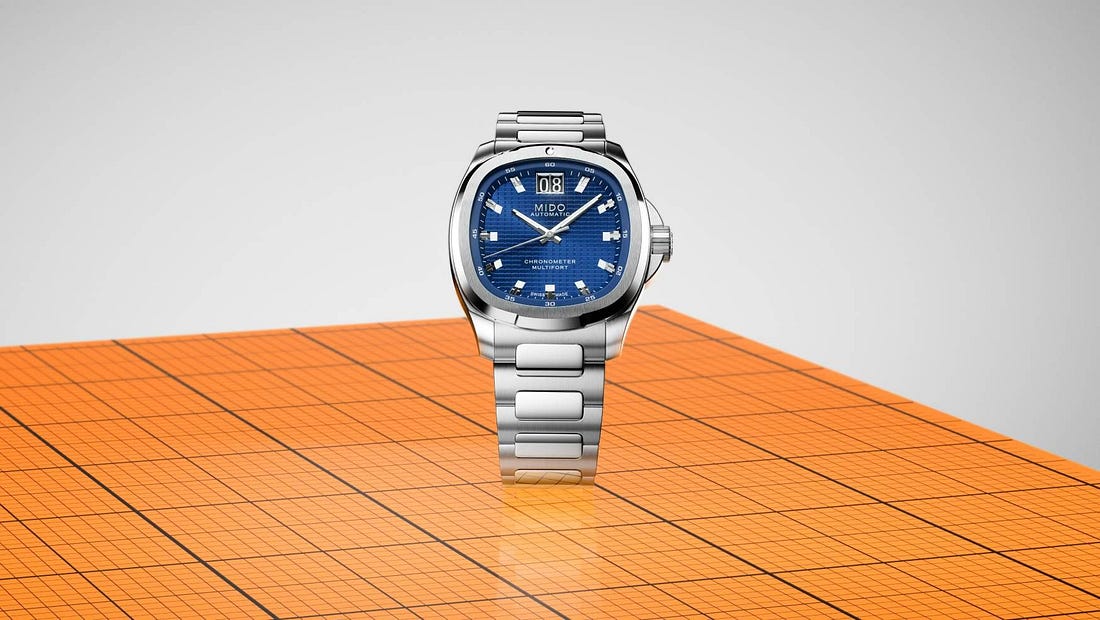
Mido Adds Chronometer Certification to the Multifort TV Big Date
Mido upgrades the Multifort TV Big Date with a COSC-certified automatic movement and a blue dial featuring a checkerboard treatment. The recognizable television-shaped steel case measures 40mm and retains 100 meters of water resistance, making the new edition suitable for everyday use. Its Calibre 80 provides an 80-hour power reserve, while the integrated bracelet continues the collection’s blend of vintage inspiration and contemporary finishing. Certification supplies a tangible mechanical distinction alongside the refreshed appearance. Price: US$1,650.
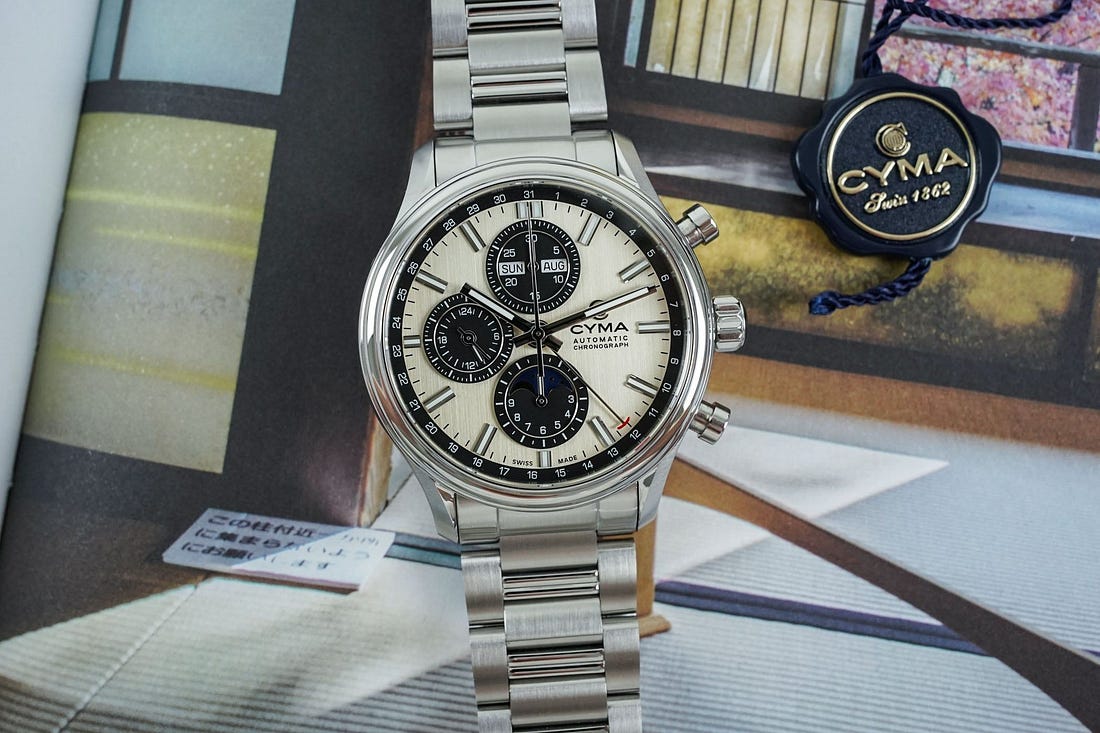
Cyma Grand Maestro “The Chess” Combines Chronograph, Calendar, and Moonphase
Cyma’s Grand Maestro “The Chess” puts a substantial collection of indications inside a 43.5mm stainless-steel case. The automatic ETA 7751 powers the chronograph, calendar displays, 24-hour indication, and moonphase, producing a dial with plenty for a mechanically curious owner to examine. Three principal color treatments sit beneath a sapphire crystal, while the shaped bezel adds a chess-inspired design reference. A steel bracelet and 100-meter water-resistance rating give the complicated display a practical foundation. Price: US$4,515 for the standard versions; US$4,950 for the limited edition.
Comparisons
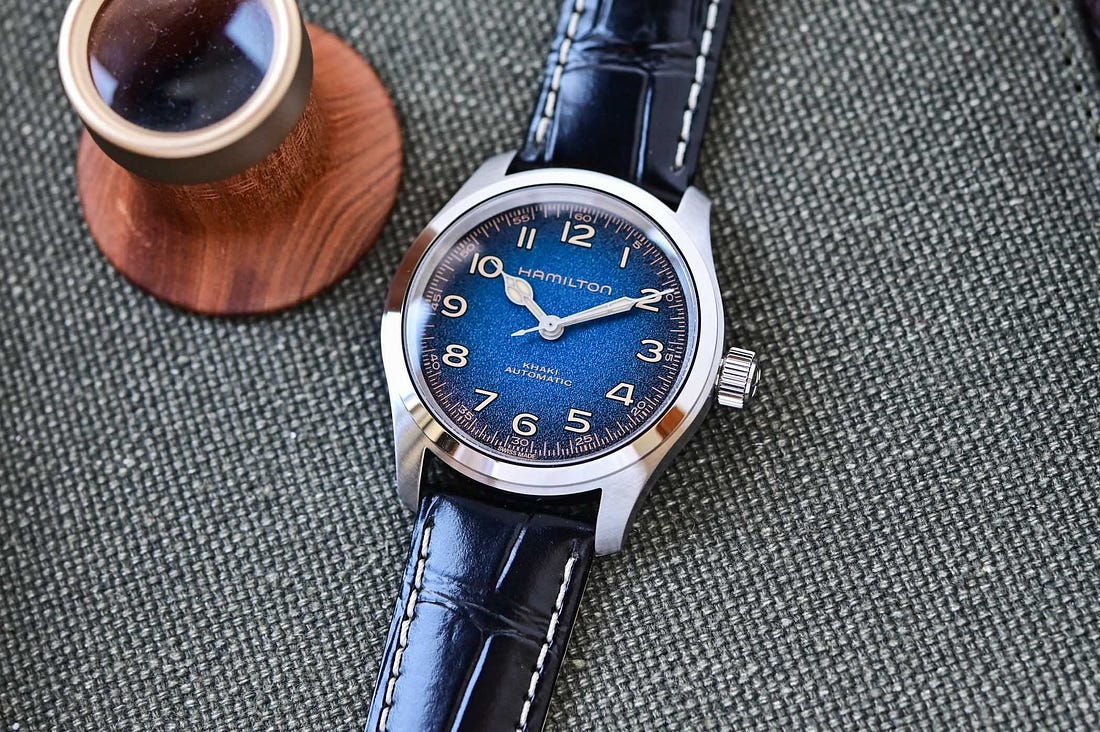
Six Watches That Make a Strong Case for Spending Less
This selection brings together six watches beneath a €2,500 ceiling, showing how much personality exists outside the luxury market’s more intimidating price brackets. Quantum’s Barracuda begins at US$299, while Earthen & Co’s Summit MKII offers ceramic construction at US$899. Hamilton, MAT Watches, Sicura, and O&HoraPictor broaden the range with field-watch styling, unusual bezel functions, and distinctive dial treatments.
The useful takeaway is the variety of approaches. A buyer can prioritize a practical diver, a playful detail, an uncommon material, or a dressier presentation without following the same familiar shortlist. The collection rewards looking closely at what a watch actually offers rather than assuming interest rises in direct proportion to price.
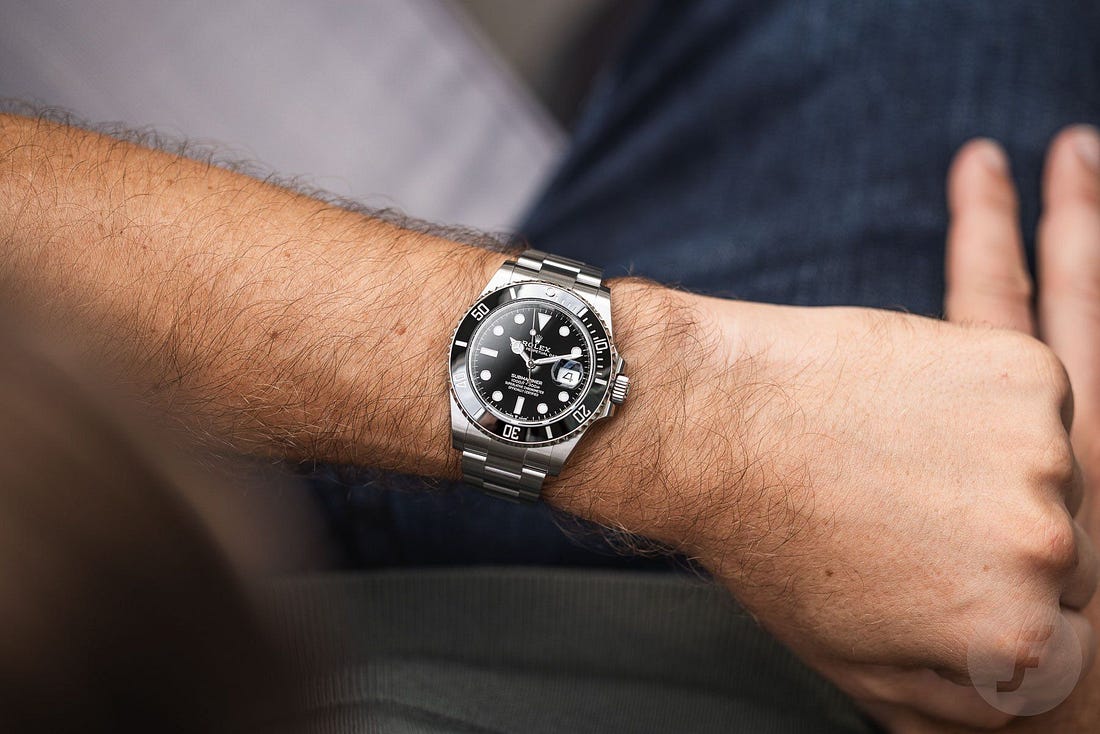
Tudor Pelagos 39 or Rolex Submariner: What Are You Buying?
The Pelagos 39 and Submariner share a broad diving-watch vocabulary, but their appeal rests on different balances of material, heritage, and ownership experience. Tudor’s titanium construction and compact proportions emphasize lightness and contemporary utility. The Submariner brings its exceptionally recognizable design and a long-established place in collecting culture.
A comparison becomes more useful when it moves beyond declaring one universally better. Weight, fit, availability, price, and the importance of the Rolex identity will matter differently to different owners. The Pelagos makes a strong case for buyers focused on a modern daily tool watch; the Submariner offers the particular satisfaction of owning a design that has become a reference point for the category.
Reviews
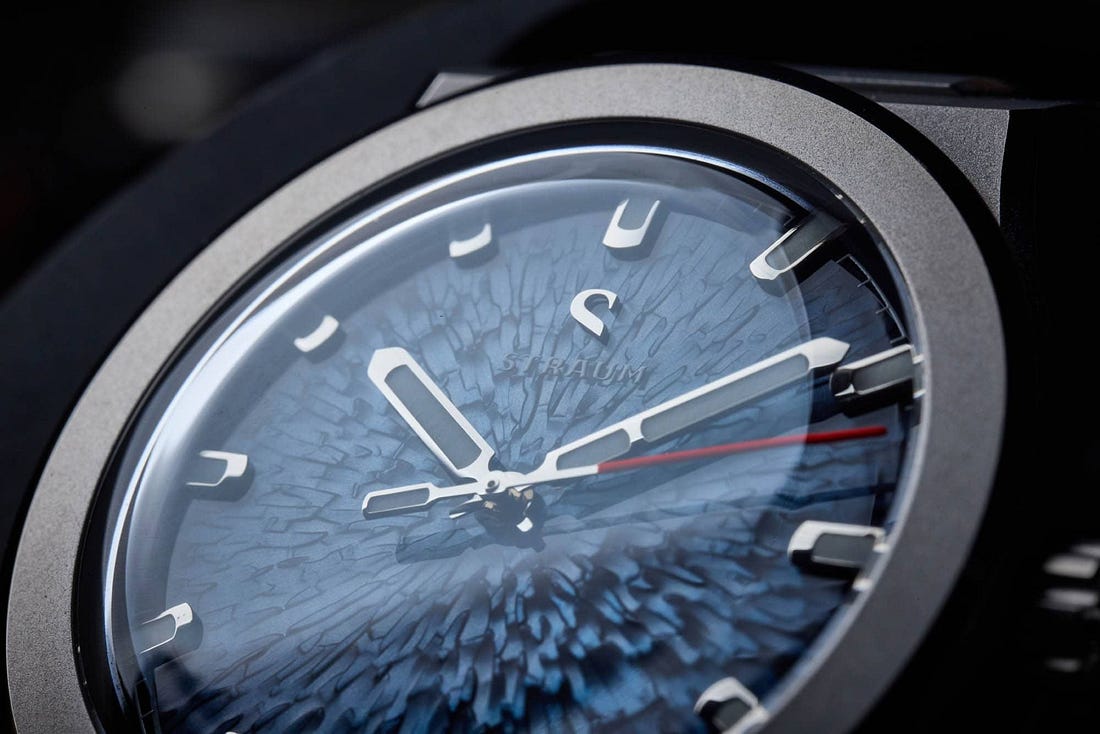
Straum Jan Mayen Stormy Seas Gets an Everyday Workout
This ownership review puts Straum’s Jan Mayen Stormy Seas into water, salt, and ordinary daily use, examining whether its striking dial is backed by a convincing wearable package. The hardened titanium case, screw-down crown, 100-meter water-resistance rating, and quick-release rubber strap support the watch’s outdoors-oriented character. Its automatic La Joux-Perret G101 movement supplies the mechanical foundation.
The assessment also leaves room for reservations, including timekeeping behavior and the absence of a matching titanium bracelet at launch. Those details help distinguish affection for the design from satisfaction with every aspect of ownership. Straum emerges as a maker with a recognizable visual identity and room to refine the practical experience around it.
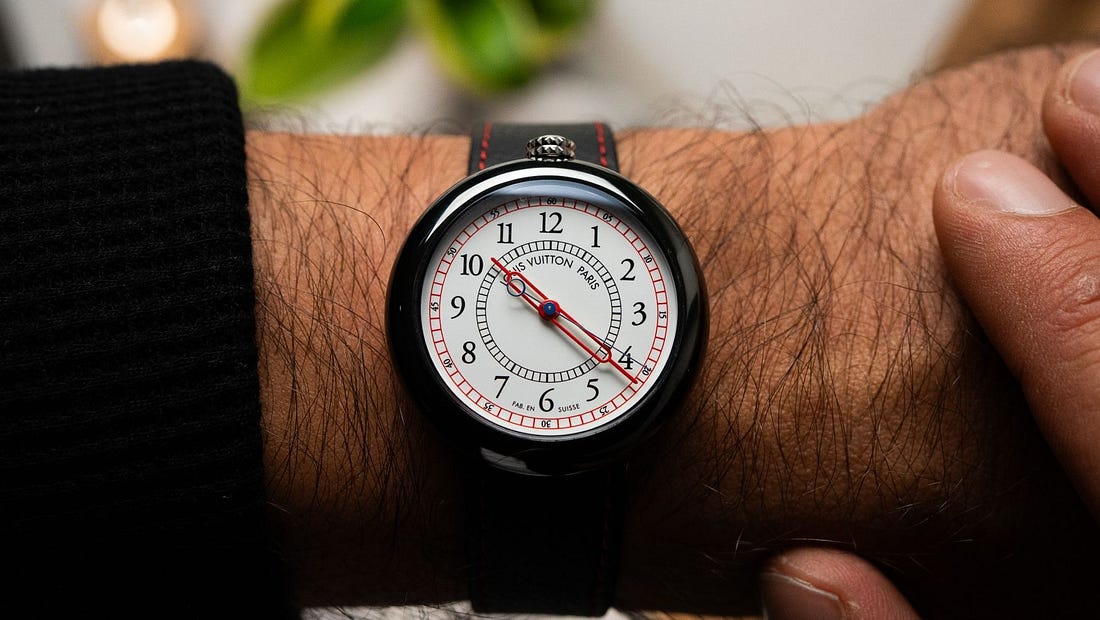
Louis Vuitton’s Monterey Returns With a Ceramic Shell
Louis Vuitton revisits the rounded Monterey design with green and black ceramic versions that preserve its compact, pebble-like character. The material demands careful manufacturing and finishing, giving the apparently simple case a more complicated production story. Distinctive dial colors, contrasting hands, and coordinated leather straps reinforce the original design’s unusual personality.
The mechanical update is equally significant. An automatic Calibre LFT MA01.02 replaces the quartz approach associated with the original, providing a 45-hour power reserve and a different ownership experience. The result is a revival that uses both material and movement to reposition a familiar shape within Louis Vuitton’s contemporary watchmaking ambitions.
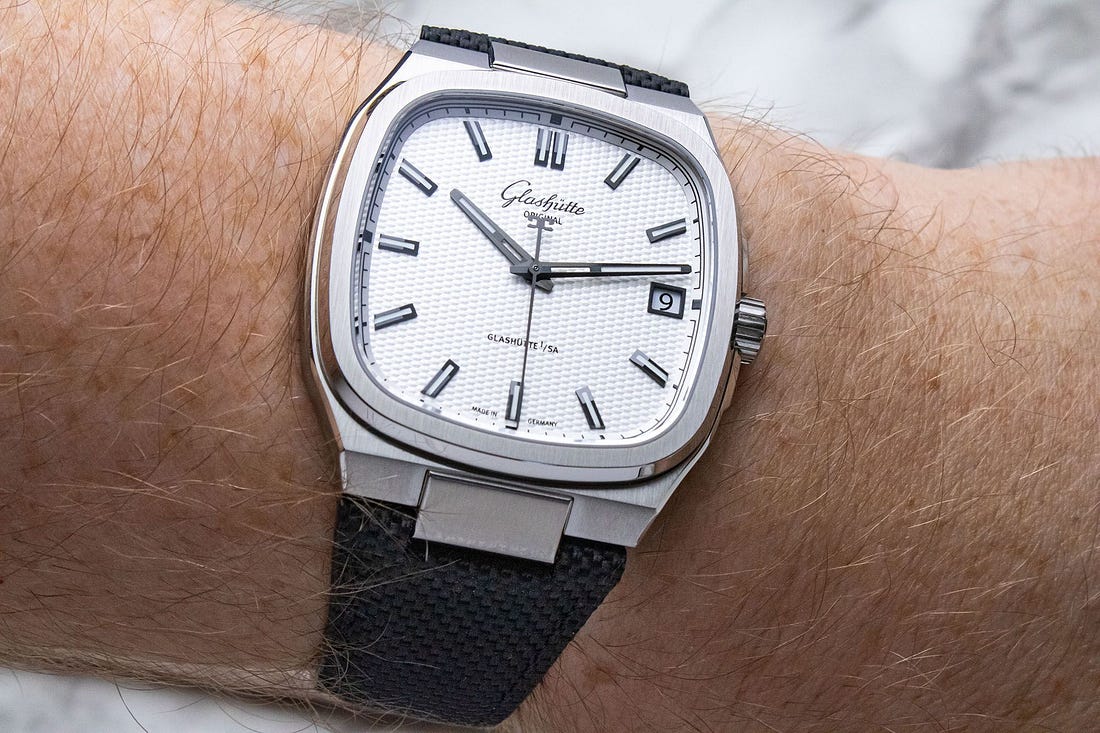
Glashütte Original’s Revised 70s Watch Makes an Understated Argument
The revised Glashütte Original 70s design pursues balance through angular proportions, restrained detailing, and a textured dial. Its appeal lies in the cumulative effect of finishing, legibility, and carefully managed surfaces rather than a single attention-grabbing flourish. Bracelet and strap options give the design different personalities without overwhelming the case.
The review highlights the automatic Calibre 36 and its 100-hour power reserve, alongside the movement finishing expected from the manufacture. At a reported US$13,200, the watch enters a competitive field of luxury sports designs. Its strongest argument is the combination of German watchmaking character and a presentation that rewards close inspection.
Editorial
Watch Security Is Everyone’s Business
Protecting watches requires attention to the people, information, and routines surrounding them. This editorial examines how risks extend beyond display cases to deliveries, events, customer interactions, and the details shared online. Retailers and owners face different circumstances, but both benefit from treating security as an ongoing practice.
The discussion emphasizes documentation, accurate records, staff preparation, and the importance of prioritizing personal safety. For an industry built around portable objects of substantial value, protection cannot begin only after something goes missing. The most useful systems are the ones people understand and consistently follow.
Events
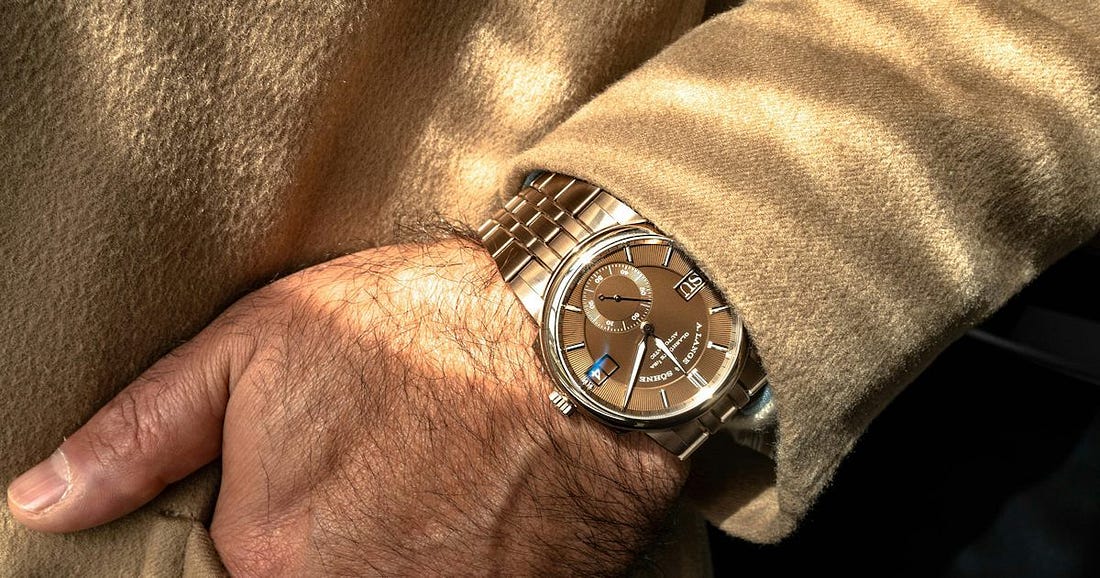
A. Lange & Söhne Joins the Automotive Gathering at Newport
The 2026 Audrain Newport Concours d’Elegance brought rare automobiles and serious watchmaking into the same setting over four days of displays and gatherings. A. Lange & Söhne’s presence provided a natural connection between mechanical disciplines whose enthusiasts share an appreciation for engineering, preservation, and painstaking detail. Exceptional cars supplied the scale; complicated watches offered equally absorbing objects at wrist level.
Beyond the headline displays, the weekend created opportunities for conversation with collectors and industry figures. That social dimension helps explain why automotive events remain useful meeting places for watch brands. The strongest connections emerge when participants have something substantive to discuss beyond the logos.
Podcasts
The Business of Watches: Why The Escapement Is Betting on Las Vegas
Andy Hoffman speaks with The Escapement organizers Faheem Khan and Neeshu Hajra about moving their proposed gathering from Abu Dhabi to Las Vegas and the case for another major watch event. Scheduled for February 5–7, 2027, the show aims to attract thousands of enthusiasts through a combination of brand participation, discussion, and entertainment. The organizers explain the audience they hope to reach and how they intend to distinguish the experience.
The conversation also addresses skepticism about the project’s scale and the practical demands of staging a first edition. For listeners interested in the business behind watch culture, it offers a useful look at the gap between announcing an ambitious gathering and building one that collectors want to attend repeatedly.
Videos
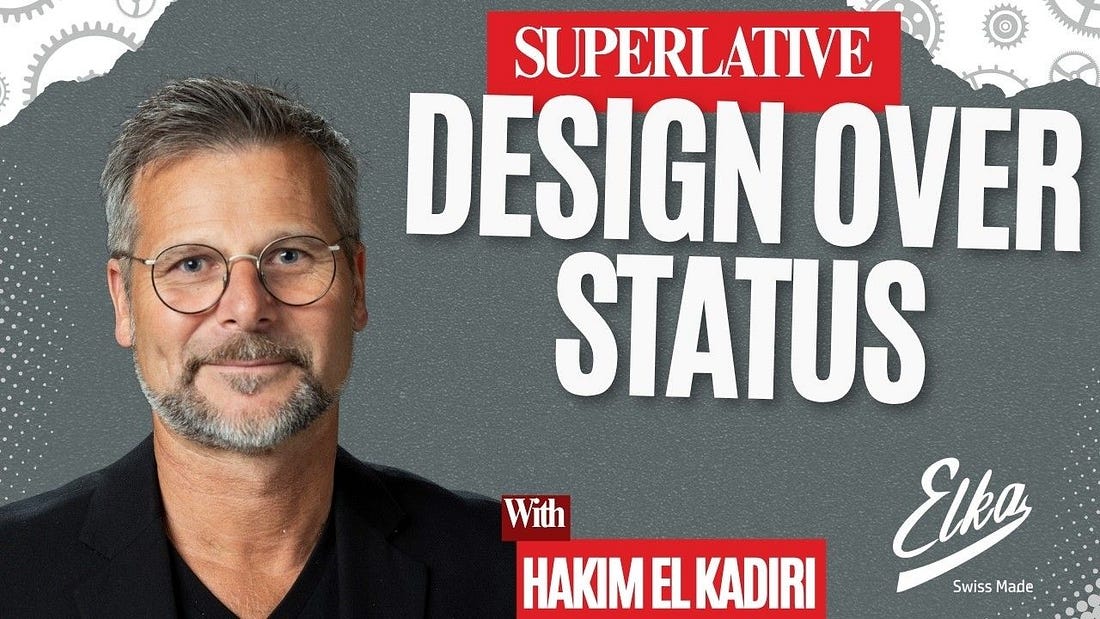
aBlogtoWatch: Meaningful Design With ELKA’s Hakim El Kadiri
Hakim El Kadiri discusses the ideas behind ELKA Watch Co. and the challenge of creating designs that connect with contemporary buyers. The conversation considers how a smaller Swiss brand can establish a recognizable identity while drawing on watchmaking tradition. It is a useful companion to today’s broader question of what gives a watch lasting relevance beyond its launch.

Britt Pearce: Did Omega Accidentally Make the Perfect Seamaster?
Britt Pearce takes an enthusiast’s look at a Seamaster she considers unusually successful. The appeal of this kind of review is the attention given to the combination of details that makes a familiar collection feel newly compelling. “Perfect” remains a personal judgment, but the discussion offers viewers another way to evaluate their own preferences within Omega’s expansive diving-watch family.

Luxury Secret: Questions About the Rolex Ownership Experience
Luxury Secret presents a critical commentary on Rolex and concerns the channel says are emerging within its audience. The video’s provocative framing makes it best approached as an argument to assess, rather than evidence that the brand faces a confirmed operational crisis. It adds another perspective to the ongoing discussion about expectations, access, and satisfaction surrounding luxury-watch ownership.

This Watch, That Watch: What Bigger Brands Could Learn From Hanhart
Hanhart’s 417 ES becomes the starting point for a discussion about focused design and a clearly communicated identity. The video considers why a smaller maker’s commitment to a recognizable product can resonate with enthusiasts in a crowded market. It is a useful prompt to ask whether a collection benefits more from constant expansion or from refining the qualities people already appreciate.
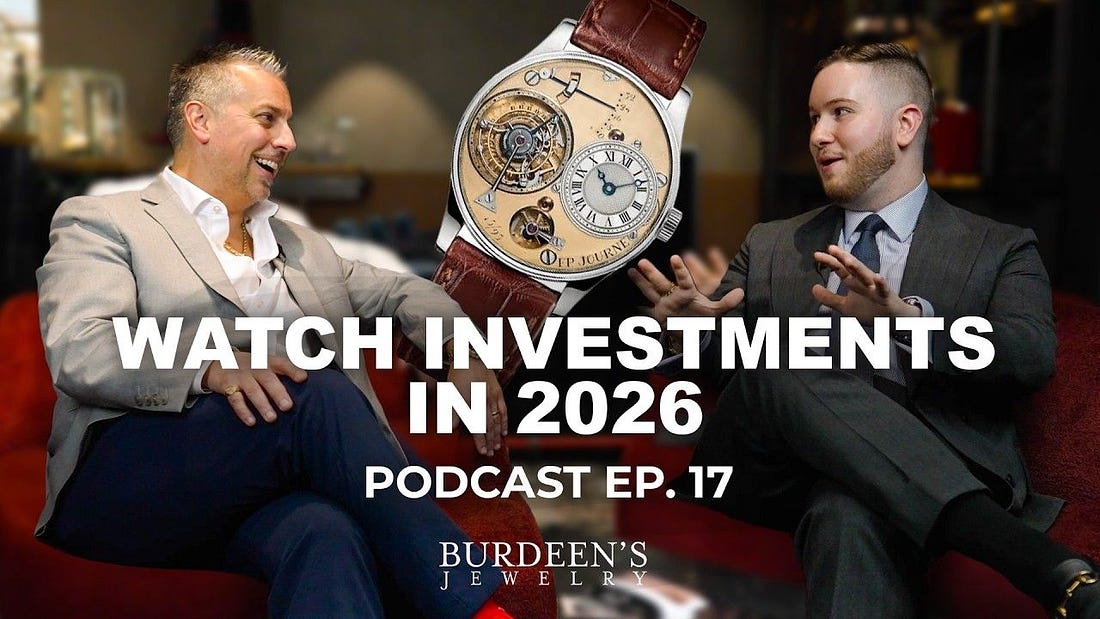
Burdeens Jewelry: Is This the Time to Buy Luxury Watches?
Burdeens Jewelry examines luxury watches through an investment-oriented lens, considering the relationship between ownership enjoyment and possible financial returns. The topic is particularly relevant alongside today’s unsuccessful Nautilus auction and the distinction between advertised prices and available bids. Viewers should weigh the retailer’s perspective against the costs and uncertainty of eventually selling, rather than treating appreciation as an automatic part of ownership.
Auction Results
Patek Philippe Nautilus Reaches $128,500—and Stays Unsold
The October 14 auction of the 2023 Patek Philippe Nautilus Travel Time Flyback Chronograph, reference 5990/1A-011 with blue dial, ended at $128,500 without meeting reserve. The result records the highest bid, not a completed sale.
Even one of contemporary collecting’s most recognizable watches still requires agreement on price. The reserve was not provided, so the size of the remaining gap is unknown. What is clear is that six-figure interest did not produce a transaction.
Auction Report
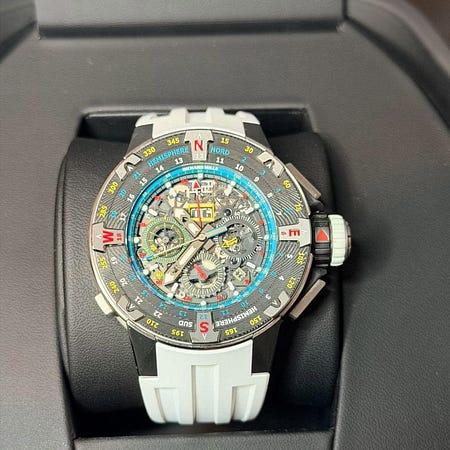
Richard Mille RM 60-01: Eighty Watches, Seven Seas, and One Price Test
Today’s auction features a 2022 Richard Mille RM 60-01 Automatic Winding Flyback Chronograph Les Voiles de Saint Barth, one of an edition limited to 80 pieces. The RM 60-01 family debuted in 2014 as Richard Mille’s first technical watch dedicated to navigation at sea; this particular limited edition followed in 2021, extending the brand’s relationship with the Caribbean regatta. Its 50mm titanium-and-Carbon-TPT construction gives it a distinctly different presence from the tonneau-shaped watches most closely associated with the name. The listing’s “two tone” description should not be confused with a conventional steel-and-gold combination.
The automatic RMAC2 delivers an unusually extensive collection of functions: a flyback chronograph, countdown timer, annual calendar, oversized date, month display, and UTC indication, with approximately 55 hours of power reserve. Its rotating bezel can help establish compass directions using local time and the sun’s position. That gives the elaborate exterior a functional rationale, even if most owners are more likely to use the watch near a marina restaurant than while navigating open water. The sailing connection is supported by the mechanism, not merely printed on the dial.
For price context, a dealer listing for the same 80-piece titanium-and-carbon edition quotes US$119,800. That is a useful retail asking-price comparison, not a verified completed sale or a guarantee of what today’s example will bring. Condition, service history, accessories, and the buyer’s total cost all affect the comparison. The available evidence supports using roughly US$120,000 as an advertised retail reference point; it does not support declaring a precise auction value. Scarcity limits the supply, but the market still has to supply an interested buyer.
The U.S.-located example includes its box, papers, product literature, and extra straps. The dial is described as excellent, with minor wear and light scratches recorded on the case, bezel, and the listing’s bracelet/strap category. Its pre-owned designation allows for possible previous servicing or polishing without establishing that either occurred, making the actual history relevant to the final assessment. Bidding is scheduled to close at 5:05 p.m. EDT tonight, October 15, 2026. After yesterday’s Nautilus failed to clear reserve, this Richard Mille offers another test of how closely a seller’s expectations align with the money bidders are prepared to commit.
Current bid: $750
Losing Time
Today’s Big Losers at Auction on Grailzee
Four watches, four failed sales, and four reminders that an asking price is not a market consensus. Buyers showed up with money. Sellers apparently had something more ambitious in mind.
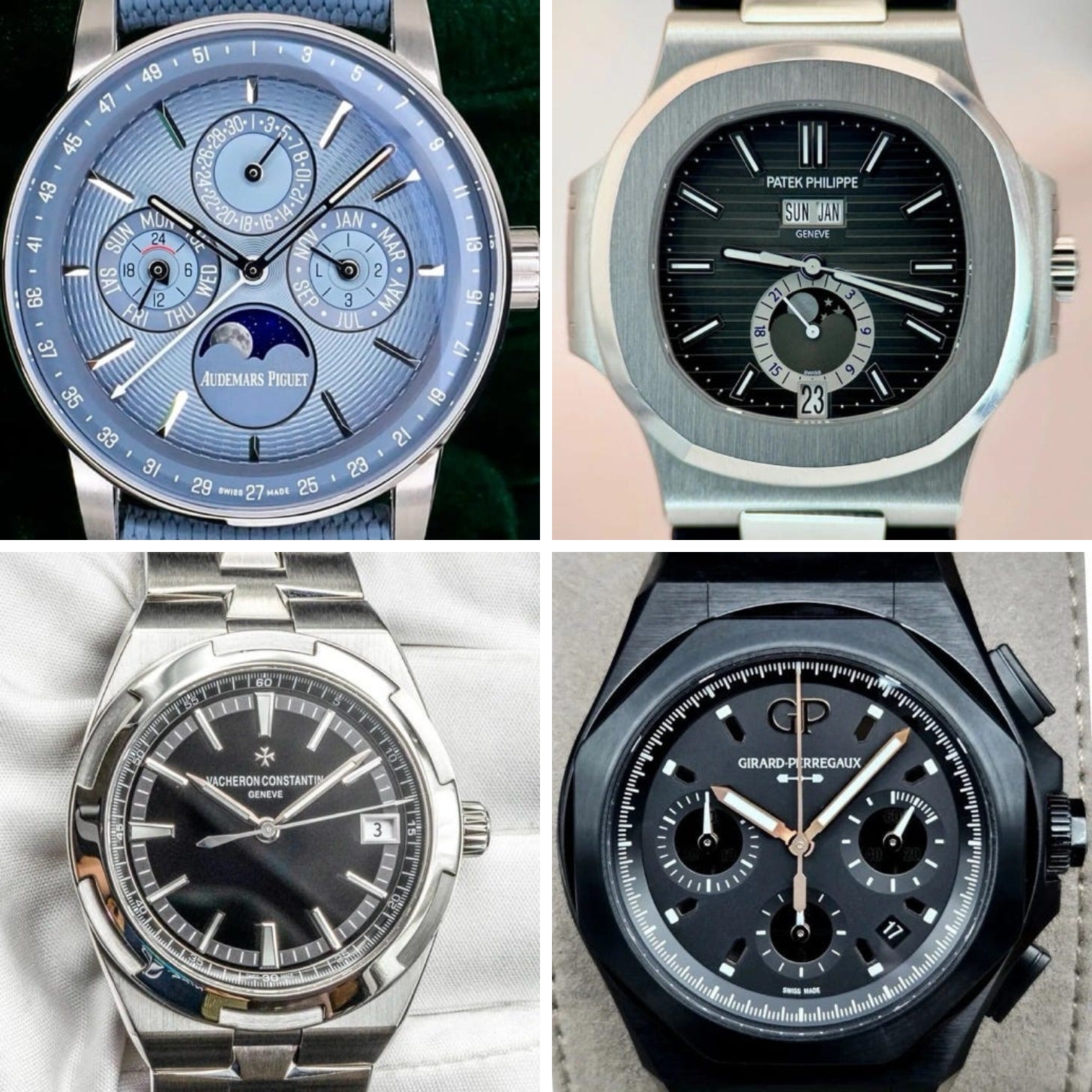
The Audemars Piguet Code 11.59 Perpetual Calendar(26494BC.OO.D350KB.01) produced the biggest disconnect. The 41mm white-gold watch with a blue dial and textile strap carried a $170,074 ask, while bidding reached $85,000—a shortfall of $85,074, or 50.0% below asking. The perpetual calendar may track the passage of time beautifully, but it cannot tell the seller when that other $85,000 is arriving.
The 2017 Patek Philippe Nautilus Annual Calendar (5726A-001), with its anthracite dial and leather strap, sought $88,749 and drew a $55,000 high bid. That left it $33,749 short, or 38.0% below asking. Apparently, even the Nautilus name cannot persuade bidders to treat every seller’s expectations as a contractual obligation.
The 2021 Vacheron Constantin Overseas (4500V/110A-B483), in steel with a black dial and matching bracelet, came closest to its target—which is a generous way to describe missing by roughly a third. Its $19,100 bid against a $28,950 ask left a $9,850 gap, or 34.0% below asking. The least unsuccessful sale of the group still ended without a sale. A modest distinction, but someone had to win it.
The 2025 Girard-Perregaux Laureato Absolute “Gold Fever” Limited Edition (81060-21-492-FH3A), with a black dial and rubber strap, attracted a $6,000 high bid against an $11,295 ask. That is $5,295 short, or 46.9% below asking. The edition was limited; so was the bidders’ enthusiasm for the price. “Gold Fever” proved considerably more contagious on the selling side.
The common thread is a substantial gap between seller expectations and what these particular bidders would commit. All four missed their asks by at least 34%, and two came in roughly halfway there. That suggests these listings need meaningful price adjustments or a different buying audience, rather than a slightly more persuasive description. These failed auctions do not establish definitive market values or prove a broader luxury-watch slump. They do show that prestigious names, complications and limited-edition branding were insufficient to close the gap. The sellers supplied the aspirations; the bidders supplied the budget.
Closing Time
The best part of collecting is still the opportunity to notice something new: a movement doing an unfamiliar job, a design that suddenly makes sense, or a conversation that changes what you appreciate. Today’s issue offers plenty of all three. Enjoy the watches, question the prices, and leave a little room for discovery.
Thanks for spending part of your day with BuyingTime Daily. We’ll see you tomorrow.