Issue #272 | Buying Time - October 20, 2026
Record crowds, independent vision, and a gold Daytona put the spotlight on what makes a watch worth owning.
BuyingTime in 30 Seconds
WatchTime New York’s record 3,000 attendees suggest enthusiasm for watches remains strong, even as collectors become more selective about price and purpose. Richard Mille and Rexhep Rexhepi offer different lessons in building a distinctive identity, while Hublot’s challenge raises questions about scarcity and demand. New releases range from Union Glashütte’s compact racing chronograph to ambitious creations from Moser and Armin Strom. Yesterday’s limited-edition De Bethune reached $30,500 without selling; tonight, a 2026 yellow-gold Rolex Daytona on Oysterflex takes its turn, with bidding scheduled to close at 8:40 p.m. EDT.
Time Graphing Today’s Watch Universe
A Full Room, a Selective Market, and the Watches That Earn Our Attention
Three thousand people walked into Gotham Hall for WatchTime New York. That is a useful starting point for understanding today’s watch world. Whatever the industry’s difficulties with pricing, distribution, or uneven demand, people still want to handle watches, meet their makers, and talk about what makes them interesting. A crowded show does not automatically translate into a crowded order book. It does, however, demonstrate that the audience is there. The next question is what earns that audience’s commitment.
Today’s stories suggest that a clear identity matters more than ever. Consider Richard Mille’s first 25 years. The brand built a recognizable world around unconventional materials, demanding engineering, and watches that could accompany extraordinary athletes into competition. Whether that world appeals to your taste or your budget, its proposition is unmistakable. Collectors understand what the brand stands for before they begin studying an individual reference.
Rexhep Rexhepi’s rise offers a quieter version of the same lesson. His reputation rests on an increasingly persuasive body of work, developed through apprenticeship, difficult early years, and an exacting approach to watchmaking. The connection to the maker is central. The forthcoming George Daniels centenary exhibition places that idea in a longer historical frame. A watch can carry the authority of an individual’s decisions, experiments, and standards long after its creation.
That makes the debate over Hublot and engineered scarcity particularly relevant. Distribution discipline can protect a brand from undermining itself. A more focused collection can make its strongest ideas easier to recognize. But limiting availability only becomes powerful when people already want what is being limited. A waiting list is an outcome of desire, and the product still has to give collectors a reason to care. Hublot’s original combination of gold and rubber supplied exactly that kind of distinctiveness. Recovering the force of an idea may matter as much as managing the number of watches.
Our auction desk supplies a practical reminder. Yesterday’s De Bethune DB24, limited to 50 pieces, attracted a $30,500 bid and remained unsold. One auction cannot define an entire market, but it can show where enthusiasm and a seller’s expectations failed to meet. Today’s yellow-gold Daytona arrives with broader recognition and a different collector audience. Even so, condition, configuration, completeness, and the final price remain essential. Recognition gets a watch noticed; the individual example must justify the purchase.
There is also a more personal measure of value running through this issue. In the Moonshine Gold Speedmaster ownership story, the “best” watch emerges through attachment and use. The Omega-versus-Oris comparison asks a related question at different price points: which refinements matter enough to you to justify paying more? Those are productive questions because they require an answer from the wearer.
Today’s new watches provide plenty of ways to answer. Union Glashütte emphasizes proportion and automotive character. Moser turns a sports collaboration into a mechanical spectacle. Armin Strom makes the interaction of two regulating systems the centerpiece. None needs to satisfy every collector. Each needs to make its case clearly to the right one.
The strongest signal from today’s issue is that curiosity remains abundant while commitment is becoming more discriminating. That can be healthy for collecting. Look closely, ask better questions, and give yourself permission to value the watch you want to wear. The most meaningful collection is built through those decisions, one watch at a time.
-Michael Wolf
News

WatchTime New York Draws a Record 3,000 Attendees
WatchTime New York welcomed a record 3,000 attendees to Gotham Hall from October 16–18, bringing 48 exhibiting brands together for the show’s 11th edition. Nine newcomers, including Jacob & Co., Kollokium, and Gérald Genta, joined established participants in a lineup spanning accessible discoveries, independent watchmaking, and major complications. The opening-night cocktail event sold out with 625 guests.
Beyond the attendance figures, the weekend highlighted the appeal of direct access to the people behind the watches. Collectors could examine releases, compare impressions, and hear discussions about the motivations that shape a collection. Organizers plan to evolve the event as demand grows, with this year’s turnout offering an encouraging picture of the American enthusiast community.
Features

How Richard Mille Became a Horological Household Name in Just 25 Years
Richard Mille established a distinctive position by treating the luxury watch as a platform for advanced engineering. Unconventional materials, lightweight construction, and ambitious movements helped create a visual and technical identity that collectors could recognize immediately. Specialist partners supported that development, while associations with athletes such as Rafael Nadal and Felipe Massa placed the watches in environments that reinforced the brand’s performance credentials.
The resulting business combines limited production, extraordinary prices, and a coherent design philosophy. With family leadership now helping guide the company, the continuing challenge is to preserve the founder’s appetite for experimentation while sustaining an established global name. This retrospective examines how those elements came together—and why the brand’s influence extends beyond its distinctive cases.
The Best Watch I’ve Ever Owned: Omega’s Apollo 11 Anniversary Speedmaster in Moonshine Gold
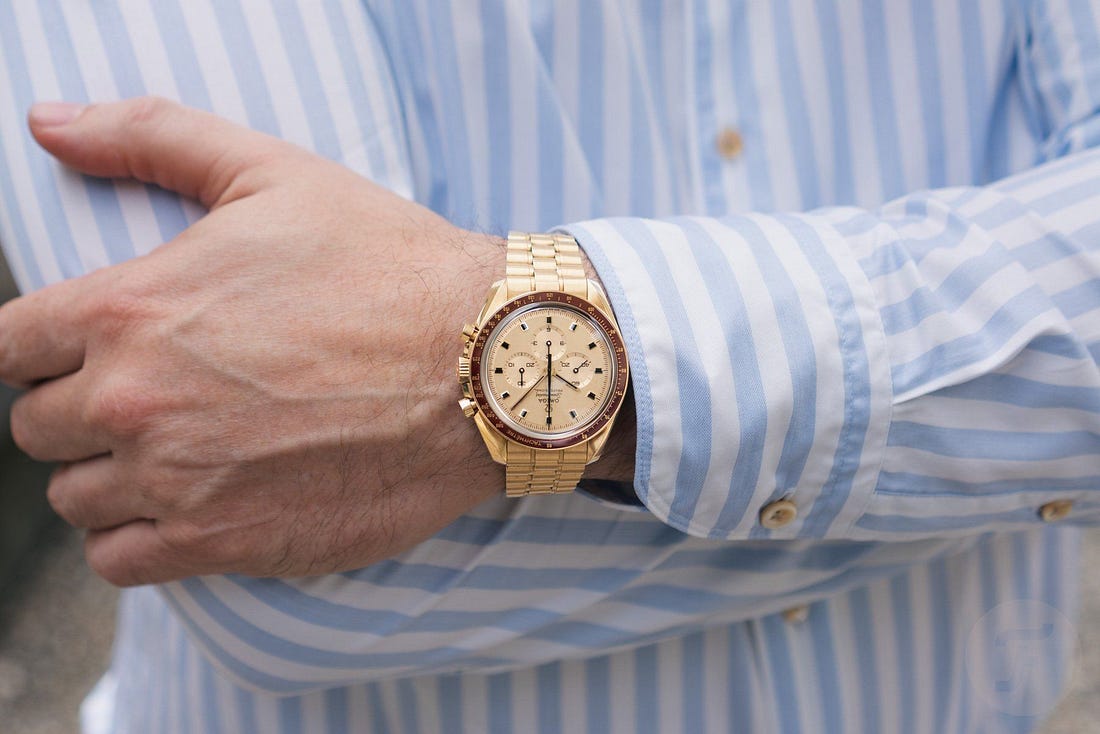
What makes a watch the best in a collection: its movement, its finishing, its history, or the frequency with which its owner reaches for it? This personal account considers those competing measures before settling on the Omega Speedmaster Professional Apollo 11 50th Anniversary in Moonshine Gold. The attraction combines the familiar Speedmaster form with precious-metal warmth, commemorative details, and the caliber 3861.
The lunar-meteorite detail adds another connection to the anniversary being celebrated, but the story’s strongest argument is about ownership. A watch becomes a signature piece through repeated wear and accumulated meaning. For this collector, the gold Speedmaster brings together technical interest and emotional satisfaction in a way that more abstract rankings cannot capture.

How Rexhep Rexhepi Became Watchmaking’s Independent Icon
Rexhep Rexhepi’s career traces a demanding path from Kosovo to Swiss watchmaking, beginning with an apprenticeship at Patek Philippe and continuing through experience at BNB Concept and F.P. Journe. Those formative years gave him both technical grounding and exposure to different approaches to making complicated watches. Establishing his own identity proved harder: the early AK-01 did not immediately find the audience his work would later attract.
Persistence, subsequent models, and growing support from collectors and retailers changed that trajectory. The Chronomètre Contemporain’s 2018 GPHG recognition marked a decisive breakthrough, helping establish Rexhepi among the leading names in independent watchmaking. His story illustrates how a reputation can develop through sustained work well before commercial success makes the journey appear inevitable.
Small Complications, Real Usefulness: The Power Reserve Indicator
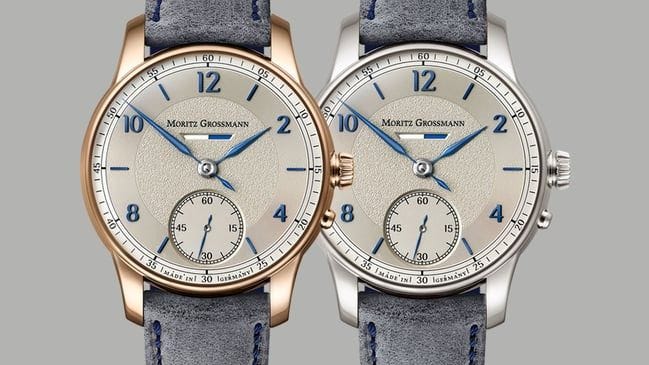
A power reserve indicator answers one of mechanical watchmaking’s most practical questions: how much running time remains? By translating the state of the mainspring into a visible display, it helps owners decide when to wind a watch and reduces the chance of finding it stopped. Its usefulness extends to automatic watches that spend time off the wrist or receive insufficient movement during wear.
The complication also gives designers considerable freedom. A traditional hand and scale, a linear display, or a discreet indication on the movement side can each communicate the same information with a different aesthetic effect. This overview follows the feature from its historical applications to contemporary examples, showing how a modest complication can become a defining part of a watch’s personality.

The Triumph of the Maltese Cross
The Maltese cross is familiar as a watchmaking symbol, but its mechanical significance deserves equal attention. In stop-work arrangements, the mechanism can restrict the usable winding range of a mainspring, helping a watch operate within a more favorable portion of its torque curve. Its geometry also illustrates a broader principle: continuous rotation can be converted into controlled, intermittent movement.
That principle has applications beyond the barrel, including calendar mechanisms and jumping displays. The article explores how watchmakers have adapted these ideas to achieve precise advances and secure pauses between them. It is a reminder that seemingly simple shapes can solve difficult mechanical problems—and that understanding a small component can change how we appreciate an entire movement.
New Watches
Converted prices below are approximate U.S. dollar equivalents of the supplied foreign-currency prices, using October 19 reference rates. They are not confirmed U.S. retail prices; local taxes and import costs may differ.
Union Glashütte Belisar Chronograph Speedster 2026: A More Compact Racing Chronograph
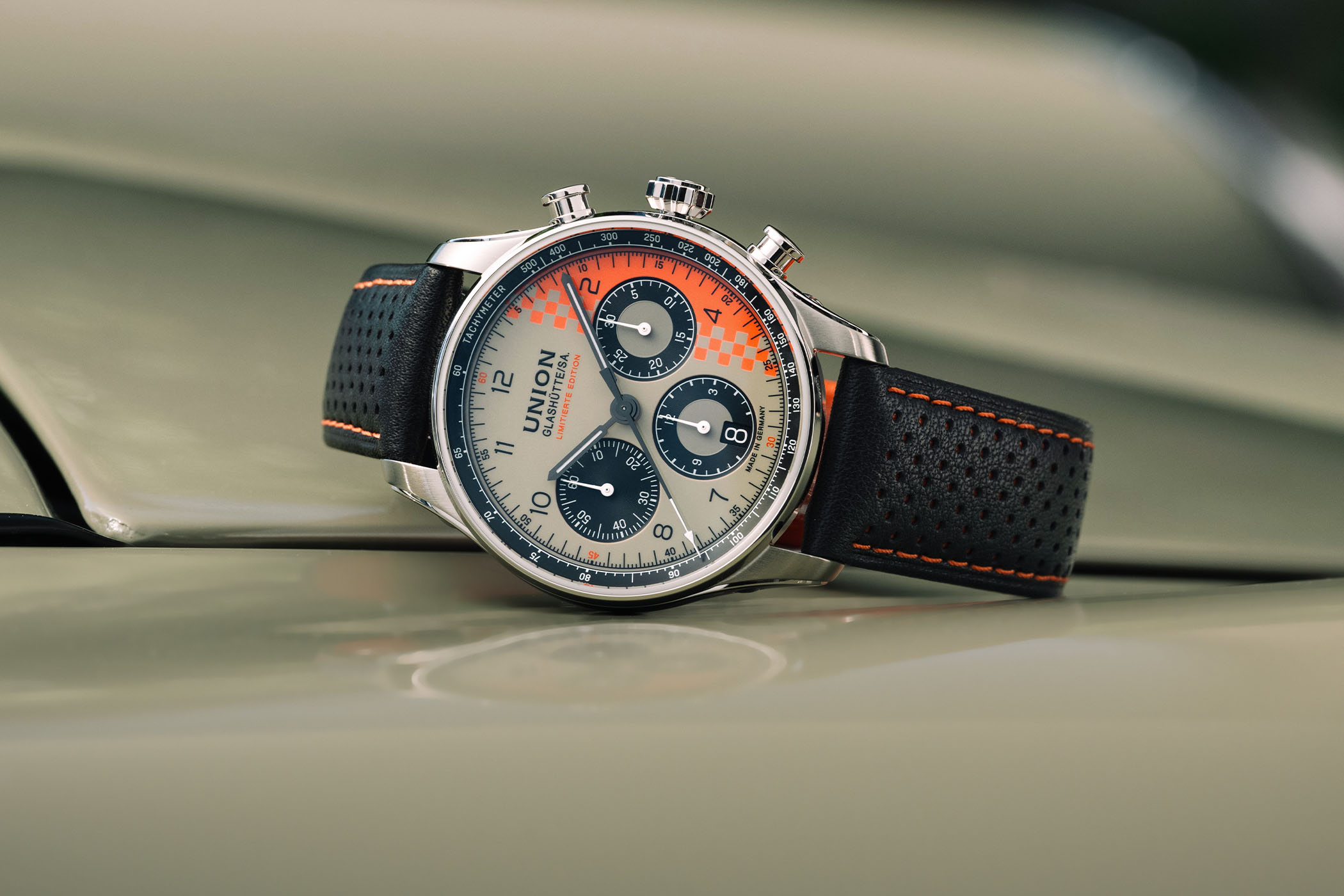
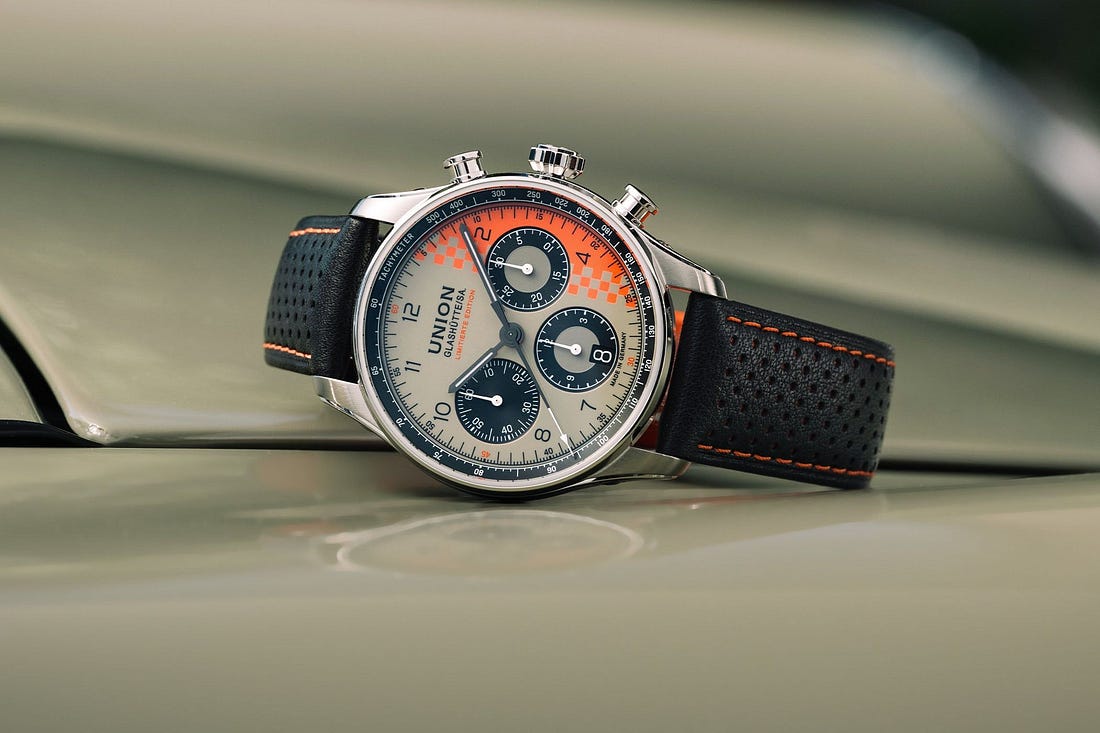
Union Glashütte brings its Speedster formula into a 40 mm stainless-steel case, pairing more compact proportions with a glossy beige dial inspired by a classic Porsche 911. Orange chequered accents, matte black subdials, and mushroom-shaped pushers give the watch an unmistakably automotive character without sacrificing everyday legibility. The automatic UNG-27.S1 movement uses a silicon balance spring and provides a 65-hour power reserve, while water resistance is rated at 100 meters. Limited to 288 numbered pieces, the watch offers a perforated black calfskin strap with orange stitching or a steel bracelet, with quick-change fittings adding practical versatility. Price: approximately US$3,873, converted from €3,450 including VAT.
Version Watches V0201-TH: A Colorful Window Into the Movement
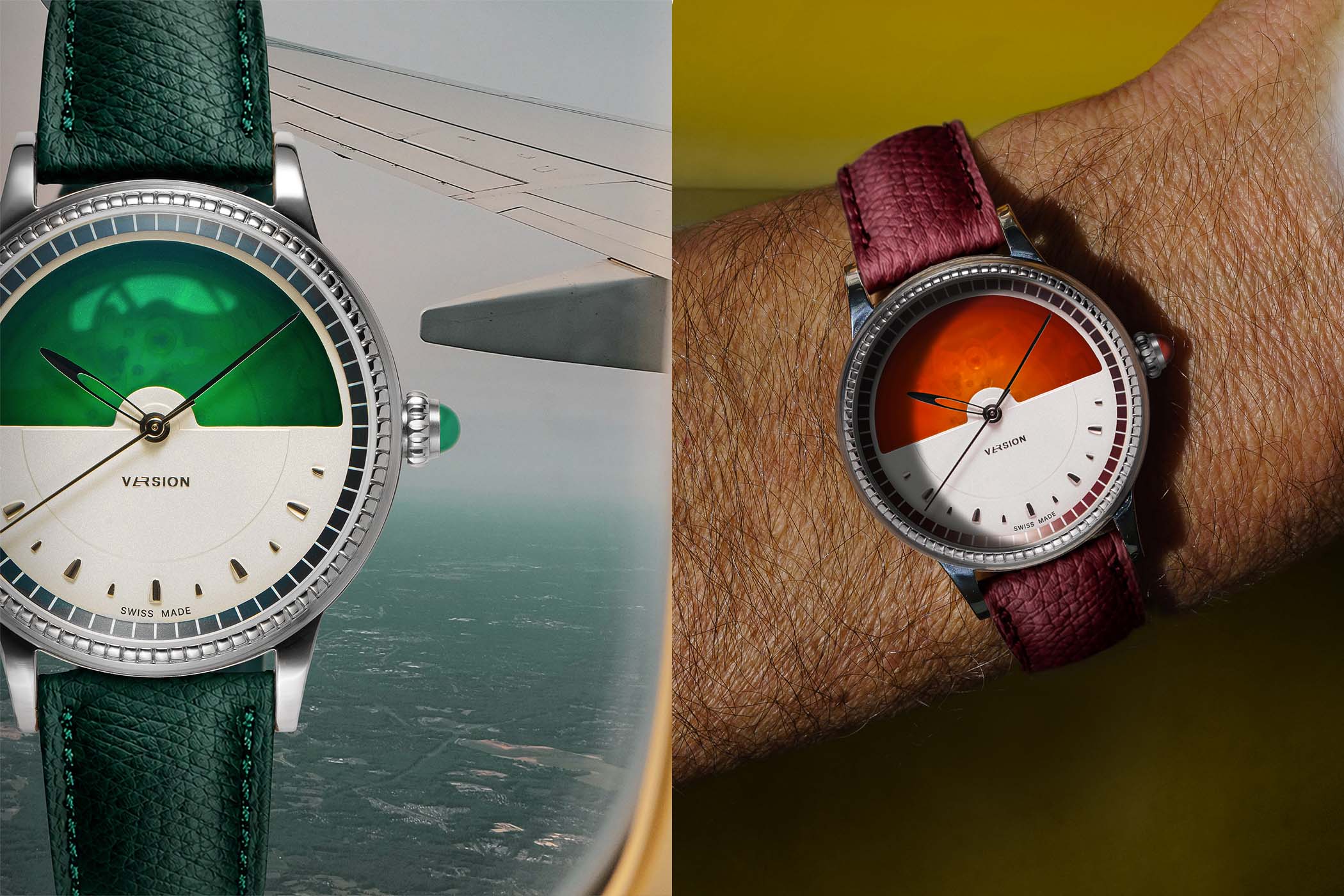
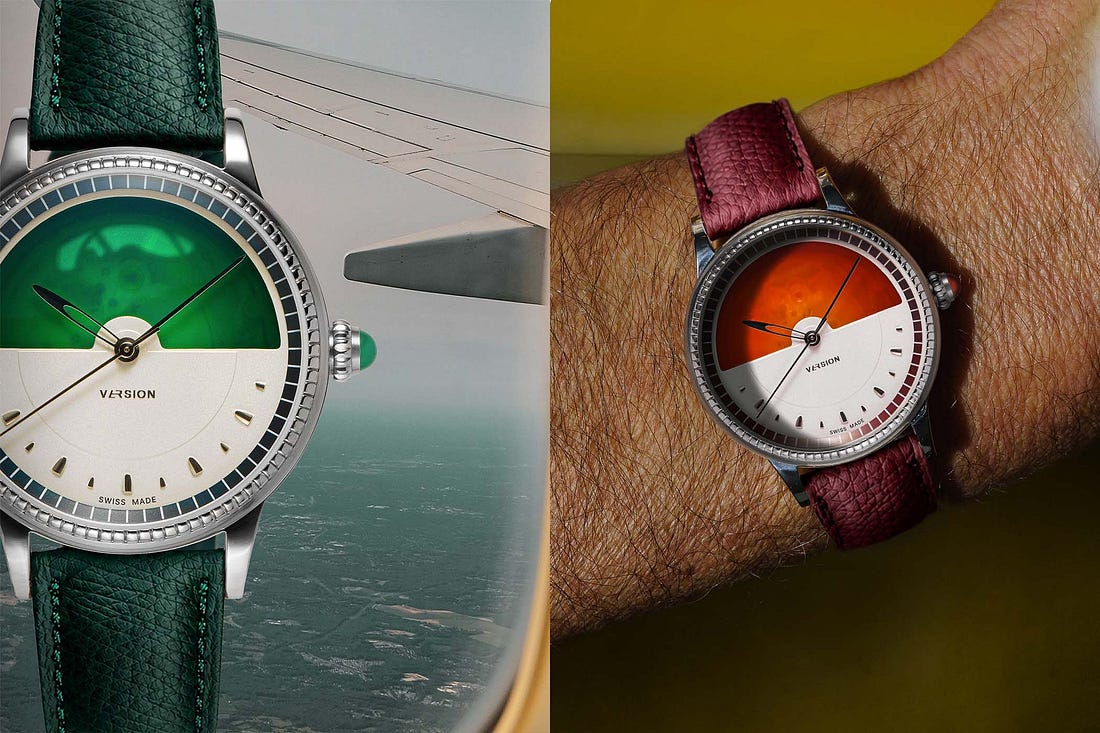
Version Watches introduces a semi-openworked design that combines a satin-white lower dial with a partially transparent upper section in azure blue, emerald green, or blood orange. The 38 mm steel case features a fluted bezel and a cabochon-set crown, giving the watch a dressier framework for its exposed mechanical detail. A Sellita SW200-1 automatic movement supplies approximately 39–41 hours of power reserve, and buyers can choose a calfskin strap or optional mesh bracelet. Production is limited to 300 watches, divided evenly among the three colors, with delivery expected six months after the Kickstarter campaign concludes. Kickstarter prices: approximately US$954 for the first 100 watches, US$1,341 for the next 100, and US$1,678 for the final 100.
H. Moser & Cie. Pioneer Cylindrical Tourbillon Skeleton Aventurine Saquon Barkley Edition
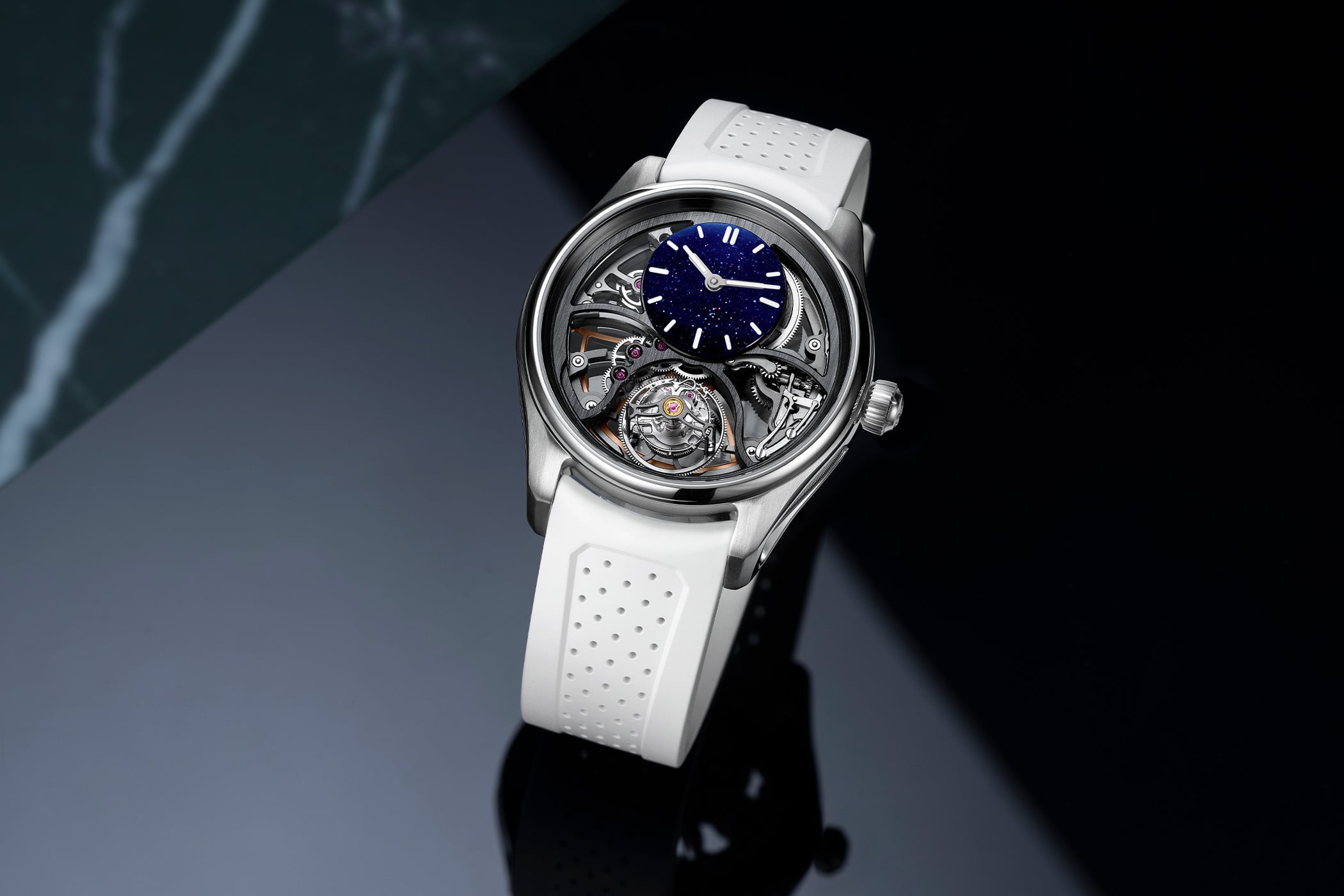
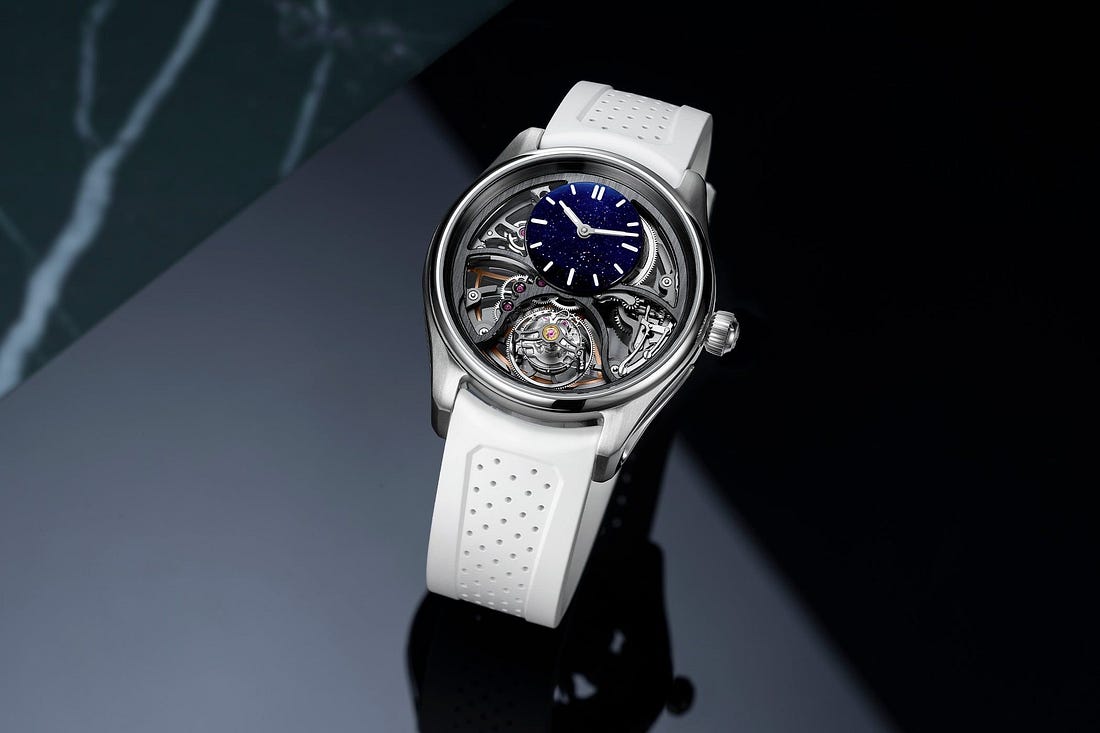
Moser’s Saquon Barkley edition combines an open movement with a sparkling aventurine time display, creating a sports collaboration with substantial mechanical ambition. The 42.8 mm stainless-steel case houses the automatic HMC 811, whose cylindrical hairspring and flying tourbillon form the visual centerpiece beneath the hours-and-minutes subdial. Green accents at 2 and 6 reference Barkley’s jersey number, while a white rubber strap gives the otherwise intricate watch a crisp, athletic appearance. The movement offers a minimum 74-hour power reserve, the case carries a 120-meter water-resistance rating, and production is limited to 97 pieces. Price: US$99,600.
Armin Strom Mirrored Force Resonance Zeitgeist 1665 3N: Resonance in a Warmer Palette
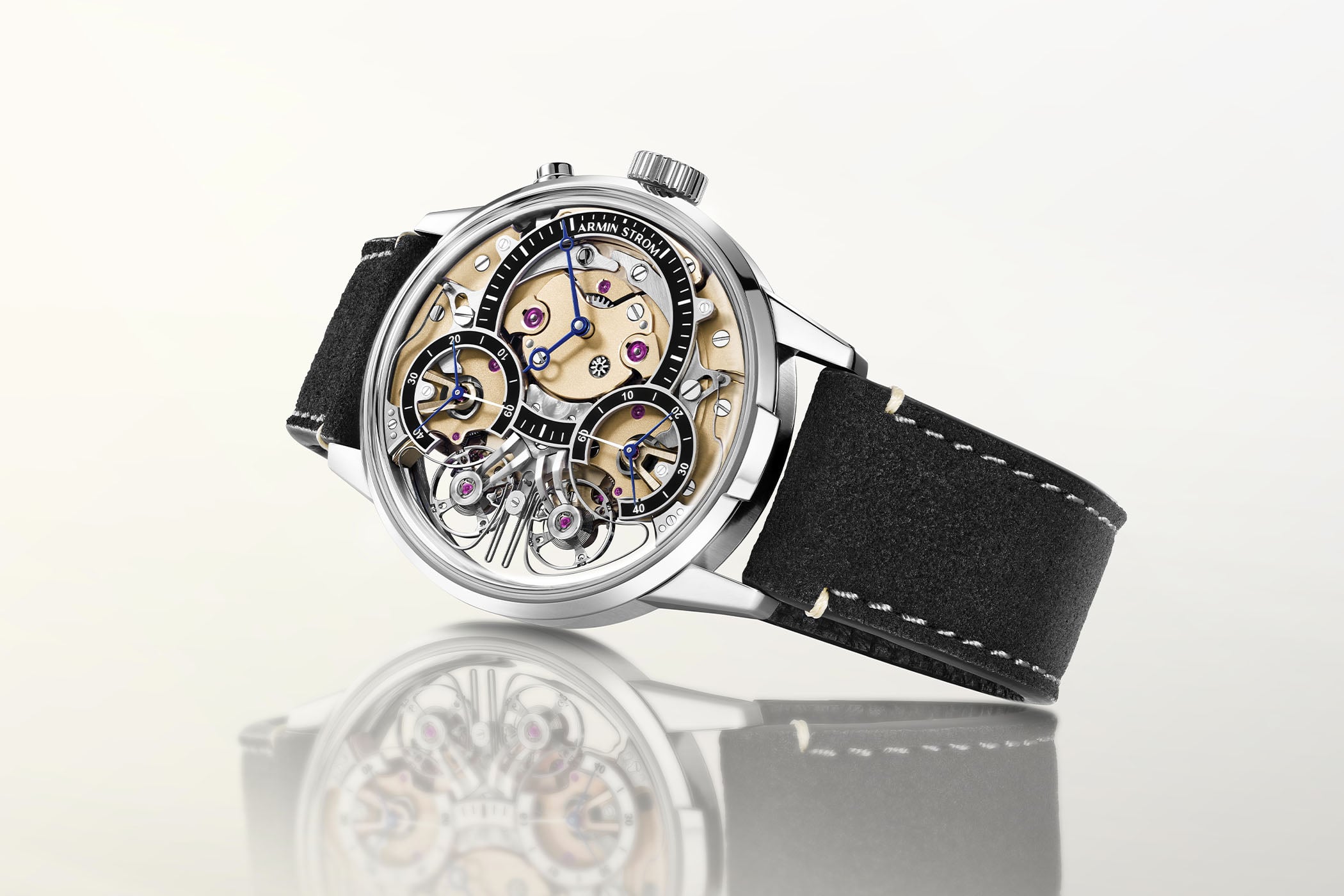
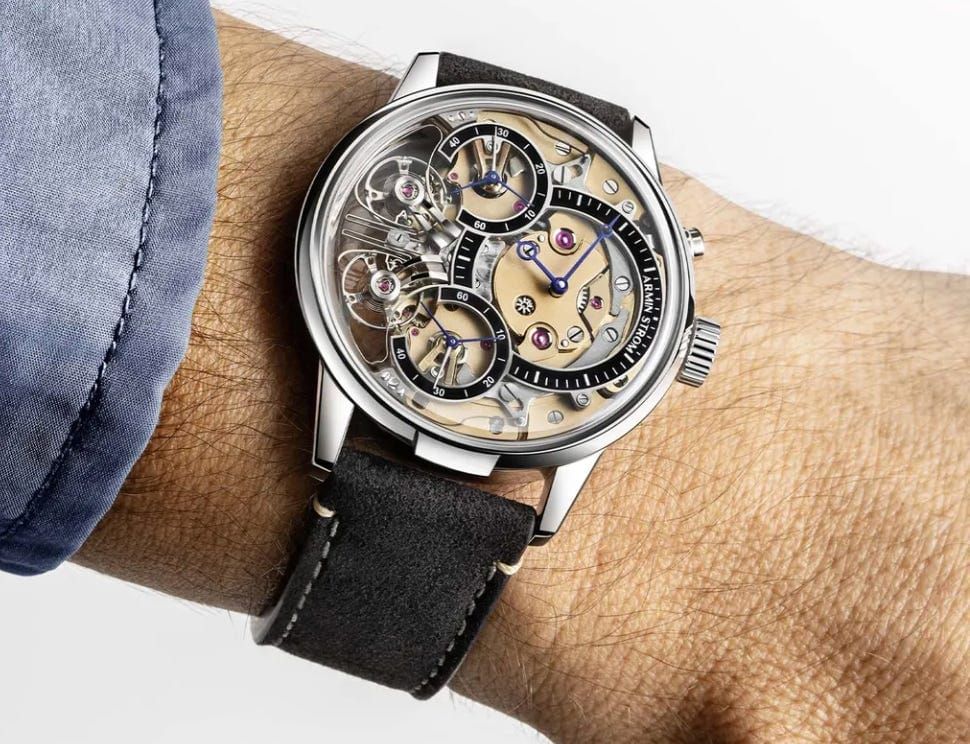
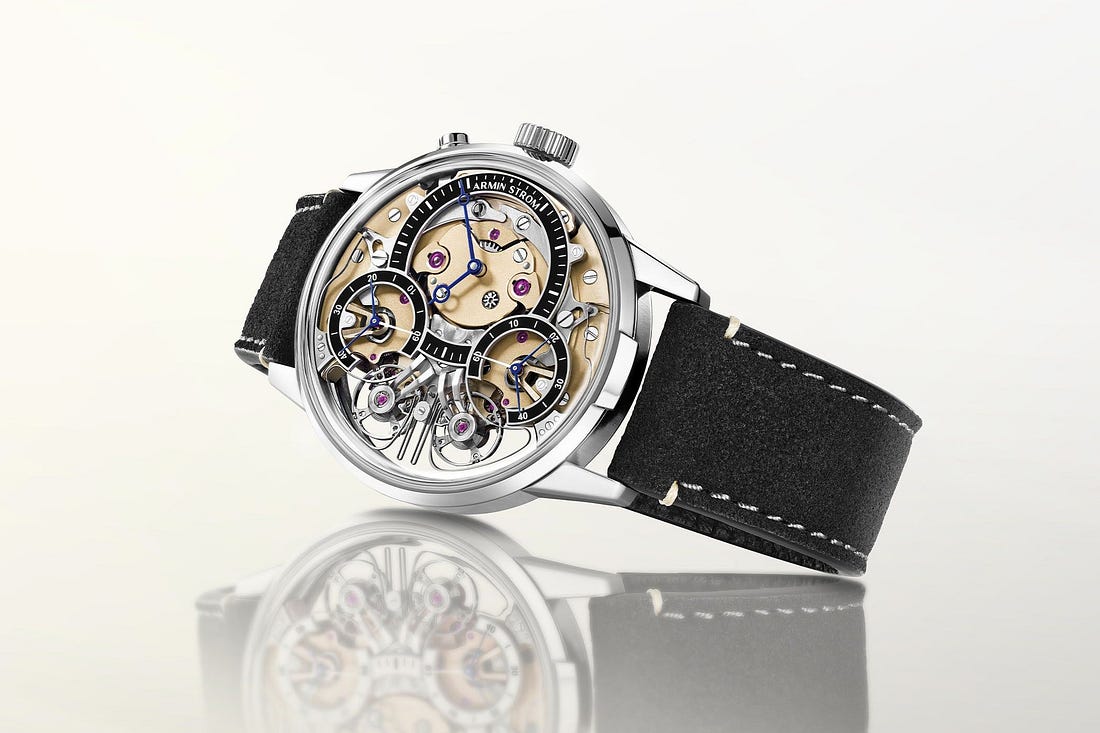
Armin Strom gives its exposed resonance architecture a warmer appearance with yellow 3N gold-colored mainplate and bridges inside a 43 mm stainless-steel case. The design leaves the twin regulating systems clearly visible, making their synchronized behavior the central attraction. A patented resonance clutch connects the systems, while a flyback mechanism allows the seconds hands to be reset together. The watch pairs an 80-hour power reserve with a dark-grey Alcantara strap, and its 25-piece production run underscores the specialized nature of this technically ambitious release. Price: approximately US$99,390, converted from CHF82,000.

Ralph Lauren Vintage ’67: Understated Design in 18-Karat Gold
Ralph Lauren’s Vintage ’67 combines a 40 mm 18-karat yellow-gold case with a restrained profile measuring 9.1 mm thick. Oversized Arabic numerals, a railway minute track, and distinctive spade- and sword-shaped hands give the dial an instrument-inspired character softened by dress-watch proportions. Inside, the La Joux-Perret caliber 7380 provides a substantial 90-hour power reserve, adding mechanical interest to the design. A black alligator strap, gold-plated buckle, and 50-meter water-resistance rating complete a watch positioned for buyers who appreciate vintage styling and precious-metal construction. Price: approximately US$25,995, converted from £19,500.
Comparisons
Omega Seamaster vs. Oris Aquis: What Does the Extra Money Buy?
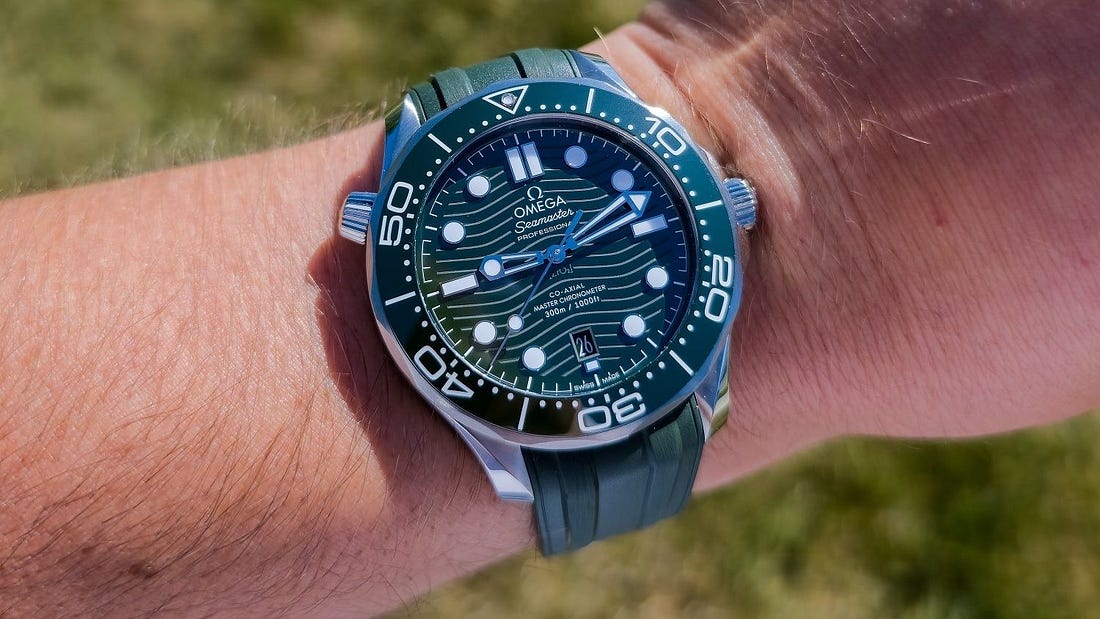
The Omega Seamaster Diver 300M and Oris Aquis New York Harbor Limited Edition II approach the modern dive watch from different positions. Omega emphasizes its green ceramic dial, detailed finishing, and Co-Axial Master Chronometer movement. Oris counters with the visual individuality of mother-of-pearl, a comfortable rubber strap, and a lower price.
Both offer 300 meters of water resistance, so the decision reaches beyond the basic diving specification. Using the review’s quoted prices of roughly $5,600 for the Omega and $3,000 for the Oris, the comparison asks whether the Seamaster’s technical refinements justify the premium. The Omega emerges as the more sophisticated all-around luxury proposition, while the Aquis makes a persuasive case for collectors who place design character and value at the center of the purchase.
Reviews
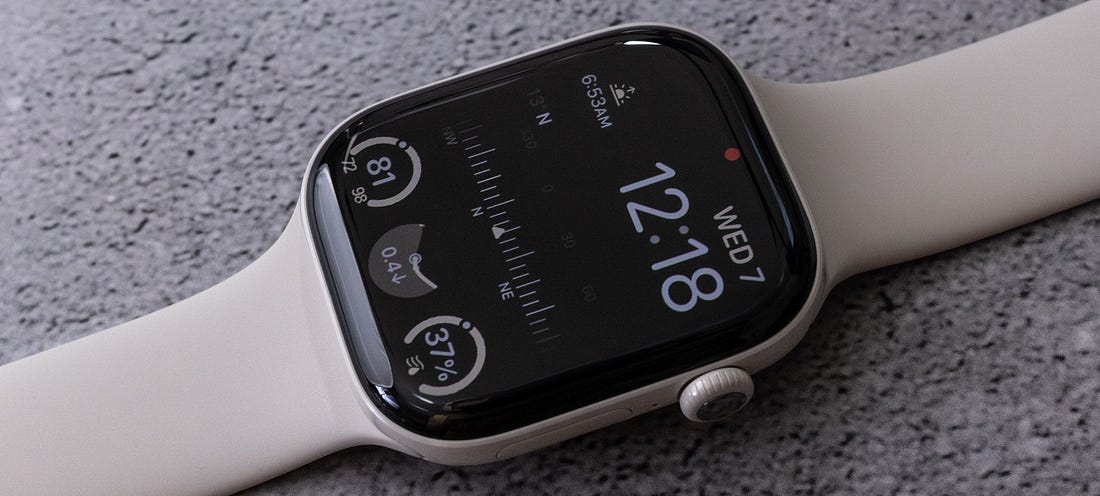
Apple Watch Series 12 Ceramic: The Case for a Premium Everyday Smartwatch
The supplied review presents the Apple Watch Series 12 Ceramic as an argument for investing in the physical quality of an everyday wearable. Its focus is on ceramic construction, sapphire protection, and the combination of health tracking and connected functionality in a premium package. At a quoted $949 for the 46 mm model, the watch is evaluated as a considered purchase rather than a disposable accessory.
A central theme is the relationship between purchase price and ongoing ownership. The reviewer favors an approach that delivers core functionality without adding another subscription requirement, arguing that the experience matters as much as the specification sheet. For watch enthusiasts who also wear a smartwatch, the discussion raises a familiar question: how much should better materials and a more satisfying daily experience be worth?
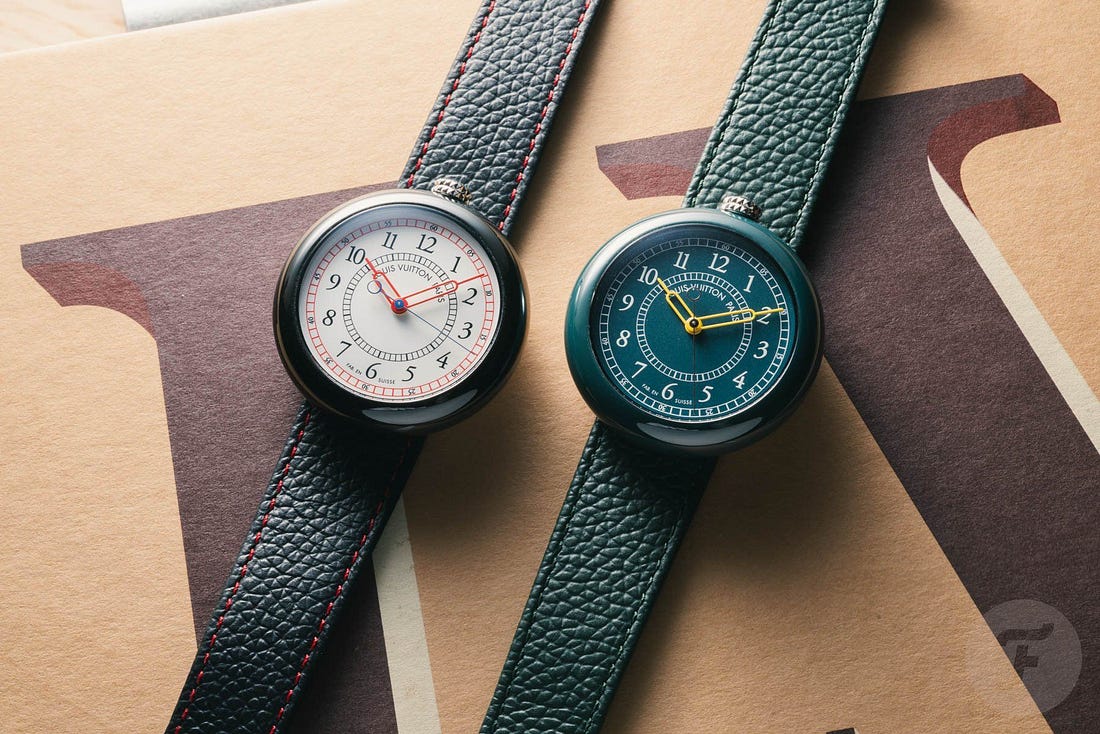
Louis Vuitton Monterey in Green and Black Ceramic: A Watch as a Sculptural Object
Louis Vuitton’s Monterey returns in glossy black and green ceramic, maintaining the rounded, lugless form that gives the design its distinctive presence. The 37 mm case measures 11 mm thick, while the strap-through-case arrangement preserves a central element of the original concept. Contrasting hands and double railway tracks give both versions a graphic, instrument-like quality.
The automatic LFT MA01.02 movement provides a 45-hour power reserve, and water resistance is rated at 30 meters. The review considers how the ceramic surface, unusual proportions, and strap arrangement translate to the wrist, where the watch’s sculptural personality becomes especially apparent. At a quoted U.S. price of $22,300, the Monterey is aimed at collectors for whom originality of form is a major part of the appeal.
Editorial
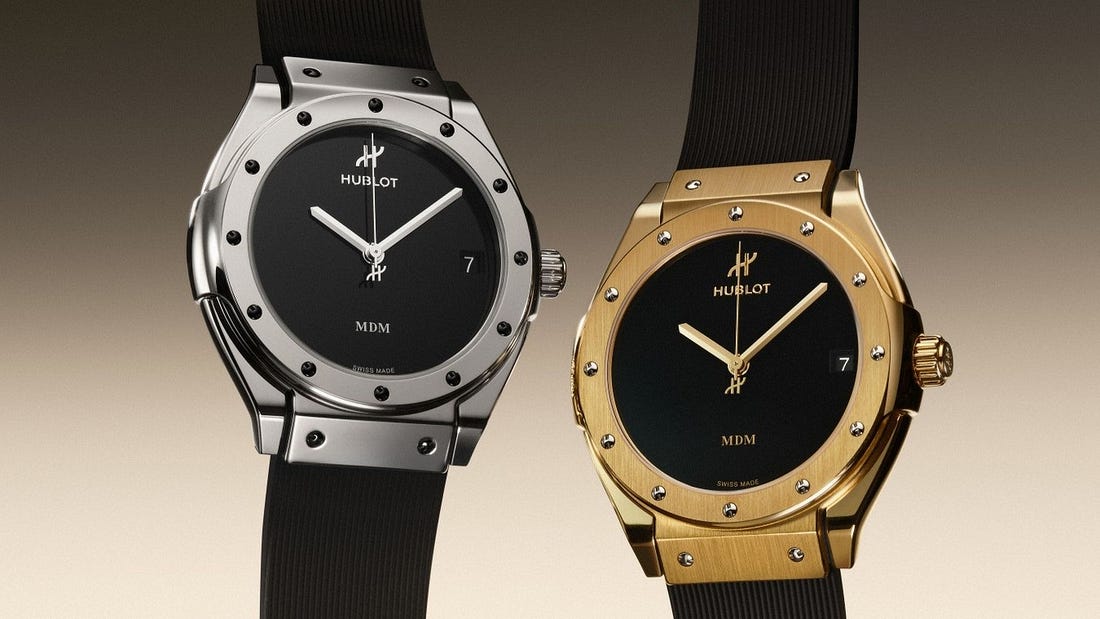
Can François-Henry Bennahmias Help Hublot Make Scarcity Meaningful?
The editorial argues that Hublot’s challenge goes beyond reducing production. It cites a decline in estimated revenue from CHF744 million in 2022 to CHF460 million, alongside a fall in annual output from 54,000 to 32,000 watches over three years. Against that backdrop, François-Henry Bennahmias’s consulting role invites comparisons with the desirability and distribution discipline associated with his tenure at Audemars Piguet.
The proposed route forward centers on tighter retail control, fewer releases, and a more focused core collection. Those measures could help strengthen the relationship between supply and demand, but their success depends on the watches inspiring sufficient interest. The larger question is whether Hublot can renew the clarity of its original proposition while giving collectors compelling reasons to choose its current products.
Events
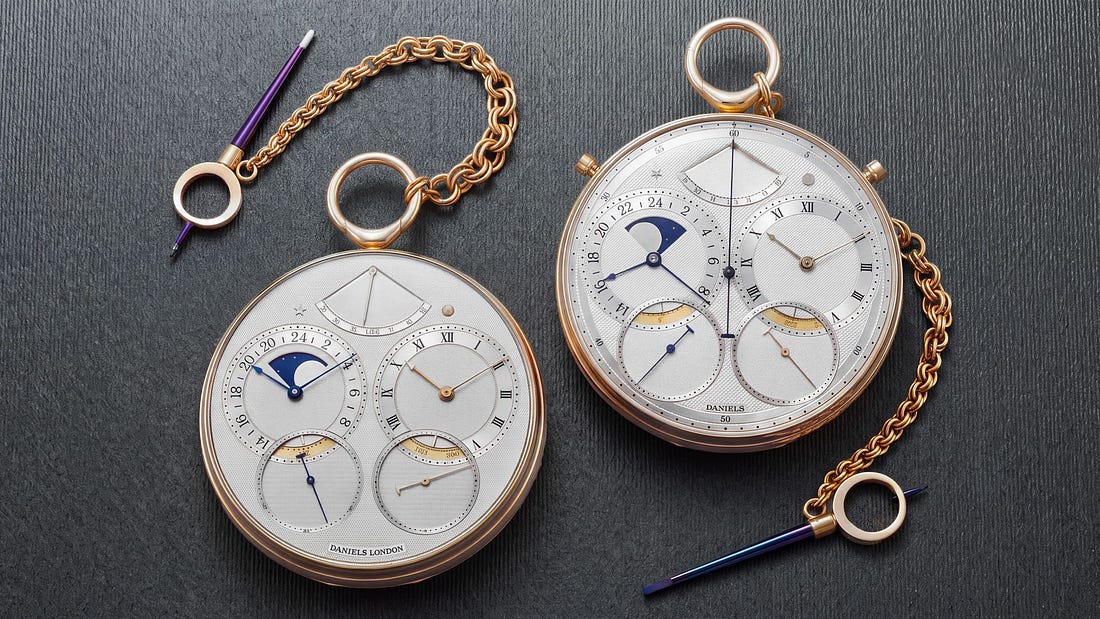
George Daniels Masterpieces Reunited for a Centenary Exhibition
“George Daniels 100: The Genesis of Artisanal Watchmaking” will bring Space Traveller I and Space Traveller II together in an exhibition celebrating one of modern horology’s most influential figures. Scheduled for IAMWATCH in Singapore from November 12–15, the presentation will include 22 Daniels creations and examine the breadth of his work as a maker and inventor.
The exhibition places his celebrated co-axial escapement within the larger story of a craftsman whose influence helped shape contemporary independent watchmaking. A Phillips-produced documentary is scheduled to premiere on November 14, adding another perspective on his legacy. The exhibition is then expected to travel to Phillips in London in early 2027, extending the opportunity to see these exceptional watches beyond the Singapore gathering.
Videos
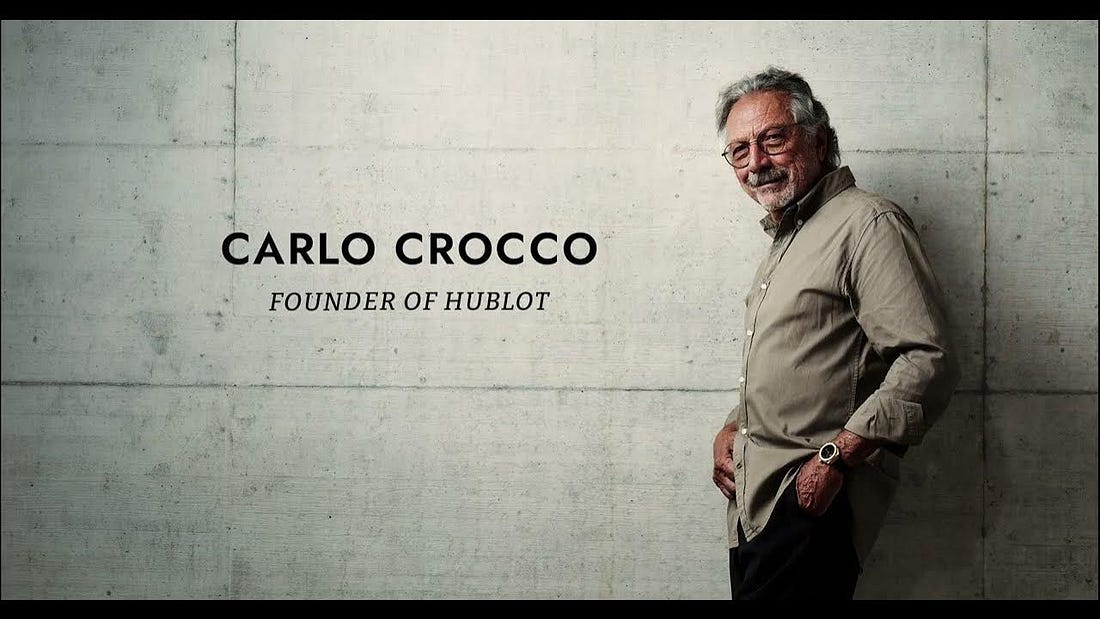
Carlo Crocco on the Original Hublot and the Classic Fusion Tributo — Swisswatches
Hublot founder Carlo Crocco discusses the ideas behind the original watch and their connection to the Classic Fusion Tributo. The conversation places the new model within the brand’s design history, exploring the materials and aesthetic choices that established its identity.
It is a useful companion to today’s Hublot editorial. Hearing the founder discuss the original proposition offers context for the broader question of how a mature brand can preserve the force of its defining idea while continuing to develop.

“Rolex’s Bet Backfired and I Can’t Be Happier” — Luxury Secret
This commentary video takes a critical view of Rolex’s market positioning and the relationship between brand strategy and changing consumer demand. Its provocative title frames an opinion-led discussion about what happens when buyers’ expectations and a luxury company’s decisions move in different directions.
For collectors following pricing and availability, the subject connects with a recurring theme in today’s issue: the distinction between a brand’s ability to command attention and an individual watch’s ability to justify its asking price. Watch it as a market perspective to consider alongside the details of any actual purchase.
Podcasts
From the Archives: James Lamdin on the Vintage Market and What Authentication Really Means — The Business of Watches
In this November 24, 2025 episode, Analog founder and RedBar co-founder James Lamdin joins Hodinkee’s Andy Hoffman for a discussion of the vintage and pre-owned watch business. Recorded before an audience in New York, the conversation explores the market’s development, the meaning of authentication, and the importance of remaining curious as a collector.
It makes a relevant companion to today’s auction report and broader discussion of value. A recognizable name and an attractive price are only part of a purchase; understanding the watch, the seller, and what an assurance of authenticity actually covers is equally important.
Auction Report
Gold, Rubber, and Racing Heritage: A 2026 Rolex Daytona Takes the Spotlight
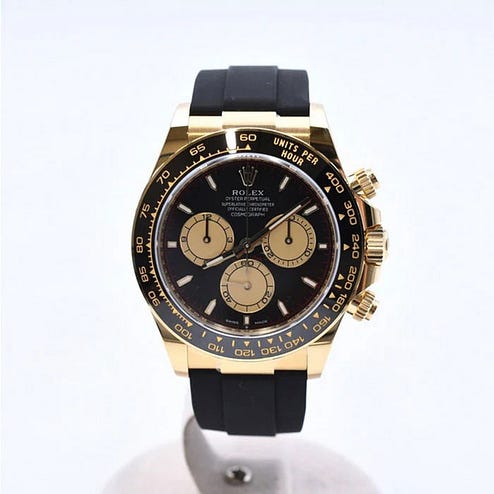
Yesterday’s October 19 auction of the De Bethune DB24 Vetrois Power Reserve, reference DB24TIS1Z3, reached $30,500 but did not result in a sale. The titanium watch, with its silvered dial and production limited to 50 pieces, now gives way to a very different proposition: a 2026 Rolex Cosmograph Daytona, reference 126518LN-0004, pairing an intense black and champagne-color dial with a black ceramic bezel and Oysterflex bracelet. This 40 mm reference uses 18-karat yellow gold; the supplied listing’s “Two Tone” material field does not match the manufacturer’s specification.
The Daytona’s history begins in 1963, when Rolex introduced the chronograph for motor-racing use. Its subsequent evolution brought successive movement generations and materials, with Oysterflex joining the gold Daytona range in 2017. The current generation arrived in 2023 with caliber 4131 and revised design details. Today’s example combines that automatic chronograph movement and its approximately 72-hour power reserve with the contrasting black-and-gold appearance that gives this configuration much of its appeal.
Rolex currently displays a U.S. retail price of $42,700 for this configuration. Advertised secondary-market comparisons show a wider spread: a June 2026 listing for a complete 2024 example asked $49,550, while a marketplace page for the exact reference recently showed availability starting at $57,500. These provide an approximate $50,000–$58,000 advertised comparison band, rather than evidence of completed sales or a prediction for tonight’s result. The auction watch’s condition, warranty documentation, Oysterflex fit, and any buyer’s fees will determine how the final acquisition cost compares.
The U.S.-located watch is offered with its box, papers, product literature, and hangtags. Its dial is described as excellent, with minor signs of wear reported on the case, bezel, and bracelet; the general pre-owned designation does not establish whether this particular watch has been serviced or polished. Because Oysterflex sizing uses bracelet sections rather than conventional removable metal links, bidders should verify the fitted sizes instead of relying on the listing’s generic “all links pictured” note. The auction is scheduled to end at 8:40 p.m. EDT tonight, Tuesday, October 20, 2026.
Current bid: $40,500
Losing Time
Today’s Big Losers at Auction on Grailzee
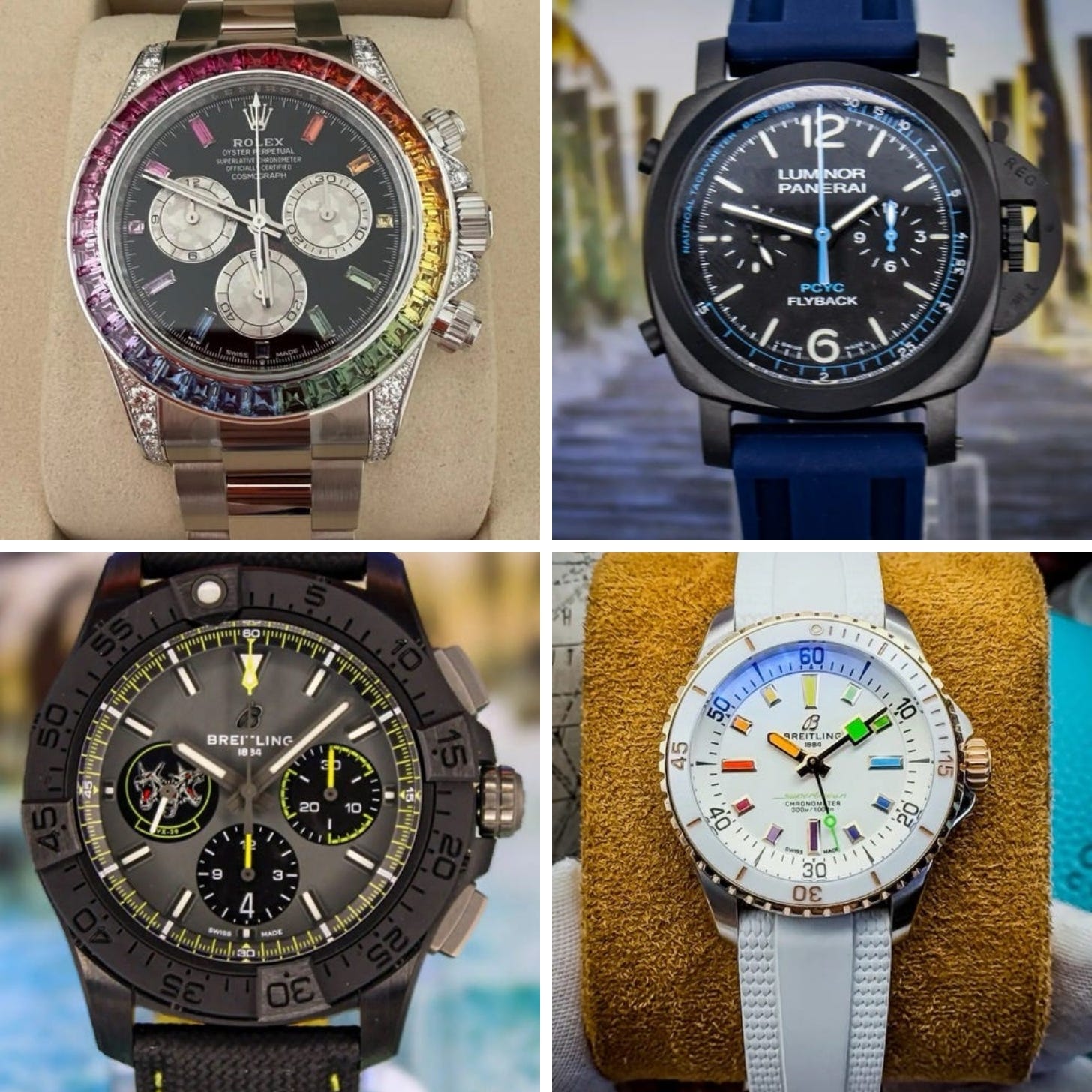
Four watches, four failed sales, and four reminders that an asking price is an aspiration—not a binding agreement with reality. Each listing finished more than 50% below its ask, with the biggest dollar disappointment arriving, appropriately enough, wrapped in a rainbow.
The 2026 Rolex Cosmograph Daytona “Rainbow” in white gold (126599RBOW) asked for $420,000 and received a top bid of $85,000. That’s a $335,000 shortfall, or 79.8% below asking. Bidders offered just over one-fifth of the seller’s target. Apparently, the pot of gold at the end of this rainbow was expected to come entirely from the buyer.
The 2019 Panerai Luminor “Classic Yachts Challenge” Flyback Limited Edition (PAM00788) sought $12,000 but topped out at $4,501—$7,499 short, or 62.5% below asking. The 44mm chronograph brought the yacht-club credentials; bidders brought a considerably smaller boat. The limited-edition designation did not produce unlimited enthusiasm.
The 2026 Breitling Avenger B01 Chronograph Night Mission Bloodhounds (SB01472A1B1X1) carried a $5,995 ask and attracted a $2,700 bid. That left a $3,295 gap, or 55.0% below asking. For all the tactical branding, this mission never got close to its financial objective. Even a current-year watch couldn’t persuade this bidding audience to meet the seller halfway.
The 2024 Breitling Superocean “Rainbow” 36mm (U17377211A1S1)asked $8,995 and reached $4,050, finishing $4,945 short, or 55.0% below asking. A second rainbow, another missing pot of gold. Despite very different styling, the two Breitlings attracted almost exactly the same verdict: bids worth roughly 45% of the asking price.
The common thread is a substantial disconnect between seller expectations and what these bidders were willing to commit. The Rolex produced the largest gap in both dollars and percentage terms, while the Panerai and Breitlings show that the disconnect wasn’t confined to a six-figure trophy watch. These failed auctions don’t establish definitive market values—participation, condition and sale terms can all affect bidding—but they do show that these asking prices found little support in these particular rooms. Sellers can hold out for a different audience. This one had already voted with its wallet.
Closing Time
Thank you for spending part of your day with BuyingTime. From a crowded Gotham Hall to the quiet decisions made at a watchmaker’s bench, today’s stories show how many different paths can lead to a lasting connection with a watch. Keep looking closely, keep asking questions, and make time to enjoy what is already on your wrist.
We’ll be back tomorrow with more watches, more perspective, and the result of tonight’s Daytona auction.