Issue #275 | Buying Time - October 23, 2026
From a multimillion-dollar Patek collection to affordable watches with attitude, today’s issue explores what gives a watch an identity worth owning.
Buying Time in 30 Seconds
Provenance takes center stage as a single-owner collection of modern Patek Philippe watches heads toward auction, while a visit to A. Lange & Söhne’s archives shows how lasting identities are built at the workbench. Otsuka Lotec founder Jiro Katayama offers a different route to distinction, turning an industrial designer’s curiosity into one of Japan’s most compelling independent brands. New releases stretch from Orient’s accessible Kamasu GMT and Svea Atelier’s angular Monolith to Laurent Ferrier’s twilight-toned annual calendar and Atelier de Chronométrie’s bespoke chronograph. Bonhams is rebuilding its American watch business, Fossil is reconsidering its place on the wrist, and our listening and viewing selections examine family brands, celebrity collectors and even Bond villains. Yesterday’s Blancpain Bathyscaphe reached $7,100 without selling. Tonight, an unworn Hermès H08 Chronograph takes its turn, with bidding scheduled to close at 8:10 p.m. EDT.
Time Graphing Today’s Watch Universe
The Watches That Know Who They Are
A watch can have excellent specifications and still leave you wondering why it exists. Another can be mechanically straightforward, modestly priced and immediately recognizable from across a room. Today’s issue is full of watches that make us consider the difference—and collectors who are deciding what that difference is worth.
The common thread is identity. Where does it come from? How much can a company inherit, how much must it create, and what happens when the market puts a price on it?
Start at the expensive end, with the single-owner collection of modern Patek Philippe watches heading to Sotheby’s. Complications, precious metals and exceptional gem-setting account for part of the attraction. The ownership history and Tiffany connections add another dimension. These watches arrive with a relationship attached: between collector and retailer, retailer and manufacturer, and individual purchases assembled over time.
That coherence matters. There is a difference between accumulating desirable references and building a collection that reveals a point of view. Money can accomplish the first relatively quickly. The second usually requires patience, access and decisions that make sense together. The auction will test how much buyers value that complete story when the watches become available to new owners.
At A. Lange & Söhne’s archives, identity emerges through a different kind of continuity. The modern company’s 1994 debut established a remarkably clear vocabulary: distinctive proportions, unconventional dial arrangements, ambitious mechanics and finishing that rewards close inspection. Looking back at those early watches is a reminder that a convincing revival needs more than a familiar name. It needs objects strong enough to give that name a future.
Then consider Jiro Katayama and Otsuka Lotec. Here, the starting point was a lathe, an industrial designer’s eye and the desire to make something tangible. The watches resemble gauges and mechanical instruments because those are part of the visual world that interests their creator. Their personality follows from that interest.
That is one reason small independent makers can feel so immediate. You can often trace an unusual decision back to a particular person. The challenge comes when demand grows. Increasing production without diluting the qualities that created the demand is a much more complicated exercise than making a waiting list longer.
Fortunately, personality does not require an extraordinary budget. Today’s affordable-watch roundup shows how much room remains for distinctive typography, unusual materials and a playful dial below $600. At that level, design has to work particularly hard. There is little opportunity to hide behind a prestigious movement or an elaborate finishing story.
The Svea Atelier Monolith makes a related argument. Its compact, five-sided case and integrated bracelet establish the proposition before the movement enters the conversation. Quartz helps keep the watch thin and convenient. For someone attracted to its geometry, that is a sensible design decision.
Heritage brands face their own version of this question. Breitling’s permanent hand-wound Navitimers reconnect the collection with a tactile part of chronograph ownership. Winding a watch each morning changes the relationship, even if it does not improve the efficiency of getting out the door. The appeal lies partly in choosing that small ritual.
Meanwhile, Fossil’s Signature collection raises a larger business question: what should a familiar watch company stand for now? A recognizable name gets attention, but a new collection must give customers a reason to reconsider it. Design, execution, distribution and price all have to support the same answer.
That work continues after a watch leaves the shop. Bonhams’ American watch department is trying to bring a clearer identity to the selling experience itself, combining an established auction name with a more energetic approach to clients and consignments. Its success will depend on whether that ambition produces worthwhile watches, credible estimates and completed transactions.
Which brings us to tonight’s Hermès H08 Chronograph. It belongs comfortably in this conversation: a recognizable case, distinctive numerals, lightweight materials and a chronograph control integrated into the crown. The design has its own reasons for looking the way it does. At auction, however, those qualities still have to meet a buyer’s judgment about price.
Yesterday’s unsold Blancpain provides the necessary discipline. A high bid is evidence of interest, but a sale requires agreement. A retail price supplies context, but it cannot make that agreement happen. The delta between the two, in this case, was wide.
The most satisfying collecting begins when we can explain why a particular watch holds our attention. It might be the person behind it, the history it carries, the ingenuity of its mechanism or simply the way it looks when we glance down at our wrist. Today’s strongest stories give us specific reasons to care. The next decision is whether those reasons remain persuasive at the price being asked.
-Michael Wolf
News
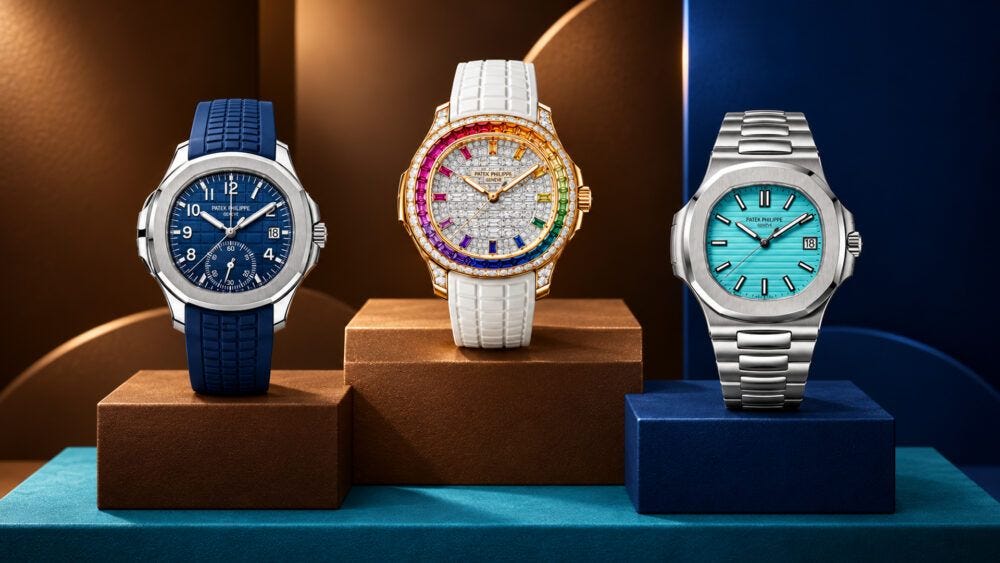
How to Build a $10 Million Patek Philippe Collection
An upcoming Sotheby’s New York sale brings together thirty modern Patek Philippe watches from a single owner, with important Tiffany & Co. connections running through the collection. The appeal extends beyond individual trophy references: the group offers a record of sustained collecting, access and relationships.
Among the highlights are a gem-set minute repeater perpetual calendar estimated at $2.5 million–$5 million, an Aquanaut Luce Rainbow Minute Repeater carrying a $1.4 million–$2.8 million estimate, and a minute repeater with an instantaneous perpetual calendar estimated at $900,000–$1.8 million. Tiffany-signed sports watches add another layer of interest.
The collection could bring roughly $9 million if expectations are met, although estimates remain a starting point rather than a forecast of completed sales. For collectors, the broader question is how much documented provenance and a coherent ownership history add to watches that already command attention on their own.
Features
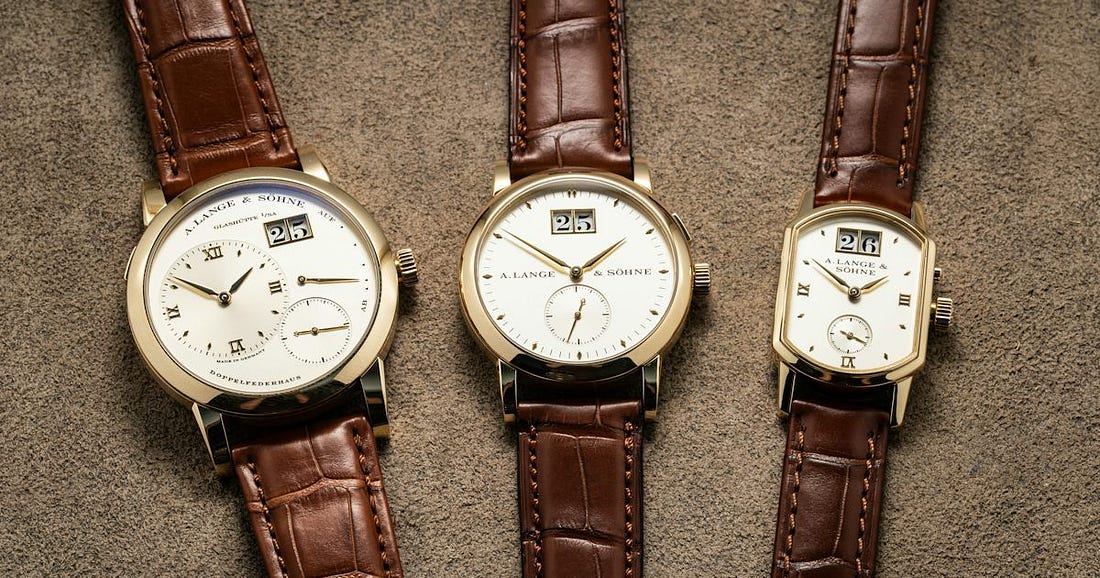
Nine Extraordinary Watches Inside A. Lange & Söhne’s Archives
A visit to A. Lange & Söhne’s Glashütte headquarters opens a window onto the watches that shaped its modern revival. The inaugural 1994 collection—the Lange 1, Arkade, Saxonia and Tourbillon Pour le Mérite—established a design and engineering identity that remains central to the company today.
Seeing these pieces together makes the breadth of that opening statement easier to appreciate. The asymmetry of the Lange 1, the compact elegance of the Arkade and the technical ambition of the Pour le Mérite were distinct answers to the same challenge: making a revived manufacture immediately relevant.
Later Handwerkskunst creations extend that story through elaborate decorative techniques and exceptionally labor-intensive execution. The archives reveal a company developing its identity through specific watches, rather than simply repeating its founding narrative.
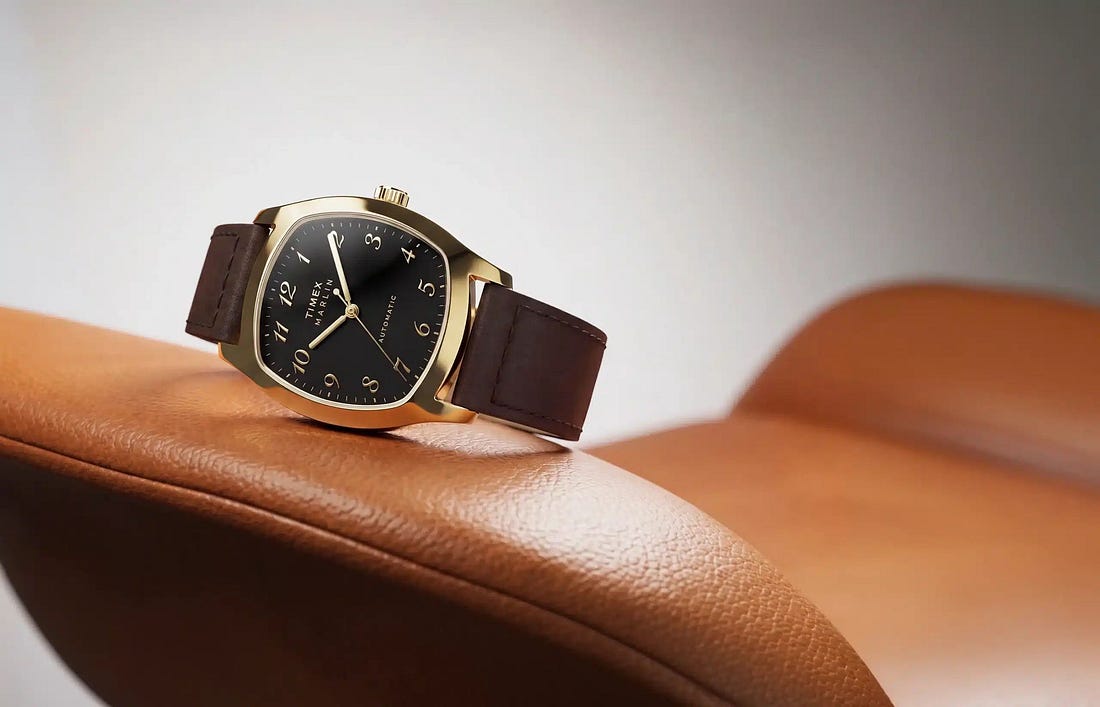
October’s Affordable Watches Put Personality First
This month’s affordable-watch selection stays below $600 and concentrates on models with confirmed American pricing. The result is a compact group that includes a panda-inspired chronograph, a Timex with Breguet-style numerals, a titanium digital watch and a fabric-strap Casio Duro.
The interesting shift is toward visual character. Familiar movement technology and practical specifications remain important, but typography, color and materials increasingly determine which watch earns a second look in a crowded market.
Availability deserves attention, too. Two selections are not expected to ship until November, meaning their specifications and photographs still await the test of everyday ownership. The roundup distinguishes an appealing announcement from a watch buyers can already evaluate on the wrist.
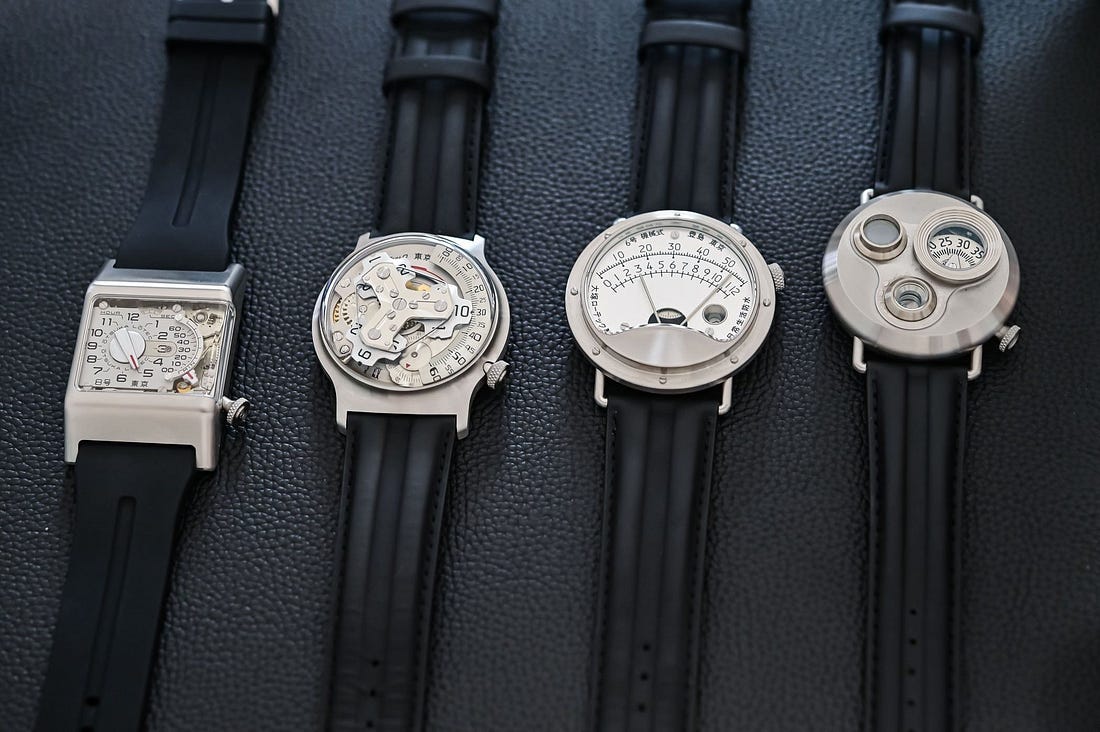
Jiro Katayama on Building Otsuka Lotec One Idea at a Time
Jiro Katayama’s path into watchmaking began with the purchase of a small lathe in 2008. Coming from automotive and product design, he taught himself through research, experimentation and the practical challenges of making parts fit together.
That background remains visible in Otsuka Lotec’s watches. Industrial gauges, vintage cameras and mechanical instruments inform displays that feel closer to compact machines than conventional luxury accessories. The unusual appearance grows from Katayama’s interests and methods.
Partnerships with Hajime Asaoka and Precision Watch Tokyo have helped the business develop, but design, engineering and prototyping remain closely connected to Katayama’s own workspace. With demand exceeding supply, the company’s next challenge is increasing access while preserving the individual character that made collectors notice it.

Bonhams USA’s Watch Department Starts a New Chapter
Bonhams is rebuilding its American watch business under Reg Brack, combining the auction house’s established reach with a more entrepreneurial approach. A new West 57th Street flagship and changes in ownership provide the setting for an effort to attract consignments and broaden the collector base.
The department reports a 90 percent sell-through rate in recent online auctions and a record result for a Breguet reference 3130BA. Its developing pipeline includes established names such as Patek Philippe and Audemars Piguet alongside independent watchmakers.
A December 8 live auction will mark its return to New York’s major watch-auction calendar, supported by a timed online sale. Cross-category collaboration and stronger social engagement are part of the strategy, with younger collectors and women among the audiences Bonhams hopes to reach more effectively.
New Watches
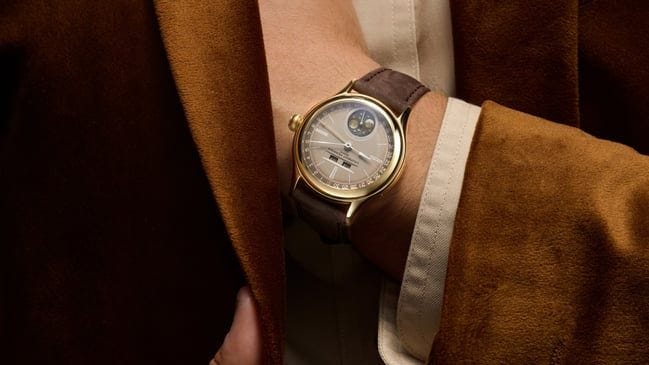
Laurent Ferrier Classic Moon Dusk: Twilight in Yellow Gold
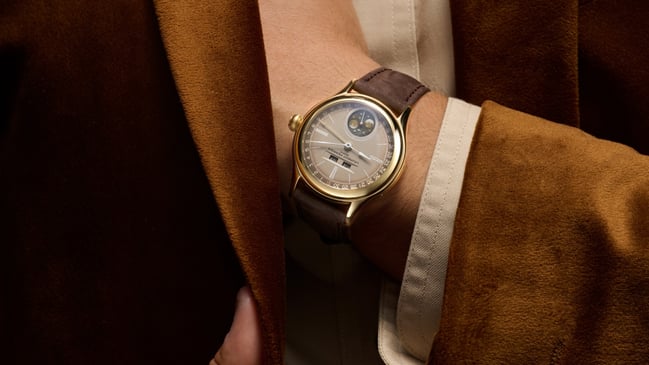
Laurent Ferrier’s Classic Moon Dusk Série Atelier pairs an 18-karat yellow-gold case with a gradient dial moving from light taupe into deep brown. The 40 mm case retains the rounded, pebble-like profile that has become one of the maker’s most recognizable signatures.
The hand-wound LF126.02 combines an annual calendar and moon-phase display with an 80-hour power reserve. Roman numerals, slender hands and the dark moon-phase presentation give the complications a formal setting without overwhelming the dial.
Production is limited to twenty pieces, each supplied on a mocha nubuck strap with a yellow-gold pin buckle. The announced price is CHF93,000 excluding VAT. Price: approximately US$113,130 before tax.
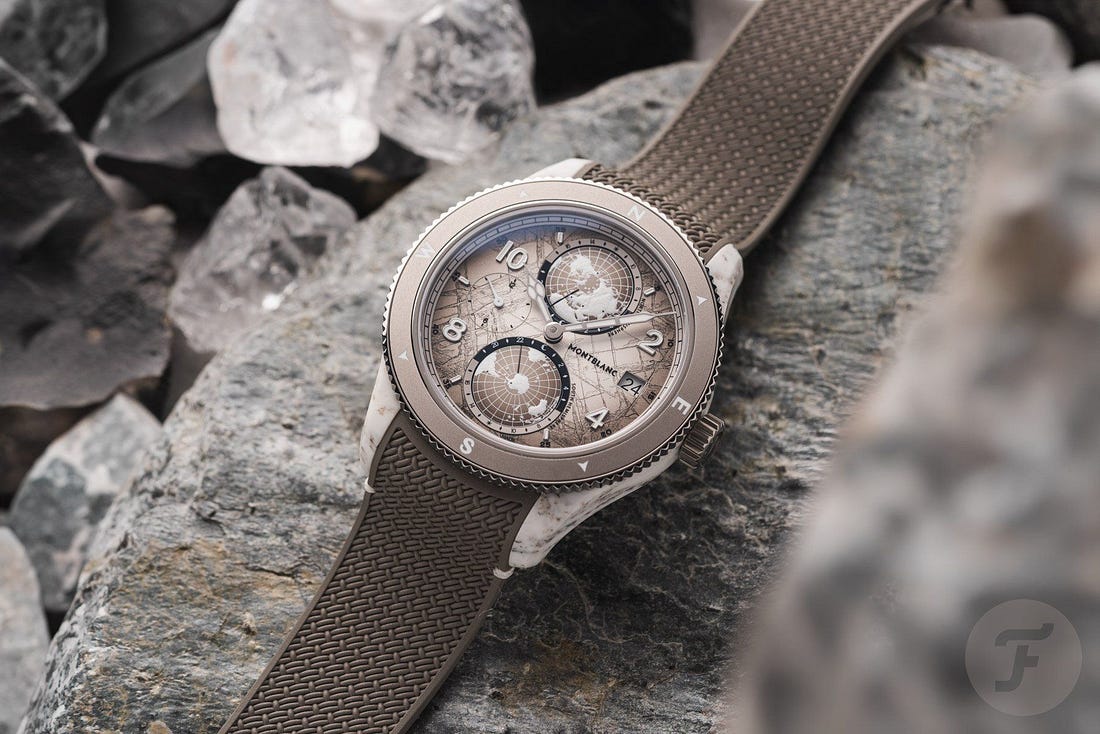
Montblanc Geosphere 0 Oxygen Mount Elbrouz LE 829
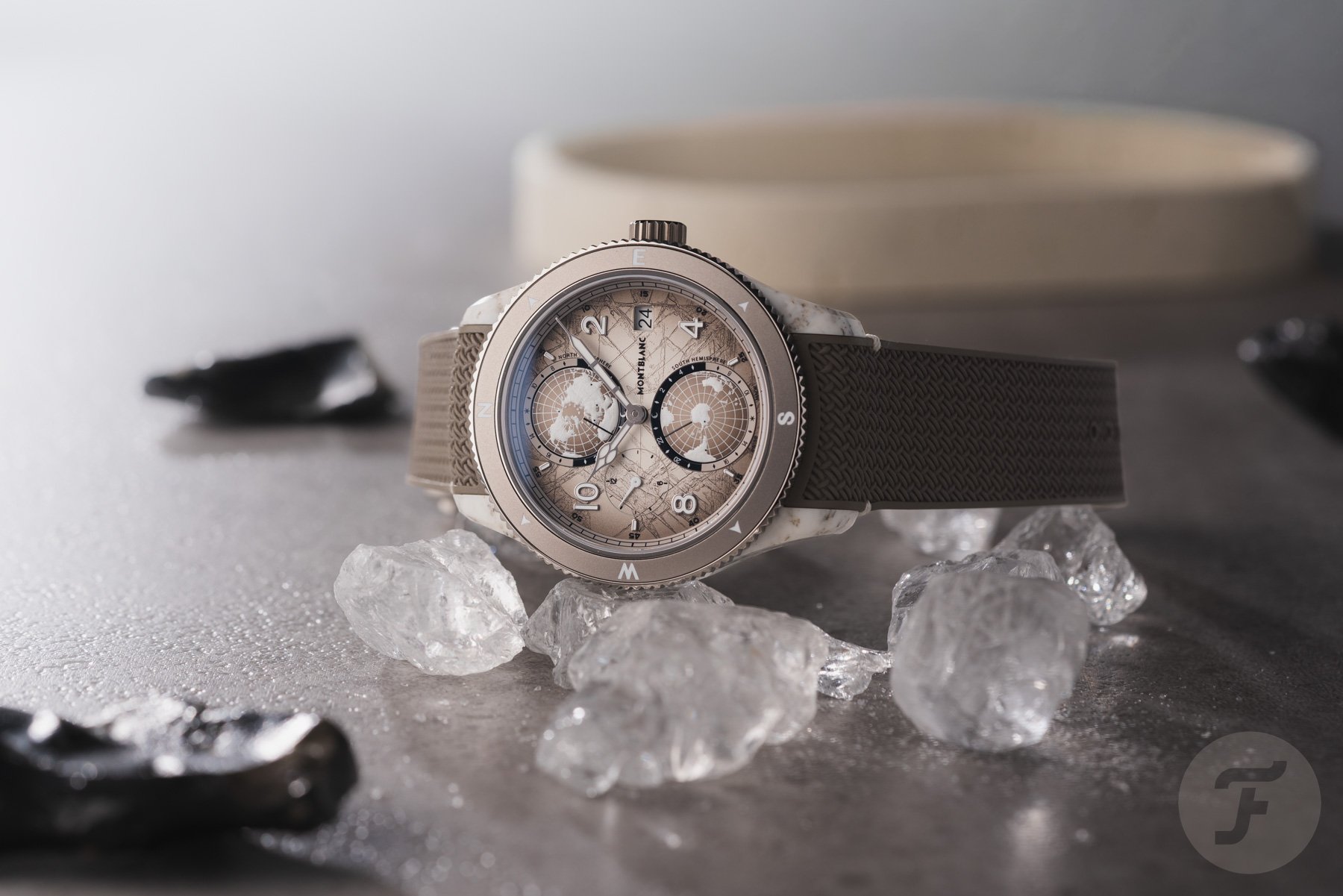
Montblanc brings volcanic material into its mountain-inspired watchmaking with a composite case incorporating ash from Mount Elbrus. The 43.5 mm Geosphere combines a glacier-like dial, orange luminous accents and a case engraving referencing the mountain.
Its automatic MB 29.25 powers the collection’s rotating Northern and Southern Hemisphere displays, a second-time-zone indication and the date. A bidirectional compass bezel, 100-meter water resistance and an oxygen-free case interior support the adventure-oriented proposition.
Limited to 829 pieces, the watch comes on a light-brown rubber strap and carries an announced European price of €10,100. Its strongest distinction is the way the materials and display connect the geographical theme to the physical watch. Price: approximately US$11,320, converted from the European price.
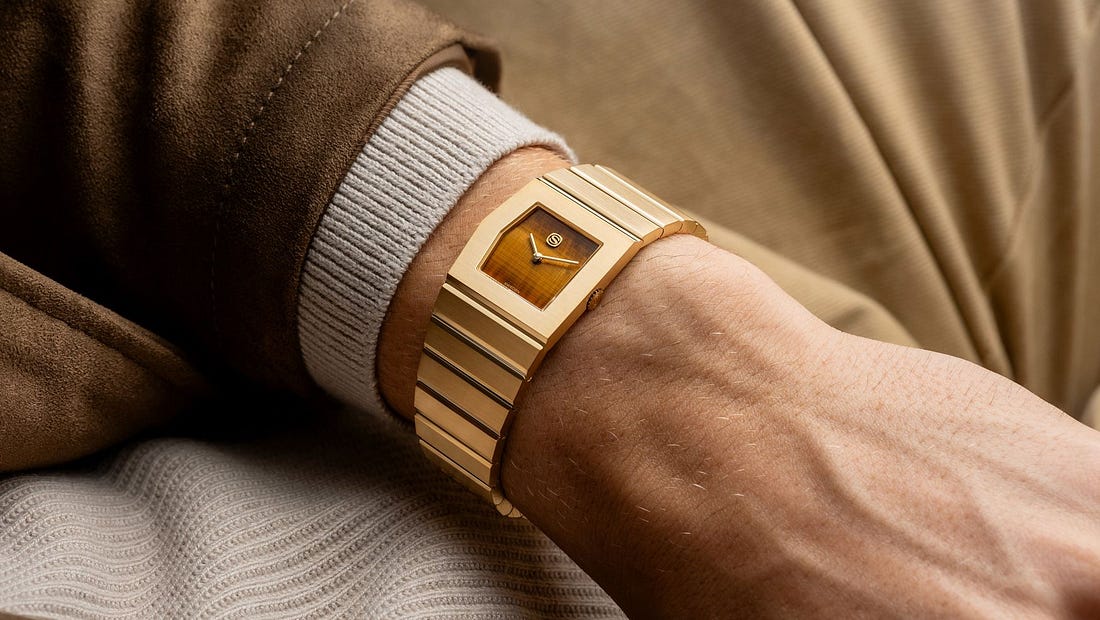
Svea Atelier Monolith: A Different Shape for the Dress Watch
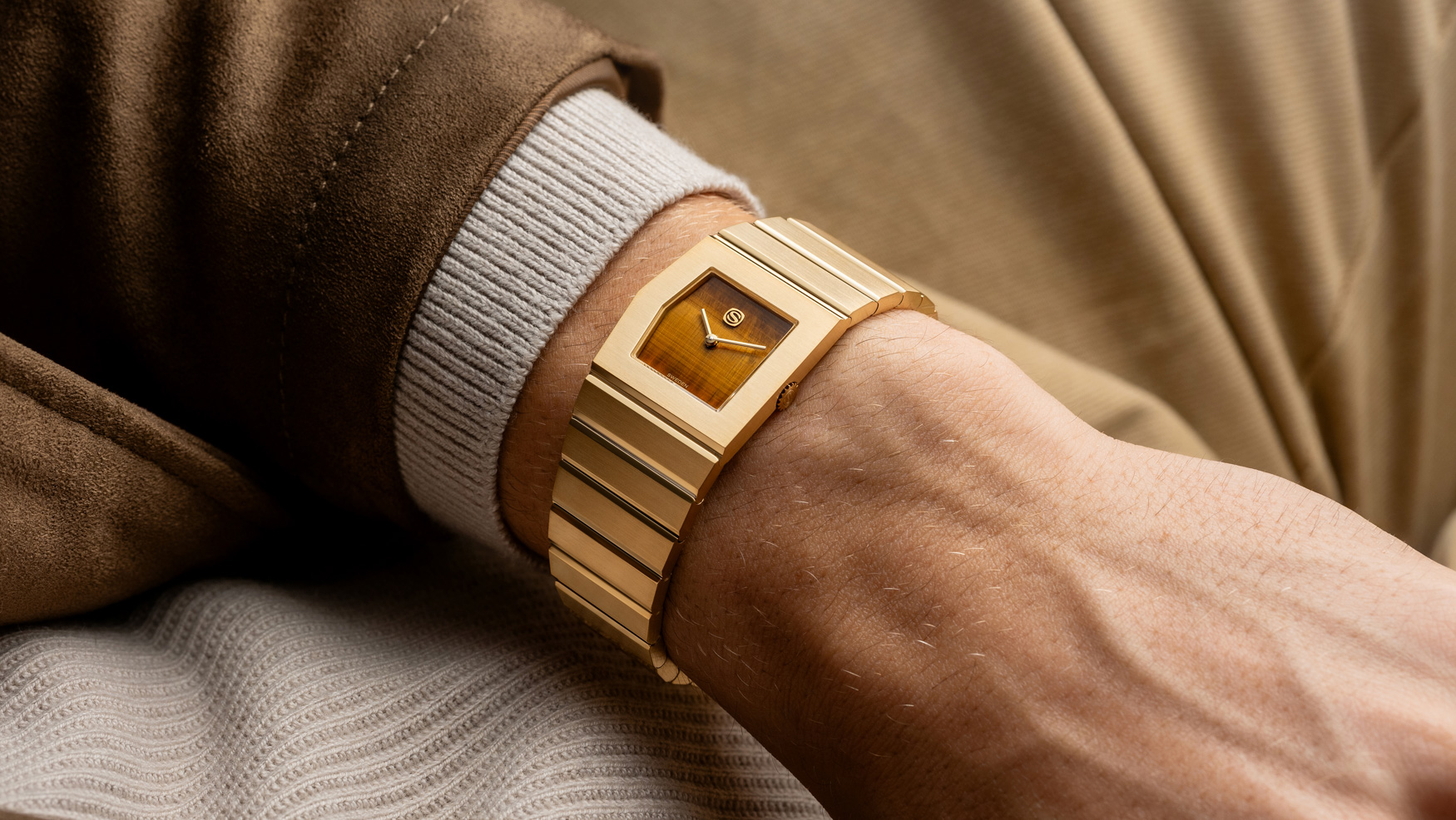
Swedish newcomer Svea Atelier launches the Monolith with a five-sided case measuring approximately 27.5 × 27 mm and just 5.5 mm thick. Designed by former Longines head designer Francis Jacquerye, it uses strong geometry and an integrated bracelet to establish a distinctive silhouette.
A Swiss-made Ronda 1062 quartz movement keeps the package slim and offers up to six years of battery life. Sapphire crystal and 50-meter water resistance give the design practical everyday credentials, while dial choices include textured treatments and natural stone.
The Core and Atelier collections are announced at €680 and €780 respectively, excluding VAT. Steel and gold-colored finishes broaden the choice without changing the compact proportions. Prices: approximately US$760 for the Core collection and US$875 for the Atelier collection, before tax.
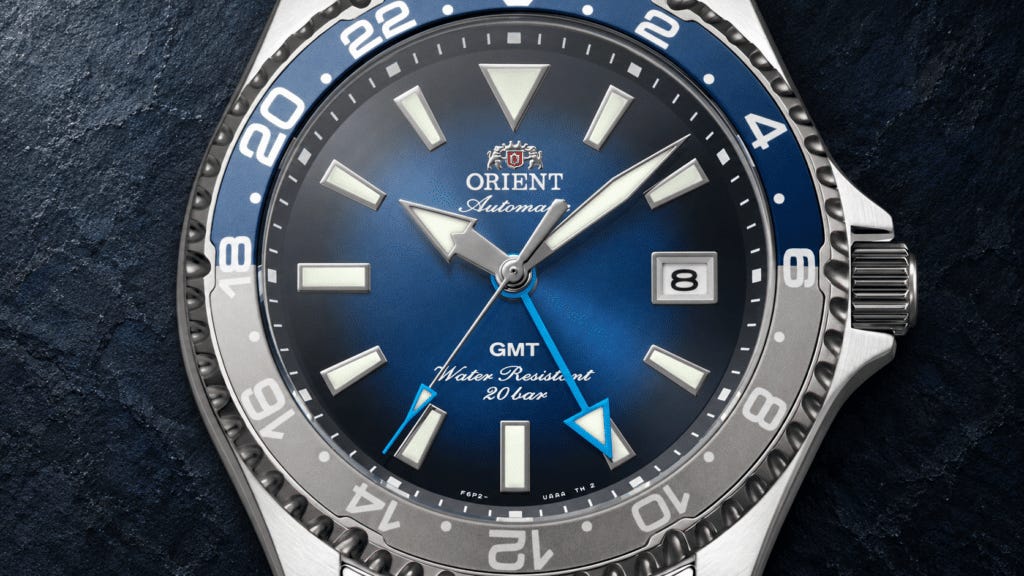
Orient Kamasu GMT Enters the Affordable Travel-Watch Contest
Orient expands the Kamasu family with a GMT model combining a fourth hand, a 24-hour bezel and the collection’s familiar sporting character. Sapphire crystal and 200-meter water resistance make the watch suitable for buyers seeking travel functionality in a robust everyday package.
The automatic F6P22 offers hand-winding, hacking seconds and more than forty hours of power reserve. Four regular dial colors—green, blue, black and orange—are joined by a limited-edition dark-blue version.
The proposition is straightforward: Orient’s own movement platform, useful specifications and an attainable entry price in an increasingly competitive category. The reported retail discount also creates a meaningful gap between the suggested price and what buyers may encounter in stores. Price: US$625 MSRP; reported retail pricing around US$495.
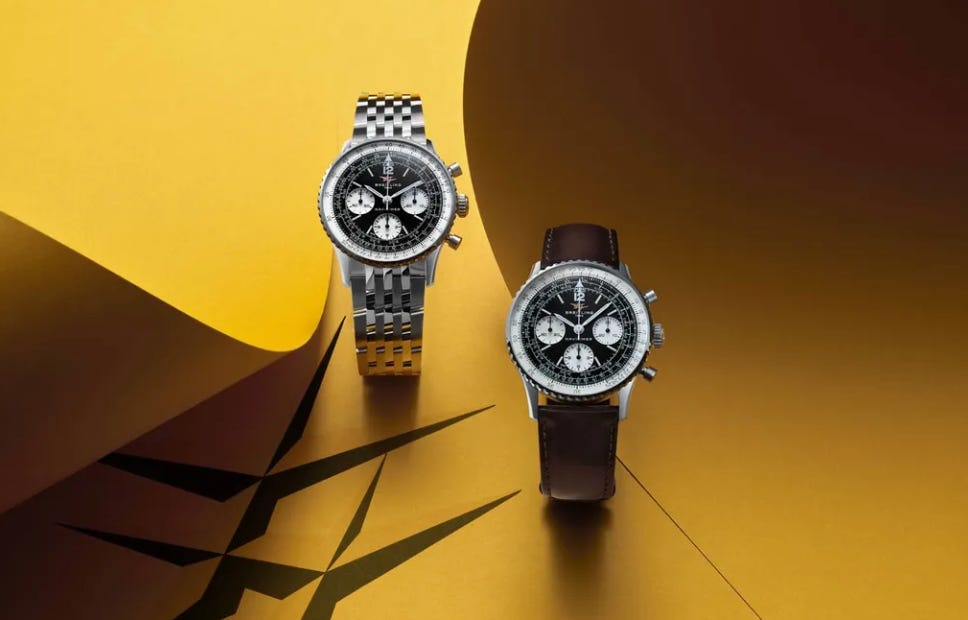
Breitling Makes Hand-Wound Navitimers a Permanent Choice
Breitling adds the Navitimer B09 Chronograph 41 and Navitimer B02 Chronograph 41 Cosmonaute to its core collection. The move gives collectors regular-production access to manually wound interpretations of one of the most recognizable chronographs in watchmaking.
Both use 41 mm cases and retain the collection’s slide-rule identity, with contrasting subdials and a gold-colored Twin Jet logo reinforcing the historical references. The Cosmonaute adds its distinctive 24-hour time display, recalling the requirements associated with Scott Carpenter’s spaceflight.
The appeal includes the daily act of winding the watch, as well as the connection to earlier Navitimers. Making these models permanent additions gives buyers time to consider that choice without the pressure of a limited-edition countdown. Prices: from US$7,900 for the B09 Chronograph 41 and US$10,600 for the Cosmonaute.
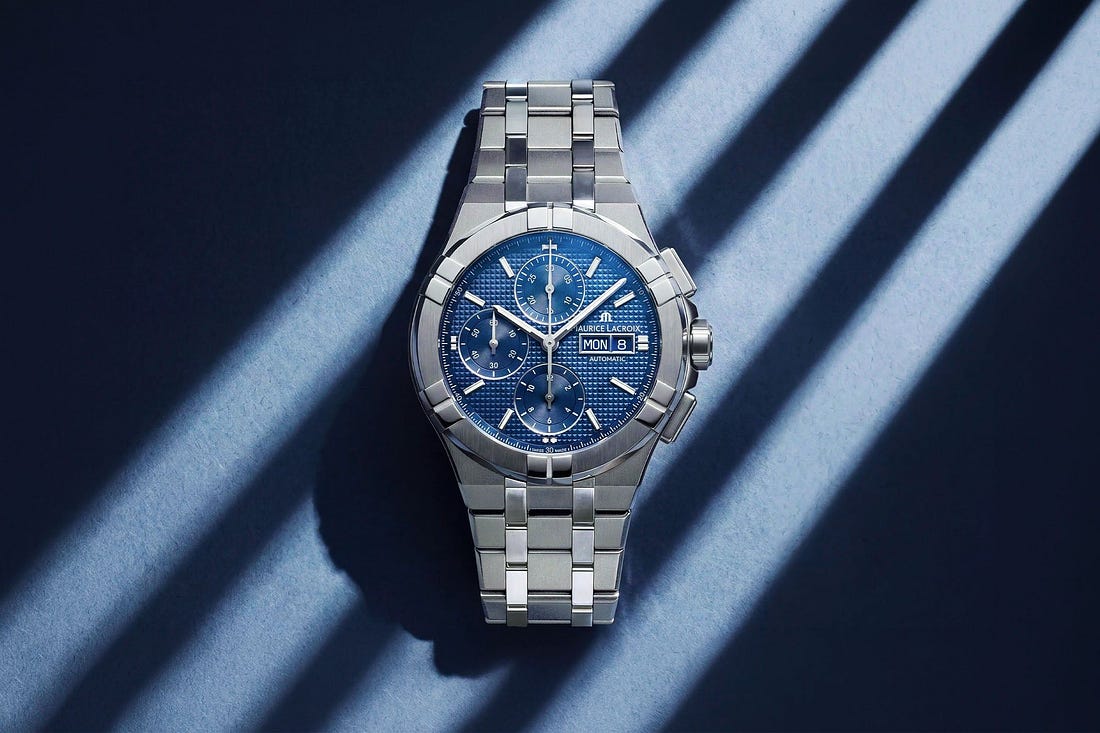
Maurice Lacroix Refines the Aikon Chronograph for Its Tenth Anniversary
Maurice Lacroix updates the Aikon Automatic Chronograph with a smaller 42 mm steel case, a more pronounced dial texture and revised detailing. The six-claw bezel and integrated bracelet preserve the collection’s familiar appearance, while rectangular pushers and a day-date display support its sporting functionality.
The automatic ML112 provides more than sixty hours of power reserve, with movement decoration visible through the exhibition back. Water resistance is rated to 100 meters, and the bracelet’s Easy Change system allows tool-free swaps.
Five references introduce different dial treatments within the revised format. Announced regional prices include CHF3,150 and €3,690, with local taxes included. Price: approximately US$3,830 converted from the Swiss price, including the Swiss tax stated in that price.
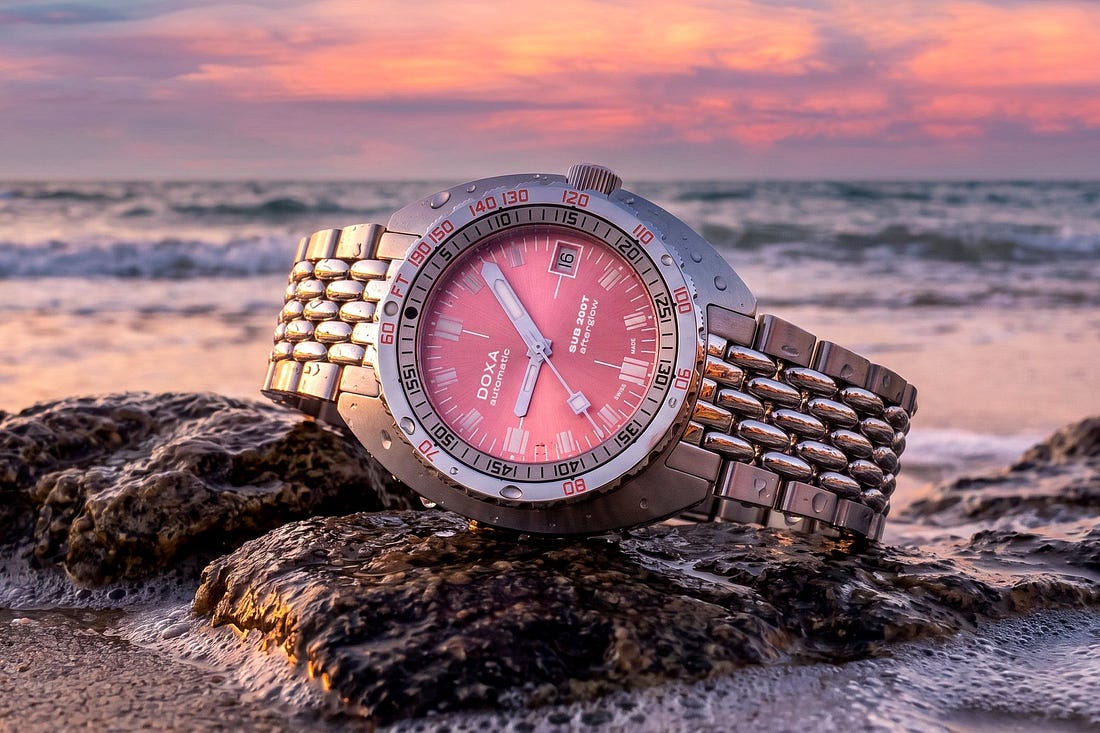
Doxa SUB 200T Afterglow Captures a Florida Sunset
Doxa’s SUB 200T Afterglow gives its compact diver a pink sunray dial inspired by the evening sky over Naples, Florida. The 39 mm stainless-steel case retains the collection’s recognizable proportions and a unidirectional bezel with a no-decompression scale.
The automatic Sellita SW200-1 supplies approximately thirty-eight hours of power reserve. Sapphire crystal, luminous hands and markers, and 200-meter water resistance preserve the practical specification beneath the colorful presentation.
A steel beads-of-rice bracelet completes the watch, which is limited to fifty examples and offered exclusively through Exquisite Timepieces. It is a narrowly distributed variation whose main attraction is the dial’s effect on an established design. Price: US$1,990.
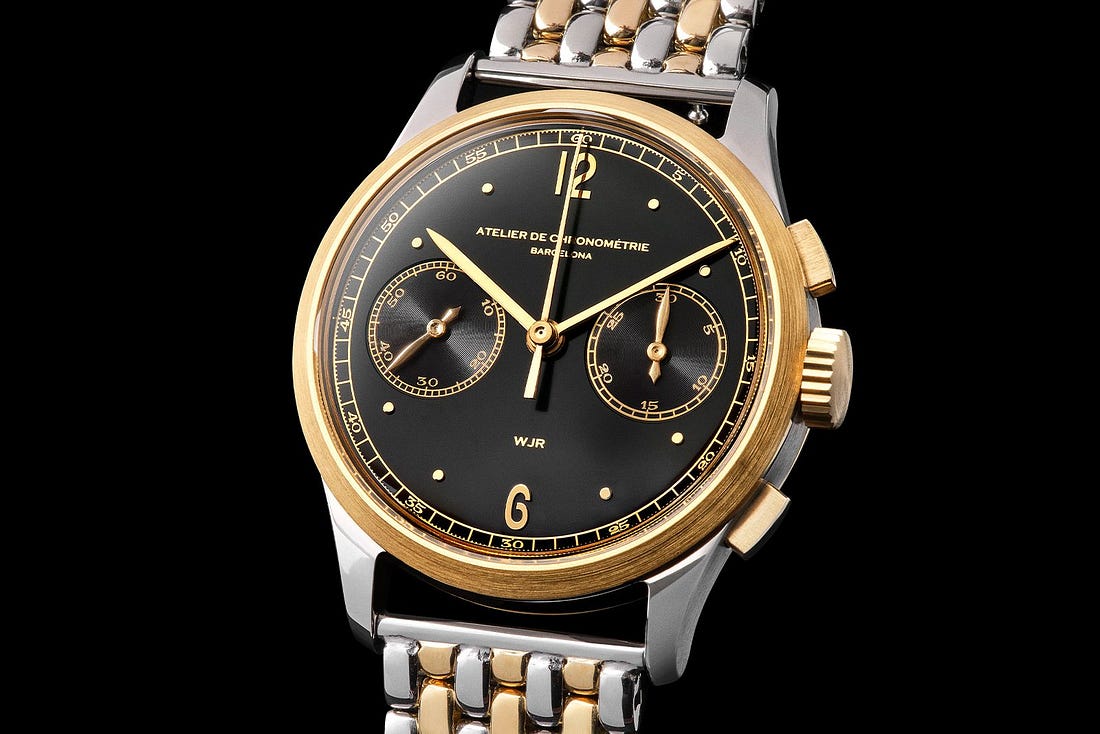
Atelier de Chronométrie AdC16 Reworks a Chronograph Classic
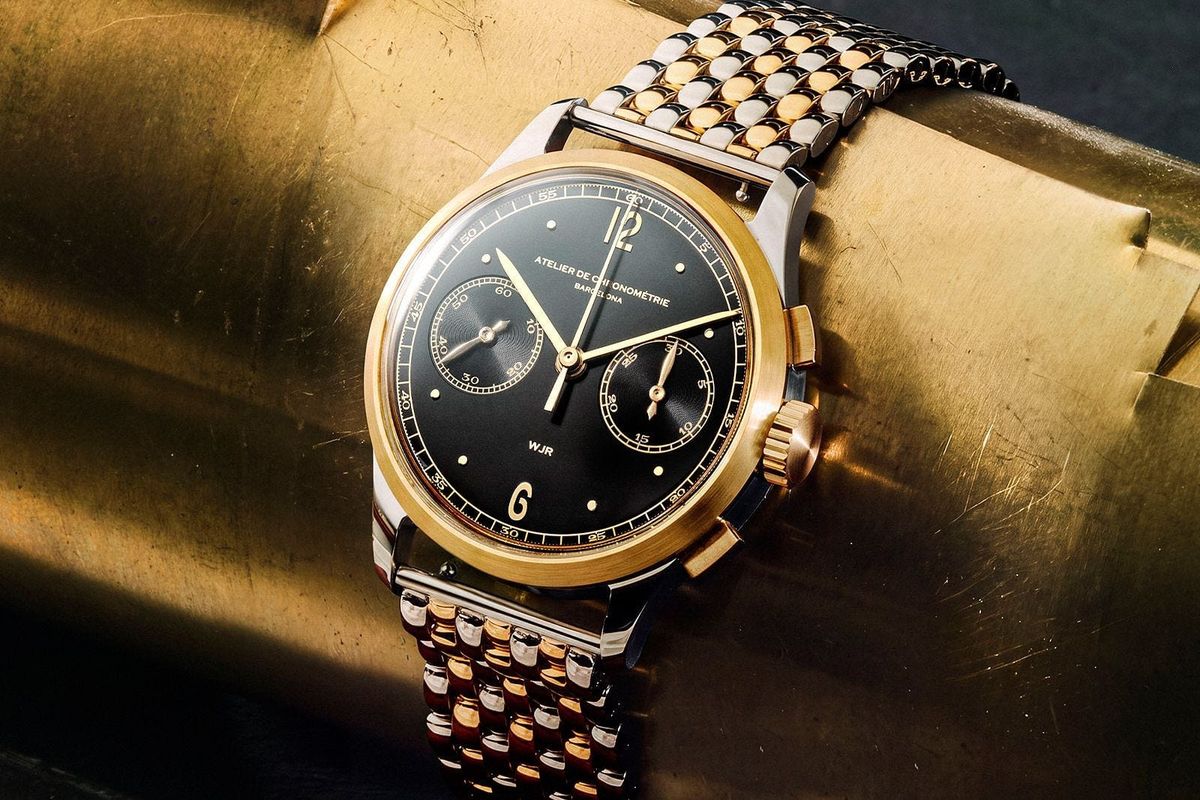
Atelier de Chronométrie introduces its first dual-register chronograph with the AdC16, built around an extensively reworked Valjoux 23. The featured commission combines a gilt dial with a steel-and-yellow-gold case, giving the watch a distinctly traditional starting point.
The mechanical work goes much further, incorporating an instantaneous minute counter, a specially developed balance assembly and extensive hand finishing. Manual winding and a reported 52-hour power reserve reinforce the connection between the owner and the mechanism.
Customization allows the dial, hands, case and strap to be developed around an individual commission. With pricing beginning around €140,000, the proposition rests on the depth of the reconstruction and the personal nature of the finished watch. Price: from approximately US$156,870.
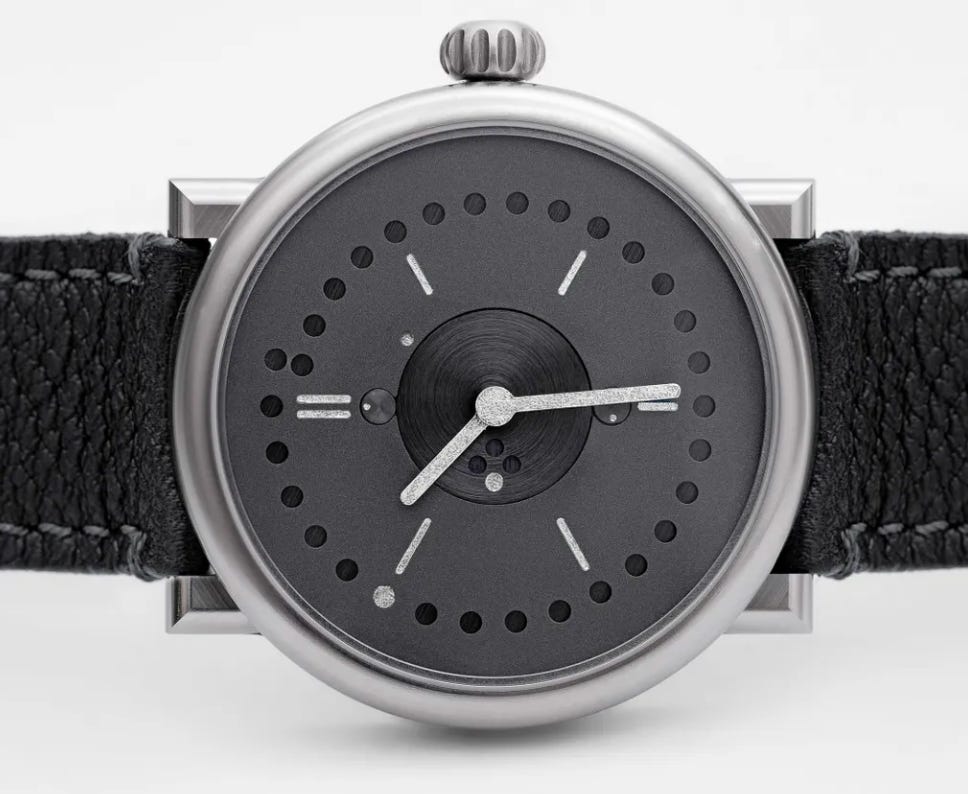
Ochs und Junior’s Perpetual Calendar Gets a Holiday Edition
Ochs und Junior presents a Holiday Edition perpetual calendar in a 42 mm titanium case with a dark anthracite dial and white-gold accents. Its system of dots, apertures and rotating elements communicates calendar information with a markedly different visual language from conventional subdials.
The automatic Ulysse Nardin UN-118 supplies a sixty-hour power reserve, while water resistance is rated to 100 meters. A black Ecopell calfskin strap complements the restrained palette, allowing the changing indications and surface finishes to provide the detail.
Orders remain open until January 6, 2027, with a fifty percent deposit required by November 15 for delivery before Christmas. Announced pricing is CHF15,000 excluding tax, or CHF16,215 including Swiss VAT. Price: approximately US$18,250 before tax, or US$19,725 including Swiss VAT.
Comparisons
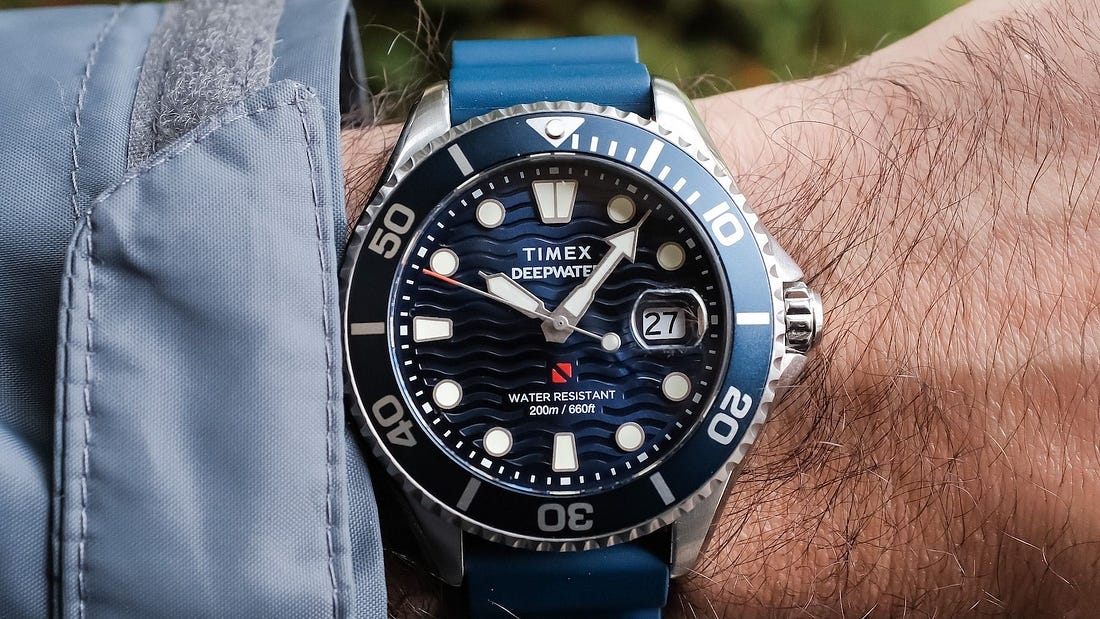
Timex Deepwater vs. Citizen Promaster: Materials or Everyday Convenience?
Timex’s Deepwater Meridian 200 and Citizen’s Eco-Drive Promaster Diver approach the affordable dive watch from different directions. The Timex emphasizes substantial wrist presence, a blue sunray dial and sapphire crystal, while Citizen concentrates on lighter wearing comfort and solar-powered convenience.
Both offer 200-meter water resistance and luminous displays. The Timex uses a conventional battery-powered quartz movement; Citizen’s Eco-Drive system replenishes its energy from light, reducing the need for routine battery replacement.
The review favors the Citizen as the more sensible long-term everyday companion. Buyers who prioritize sapphire and a larger, more substantial feel may reach a different conclusion, making this a useful comparison of ownership preferences as much as specifications.
Reviews
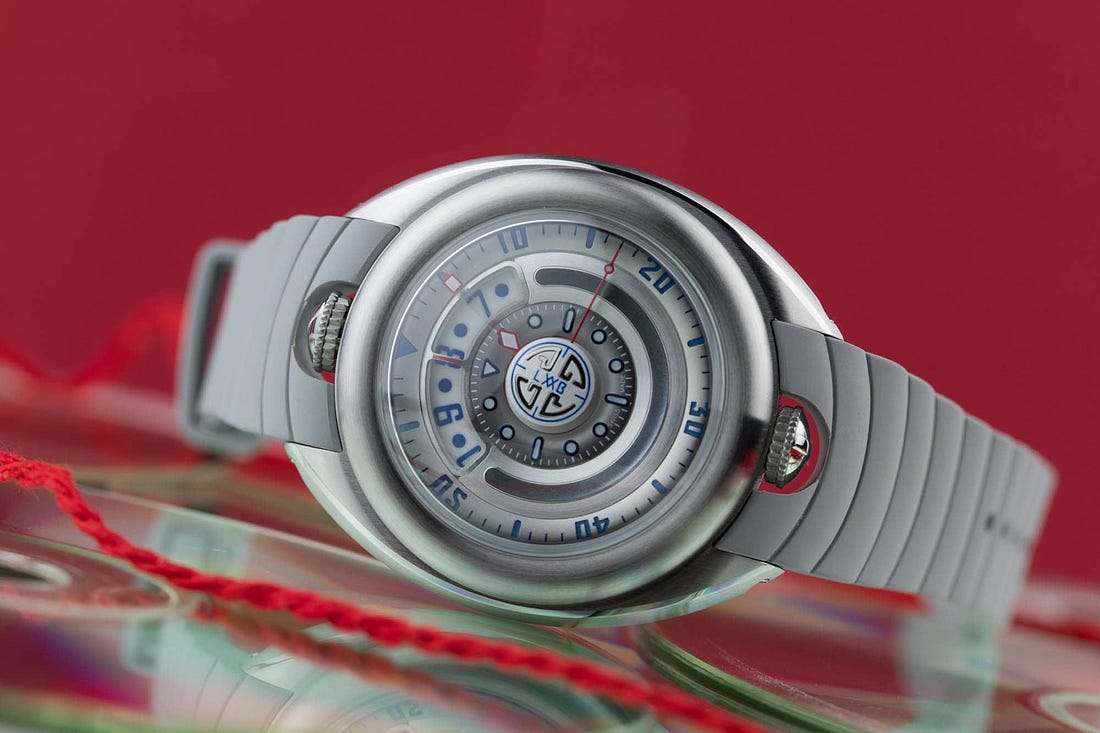
Gagà Laboratorio Aqualab: A Dive Watch With Its Own Visual Language
The Gagà Laboratorio Aqualab makes reading the time part of the experience. A rotating hour-disc window, an unusual two-part minute-hand arrangement and a central seconds element create a display that demands more attention than a conventional diver.
Its 44 mm brushed-steel case and double-domed sapphire crystal reinforce the bold presentation. Inside, the automatic La Joux-Perret G100 offers a 68-hour power reserve, supported by 200-meter water resistance and a proprietary HNBR rubber strap.
At €3,900 before applicable import charges, the Aqualab asks buyers to place considerable value on originality. The review’s central tension is whether the display’s theatrical appeal compensates for the extra interpretation it can require from its wearer.
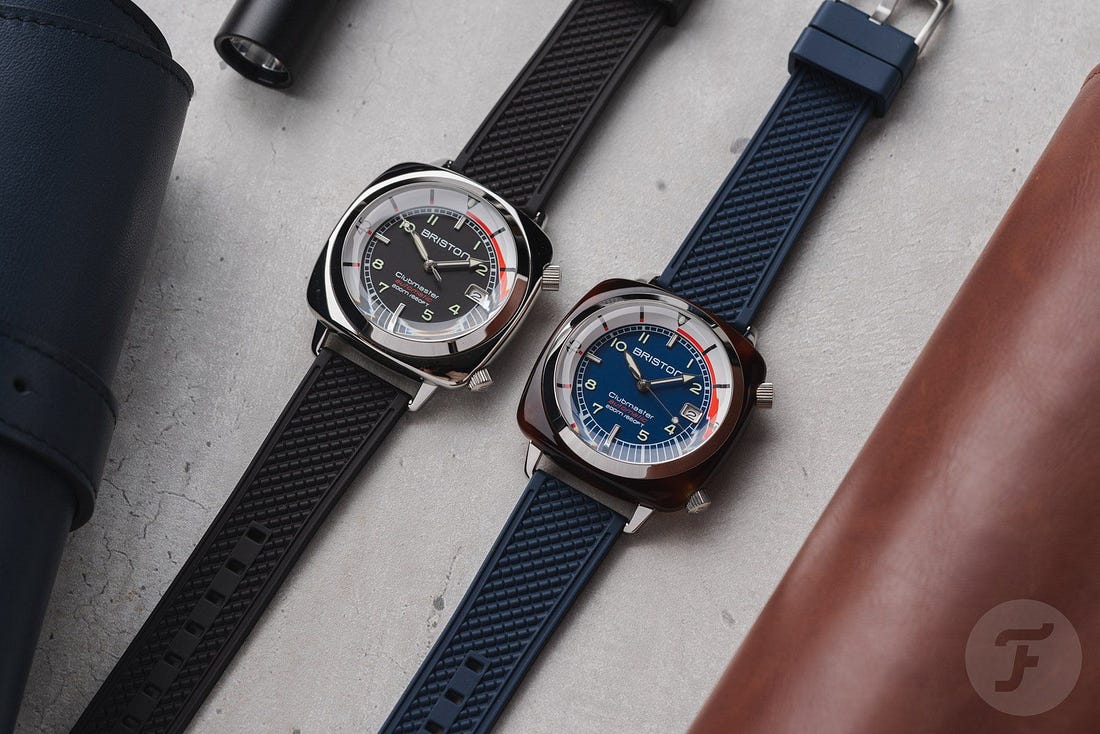
Briston Clubmaster Legend Compressor Offers a Refreshing Alternative
Briston brings its rounded-square case identity to the dive-watch category with the 42 mm Clubmaster Legend Compressor. The choice between steel and an acetate treatment gives the watch two noticeably different personalities.
An automatic Seiko NH35A provides approximately forty-one hours of power reserve. An internal rotating dive bezel, luminous indications, a date display and 200-meter water resistance establish the functional foundation, while an FKM rubber strap supports daily wear.
The review finds particular appeal in the acetate version, whose material gives the design warmth and character. Reported American prices are $675 for acetate and $695 for steel, placing the watch within reach of buyers seeking something less predictable than another round diver.
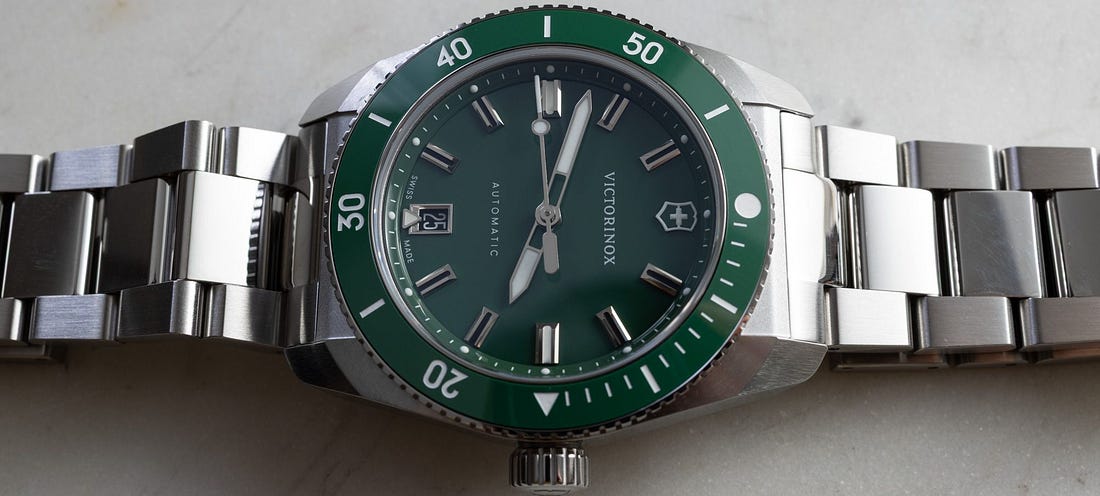
Victorinox Maverick Automatic 39 mm Finds the Everyday Middle Ground
The Victorinox Maverick Automatic 39 mm combines approachable dimensions with a green dial, ceramic bezel and the practical appeal of a familiar name. Its proportions make a useful counterpoint to the larger watches that often dominate the sports category.
The automatic Sellita SW200 offers approximately forty-one hours of power reserve. Sapphire crystal, 200-meter water resistance and quick-release straps broaden the everyday proposition, while shared 21 mm lug dimensions make switching among compatible options straightforward.
Prices run from about $1,100 on rubber to $1,200 on a steel bracelet. The review’s strongest endorsement concerns the balance of the package: enough detail for enthusiasts, enough familiarity for casual buyers, and dimensions that encourage regular wear.
Editorial
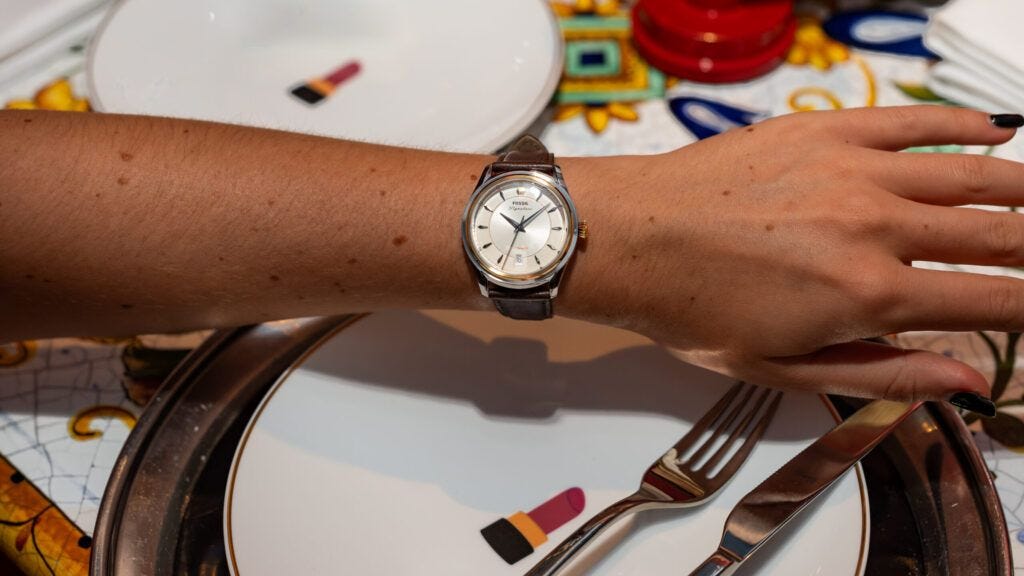
Can Fossil’s Signature Collection Give the Brand a Clearer Direction?
Fossil’s Signature collection represents an effort to bring attention back to conventional watches through design, materials and a more deliberate product identity. Mid-century influences, chronograph layouts and a choice of leather straps or bracelets give the collection a familiar starting point.
The broader business argument is more consequential than any individual dial. As Fossil refocuses its watch offering, it must persuade customers that the name represents a worthwhile combination of style, execution and price in a crowded market.
The featured collection occupies territory around €699–€799, where buyers have numerous established alternatives. Attractive styling can open the conversation, but the lasting test will be how the watches perform in stores and in daily ownership—and whether customers return for another.
Podcast
The Business of Watches: Nicholas Bowman-Scargill on Rebuilding Fears
Fears founder and CEO Nicholas Bowman-Scargill joins the conversation to explain the revival of his family’s historic watch company. His route from banking to training at Rolex, and eventually to relaunching Fears in 2016, gives the story an unusually personal foundation.
The discussion covers the practical realities behind the heritage narrative: cash flow, governance, investors, product development and the work of building a team. Fears has grown to around fifteen people and returned to Bristol, but the journey included serious financial pressures.
For collectors, the episode adds context to the watches. For anyone running a small business, it offers a candid account of turning an inherited name into a functioning modern company.
Fratello Talks: Picking Watches for James Bond Villains
Nacho, RJ and Jorg turn the usual Bond-watch discussion toward the characters on the other side of the plot. The exercise asks which watches best communicate a villain’s personality, ambitions and sense of style.
That opens an entertaining conversation about the associations collectors attach to particular designs. A watch can suggest restraint, theatricality, technical obsession or conspicuous wealth before its wearer says a word.
The episode works as a lighthearted extension of today’s theme: why certain watches seem to belong to certain people. Listeners can build their own casting list along the way.
Video
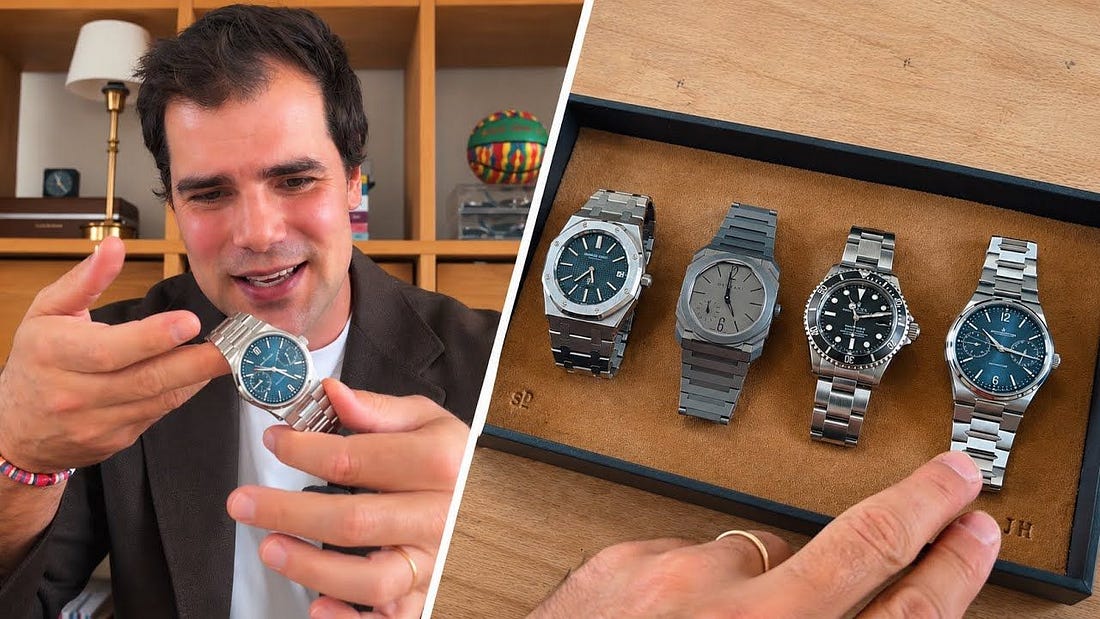
How Good Is the New Jaeger-LeCoultre Master Control Bracelet? — Justin Hast
Justin Hast takes a closer look at the bracelet fitted to Jaeger-LeCoultre’s Master Control, concentrating on a component that can substantially change the experience of wearing a watch. Integration, finishing and articulation matter just as much as the first impression in a photograph.
For prospective buyers, the useful question is how convincingly the bracelet completes the watch. For existing collectors, the review offers a reminder that comfort and construction deserve attention alongside the movement and dial.

Picking Watches for James Bond Villains — Fratello
Fratello’s video presentation brings a visual dimension to the podcast’s character-driven watch selections. Considering the watch alongside the imagined wearer makes the discussion especially suited to the screen.
The entertainment lies in the reasoning: which designs suggest power, eccentricity, discretion or menace? It is an invitation to think about watches as elements of character and storytelling, with plenty of room to disagree with the choices.
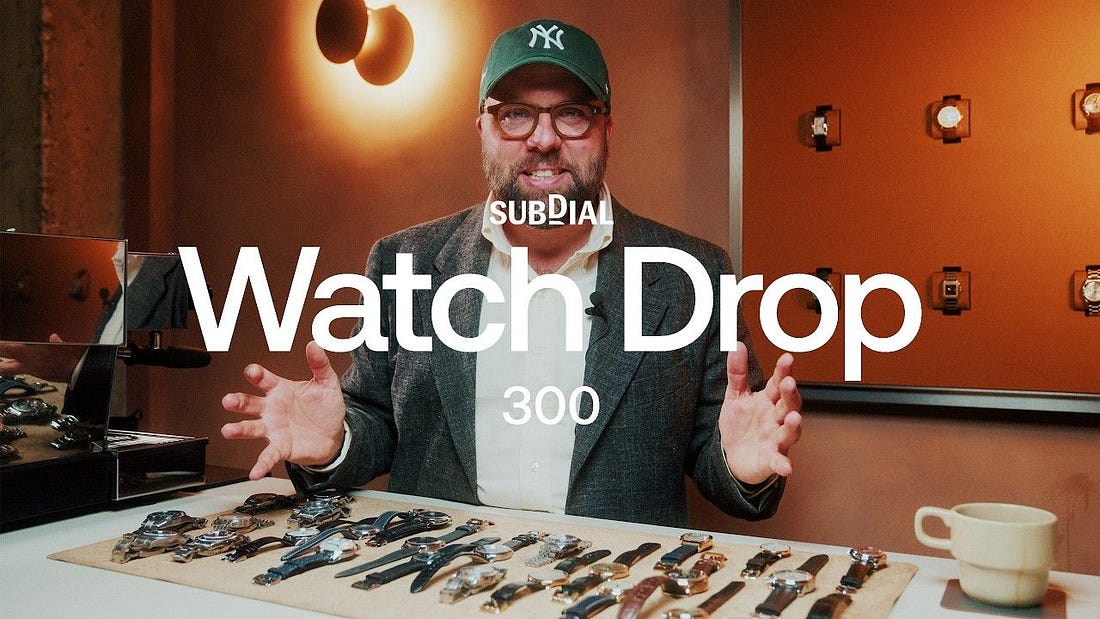
The Best Blue Dials in the Business: Drop #300 — Subdial
Subdial marks its three-hundredth drop with a selection centered on blue dials. The shared color provides a useful way to compare watches whose surface treatments, proportions and overall personalities can otherwise be quite different.
Blue can appear formal, sporting, restrained or vivid depending on the surrounding design. This is a viewing selection for collectors who enjoy those distinctions—and a reminder that a dial color is only the beginning of the description.

How Celebrity Watch Collecting Changed — Menta Watches
Menta Watches examines the changing relationship between famous collectors and the wider watch market. Celebrity visibility can draw attention to an unfamiliar reference, reinforce an established favorite or help turn a particular style into a broader trend.
The subject also raises a useful collecting question: how much of our interest comes from the object, and how much comes from seeing someone else wear it? Watch with that distinction in mind as the discussion considers the influence of public taste.
Auction Report
Yesterday’s auction of the 2026 Blancpain Fifty Fathoms Bathyscaphe, reference 5000-1110-71S, ended at a high bid of $7,100 without a sale. Against the manufacturer’s current $17,100 U.S. retail price, that unsuccessful bid represents approximately 41.5 percent of retail. It records where bidding stopped, rather than a completed transaction or a definitive market valuation.
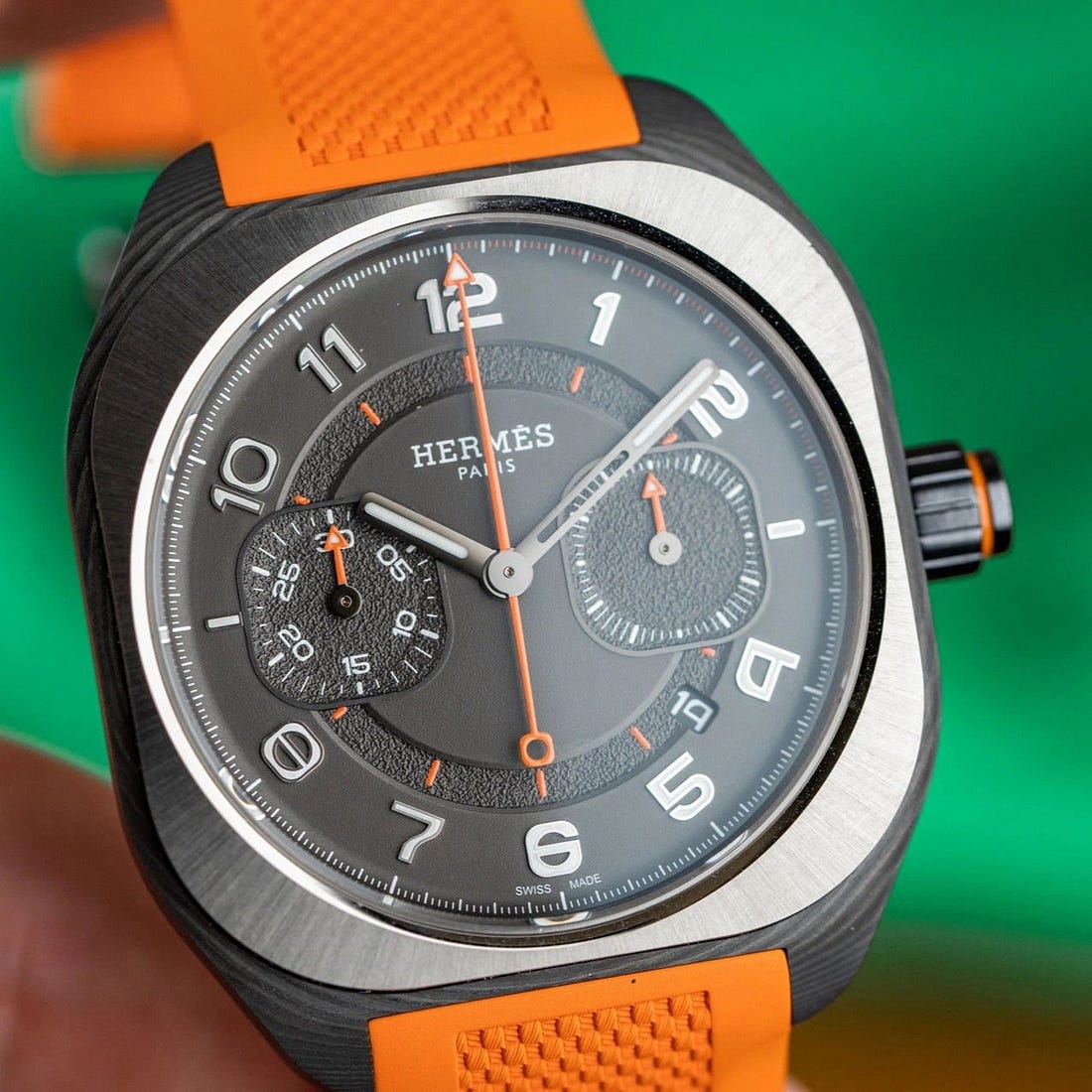
Hermès H08 Chronograph: A Distinctive Design Faces the Auction Test
Tonight’s featured watch is an unworn 2026 Hermès H08 Chronograph, reference W403130WW00, offered in the United States with box and papers. The seller describes the dial, case, bezel and strap as excellent, with the usual qualification that handling can leave minor marks on an unworn watch. The H08 collection debuted in 2021, followed by the introduction of its chronograph in 2023. Its appeal comes from an unusually coherent design: a softened square case, circular dial, distinctive Arabic numerals and a single chronograph control that preserves the case’s geometry.
The case measures 41 mm across and 45 mm lug to lug, an important distinction when interpreting the auction’s 45 mm size description. Carbon-fiber composite with graphene powder is paired with a titanium bezel, while the black dial and orange accents give this reference its recognizable character. The automatic H1837 with a chronograph module offers approximately forty-six hours of power reserve; successive presses of the crown-integrated button start, stop and reset the chronograph. Sapphire crystals front and back, 100-meter water resistance and an orange rubber strap complete a watch intended for regular wear.
The auction’s stated list price is $13,000. Secondary-market evidence is thinner than for more widely traded sports chronographs: an archived dealer listing for the related yellow-strap reference W403131WW00 showed a $10,950 asking price, while a separate private chronograph listing asked $12,500. Those figures describe advertised alternatives, not verified sale proceeds, and the yellow version is a comparison rather than an exact-reference match. This example’s recent year, complete set and unworn description strengthen its appeal, but its value still depends on the final cost relative to available stock and warranty coverage. The auction is scheduled to end tonight, Friday, October 23, 2026, at 8:10 p.m. EDT.
Current bid: $6,600
Losing Time
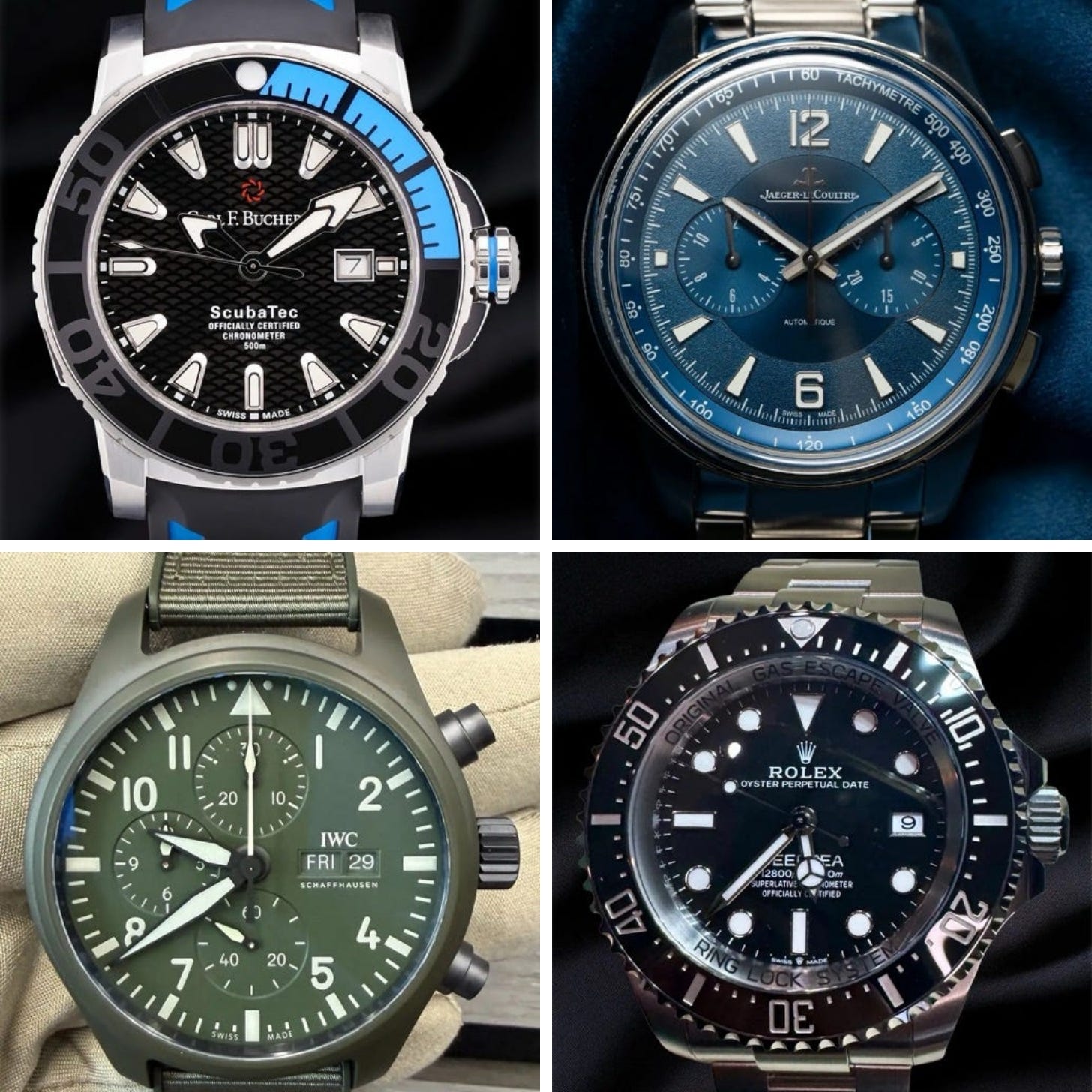
Today’s Big Losers at Auction on Grailzee
The four failed sales offered a familiar lesson: an asking price is a statement of ambition; a final bid is where someone actually reached for their wallet.
The Carl F. Bucherer Patravi ScubaTec 44.6MM (00.10632.23.33.01) asked $5,200 and attracted a final bid of $1,850—a $3,350 shortfall, or 64.4% below ask. The seller brought luxury dive-watch expectations; bidders brought a substantially smaller envelope. With the bid covering barely more than a third of the asking price, this was the biggest percentage disconnect of the four.
The 2018 Jaeger-LeCoultre Polaris Chronograph 42MM (Q9028180), with its blue dial and steel bracelet, carried a $10,497 ask against a $5,100 high bid. That left a $5,397 gap, or 51.4% below ask. Apparently, the precision of that $10,497 price did not make it any more persuasive. Bidders stopped just short of half the seller’s number—a fairly emphatic disagreement over what this Polaris was worth that day.
The 2026 IWC Schaffhausen Pilot Top Gun “Woodland” 44.5MM(IW389106) sought $10,800 but drew a $6,600 final bid, missing by $4,200, or 38.9%. The green dial and textile strap delivered the camouflage theme; unfortunately, they could not conceal the pricing gap. The current model year alone wasn’t enough to get bidders within striking distance.
The 2026 Rolex Sea-Dweller Deepsea 44MM (136660) had the strongest showing relative to its ask, although “closest failed sale” remains a modest distinction. Its $10,900 high bid fell $5,600 short of the $16,500 ask, or 33.9% below it. Rolex prestige helped produce the smallest percentage miss, but this watch still posted the largest dollar gap. Even the Deepsea couldn’t handle that much pricing pressure.
Together, the watches carried $42,997 in asking prices and drew $24,450 in final bids—a combined shortfall of $18,547, or 43.1%. These were substantial gaps, suggesting that completing the sales would have required meaningful movement from sellers, bidders, or both. The two 2026 watches came closer proportionally than the Bucherer and the 2018 JLC, but neither freshness nor brand recognition closed the deal. These results show where bidders stopped in these particular auctions—not definitive market values—but the shared message was clear: the sellers’ expectations were considerably better funded than the bids.
Closing Time
Thank you for spending part of your Friday with BuyingTime Daily. This weekend, give a little wrist time to a watch you already own and remember what made you choose it. The next discovery will arrive soon enough; enjoying the last one is part of collecting, too.