Issue #277 | Buying Time - October 27, 2026
Audemars Piguet puts its name behind pre-owned trading, independents reveal their mechanics, and auction bidders put confidence to the test.
Buying Time in 30 Seconds (or so)
Audemars Piguet’s new Watch Keepers platform brings brand authentication, condition grading and a two-year warranty into a consignment marketplace. Its arrival raises questions about what collectors will pay for reassurance—and how much control manufacturers should exercise over the second life of their watches. Richard Mille’s regional results, meanwhile, show European weakness alongside strong Middle Eastern growth.
Today’s features connect that search for confidence to retailer security, watchmaking education and the work performed inside Girard-Perregaux’s manufacture. New watches range from Nomadic’s rectangular, hand-wound Dána 141 to Hautlence’s white spherical-hour display, with autumnal Rados and a vintage-inspired Hanhart collaboration between them. Reviews explore independent design, striking complications and the practical importance of finding a watch that fits.
Yesterday’s Hermès Squelette Lune reached US$10,199, falling short of its US$13,995 reserve and remaining unsold. Today, a 2025 Chronoswiss Q-Repeater Blue Note, limited to 25 pieces, brings titanium, skeletonized architecture and an audible quarter-hour complication to the auction block. Bidding is scheduled to close at 12:50 p.m. EDT today, Tuesday, October 27, 2026.
Time Graphing Today’s Watch Universe
The Most Valuable Complication May Be Confidence
A luxury watch arrives with several promises attached. There is the promise that somebody made it well, that the name on the dial means something, that the mechanism will continue working and that the object will remain desirable after its first owner has moved on. Some of those promises can be examined under a loupe. Others become clear only when something goes wrong—or when it is time to sell.
Today’s issue revolves around that distinction. The watch industry is investing in ways to make collectors feel more comfortable spending money. Manufacturers are authenticating their own older watches. Educators are explaining what happens inside the case. Retailers are reconsidering how to protect the objects and people in their stores. Independent makers are opening their movements for inspection. Each offers a different answer to the same question: what gives a buyer enough confidence to proceed?
Start with Audemars Piguet’s Watch Keepers marketplace. The attraction is easy to understand. Buying a complicated, expensive object from an unfamiliar seller can require considerable faith. Having the manufacturer examine it, describe its condition and provide a warranty gives that faith something more concrete to rest on.
Yet the details matter. As today’s closer examination of the consignment model explains, authentication does not automatically mean a complete service or restoration. A watch can be genuine and still show wear. It can have an accurate condition description without being returned to new-watch condition. Collectors should understand exactly which reassurance they are purchasing, particularly when commissions become a meaningful part of the transaction.
There is also a larger commercial question. A manufacturer entering its own secondary market gains another relationship with the customer and another opportunity to earn revenue. It also gains influence over how older watches are presented. That could improve transparency. It could make buying less intimidating. Whether it produces attractive prices and completed sales will depend on the watches and the terms, rather than the authority of the logo alone.
The feature on rising watch and jewellery crime gives this conversation a more immediate dimension. Confidence includes knowing that a watch has a legitimate ownership history and that the process of buying, selling and transporting it is secure. Good documentation helps connect those stages. An authentication certificate addresses one concern; a credible chain of ownership addresses another.
Education belongs in this discussion, too. At the FHH Summit, the argument for investing in watchmakers and informed consumers reaches beyond preserving an attractive craft. An industry asking substantial prices benefits when customers can recognize the work supporting those prices. Buyers become better equipped to distinguish an elaborate explanation from an elaborate mechanism.
That is why the Girard-Perregaux manufacture visit is useful reading. The interest lies in specific operations: machining, component production and the hours devoted to finishing. “Manufacture” can become a broad marketing word. Seeing what people actually do inside one gives it more substance. A collector may still decide the finished watch is too expensive, but at least the decision has a clearer foundation.
The watches themselves offer several ways to build that understanding. Renaud Tixier’s Monday Skeleton exposes an ambitious winding system and extensive finishing. Armin Strom’s Minute Repeater Resonance 12:59 turns its striking mechanism into an experience the owner can deliberately repeat. These are substantial purchases, but their strongest arguments are available for examination in the objects.
Confidence can also come from a much simpler source: recognizing that a watch suits you. Today’s Hermès Cape Cod ownership story concerns a pre-owned purchase with character, imperfections and a manageable entry price. The TAG Heuer Monaco hands-on reaches a different conclusion: admiration for a design does not necessarily translate into comfort on the wrist. Both are useful reminders that personal satisfaction is something the owner must establish.
For manufacturers, the stakes are larger. The Zenith editorial examines the difficulty of seeking higher prices while reducing scale. A company can choose to offer more expensive watches. Customers must still choose to buy them. Confidence in that transition has to be earned through product, execution and a convincing reason to occupy the new position.
Yesterday’s Hermès auction makes the distinction measurable. A watch carrying a stated US$30,000 list price drew a US$10,199 high bid and failed to clear its reserve. That does not establish the value of every Squelette Lune. It does show that the participants in this auction would not support the seller’s minimum. The confidence required to place a bid stopped before the confidence required to complete a sale.
Today’s Chronoswiss Q-Repeater offers another test. Its scarcity is real, its complication is engaging and its mechanical history is worth understanding. Those qualities deserve attention. The auction will determine whether they persuade somebody to pay enough for this particular example.
The healthiest watch market would give collectors more reasons to feel informed: clear descriptions, useful warranties, accessible expertise and prices that withstand comparison. We should welcome the businesses that provide those things. Confidence becomes valuable when we can explain what supports it.
-Michael Wolf
News
Audemars Piguet Creates a “Safe Space” for Pre-Owned Trading
Audemars Piguet’s Watch Keepers program brings the manufacturer directly into the process of selling previously owned AP watches. Initially available in Switzerland and Continental Europe, the service examines eligible watches, grades their condition, photographs them and presents them to prospective buyers with the brand’s authentication behind the listing.
Watches must originally have been sold at least two years earlier. Sellers retain ownership until a transaction is completed, while buyers receive a certificate of authenticity, a travel pouch and a two-year warranty. The model emphasizes documented condition rather than automatically restoring every watch.
The commission schedule starts at 20% on the first CHF25,000, falls to 15% on the next CHF25,000 and reaches 10% above that level. Those charges make the service a meaningful financial decision for sellers, even when the convenience and reassurance are attractive.
Richard Mille’s European Sales Slip as the Middle East Accelerates
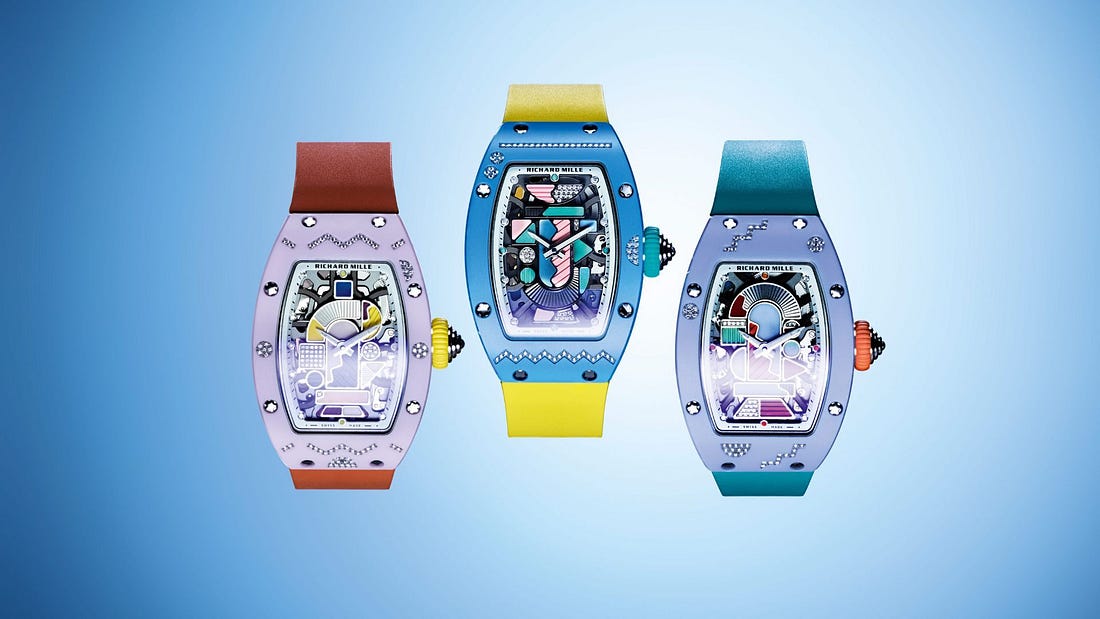
Reported European sales within Richard Mille’s EMEA business fell approximately 7% in 2025, declining from CHF302 million to CHF280 million. Middle Eastern revenue moved sharply in the opposite direction, rising from CHF102 million to CHF218 million.
Operating profit increased from CHF141 million to CHF182 million, showing that weaker European revenue did not prevent stronger profitability across the reported business. Boutiques in Munich, Istanbul and London also performed better than expected, complicating any simple explanation of a uniformly soft European market.
The regional contrast is the central story. Ultra-expensive watches can remain commercially powerful while the geography of demand changes substantially. For a business operating across Europe and the Gulf, the location of growth matters almost as much as its size.
The Watch Keepers Gives AP Another Route to the Customer
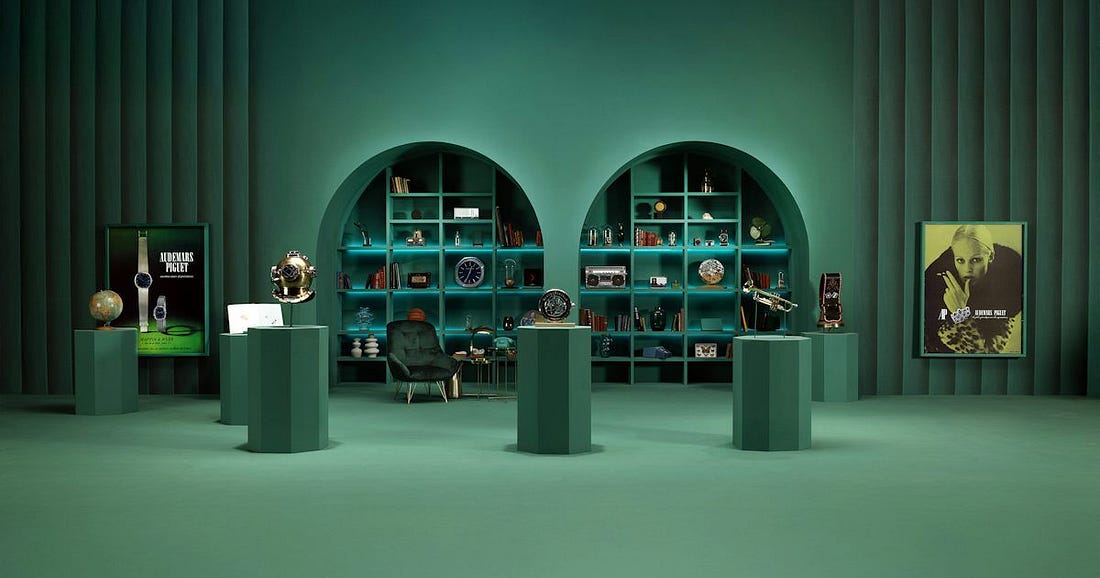
Audemars Piguet’s new digital platform also represents an expansion of its commercial relationship with collectors. Alongside authentication and condition assessment, the service handles photography, listings and delivery, with fixed-price and bidding formats broadening the ways watches can change hands.
The consignment structure allows AP to participate in a transaction without initially purchasing the seller’s watch. That creates potential fee income and gives the manufacturer more insight into demand for older references.
For buyers, the proposition combines access with reassurance. For the industry, it is another indication that the secondary market has become too important for major brands to treat as somebody else’s business. The test will be whether a manufacturer-operated marketplace offers sufficient value to both sides of the transaction.
Features
The Weekday Display: A Small Complication With Many Personalities
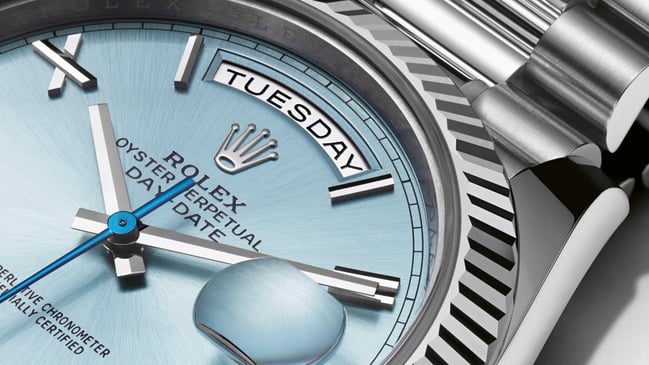
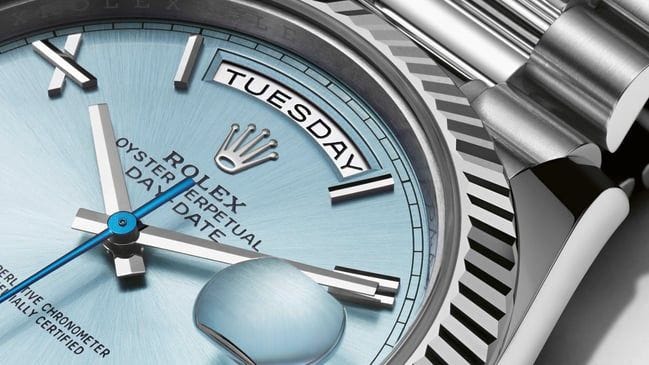
A day-of-the-week indication can be a modest practical addition or a defining element of a watch’s identity. This survey moves from Rolex’s fully spelled-out Day-Date presentation to abbreviated windows, pointer displays and retrograde arrangements.
The design challenge changes with the format. A large day window can establish hierarchy across the dial, while a shorter indication may balance a date display on the opposite side. Language choices add another consideration, particularly when one movement supports several markets.
The less conventional examples show how much creative room remains in a familiar function. Sequential apertures and returning hands can make the progression through the week visually engaging without requiring a grand complication.

Inside Girard-Perregaux: Giving “Manufacture” a Practical Meaning
A visit to Girard-Perregaux connects the company’s technical history with the work required to produce its contemporary watches. Quartz development, micro-rotor architecture and the Constant Escapement provide the historical framework, while the manufacture floor reveals how those ambitions become components.
The account follows bridge production, machining and finishing, including the different demands imposed by titanium and white gold. Modern equipment establishes the forms, but a considerable amount of skilled work remains before the pieces are ready to enter a finished movement.
The interest lies in that relationship between machinery and judgment. Technical independence becomes more persuasive when the visitor can see the operations, specialists and accumulated knowledge supporting it.
Watch and Jewellery Crime Forces a Broader Security Conversation
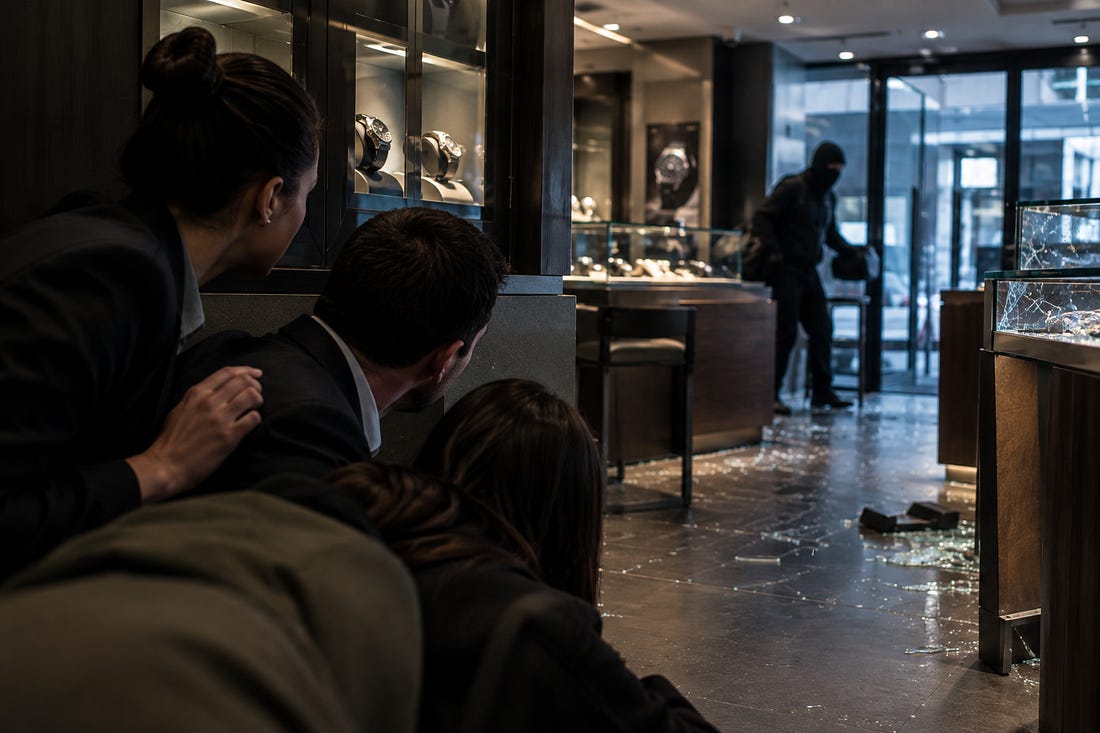
Rising losses and more aggressive attacks are pushing watch and jewellery retailers to reconsider how they protect staff, customers and stock. The report records a sharp increase in UK armed attacks and substantial American losses, even where the number of incidents has declined.
Security extends beyond reinforced displays. Transport procedures, access controls, staff training, insurance documentation and the verification of watches entering resale channels all influence how vulnerable a business may be.
The strongest response treats the watch’s journey as a connected process. A piece can be exposed in a shop, in transit or during a private transaction. Better coordination among retailers, insurers, law enforcement and marketplaces could improve prevention and the recovery of stolen property.
FHH Summit: Watchmaking Education Is an Investment in Trust
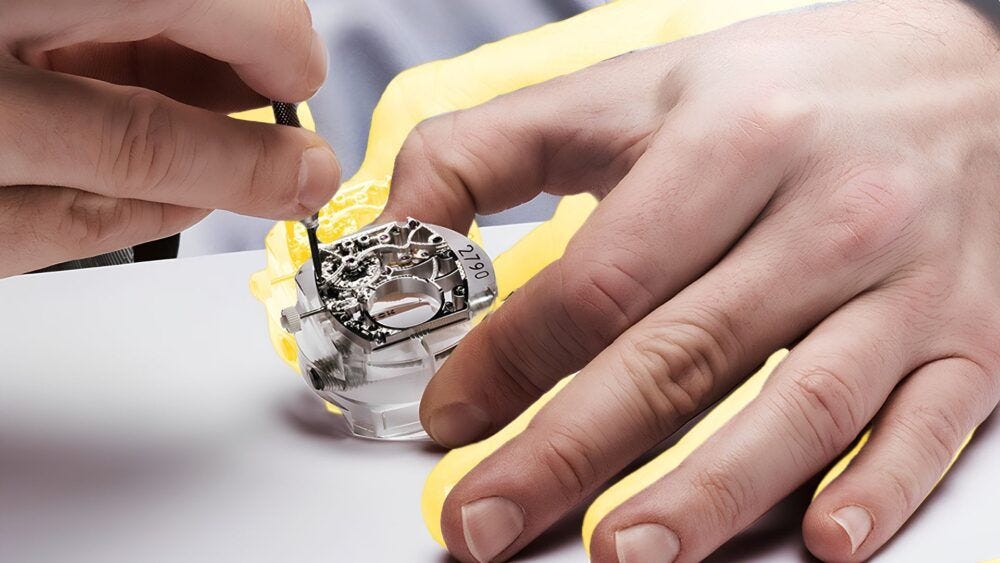
The FHH Watch Summit in New York places education at the center of the industry’s future. Training watchmakers, creating viable careers and helping consumers understand mechanical work are presented as connected priorities.
The shortage of qualified watchmakers in the United States gives the discussion practical urgency. Programs such as the North American Institute of Swiss Watchmaking in Dallas demonstrate how sustained investment can build the workforce needed to maintain and repair the watches already being sold.
Consumer education matters for a related reason. Understanding construction, finishing and service makes it easier to assess value and ownership costs. Technology may support that learning, but the discussion emphasizes preserving the human expertise on which the industry depends.
AP’s Consignment Model Deserves a Close Reading
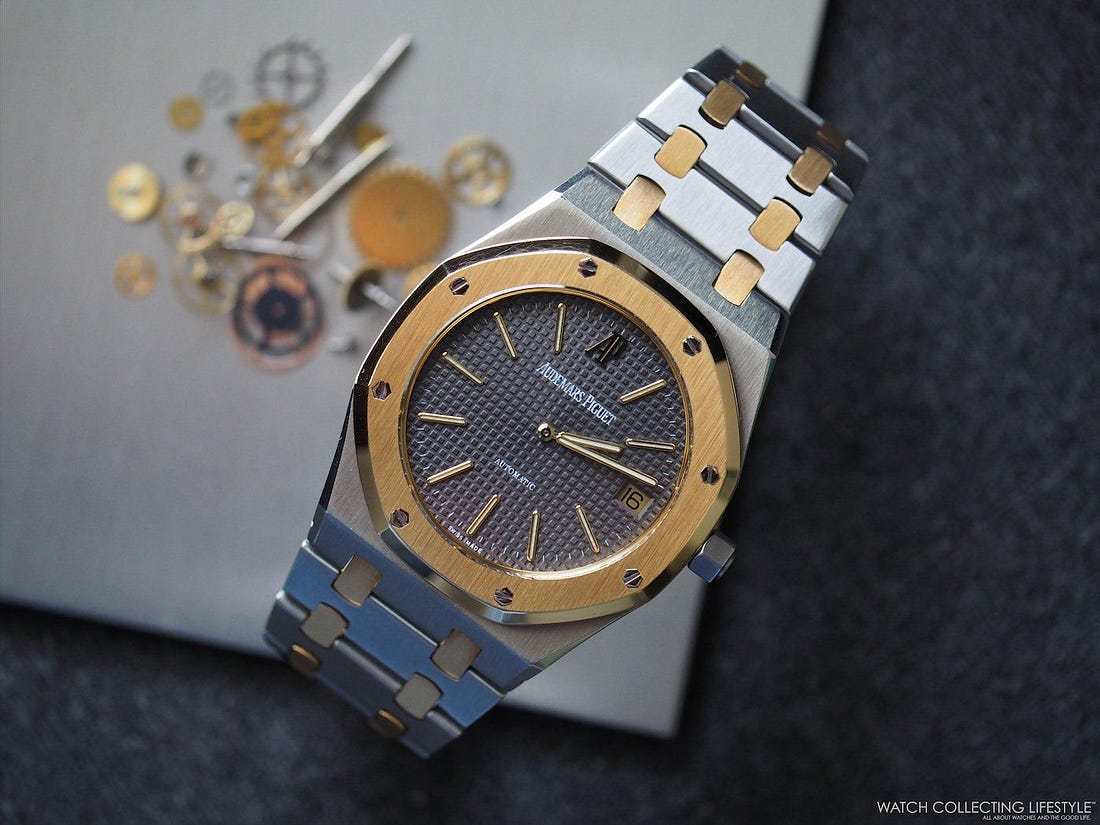
Eight years after Audemars Piguet’s earlier exploration of certified pre-owned, The Watch Keepers gives the concept a defined commercial structure. Watches are authenticated against the manufacturer’s records, assigned a condition grade and offered with a two-year warranty.
The significant distinction is that the program does not automatically refurbish every watch. Buyers receive a documented example in its assessed condition, while sellers pay a tiered commission and retain ownership until a sale occurs.
That approach can appeal to collectors who value original condition, but it requires careful reading of each description. The larger question is how a manufacturer’s participation will influence availability, pricing and confidence in its own secondary market.
Watches and Cars Share More Than a Racing Calendar
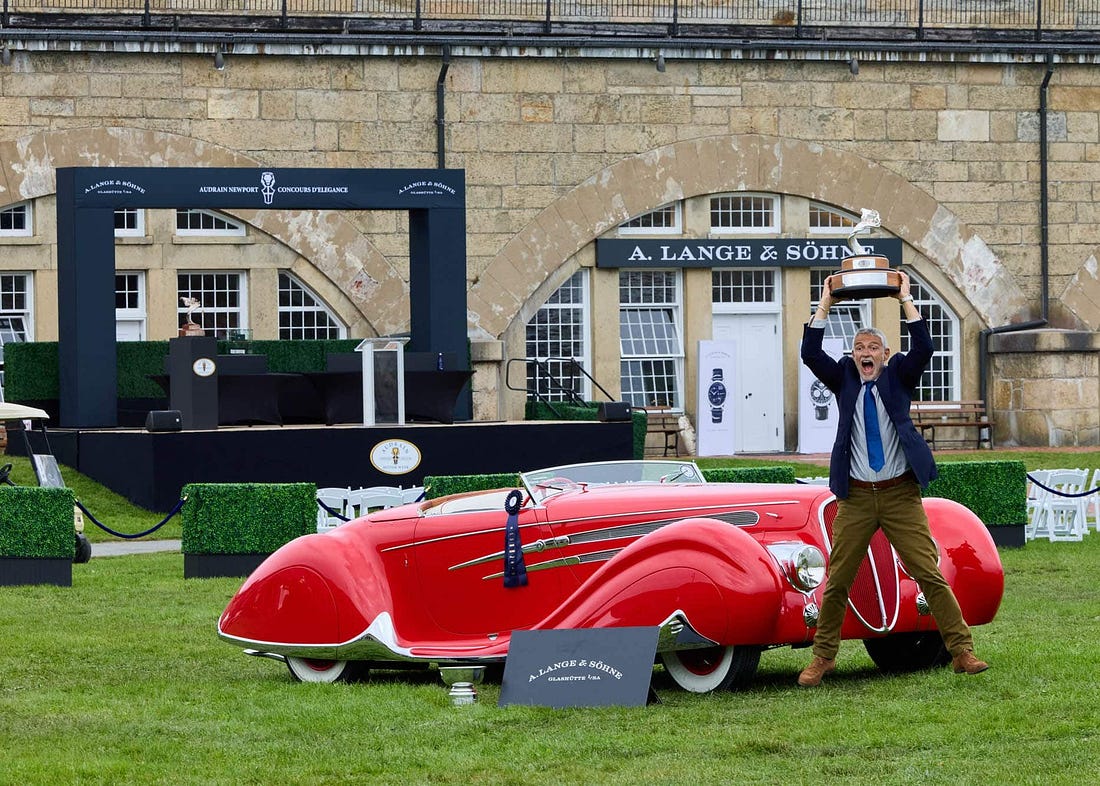
The connection between watches and automobiles begins with measurement but extends into design, engineering and collecting culture. Early timing instruments helped quantify speed and distance, while later wrist chronographs turned those functions into recognizable sporting identities.
The Speedmaster, Autavia and Daytona illustrate how motorsport associations can become inseparable from a watch’s public character. Film, famous owners and auction results add further layers to that relationship.
The feature also considers the more fundamental attraction: mechanisms assembled with care, components working together and the satisfaction of understanding how a machine performs. A. Lange & Söhne’s chronograph development provides a particularly sophisticated expression of that shared mechanical interest.
Picking NFL Team Watches, Part II
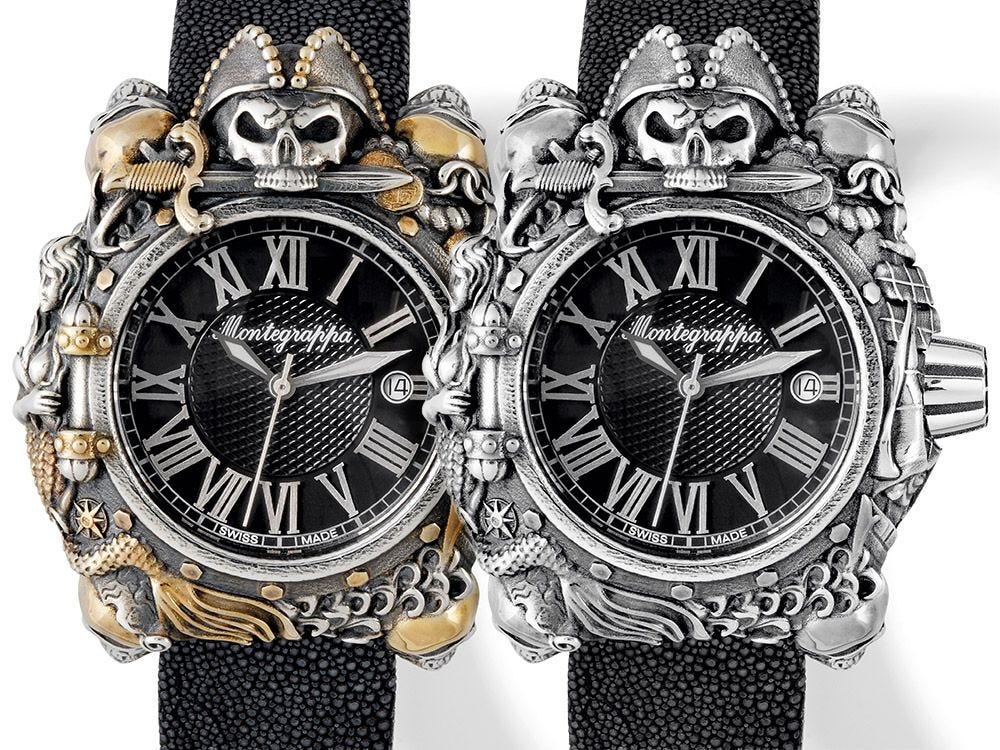
The second installment of this NFL watch-pairing exercise uses team histories, colors and personalities as starting points for an unconventional selection process. The choices range across vintage watches, contemporary models and collaborations.
The entertaining part is the explanation. Ownership milestones, franchise anecdotes and cultural associations give the pairings more substance than simply matching a dial to a jersey.
Collectors who enjoy assembling watches around a theme will recognize the appeal. A collection can tell a story through connections that never appear on a specification sheet—and sports fandom supplies plenty of material.
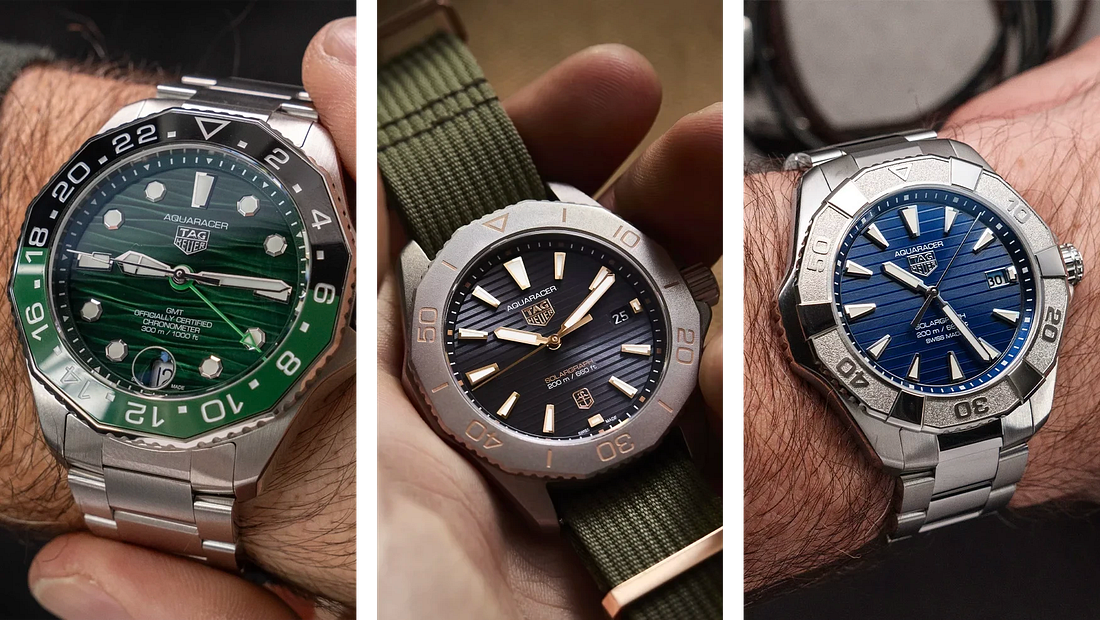
The Modern TAG Heuer Aquaracer Has More Than One Identity
TAG Heuer’s Aquaracer family now stretches well beyond the idea of an entry-level luxury diver. This survey considers heritage-inspired titanium models, deep-diving specialists and solar-powered everyday watches.
The differences are consequential. Case material, thickness, movement technology and depth rating can make two Aquaracers serve quite different owners, even when they share the collection’s recognizable design language.
Recent developments emphasize improved ergonomics and a broader range of materials. For prospective buyers, the useful exercise is deciding which capabilities will matter on the wrist, then finding the version whose proportions and maintenance needs support that use.
New Watches
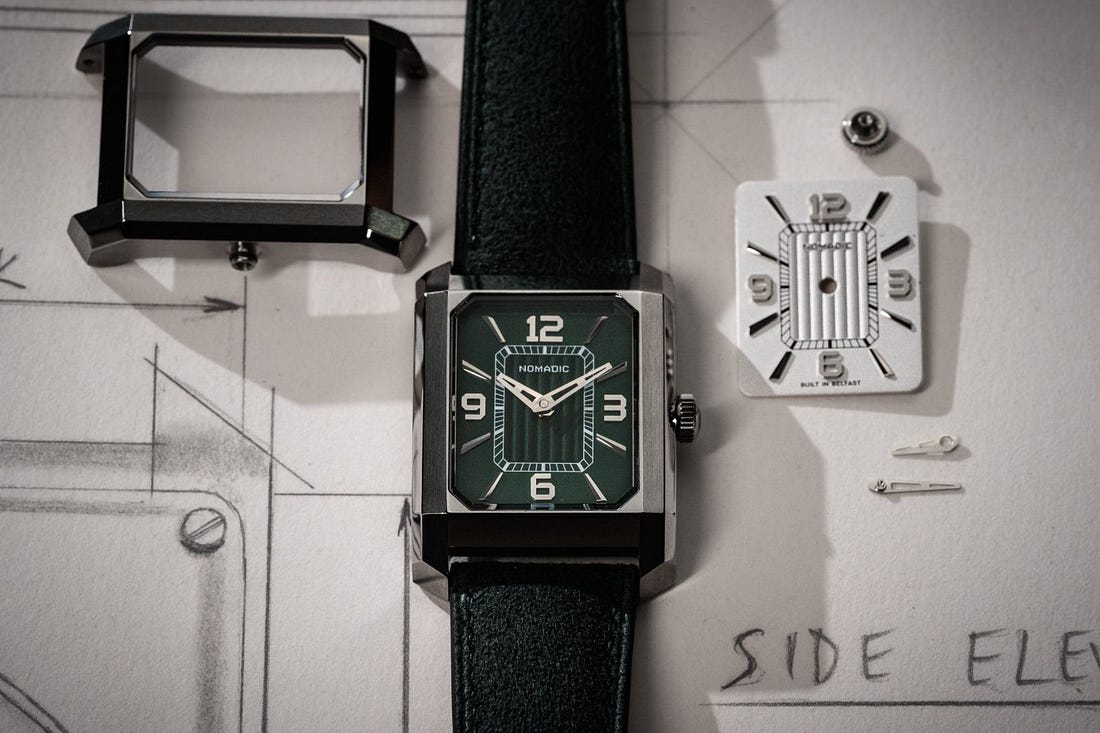
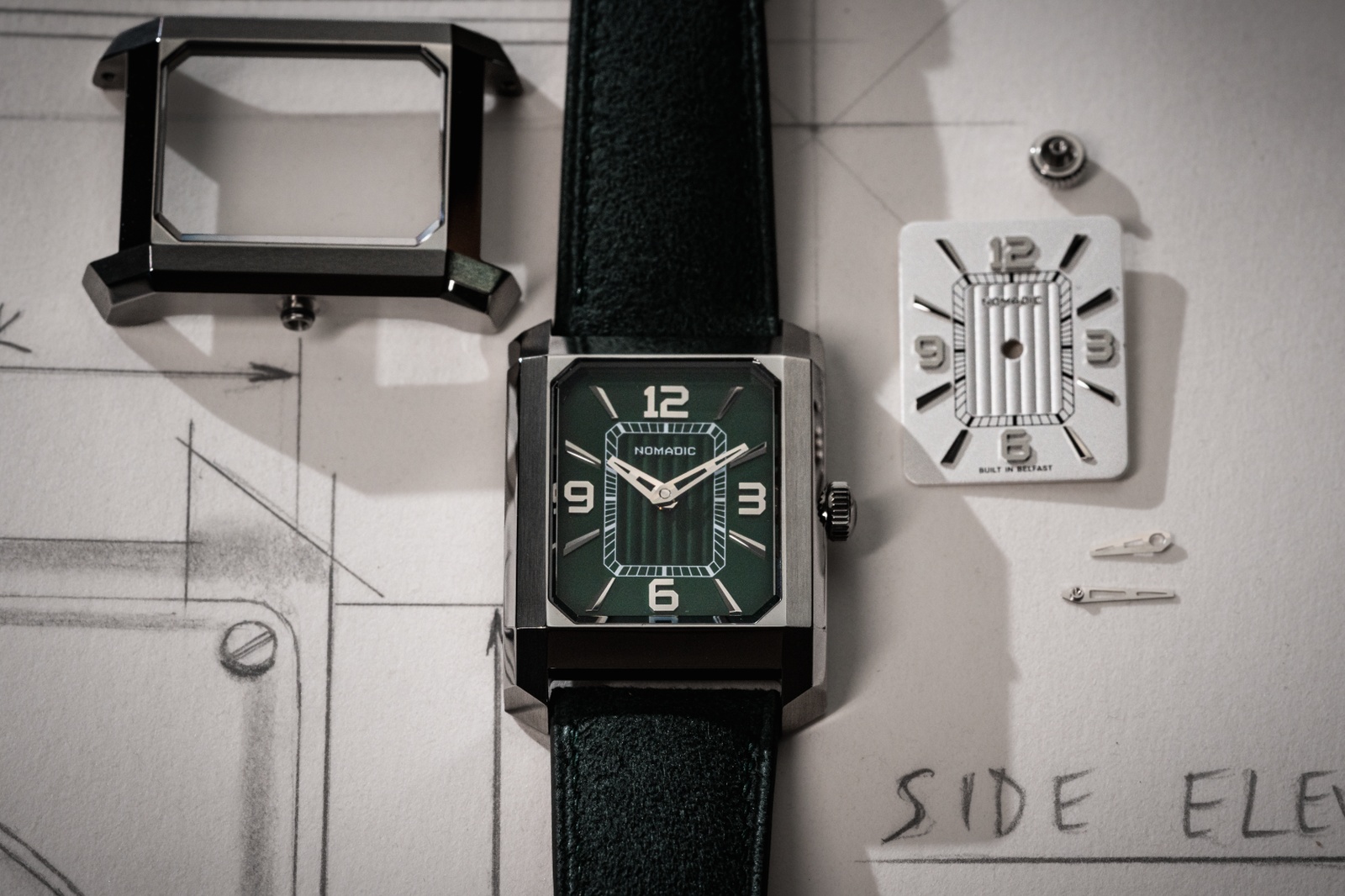
Nomadic Dána 141: Belfast Takes a Rectangular Turn
Nomadic expands beyond its familiar tool-watch territory with the Dána 141, a slim rectangular dress watch offered with Moonlight White, Emerald Green or Black Velvet dials. Its steel case measures approximately 28 × 39.5 mm and 8.3 mm thick, while a striped dial center, openworked hands and an Art Deco minute track establish a more formal personality. The manually wound La Joux-Perret D101 supplies a 50-hour power reserve and can be viewed through the exhibition back.
Leather, suede and Milanese options give the watch several different expressions, with quick-release fittings simplifying changes. Water resistance is 30 meters, making this principally an everyday dress watch. Nomadic lists purchasing availability for October 30, rather than October 27. Price: approximately US$1,670, converted from £1,250; local taxes and import charges may differ.
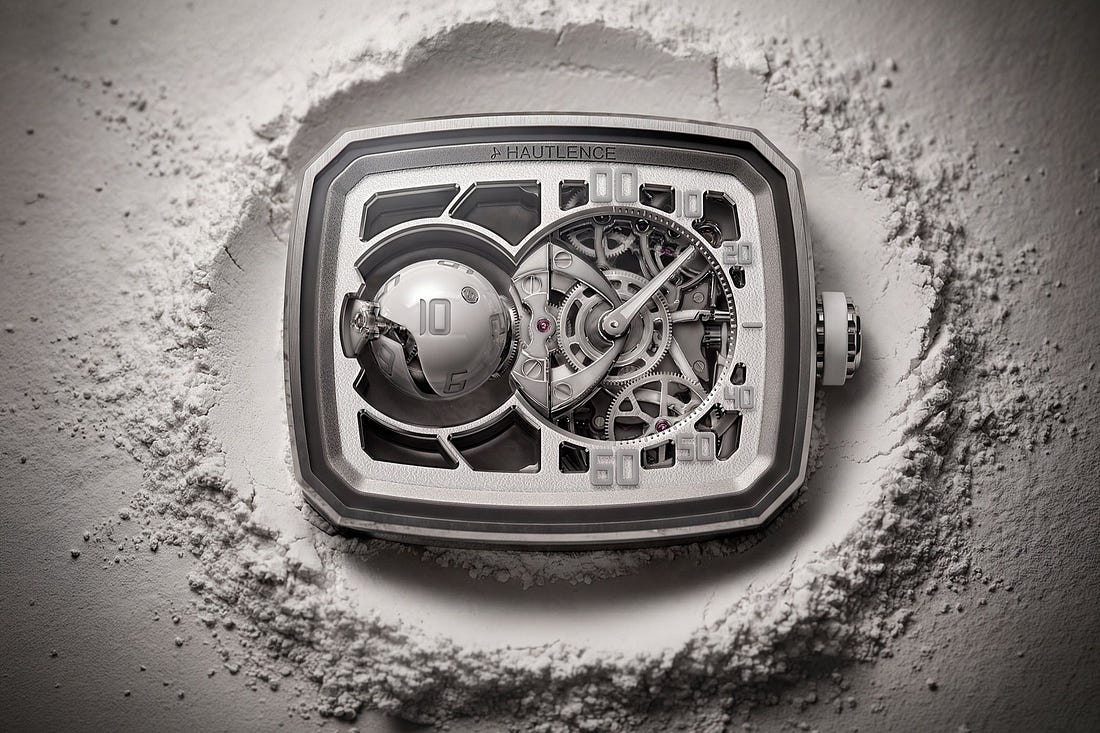
Hautlence Sphere Series 5 Turns Its Mechanical Theater White
Hautlence gives its spherical jumping-hour display a striking white treatment with the Sphere Series 5. A rotating, multi-axis sphere presents the hours, while a retrograde minute hand supplies a more familiar reference point beside the unusual mechanism. The grade 5 titanium case measures 37 × 45 mm, with a substantial sapphire crystal contributing to the watch’s 17.4 mm overall height.
The hand-wound A82 movement offers a 72-hour power reserve, and water resistance is rated to 100 meters. Production is limited to 28 pieces, with an initial 30-day Mexican exclusivity period and additional green and red straps accompanying the Mexican-market presentation. White suede reinforces the visual theme while leaving the display itself as the principal attraction. Price: approximately US$87,500 before tax, converted from CHF72,200.
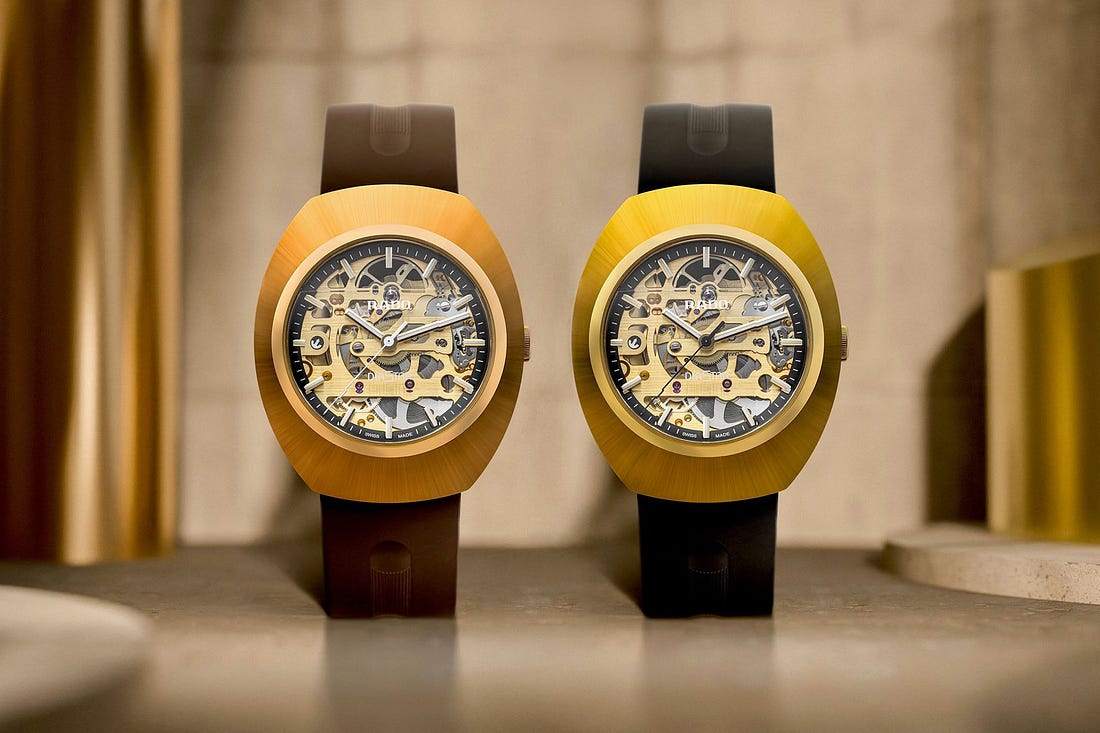
Rado DiaStar Original Skeleton Warms Up for Autumn
Rado brings rose-gold and yellow-gold tones to the DiaStar Original Skeleton, using warm finishes to soften the collection’s recognizable helmet-shaped profile. The 38 mm case combines Ceramos with a steel middle case, while the openworked display reveals gold-colored movement elements and luminous hands. The result places contemporary skeletonization inside a silhouette whose origins reach back to the original DiaStar.
The automatic R808 offers an 80-hour power reserve, a Nivachron hairspring and regulation in five positions. A brown rubber strap with Rado’s EasyClip interchangeability adds a casual element, and 100-meter water resistance supports everyday use. The appeal is the combination of material technology, familiar geometry and a distinctly warmer palette. Price: approximately US$2,910, converted from €2,600.

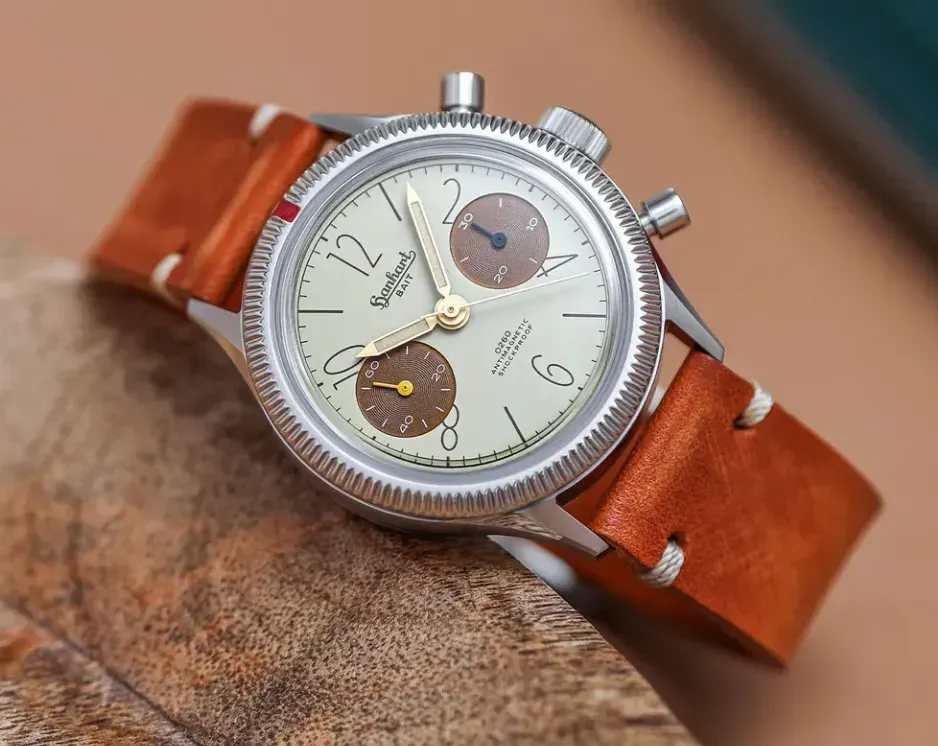
Hanhart 417 ES × 0260 × BAIT Imagines a Lost Racing Chronograph
Hanhart, 0260 and BAIT collaborate on a racing-inspired interpretation of the 417 ES, imagining a vintage model that never entered the historical catalog. The 39 mm steel case retains a fluted bidirectional bezel and domed sapphire crystal, while contrasting two-register dials give the familiar pilot-watch architecture a different personality. Buyers can choose black with cream counters and red accents, or cream with brown counters.
A manually wound Sellita SW510 M powers the chronograph, and water resistance is rated to 100 meters. Vintage-style leather straps reinforce the period reference without requiring the compromises of an actual midcentury watch. Each dial version is limited to 88 pieces. Price: approximately US$3,235, converted from €2,890.
Reviews

PS Horology Tsuba En Finds Distinction in Restraint
The PS Horology Tsuba En brings Peter Speake and Japanese watch specialist Kinya Mishima together in a ten-piece edition celebrating Les Artisans’ twentieth anniversary. Its 38.3 mm steel case, integrated bracelet and gold-plated German-silver guilloché dial create a watch whose interest emerges through close inspection.
The ultra-thin Vaucher 5401 uses a tungsten micro-rotor and provides a 48-hour power reserve. At 8.91 mm thick, the complete watch places considerable emphasis on proportion and wearing comfort.
The review frames the design through shibui, the appreciation of understated beauty. Case contours, dial engraving and bracelet integration provide the substance behind that description. The announced price is CHF18,000 before tax, approximately US$21,815.
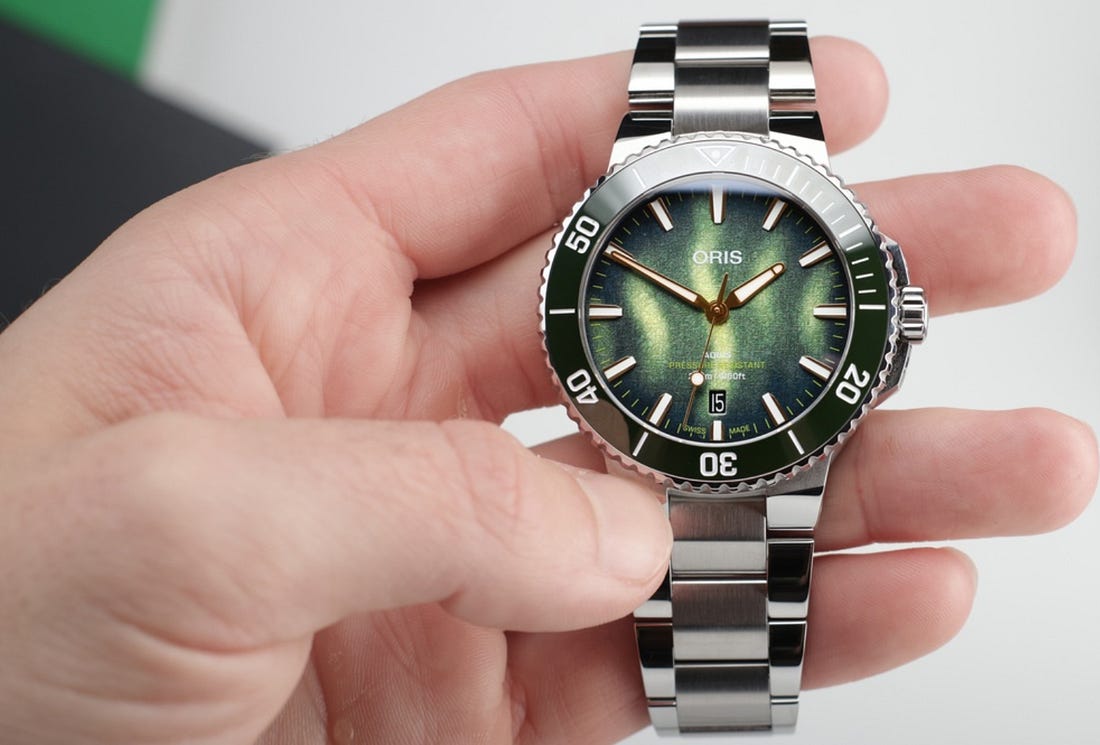
Oris Aquis Kelp Forest Gives Conservation a Place on the Dial
Oris uses the Aquis Kelp Forest Limited Edition to draw attention to an underwater environment that rarely receives the visibility of coral reefs. Its green dial carries a raised kelp-inspired pattern influenced by photographer Francis Pérez’s work.
The 41.5 mm steel case provides 300-meter water resistance, while a green ceramic bezel and luminous indications preserve the Aquis’ practical diving credentials. Inside, the automatic Calibre 733 offers a 41-hour power reserve.
Limited to 1,000 pieces, the watch combines a distinctive dial with a familiar, capable platform. The supplied price is £2,250, approximately US$3,005 at the conversion rate used for this issue. Its most individual feature is the way the dial turns an environmental subject into something the owner encounters every day.
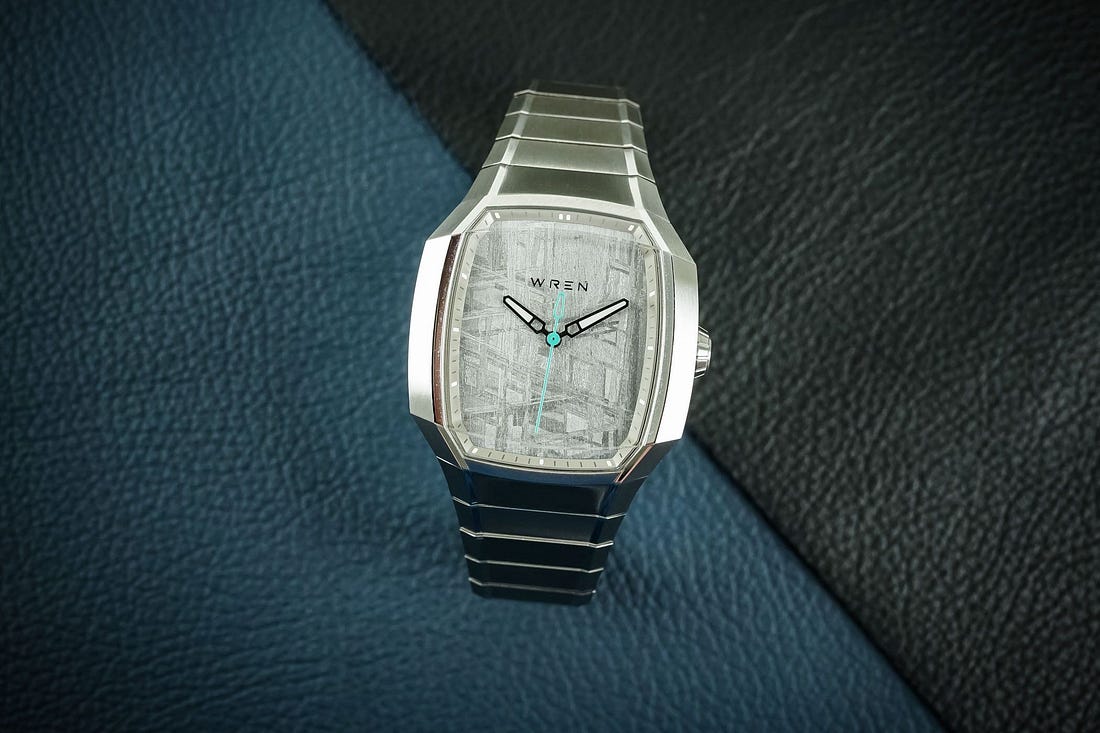
Wren Vessel Takes the Integrated Sports Watch in a Sharper Direction
Wren’s Vessel moves decisively away from the brand’s vintage-diver associations. Designed by Max Resnick under Craig Karger’s direction, it combines a faceted 39 mm case with an unusually shaped sapphire crystal and an integrated bracelet.
The 904L steel construction and sharply resolved surfaces give the watch a coherent architectural identity. A Sellita SW300 supplies the automatic movement, while silver and meteorite dials create two distinct expressions of the design.
Production is limited to 150 pieces per version, with early-2027 delivery planned for preorders. Pricing is US$2,900 for silver and US$3,400 for meteorite, with an optional US$195 rubber strap. The important question is how comfortably that ambitious geometry translates from photographs to the wrist.
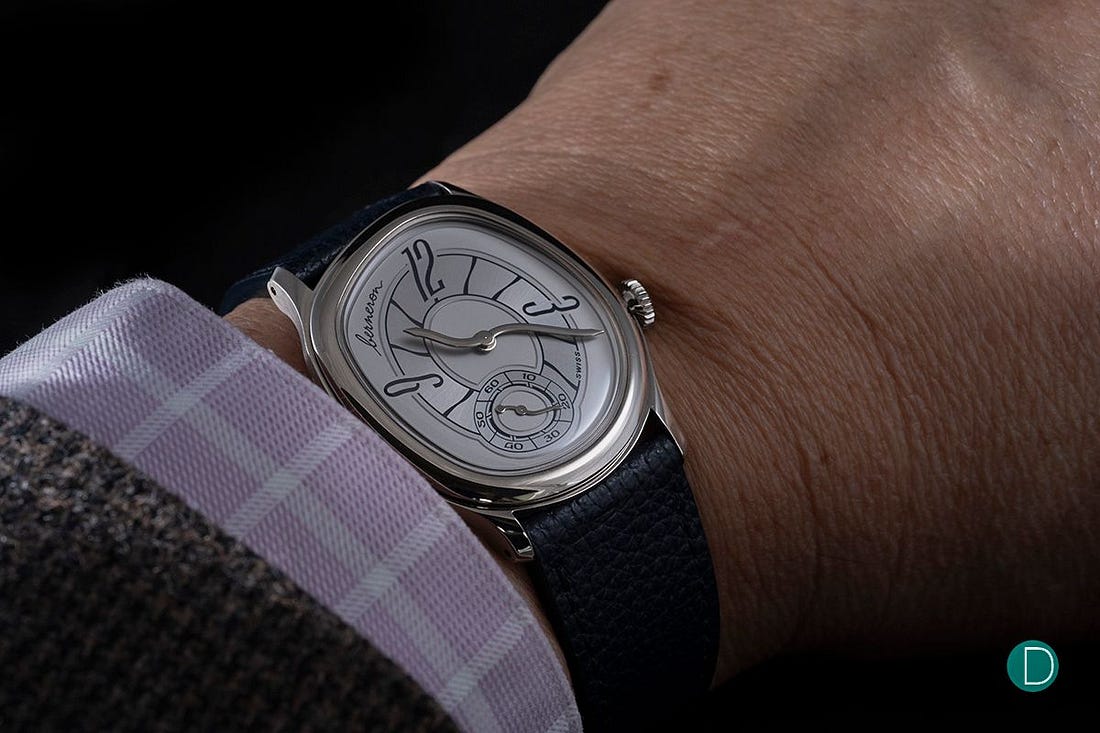
Berneron Mirage 38 Prussian Blue Makes Distortion Feel Deliberate
Berneron’s Mirage 38 challenges conventional symmetry across the case, dial, hands and movement. The Prussian Blue version uses an 18-karat white-gold case measuring approximately 38 × 34 mm, with proportions that appear fluid while following a carefully developed geometry.
The bespoke, manually wound Calibre 233 is only 2.3 mm thick and offers a 72-hour power reserve. Its construction supports the broader design rather than forcing an unconventional case around a conventional round mechanism.
The review finds the completed watch unexpectedly comfortable, helped by its 7 mm thickness and short, curved lugs. Production is limited to 24 pieces annually, and the Prussian Blue allocation was already filled for 2026. The stated CHF72,500 price is approximately US$87,865 before VAT.
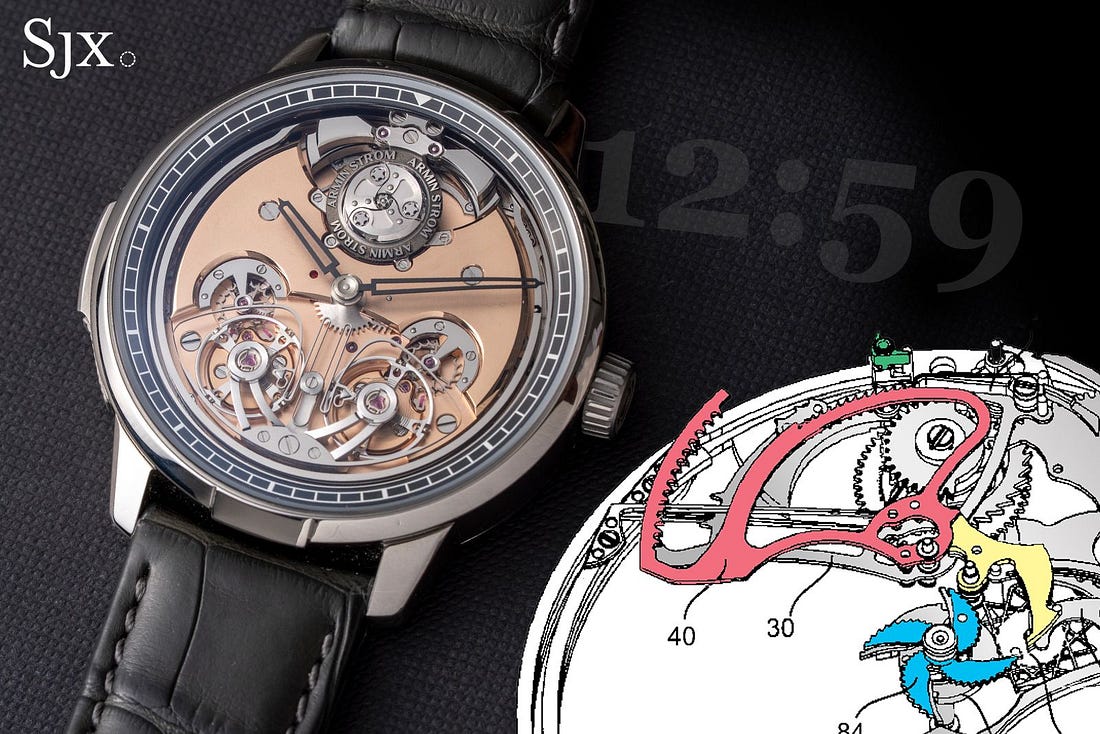
Armin Strom Makes 12:59 Available on Demand
The Minute Repeater Resonance 12:59 First Edition adds an unusual demonstration function to Armin Strom’s chiming watchmaking. Owners can ask it to sound 12:59 without changing the displayed time, allowing the striking mechanism to perform its extended sequence whenever desired.
That theatrical feature sits alongside the brand’s coupled oscillators and resonance clutch spring. The 42 mm titanium case measures 11.7 mm thick, giving an exceptionally complicated mechanism relatively restrained exterior dimensions.
The technical interest lies in how the striking racks and associated controls produce the demonstration while leaving timekeeping undisturbed. Limited to 25 pieces, the watch carries an announced price of CHF390,000 before tax. It is an example of engineering directed toward the owner’s experience of a complication.
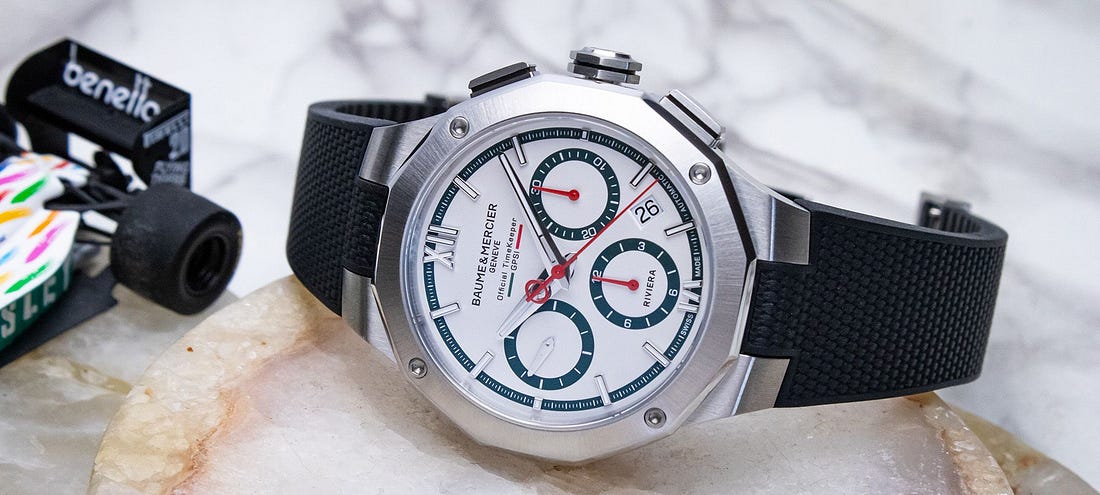
Baume & Mercier Riviera GPSI Chooses a Different Racing Vocabulary
The Riviera Chronograph GPSI Limited Edition brings vintage motorsport references to Baume & Mercier’s angular sports-watch platform. A white opaline dial, forest-green counter surrounds and red chronograph hands establish the theme without relying on a prominent tachymeter scale.
The 41 mm steel case retains the Riviera’s twelve-sided bezel and integrated-lug design. A Valjoux 7753 automatic chronograph provides a 48-hour power reserve, with the movement visible through a commemoratively printed sapphire back.
The review appreciates the restrained composition while noting the practical limitation of a cut-to-fit rubber strap. At US$5,100, the watch asks buyers to value a particular combination of case identity, racing references and everyday chronograph functionality.
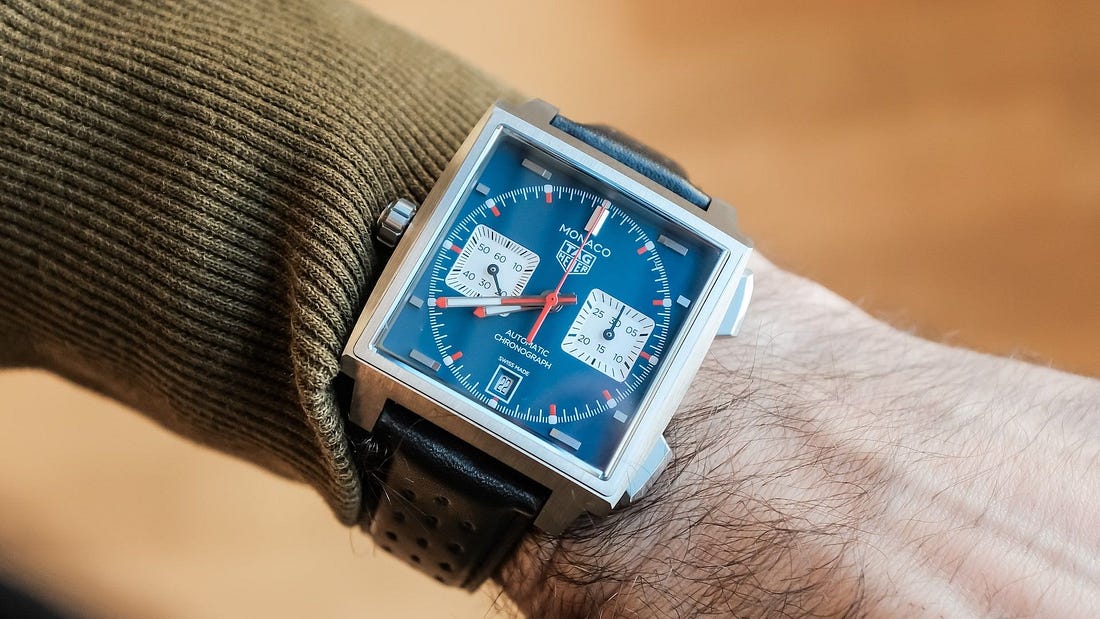
TAG Heuer Monaco: Admiration Still Has to Pass the Wrist Test
This hands-on examination finds plenty to admire in the TAG Heuer Monaco’s blue dial, contrasting counters and red accents. The 39 mm grade 5 titanium case reduces weight, while the automatic TH20-11 provides an 80-hour power reserve.
Chronograph operation and finishing support the technical proposition, and the perforated black calfskin strap complements the sporting design. Yet the square case’s broad, relatively flat footprint proves more challenging than its nominal diameter suggests.
That tension defines the review. A watch can be historically significant, visually persuasive and mechanically appealing while remaining difficult to integrate into a particular owner’s rotation. At US$9,350, the Monaco makes a convincing argument for trying a watch on before committing to the idea of owning it.
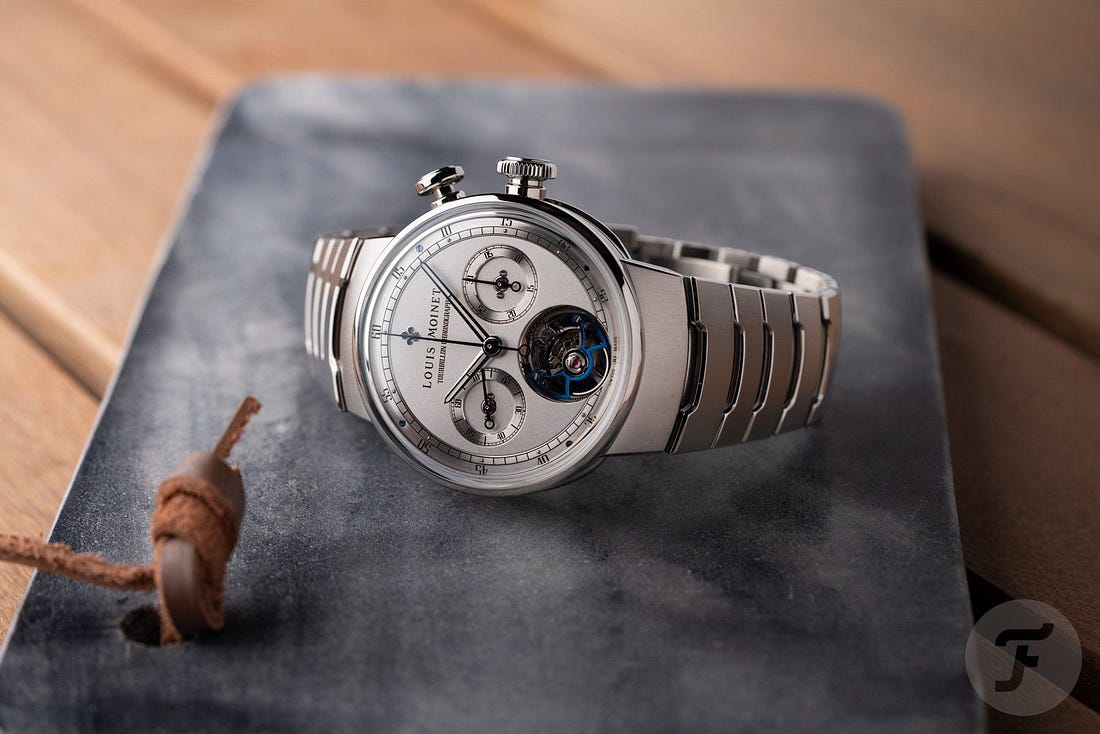
Louis Moinet 1816 Combines a Tourbillon With Chronograph Ambition
Louis Moinet’s 1816 Tourbillon Chronograph places a monopusher chronograph and an off-center flying tourbillon inside a 40.6 mm grade 5 titanium case. Blue accents, open views of the mechanism and an integrated bracelet give the complicated watch a contemporary appearance.
Developed with Concepto, the LM114 combines a column wheel and horizontal clutch with a 96-hour power reserve. Its arrangement makes the movement’s operation a substantial part of the visual experience.
Production is limited to twelve pieces, with a price of US$135,000. The 15.1 mm thickness remains relevant to wearability, even with the moderate diameter and lightweight case material. This is a watch whose attraction depends on enjoying the mechanics as much as the overall design.
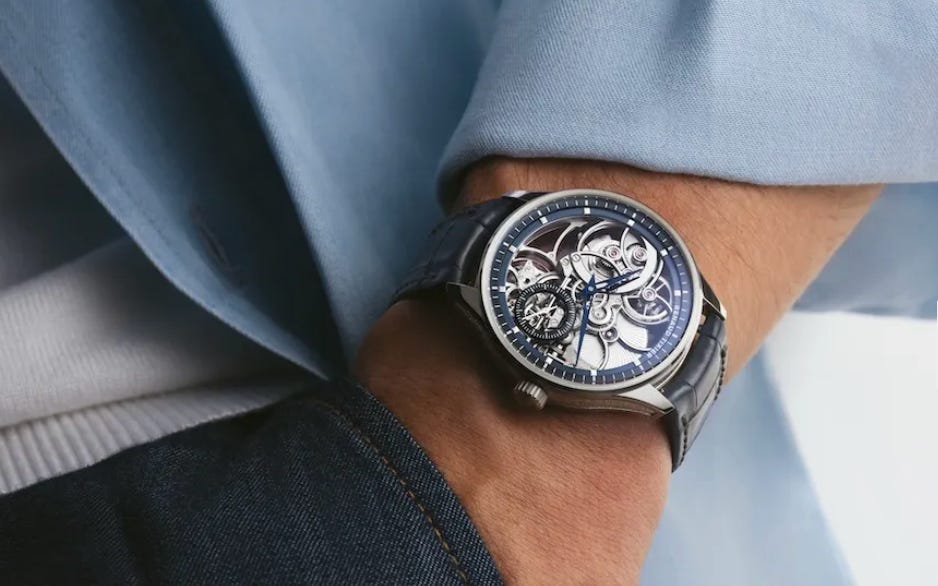
Renaud Tixier Monday Skeleton Opens the Mechanism to Inspection
The Monday Skeleton exposes the inventive work behind Renaud Tixier’s automatic winding system. Dominique Renaud and Julien Tixier use the openworked format to reveal both the mechanism’s architecture and the finishing required to make it visually coherent.
The 40.8 mm gray-gold case contains the RVI2025 movement, with at least 72 hours of power reserve. Extensive inward angles and hand-finished surfaces give collectors details to examine beyond the unusual micro-rotor concept.
Petrol-blue and green versions are each limited to fifteen pieces. At CHF129,000, approximately US$156,340, the watch occupies an exacting price category. Its case rests on the combination of mechanical invention, demanding execution and the visibility of the work itself.
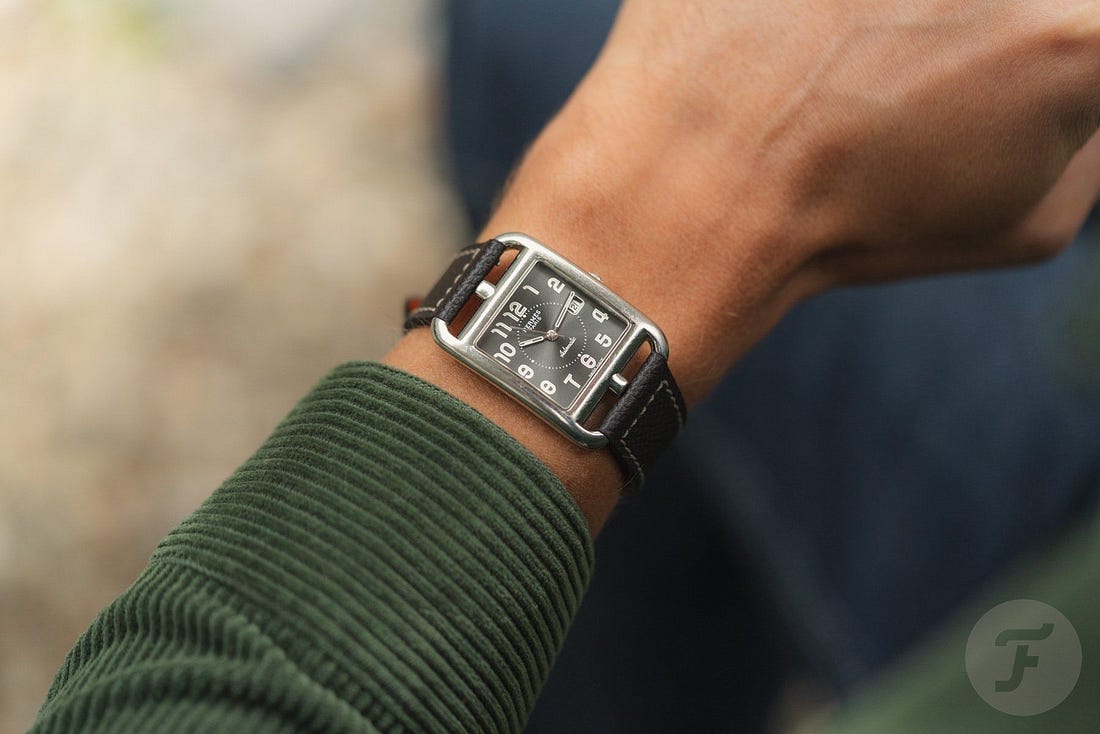
Why a Pre-Owned Hermès Cape Cod Made Sense
A pre-owned Hermès Cape Cod reference CC1.710 becomes the subject of a refreshingly personal ownership account. Found through a Dutch watch forum and negotiated to €1,000, the watch appealed through its gray dial, unusual numerals and distinctive rectangular geometry.
The approximately 29 × 41 mm case sits comfortably on the author’s 17 cm wrist, demonstrating how differently shaped watches can wear from what their dimensions initially suggest. Condition compromises include visible wear, weak lume and an automatic movement running somewhat fast.
The owner remains pleased, while recognizing the need for further care and a suitable strap. It is a useful account of buying a watch for its character with a clear understanding of its imperfections. The purchase price translates to approximately US$1,120.
Editorial
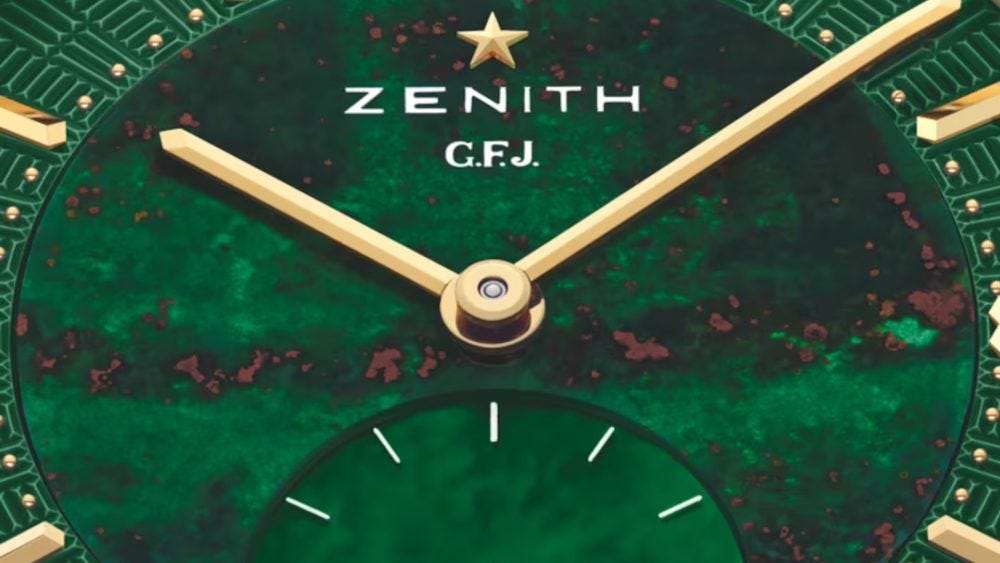
Zenith and the Risk of Chasing a Scarcity Premium
Zenith’s reported restructuring raises a difficult strategic question: can a manufacture respond to pressure in its established market by moving decisively toward much more expensive watches? The editorial examines a proposed shift from the familiar CHF8,000–15,000 territory toward pieces around CHF50,000 and above.
The attraction is understandable. Lower volumes and higher selling prices can appear to offer a route toward stronger economics. But the costs of running a manufacture do not disappear simply because fewer watches leave it, and customers in a higher bracket have formidable alternatives.
The analysis also considers the organizational challenge. Producing smaller quantities of more elaborate watches can require different skills, expectations and distribution. Reducing a retail network may support exclusivity while weakening the visibility needed to attract new customers.
Zenith possesses substantial technical credibility. Turning that strength into sustained demand at higher prices will require a convincing product identity and patient support. Scarcity can help express desirability; a smaller supply alone cannot establish it.
Podcasts
Scottish Watches #826: Dialling In With Chris Alexander
Chris Alexander, better known as the Dial Artist, joins Scottish Watches for a conversation about the people, encounters and creative possibilities surrounding the watch-show circuit. Visits to Watchmakers United, Hautlence and Sartory-Billard provide the setting.
The discussion ranges from Hublot’s Jeff Koons collaboration and the Bulgari × Vianney Halter Octo Finissimo to an encounter with extraordinary gem-set watches at Jacob & Co. Alexander also considers the conversations that may eventually become future collaborations.
The episode’s appeal is its view of watchmaking as a community of individuals exchanging ideas. The travel anecdotes and lighter diversions give the mechanical discussion a human setting.
Videos

Why US$2,000 Is the Sweet Spot for Watches — Scott Adam Lancaster
Scott Adam Lancaster argues that the area around US$2,000 offers a particularly appealing relationship between quality and expenditure. The discussion considers the movements, materials and design execution available before buyers move further into the premiums associated with prestige.
It is a useful proposition to examine against actual watches. Reliable mechanics and good construction can make this price category rewarding, although resale performance will still depend on the model and purchase price.
The broader question is where additional spending begins to deliver qualities that matter to you. Better finishing, a distinctive design or an unusual movement may justify more money, but that decision benefits from knowing what an attainable alternative already provides.
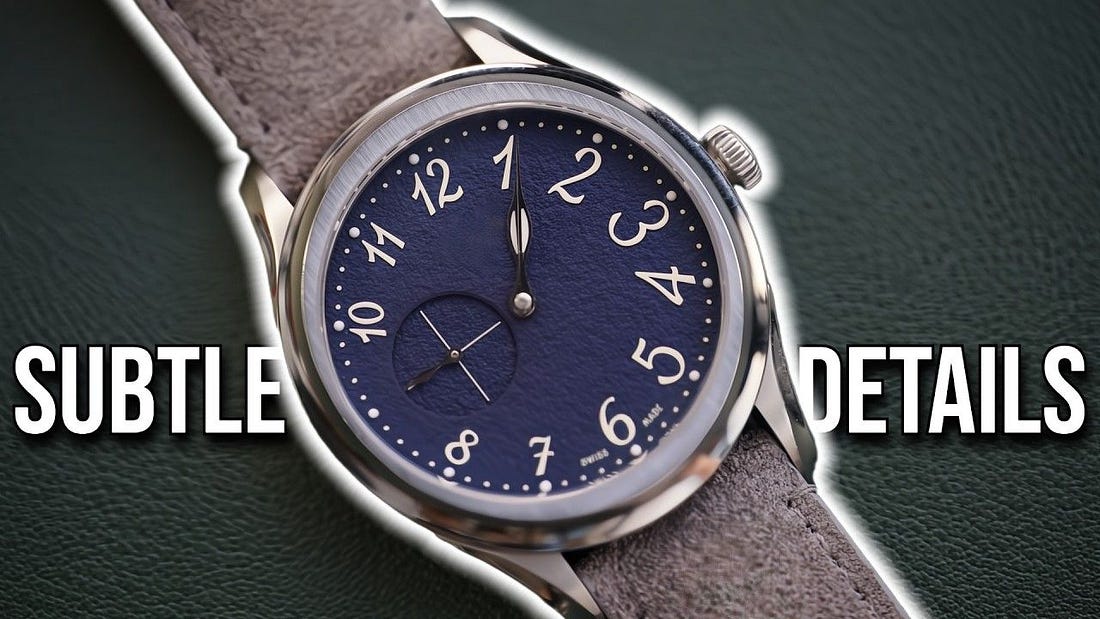
A Parisian Watch Brand Puts Design First — WatchChris
WatchChris examines a Parisian watch offering whose central attraction is its visual design. The presentation provides an opportunity to consider how proportions, surfaces and detailing work together beyond a static product photograph.
The useful question is whether the design remains coherent when viewed closely and from different angles. Distinction attracts attention, but execution determines whether that attention develops into lasting interest.
For collectors exploring smaller brands, videos like this can help establish which details deserve further investigation. A strong first impression is the beginning of the assessment, especially when the watch’s identity rests heavily on its appearance.
Auctions
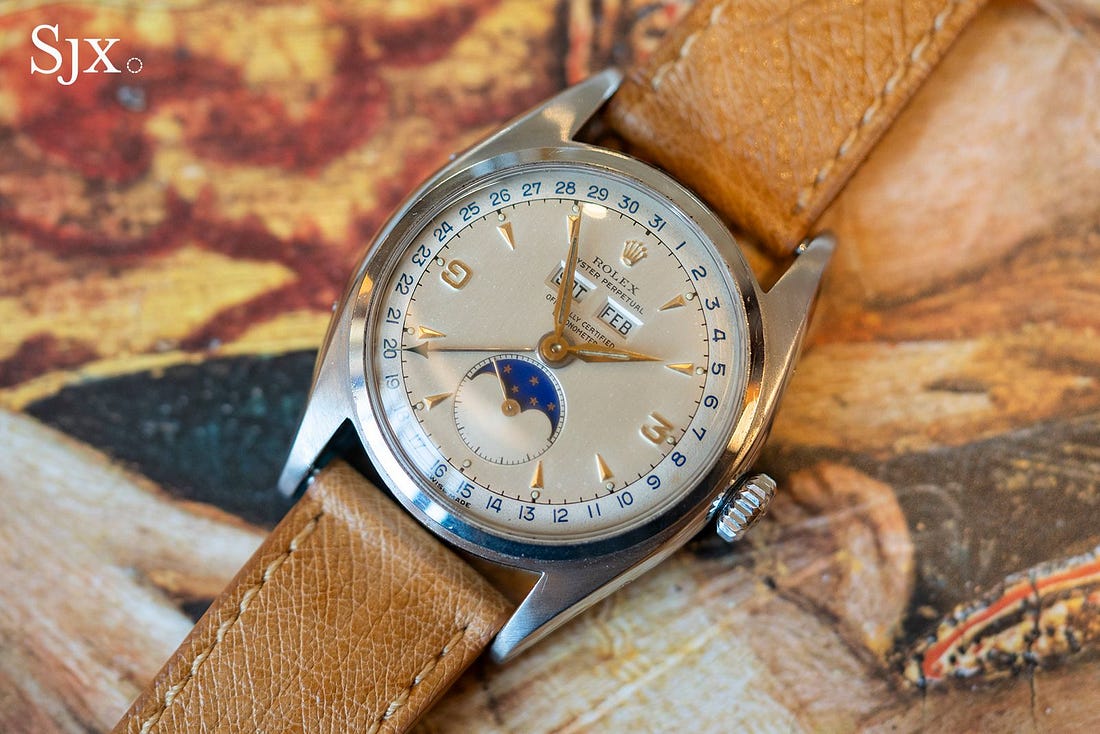
A Steel Rolex 6062 Brings Condition and Provenance Into Focus
A steel Rolex reference 6062 triple-calendar moon-phase watch is the subject of this auction preview. Offered as lot 50 at Monaco Legend, it carries an estimate of €1 million–€2 million and a reported ownership history involving only two owners.
The appeal centers on the individual example: its preserved dial surfaces, gold-toned hands and markers, case details and traceable appearance at auction in 2017. With vintage watches at this level, apparently small differences in originality and condition can have substantial consequences.
The reference combines a full calendar and moon phase with an Oyster case, giving it a distinctive place in Rolex collecting. The estimate establishes the auction house’s expectations. The bidding will determine how strongly collectors respond to this particular watch’s combination of rarity, presentation and history.
Auction Results
Hermès Squelette Lune Reaches US$10,199 and Remains Unsold
The October 26 auction of the 2022 Hermès Slim Squelette Lune, reference 053606WW00, ended with a high bid of US$10,199. The watch did not sell because bidding failed to reach its US$13,995 reserve.
The strongest bid finished US$3,796 below reserve, a shortfall of approximately 27.1%. Against the supplied US$30,000 list price, bidding reached approximately 34% of retail.
Those figures describe an unsuccessful auction, rather than a completed transaction or a definitive market valuation. They nevertheless show a substantial gap between the participating buyers’ offers and the seller’s minimum acceptable price.
Auction Report
Chronoswiss Q-Repeater Blue Note: Twenty-Five Pieces, Two Gongs and a Market Test
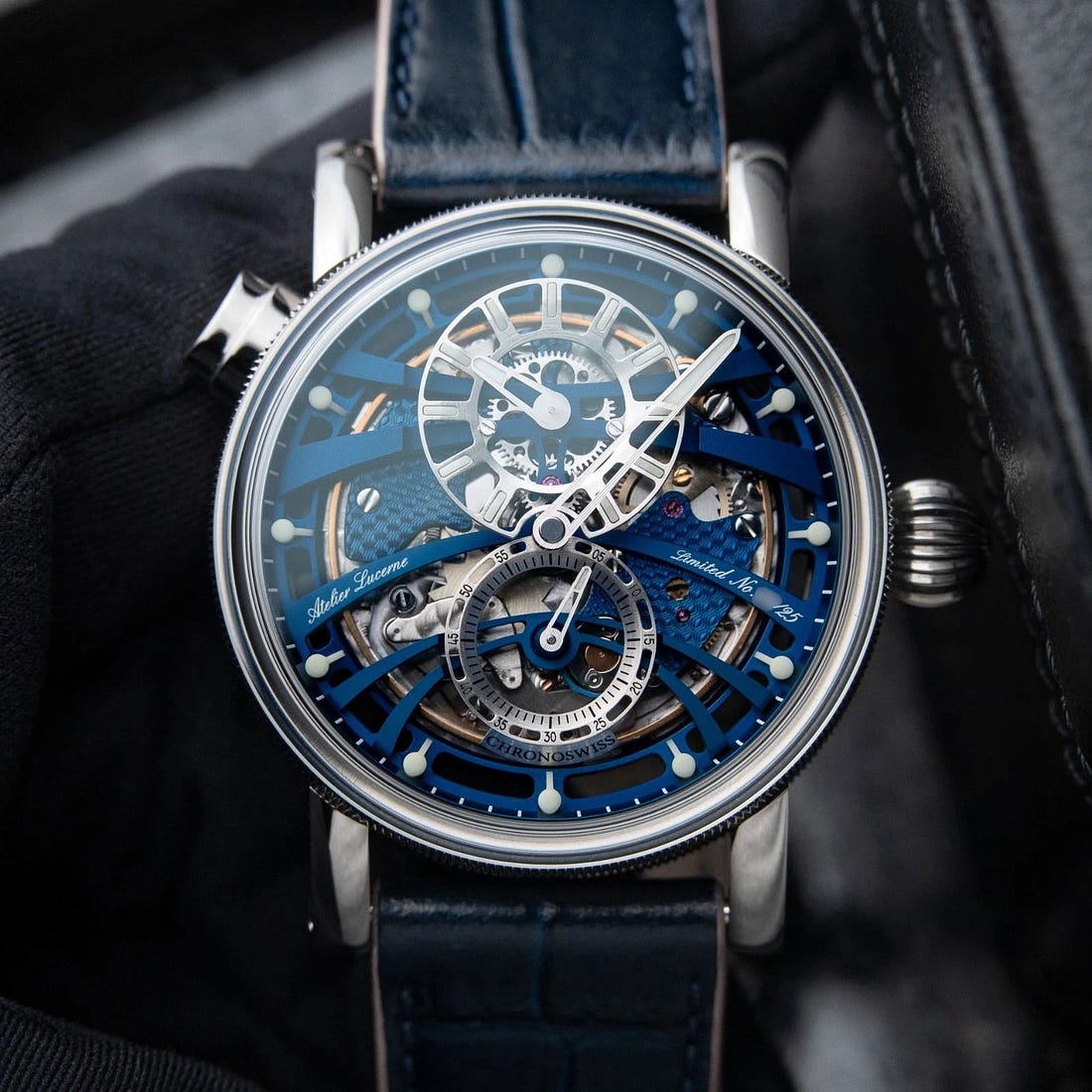
Today’s auction features a 2025 Chronoswiss Q-Repeater Blue Note, reference CH-1663T-BLSI, one of just 25 examples. Introduced in 2025, the model connects the contemporary Lucerne manufacture with the mechanical legacy of founder Gerd-Rüdiger Lang. Its automatic C.126 revives a Chronoswiss caliber introduced in the 1990s, restored and presented within a dramatically openworked modern watch. The Blue Note name draws on jazz, while the deep-blue architecture gives the historical mechanism a distinctly contemporary setting.
The 42 mm grade 5 titanium case contains a quarter repeater that sounds the hours and completed quarter-hours on two gongs when the pusher at ten o’clock is activated. It does not strike the individual minutes between quarters. Separate hour, central-minute and small-seconds indications reinforce the regulator presentation, while visible hammers make the mechanism part of the spectacle. The movement has a 35-hour power reserve; the case measures 16.2 mm thick and 50 mm from lug to lug, with water resistance rated to 30 meters.
Chronoswiss currently lists the Blue Note at US$45,900 on its American website. A separate pre-owned example offered by Exquisite Timepieces carries a US$36,000 asking price, approximately 21.6% below that retail reference. That is a dealer advertisement, not a confirmed sale, and it does not establish what today’s auction watch should bring. It does provide a useful alternative against which to compare the final payable amount. With such limited production, scarcity is straightforward to establish; a dependable resale value requires actual transactions.
The supplied auction listing describes this example as pre-owned, located in the United States and accompanied by its box, papers, product literature and hangtags. The dial is rated excellent, with minor wear noted on the case and bezel and in the listing’s bracelet field, although the watch is presented on a strap. The general condition language allows for possible previous servicing or polishing without confirming either. Its appeal rests on an unusual combination of historical mechanics, audible complication and modern titanium construction. Bidding is scheduled to close at 12:50 p.m. EDT on Tuesday, October 27, 2026.
Current bid: $4,800
Losing Time
Today’s Big Losers at Auction on Grailzee
Four Watches, Four Failed Sales: Apparently, the Buyers Missed the Pricing Memo
Four watches arrived at auction with a combined asking price of $146,700. The strongest bids totaled $107,600, leaving sellers $39,100 short—a collective miss of 26.7%. There was interest. There was money. Agreement on what these watches were worth proved somewhat harder to locate.
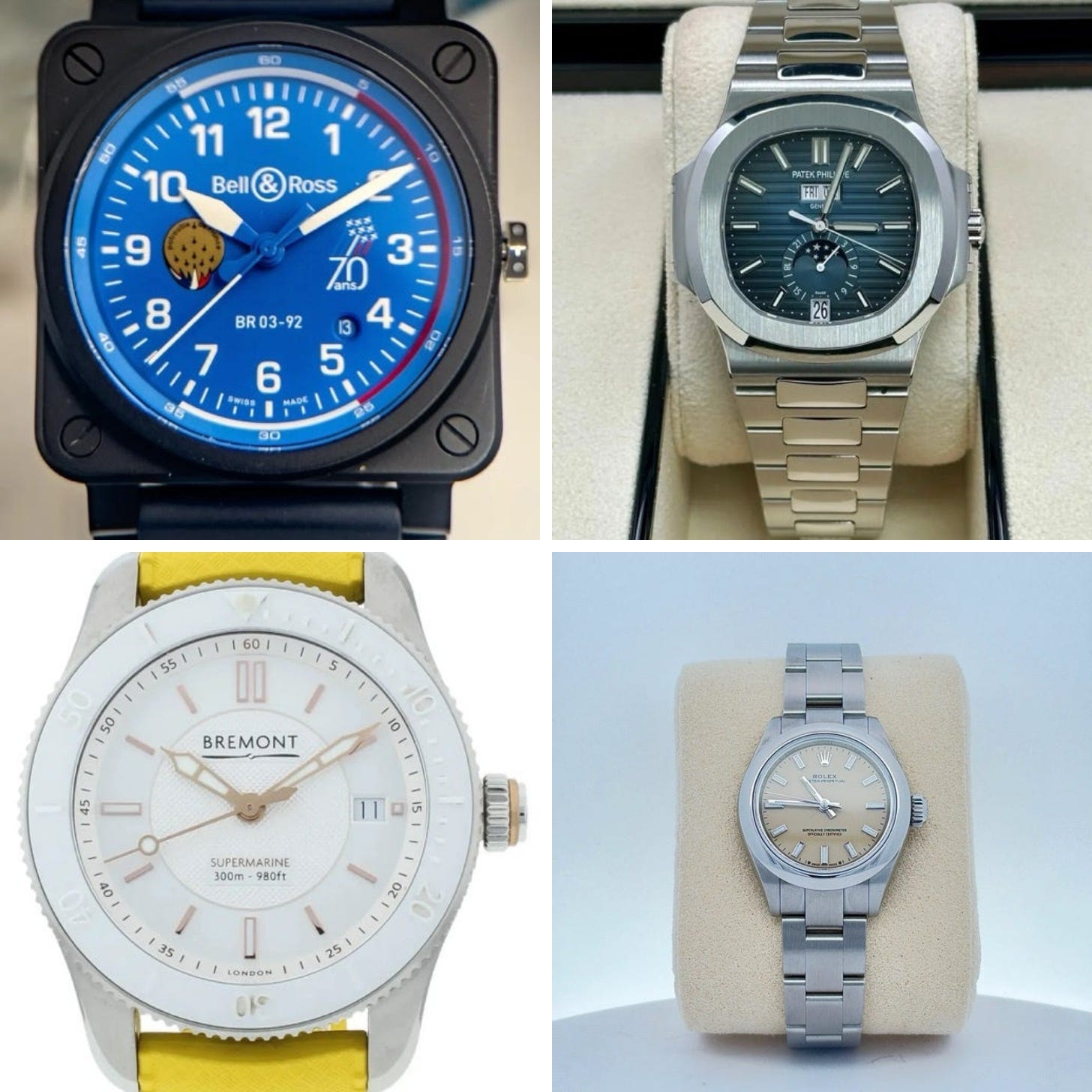
The 2026 Bell & Ross BR 03 “Patrouille de France 70th Anniversary,” reference BR0392-PAF7-CE/SCA, carried a $3,500 asking price but attracted just $1,700. That $1,800 shortfall put the bid 51.4% below ask. The aviation tribute may celebrate precision formation flying, but buyer and seller were operating in entirely different airspace.
The 2022 Patek Philippe Nautilus 5726/1A-014, with its blue dial and steel bracelet, produced the largest dollar disagreement. Against a $134,500 ask, the high bid reached $101,000, missing by $33,500, or 24.9%. Even a six-figure offer apparently lacked the necessary enthusiasm. The Nautilus name brought serious money into the room; it simply failed to bring the additional thirty-three thousand five hundred dollars the seller had in mind.
The Bremont Supermarine S300 Vigo, reference S300-VIGO-R-S, offered with a white dial and aftermarket rubber strap, sought $1,700 and received a $900 bid. The $800 gap represented a 47.1% miss. Nearly half the asking price remained an exercise in optimism. No production year was supplied, and the aftermarket strap is a relevant detail when comparing this example with other offerings.
The 2026 Rolex Oyster Perpetual Lady 28, reference 276200, paired a beige dial and Oyster bracelet with a $7,000 ask. Buyers stopped at $4,000, leaving a $3,000 gap, or 42.9% below the asking price. The crown was present. The presumed pricing authority appears to have taken the evening off.
The common thread is a substantial disagreement over price. Every watch missed its asking price by at least 24.9%, and three missed by more than 40%. Patek’s smaller percentage gap still accounted for most of the combined dollar shortfall, so the aggregate figure understates how far apart buyers and sellers were on the other three watches.
For this group, the market supplied 73.3 cents of bidding for every dollar requested. The remaining 26.7 cents was confidence awaiting sponsorship.
Closing Time
Thank you for spending part of your Tuesday with BuyingTime Daily.
Today’s issue offers several reasons to look more closely: the work inside a manufacture, the details of a warranty, the shape of a case and the distance between a seller’s expectation and an actual bid. Understanding those things can make collecting more rewarding, whether the next purchase is an unusual pre-owned Hermès or a titanium repeater.
Wear something you enjoy today. Let the next watch earn your confidence.
Have a great Tuesday.