Issue #278 | Buying Time - October 28, 2026
Rolex expands its retail reach, affordable watches challenge familiar assumptions, and a platinum Hermès asks collectors to put a price on individuality.
Buying Time in 30 Seconds
Rolex’s influence is extending across the watch business, from Bucherer-operated boutiques to the rapidly expanding certified pre-owned market. New research places Rolex, Audemars Piguet and Patek Philippe at the center of a secondary market estimated at US$26.6 billion, raising a familiar question: how much of a watch’s value comes from the object, and how much comes from the system surrounding it?
Elsewhere, Seiko’s broad release calendar, Citizen’s affordable titanium watches and a US$349 Timex collaboration demonstrate how much choice exists outside the prestige hierarchy. Hermès continues developing its own watchmaking identity, while new releases from NOMOS, Sinn, Elka and Moritz Grossmann offer very different interpretations of useful mechanics and distinctive design.
Yesterday’s limited-edition Chronoswiss Q-Repeater Blue Note reached US$17,250 and remained unsold against a stated US$45,900 MSRP. Today’s auction features a 39 mm platinum Hermès Slim d’Hermès, reference W054157WW00, with a US$20,000 reserve. Bidding is scheduled to close at 5:25 p.m. EDT today, Wednesday, October 28, 2026.
Time Graphing Today’s Watch Universe
Who Gets to Decide What a Watch Is Worth?
The watch business has become exceptionally good at explaining why something should cost more. There is the movement, the finishing, the history, the production limit, the precious metal and, somewhere near the end of the presentation, the possibility that someone else might eventually want it. Each can contribute to value. The trouble begins when we assume they contribute in equal measure—or that an impressive explanation guarantees an equally impressive bid.
Today’s issue offers several ways to examine that assumption. At one end sits Rolex, whose commercial strength increasingly extends beyond making watches. At the other are companies offering useful, attractive timepieces for a few hundred dollars. Between them is a crowded territory of independent design, mechanical invention and brand ambition. The products are different, but all are competing for the same final decision: whether a customer believes the asking price makes sense.
Consider Bucherer’s share of this year’s Rolex boutique openings. A larger boutique provides more than additional display cases. It creates room for hospitality, service, storytelling and certified pre-owned inventory. It also gives Rolex, through its ownership of Bucherer, greater influence over the setting in which customers encounter its watches.
That setting matters. Buying a luxury watch involves evaluating an object, but it also involves deciding whom to trust. A substantial boutique, an authorized relationship and an established service operation can make the purchase feel easier to justify. Those things cost money to provide. They can also help a brand defend its position when customers have more alternatives than ever.
The secondary-market report shows how powerful that position has become. Rolex, Audemars Piguet and Patek Philippe capture a disproportionate share of resale spending. Their appeal combines recognition, established demand and confidence that another buyer will understand the watch when its owner decides to sell.
Certified pre-owned adds another layer. The customer is purchasing a watch and a framework for evaluating it. Authentication, condition assessment and a warranty address concerns that can otherwise discourage an expensive transaction. The commercial opportunity is considerable, especially as younger collectors become more comfortable selling one watch to finance another.
But a market dominated by three names should make us curious about everything outside those names. Today’s argument about Chinese watchmaking and the Swiss Made label challenges the shortcuts we use to judge quality. If experienced observers substantially overestimate the price of an inexpensive watch, perhaps the object deserves a closer look before we consult the country printed on its dial.
Country of origin can communicate meaningful information. It cannot do all the work of inspecting a case, understanding a movement or assessing a bracelet. Nor does a comparatively low price automatically reveal how much skill went into the product. The more capable affordable watchmaking becomes, the more carefully expensive watchmaking must explain its advantages.
The Citizen AW1900 review makes that discussion practical. Titanium construction, light-powered operation and convenient everyday dimensions offer benefits an owner can appreciate immediately. The WM Brown x Timex collaboration approaches the same problem through design. Its appeal rests on a coherent dress-watch presentation at a price that does not require a dissertation to defend.
Higher spending can still deliver something extraordinary. The hammer winding system inside the Moritz Grossmann Hamatic Enamel represents a specific mechanical idea supported by demanding craft. Its value proposition becomes clearer when we discuss what the mechanism does, how it is constructed and why someone might find it fascinating.
Hermès’s patient approach to watchmaking offers another route. The company has invested in technical capability while preserving a recognizable design personality. That combination matters because collectors have plenty of competent watches available. A persuasive reason to choose one often begins with the feeling that nobody else would have made it quite that way.
Today’s platinum Slim d’Hermès auction brings that proposition into focus. Platinum, a slim automatic movement and unconventional typography make an appealing combination. Yet the reserve sits close to advertised alternatives. The buyer still has to assess condition, completeness, service history and the total cost. Distinction earns attention; the individual transaction must earn the money.
Yesterday’s Chronoswiss provides an even sharper reminder. Twenty-five-piece production and an audible complication did not produce a sale. The US$17,250 high bid was meaningful evidence of interest, but it stopped far below the stated retail price. Scarcity explains how many watches exist. It does not tell us how many people want one at a particular price.
There is a more personal form of value running through today’s issue, too. The Submariner owned by sound engineer Elliot Tyson carries a documented history that helps distinguish it from other examples. The Cartier Tank discussion inspired by Harry Styles considers how a familiar design acquires fresh relevance when another generation makes it its own.
Neither story can be reduced to a movement specification. Watches accumulate meaning through ownership, use and association. Those qualities can enrich collecting, provided we understand when we are paying for craftsmanship, reassurance, recognition or a story we particularly enjoy.
The useful conclusion is that value deserves a more precise conversation. A good watch should survive questions about what it offers. A good transaction should survive comparison. And a satisfying collection should reflect the owner’s judgment as clearly as it reflects the industry’s preferences.
-Michael Wolf
News

Bucherer Accounts for More Than Half of This Year’s Rolex Boutique Openings
Bucherer’s expanding role in Rolex retail is becoming visible through a series of substantial boutique openings. The report attributes seven of thirteen Rolex boutique openings this year to Bucherer ownership, placing the retailer at the center of the brand’s latest expansion.
Locations highlighted include Bellevue, Paris and Hong Kong, with a major New York flagship expected next year. These stores emphasize generous selling space, service facilities and, where applicable, certified pre-owned offerings.
The development raises questions about the balance between Rolex-owned Bucherer and independent retail partners. Larger boutiques can improve presentation and customer service, but the ownership of those boutiques also determines who controls the relationship with the buyer—and who participates in the watch’s subsequent service and resale life.
Features
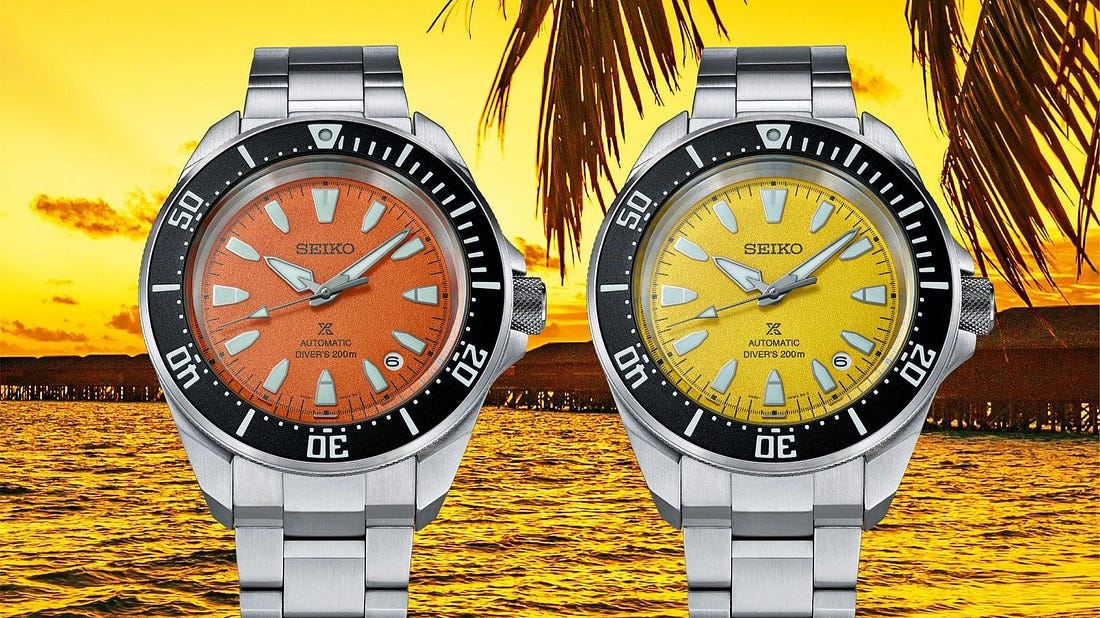
Our Favorite Seiko Watches of 2026
Seiko’s 2026 releases demonstrate the breadth that makes the brand difficult to summarize in a single sentence. Accessible sports watches, mechanical divers, more ambitious King Seiko models and technically sophisticated Astrons serve buyers with very different priorities.
The selection highlights colorful Speedtimers, practical GMTs, field watches and Marinemaster developments, alongside more experimental limited editions. Improvements in movement performance sit beside familiar Seiko strengths: legibility, distinctive case design and an ability to make everyday watches feel collectible.
Availability remains part of the buying decision. Some appealing references are difficult to obtain in the United States, and specifications vary considerably across the range. The most useful approach is to identify the particular model’s strengths rather than assuming every Seiko offers the same ownership experience.
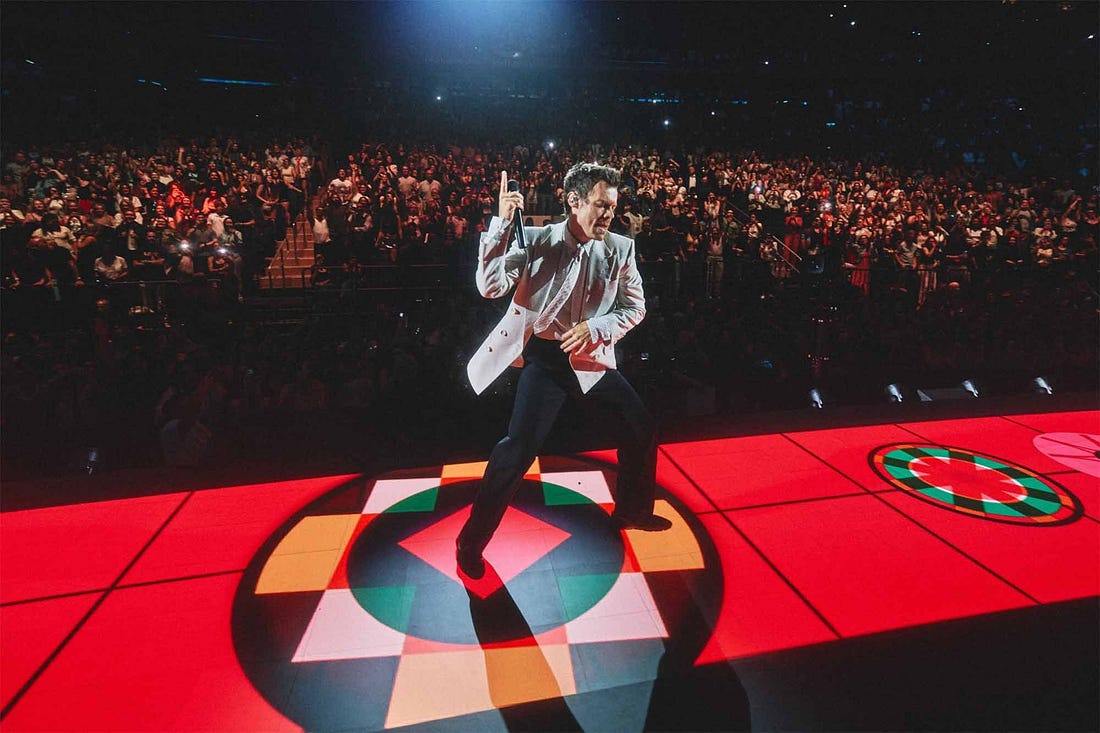
Harry Styles, the Cartier Tank and the Staying Power of Classic Watchmaking
Harry Styles’ embrace of traditional tailoring and a gold Cartier Tank Louis provides a starting point for considering how classic watches move between generations. A design associated with formal dress can acquire a different personality through contemporary styling and the person wearing it.
The Tank’s lasting appeal comes partly from its proportions and visual clarity. Its recognizable shape leaves room for individual expression without requiring the watch itself to be redesigned every few seasons.
The broader argument concerns flexibility. Younger buyers are reinterpreting established dress codes and familiar categories, giving longstanding designs new cultural settings. For watchmakers, relevance may depend as much on allowing those interpretations as on introducing another variation.
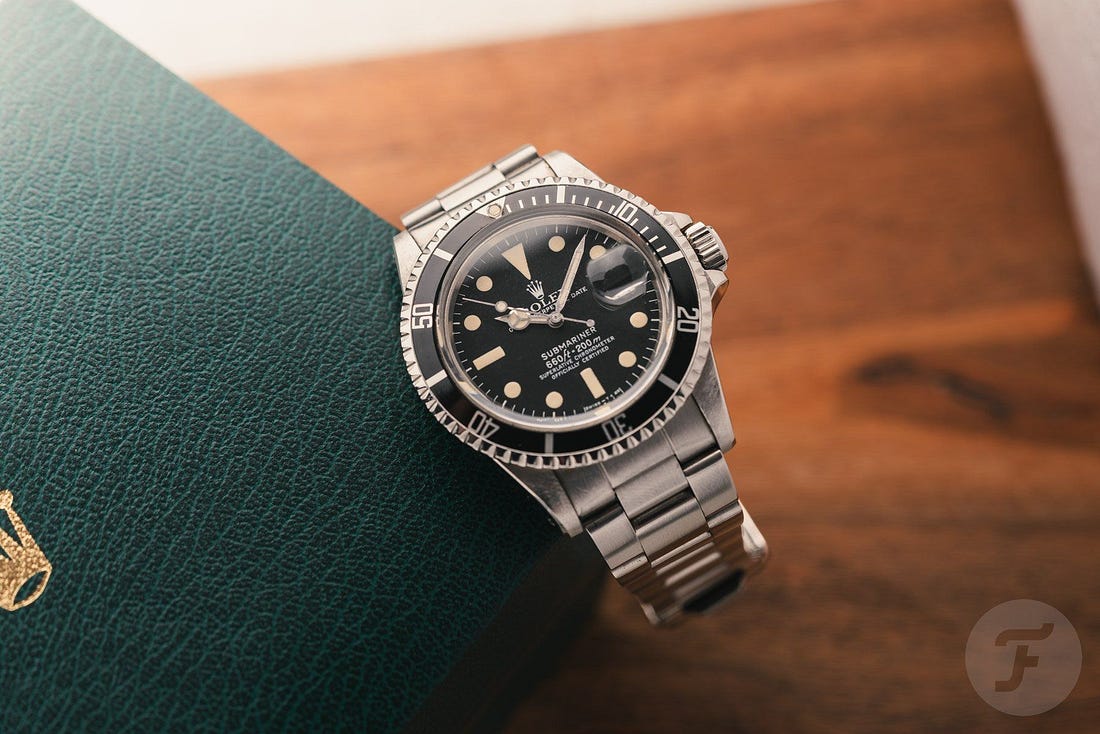
An Oscar-Winning Sound Engineer’s Rolex Submariner 1680 Comes With a Paper Trail
A vintage Submariner becomes more individual when its ownership history can be followed. This reference 1680 belonged to Academy Award-winning sound engineer Elliot Tyson and is accompanied by documentation tracing its purchase and subsequent care.
The account includes a 1979 Hong Kong purchase invoice for HK$2,550, original accessories and later service records. Those materials give prospective buyers more information than a clean dial and attractive case photographs alone can provide.
Condition still requires independent assessment, particularly where servicing may have affected components over time. Nevertheless, the combination of provenance, paperwork and a recognizable vintage reference illustrates why collectors often pay close attention to everything that comes with the watch.
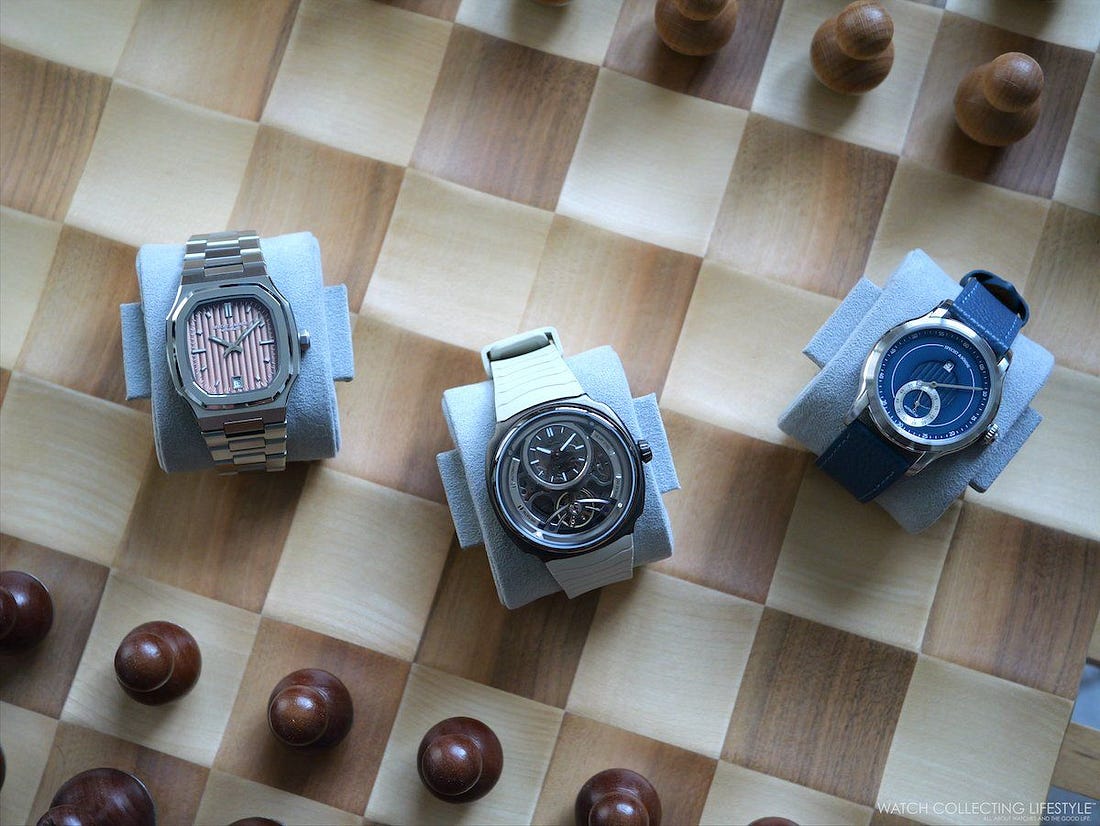
Inexpensive Chinese Watches Challenge Assumptions About Quality and Origin
The growing capability of Chinese watchmaking is complicating familiar relationships between price, appearance and national origin. The feature describes inexpensive watches that prompted much higher estimates from experienced industry observers, alongside more ambitious Chinese manufacturers producing increasingly sophisticated mechanisms.
Its central argument concerns transparency. A Swiss Made designation does not mean every component originated in Switzerland, and customers may misunderstand how international supply chains contribute to the finished product.
The proposal for tighter rules is an editorial position. The broader consumer question is straightforward: how clearly should brands explain where important components come from, and how much should that information influence price? Better disclosure would give buyers more substance on which to base their judgments.
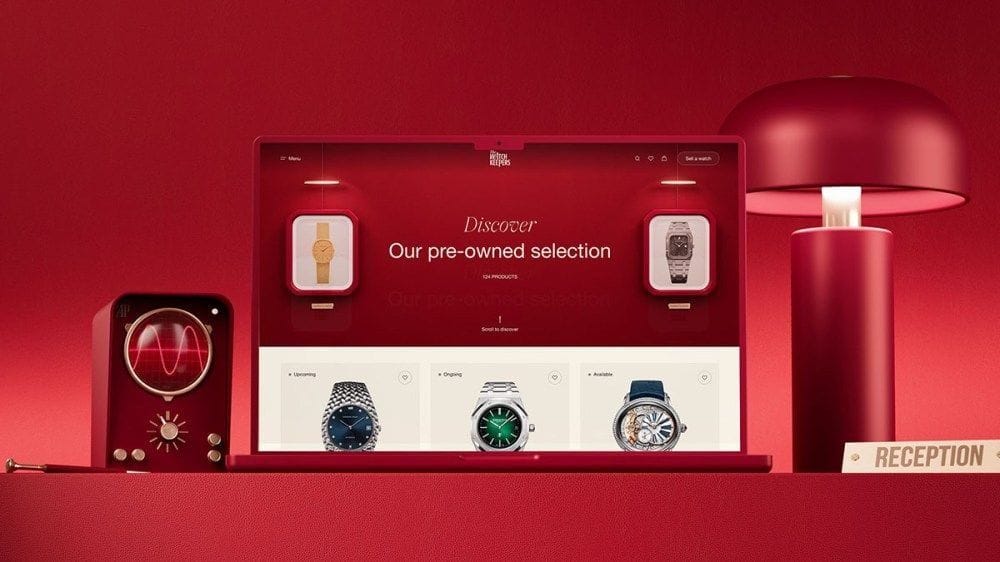
Three Brands Own the Pre-Owned Market—and Rolex Is Strengthening Its Position
Beyond concentration, the secondary-market report points to a change in how the industry earns money. Oliver R. Müller expects Rolex’s certified pre-owned transactions to approach CHF1 billion by year-end, while Audemars Piguet’s entry gives another leading manufacturer a direct role in resale.
Younger collectors’ willingness to trade watches supports the forecast that secondary sales could eventually overtake primary sales. That remains a projection dependent on future growth.
For manufacturers, the opportunity extends beyond selling another watch. Certification and resale services create additional customer relationships, while giving brands greater influence over how earlier production is presented and valued.
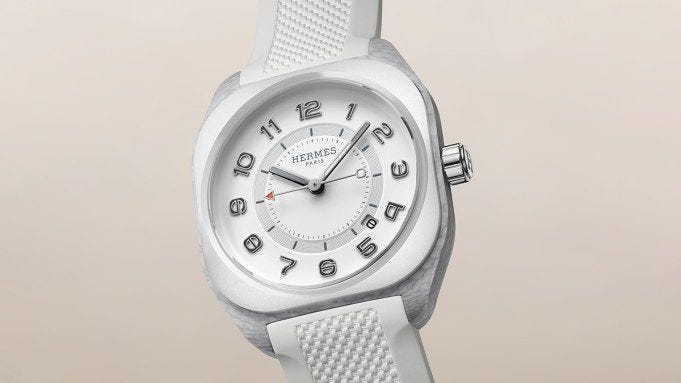
Hermès Is Playing the Long Game in Watchmaking
Hermès continues developing a watch business whose personality is recognizable across different categories. The H08 provides a particularly useful platform, combining sporting proportions with unusual materials, distinctive numerals and an approach to color that avoids excessive solemnity.
The technical foundation reflects years of investment. Hermès acquired a 25% stake in Vaucher Manufacture Fleurier in 2006, establishing a relationship that supports its mechanical ambitions without amounting to outright ownership of the movement maker.
That patient development allows design and mechanics to evolve together. The challenge is to persuade collectors that a Hermès watch offers a compelling horological identity alongside the wider reputation of the house. Its strongest examples make that case through the watches themselves.
New Watches
Dollar equivalents below use approximately US$1.115 per euro, based on the October 27 reference rate. Converted prices are estimates rather than confirmed US retail prices; the source price’s tax treatment still applies.
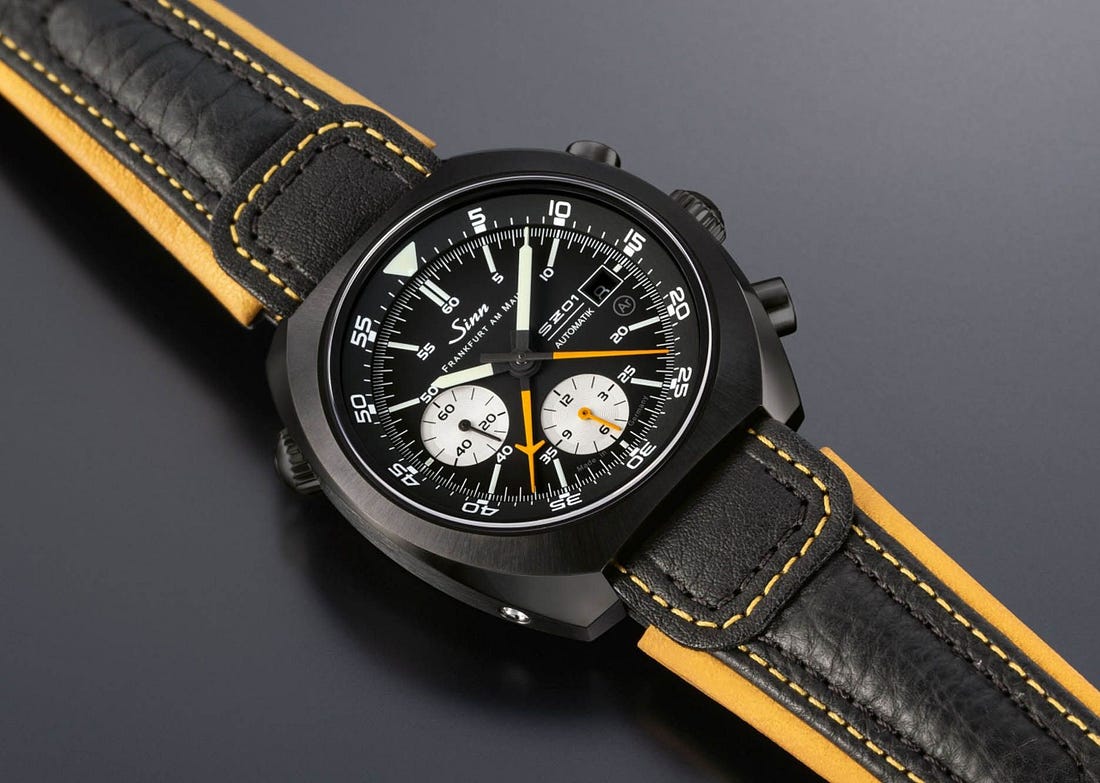
Sinn’s Autumn Releases Bring Color, Football and Spaceflight to Its Tool Watches
Sinn’s autumn selection gives several established designs more specific identities. The 38.5 mm 556 I FAZ II appears in green and orange editions created with the Frankfurter Allgemeine Zeitung, with 100 examples of each color and an automatic SW200-1 movement. The 41 mm 105 Eintracht uses Frankfurt football as its theme, including a bezel treatment referencing a 45-minute half, and is limited to 500 pieces.
At the more technical end, the 44 mm 140 A S Anniversary celebrates Sinn’s spaceflight history with an SZ01 chronograph, hardened case construction and a 300-piece production run. The collection demonstrates how a functional base can support very different visual and cultural references. Prices: US$2,370 for the 556 I FAZ II; US$3,260 for the 105 Eintracht; US$6,980 for the 140 A S Anniversary.
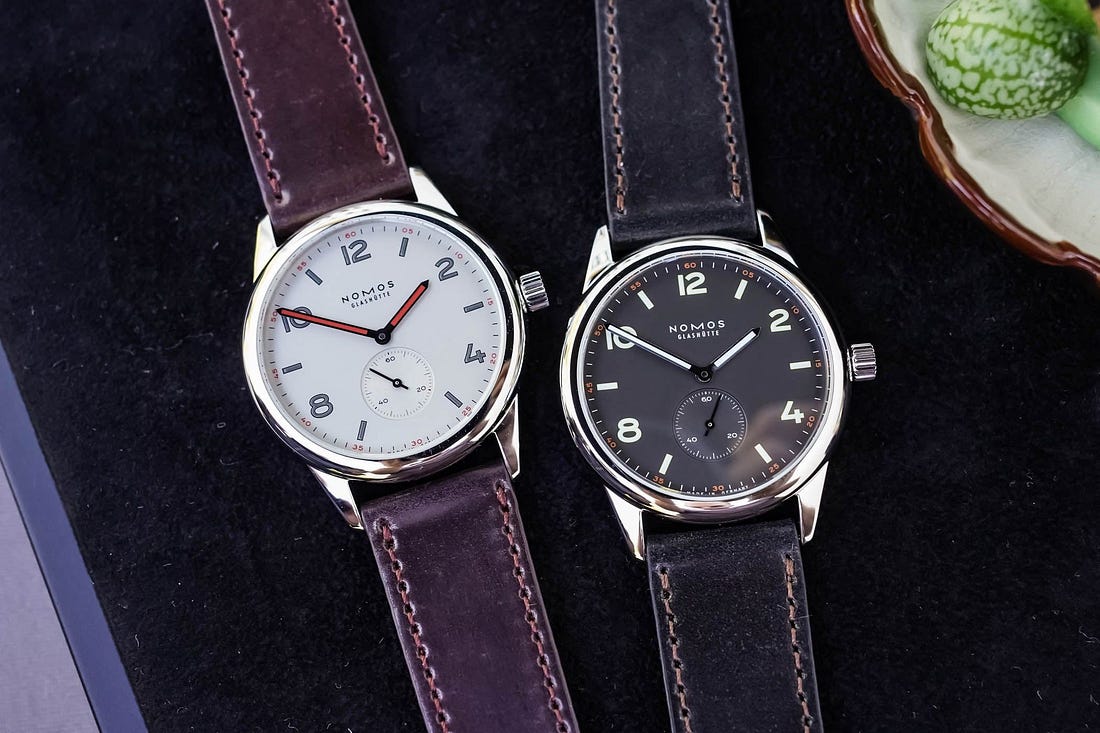
NOMOS Club 38 Gives a Familiar Favorite More Wrist Presence
NOMOS expands the Club’s appeal with a 38.5 mm version that retains the collection’s straightforward dial design and casual versatility. The polished steel case remains slim, with 100-meter water resistance helping it function as an everyday watch rather than a delicate dress piece. Inside, the manually wound DUW 4001 supplies up to 53 hours of power reserve.
Buyers can choose the familiar white-silver-plated dial or a darker ruthenium treatment with contrasting details. An optional sapphire back reveals the movement, while the slightly larger proportions provide an alternative for collectors who find the original 36 mm model too small. Prices: approximately US$1,695 for the white-dial version and US$1,739 for ruthenium, with approximately US$245 added for a sapphire back.
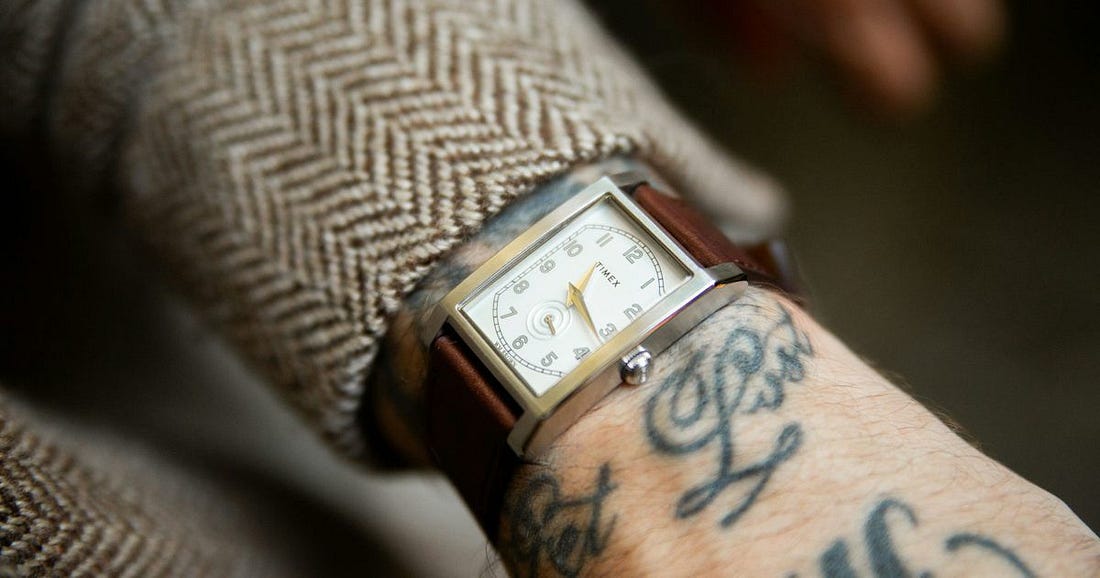
WM Brown x Timex Delivers an Attainable Rectangular Dress Watch
Matt Hranek’s WM Brown collaboration with Timex centers on a rectangular steel dress watch with a restrained light-gray dial. Arabic numerals, a small-seconds display and carefully varied surface finishes give the design more character than its modest price might suggest. A Miyota 1L40 quartz movement provides convenient operation, supported by mineral glass and 50-meter water resistance.
The package includes both a brown leather strap and a steel bracelet, allowing the owner to change its appearance without making another purchase. Quick-release fittings reinforce the practical nature of the set, while the understated branding keeps attention on the proportions and dial. Price: US$349 for the gift set.
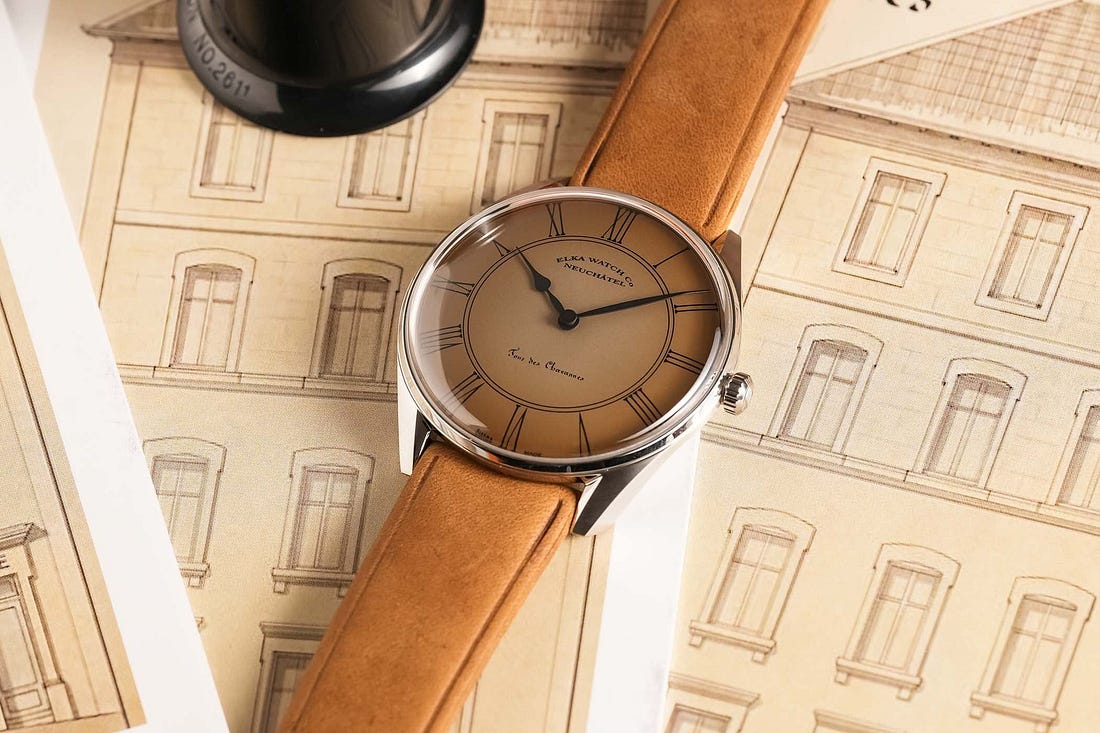
Elka’s Tour des Chavannes Turns Local History Into Dial Design
Elka’s R Series Tour des Chavannes draws inspiration from Neuchâtel’s architectural history rather than a familiar sporting-watch formula. Roman numerals, distinctive lettering and a curved sapphire crystal establish the vintage character, while the 40.8 mm steel case gives the design contemporary dimensions. The automatic La Joux-Perret G101 offers a 68-hour power reserve, with water resistance rated to 50 meters.
The Pierre d’Hauterive version pairs a beige dial with black hands, while the 1736 Edition uses a black dial and rose-gold-toned hands. These are special releases rather than numbered limited editions, connecting Elka’s developing identity to the place in which it operates. Price: approximately US$2,008, excluding taxes, converted from the quoted €1,801.
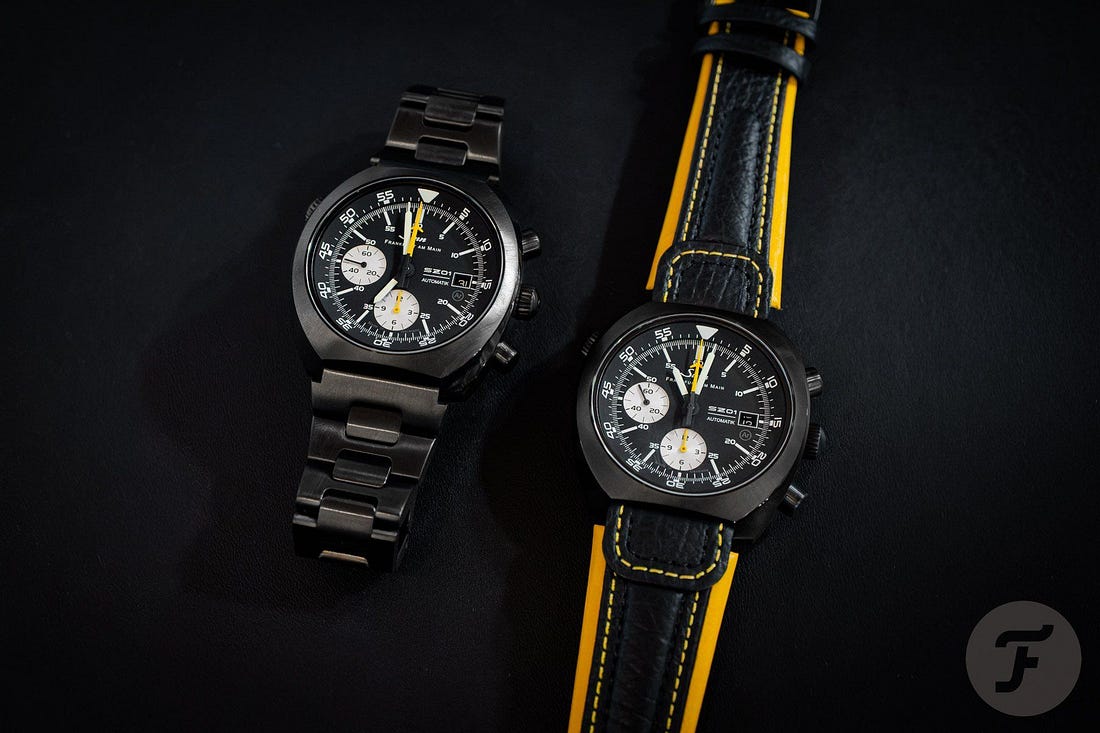
Sinn 140 A S Anniversary Celebrates a Chronograph Built Around Legibility
The 140 A S Anniversary deserves a closer look within Sinn’s autumn releases because its chronograph display differs from the conventional small-subdial arrangement. The automatic SZ01 places elapsed chronograph minutes on a central hand, helping the wearer read a timed interval quickly. Yellow accents strengthen the display’s visual hierarchy, while a rotating minute scale adds another timing reference.
Its 44 mm steel case combines TEGIMENT hardening with a black coating, and the crown and pushers use Sinn’s D3 sealing system. A Spacelab D1 insignia on the back connects the 300-piece edition to the brand’s spaceflight story, while 100-meter water resistance and a 46-hour power reserve support practical ownership. Price: US$6,980 as quoted for the US market; the separately reported €5,490 European price converts to approximately US$6,121.
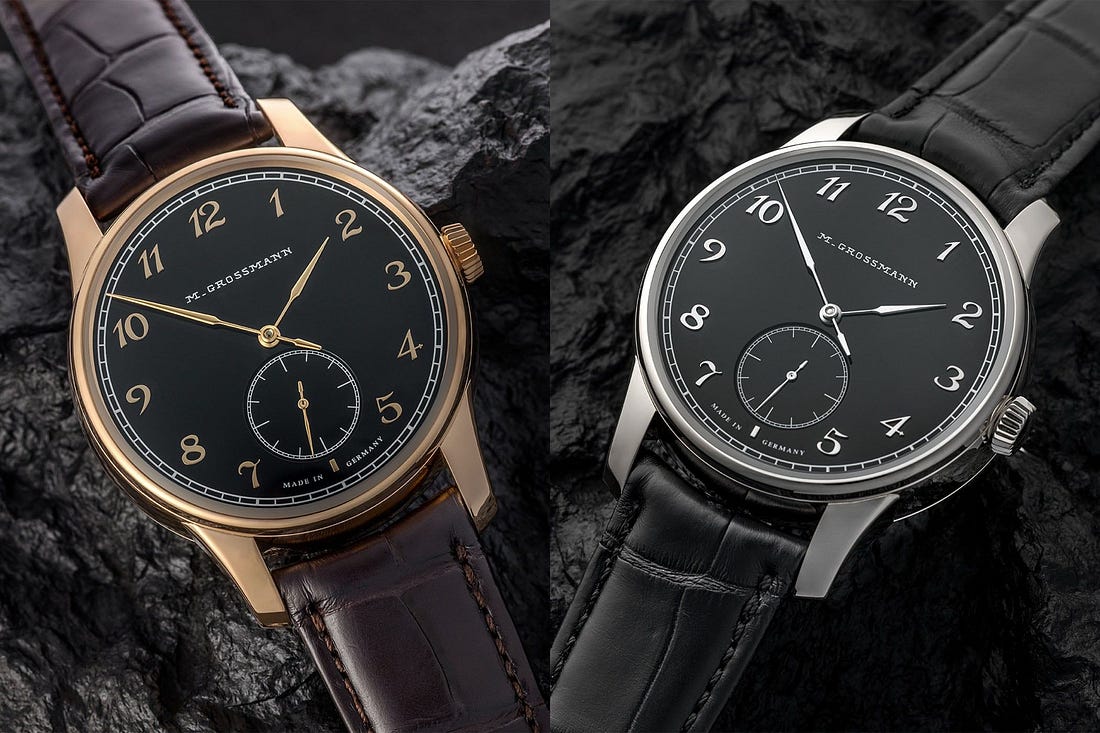
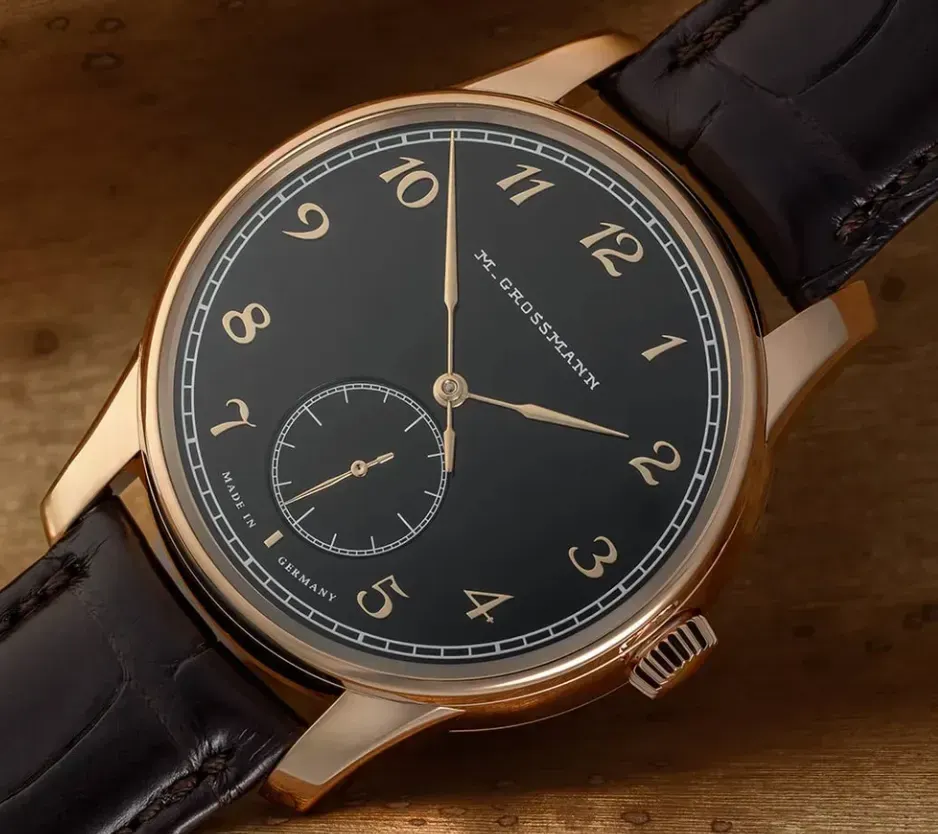
Moritz Grossmann Hamatic Enamel Pairs a Black Dial With Unusual Automatic Winding
The Hamatic Enamel celebrates the 200th anniversary of Carl Moritz Grossmann’s birth with a jet-black enamel dial and applied Arabic numerals. Offered in 41 mm rose-gold or white-gold cases, the watch combines an outwardly formal presentation with a distinctly unconventional automatic mechanism. Instead of a familiar rotating winding weight, the calibre 106.0 uses a pendulum-style hammer system.
The movement supplies a 72-hour power reserve and displays traditional German finishing, including a German-silver plate, gold chatons and an engraved balance cock. Production is limited to eight examples in each metal, making this an unusually small anniversary edition whose mechanical identity is as important as its appearance. Price: approximately US$70,803, excluding tax, converted from €63,500.
Comparisons
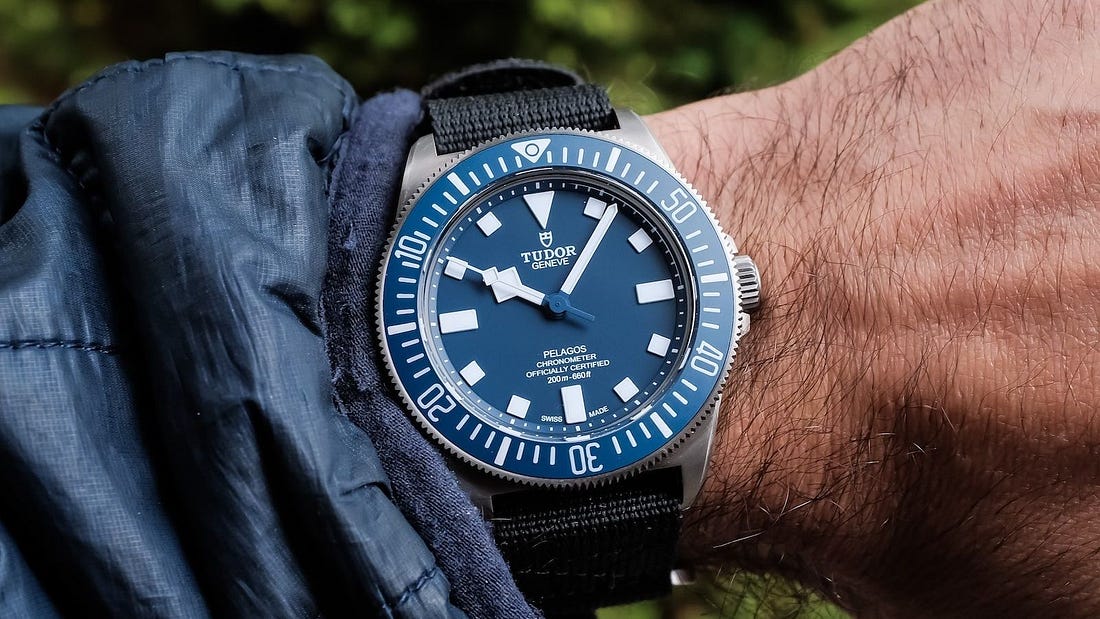
Tudor Pelagos FXD vs. Seiko Turtle: Two Different Routes to a Military-Inspired Diver
The Tudor Pelagos FXD and Seiko Turtle share an association with demanding use, but their designs reflect different priorities. Developed with French naval combat swimmers, the blue Pelagos FXD combines titanium construction, fixed strap bars and a specialized countdown bezel with Tudor’s chronometer-certified MT5602 movement.
The Turtle offers a more accessible interpretation of the durable automatic diver. Its steel cushion case, strong luminous display, conventional rotating bezel and 4R36 movement emphasize familiar functionality, while standard strap attachment gives owners more flexibility.
The price difference is substantial: the supplied comparison places the Tudor above US$5,000 and the Seiko around US$525. The decision therefore involves more than specifications. The Tudor offers specialized construction and higher movement performance; the Turtle provides an established design and practical capability at a much lower entry price.
Reviews
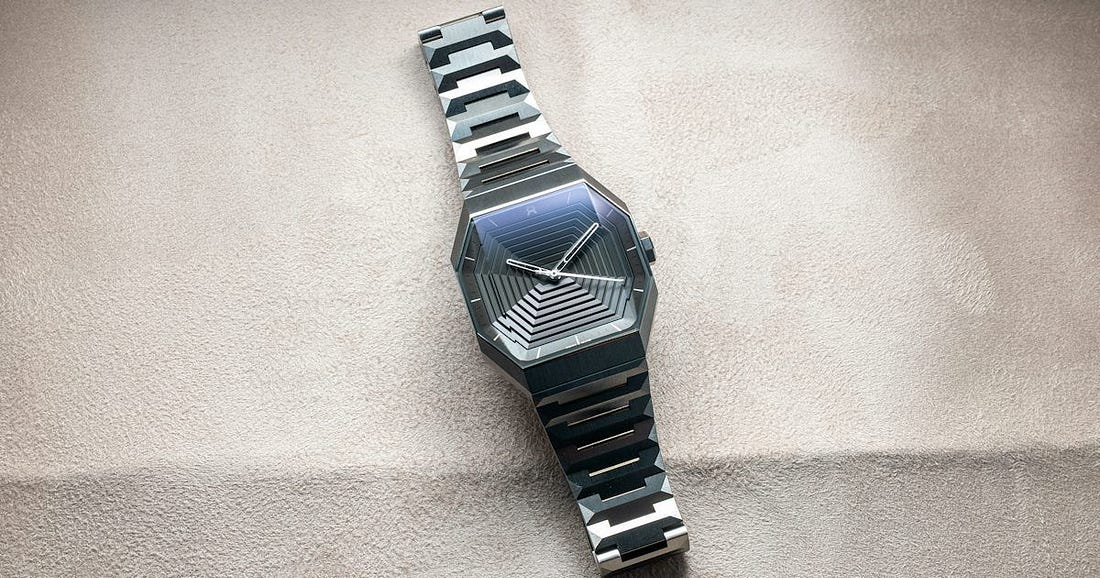
Alto ART 02 Makes Independent Design More Wearable
Alto’s ART 02 brings the brand’s unconventional design language into a permanent collection. A 36 mm grade 5 titanium case, faceted sapphire crystal and anthracite dial create a compact watch whose interest comes from geometry rather than sheer size.
The backward-running seconds hand provides an immediately recognizable detail, while the titanium bracelet includes tool-free micro-adjustment. The automatic A02 movement is presented as another major part of the appeal, with a high-frequency beat and a 50-hour power reserve.
At approximately €14,100—roughly US$15,722—the ART 02 competes for attention with established luxury sports watches. Its case rests on individuality, low weight and the coherence of its design. For prospective buyers, the important question is whether those qualities remain compelling after the novelty of the unusual display has worn off.
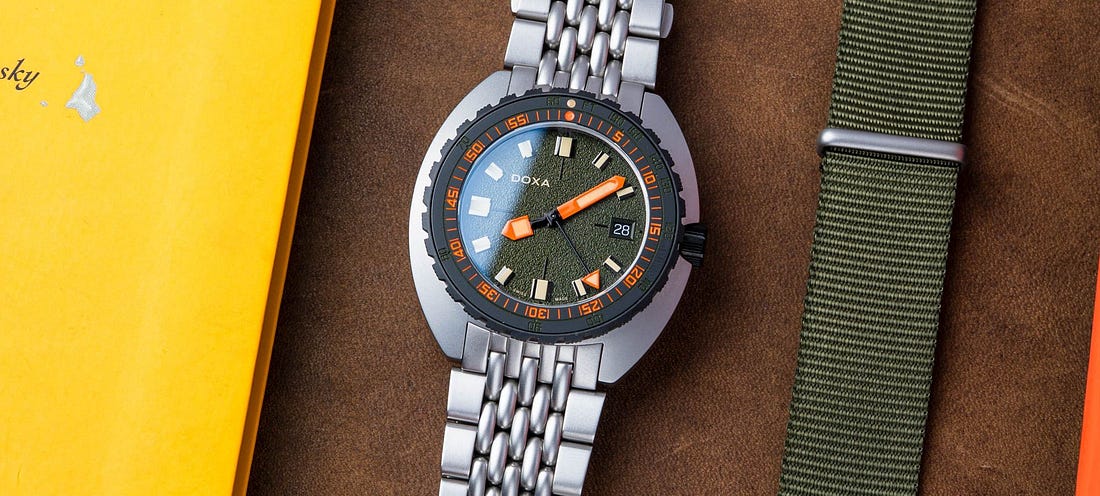
Doxa Sub 300 Beta “Frogger” Finds a More Restrained Kind of Visibility
The Belmont Watches collaboration gives Doxa’s Sub 300 Beta an olive-green dial, bright orange hands and a black ceramic bezel. The combination preserves the brand’s emphasis on visibility while producing a different mood from its better-known orange-dial watches.
A case thickness of 11.95 mm contributes to the review’s positive assessment of wearability. The Swiss automatic Sellita SW200-1 provides a 38-hour power reserve, while the bracelet and 20 mm strap interface offer options for everyday use.
Limited to 100 numbered examples and priced at US$2,890, the Frogger also includes a Coronado Island design on its caseback. The reviewer’s enthusiasm centers on the overall balance: a recognizable Doxa with more restrained color, useful contrast and proportions that make frequent wear appealing.
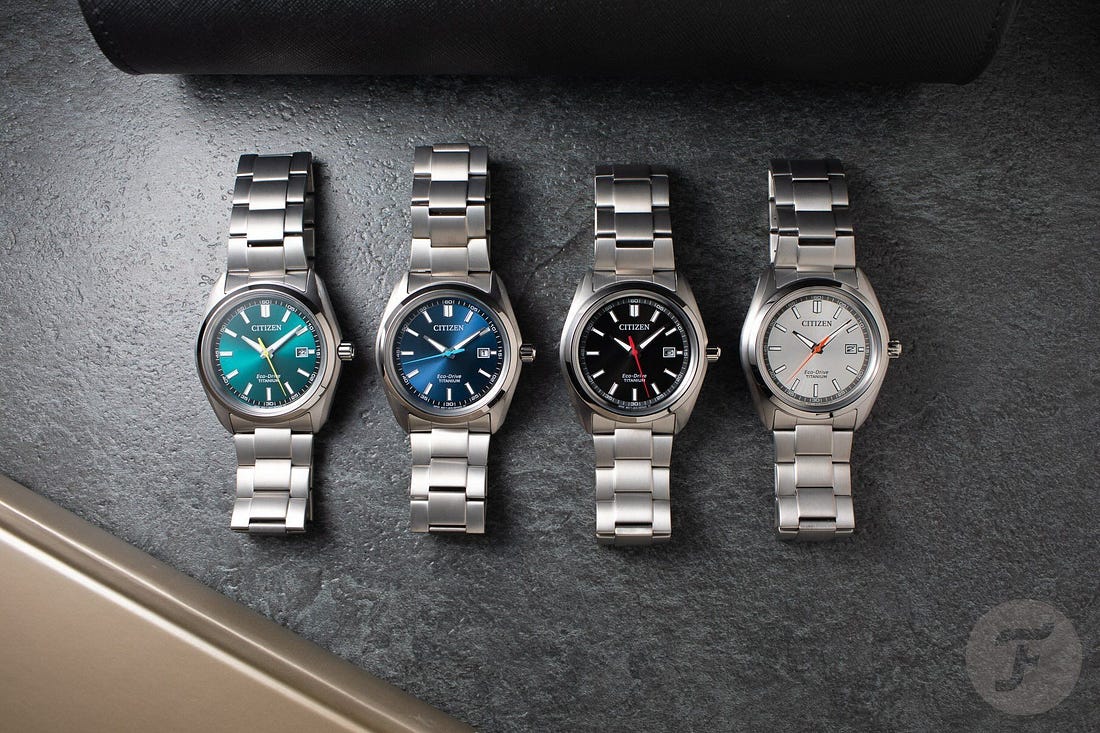
Citizen Eco-Drive AW1900 Makes a Strong Case for Affordable Titanium
Citizen’s AW1900 series offers a persuasive collection of everyday benefits: low weight, titanium construction, a solar-powered movement and straightforward dial layouts. The 40 mm case measures approximately 9.49 mm thick, while the complete watch weighs about 78 grams.
The Eco-Drive J810 avoids routine battery changes by converting light into power, with a stated reserve of up to 240 days. Four dial colors and matching titanium bracelets provide variety without complicating the basic proposition.
Compromises include mineral glass and a relatively simple clasp. At below €250—approximately US$279—the review nevertheless presents the AW1900 as an unusually accessible way into a lightweight metal watch with convenient operation. Its strongest argument is the amount of useful watchmaking offered for the money.
Events
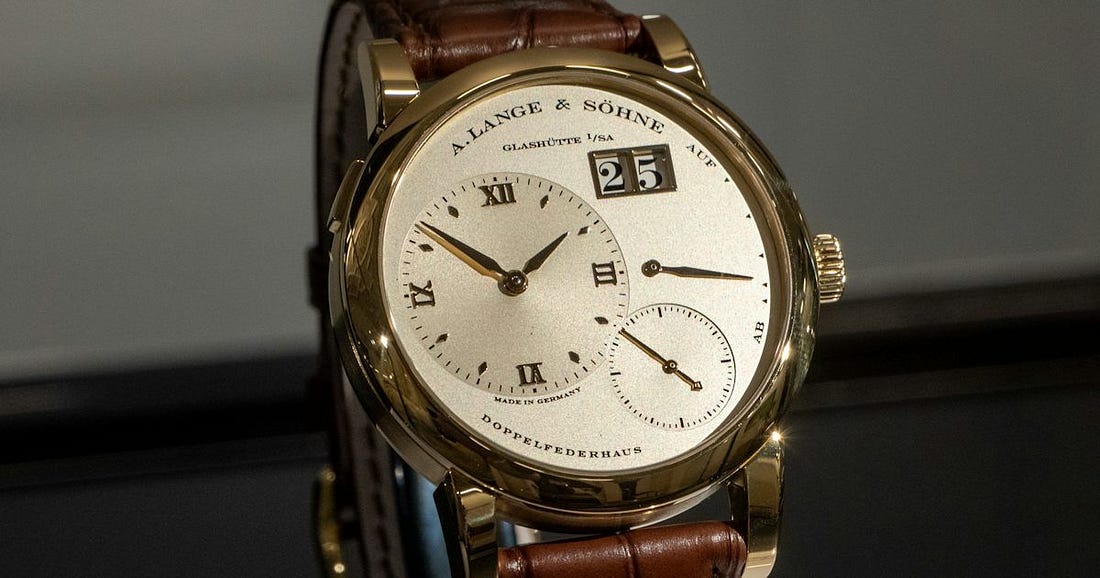
A. Lange & Söhne Brings Its History to New York
A New York exhibition marking 32 years since A. Lange & Söhne’s modern relaunch brought historical and contemporary watches into the same conversation. Displays at the William Ziegler Mansion and the brand’s boutique connected antique pocket watches with the modern manufacture’s complicated wristwatches.
Highlights included significant Datographs, contemporary chiming and chronograph models, and a Datograph associated with Philippe Dufour. Watchmakers and engraving demonstrations helped explain the work behind the objects on display.
The event’s value lay in the opportunity to follow a technical and aesthetic lineage across different periods. For visitors, seeing the watches together offered a richer understanding than encountering each as an isolated product announcement.
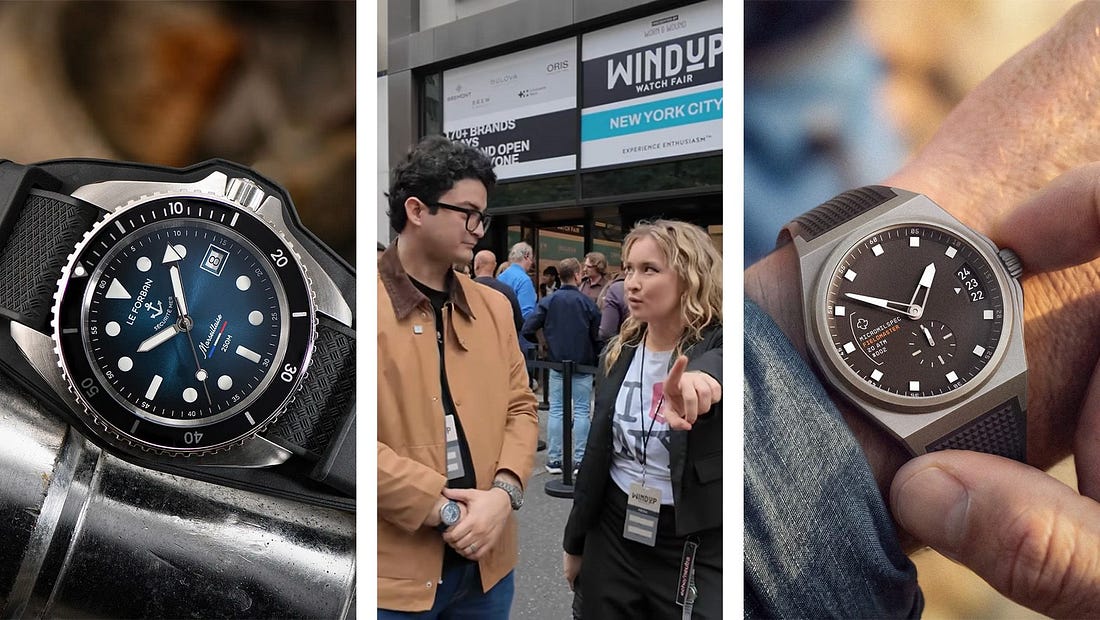
Windup NYC 2026: Meighan and Gabe Build Competing Collections
A collection-building challenge gives Windup’s broad selection a manageable structure. Meighan and Gabe each choose watches for four roles: dive, dress, field and a versatile everyday option.
Their contrasting preferences drive the exercise. Meighan gravitates toward color, materials and visual distinction, while Gabe places greater emphasis on technical specifications and functional design.
The selections include watches from Le Forban, Pequignet, Micromilspec and Formex, illustrating the range available beyond the most familiar luxury names. The enjoyable question is who assembled the stronger collection; the useful one is which selection criteria most closely resemble your own.

Basilia 2027 Tries to Give Basel a New Commercial Role
Basilia’s proposed April 8–11, 2027 fair aims to bring watch and jewellery buyers back to Messe Basel with a different commercial proposition. Organized by MCH Group and Informa Markets, it is positioned primarily around jewellery and gemstones, with watches representing a smaller portion of the planned exhibitor mix.
Entry packages below CHF10,000 and arrangements intended to improve accommodation and transport address concerns that contributed to dissatisfaction with earlier Basel events. The timing overlaps with the closing days of Watches and Wonders Geneva, potentially allowing buyers to incorporate both destinations.
The central challenge is rebuilding confidence. Competitive costs and a recognizable venue help, but exhibitors will ultimately judge the fair by the quality of buyers, useful meetings and resulting business.
Podcasts
Fratello On Air: Sébastien Chaulmontet on Sellita, Albishorn and Vintage Watches
Sellita’s head of innovation, Sébastien Chaulmontet, joins Balazs Ferenczi for a conversation connecting movement manufacturing, independent watchmaking and vintage collecting. The discussion examines Sellita’s role as a supplier and explains how Manufacture AMT fits into that broader operation.
Chaulmontet also discusses Albishorn’s “imaginary vintage” philosophy: creating watches that might plausibly have existed, rather than reproducing historical references. An upcoming time-only release provides another direction for a brand initially associated with chronographs.
The episode closes with vintage collecting, bringing the industrial discussion back to personal enthusiasm. It is a useful pairing: understanding how movements reach the market, then hearing how someone deeply involved in that process chooses watches for himself.
Videos

The Fall of Zenith — Watches with Dennis
Watches with Dennis offers a critical assessment of Zenith under a deliberately provocative title. The subject connects with a broader industry question: how a manufacturer with substantial technical heritage converts that reputation into sustained commercial demand.
The useful distinction is between the strength of a watchmaking legacy and the effectiveness of a current business strategy. Collectors considering Zenith will find that tension relevant, particularly when evaluating positioning, pricing and the continuing appeal of the watches themselves.

Inside the Chopard L.U.C Grand Strike — Time+Tide Watches
Time+Tide turns its attention to the Chopard L.U.C Grand Strike and its combination of grande sonnerie and tourbillon complications. The presentation centers on the mechanical ambition behind a watch positioned among the year’s high-horology talking points.
A chiming watch deserves to be considered as an audible object as well as a technical achievement. This is an opportunity to explore how sound, mechanism and finishing contribute to its appeal, alongside the discussion of its place in the 2026 GPHG conversation.

The Swiss Watch Industry Is Panicking — A Podcast About Watches
This discussion takes a critical view of the pressures facing Swiss watchmaking, including competition, changing consumer expectations and the difficulty of maintaining established business models.
Its title expresses a viewpoint rather than a condition shared equally by every manufacturer. The more useful questions concern the underlying pressures: which customers are becoming harder to reach, whether pricing remains persuasive and how companies can make their products relevant to the next generation of buyers.

Audemars Piguet Launches CPO: The Watch Keepers — The Wrist Club
The Wrist Club examines Audemars Piguet’s move into certified pre-owned through The Watch Keepers. The initiative gives the manufacturer a more direct role in the presentation and sale of watches already in circulation.
The discussion complements today’s secondary-market coverage. Authentication and brand participation may improve confidence, but collectors still need to consider condition, pricing and transaction terms. A manufacturer’s involvement changes the buying framework; the merits of the individual watch remain essential.
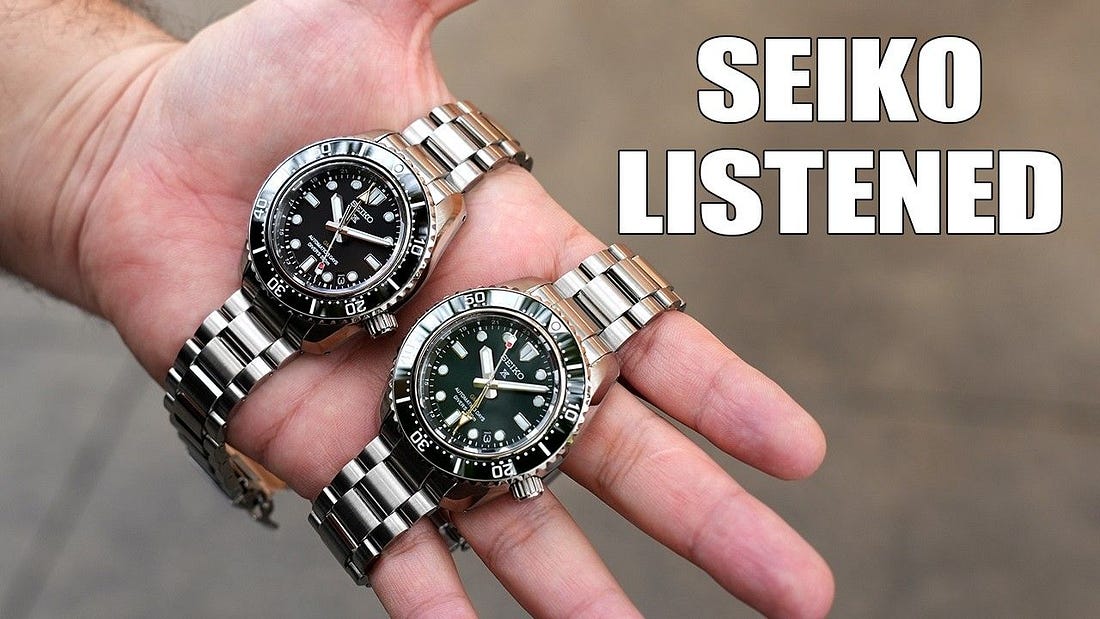
Seiko Finally Fixed One of Its Biggest Problems — Bruce Williams
Bruce Williams examines a Seiko development he regards as addressing a longstanding weakness. The topic complements today’s review of the brand’s 2026 releases and the continuing discussion about what buyers should expect as Seiko moves into higher price categories.
For prospective owners, the practical question is how the change affects the specific watch being considered. Improvements need to be evaluated at model and movement level, particularly across a catalog as broad as Seiko’s.

Vacheron Constantin and Phillips Introduce a Concours d’Élégance
This presentation introduces the inaugural Vacheron Constantin Concours d’Élégance collaboration with Phillips. The concept places collecting, preservation and appreciation of historical watchmaking at the center of the discussion.
A concours provides a different setting from a conventional product launch or auction preview. Attention moves toward the qualities that distinguish individual watches and the collectors who preserve them, offering another perspective on how a manufacture’s history continues through privately owned examples.
How Watches Are Tested for Accuracy — Teddy Baldassarre
Teddy Baldassarre explores how watch accuracy is measured and evaluated. The subject helps connect published performance claims with the procedures used to assess a movement’s behavior.
For collectors, the important distinction is between a controlled test result and the rate experienced during ordinary wear. Position, state of wind and operating conditions can influence performance. Understanding the testing process makes it easier to interpret specifications and decide which accuracy claims matter to your own ownership expectations.

Watches and the Real People Behind Them — Peter Kotsa Photographer
Peter Kotsa’s presentation brings the people surrounding watches into the foreground. Designers, makers, owners and enthusiasts contribute meaning that cannot be fully expressed through dimensions, movement references or prices.
The human perspective fits today’s issue particularly well. A watch can be assessed as a manufactured object, a collectible or a commercial proposition, but the reasons people create and wear it often explain why it remains interesting long after the specifications have been memorized.
Auction Results
Chronoswiss Q-Repeater Blue Note Reaches US$17,250 and Remains Unsold
The October 27 auction of the 2025 Chronoswiss Q-Repeater Blue Note, reference CH-1663T-BLSI, ended with a high bid of US$17,250. The titanium, skeletonized quarter repeater, limited to 25 pieces, did not sell.
Against the supplied US$45,900 MSRP, the bid finished US$28,650 lower, or approximately 62.4% below retail. It reached about 37.6% of the stated new-watch price.
No reserve figure was supplied for this result, so the shortfall against the seller’s minimum cannot be calculated. The outcome nevertheless illustrates the distance that can develop between retail positioning and auction demand, even for a scarce watch with an unusual complication. The high bid records the interest generated in this auction; it does not represent a completed sale.
Auction Report
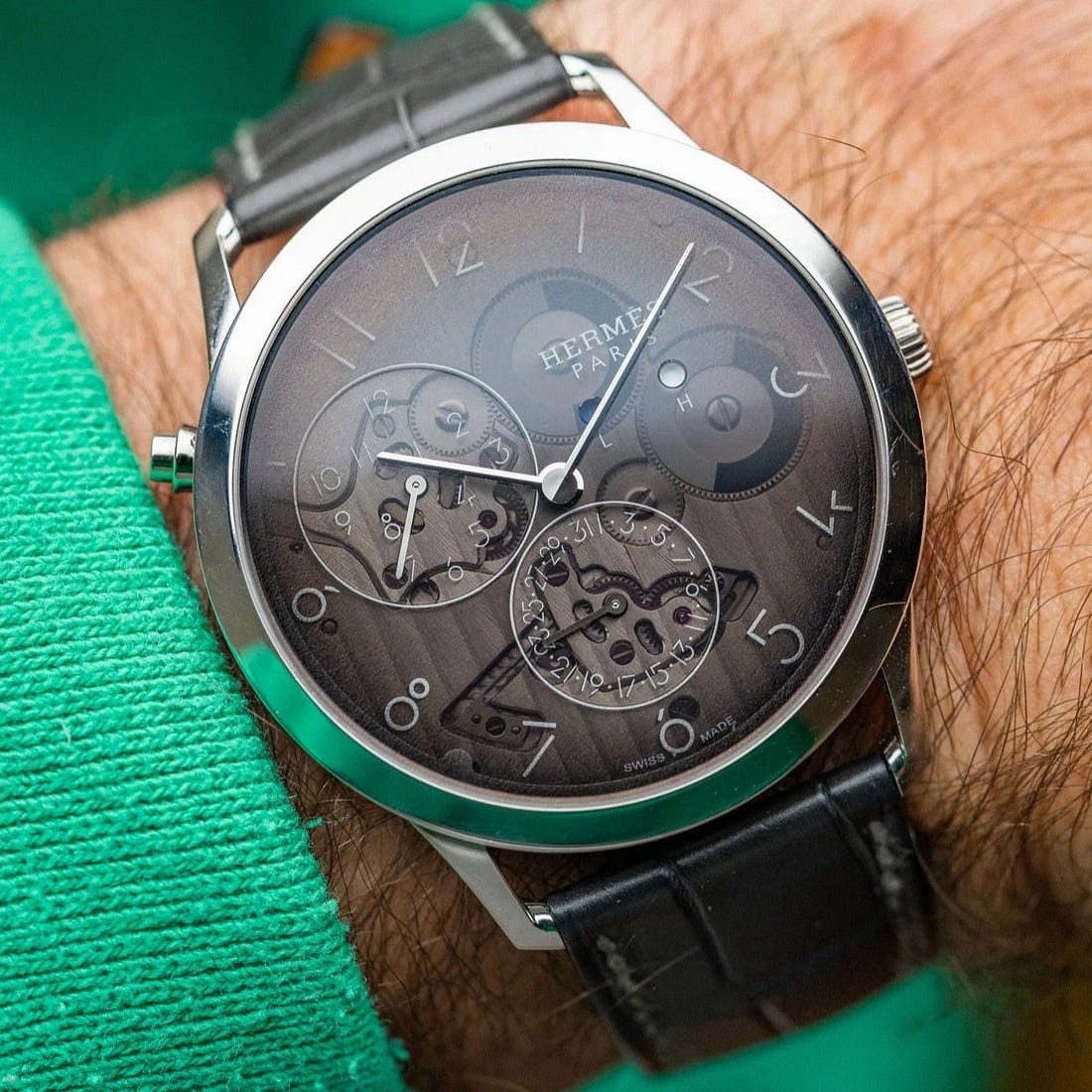
Platinum, Personality and a US$20,000 Reserve: The Hermès Slim d’Hermès Faces the Market
Today’s auction features the Hermès Slim d’Hermès in platinum, reference W054157WW00, offered with a US$20,000 reserve. Reference-matched market listings identify it as the GMT version, adding travel functionality to the restrained appearance of the Slim collection. Introduced as a family in 2015, the Slim d’Hermès established a distinctive identity through slender proportions and the unconventional Arabic numerals designed by Philippe Apeloig. The auction’s broad “2015–present” date designation does not establish the manufacture year of this individual watch.
The listed 39 mm platinum case and gray dial give the watch a discreet precious-metal presentation. The automatic H1950 uses micro-rotor winding, allowing the movement to remain slim while providing approximately 43 hours of power reserve. In its GMT configuration, the mechanism supports a second time zone, date and day/night indications. Its appeal lies in the combination of recognizable Hermès design and serious mechanical content, supported by the house’s longstanding relationship with Vaucher Manufacture Fleurier.
Advertised examples bearing the same reference have appeared around US$19,999 to US$21,700. Those are asking prices rather than confirmed transaction results, but they place the US$20,000 reserve close to available advertised alternatives. One higher-priced listing includes both box and papers, making completeness relevant when comparing it with today’s watch. The reserve therefore offers no obvious discount to the advertised market before any applicable buyer charges, taxes or shipping. A persuasive purchase depends on the individual example’s condition, service history and final payable cost.
The supplied listing describes a pre-owned watch located in the United States, accompanied by its box but without papers. The dial is rated excellent; the case and bezel show light scratches, the buckle has minor scratches, and the underside of the strap has slight discoloration. The general condition wording allows for possible previous servicing or polishing without confirming either. This is an appealing proposition for a collector seeking platinum construction and an individual design, but the price deserves the same scrutiny as the mechanics. Bidding is scheduled to close at 5:25 p.m. EDT today, Wednesday, October 28, 2026.
Current bid: $750
Losing Time
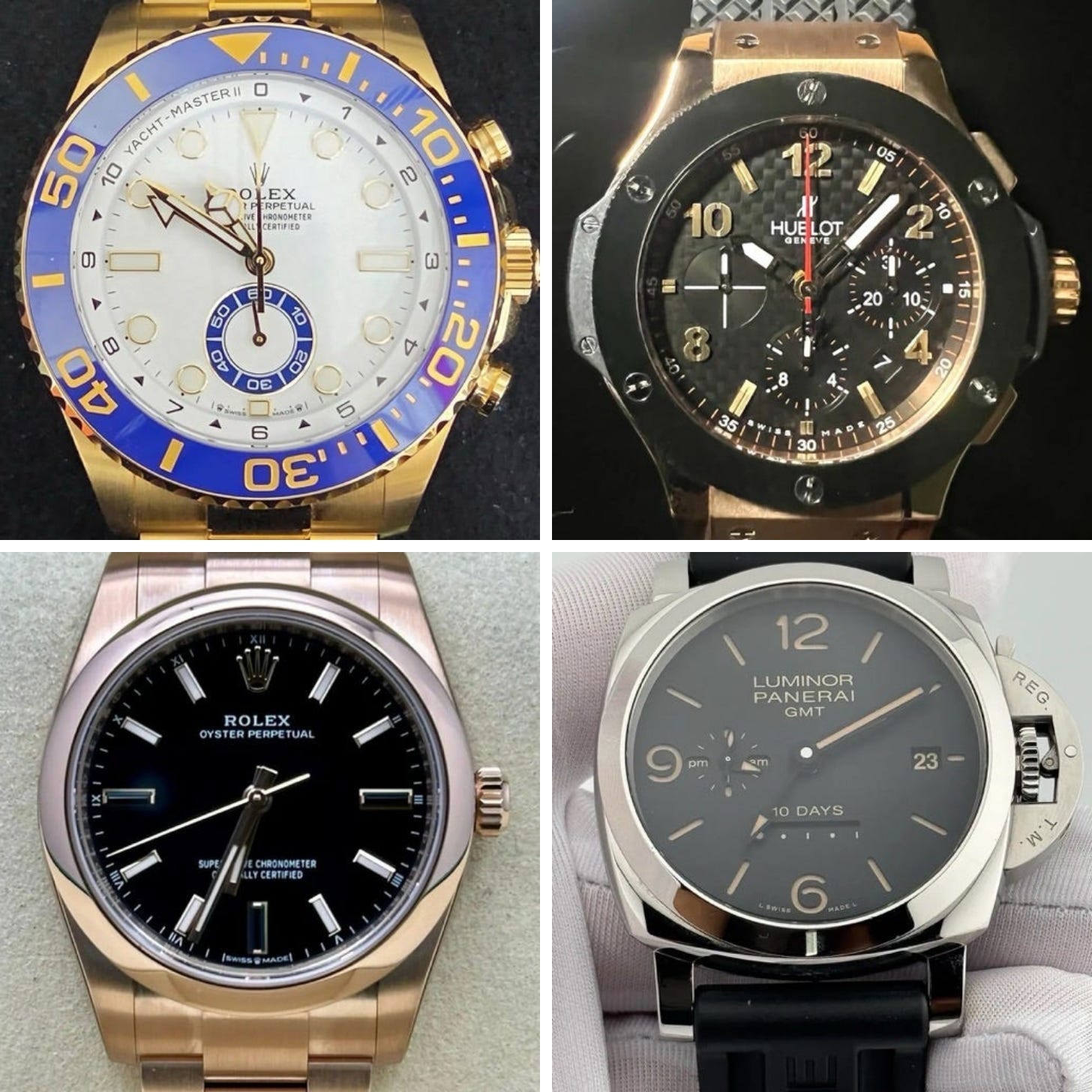
Today’s Big Losers at Auction on Grailzee
Four watches, four failed sales, and a familiar problem: the asking prices and the bidders appeared to be attending entirely different auctions.
The 2026 Rolex Yacht-Master 44MM White Dial Yellow Gold Oyster Bracelet (126688) carried a $77,500 ask but attracted a final bid of just $31,000. That’s a $46,500 shortfall, or 60.0% below asking. Apparently, the gold was solid; the pricing strategy, less so. Bidders offered only 40 cents for every dollar the seller wanted.
The Hublot Big Bang 44MM Carbon Fiber Dial Rubber Strap (301.PB.131.RX) asked $12,800 and reached a high bid of $4,300—$8,500 short, or 66.4% below asking. Big Bang, small bid. With bidders willing to cover barely a third of the ask, this was the largest percentage miss of the four.
The 2026 Rolex Oyster Perpetual 34MM Black Dial Oyster Bracelet (124205) arrived with a $44,500 ask and finished at $15,000. The $29,500 gap represents a 66.3% miss. Evidently, a 2026 date and a crown on the dial weren’t enough to get bidders within the same ZIP code as the seller’s expectations.
The 2019 Panerai Luminor 1950 10 Days GMT 44MM Black Dial Rubber Strap (PAM00533) had the most modest ask at $7,000, but its $3,251 high bid still left it $3,749 short, or 53.6% below asking. Ten days of power reserve, zero days of ownership transfer. It came closest to its asking price, which in this group means bidders offered slightly less than half.
Together, the four sellers sought $141,800 and attracted combined final bids of $53,551—a collective $88,249 shortfall, or 62.2% below asking. Every watch missed its ask by more than half. That suggests these sellers faced more than a little last-minute negotiating friction: their expectations were substantially above what this particular bidding audience would support.
These failed auctions don’t establish definitive market values (but they might); bidder turnout, condition, documentation and sale terms can all affect results. But they do deliver a fairly consistent message: ambitious asking prices need willing buyers, and those buyers apparently had other plans.
Closing Time
Thank you for spending part of your Wednesday with BuyingTime Daily.
Today’s stories offer plenty of ways to think about value: the reassurance of an established retail network, the ingenuity of an unusual movement, the usefulness of an affordable everyday watch and the history preserved in an owner’s paperwork. Each can make a watch worth having. The price still has to make sense for the person buying it.
Enjoy what is already on your wrist, stay curious about what comes next, and give every asking price the benefit of a thoughtful question.
Have a great Wednesday.