Issue #281 | Buying Time - November 2, 2026
Patek’s record sales, independent ambition, affordable alternatives, and a Vacheron tourbillon put the meaning of watch value under the loupe.
Buying Time in 30 Seconds
Patek Philippe’s UK business has reported record annual sales of £301 million, but operating profit declined. It is a useful opening to an issue filled with questions about value: what brands charge, what craftsmanship delivers, what owners actually enjoy, and what another collector will eventually pay.
Independent watchmaking provides much of today’s creative energy. Five debut collections introduce new names, Jean Arnault continues building Louis Vuitton’s horological credibility, and Tad Kozh connects established artisans with emerging talent. Louis Erard and Vianney Halter bring an unmistakable design language to a wider audience, while the forthcoming George Daniels exhibition in Singapore traces the roots of modern artisanal watchmaking.
The practical side of collecting gets equal attention. A better bracelet can transform a watch you already own. Quartz may offer Swiss brands a route back to accessible prices. Casio’s titanium automatic and Tissot’s PRX Quartz Chronograph approach everyday value from different directions, while our comparisons ask how much extra satisfaction accompanies a more expensive name.
At auction, the MEC-1 reached US$8,200 and remained unsold, against an approximately US$25,000 historical retail price. Today’s spotlight turns to a rose-gold Vacheron Constantin Malte Tourbillon, reference 30066/000R-8816, with box, papers, and product literature. Bidding is scheduled to close at 2:45 p.m. Eastern today.
Time Graphing Today’s Watch Universe
What Makes a Watch Worth Owning?
As I’ve often said, the watch industry has plenty of ways to tell us what something costs. Understanding what makes it worth owning takes more work.
Today’s issue offers an unusually broad set of answers. There is commercial success at Patek Philippe, creative ambition among independent makers, improved comfort from a replacement bracelet, and the stubbornly practical argument for quartz. There are watches that celebrate the passage of time through patina and others that confront it with a skull. At the end of the issue, an unsold independent and a complicated Vacheron Constantin bring the conversation back to the price a buyer will actually support. Also at the end of this issue, you’ll find some huge price deltas on some big brands from recent auctions.
Start with Patek Philippe’s record UK sales. Revenue reached £301 million, yet operating profit declined. Even a powerful name with committed customers must contend with the cost of doing business. For collectors, that is a reminder that rising sales, rising prices, and a healthy business are related subjects, but they do not always move together. A watch can become more expensive while the economics behind it become less comfortable.
The more interesting question is what the customer receives as the price rises. Jean Arnault’s work at Louis Vuitton addresses that question through watchmaking itself: better movements, serious collaborators, demanding craftsmanship, and a willingness to build credibility over time. The resources of a large luxury group provide an advantage. Earning the attention of collectors still requires watches that reward close inspection.
The same test applies to the five independent makers introducing their debut watches. An unfamiliar name can be exciting because it brings a fresh point of view. It also asks the buyer to make a larger judgment about the people, the movement, the execution, and the future of the enterprise. Small production gives a watch scarcity. The quality of the work must give that scarcity meaning.
That is why the Tad Kozh conversation belongs near the center of today’s issue. Watchmaking needs more than customers for finished watches. It needs tools, training, mentorship, and opportunities for talented people to become sustainable businesses. Supporting a young maker can contribute to that future, provided the enthusiasm is accompanied by a clear understanding of what is being purchased.
There is a quieter answer to the ownership question in our feature on upgrading a Tudor bracelet. A clasp that fits properly can make an existing watch feel newly useful. That improvement will rarely dominate a launch campaign, yet it affects every hour the watch spends on the wrist. Collectors can spend months researching the next acquisition while tolerating an uncomfortable fit on the watch they wear most often.
The case for quartz makes a similar argument at the industry level. Mechanical watchmaking offers pleasure, history, and technical fascination. Accessible quartz watches can offer attractive design and dependable timekeeping to customers who do not want the purchase price or maintenance obligations of an increasingly expensive mechanical watch. The Tissot PRX Quartz Chronograph gives that discussion a concrete example. A useful watch at a persuasive price can be a powerful invitation into the hobby.
Meanwhile, Louis Erard’s latest collaboration with Vianney Halter asks how much of an exceptional designer’s personality can travel into a more accessible product. The answer lies in the coherence of the finished watch. A recognizable silhouette attracts attention; convincing proportions and thoughtful execution sustain it.
Our patina feature adds another dimension. Sometimes a watch becomes more meaningful because it has been owned, worn, and changed by time. That appeal deserves careful judgment, since attractive aging and deterioration can occupy neighboring territory. Still, it explains something that specifications cannot: a watch may become more personal long after its technical novelty has faded.
The auction market supplies the final discipline. The MEC-1’s US$8,200 high bid did not produce a sale. That result does not settle every question about the watch, but it clearly shows that the historical retail price and the bidding audience were far apart on that occasion. The same distinction matters when considering today’s Vacheron tourbillon. Its craftsmanship and history are real; the appropriate purchase price still depends on condition, service history, completeness, and comparable transactions.
The forthcoming George Daniels centenary exhibition offers a fitting perspective. Lasting significance develops through the work and its influence. Collectors benefit from giving their own purchases a little of that same patience.
A watch earns its place when its design, mechanics, comfort, history, and price make sense to the person wearing it. Today’s issue provides plenty to admire—and plenty of reasons to look closely before deciding.
-Michael Wolf
News
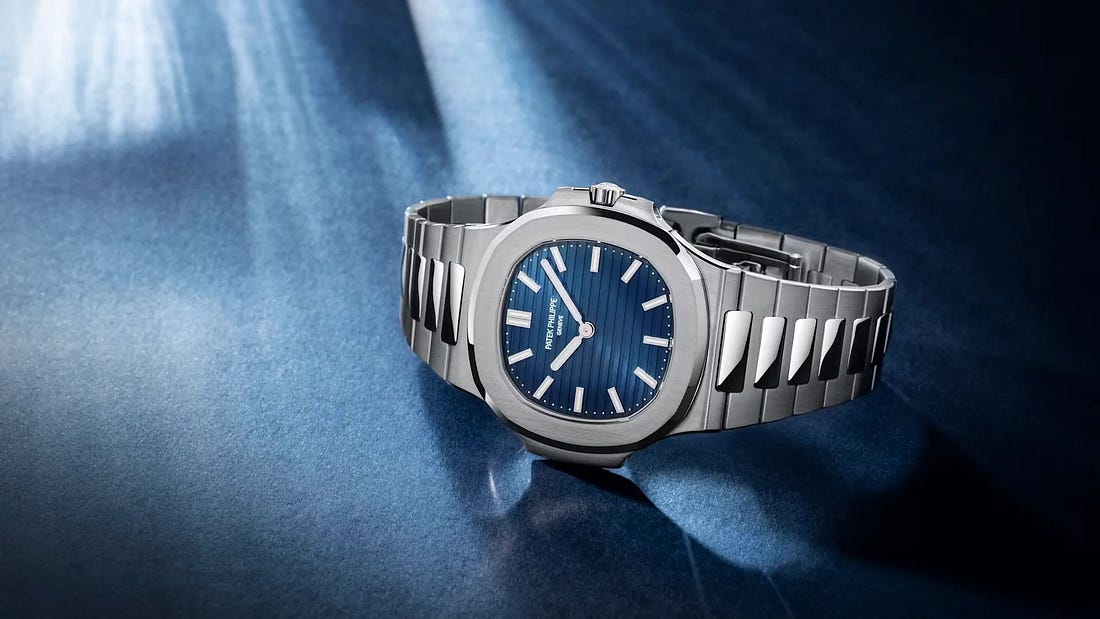
Patek Philippe UK Sales Reach a Record £301 Million as Costs Squeeze Profit
Patek Philippe’s UK operation generated record turnover of £301 million for the financial year ended January 31, 2026, an increase of 11%. Demand remained strong, and a greater proportion of higher-value sales helped lift revenue. The figure is denominated in pounds, despite the dollar sign in the original source headline.
The company’s expanded Bond Street boutique contributed strongly, with sales rising 28.1% to £106 million. However, operating profit across the combined wholesale and retail business fell 9.4% to £22.1 million. That leaves profit approximately 27.5% below its 2023 peak, demonstrating how rising operating costs can erode the benefit of higher sales.
The boutique’s approximately 12% operating margin exceeded the roughly 7% margin for the combined business. Patek’s results show continued demand at the upper end of watchmaking, alongside a less comfortable picture for the cost of serving that demand.
Features
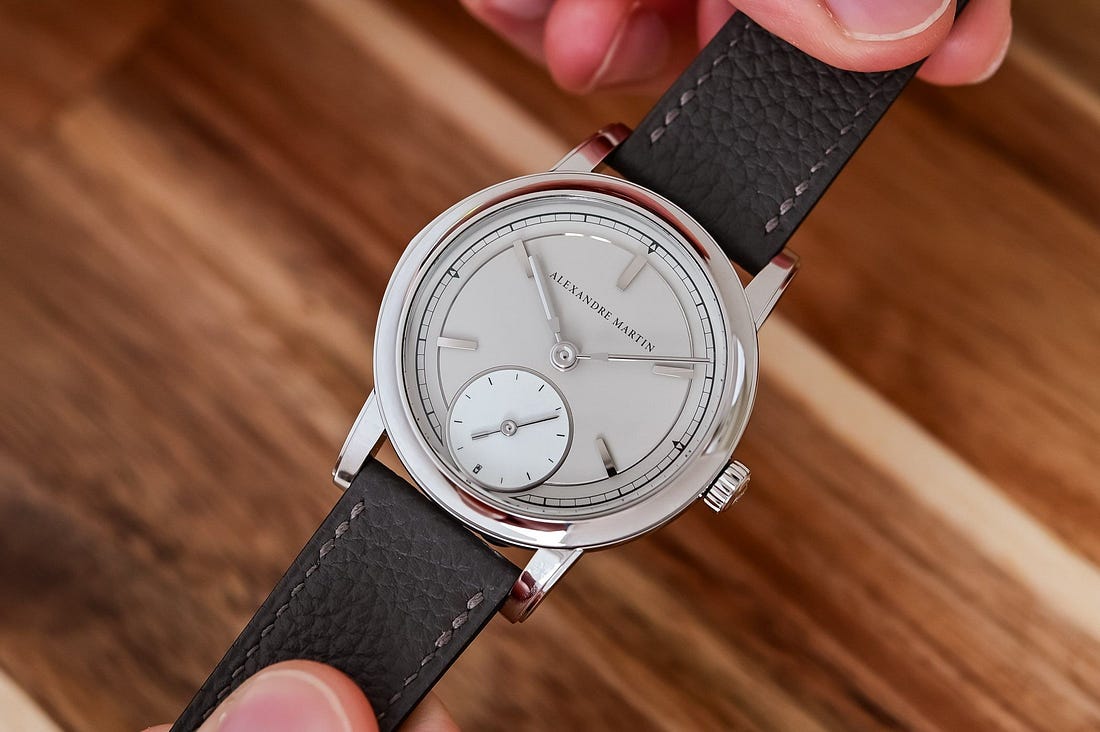
Five Independent Watchmakers Make Their First Impressions Count
Marcu, Neode, Atelier Pieters, Voxel, and Alexandre Martin approach their debut watches with very different ideas about design, mechanics, and price. Together, they show how much territory independent watchmaking now covers, from a comparatively accessible jumping display to platinum-cased complication.
Marcu’s Initial pairs titanium with a manually wound movement, while Neode combines a silver sector dial with a reworked Chronode caliber. Atelier Pieters moves into tourbillon territory with its Founders’ Series. Voxel’s Meridion offers a distinctive 12/24-hour jumping display, and Alexandre Martin’s 1965 builds its identity around a reworked historic CYMA movement.
Small production numbers connect the projects, but the stronger reason to pay attention is the individuality of their execution. For collectors, each debut is an invitation to evaluate the maker’s ambitions, the finished product, and the practical commitments involved in owning a watch from a new name.
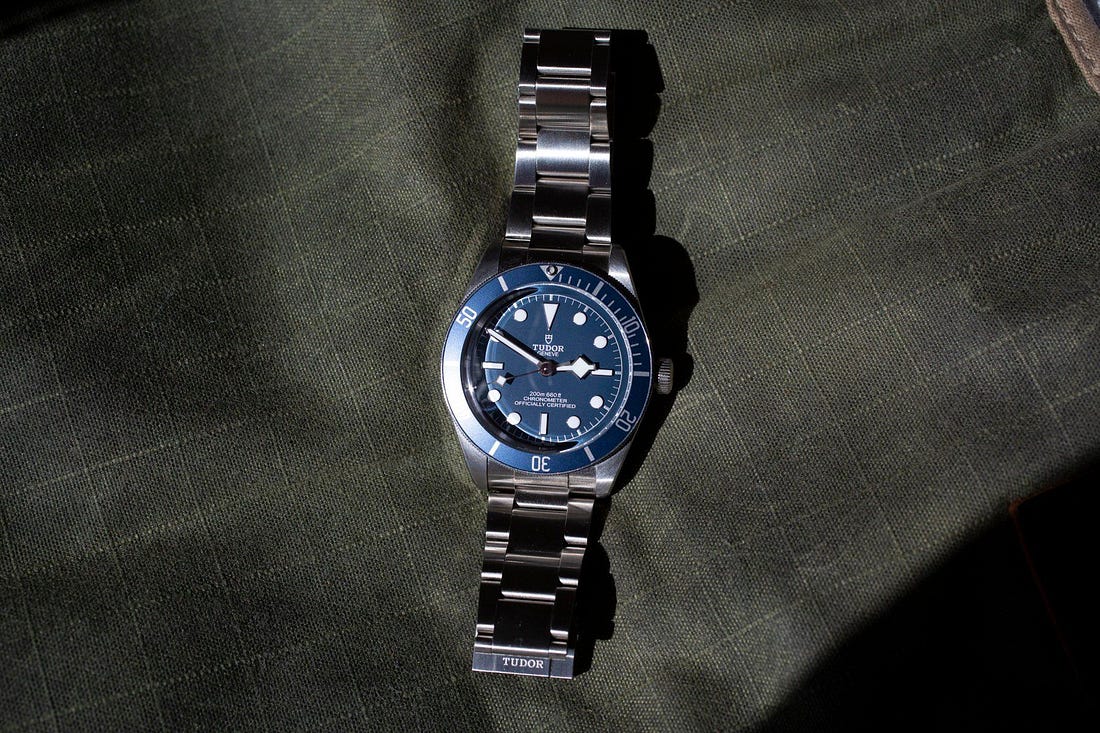
Before Buying Another Watch, Consider Improving the One You Own
A Tudor Ranger loaner prompted a useful discovery: its bracelet and T-fit clasp offered a more satisfying fit than the original arrangement on the author’s Black Bay 58. The ability to make small adjustments during the day changed the wearing experience without requiring a different watch.
After trying the bracelet on the Black Bay, the author purchased the replacement directly from Tudor and had it installed by a watchmaker. The result brought better comfort and a refreshed appearance while retaining the familiar case and dial.
The broader lesson is practical. Before replacing a watch that otherwise suits you, investigate whether its bracelet, clasp, or strap is the source of the dissatisfaction. Confirm compatibility first; a targeted improvement can deliver a surprising amount of renewed enjoyment.

Jean Arnault Is Building Louis Vuitton’s Watchmaking Credentials One Project at a Time
Jean Arnault’s direction of Louis Vuitton watchmaking has focused attention on technical substance, specialist partnerships, and carefully controlled production. The effort asks collectors to judge the watches through their movements, finishing, complications, and artistic execution.
Collaborations with respected independent makers and the development of more ambitious in-house work have helped change the conversation around the brand. The broader program also includes support for emerging talent and the revival of historic watchmaking names such as Daniel Roth.
Louis Vuitton has the resources to attract attention immediately. Building lasting credibility among demanding collectors is a longer undertaking, and the article examines the people and decisions behind that process.
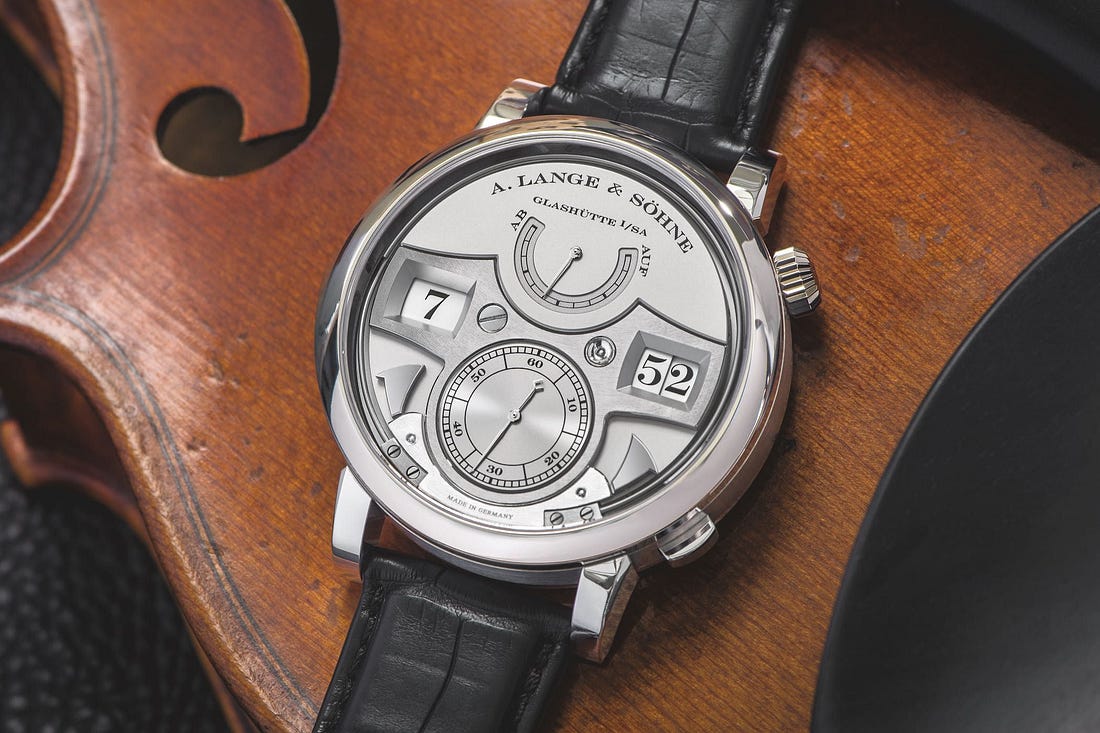
The History of German Watchmaking Extends Well Beyond Glashütte
German horology reaches back to the early portable timepieces associated with Nuremberg and Peter Henlein. Its development also encompasses Black Forest clockmaking, Pforzheim’s manufacturing traditions, and the emergence of Glashütte as a major center of precision watchmaking in the nineteenth century.
The story includes industrial expansion, military production, wartime destruction, and the rebuilding of the industry after German reunification. Contemporary names such as A. Lange & Söhne, Glashütte Original, Moritz Grossmann, and NOMOS reflect different expressions of that inheritance.
Three-quarter plates, distinctive movement decoration, and an emphasis on engineering help make the tradition recognizable. The history also explains why German watchmaking contains both elaborate hand-finished complications and comparatively restrained watches built around everyday utility.
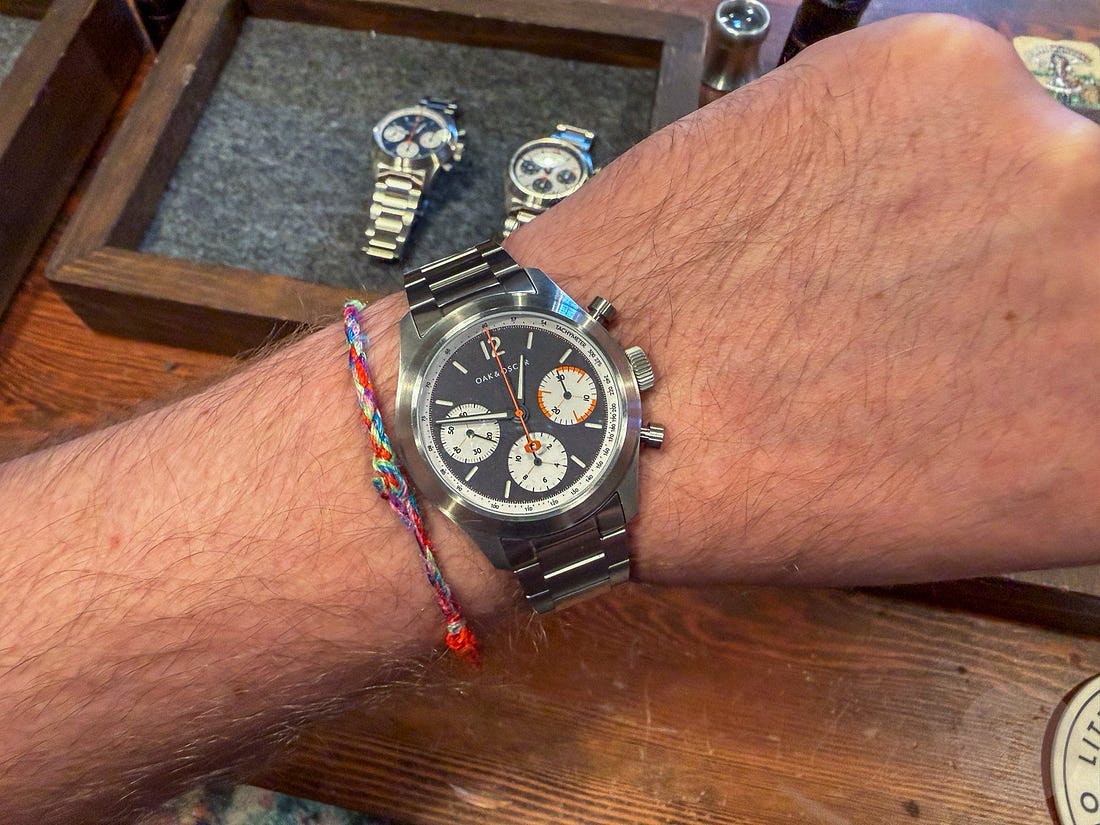
Inside Oak & Oscar’s Chicago Headquarters
Oak & Oscar’s Chicago headquarters presents watchmaking as a personal, approachable enterprise. The visit moves between a welcoming lounge filled with local references and the working areas where the team’s watches and projects take shape.
Models including the Humboldt, Olmsted, and Atwood illustrate the brand’s combination of practical design and an identifiable American personality. The setting also gives visitors a closer understanding of the people behind the products, something that can be difficult to communicate through an online catalog.
The strongest impression is the connection between hospitality, shared enthusiasm, and the business itself. For a smaller brand, that relationship with collectors can become an important part of the ownership experience.
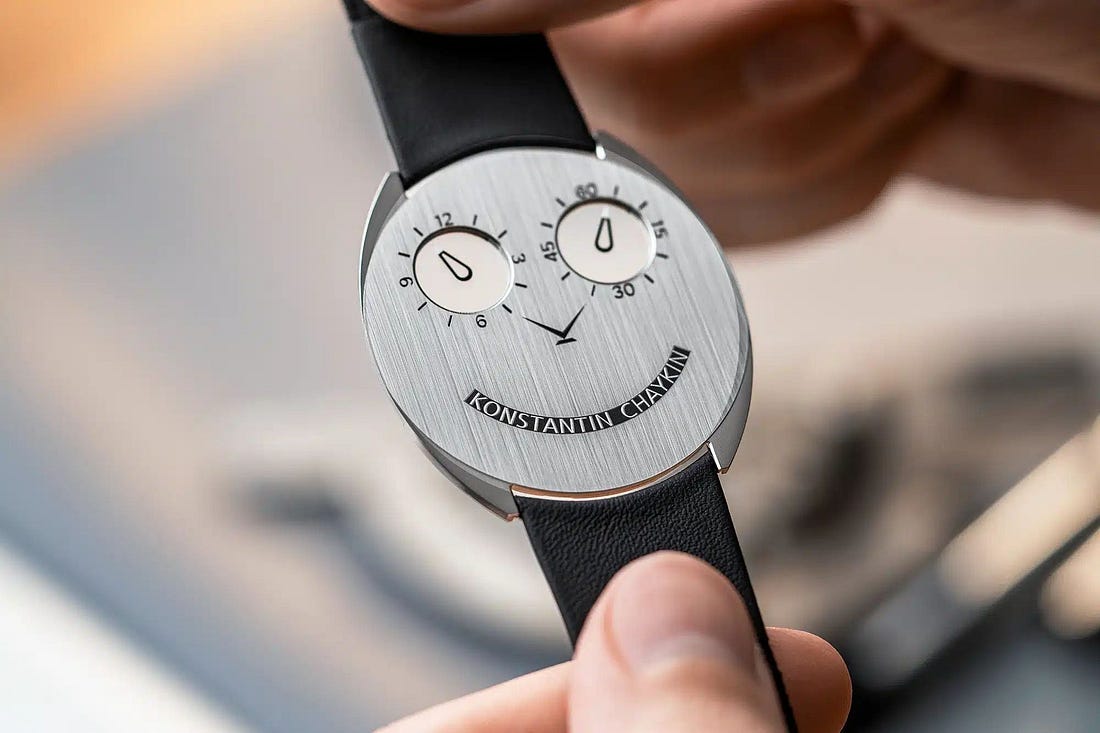
Watchonista’s GPHG Finalist Favorites Put Creativity in the Spotlight
Watchonista’s staff selections from the GPHG 2026 finalists range across mechanical experimentation, jewelry, luminous materials, and unusual dial treatments. The exercise is a reminder that excellence in watchmaking can take very different forms.
The highlighted watches include Konstantin Chaykin’s ThinKing Mystery, TAG Heuer’s Monaco Evergraph, and Piaget’s Swinging Pebble. Other selections turn to IWC’s luminous Ceralume treatment, Piaget’s use of sodalite, and David Candaux’s distinctive tourbillon architecture.
Personal favorites offer a useful companion to the eventual awards. They encourage readers to consider which qualities matter most to them, whether that means technical difficulty, visual originality, craftsmanship, or the simple appeal of the finished object.
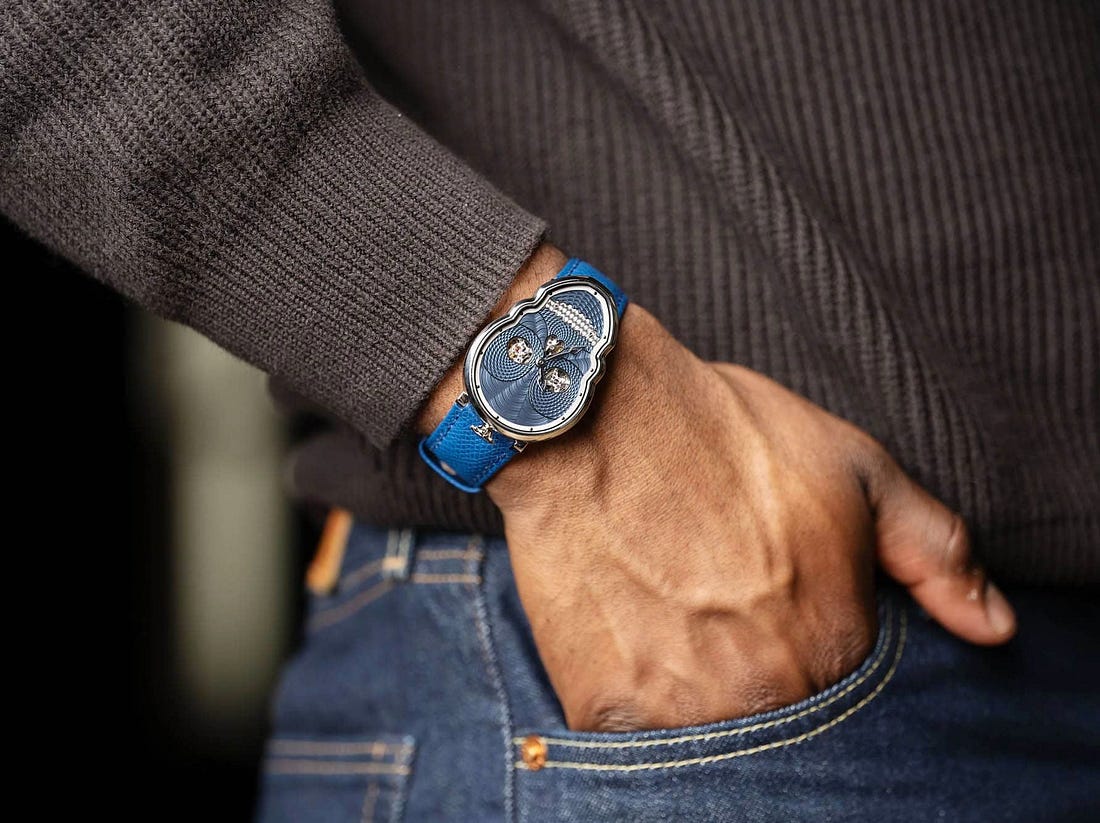
Twelve Skull Watches Explore Watchmaking’s Memento Mori Tradition
Skull watches connect contemporary design with a long tradition of portable reminders of mortality. Early examples made the message explicit through their form; modern interpretations range from solemn engraving to colorful animation.
The selection includes Bell & Ross, Chopard, Corum, Fiona Krüger, Hermès, Hublot, HYT, Louis Vuitton, Mr Jones, Richard Mille, Bomberg, and Ressence with Alain Silberstein. Their approaches encompass sculptural cases, painted dials, fluid displays, and mechanical figures.
The appeal goes beyond seasonal novelty. A watch already measures a finite resource, making the skull a particularly direct expression of what the object does. The best examples find room for humor and artistry within that serious idea.
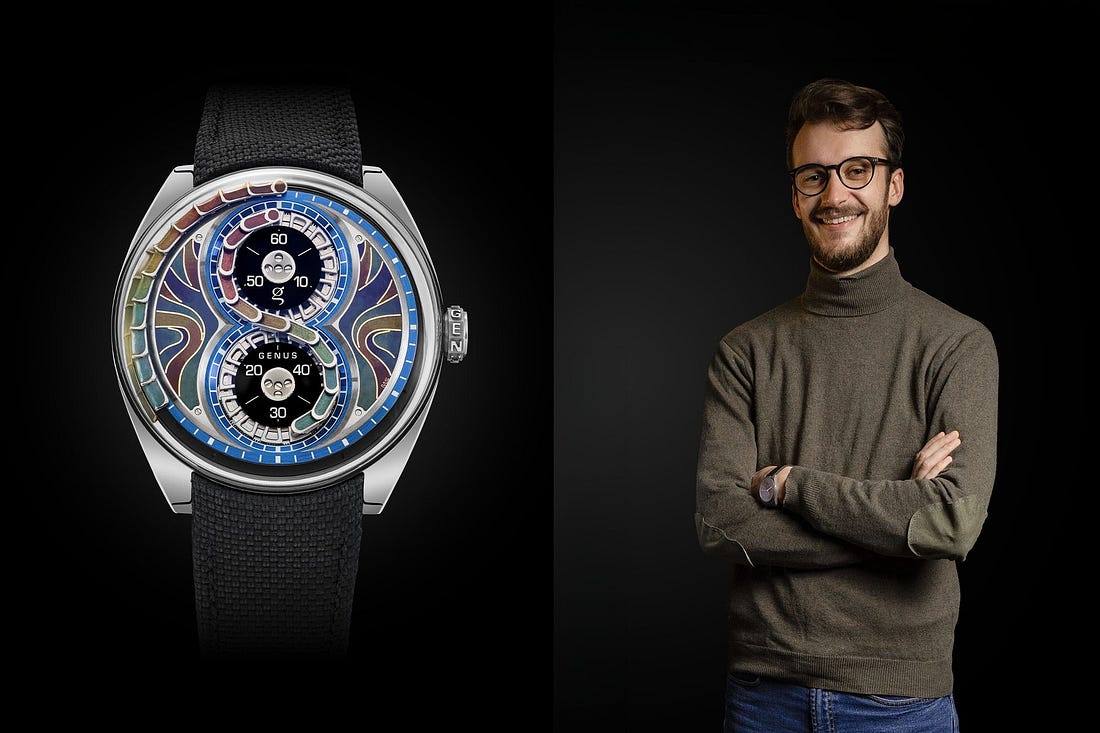
Tad Kozh Gives Artisans and Young Watchmakers a Shared Platform
Baudouin Van Es describes Tad Kozh as an initiative that connects established watchmakers and artisans while helping finance opportunities for emerging talent. Limited collaborative watches generate support for competitions, equipment, and mentorship.
An initial cloisonné enamel project with Genus demonstrated the approach through a five-piece series. Further collaborations, including a planned project with Armin Strom, extend the ambition beyond a single release.
The interview explores a practical challenge facing independent watchmaking: exceptional talent needs a route from the workshop to a viable business. Technical resources, guidance, and exposure to collectors can be as consequential as the initial recognition.
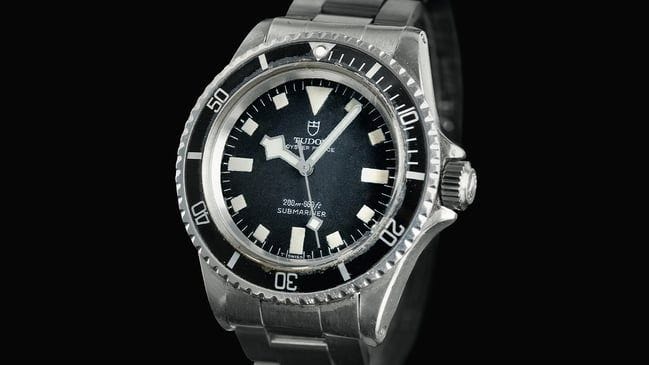
Patina and Prestige: How Time Changes a Watch’s Character
Tropical dials, faded bezels, aged luminous material, and oxidized metals can turn a familiar reference into something visually distinctive. Patina records the interaction between materials, environment, and ownership, although the results vary considerably.
The feature examines changes in dial surfaces, aluminum and Bakelite bezels, bronze, silver, and other materials. It also considers why modern ceramic and contemporary luminous compounds often preserve their appearance more consistently.
Collectors may find beauty in these transformations, but originality and condition still require scrutiny. Appealing aging, damage, and artificial alteration are different propositions, even when photographs make them look superficially similar.

Ten Spooky Watches Keep the Halloween Spirit Running
Halloween may be behind us, but the watches gathered here show how effectively the industry can turn eerie imagery into wearable design. Skeletons, unsettling faces, luminous details, and playful horror references appear across a wide range of prices.
The selection moves from Swatch’s Simpsons-inspired Aye Carumboo to more elaborate independent creations, including the Behrens and Konstantin Chaykin collaboration. Some examples use the dial as an illustrated canvas; others incorporate the theme into the watch’s overall construction.
The common attraction is personality. These are watches chosen because they make their owners smile—or enjoy a small shiver—rather than because they disappear quietly beneath a cuff.
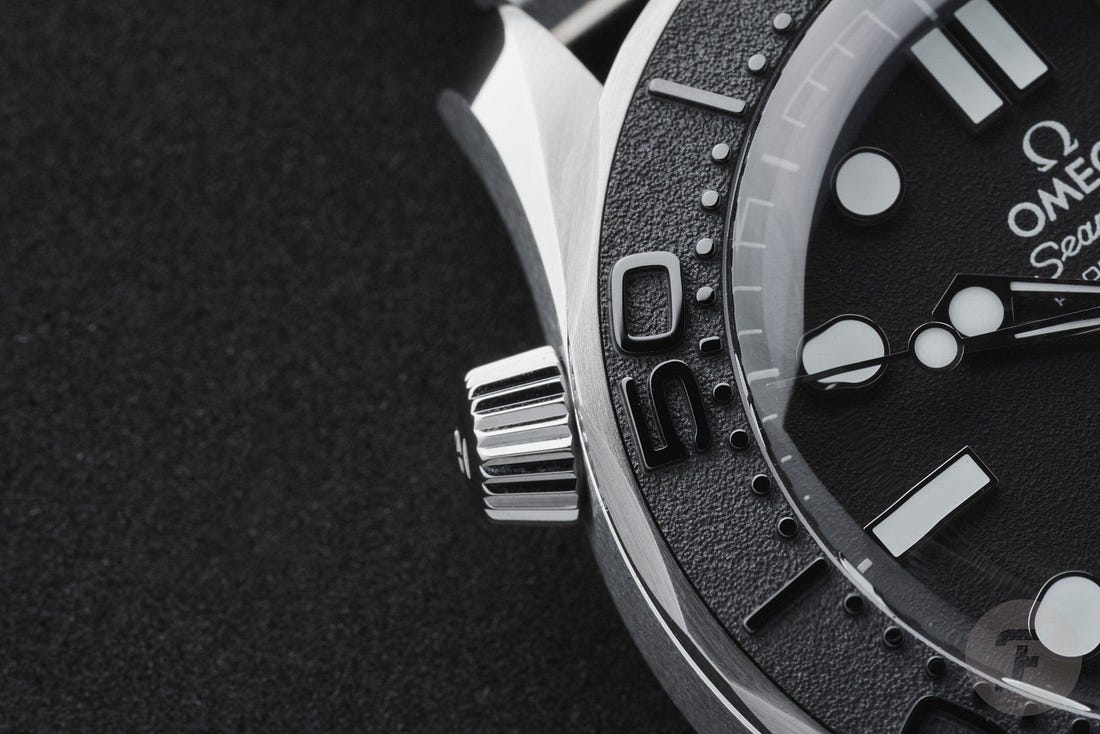
Five Recent Dive Watches Show the Breadth of a Familiar Category
The dive watch remains one of the industry’s most flexible formats. This selection brings together Panerai, Omega, Grand Seiko, Longines, and Blancpain, illustrating the distance between a basic underwater instrument and the many modern interpretations of the idea.
Long power reserves, lightweight materials, distinctive dial treatments, and recognizable design histories give the watches different identities. Case size and wearing comfort matter just as much as the depth rating when the watch will spend most of its life on land.
For prospective buyers, the list provides several starting points rather than one universal winner. The useful comparison is how each watch balances its engineering, proportions, appearance, and price against the way it will actually be worn.
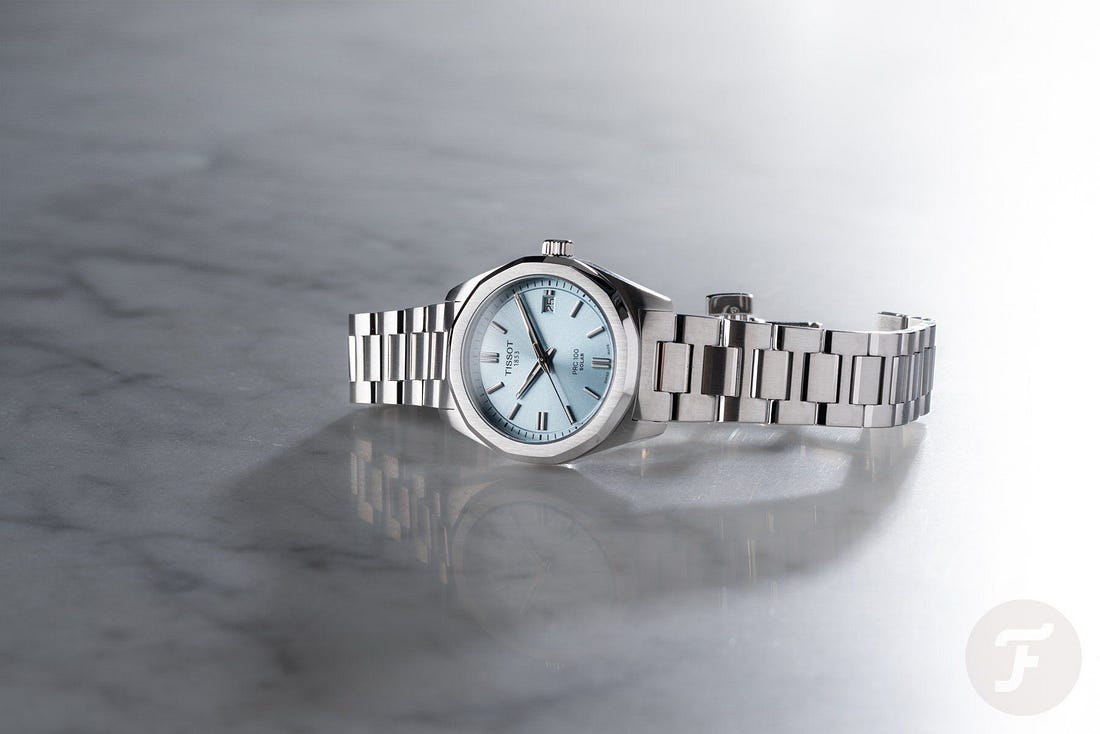
Could Quartz Help Rebuild the Accessible Swiss Watch Market?
As entry-level mechanical watches become more expensive, Swiss brands risk losing buyers who once regarded them as attainable introductions to the industry. Maintenance obligations can make the calculation harder, particularly when servicing represents a large share of the watch’s original purchase price.
Quartz offers dependable timekeeping, lower routine ownership costs, and considerable freedom in design. Those qualities could help brands produce appealing Swiss watches at prices that reach a broader audience.
The argument is strongest when quartz receives thoughtful product development and a clear identity. Buyers still want attractive design, convincing quality, and a reason to choose the watch. An accessible price becomes more persuasive when the complete product feels deliberate.
New Watches
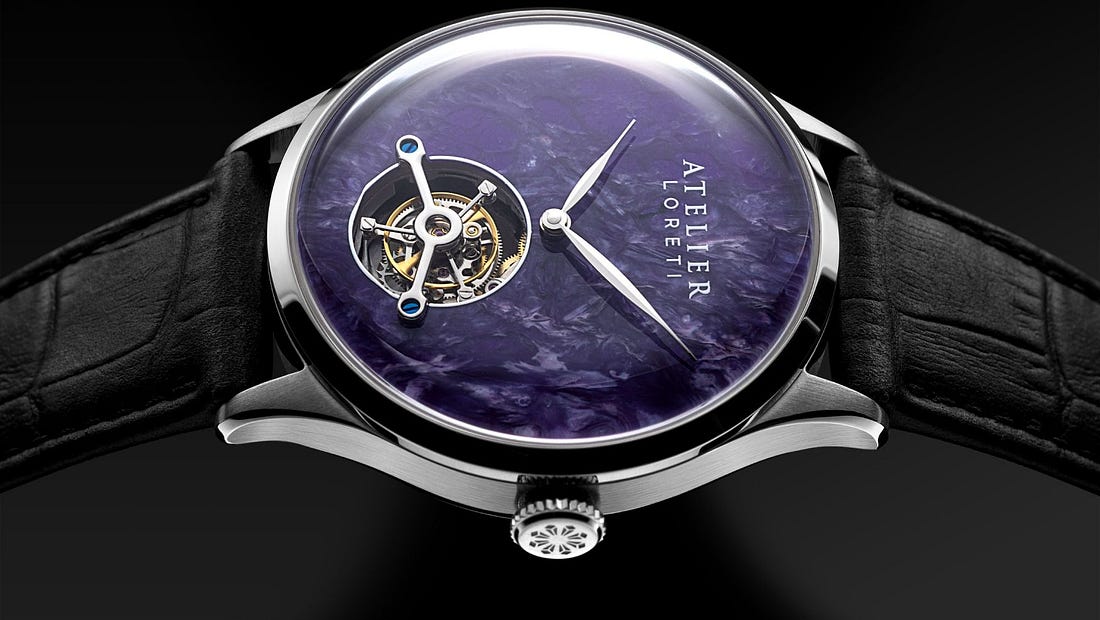
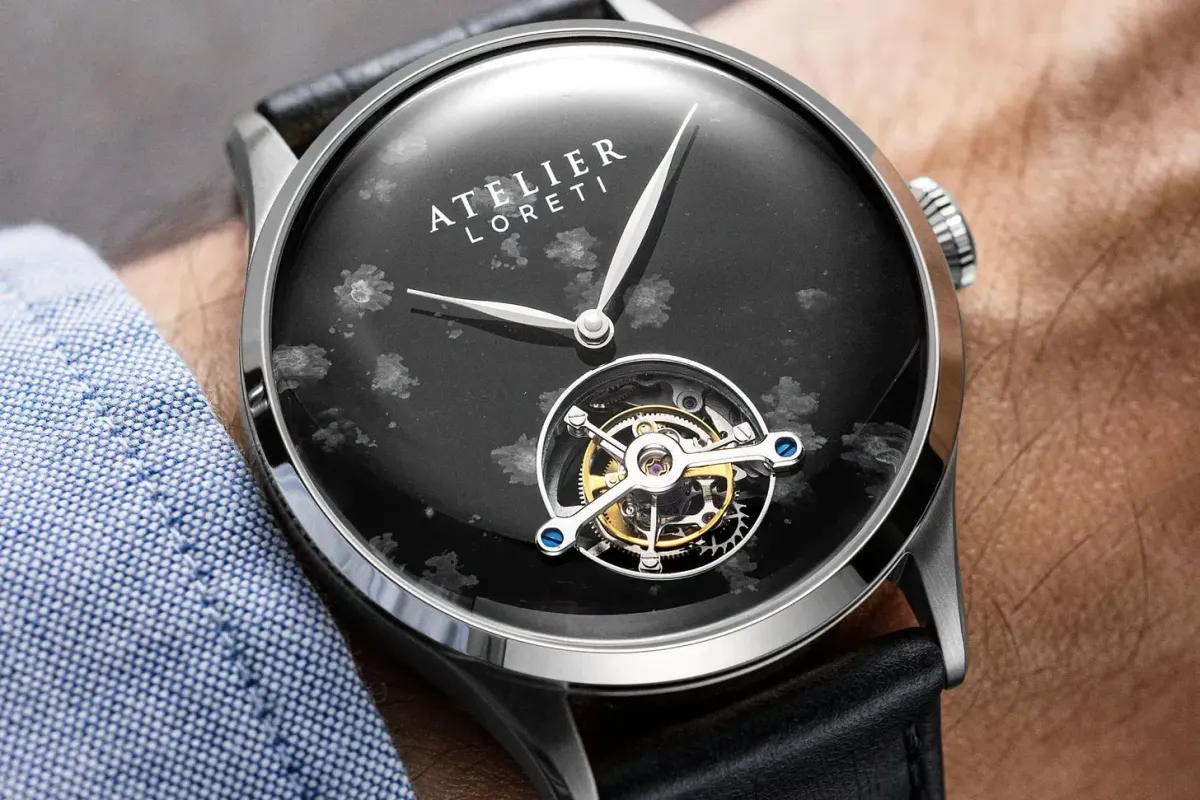
Atelier Loreti Adds Snowflake Obsidian and Charoite to Its Celestial Tourbillon
Atelier Loreti expands the Celestial Tourbillon collection with two natural-stone dials, giving each watch an individual pattern. The 42 mm stainless-steel case measures 10.85 mm thick, offers 100 meters of water resistance, and places a one-minute tourbillon prominently in the lower portion of the dial. According to the brand, the automatic L1T caliber uses extensively reworked architecture derived from the Miyota 8215, with approximately 35 hours of power reserve.
Both versions come on black leather straps, and production is limited to 50 examples of each reference. Availability is scheduled for November 19, making these additions an unusually inexpensive proposition in a complication generally associated with much higher prices. Price: US$980 for Snowflake Obsidian; US$1,180 for Charoite.
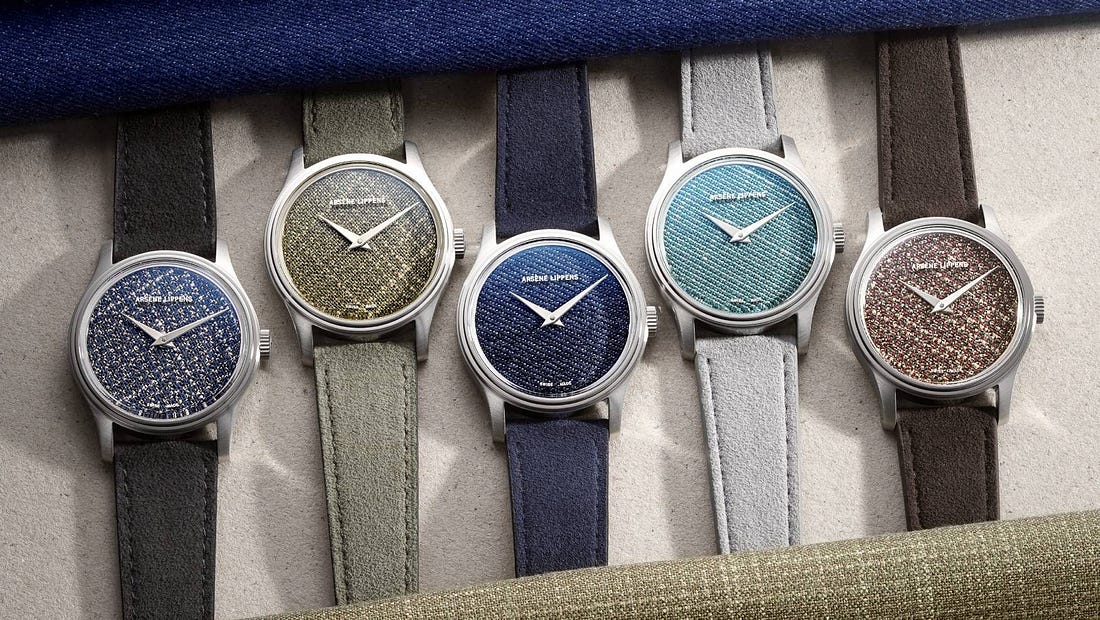
Arsène Lippens Gives the Artigiano New Textile Dials and a Display Back
Arsène Lippens introduces Stelvio and Bellagio dial options to the Artigiano Ref. 0599 Textile Collection, while adding sapphire display backs across the range. The watch retains its compact 37.5 mm diameter and 9.9 mm thickness, with a manually wound Sellita SW210-1b providing approximately 48 hours of power reserve. Alcantara straps and quick-release spring bars complement the collection’s emphasis on texture and wearability.
Ordering is scheduled for November 5–11, with delivery expected before Christmas. Production will continue in small batches rather than under a fixed numbered limit, giving the brand more flexibility while preserving its modest scale. Price: approximately US$1,823, converted from CHF1,500, excluding VAT.
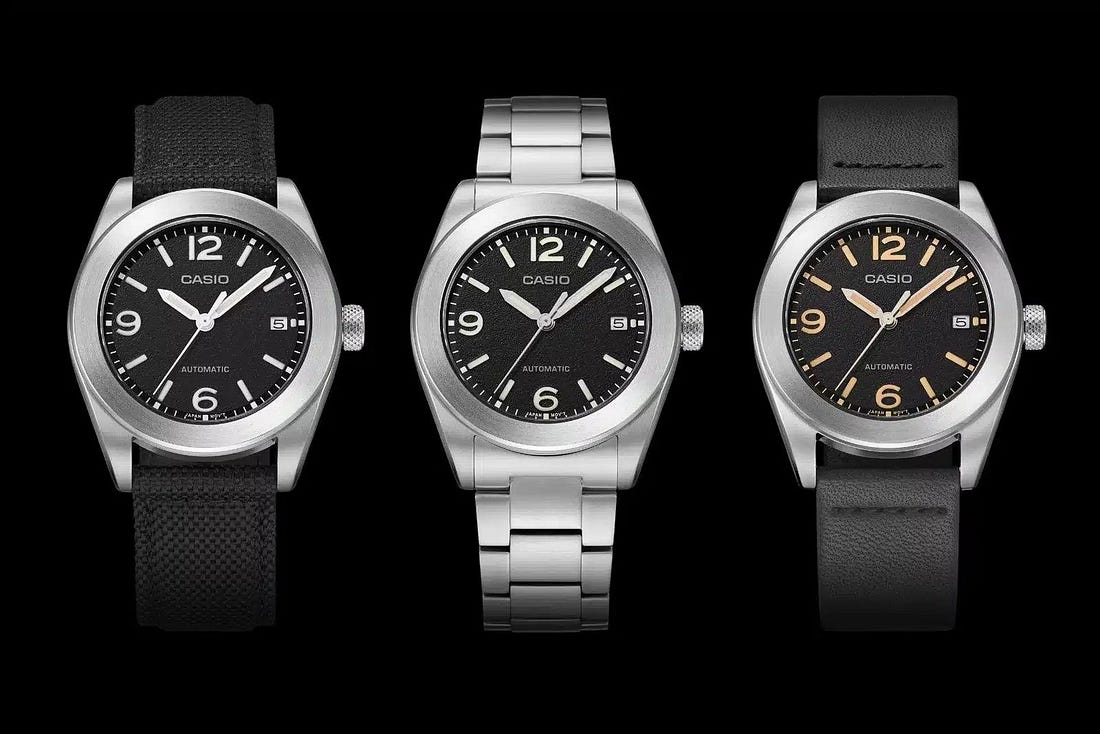
Casio’s CMK-100 Brings Titanium and Automatic Power to the Everyday Field Watch
Casio’s CMK-100 adopts a straightforward field-watch formula with a 38 mm titanium case, large luminous numerals, a date display, and a sapphire crystal. The case measures 11.4 mm thick and offers 100 meters of water resistance, with screw-lock construction for the crown and caseback. Its Japanese automatic movement supports hand-winding and hacking seconds and provides approximately 42 hours of power reserve.
The restrained dial gives the watch a familiar outdoor character, while titanium keeps weight down. Nylon, leather, and titanium-bracelet versions broaden the choice, making the collection relevant to buyers who prioritize practical materials and everyday comfort. US prices: US$330 for the basic cloth-strap version, US$350–US$375 for intermediate variants, and US$440 on the titanium bracelet.

Lorige and Inter Europol Put Race-Used Brake Material on the Wrist
Lorige’s Inter Europol Competition BL-Endurance uses Carbon/Carbon material recovered from LMP2 racing brake components, giving the case a direct physical connection to motorsport. Laser-etched information records the associated race, car, and result, turning provenance into part of the watch’s identity. The 42 mm case houses the LOR-DB03 movement, whose twin barrels deliver a substantial 168-hour power reserve.
A gradient sapphire dial and racing-harness-inspired strap reinforce the connection without relying solely on color or branding. Production is limited to 50 pieces, positioning the watch for collectors who value the material’s actual competition history as much as the mechanical specification. Price: approximately US$36,150, converted from CHF29,750, excluding VAT.
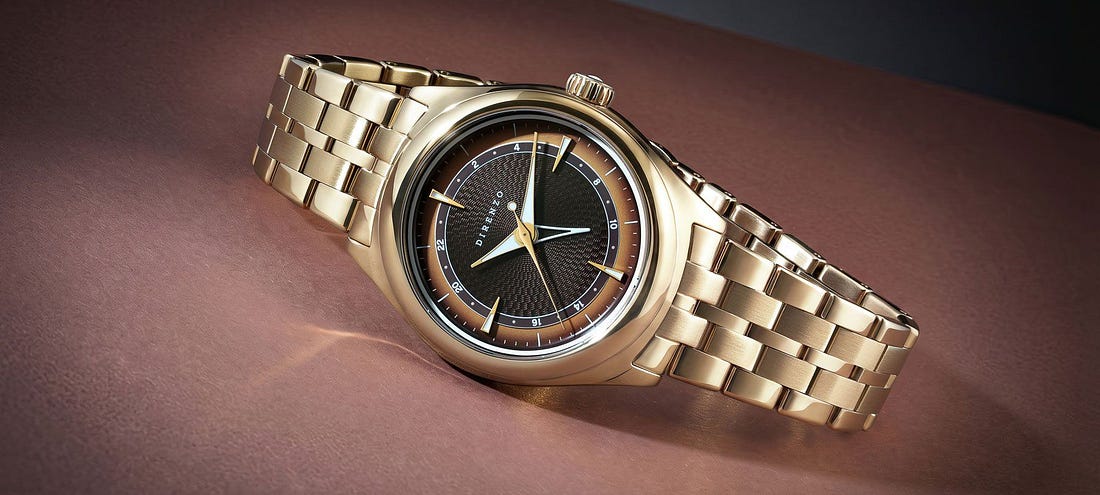
Direnzo’s DRZ 08 Cosmonaire GMT Takes a Space-Age Approach to Travel
Direnzo’s first GMT combines an elliptical bezel, layered dial, and domed sapphire crystal within a 39 mm-wide stainless-steel case. The Sellita SW330-2 automatic movement supplies an independently adjustable GMT hand and approximately 56 hours of power reserve. Water resistance is 100 meters, and the collection offers steel-bracelet and leather-strap configurations alongside polished and gold-PVD case treatments.
The range includes a 60-piece meteorite edition and a 40-piece Isotope collaboration, with the launch scheduled for November 21 at 15:00 CET. Its appeal lies in combining useful second-time-zone functionality with a silhouette that steps away from conventional travel-watch styling. Prices: approximately US$1,458 for standard models and US$1,640 for limited editions during presale; approximately US$1,519 and US$1,701, respectively, at regular retail.
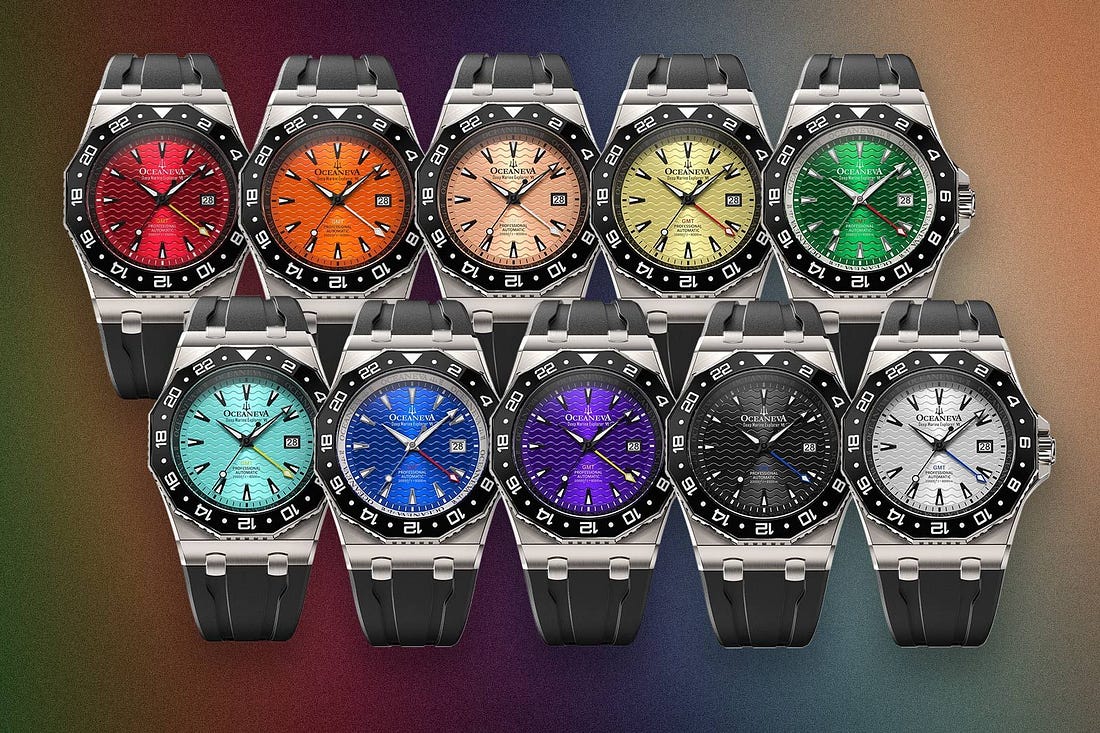
Oceaneva’s Dodeca-Trench Pairs a Traveler GMT With a 6,000-Meter Rating
Oceaneva’s Dodeca-Trench combines a Grade 5 titanium case with a stated 6,000-meter water-resistance rating and a Miyota 9075 automatic traveler GMT movement. The specification requires considerable physical presence: the watch measures 44 mm across and 18.95 mm thick, including its substantial sapphire crystal. A ceramic 24-hour bezel, luminous wave-pattern dial, and FKM rubber strap complete the package.
Ten dial colors are offered, each limited to 50 pieces. The independently adjustable local-hour hand adds genuine travel utility, while buyers should pay particular attention to the watch’s thickness and 54 mm lug-to-lug dimension when assessing fit. Reported launch price: US$799.
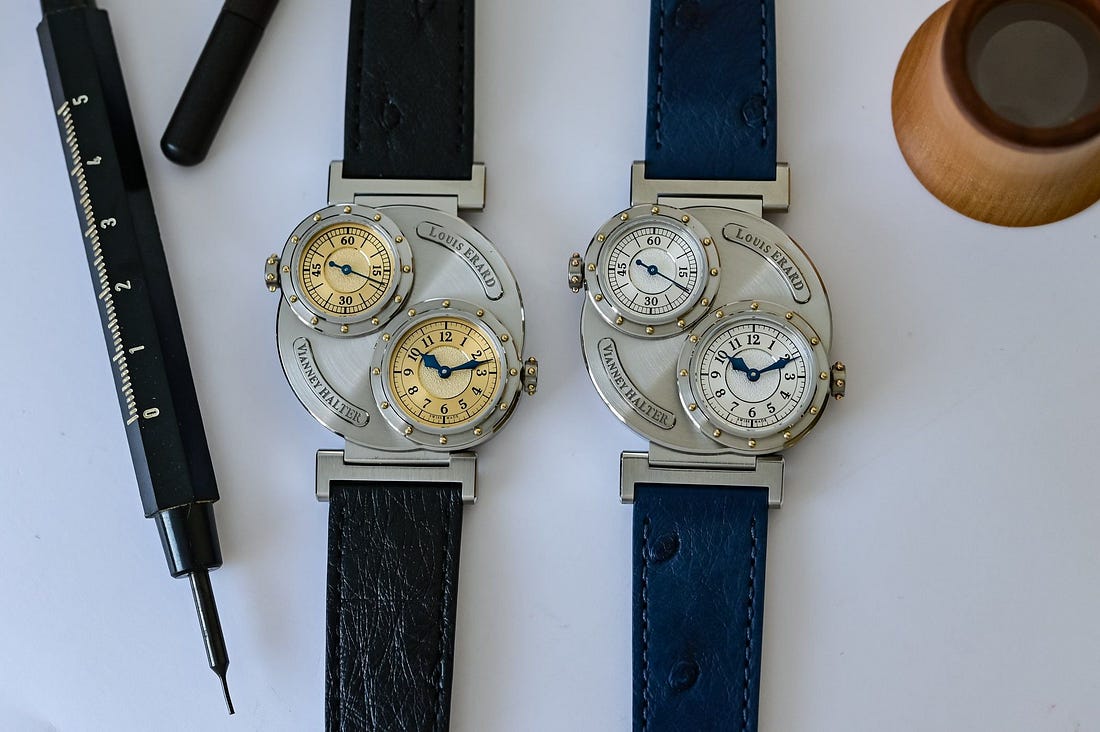
Louis Erard and Vianney Halter Bring the Futur Antérieur Closer to the Antiqua
The Louis Erard × Vianney Halter Futur Antérieur translates Halter’s riveted, porthole-like design language into a 38 mm stainless-steel watch. Two Sellita SW100 automatic movements divide the work, with one driving hours and minutes and the other running the separate seconds display. Raised subdials, a distinctive crown, and carefully placed nameplates give the watch much of its retro-futuristic personality.
Developed with American artist Jeff Barnes, the design is offered in gold-toned and silver-toned executions with ostrich-leather straps. The release includes individual editions of 178 pieces per version and a paired-set offering, providing a relatively accessible route into Halter’s visual world. Prices: approximately US$6,015 per watch or US$12,030 for the pair, converted from CHF4,950 and CHF9,900, excluding tax.
Comparisons
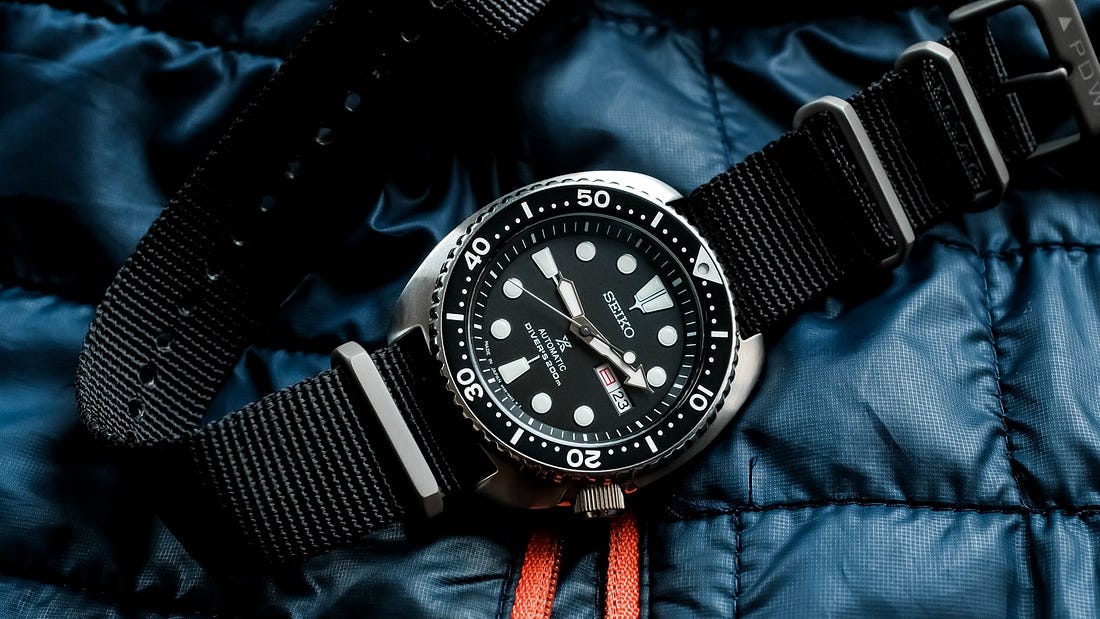
Seiko Turtle vs. Orient Mako II: Two Ways Into an Affordable Automatic Diver
The Seiko Turtle’s cushion-shaped case and familiar dial connect it to a recognizable dive-watch lineage. Its automatic 4R36 movement offers hand-winding and hacking seconds, while strong lume and a practical bezel support its tool-watch character.
The Orient Mako II takes a more conventional approach, combining a 41.5 mm case, sunburst dial, and automatic F6922 movement. Both watches offer 200 meters of water resistance, but their proportions and personalities differ more than the headline specifications suggest.
The choice comes down to which compromises suit the wearer. Seiko supplies an unmistakable shape and historical identity; Orient offers a more restrained everyday presentation, often at a lower entry price.
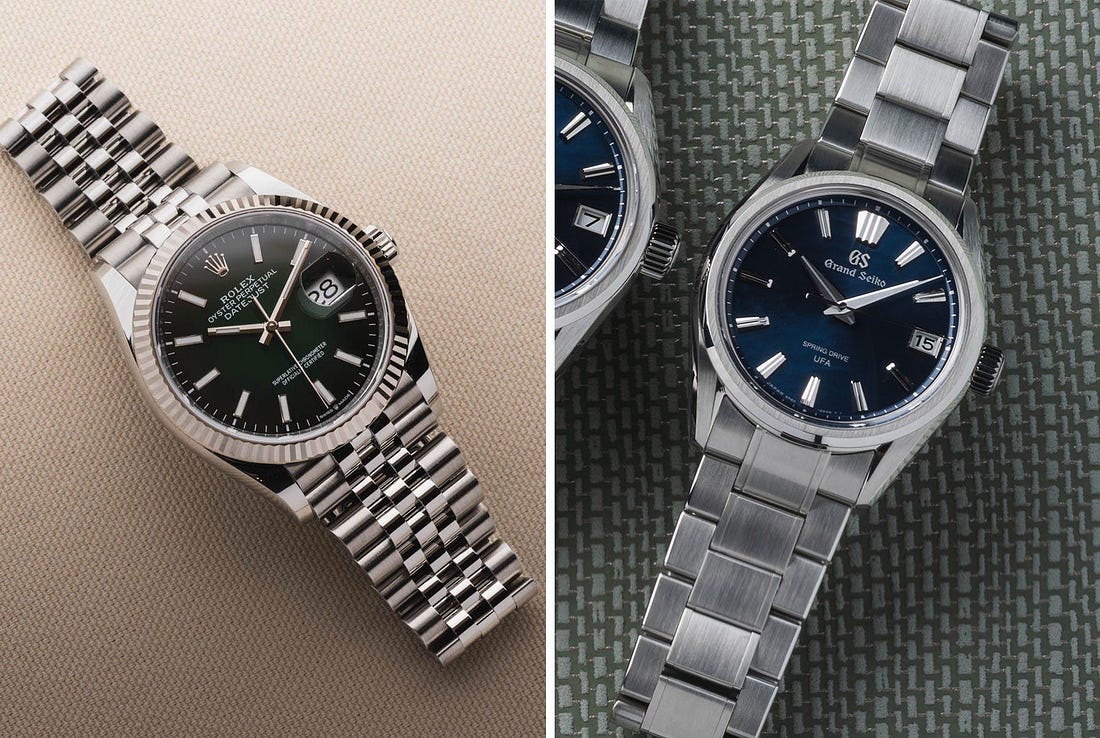
Rolex Datejust 36 Ombré vs. Grand Seiko Lake Suwa: Familiar Luxury Meets Precision Engineering
A green ombré dial gives the Rolex Datejust 36 a more expressive face without changing its familiar combination of fluted bezel and Jubilee bracelet. The Grand Seiko SLGB015 answers with a lake-inspired blue dial and Spring Drive U.F.A. technology.
The comparison puts brand identity, dial execution, accuracy, and daily wear on the same page. Grand Seiko’s stated accuracy of ±20 seconds per year is a central technical distinction, while the Rolex’s appeal includes its recognizable proportions and longstanding place in the market.
These watches approach an everyday luxury purchase from different directions. The more useful question is which combination of design, engineering, fit, and ownership experience best matches the buyer.
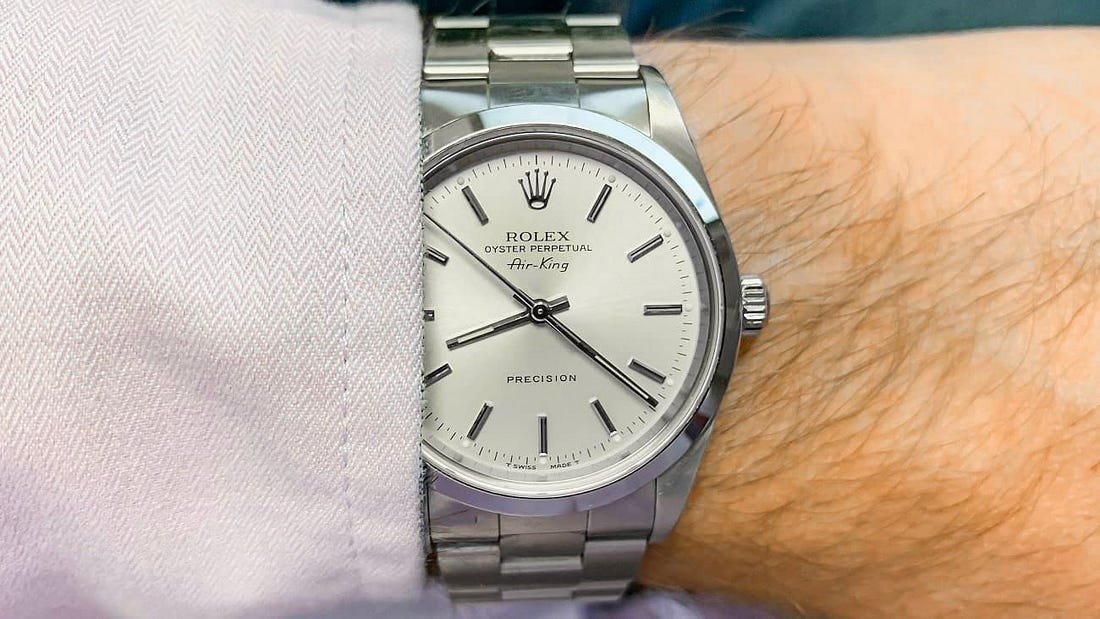
Vintage Rolex Air-King vs. Orient Bambino: How Much of the Experience Can an Affordable Watch Deliver?
The Rolex Air-King reference 14000 offers compact 34 mm proportions, an understated dial, sapphire crystal, and the appeal of an older Rolex. Its purchase price also brings the condition and service-history questions that accompany a vintage mechanical watch.
The Orient Bambino Version 3 provides a more accessible route to traditional automatic-watch styling. A domed mineral crystal and distinctive dial give it character, although finishing, movement behavior, and durability should be judged within its price category.
The Bambino can satisfy a desire for an attractive mechanical dress watch. Whether that replaces the appeal of the Air-King depends on how much of the attraction lies in the Rolex itself, its history, and the particular example under consideration.
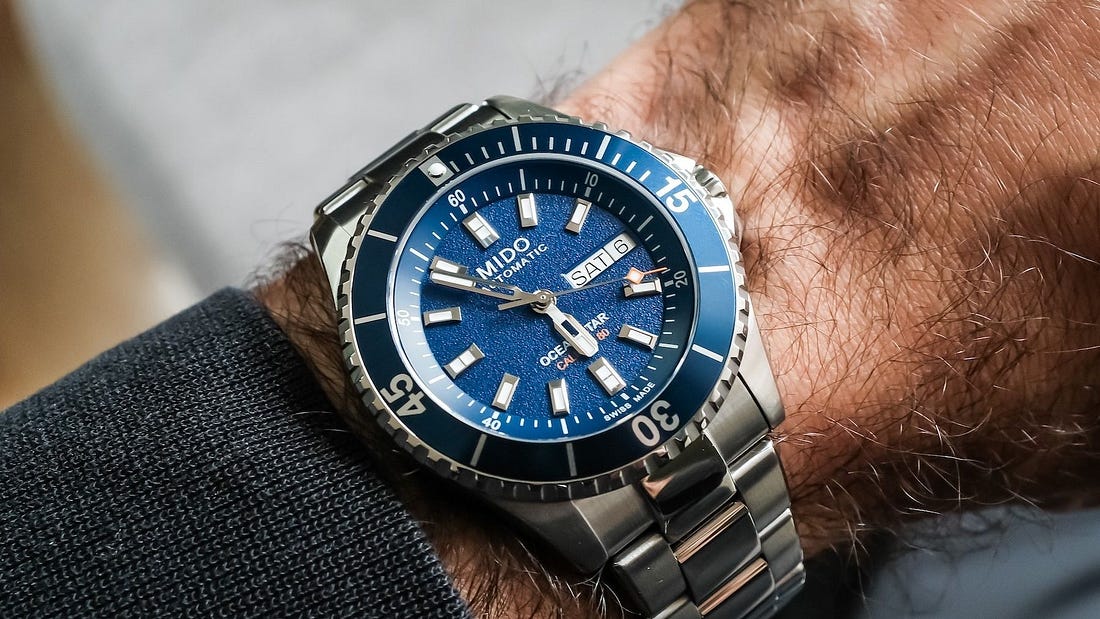
Mido Ocean Star vs. Oris Aquis: Comparing the Complete Ownership Proposition
The Mido Ocean Star 200 builds its case around a long power reserve, useful water resistance, and a comparatively approachable price. Its restrained presentation makes it a plausible choice for someone seeking one Swiss diver to wear regularly.
The Oris Aquis New York Harbor II introduces a distinctive aqua-green mother-of-pearl dial, a conservation connection, and a 300-meter rating. It also asks the buyer to spend substantially more and accept a different set of proportions and movement specifications.
The comparison illustrates why price differences need to be examined feature by feature. Dial character, bracelet design, fit, and personal attachment may justify a premium, but the lower-priced watch can remain the stronger match for a particular owner.
Reviews
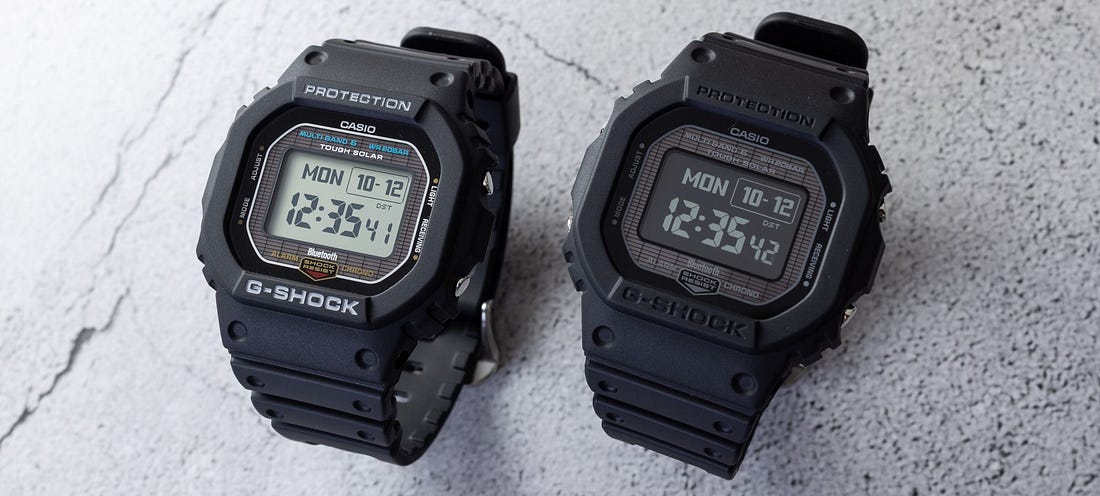
Casio G-Shock GWBX5600 Brings a Better Display to a Familiar Shape
The GWBX5600 combines the classic square G-Shock format with a memory-in-pixel display, solar charging, Bluetooth connectivity, and radio-controlled time synchronization. The feature set addresses readability and everyday convenience while retaining the rugged character that made the original design successful.
The review considers the practical benefit of the screen and the ease of managing settings through a connected phone. At approximately 51 grams with 200 meters of water resistance, it remains focused on comfortable, durable daily use.
For buyers who appreciate the square but want a more contemporary interface, this is a meaningful development. The attraction is the way the technology improves a familiar watch.
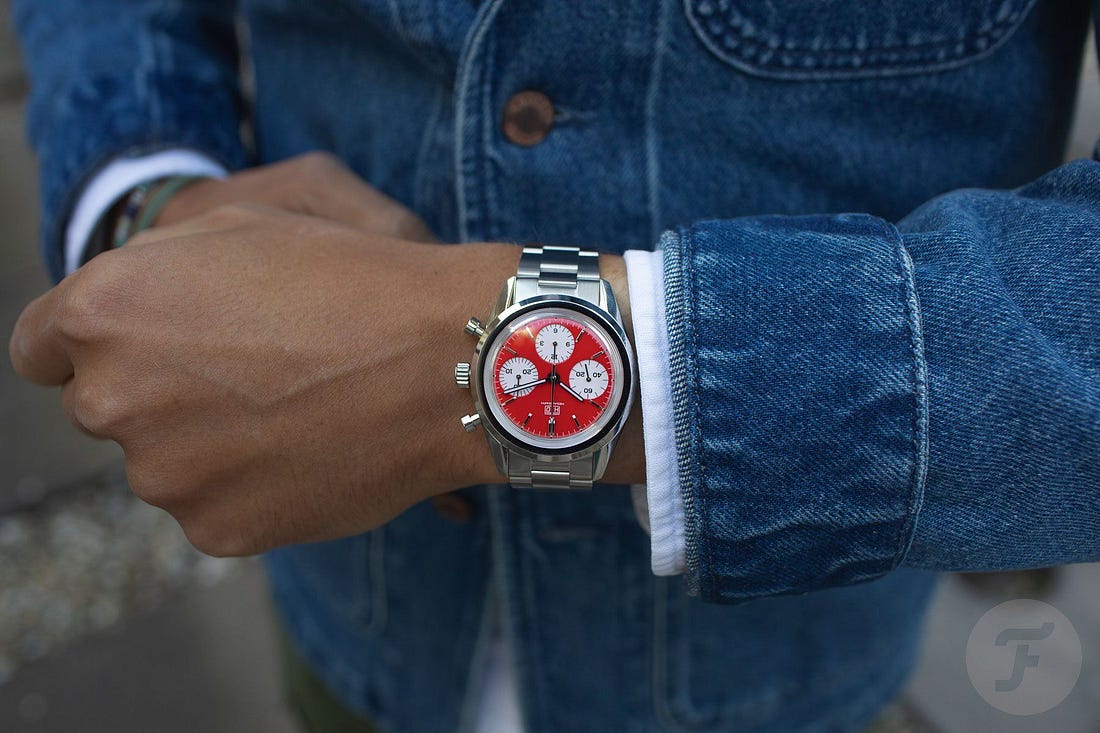
HTD Hesagraph RitmoCorsa Puts Racing Red at the Center of the Dial
The HTD Hesagraph RitmoCorsa celebrates the brand’s racing partnership with a vivid red dial and three contrasting white registers. Its 39 mm steel case houses a manually wound Sellita SW510 M chronograph movement with approximately 63 hours of power reserve.
A steel bracelet gives the watch a substantial everyday presence, although sizing and adjustment require more attention than a modern tool-free clasp would. The design’s appeal lies in its compact chronograph proportions and direct motorsport identity.
Only 99 pieces were produced, and the edition reportedly sold out shortly after launch. The review therefore serves both as a closer examination of the watch and a useful introduction to HTD’s approach.
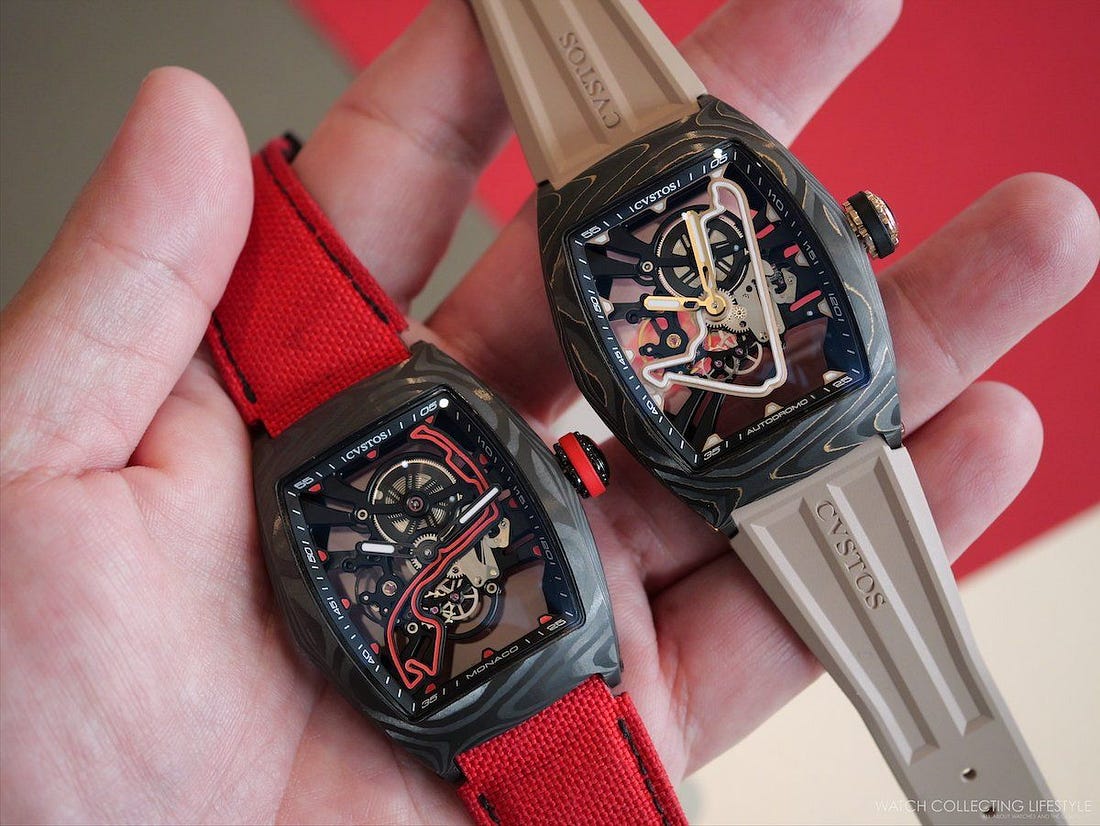
CVSTOS Challenge Autodromo and Monaco Turn Racing Circuits Into Graphic Design
CVSTOS uses lightweight carbon cases and openworked movements to create two watches with strong trackside identities. The Challenge Monaco traces the principality’s circuit in red, while the Challenge Autodromo incorporates the outline of Mexico City’s racing circuit.
Despite large tonneau dimensions, low weight is central to the wearing proposition. Both watches use the manually wound CVS610 caliber with approximately 60 hours of power reserve, and each pairs its circuit motif with coordinated strap and finishing choices.
The Monaco is limited to 30 pieces at US$24,000; the Autodromo is limited to 25 at US$26,000. Their appeal rests on sculptural construction, motorsport references, and the visual energy of the complete package.
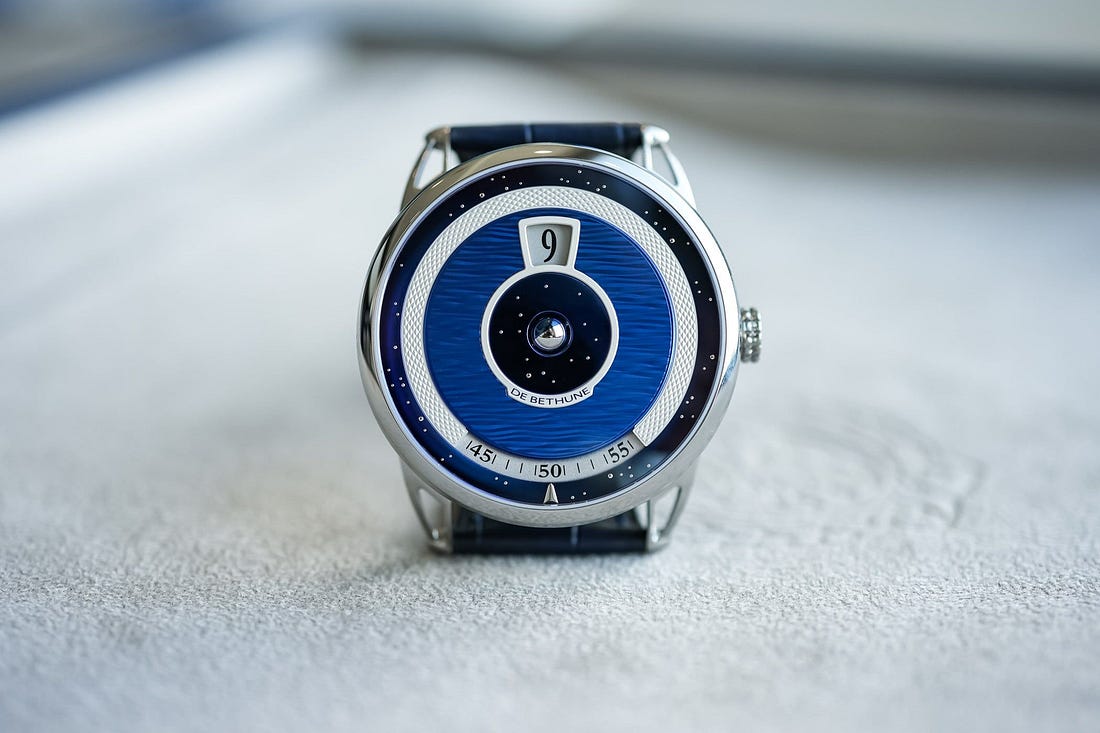
De Bethune DB25 Digitale Makes Mechanical Time Look Futuristic
The DB25 Digitale combines a jumping-hour display, a rotating minute indication, and a spherical moon phase within a polished titanium case. Blued elements and concentric surfaces make the dial feel architectural while preserving a deliberate balance between the indications.
The manually wound DB2144V3 movement provides a five-day power reserve and incorporates De Bethune’s distinctive approach to regulating technology and shock protection. The 42 mm case and short, openworked lugs give the watch a more compact presentation than its elaborate display might suggest.
The review examines a watch whose technical sophistication and visual identity are closely connected. It is a particularly clear example of how an independent maker can develop a recognizable language across both movement and exterior.
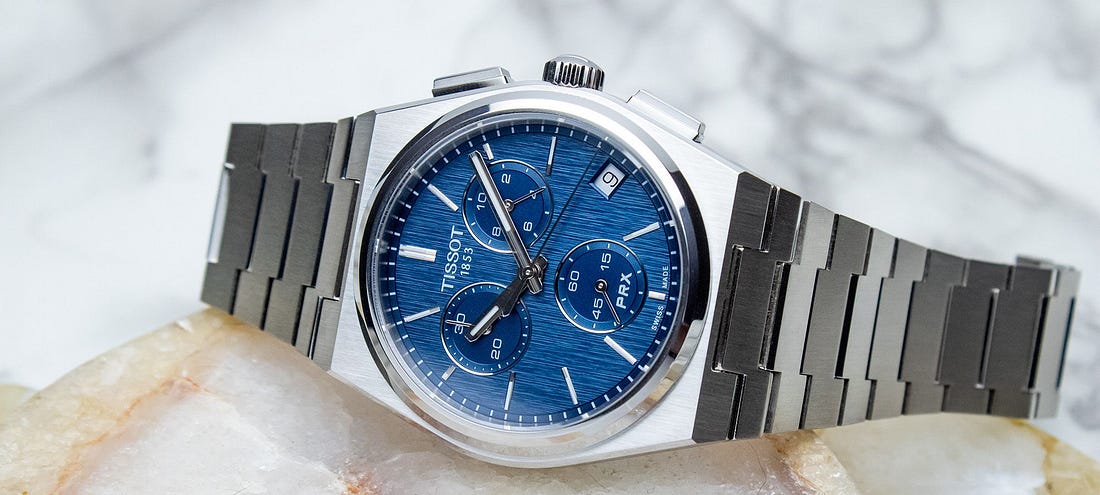
Tissot PRX Quartz Chronograph Adds a Persuasive US$525 Option
The PRX Quartz Chronograph extends Tissot’s integrated-bracelet collection with a slimmer, more accessible alternative to its mechanical chronograph. Its 41 mm steel case preserves the family’s angular surfaces and continuous bracelet profile.
A textured dial and three-register layout add interest without abandoning the design’s everyday character. The ETA quartz chronograph movement brings practical timing functions, an approximately 38-month battery life, and the convenience expected at this price.
At US$525 with 100 meters of water resistance, the watch gives buyers a clear proposition: recognizable PRX design, useful functionality, and a moderate ownership commitment. Bracelet fit and the manually adjusted butterfly clasp remain worth checking in person.
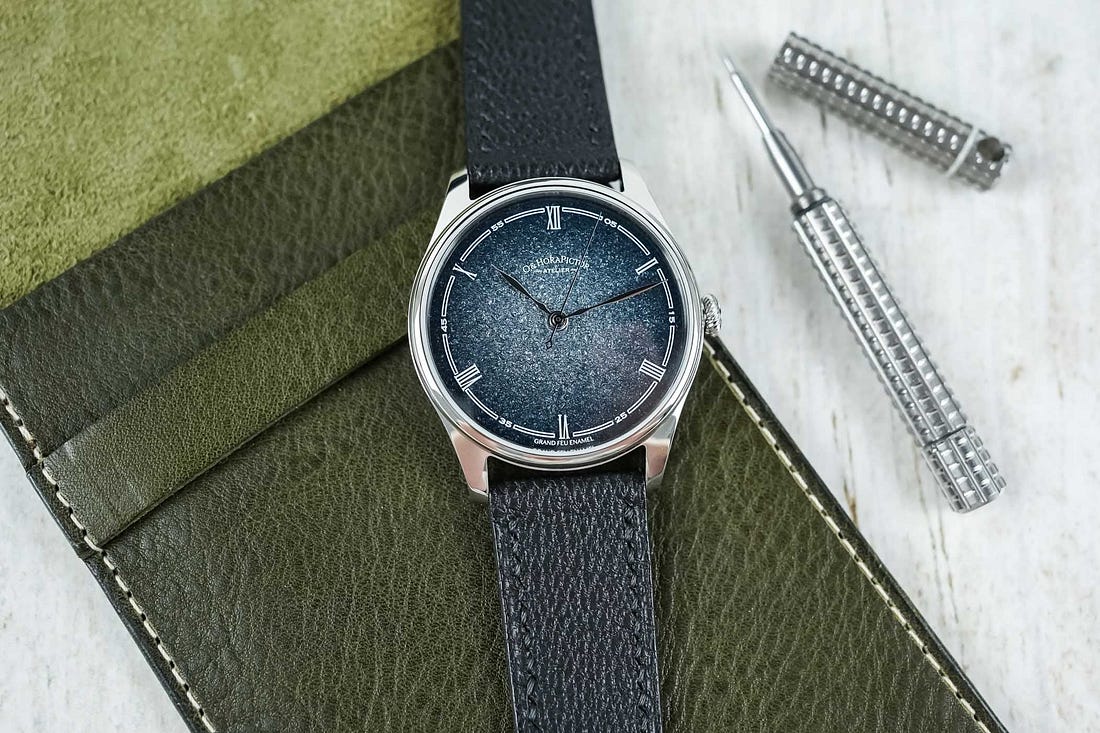
O&HoraPictor Smoked Ocean Finds Depth in Enamel and Silver Leaf
The Smoked Ocean Volcano Grey builds its identity around a hand-formed silver-leaf dial covered with translucent gray enamel. The process produces individual patterns and depth, giving each example a slightly different surface.
A 38 mm case and 45.5 mm lug-to-lug measurement keep the watch within approachable dimensions. The automatic Sellita SW200 supplies familiar mechanical foundations, while a decorated rotor and enamel detail extend the artisanal theme to the reverse.
The result is an interesting proposition for collectors drawn to decorative craft. The review considers how much visual individuality and finishing the brand delivers at a price below many established enamel-dial offerings.
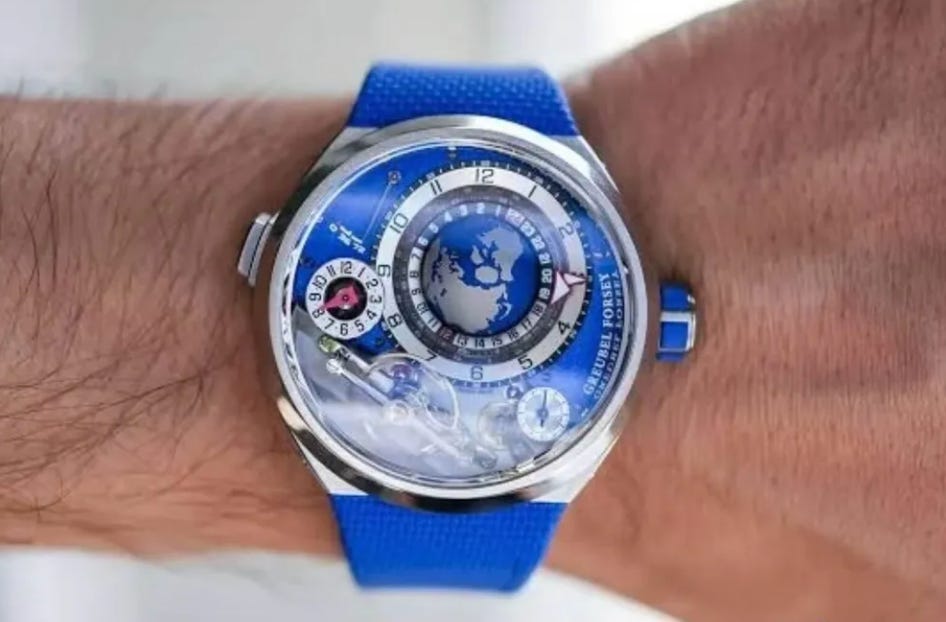
Greubel Forsey GMT Balancier Convexe in Blue Combines Global Time With Sculptural Mechanics
Greubel Forsey’s blue GMT Balancier Convexe organizes its globe, time displays, power-reserve indication, and inclined balance within a curved titanium case. The multi-level construction makes the mechanics an essential part of the visual experience.
The manually wound movement contains 496 components and offers approximately 72 hours of power reserve. A 42.9 mm case and curved profile aim to reconcile that complexity with a more manageable fit on the wrist.
Limited to 22 pieces, this edition sits firmly within highly specialized collecting. The review explores how the case, display, materials, and hand finishing work together to make an unusually elaborate travel watch feel coherent.
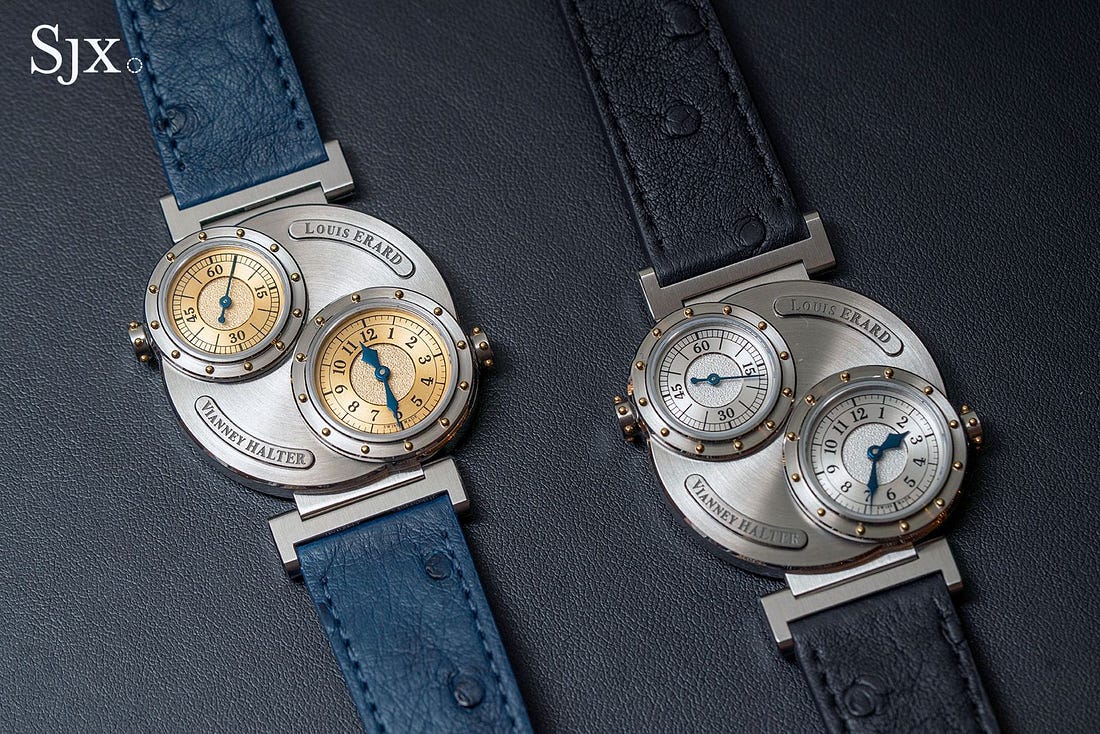
A Closer Look at Louis Erard and Vianney Halter’s Futur Antérieur
The hands-on examination of the Futur Antérieur looks beyond the immediate resemblance to Halter’s Antiqua and into the execution of the new watch. Raised displays, rivets, nameplates, and contrasting finishes give the design multiple layers to inspect.
Its two automatic movements are a particularly unusual solution to the separated indications. They allow the watch to preserve a distinctive visual arrangement while keeping the project within Louis Erard’s broader collaboration strategy.
The important question is whether the whole watch feels convincing at close range. Case proportions, dial construction, finishing, and the relationship between the displays determine how successfully the design moves from an arresting image to a satisfying object.
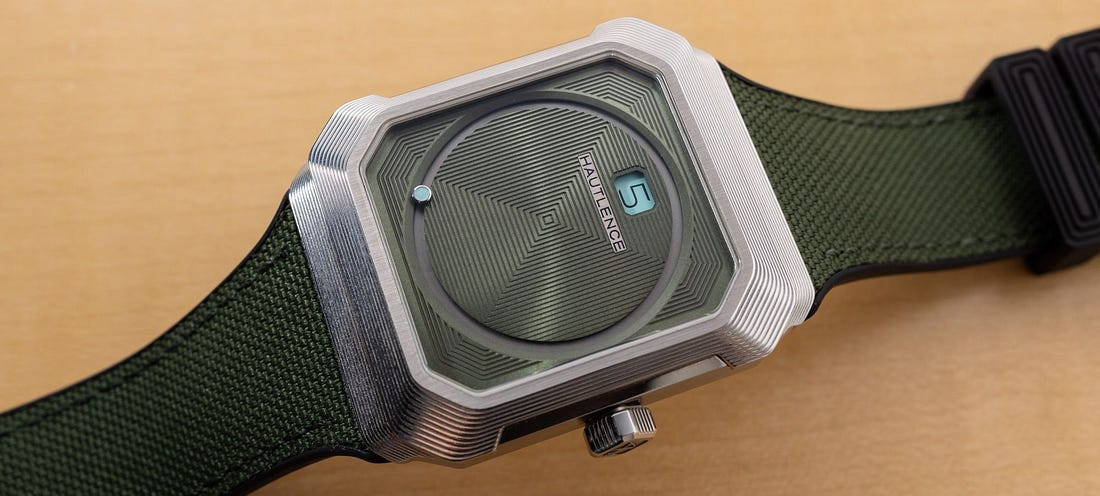
Hautlence Kubera Gives the Jumping Hour a Cubist Setting
The Hautlence Kubera combines an olive-green dial, contrasting turquoise hour disc, and a square steel case with strongly patterned exterior surfaces. An instantaneous jumping-hour display provides the central mechanical attraction.
The case measures 36 mm wide and 11.3 mm thick, with a 43.8 mm lug-to-lug span. Its automatic B60 caliber offers approximately 70 hours of power reserve and can be viewed through a sapphire back that continues the watch’s textured visual theme.
Bracelet and hybrid-strap options change the presentation, but the identity remains unmistakable. This is a watch for collectors interested in how geometry, surface treatment, and an unconventional display can work as a unified design.
Events
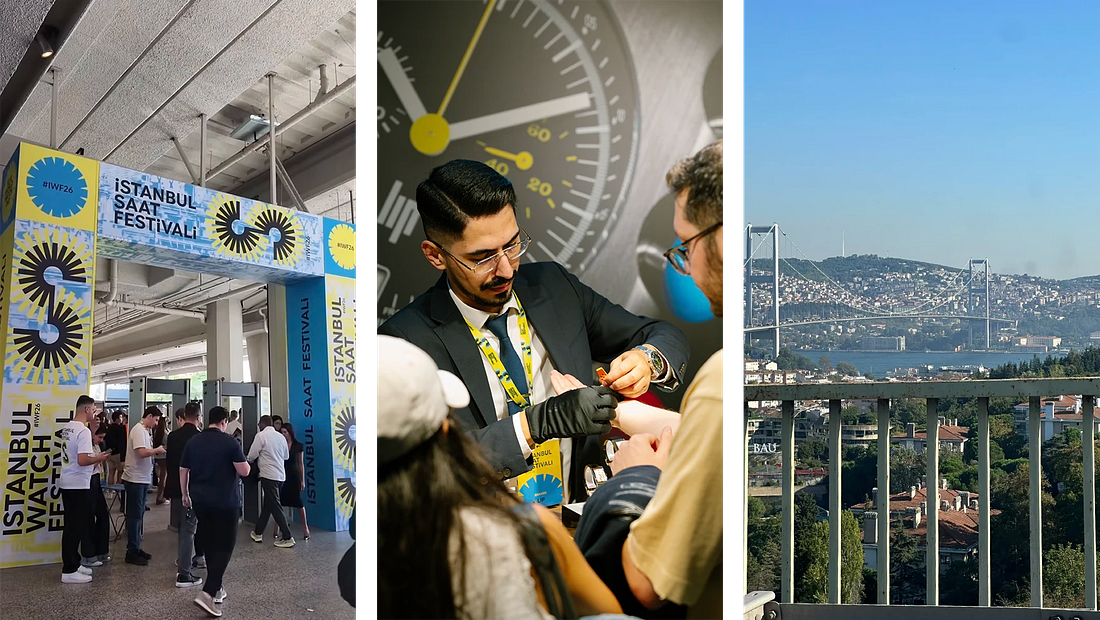
Istanbul Watch Festival Brings Collectors and Watchmaking to the Bosphorus
The Istanbul Watch Festival brought more than 7,500 visitors to QNB Terminal Kadıköy over two days in early October, following more than 11,500 registrations. Organized by Türk Saat Kulübü, the event combined a broad brand lineup with opportunities to experience watches and watchmaking directly.
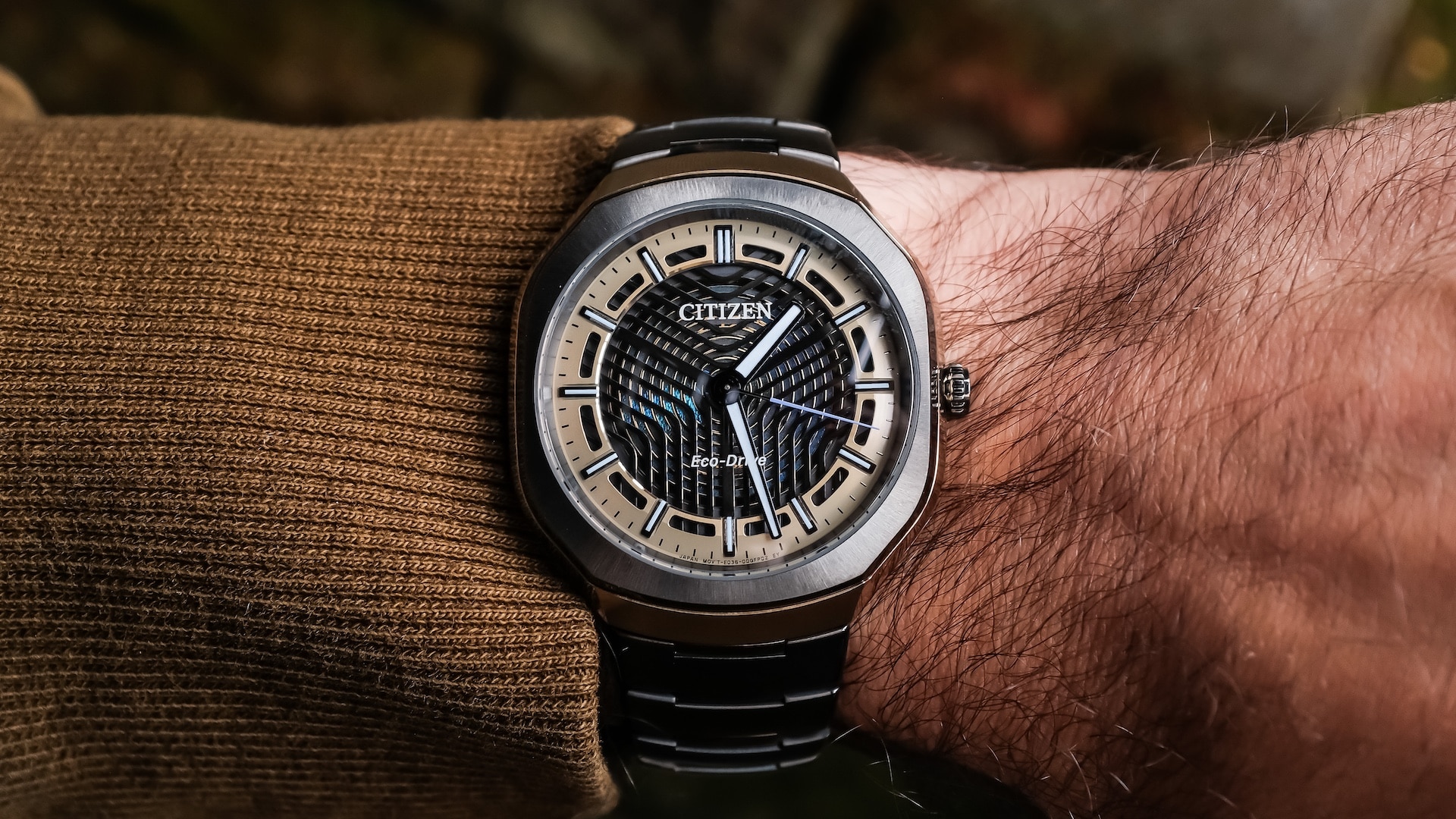
Participating names included Citizen, Casio, Bremont, NOMOS, Junghans, Doxa, and Baume & Mercier. Workshops, movement demonstrations, customization, and discussions gave the program depth beyond the display cases.
The turnout suggests an enthusiastic audience for a gathering that serves several levels of collecting at once. Its combination of accessibility and hands-on engagement provides a strong foundation for future editions.
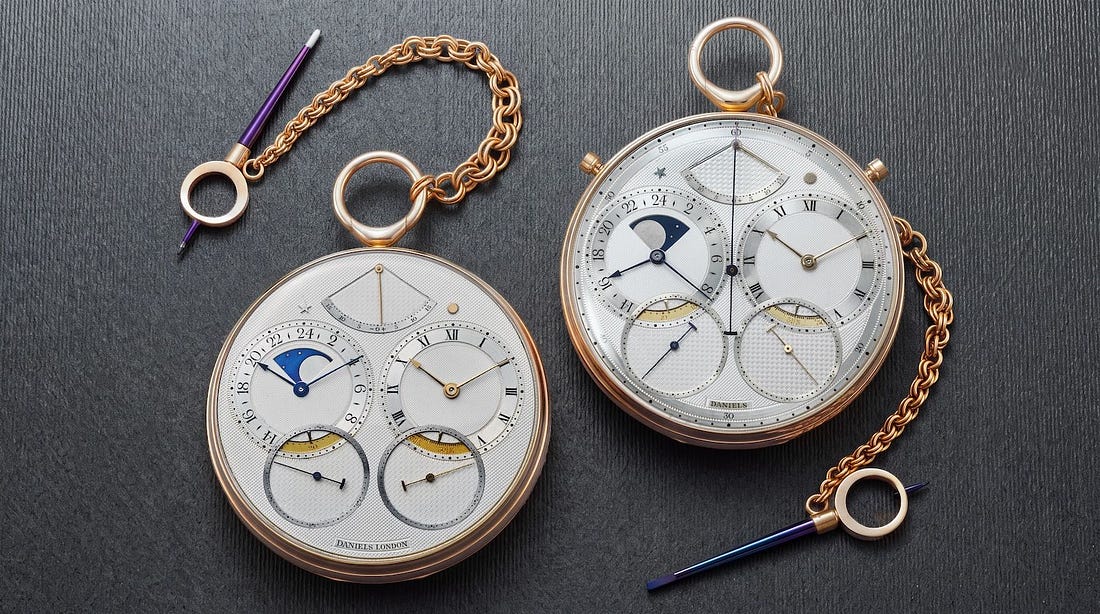
George Daniels 100 Brings Twenty-Two Exceptional Watches to Singapore
“George Daniels 100: The Genesis of Artisanal Watchmaking” will be presented at IAMWATCH in Singapore from November 12–15, with public access November 13–15. Organized by Phillips in association with Bacs & Russo and The Hour Glass, the exhibition marks the centenary of Daniels’ birth.
Twenty-two watches will be assembled, including Space Traveller I and Space Traveller II together for the first time. The exhibition also introduces a documentary exploring Daniels’ life, work, and influence on subsequent generations of independent makers.
The venue is The Singapore EDITION, and admission is complimentary with advance registration. For collectors interested in the foundations of modern independent watchmaking, the gathering offers an exceptional opportunity to see the work in person.
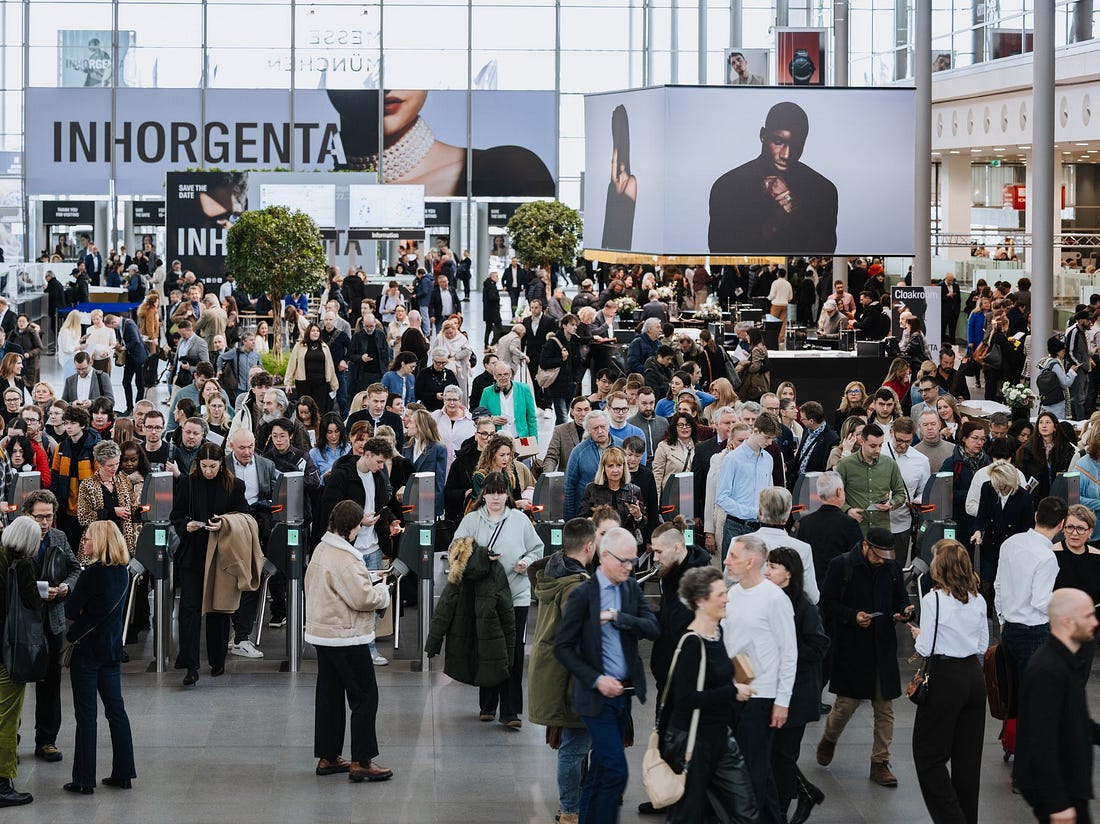
Inhorgenta Looks Ahead to Four Days of Industry Exchange in Munich
Inhorgenta returns to Munich February 19–22, 2027, bringing watches, jewelry, gemstones, retail, and manufacturing into one trade gathering. The event’s presentation highlights approximately 900 exhibitors representing more than 1,200 brands.
Six exhibition areas cover subjects ranging from timepieces and fine jewelry to technology and wedding design. Talks, workshops, demonstrations, and guided tours supplement the business conducted on the exhibition floor, with vintage and pre-owned products receiving additional attention.
For watch businesses, the value extends beyond discovering products. The show also provides a setting to compare retail strategies, discuss changing demand, and build relationships across the wider industry.
Podcasts
Should You Sell Your Zenith? — Late as Hell, Zero to Sixty
The supplied video edition of Late as Hell takes up a question many collectors eventually face: when does selling a watch make more sense than keeping it? Zenith provides the focus, but the underlying tension between market value and personal enjoyment applies much more broadly.
A useful decision requires more than a prediction about future prices. How often the watch is worn, what a sale would fund, and how difficult it might be to replace all belong in the calculation. This discussion offers a starting point for examining those competing priorities.
Rolex Waiting Lists Are Coming Down — The Movement Podcast
The Movement Podcast considers the possibility of shorter Rolex waiting lists and what improved access could mean for buyers. The discussion belongs within a market where availability can vary considerably by reference, retailer, and customer relationship.
For collectors, easier access may change the choice between waiting for an authorized purchase and paying a premium elsewhere. The episode’s premise invites listeners to consider how their own buying plans would change if the desired watch became easier to obtain.
Your Watch Collection Has a Big Problem — A Podcast About Watches
A Podcast About Watches turns its attention to the collection itself, inviting listeners to reconsider the assumptions behind accumulating watches. The title sets up a broader discussion about what owners want from the hobby and whether their collection is delivering it.
That is a worthwhile question before the next purchase. A collection can grow in size while becoming harder to enjoy, and personal priorities can change long before the contents of the watch box catch up. The supplied video edition provides the conversation.
Videos

Watch Shopping With Togi Gets Crazy — TimePieceTrading
TimePieceTrading follows a lively watch-shopping session with Togi, bringing the personalities and pace of the retail encounter into view. The appeal lies in seeing reactions develop as watches move from the display case to the wrist.
It is an entertaining counterpart to a more methodical buying process. Enthusiasm can reveal an unexpected favorite, while the final decision still benefits from attention to fit, condition, price, and how the watch will be used.

The Two Sides of Luxury Watchmaker Patek Philippe — Jenni Elle
Jenni Elle explores Patek Philippe through the relationship between its heritage and its contemporary identity. The brand’s reputation rests on watchmaking, but its place in modern collecting also involves image, desire, and the expectations attached to the name.
The video offers a visual companion to today’s UK financial results. Together, the stories invite readers to consider the connection between the watches collectors admire and the business that produces and sells them.
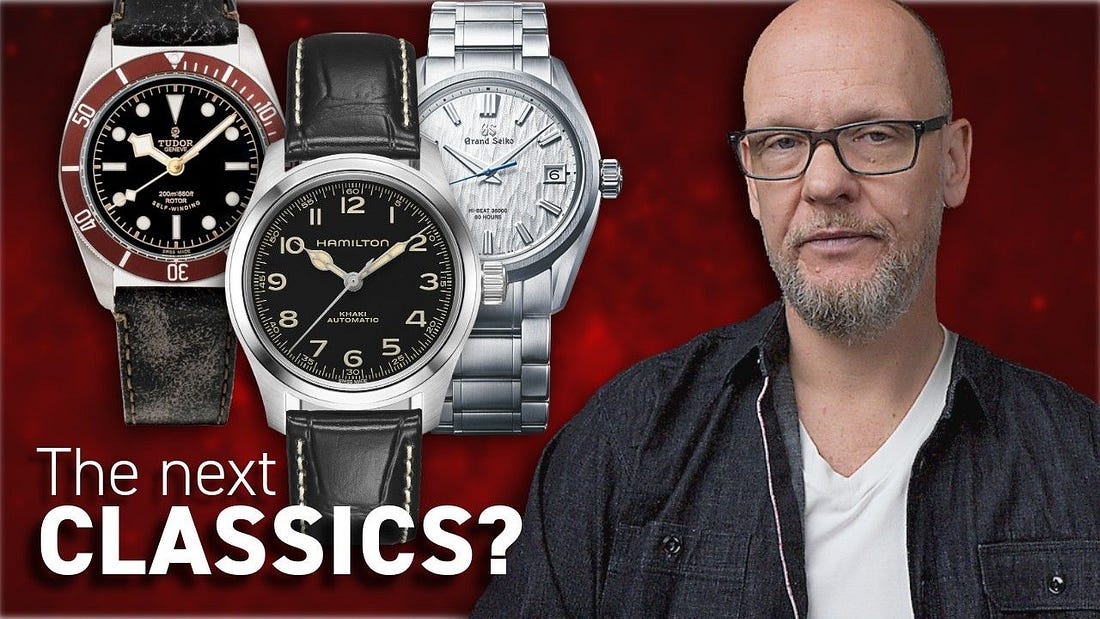
Modern Watches That Could Become Future Classics — This Watch, That Watch
This Watch, That Watch considers which contemporary watches might develop lasting significance. It is an appealing exercise because the qualities that make a watch successful at launch do not always explain why it remains desirable years later.
Design consistency, recognizable identity, technical interest, and the experience of ownership all deserve consideration. Treat the selections as an invitation to form a view about lasting appeal, with room for personal taste and uncertainty.

Is the Railmaster the Right Starting Place With Omega? — Britt Pearce
Britt Pearce examines the Omega Railmaster as a possible entry into the brand. Its comparatively restrained character offers a different starting point from the Speedmaster and the more visibly elaborate members of the Seamaster family.
The review gives prospective buyers a chance to assess the watch’s proportions, design, and everyday appeal. The relevant question is whether the Railmaster’s particular personality suits the wearer, alongside the attraction of the Omega name.
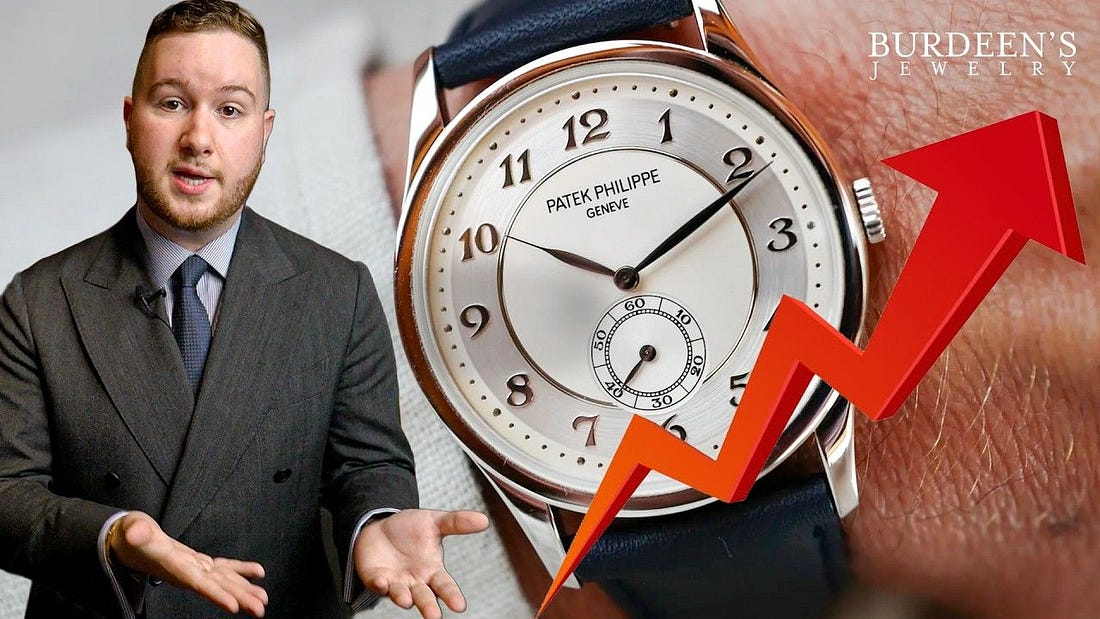
Watch Prices Are Going Up. Here’s Why. — Burdeens Jewelry
Burdeens Jewelry examines the forces behind rising watch prices. The subject benefits from separating manufacturers’ retail increases from changes in secondary-market asking prices and completed transactions.
For buyers, the practical issue is how those changes affect a specific watch and a specific budget. A broad market narrative can provide context, but it still needs to be tested against actual availability, comparable offers, and ownership priorities.

Is Rolex Certified Pre-Owned Worth the Premium? — Peter Piccolino
Peter Piccolino takes a critical look at Rolex’s Certified Pre-Owned proposition. The question centers on what buyers receive in exchange for any premium over other pre-owned examples.
Certification, warranty coverage, preparation, retailer support, and the individual watch’s condition all belong in that comparison. The video provides an opinionated entry into a buying decision that rewards careful examination of the complete offer.

You Don’t Need a Rolex: Looking Elsewhere for Watchmaking History — Scott Adam Lancaster
Scott Adam Lancaster explores the appeal of choosing a watch through its brand’s history rather than defaulting to the most familiar luxury name. The premise encourages viewers to look more widely at the stories and achievements available within watchmaking.
For collectors, that can be a useful way to discover a watch that feels personally meaningful. Heritage becomes most persuasive when the present-day product also delivers the design, quality, and wearing experience the buyer wants.
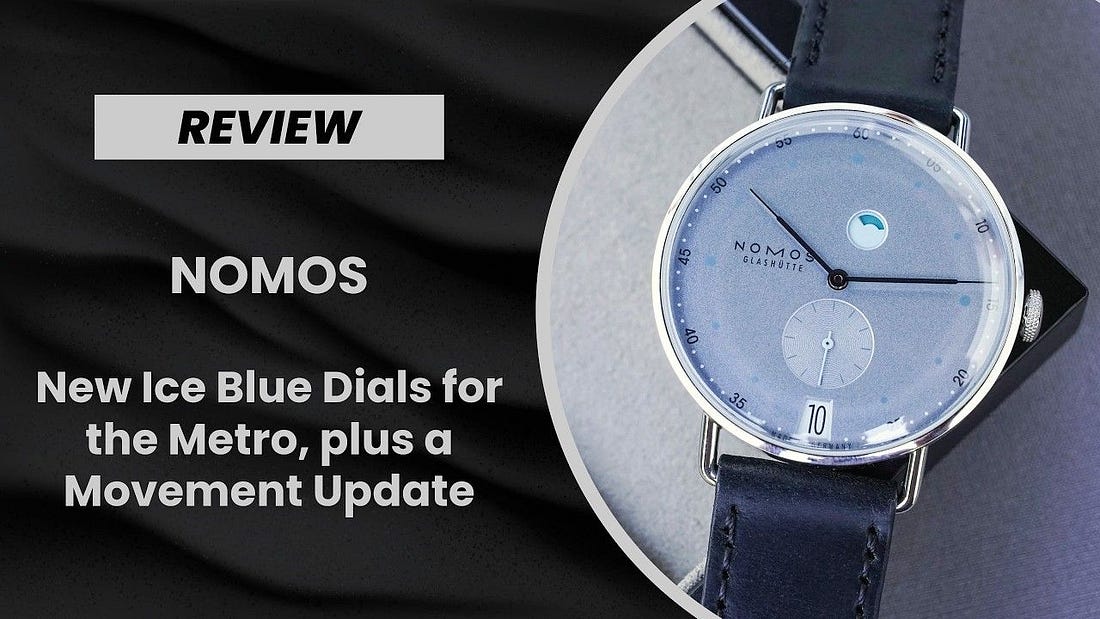
More Than a Color Change: NOMOS Updates the Ice Blue Metro — Monochrome Watches
Monochrome examines the Ice Blue Metro Date Power Reserve and Metro Neomatik 41, looking at the watches beyond their immediately visible dial color. The video format offers a closer view of proportions, dial details, and the relationship between the displays.
For NOMOS enthusiasts, those details can make a significant difference within a deliberately restrained design language. The presentation provides a useful companion to written specifications and still photography.

What Happened to Rolex? — Luxury Secret
Luxury Secret presents its perspective on Rolex and the pressures shaping the brand’s place in the watch market. The provocative title opens a discussion about demand, availability, competition, and changing collector expectations.
The useful task for viewers is to examine the claims in relation to particular models and actual transactions. Rolex encompasses enough different products and buying situations that a single market description rarely captures every owner’s experience.
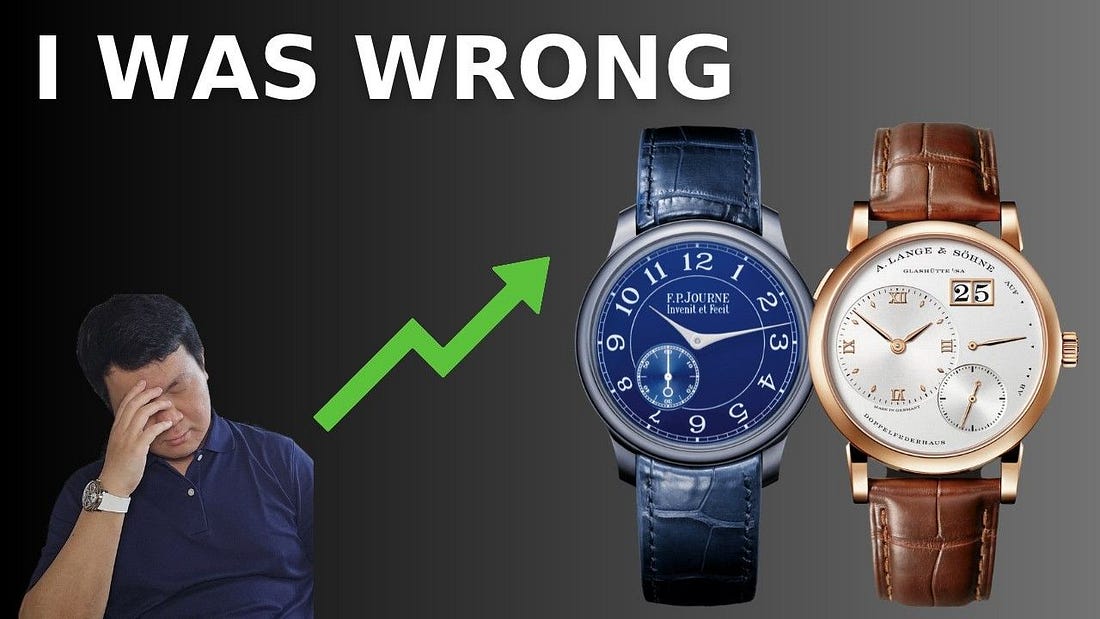
Is It Time to Sell? A Watch Market Update — Watches in Singapore
Watches in Singapore considers selling decisions within the context of changing market conditions. For an owner, the key distinction is between a watch’s advertised value and the proceeds a realistic transaction would deliver.
Presentation, documentation, fees, and the choice of selling channel can all affect the outcome. The video offers a market-oriented perspective for collectors weighing a sale or a change in the direction of their collection.
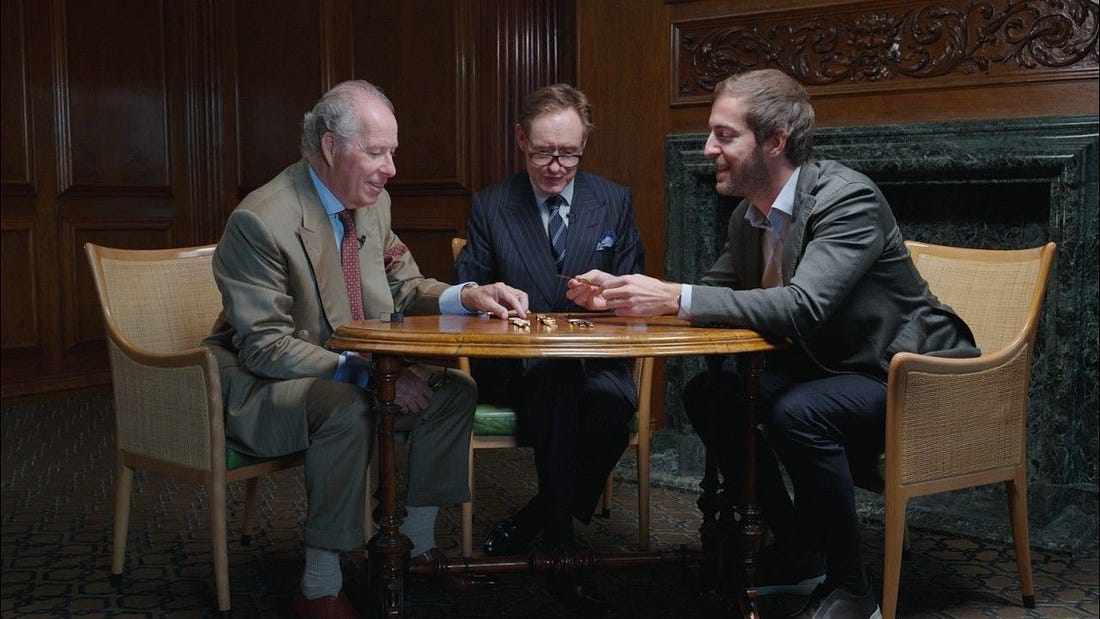
Christie’s Previews Its November Geneva Watch Auctions
Christie’s introduces watches heading to auction in Geneva this November, offering a visual preview of the material collectors will be assessing. Auction presentations can help reveal details of case shape, dial appearance, and mechanical construction that catalog images do not fully convey.
For potential bidders, the preview is the beginning of the evaluation. Condition reports, provenance, comparable sales, and the full purchase cost remain central to deciding how far to bid.

Can One Watch Replace an Entire Collection? — Chisholm Hunter
Chisholm Hunter explores the appeal of a single watch capable of covering many roles. The premise invites viewers to decide which functions and qualities they actually use, rather than assuming every collecting category requires a separate purchase.
Versatility depends on the owner’s routine as much as the watch’s specifications. Comfort, appearance, water resistance, and ease of ownership all contribute to whether one watch can remain satisfying across different settings.
Auctions
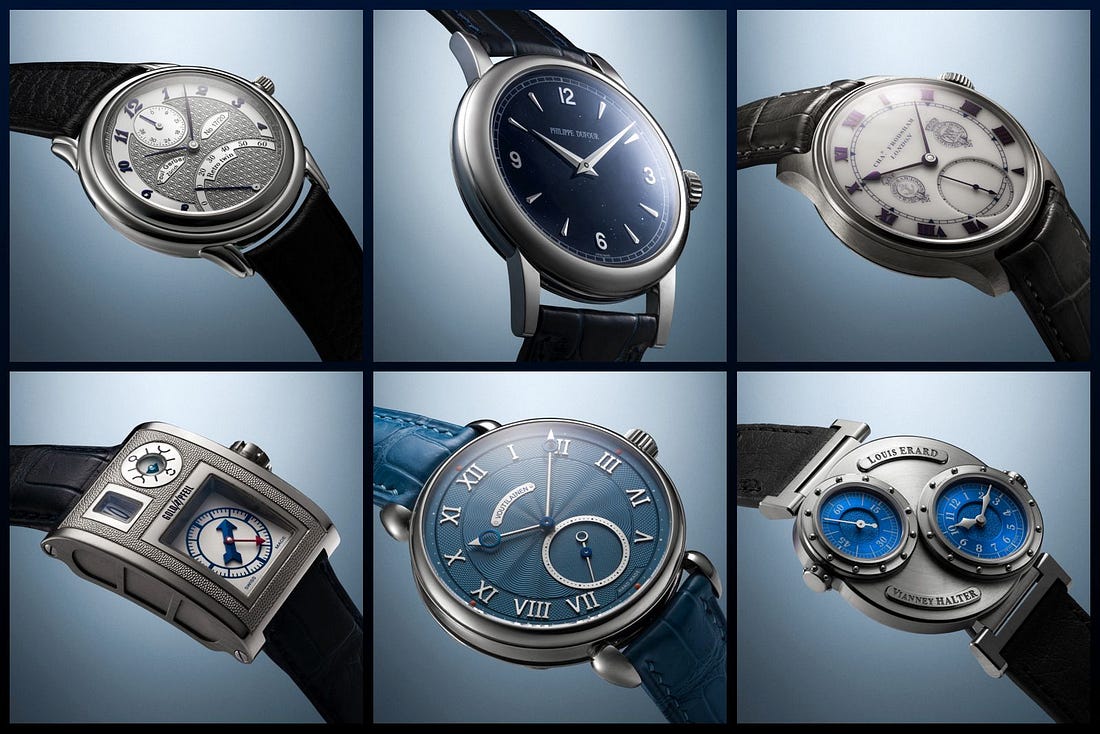
Marteau & Co.’s “The Blueprint” Connects Independent Watches Through Blue
Marteau & Co.’s “The Blueprint” brings together independent watches whose blue-toned details provide a shared visual theme. The selection spans accessible specialist creations and highly valuable works from established masters.
Highlights include watches associated with Vianney Halter, Paul Gerber, Philippe Dufour, Kari Voutilainen, and J.N. Shapiro. The variety makes the sale interesting beyond its color coordination, encompassing unusual displays, elaborate finishing, and distinctly different approaches to independent production.
The auction opened October 30 and closes in stages on November 6. A 3% maker’s fee is intended to support the creators, adding another dimension to the relationship between independent watchmaking and its secondary market.
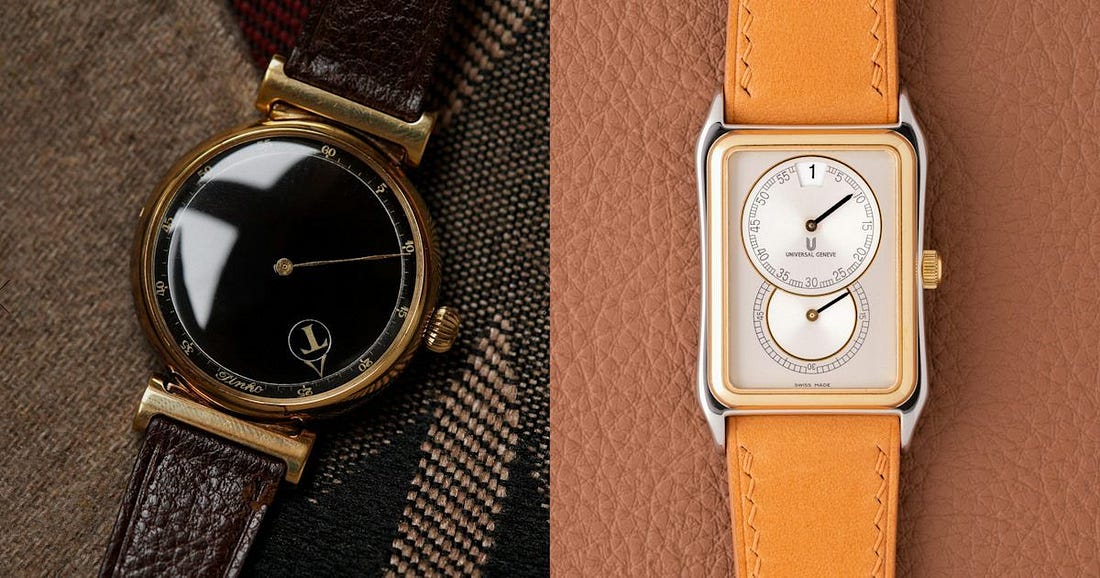
Four Unusual Watches Offer Alternatives to the Familiar Auction Names
A Vincent Calabrese Baladin, Royce Professional Marine, Universal Genève Jump Hour Regulator, and BWC chronograph provide a varied selection for collectors willing to explore less predictable territory. Each offers a different reason to investigate further.
The Baladin brings a playful jumping-hour display, while the Royce reflects the visual character of a vintage diver. Universal Genève supplies an unusual arrangement of indications, and the BWC’s Lemania 1340 movement adds interest for chronograph enthusiasts.
The attraction of an unfamiliar reference should be matched by careful attention to originality, condition, and service requirements. The roundup provides a starting point for evaluating the individual listings and their estimates.
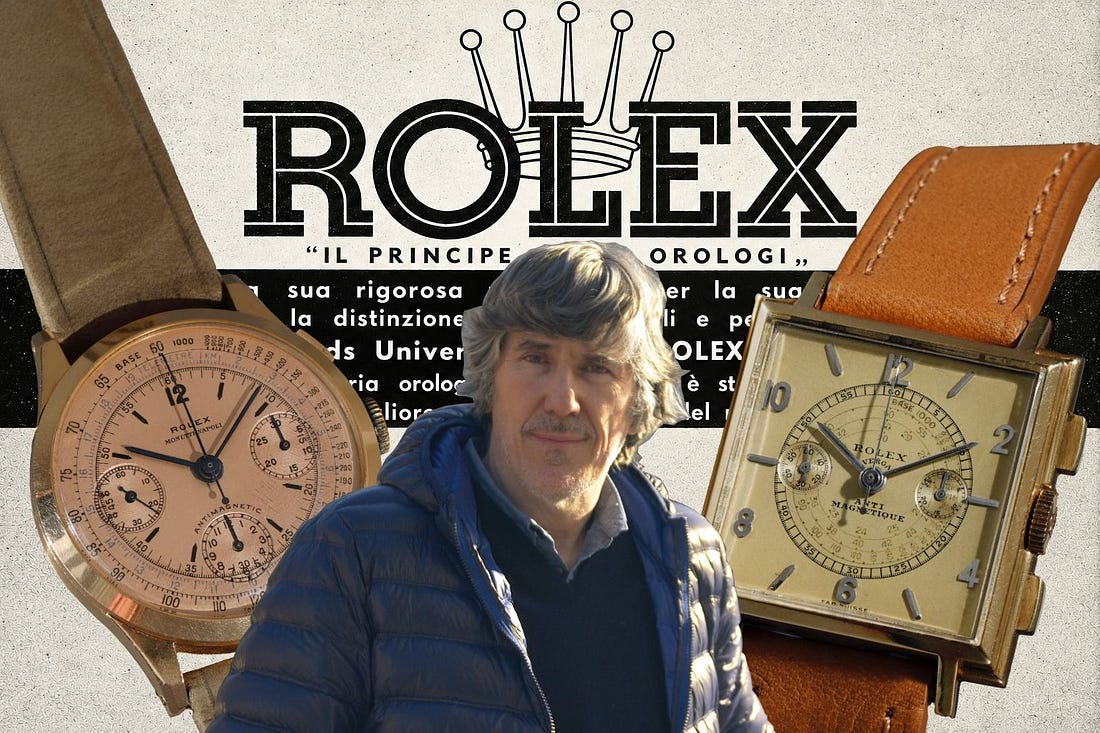
Pucci Papaleo’s Rolex Chronographs Bring Scholarship and Provenance to Phillips
“Stopping Time” presents sixteen vintage Rolex chronographs from the Pucci Papaleo collection as part of Phillips’ Geneva Watch Auction XXIV. The watches span several decades, tracing the evolution from early chronographs to the Cosmograph Daytona.
The selection includes rare dial variations and important examples associated with the Paul Newman collecting category. Their appeal also reflects Papaleo’s role in documenting Rolex chronographs through publications and specialist research.
Provenance can add context and confidence, but the individual watch remains the foundation of the purchase. Dial originality, case preservation, movement condition, and the relationship between estimate and comparable results all remain relevant.
Auction Results
MEC-1 Reaches US$8,200 and Remains Unsold
The October 30 auction of the MEC Watches MEC-1 ended with a high bid of US$8,200 and no sale. The stainless-steel, skeletonized watch carried an approximately US$25,000 retail price in 2023.
The high bid was US$16,800, or 67.2%, below that historical retail benchmark. That comparison measures the distance from original retail; it does not establish the seller’s reserve or a completed market value.
The result illustrates the challenge that can confront a small independent on resale. Distinctive design and limited production may attract interest, yet a transaction still requires agreement between the seller’s expectations and the available buyers.
Auction Report
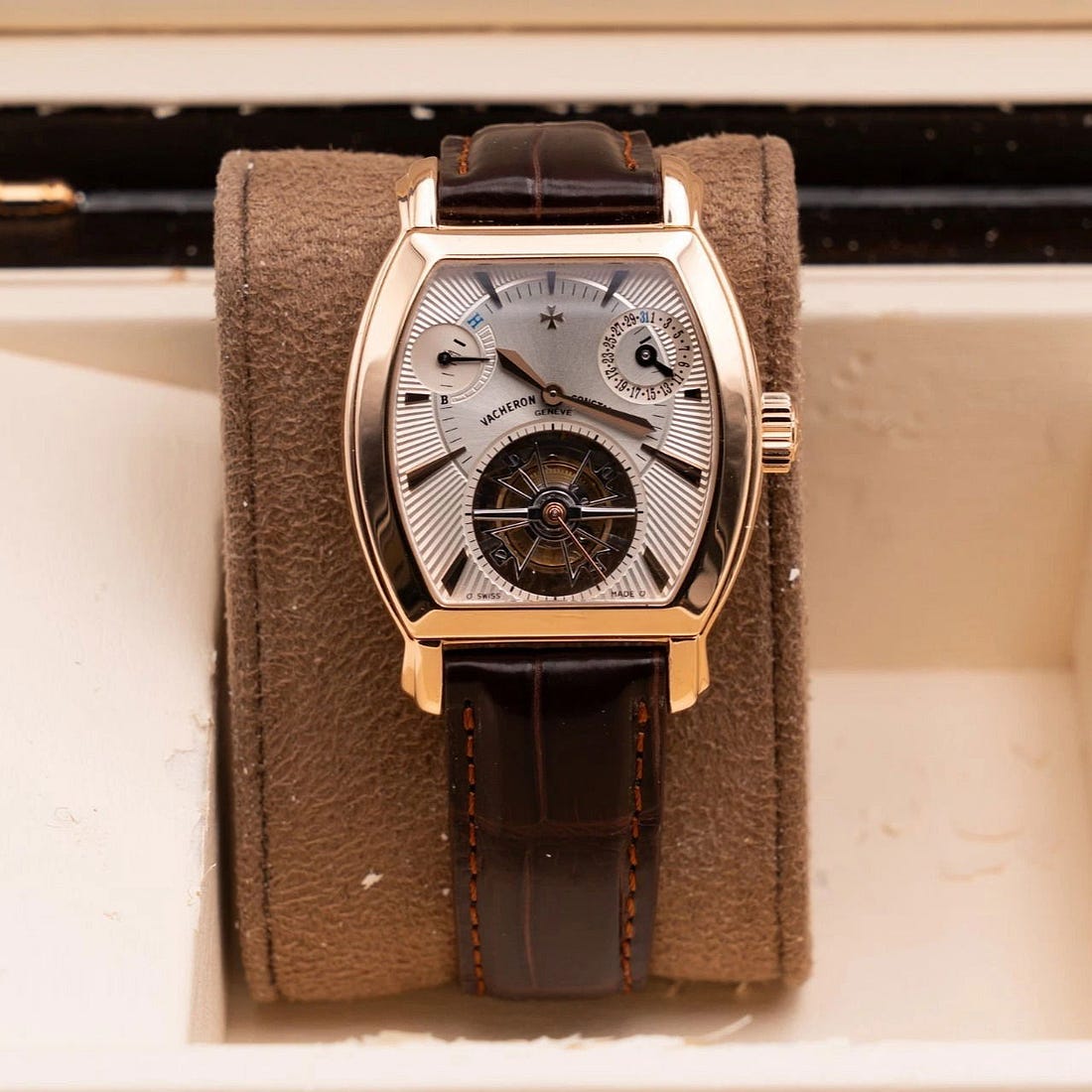
Vacheron Constantin Malte Tourbillon: A Rose-Gold Complication Meets the Market
Today’s auction features the Vacheron Constantin Malte Tourbillon, reference 30066/000R-8816, an early-2000s expression of the manufacture’s shaped-watch tradition. The Malte collection arrived around the turn of the millennium, and this model combines a tonneau-shaped rose-gold case with a silvered dial, subsidiary date display, power-reserve indication, and a tourbillon at six o’clock. Its approximately 36 mm width gives only part of the story: the elongated case and pronounced lugs give it considerably more wrist presence than a round watch of the same stated diameter.
Inside is the manually wound caliber 1790, a 27-jewel movement operating at 18,000 vibrations per hour with approximately 45 hours of power reserve. The tourbillon carriage incorporates Vacheron Constantin’s Maltese-cross motif, making the complication both a regulating mechanism and a visible signature. The silvered dial combines a relatively restrained central area with a radiating decorative treatment around the perimeter, balancing the exposed mechanics with a distinctly formal presentation.
The offered example is located in the United States and includes its box, papers, and product literature. The listing describes an excellent dial and minor wear to the case, bezel, and strap or bracelet category. Its “2004–present” year field should be treated as a catalog range rather than confirmation of this watch’s manufacturing date. Service documentation would be especially valuable here: a tourbillon’s condition and maintenance requirements can materially affect the economics of ownership, even when the exterior presents well.
A comparable example of the same reference sold at Phillips in Hong Kong in May 2024 for HK$330,200, approximately US$42,300 at the time, including the published auction result’s applicable premium. Other advertised examples have appeared around the mid-US$40,000s and above, although asking prices do not establish completed values. Taken together, those observations suggest an indicative buying range around US$35,000–US$45,000 for a sound example, subject to service history, completeness, condition, and selling costs; that is an editorial assessment rather than a formal appraisal. The attraction is substantial traditional complication from an important manufacture, but the final bid should leave room for any service obligation and auction charges. Bidding is scheduled to close at 2:45 p.m. Eastern today, Monday, November 2, 2026.
Current bid: $2,200
Losing Time
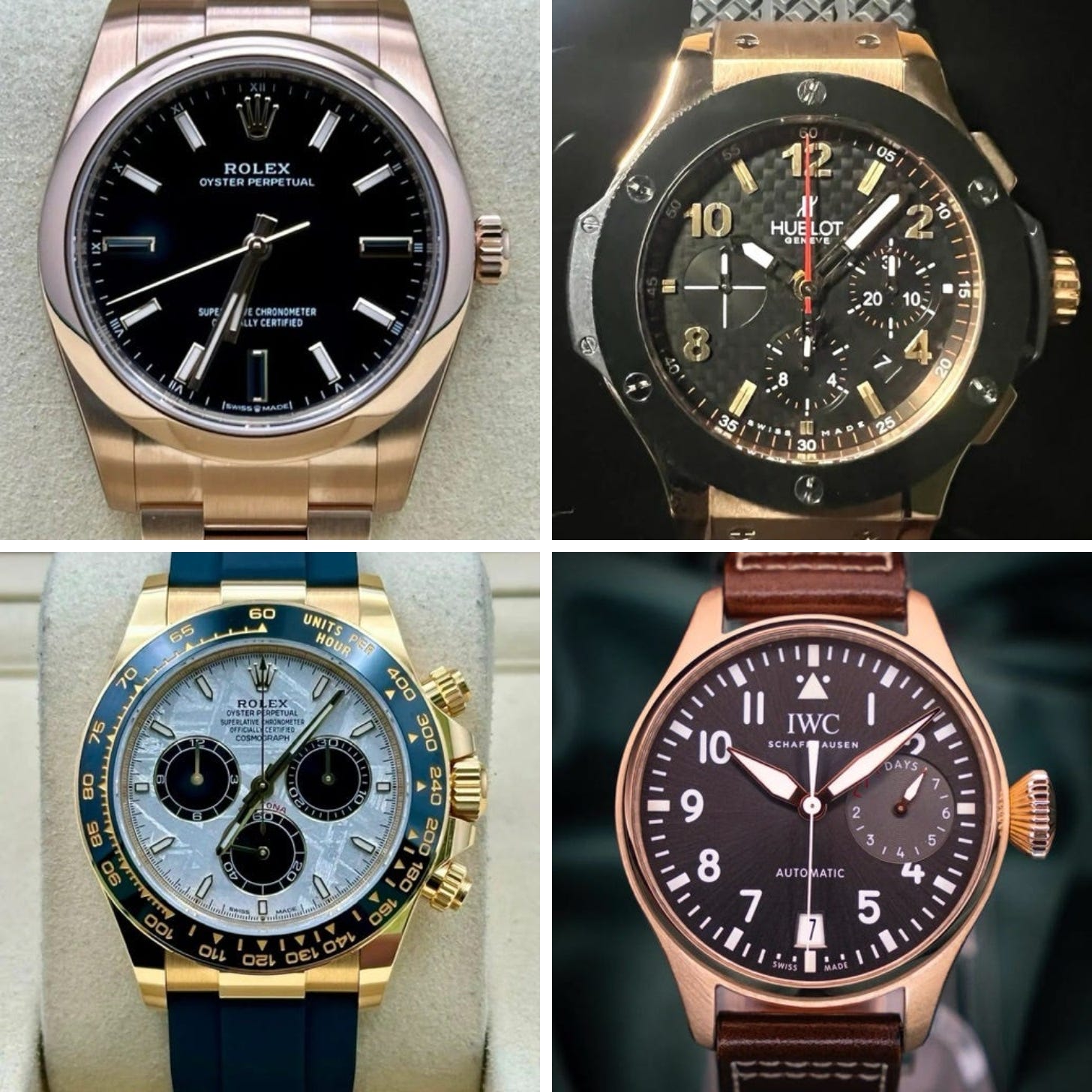
Today’s Big Losers at Auction on Grailzee
Four watches, four failed sales, and four reminders that an asking price is ultimately a statement of optimism.
The 2026 Rolex Oyster Perpetual 34MM Black Dial on Oyster Bracelet (124205) carried a $44,500 ask but attracted a final bid of just $15,000. That’s a $29,500 shortfall, or 66.3% below asking. The seller brought champagne expectations; bidders apparently had a beer budget.
The Hublot Big Bang 44MM Carbon Fiber Dial on Rubber Strap (301.PB.131.RX) asked $12,800 and drew a high bid of $4,300—an $8,500 gap, or 66.4% below asking. A Big Bang, certainly, although the bidding produced more of a modest pop. Proportionally, this was the biggest miss of the four, narrowly beating the Oyster Perpetual.
The 2026 Rolex Cosmograph Daytona 40MM Meteorite Dial on Oysterflex Strap (126518LN) had an $88,500 ask against a $58,101 final bid. The resulting $30,399 shortfall was 34.3% below asking. Apparently, even a dial from outer space couldn’t pull the bidding into the seller’s orbit. Still, it came closest to its asking price in percentage terms, while recording the largest dollar gap.
The 2017 IWC Schaffhausen Pilot Big Spitfire 46.2MM Grey Dial on Leather Strap (IW500917) sought $19,000 but topped out at $8,000. That left an $11,000 deficit, or 57.9% below asking. For a watch with “Pilot” in its name, the bidding had considerable trouble getting off the ground.
Together, the four sellers sought $164,800, while final bids totaled $85,401—a combined $79,399 shortfall, or 48.2% below asking. Three of the four watches failed to attract even half their asking prices. The Daytona showed the strongest alignment between seller expectations and bidder appetite, though a 34.3% miss is hardly a meeting of minds.
These results don’t establish each watch’s market value; they show what bidders at these particular auctions were willing to offer. The clear conclusion is that seller expectations ran well ahead of the room. An ambitious asking price is easy to announce. Finding someone willing to pay it remains the inconvenient part.
Closing Time
A watch can justify its place through exceptional craftsmanship, useful engineering, a comfortable bracelet, or the pleasure of seeing a familiar dial every morning. Today’s issue offers all of those possibilities, along with a reminder that the best purchase is one whose appeal survives a closer look.
Thank you for spending part of your day with Buying Time. Enjoy what is on your wrist, stay curious about what comes next, and have a great start to the week.