
Issue #282 | Buying Time - November 3, 2026
Big names command the market, quieter watches challenge the hierarchy, and a Richard Mille split-seconds chronograph puts engineering and value on the auction block.
Buying Time in 60 Seconds
Today’s watch world runs on two powerful forces: recognition and discovery. Rolex, Audemars Piguet, and Patek Philippe dominate the secondary market, while Christopher Ward’s growth demonstrates how a younger business can build momentum through distinctive products, direct customer relationships, and an expanding showroom network.
The new-watch selection stretches from Audemars Piguet’s elaborate chiming watches to IFL’s hand-painted, US$399 collaboration with Laphont Bloc. Along the way, Citizen explores light and color, Moser revisits vintage chronograph design, Minase makes its case-making expertise more accessible, and Kiwame Tokyo captures autumn in a compact red-dial watch.
Our features and reviews look beyond the familiar hierarchy. Ebel’s El Primero-powered chronograph offers a different route into an important movement, Tristan Ho’s LOTH debut puts individual craftsmanship in focus, and Citizen’s Photon makes an argument for sophisticated design without mechanical complexity.
Geneva’s auction season adds another dimension, bringing together independent watchmaking, royal provenance, charitable giving, and Vacheron Constantin’s collecting heritage. Yesterday’s Vacheron Malte Tourbillon reached US$30,000 and did not sell. Today’s featured auction is a 2025 Richard Mille RM 65-01 Carbon, with box and papers, scheduled to close at noon Eastern. Get your wallets out.
Time Graphing Today’s Watch Universe
The Watches Everyone Recognizes—and the Ones Worth Discovering
Recognition is one of the most valuable things a watch can carry. It helps a buyer understand what is being offered, gives a seller a larger audience, and allows a brand to communicate an entire identity before anyone has read the specifications. A Daytona, a Nautilus, or a Royal Oak arrives with a conversation already attached.
Today’s issue asks what happens outside that conversation—and whether collectors sometimes give familiarity more authority than it deserves.
The clearest starting point is the report on Rolex, Audemars Piguet, and Patek Philippe’s dominance of the secondary market. Together, those three brands account for roughly three-fifths of the market’s value. That concentration says something about desirability, but it also says something about confidence. Buyers recognize the names, understand the important references, and can usually find more information about pricing and resale than they can for a less widely traded watch.
That is a real advantage. It becomes a limitation when we allow market visibility to stand in for the entire experience of ownership.
Consider the Ebel Sport Chronograph powered by an El Primero movement. Here is an important automatic chronograph movement inside a watch with its own distinctive design history and an unusually supple bracelet. Its appeal does not require Ebel to become the next fashionable collecting category. The movement, proportions, construction, and pleasure of wearing it are already there. A broader market rediscovery would be an additional development, rather than the reason the watch deserves attention.
At a very different scale, Tristan Ho’s LOTH Watch 1 offers another kind of recognition: the ability to see an individual maker’s decisions in the finished object. Hand-worked maillechort, distinctive textures, and carefully finished movement components invite close inspection. Twelve watches made by an emerging independent occupy a different collecting world from a globally recognized sports model. They also remind us that scarcity becomes interesting when there is something worth looking at closely.
The same openness helps at more accessible prices. Minase’s Mastercraft J3 makes case finishing a central part of its proposition. Kiwame Tokyo’s Kubo Momiji builds its identity around color, proportion, and small Japanese design references. Neither needs an oversized complication or a famous auction result to explain its existence. Each offers a specific answer to the question of why someone might enjoy putting it on in the morning.
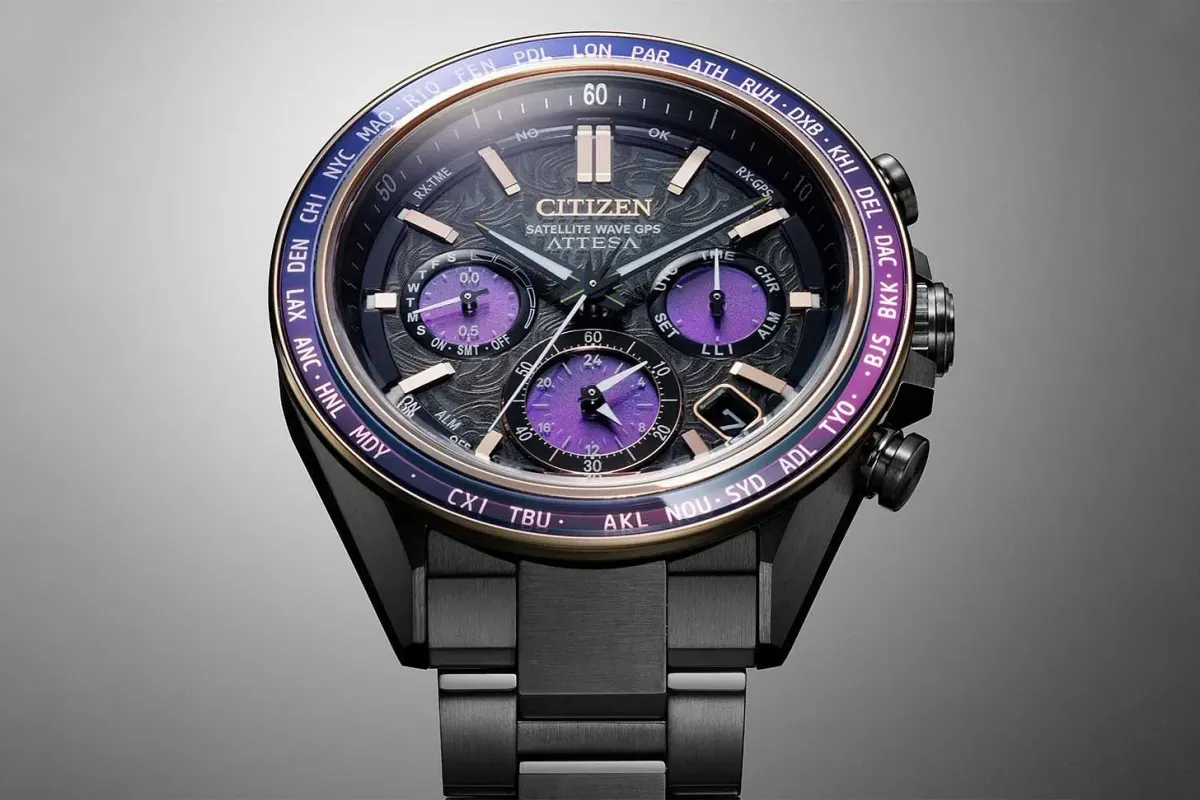
Citizen makes that question especially interesting. The Eco-Drive Photoncombines an elaborate dial with lightweight titanium and straightforward, light-powered ownership. The ATTESA Purple Aurora adds GPS synchronization and shifting optical effects. Collectors who begin every evaluation by asking whether a watch is mechanical may miss much of what these designs accomplish. Their sophistication lies partly in how much technology becomes easy to live with.
There is a related lesson in the Speedmaster-versus-Monaco comparison. Both watches possess history, visual identity, and serious chronograph credentials. The deciding factor can still be the shape of a wrist and the comfort of a bracelet. A celebrated design earns its place in a personal collection one wearing at a time.
Then the auction market brings recognition and discovery back together. The Geneva fall preview includes famous names alongside unusual references and independent makers. Vacheron Constantin’s Concours d’Élégance Horlogère celebrates the preservation of watches whose significance often requires a little explanation. These are opportunities to sharpen judgment, rather than simply follow the largest estimate.
Yesterday’s unsold Vacheron tourbillon and today’s Richard Mille auction from Bezil provide a useful closing thought. Technical achievement can be substantial while the audience remains selective. A recognizable name helps bring people to the watch; condition, configuration, documentation, and price determine whether they stay.
The most satisfying collection leaves room for both confidence and curiosity. Learn why the famous watches matter. Give the quieter ones enough attention to explain themselves. Then make the decision at the point where knowledge, price, and the pleasure of ownership meet.
-Michael Wolf
News

Kimi Antonelli’s Championship Celebration Comes with an IWC Pilot’s Watch
Kimi Antonelli’s reported championship-clinching third place at the Mexico City Grand Prix gives IWC a prominent moment on Formula 1’s biggest stage. At 20 years and 68 days, the Mercedes driver becomes the youngest world champion, with ten victories underpinning a season that rewrites the record book.
On his wrist was the IWC Pilot’s Watch Chronograph 41 Mercedes-AMG Petronas Formula One Team, reference IW388108. Introduced in 2022, the 41 mm titanium chronograph combines Petronas-green accents with the automatic caliber 69385 and a 46-hour power reserve. Its listed US$9,200 price places it within IWC’s established sports-watch range, while Antonelli’s enthusiasm for collecting gives the appearance a personal dimension beyond the team partnership.
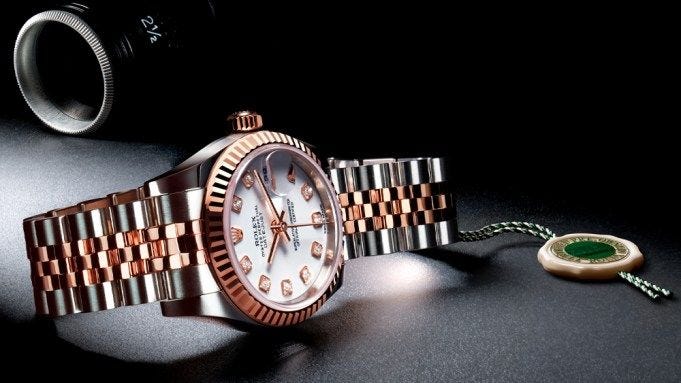
Three Brands Control Most of the US$26.6 Billion Secondary Watch Market
Rolex, Audemars Piguet, and Patek Philippe account for approximately 61–62 percent of secondary-market watch value, according to the analysis, compared with 45.5 percent of primary-market retail value. Demand remains heavily concentrated in recognizable references, including the Daytona, GMT-Master II, Nautilus, and Aquanaut.
The estimated CHF22 billion market is expanding through digital distribution, younger buyers’ willingness to trade, and certified pre-owned programs that address concerns about authenticity and condition. Some Daytonas continue to command substantial premiums over retail, although outcomes vary considerably by reference.
The implications extend beyond the biggest names. A growing market can still be highly concentrated, leaving independents and less frequently traded brands with smaller buyer pools. Collectors should distinguish overall market expansion from the likely liquidity of any particular watch.
Christopher Ward Tracks Toward US$100 Million in Annual Sales
Christopher Ward expects annual sales to reach approximately US$100 million in the financial year ending March 2027. The business has benefited from strong growth, the profile of the Bel Canto, and a broader collection that gives customers reasons to return beyond a single successful launch.
Physical showrooms are becoming a larger part of a business originally associated with direct online sales. The expanding network provides places to handle watches, meet other owners, and develop a relationship with the brand before making a purchase.
Longer-term ambitions include substantially higher revenue and a much larger North American showroom presence. The challenge will be maintaining the product appeal and customer experience that supported the early growth as the business becomes more complex.
Features
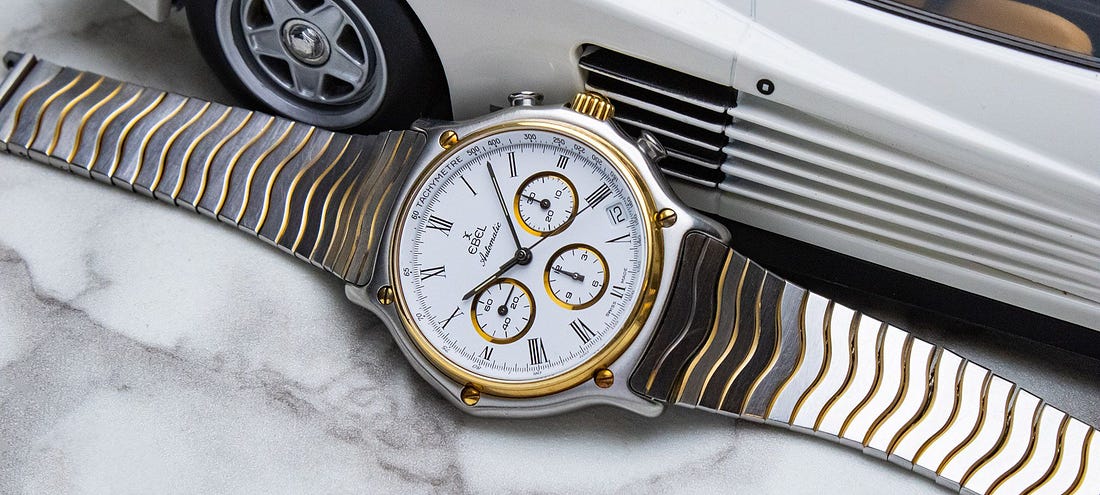
Ebel’s El Primero Chronograph Offers a Different Way into a Great Movement
The Ebel Sport Chronograph combines Zenith’s historic high-frequency automatic chronograph engineering with an unmistakably 1980s design. A 38 mm two-tone case, Roman-numeral dial, and flexible Wave bracelet give it a character quite separate from the watches most often associated with the El Primero.
The movement supplies much of the technical attraction, but the bracelet and proportions are equally important to the ownership experience. This is a watch whose design becomes easier to understand on the wrist, where its relatively modest dimensions and supple construction can outweigh contemporary preferences for larger cases.
Renewed interest in neo-vintage watches could bring greater attention to these Ebels. That possibility deserves to remain secondary to condition, originality, service history, and purchase price. An important movement makes a compelling collecting story; it does not automatically make every example an investment.
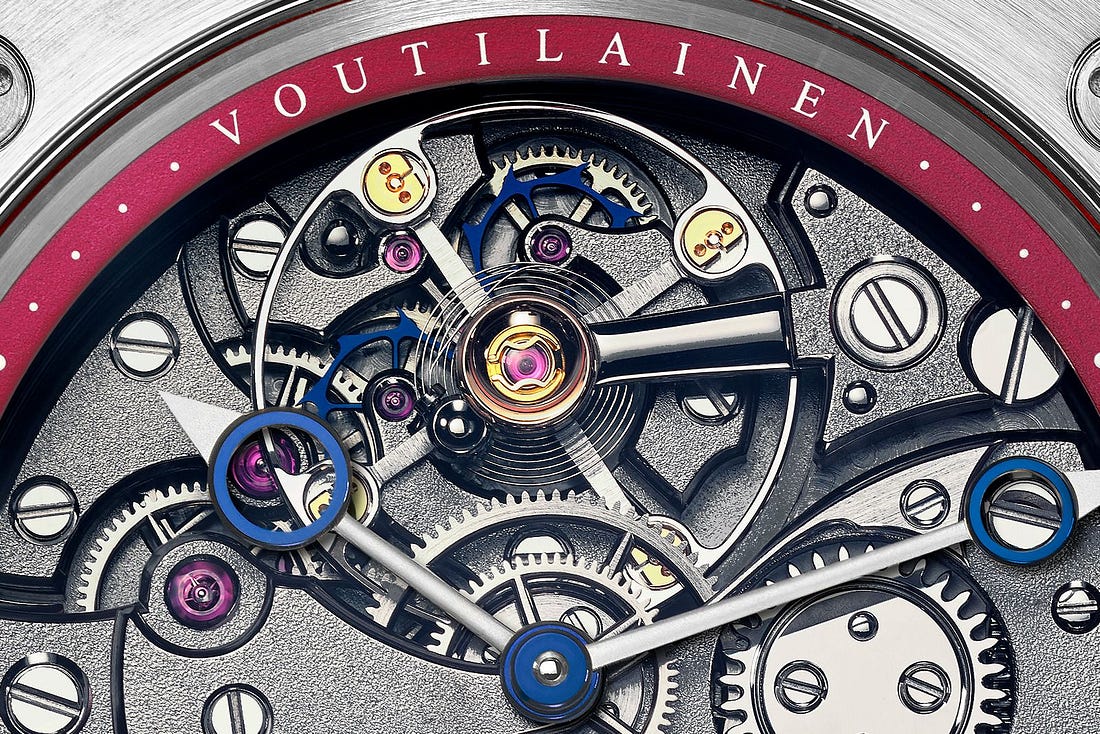
Modern Escapements Revisit Old Ideas with New Solutions
Escapement development remains one of watchmaking’s most demanding areas of experimentation. This survey follows modern interpretations of natural, detent, and Robin-inspired systems, showing how makers revisit historical principles while addressing the realities of a watch worn on a moving wrist.
Laurent Ferrier, Kari Voutilainen, and F.P. Journe approach the natural escapement through different combinations of geometry, materials, and energy delivery. Detent systems introduce another challenge: preserving efficiency while protecting against accidental unlocking during shocks or abrupt movement.
The common thread is the difficulty of turning an elegant mechanical idea into a dependable product. These developments offer a useful reminder that progress in watchmaking often happens deep inside the movement, far from the dial colors and case materials that dominate launch coverage.
New Watches
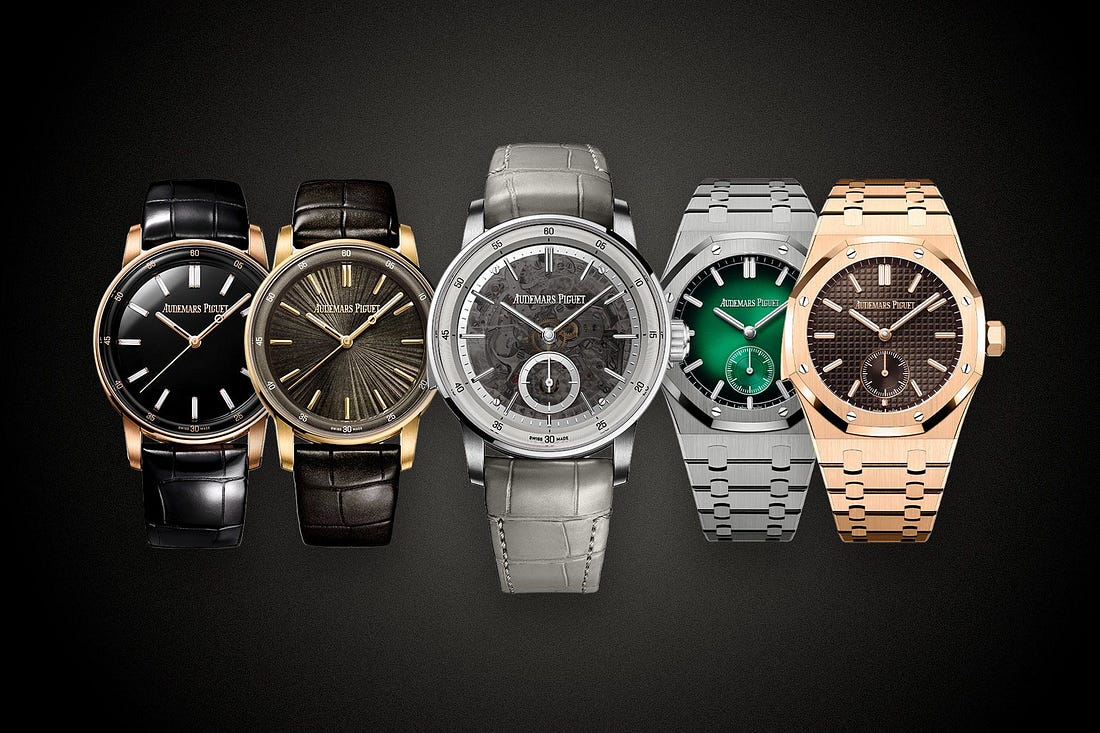
Audemars Piguet Expands Its Chiming Watches and Stone-Dial Code 11.59 Collection
Audemars Piguet’s latest group of releases brings together three Supersonnerie minute repeaters and two stone-dial Code 11.59 Selfwinding watches. The chiming selection includes titanium and pink-gold Royal Oak interpretations alongside a white-gold Code 11.59 with a smoked sapphire dial, placing sophisticated acoustic watchmaking inside two very different design languages.
The time-only additions turn the focus toward natural materials, pairing yellow gold with obsidian and pink gold with onyx. Their 38 mm cases house the automatic caliber 5909, with a stated 60-hour power reserve. For collectors, the contrast is appealing: one group reveals mechanical complexity through sound, while the other lets the dial material carry the visual interest. Price: approximately US$60,800 for the Obsidian and US$72,300 for the Onyx, converted from quoted UK prices; U.S. dollar pricing for the Supersonnerie models is available on request.
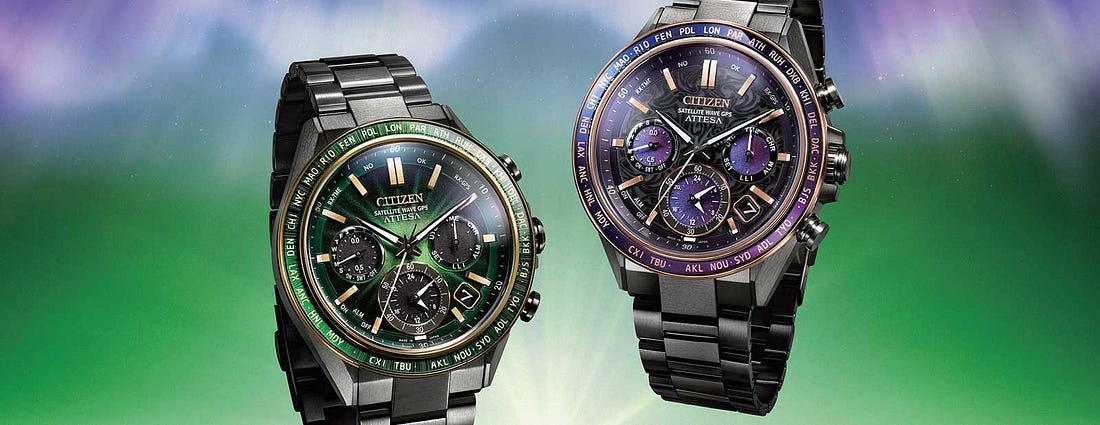
Citizen ATTESA Captures the Changing Colors of the Aurora
Citizen’s ATTESA Power of Purple Aurora celebrates 50 years of Eco-Drive with an optical treatment inspired by the northern lights. Structural color film gives the subdials shifting purple, blue, and pink-gold effects, while the sapphire bezel ring adds another transition between purple and blue.
The technical specification is equally ambitious. Citizen’s light-powered F950 movement provides GPS-synchronized timekeeping, world time, a perpetual calendar, and chronograph functions, supported by a Super Titanium case and bracelet with Duratect surface treatments. The Purple Aurora and companion Power of Green Flash are each limited to 1,500 pieces worldwide, combining practical technology with a more expressive approach to the everyday sports watch. Price: US$2,295 each.
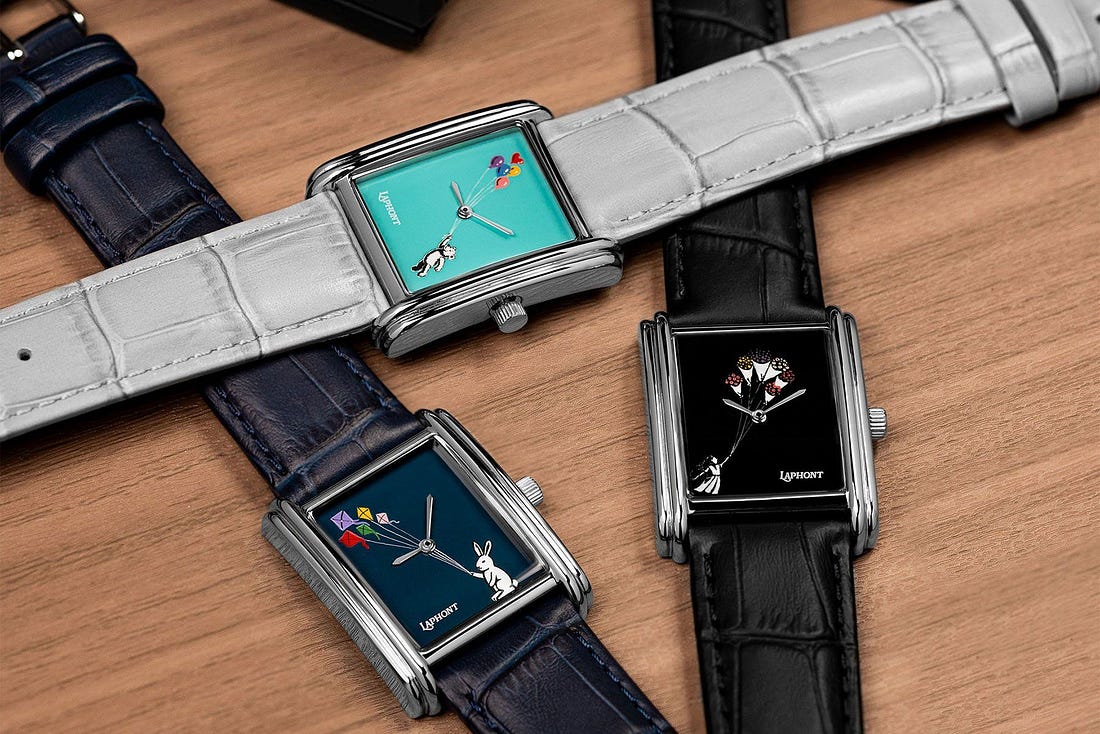
IFL Watches and Laphont Bloc Put a Little Sky on the Wrist
IFL Watches and Laphont Bloc introduce three hand-painted dial designs—Skybound, Cloudling, and Bouquella—built around the gentle imagery of kites, balloons, and dandelions. The absence of conventional hour markers gives the artwork room to breathe and makes the watch feel closer to a miniature illustration than a traditional instrument dial.
Each watch uses a compact rectangular steel case measuring 27.5 by 35 mm and 7.6 mm thick. A sapphire crystal, Miyota 2025 quartz movement, and matching croc-embossed leather strap provide straightforward everyday specifications. Production is limited to 999 examples of each design, with individual hand-painting giving the pieces small variations within the series. Price: US$399 each.
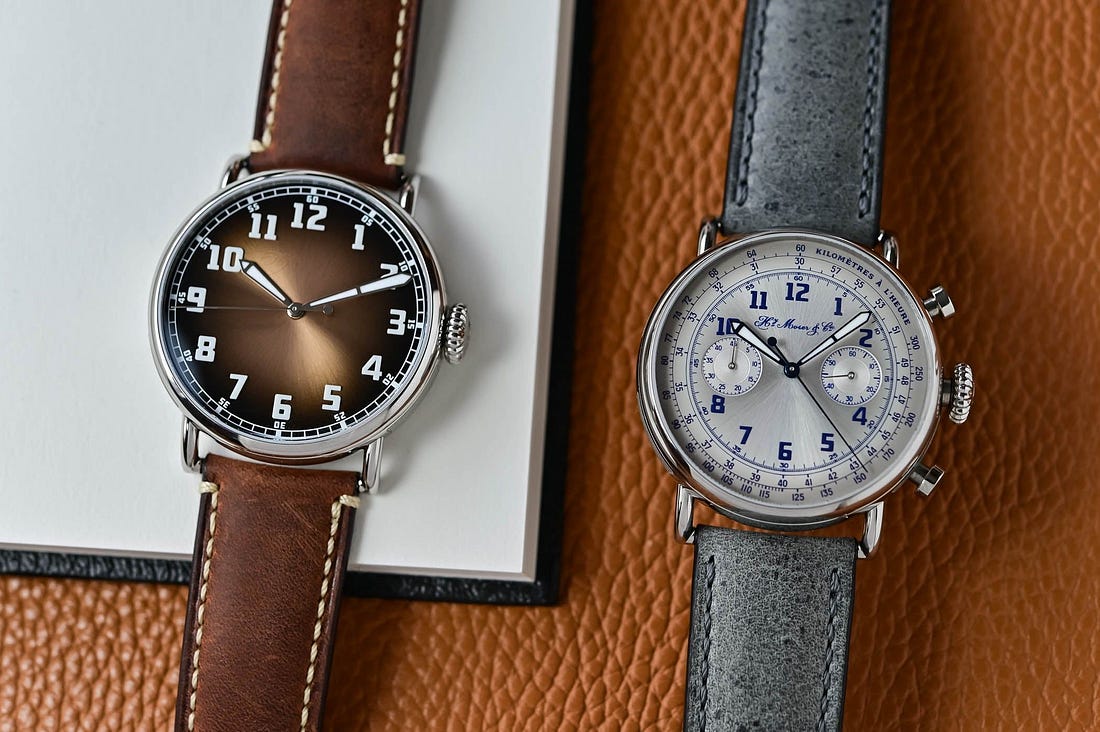
Moser Returns to Vintage-Inspired Design with Two Heritage Editions
H. Moser & Cie.’s Heritage Chronograph White Fumé combines a 1940s-inspired dial with the brand’s familiar drum-shaped case and slender lugs. The 42 mm steel watch uses a two-register layout, blued hands, and a double tachymeter scale, with the automatic HMC 220 paired to a Dubois Dépraz chronograph module and a 72-hour power reserve.
The Heritage Centre Seconds Espresso Fumé offers a simpler interpretation, using a coffee-brown gradient dial and oversized Globolight numerals inside a slimmer 42 mm steel case. Its automatic HMC 200 also delivers approximately three days of running time. Limited to 100 chronographs and 200 Centre Seconds watches, the pair broadens Moser’s contemporary identity through a more traditional visual vocabulary. Price: US$34,100 for the Heritage Chronograph White Fumé; US$18,300 for the Heritage Centre Seconds Espresso Fumé.
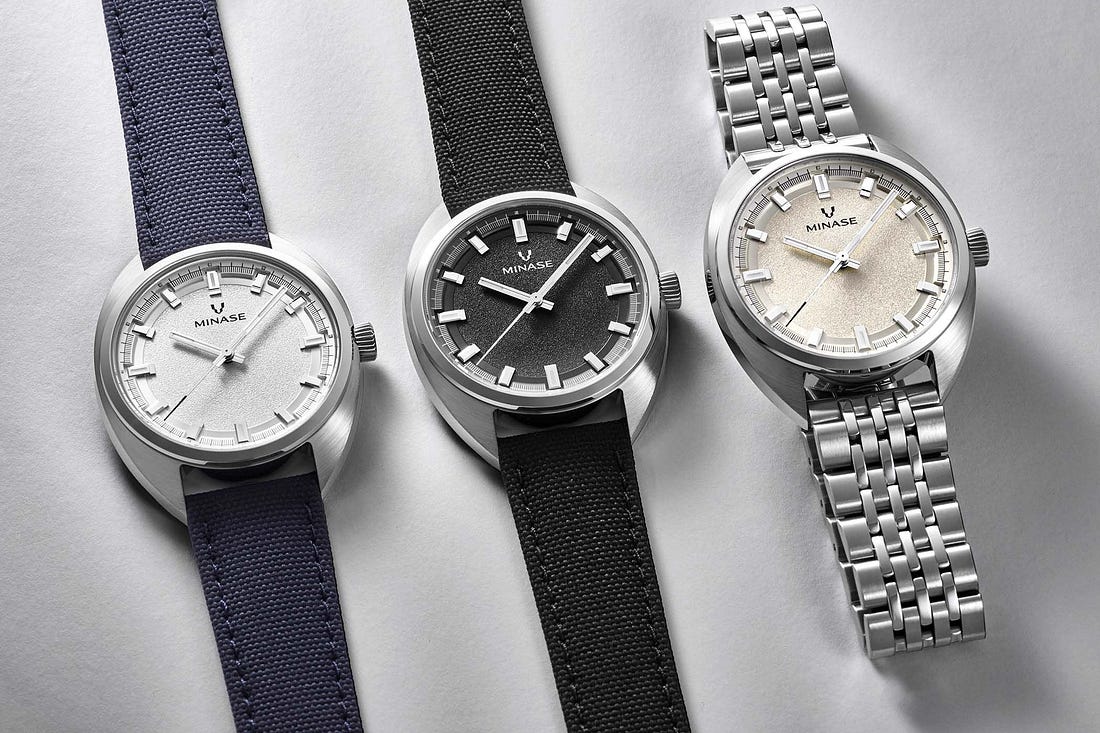
Minase Makes Its Case for a More Accessible Watch with the Mastercraft J3
The Minase Mastercraft J3 brings the Japanese brand’s attention to case construction into a compact, more accessible collection. Its 37 mm steel case measures 9.9 mm thick and combines brushed surfaces with Sallaz-polished bevels, giving the exterior a central role in the watch’s appeal.
White, beige, and black sand-textured dials provide restrained choices, with luminous hands and markers supporting everyday readability. The Miyota 90S5 automatic movement supplies a stated 42-hour power reserve, while 50-meter water resistance and interchangeable strap options make the J3 a practical daily proposition. Buyers can choose leather, rubber, or a steel bracelet without abandoning the same underlying case and dial design. Price: US$2,050 on leather, US$2,080 on rubber, or US$2,500 on the steel bracelet.
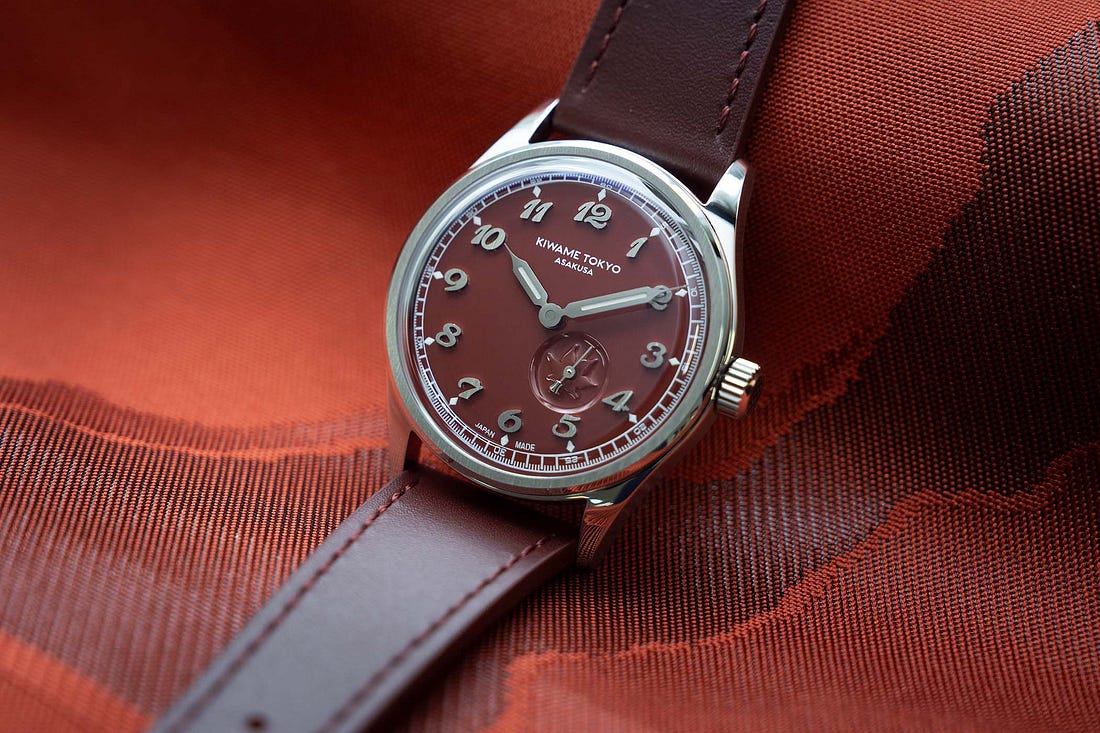
Kiwame Tokyo’s Kubo Momiji Brings Autumnal Red to a Compact Automatic
Kiwame Tokyo’s Kubo Momiji uses a deep-red lacquer dial inspired by Koimomiji, with a recessed small-seconds display at 4:30 and a raised maple-leaf motif. The design adds a seasonal identity to the Kubo collection while retaining a compact 37 mm steel case and a restrained, vertically brushed bezel.
A Miyota 82S5 automatic movement provides approximately 42 hours of power reserve, and the watch includes an antireflective sapphire crystal and Italian calf-leather strap. Small details extend the Japanese references, including a seconds-hand counterweight inspired by the roofline of Asakusa’s Kaminarimon gate. Preorders open November 17, with deliveries expected from early January 2027; the watch is not a limited edition, although orders are restricted to one per person. Price: US$630, excluding taxes.
Comparisons
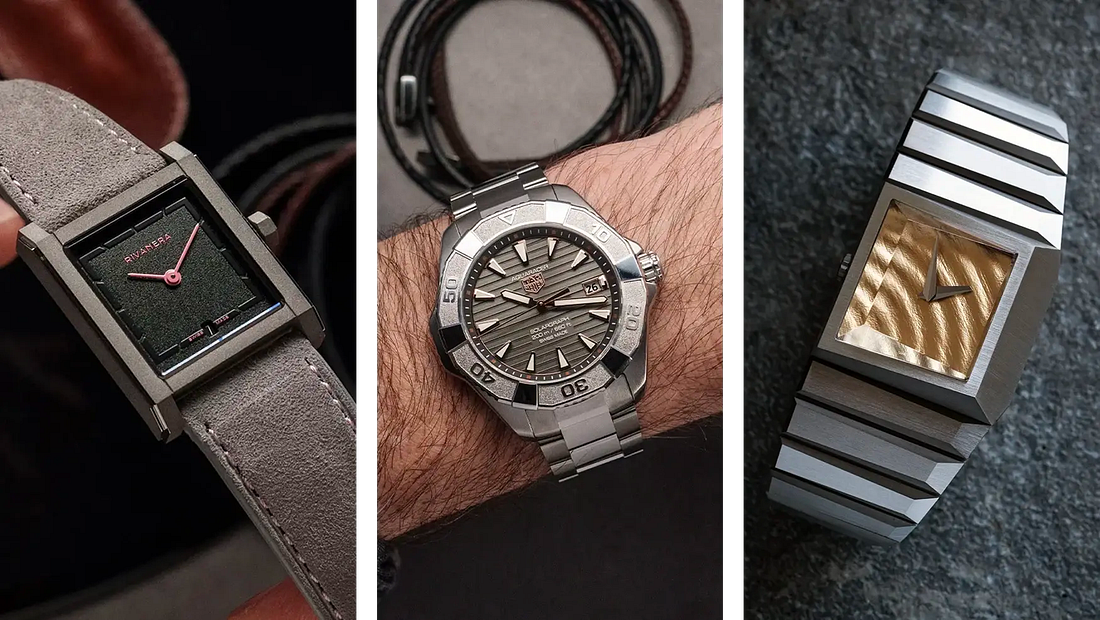
Fourteen Titanium Watches Put Comfort at the Center of the Conversation
Titanium’s greatest selling point becomes apparent when a watch reaches the wrist. Its low weight can transform the experience of wearing a substantial sports watch, while corrosion resistance and a distinctive gray appearance add practical and aesthetic appeal.
This selection spans accessible field watches, professional divers, and high-end designs from brands including Hamilton, Seiko, Rolex, and Vacheron Constantin. It also shows how widely the material can be interpreted, from restrained everyday watches to ambitious constructions with unusual dials or movements.
The useful comparison goes beyond a titanium label. Case dimensions, bracelet construction, surface treatment, and finishing all affect how a watch feels and ages. For buyers who find steel watches tiring over a long day, the material deserves an extended wrist test.
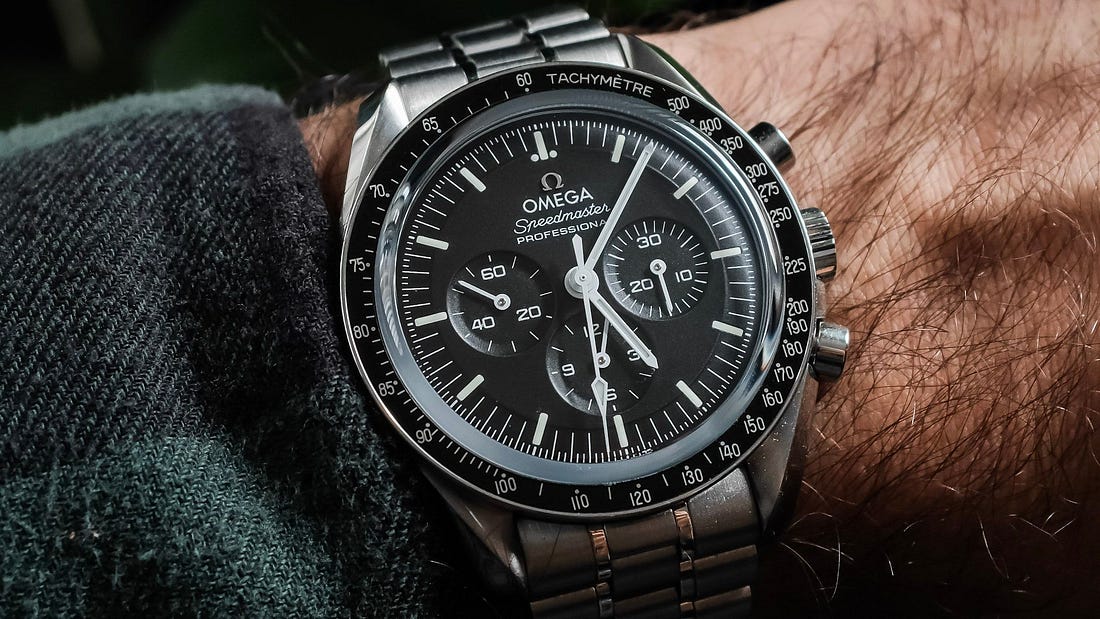
Omega Speedmaster or TAG Heuer Monaco? Let the Wrist Decide
The Omega Speedmaster Professional Moonwatch 3861 and TAG Heuer Monaco both arrive with substantial history, but their ownership experiences differ considerably. The Speedmaster combines manual winding, a highly legible dial, METAS certification, and a refined steel bracelet. The Monaco counters with a distinctive square case, automatic winding, and an approximately 80-hour power reserve in the version reviewed.
At roughly US$9,000 apiece, the comparison becomes more personal than a specification contest. The reviewer favors the Speedmaster’s comfort and its ability to remain a regular choice after years of ownership, while admiring the Monaco’s finishing and visual character.
The practical lesson is to spend time with both shapes. The Monaco’s broad, flat geometry will suit some wrists better than others, and neither a famous racing association nor a celebrated spaceflight history can determine how a watch will feel after eight hours.
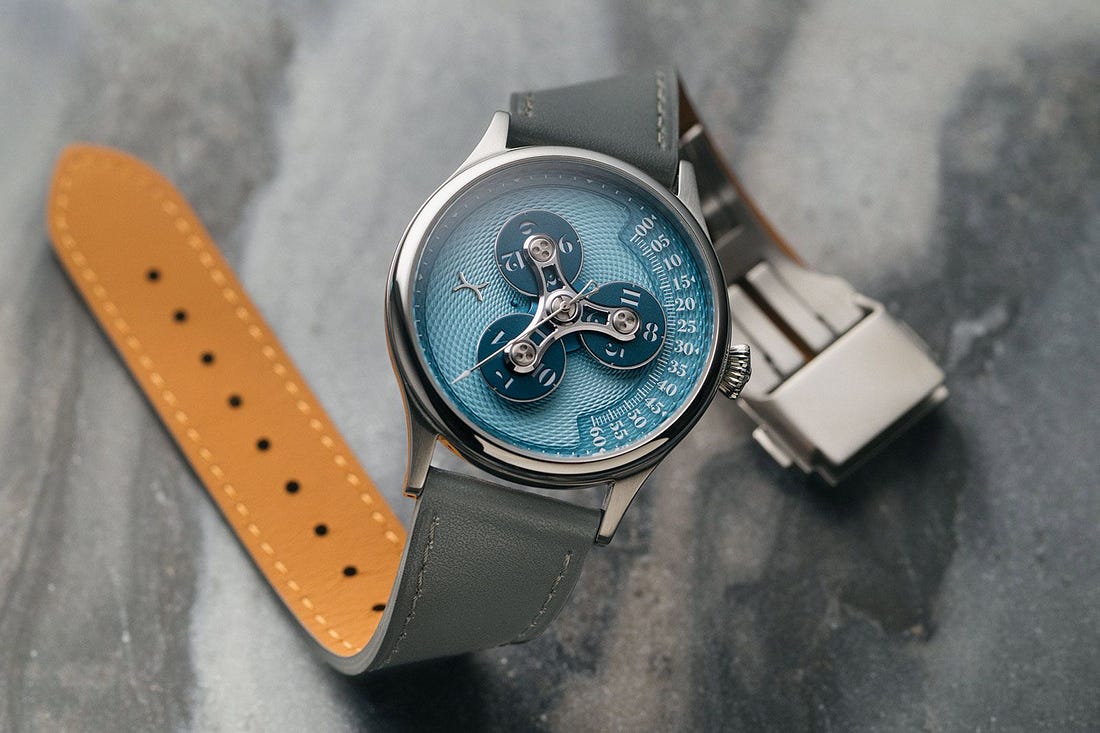
November’s Microbrands Explore Space, Architecture, and Unusual Displays
This month’s microbrand roundup shows how much experimentation is happening beyond the established luxury houses. Temporal Works explores Roman-numeral architecture, Diatom draws on planetary imagery and space-program material, and Ming uses rotating sapphire discs to create a changing luminous display.
Other entries investigate basalt-inspired forms, meteorite dials, upcycled vinyl, and wandering-hour timekeeping. The common attraction is a willingness to build a watch around a specific idea rather than a broad, established brand identity.
That variety also makes careful comparison essential. Production scale, movement choice, delivery timing, after-sales support, and the quality of the finished case matter as much as the launch concept. For collectors prepared to investigate, the roundup offers several directions that extend well beyond another familiar sports-watch silhouette.
Reviews
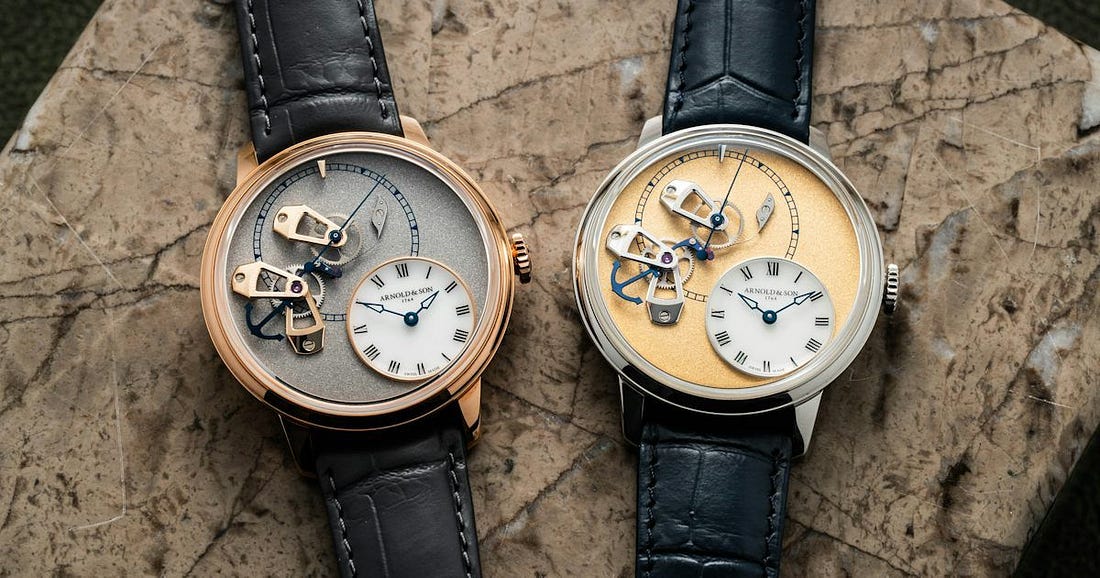
Arnold & Son Gives Its DSTB a More Useful Stop-Seconds Function
Arnold & Son’s DSTB Stop-Seconds makes its deadbeat-seconds display easier to synchronize by adding hacking seconds. The complication’s visible mechanism remains the centerpiece, accompanied by an oversized jumping-seconds hand and an off-center, concave white-opal time display.
The automatic A&S6303 movement provides a 55-hour power reserve inside a 42 mm case. Cliff Grey in red gold and Kingsand in platinum are each limited to 18 pieces, priced at US$58,700 and US$72,500 respectively.
The broad dial gives the mechanism space to perform, although the watch’s size deserves attention during a fitting. Its appeal lies in making the passage of individual seconds unusually visible—and in giving a traditional complication a presentation that is immediately recognizable.
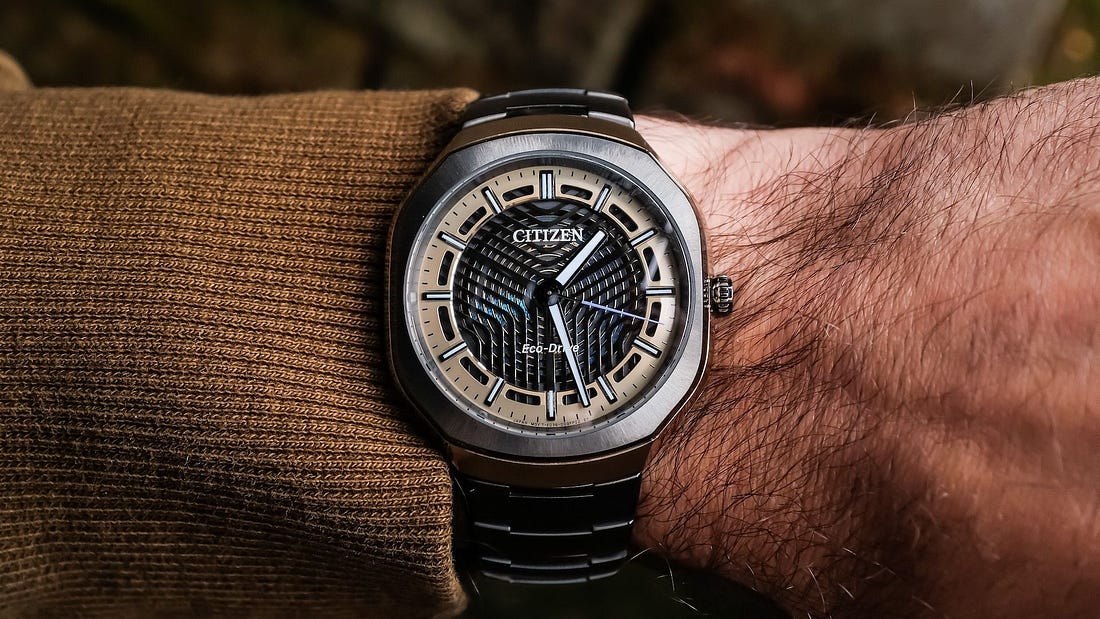
Citizen’s Eco-Drive Photon Makes an Unexpectedly Strong Everyday Impression
The Citizen Eco-Drive Photon BJ6569-59X combines lightweight Super Titanium with a layered dial inspired by the double-slit experiment. Dark gray surfaces and Amber Gold accents create a more elaborate appearance than its straightforward three-hand display might suggest.
The review finds the watch comfortable, legible, and increasingly appealing through actual wear. Citizen’s light-powered E036 movement offers a claimed running time of approximately one year when fully charged, while a concealed bracelet adjustment system adds a welcome practical detail.
At US$1,195, the Photon makes its argument through design, materials, and convenience. The reviewer would prefer greater water resistance than the stated 50 meters, but the overall impression is of a thoughtfully executed watch that rewards looking beyond conventional mechanical-watch priorities.
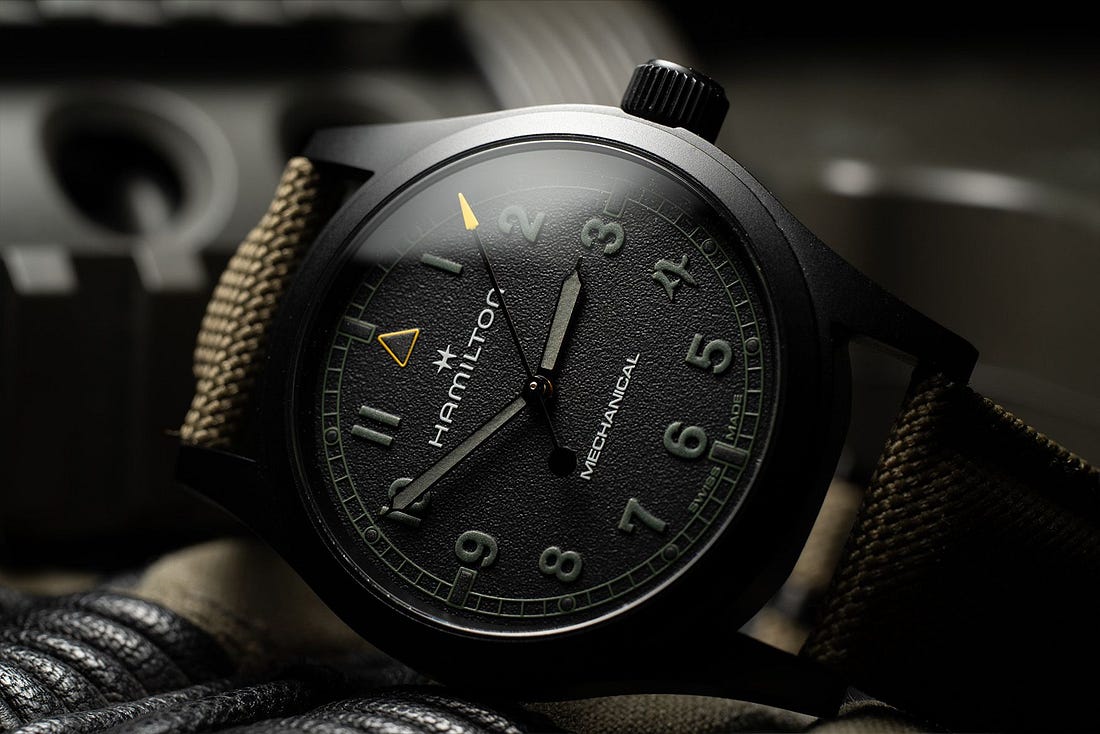
Hamilton Gives the Khaki Field Mechanical a Modern Warfare Treatment
Hamilton’s Khaki Field Mechanical 38 mm COD applies a darker, tactical aesthetic to a familiar field-watch platform. A sandblasted steel case with black PVD coating surrounds a grained black dial with muted green numerals, yellow accents, and a subtle Korean character at four o’clock.
The hand-wound H-50 movement supplies an 80-hour power reserve, while sapphire crystal and 50-meter water resistance maintain the collection’s straightforward specification. A khaki textile strap and themed packaging complete the connection to Call of Duty: Modern Warfare 4.
Priced at US$795, the watch’s success depends on how much the collaboration adds to the wearer’s enjoyment. The underlying attraction remains recognizable: compact proportions, clear timekeeping, and the daily interaction of winding a simple mechanical watch.
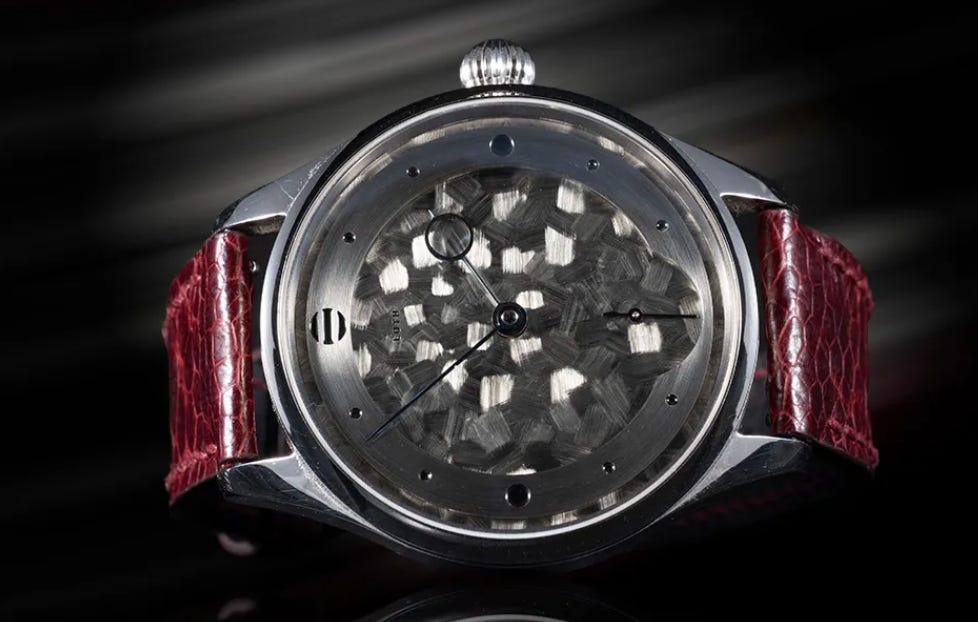
Tristan Ho’s LOTH Watch 1 Introduces a Very Personal Kind of Independent Watchmaking
Singaporean watchmaker Tristan Ho’s first commercial release places handwork at the center of the experience. Built around a Unitas 6498 base, the LOTH Watch 1 uses a hand-scratched maillechort dial and custom bridges, with polished bevels and carefully worked angles providing detail worth examining under magnification.
The 40.5 mm steel watch comes from a compact home workshop and a maker who began learning watchmaking while working in biomedical research. That background gives the twelve-piece debut a particular character: small-scale, exploratory, and closely connected to one person’s developing skills.
The release sold out at approximately SGD6,495 before tax, equivalent to about US$5,080 at current reference rates. It is an introduction to a watchmaker’s approach, with future work likely to be as interesting to follow as the initial production.
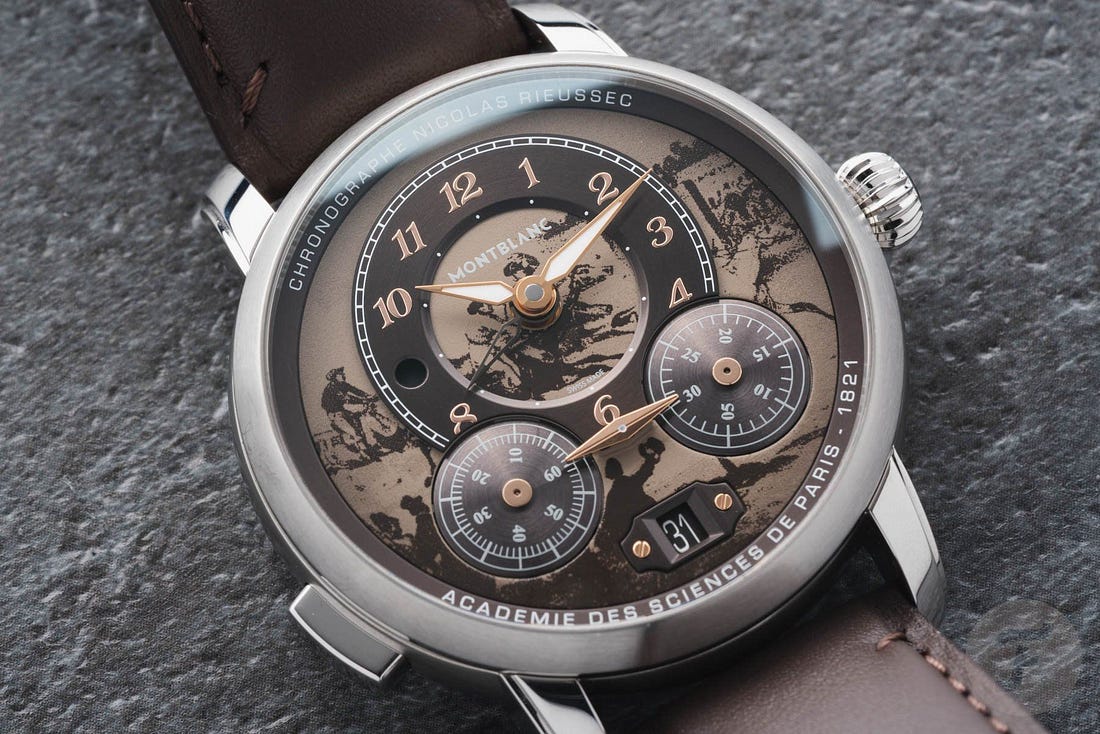
Montblanc’s Nicolas Rieussec Chronograph Brings the Racetrack onto the Dial
Montblanc’s Star Legacy Nicolas Rieussec Chronograph 43 mm Limited Edition returns to the 1821 horse races associated with Rieussec’s early inking chronograph. Four jockeys appear across a brown-toned dial, while French text, rose-gold-colored details, and a Paris map on the strap lining extend the historical theme.
Inside is the automatic MB R200 monopusher chronograph, with a column wheel, vertical clutch, and 72-hour power reserve. Rotating timing discs preserve the collection’s distinctive display, supported by additional travel and calendar functions.
Limited to 821 pieces and priced at US$9,800, the watch offers substantial mechanical interest alongside a deliberately elaborate presentation. Its 43 mm case and busy dial make it a piece to try in person, particularly for collectors drawn to historical storytelling as much as technical specification.
Editorial
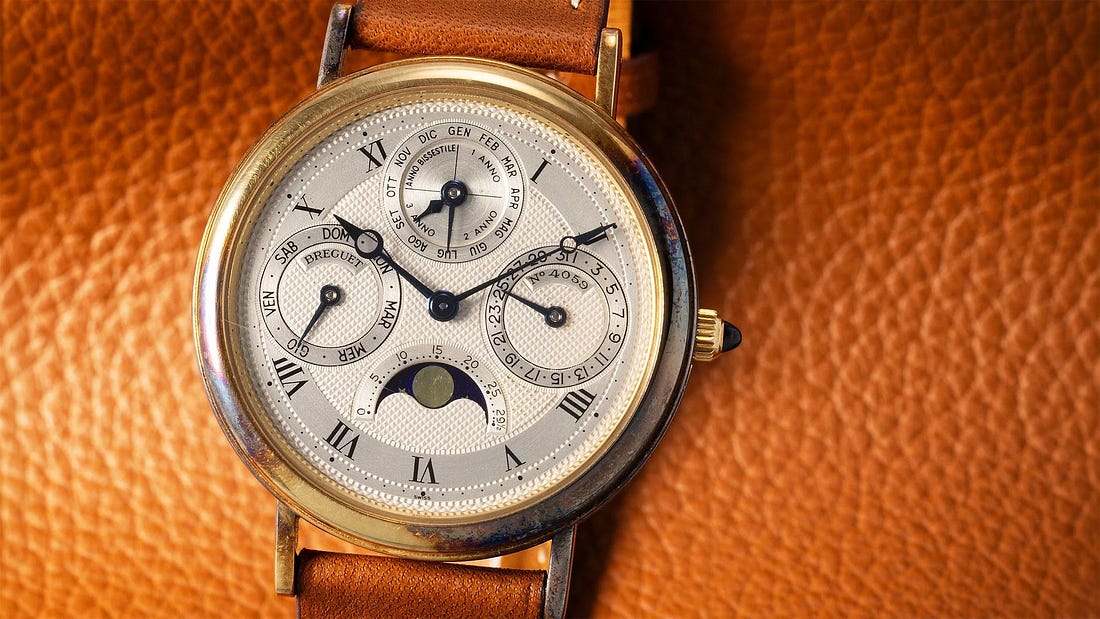
The Breguet Bounce Requires a Closer Look
A strong result for a neo-vintage Breguet perpetual calendar has renewed attention on a brand whose historical importance can exceed its visibility in the secondary market. The watch’s €85,800 sale illustrates what can happen when period, design, condition, and collector interest align.
The broader picture remains uneven. The analysis contrasts Breguet’s high average retail prices with much lower median secondary-market values, while identifying references such as the Tradition 7027 and complicated Classique models as areas of particular interest.
That makes reference-level expertise essential. A celebrated result cannot establish the value of the entire catalog, and exceptional examples can behave very differently from ordinary ones. Breguet offers considerable watchmaking substance, but realizing that opportunity requires understanding the exact watch, its condition, and the price being asked.
Events

Vacheron Constantin’s Collecting Heritage Goes on Display in Geneva
Phillips will display 34 finalists in Vacheron Constantin’s inaugural Concours d’Élégance Horlogère at Geneva’s Hôtel Président Wilson from November 4–8. The exhibition precedes the November 10 awards and brings together watches made between 1755 and 1999.
The finalists include the celebrated 1940 “Don Pancho” minute repeater with retrograde date, a sapphire-set pocket watch made for King Alexander I of Yugoslavia, and unusual wristwatches whose significance extends beyond the most familiar auction references. A 14-member jury will assess the watches across seven categories.
For collectors attending Geneva’s auction week, the exhibition offers a complementary experience: an opportunity to consider craftsmanship, design, provenance, and preservation without treating every watch primarily as a transaction. It also puts the owners who safeguard these pieces into the story.
Podcasts
Scottish Watches #828: Pamela Cloutier on a Career Inside the Watch World
Pamela Cloutier joins Scottish Watches for a conversation spanning a career connected with Christian Dior, Universal Genève, Patek Philippe, De Grisogono, Ralph Lauren, and Genus. Her experience offers a view of the industry through the people, decisions, and relationships that shape a brand’s development.
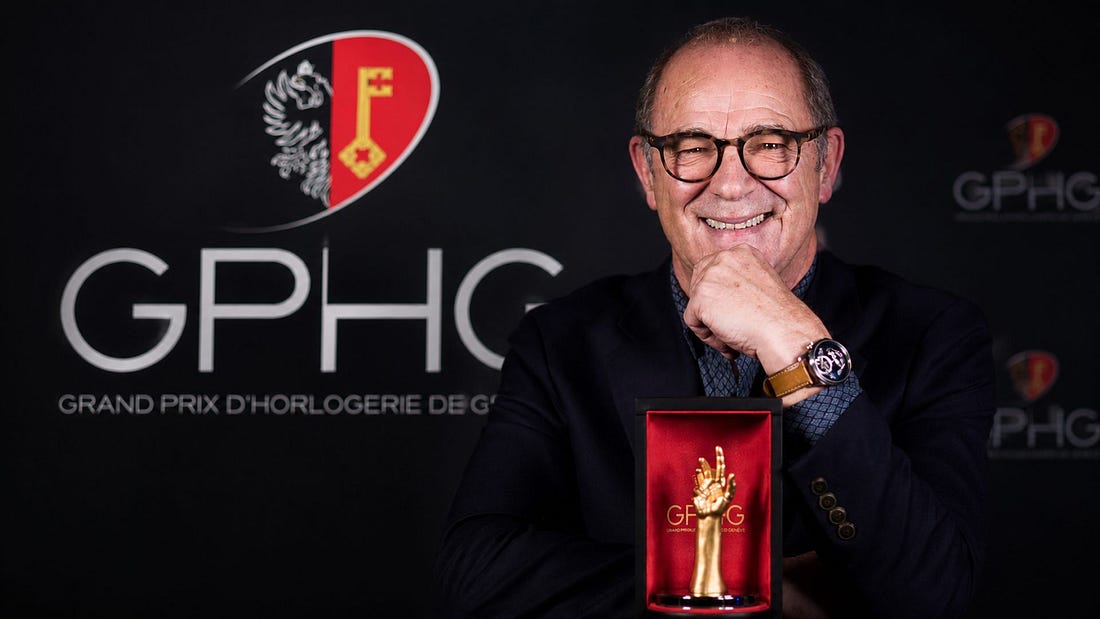
The discussion moves from international leadership roles to the unusual mechanical language of Genus, whose infinity-track display helped the brand earn recognition at the 2019 Grand Prix d’Horlogerie de Genève. Familiar watches and industry anecdotes provide accessible entry points into a career covering very different expressions of luxury.
The appeal is the combination of personal history and commercial perspective. Listeners interested in how watch companies operate—and how an unconventional idea finds its audience—will find more here than a conventional product interview.
Videos
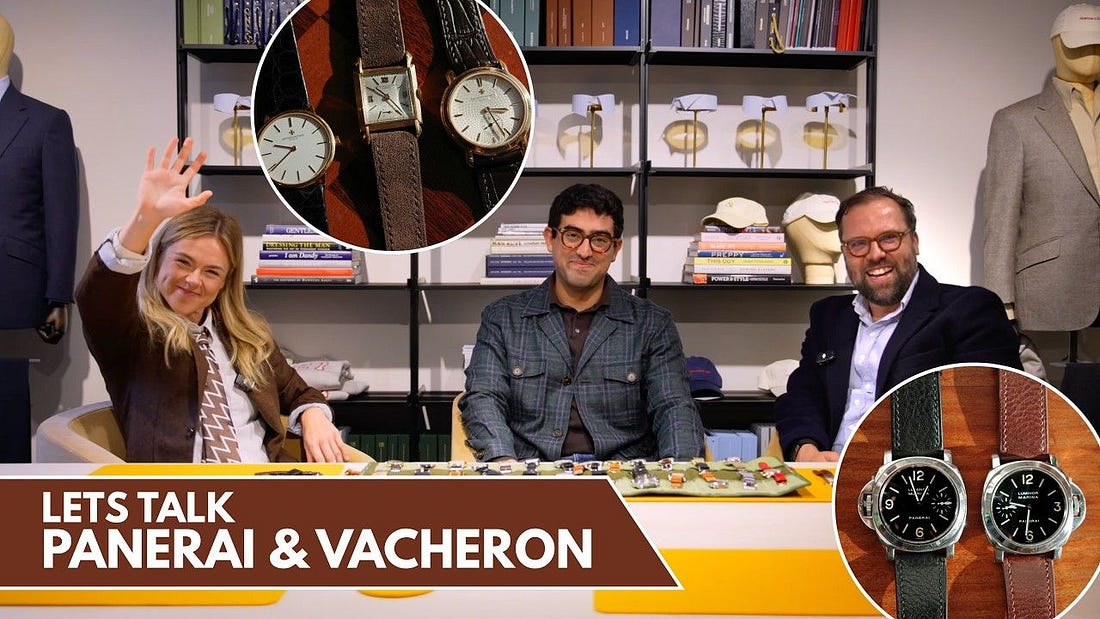
Huntington Company: Why Aren’t More Collectors Talking About Panerai and Vacheron Constantin?
Huntington Company turns its attention to two brands with substantial identities and very different places in collecting culture. Panerai brings a recognizable tool-watch vocabulary, while Vacheron Constantin offers centuries of watchmaking history and a broad range of traditional and contemporary designs.
The useful question is how those strengths translate into present-day attention. Heritage, visual distinction, pricing, and secondary-market demand do not always move together, making the pairing a worthwhile starting point for collectors considering watches beyond the most frequently discussed references.

Chisholm Hunter: Longines HydroConquest Versus Rolex Submariner
This comparison places two established dive-watch names on opposite sides of a substantial price gap. Longines makes its case through accessible pricing and modern specifications, while Rolex adds the Submariner’s recognition, history, and established secondary-market presence.
For a prospective buyer, the most useful exercise is identifying what the additional expenditure changes in actual ownership. Comfort, finishing, bracelet feel, servicing expectations, and the importance of the name on the dial all deserve consideration alongside water resistance and movement specifications.

Emily Marsden: One Mic, One Take with Independent Watchmakers in New York
Emily Marsden’s interview format brings independent voices into a direct, conversational setting. The appeal of a one-mic, one-take approach is the opportunity to hear how participants explain their work and priorities with less distance between the maker and the audience.
For collectors exploring independent watchmaking, those conversations can supply context that a specification sheet leaves out. Listen for the choices behind the design, the problems a maker wants to solve, and the character that distinguishes one small-scale operation from another.

Four Fatal Watch-Collecting Mistakes to Consider Before 2027
This forward-looking collecting video raises a practical subject: the decisions that can undermine enjoyment long after the excitement of a purchase has passed. Research, condition, provenance, maintenance, and paying an appropriate price are useful areas to examine before committing to a watch.
The broader lesson is to develop a repeatable buying process. Understand the exact reference, investigate the seller, allow for ownership costs, and consider how the watch fits your habits. A purchase becomes easier to evaluate when the questions are asked before money changes hands.

Roman Sharf: Which Watches Hold Their Value in 2026?
Roman Sharf examines value retention through the perspective of the luxury-watch trade. The subject is especially relevant in a market where a strong brand name can conceal substantial differences between references, configurations, and purchase prices.
Collectors should pay particular attention to the distinction between desirability and the price already built into a transaction. A sought-after watch can still be an expensive purchase at the wrong level, while a less fashionable model may offer more favorable ownership economics if acquired carefully.
Auctions
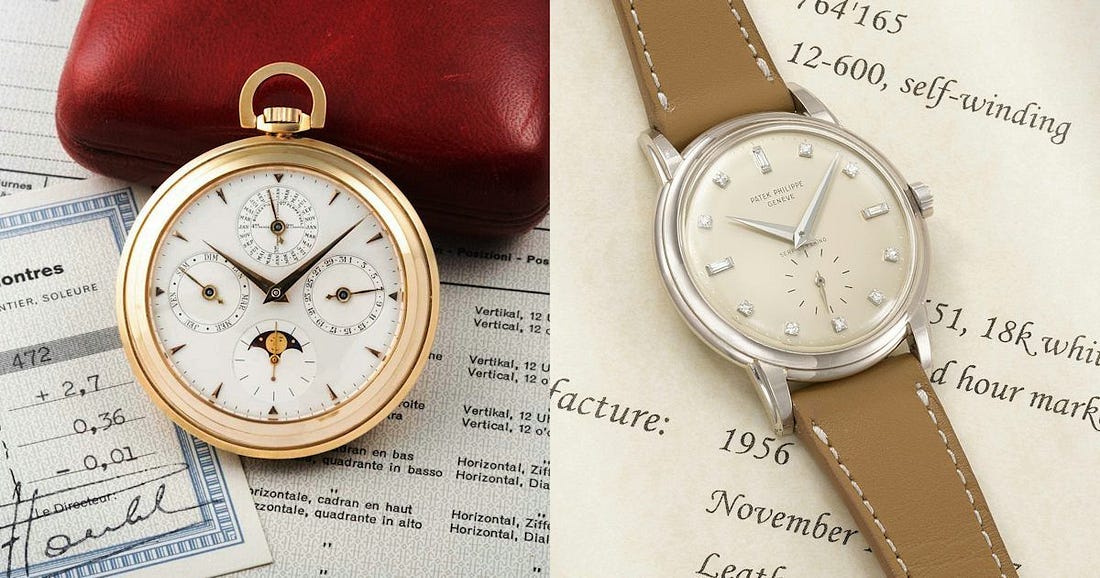
Geneva’s Fall Auctions: Famous Names and Less Obvious Opportunities
The first installment of this Geneva preview examines Christie’s and Antiquorum, bringing together headline complications, independent watchmakers, and unusual historical pieces. Christie’s includes important F.P. Journe and Patek Philippe watches alongside work by makers such as Grönefeld, Voutilainen, Vianney Halter, and Sylvain Pinaud.
Antiquorum’s broader selection opens other avenues, including shaped watches, school watches, unusual chronographs, royal-portrait dials, and decorative objects incorporating watches. The variety rewards collectors willing to investigate beyond the most conspicuous lots.
Estimates provide a starting point for research rather than a final answer on value. Condition reports, originality, service requirements, and buyer’s premiums should all be part of the calculation before a bid is placed.
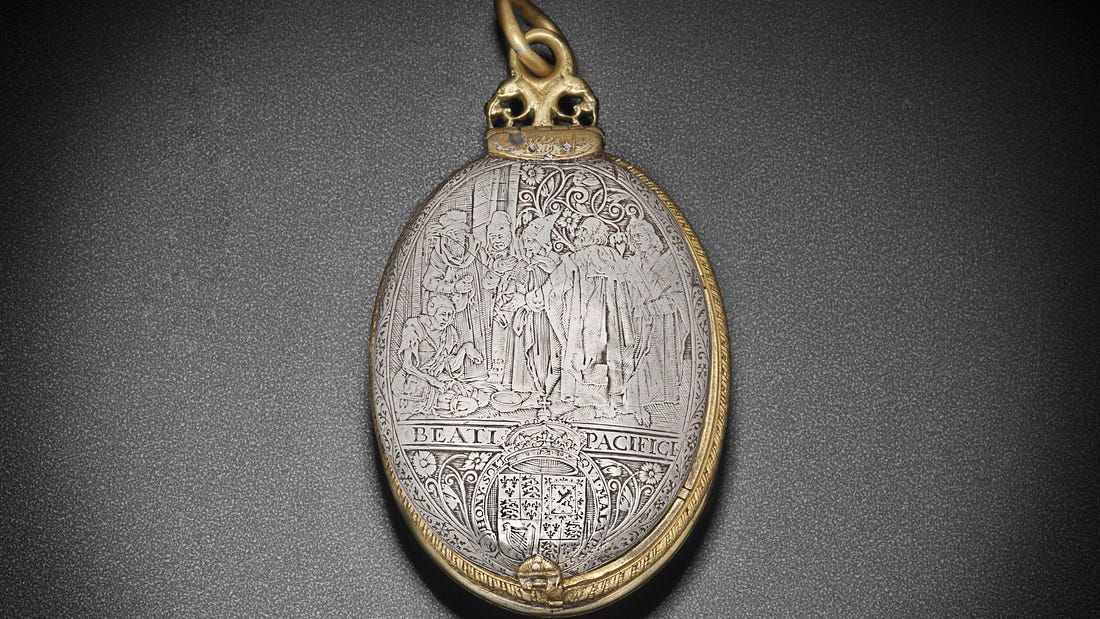
A Pocket Watch Made for King James I Heads to Bonhams
A silver-and-gilt pocket watch made around 1613 by royal clockmaker David Ramsay will lead Bonhams’ Historical and Extraordinary Watches auction on December 3. The estimate is £250,000–350,000, approximately US$335,500–469,700 at current reference rates, before buyer’s premium.
Its interest combines early watchmaking, elaborate engraving, and royal association. The decoration includes a portrait of James I of England and VI of Scotland, together with emblems connected to the kingdoms represented in his royal identity.
Following decades on loan to the British Museum and the Victoria and Albert Museum, the watch returns to the market as a rare surviving object from the early history of portable timekeeping. Its historical significance reaches well beyond conventional wristwatch collecting.
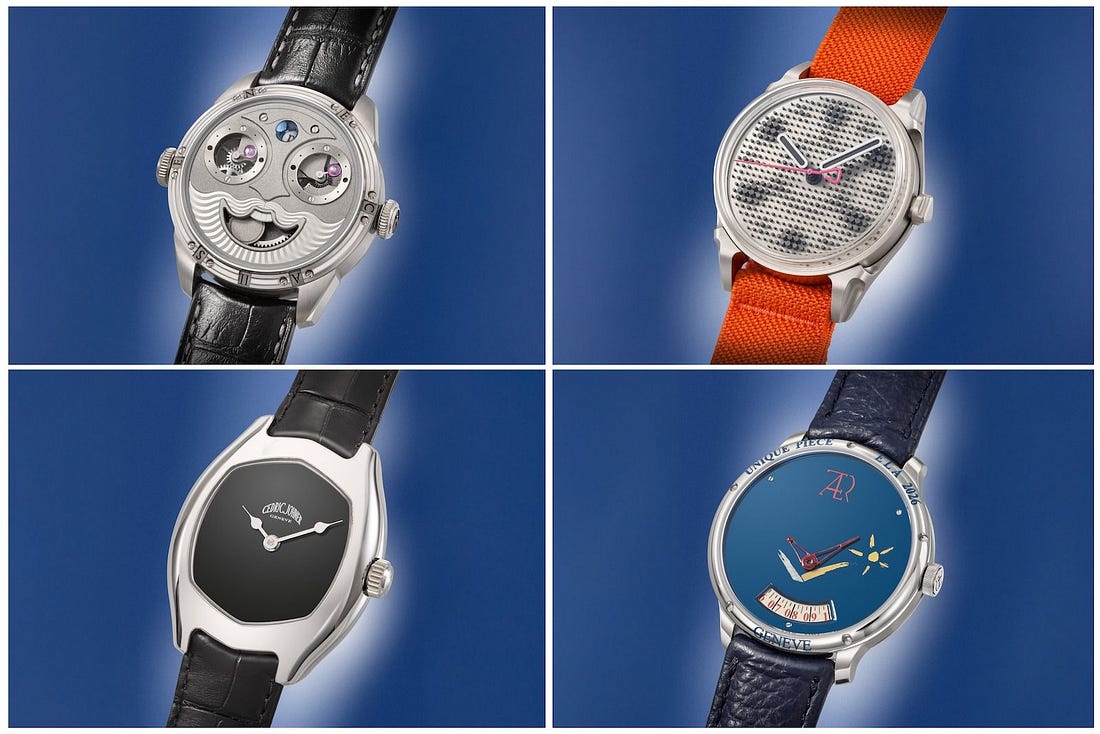
Independent Watchmakers Rally for Watches for ELA
The Watches for ELA charity auction takes place in Geneva on November 9, supporting research and families affected by leukodystrophies. A preview at the Four Seasons Hotel des Bergues runs November 5–8, giving visitors an opportunity to inspect the watches during the surrounding auction-week activity.
The selection includes Zinedine Zidane’s personal Cartier Pasha alongside contributions associated with Atælier Haute Complication, Cédric Johner, Kollokium, and Konstantin Chaykin. The variety extends from personal provenance to independent design and unusual mechanical expression.
For bidders, the charitable purpose adds another reason to participate, while the usual reference-level research remains worthwhile. It is also a chance to see smaller makers represented within one of the year’s busiest international collecting gatherings.
BuyingTime at Auction
A Vacheron Stops at US$30,000; Richard Mille’s RM 65-01 Takes the Starting Grid
Yesterday’s November 2 auction of the Vacheron Constantin Malte Tourbillon, reference 30066/000R-8816, ended at US$30,000 without a sale. Today, attention shifts to a very different expression of complicated watchmaking: a 2025 Richard Mille RM 65-01 Automatic Split-Seconds Chronograph in carbon, reference RM65-01 CA. The contrast is striking—traditional rose-gold tourbillon architecture gives way to a skeletonized, motorsport-inspired chronograph built around advanced materials and an unusually demanding timing mechanism.
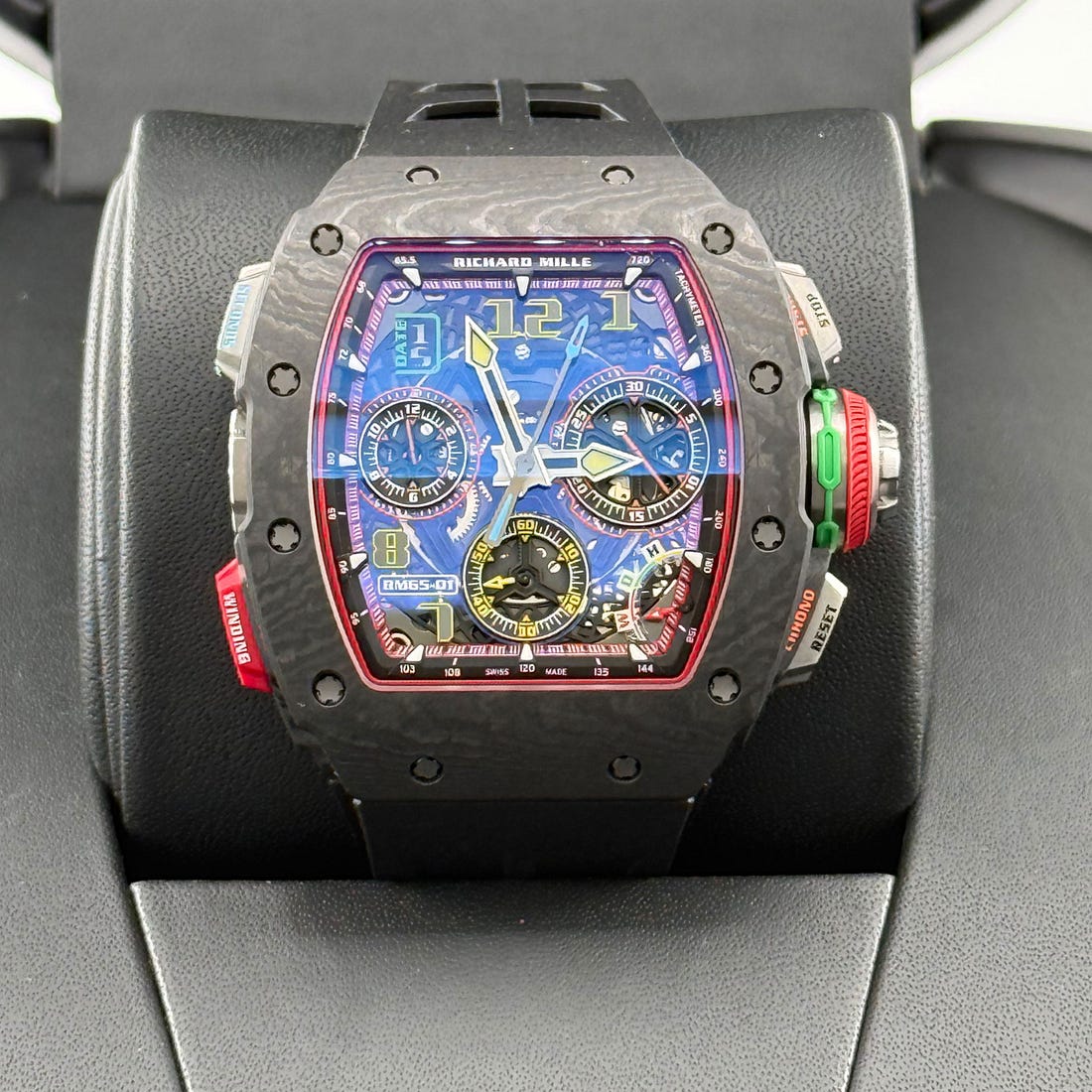
Introduced in 2020 after approximately five years of development, the RM 65-01 marked Richard Mille’s first automatic split-seconds chronograph. Its rattrapante mechanism allows one chronograph hand to pause for an intermediate reading while the other continues timing, then catch up when released. The automatic RMAC4 runs at 5 Hz, or 36,000 vibrations per hour, and offers approximately 60 hours of power reserve. A function selector and a separate rapid-winding system add to the mechanical character, while the Carbon TPT case gives the watch its distinctive layered appearance.
The offered watch measures 44.5 by 49.94 mm and is located in the United States. It comes with its box, papers, and a folio or wallet. The supplied condition description lists an excellent dial and minor wear to the case, bezel, and strap assembly; the general pre-owned designation does not establish a documented service history. For this reference, the condition of the carbon case, operation of the split-seconds mechanism, completeness of the accessories, and any remaining manufacturer coverage deserve close attention.
Value requires separating completed transactions from advertised prices. Phillips records a comparable 2023 Carbon TPT RM 65-01 selling for CHF241,300, equivalent to approximately US$294,400 when translated at current reference rates rather than its historical sale-date exchange rate. A dealer listing around US$380,000 illustrates a materially higher asking level, with no assurance that a transaction would occur there. Those figures provide context rather than a fixed appraisal for this 2025 example: its condition, documentation, service position, and the auction’s fees will determine the relevance of either comparison. Bidding is scheduled to end at noon Eastern on Tuesday, November 3, 2026.
Current bid: $230,000
Losing Time
Today’s Big Losers at Auction on Grailzee
Four watches, four failed sales, and four reminders that an asking price is a wish until somebody agrees to pay it.
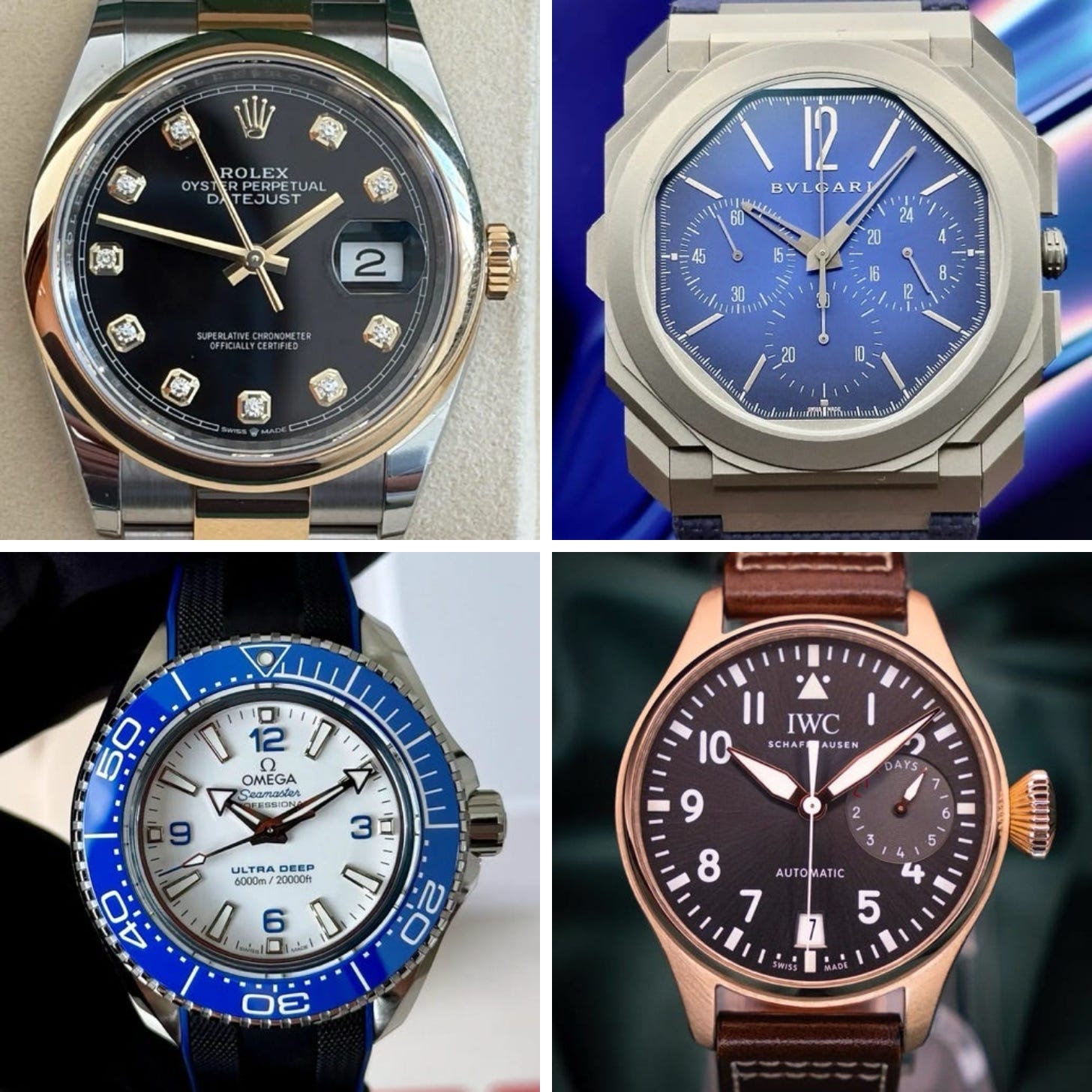
The 2026 Rolex Datejust 36MM Black Dial Two-Tone Oyster Bracelet (126203) carried a $21,000 ask, but bidding stopped at $10,400—a $10,600 shortfall, or 50.5% below asking. Apparently, the bidders missed the memo explaining why they should more than double their enthusiasm.
The 2026 Bvlgari Octo Finissimo Chronograph GMT “Yoshida” Limited Edition 42MM Blue Dial Textile Strap (103889) asked $15,500 and attracted a high bid of $8,000. That’s a $7,500 gap, finishing 48.4% below asking. “Limited edition” may describe the production run, but it apparently also described the willingness to chase this price.
The 2026 Omega Seamaster Planet Ocean 6000M Ultra Deep 45.5MM White Dial Rubber Strap (215.32.46.21.04.001) came closest to its seller’s expectations, although “closest” is doing considerable work here. Against a $10,000 ask, the $6,000 bid left a $4,000 hole—40.0% below asking. A watch built for extreme depths found another one between the seller’s expectations and the bidders’ budgets.
The 2017 IWC Schaffhausen Pilot Big Spitfire 46.2MM Grey Dial Leather Strap (IW500917) delivered the biggest disconnect. Its $19,000 ask met an $8,000 high bid, leaving an $11,000 shortfall, or 57.9% below asking. The Big Pilot had plenty of altitude in the asking price; the bidding never got off the runway.
Combined, the four sellers wanted $65,500, while the final bids totaled $32,400—a $33,100 shortfall, or 50.5% below the combined asking prices. Every watch missed by at least 40%, suggesting these were substantial disagreements over price rather than deals that nearly crossed the finish line. The Omega had the smallest percentage gap; the IWC had the largest gap in both dollars and percentage terms. These bids don’t establish definitive market values, but they do show what this group of bidders was prepared to offer. The sellers can hold out for another audience—or reconsider how much optimism belongs on the price tag.
Closing Time
The best discoveries often begin with a familiar question asked of an unfamiliar watch: What makes this one worth your attention?
Today’s issue offers plenty of answers, from a hand-worked independent dial to a light-powered Citizen and a split-seconds Richard Mille. Keep looking closely, compare the details, and leave room for the watch that surprises you.
Thank you for reading Buying Time. We’ll see you tomorrow.


