
Issue #283 | Buying Time - November 4, 2026
From Casio’s factory floor to Patek’s grand complications, today’s watches ask what makes craftsmanship, utility, and heritage worth paying for.
Buying Time in 60 Seconds
Today’s issue follows the many ways a watch earns its place on the wrist. Casio’s Yamagata factory reveals the industrial precision and trained hands behind Japanese-made G-Shocks, while anOrdain’s porcelain dial offers a different route to an artisanal watch without the long wait for enamel.
Seven new releases stretch from Depancel’s endurance-racing special and Jacques Bianchi’s combat diver to Louis Vuitton’s mirror-polished guichet watch and Richard Mille’s gemstone-covered automatic tourbillon. Formex explores ceramic and meteorite, Oris turns its Pointer Date oxblood red, and PS Horology looks to George Graham for an unusually thoughtful historical reference.
Elsewhere, Swatch Group appoints a new U.S. chief, TAG Heuer’s Aquaracer story comes full circle, Omega’s digital Speedmaster faces an uncertain consumer future, and Windup’s crowds demonstrate both the strength of watch enthusiasm and the challenges of accommodating it.
Yesterday’s Richard Mille RM 65-01 Carbon reached US$260,000 and did not sell. Today, a 2023 Patek Philippe ref. 5204R-011, combining a perpetual calendar with a split-seconds chronograph, takes the auction spotlight. The auction is scheduled to close at 12:05 p.m. Eastern on Wednesday, November 4.
Time Graphing Today’s Watch Universe
What Are We Really Paying For?
A watch price can be easy to find and difficult to explain.
Materials account for part of it. Manufacturing, finishing, distribution, and the name on the dial account for more. Then come the less measurable things: the satisfaction of operating a beautifully made mechanism, the pleasure of a particular color, the connection to a story, or the simple confidence that the watch will do its job.
Today’s issue puts several of those explanations side by side. Together, they suggest that collecting becomes more interesting when we can describe what we value with greater precision.
Start with Casio’s Yamagata factory. Here, craftsmanship includes injection molding, electronic assembly, machining, inspection, and a certification system that determines who can work on the Premium Production Line. The tools and surroundings differ from the familiar image of a Swiss watchmaker at a wooden bench. The underlying requirements—training, repeatability, attention, and responsibility for the finished product—are recognizable.
That matters because collectors sometimes reserve the word “craft” for processes that look traditional. A complicated factory can make the human contribution harder to see, even when the quality of its output depends on it. Casio’s factory story gives that contribution a face.
The anOrdain Model 1 Porcelain approaches the same problem from the other direction. The attraction is immediately visible: a lustrous white dial whose character comes partly from the way it is made. Yet the more consequential detail may be production capacity. Porcelain allows anOrdain to make more dials with fewer people than its enamel process requires.
For the buyer, that raises a worthwhile question. How much of the appeal lies in the finished surface, how much in the difficulty of producing it, and how much in the scarcity that difficulty creates? Those answers need not be identical. A watch can become easier to obtain while retaining the qualities that made someone want it.
Utility offers another clear explanation of value. The Jacques Bianchi JB300 Professional uses a lightweight carbon case, a titanium inner core, fixed lugs, and a left-side crown to address a specific kind of use. Its choices are easier to assess because they have an identifiable purpose. Fixed lugs improve one aspect of security while limiting strap selection; the buyer can decide whether that exchange makes sense.
The Seiko 5 Sports and Timex Deepwater comparison makes that exercise accessible. Timex offers the stronger water-use specifications and straightforward quartz ownership. Seiko offers the experience of an automatic movement, a familiar design language, and a substantial enthusiast community. A useful recommendation begins by asking which of those things the owner actually wants.
Heritage makes the equation more complicated—and more rewarding when handled well. The history of TAG Heuer’s Aquaracer shows how a collection can evolve through changing names, technologies, and expectations while retaining a recognizable purpose. The PS Horology Tsuba 1720 makes a more specific historical connection, translating details from a George Graham pocket watch into a contemporary bracelet watch.
The interesting distinction is how much history changes the object itself. A reference becomes more convincing when it shapes the dial, the hands, the proportions, or the way the watch communicates time. The Tsuba invites that closer examination.
Louis Vuitton’s two appearances today show how much room there is for design within this discussion. The Tambour Convergence Mirror Steel asks the owner to appreciate a polished surface and a compact window display. The Monterey Ceramic uses a lugless case and unconventional wearing options. Their value propositions depend heavily on whether those design decisions feel compelling in person.
That brings us to the people gathered at Windup New York. A crowded public fair is a reminder that specifications and photographs only carry the conversation so far. People want to handle watches, meet their makers, compare impressions, and discover something they did not arrive expecting to like. The long lines also show that enthusiasm requires practical support. Access is part of the experience.
Today’s Patek Philippe Bezel auction adds the final distinction: the difference between appreciating a watch and agreeing on its price. A perpetual calendar split-seconds chronograph has a substantial mechanical story to tell. Its auction value still depends on condition, completeness, service history, and the buyers present. Yesterday’s unsold Richard Mille makes the same point. A substantial bid demonstrates interest; a completed transaction establishes a sale.
The most useful collecting habit may be learning to finish this sentence: “This watch is worth it to me because…”
The more specific the answer, the better the purchase is likely to fit the person making it.
-Michael Wolf
News
Swatch Group Names Bertrand Delvert to Lead Its American Operation
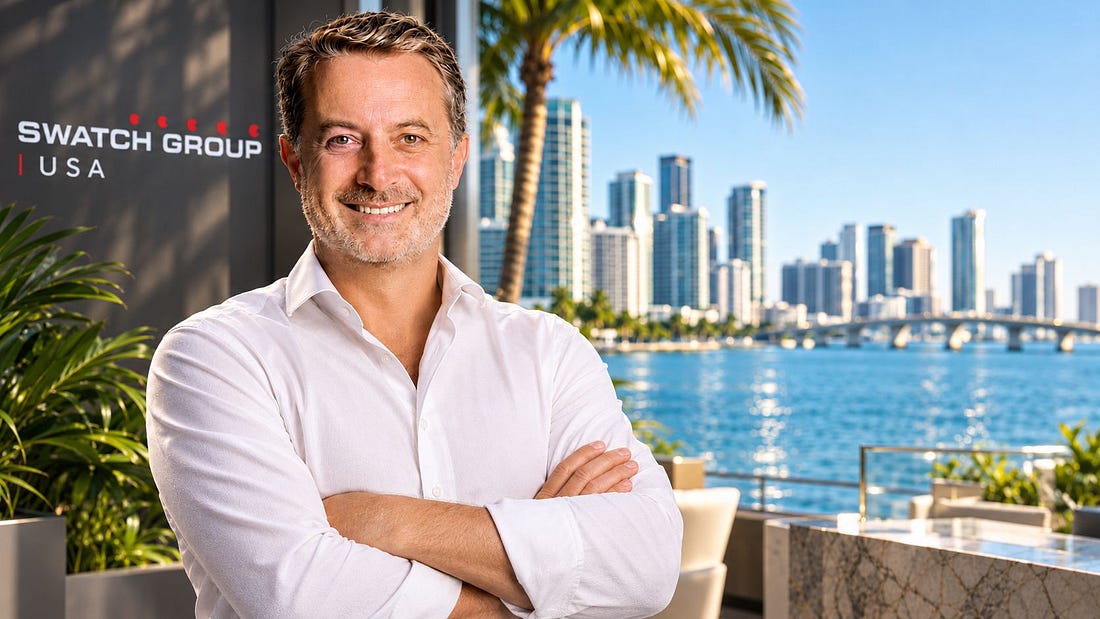
Bertrand Delvert has been appointed CEO of Swatch Group USA after 26 years with the company. He arrives from Paris, where he had led Swatch Group France since 2019, following an earlier 18-year career at Tissot that included responsibility for global marketing and communications.
The appointment puts an experienced group executive in charge of a particularly important market. According to the report, the American region was Swatch Group’s only territory to grow sales in 2025, with revenue increasing from approximately CHF 1.2 billion to CHF 1.3 billion. U.S. sales then rose 26% in the first half of 2026. Delvert’s task is to sustain that momentum across a portfolio serving very different customers and price levels.
Features
Inside Casio’s Yamagata Factory, Where “Made in Japan” Takes Shape
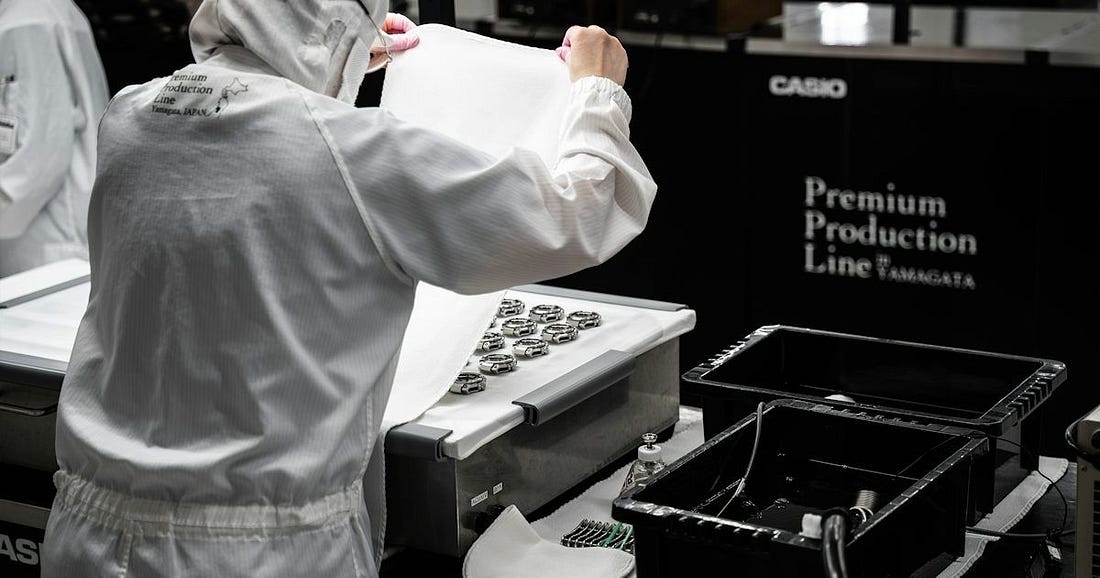
Yamagata Casio in Higashine serves as the company’s Japanese watchmaking center and its “mother factory,” guiding production while much of the group’s high-volume manufacturing takes place overseas. Its responsibilities range from movement production and injection molding to dial finishing and precision machining. Even the building’s seismic isolation systems contribute to the consistency required by its machinery.
The Premium Production Line brings trained employees into the assembly and inspection of MR-G, Oceanus, MT-G, and Gravitymaster watches. Access to that work depends on a five-tier certification system, with Gold Medal status or higher required. The visit reveals how industrial capability and individual skill combine behind watches whose toughness and convenience can make their production seem deceptively simple.
TAG Heuer’s Aquaracer Comes Full Circle
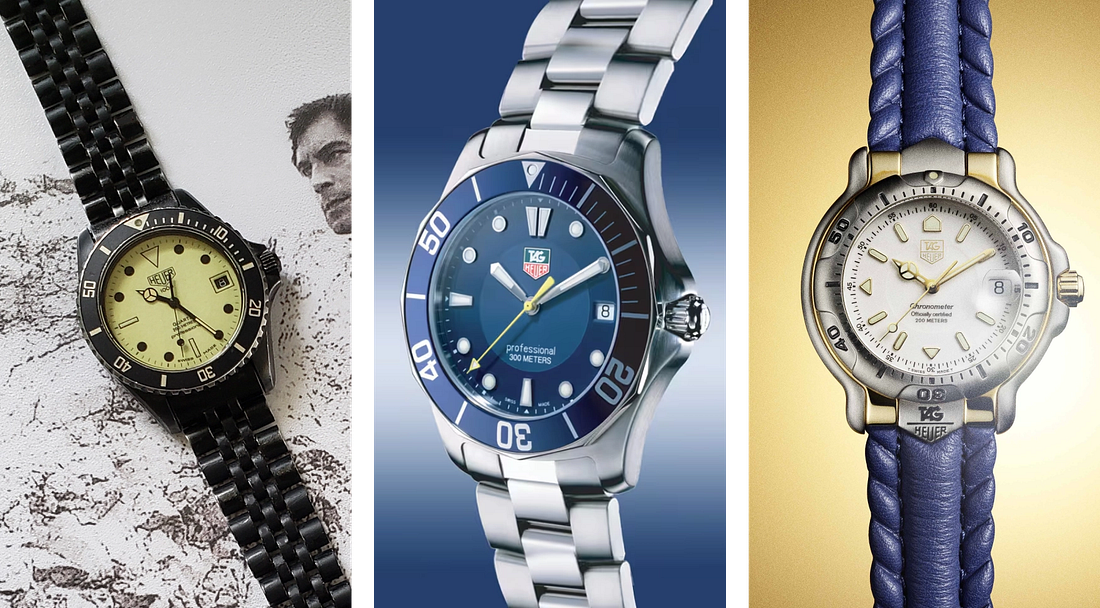
TAG Heuer’s modern dive-watch identity began with the ref. 844 in 1978, answering demand for a sturdy, accessible underwater watch. The subsequent 1000, 2000, and 3000 Series broadened that proposition through professional specifications, different sizes and styles, and more elaborate positioning. Further collections followed, but the 2000 proved especially durable.
The Aquaracer name emerged within that family before becoming the collection’s sole identity in 2005. Today’s range includes mechanical and solar-powered watches, GMTs, chronographs, and serious deep-diving models. Its development illustrates how a practical product can accumulate history while continuing to change, with references to the original 844 and Night Diver sharing space with the Solargraph and 1,000-meter Superdiver.
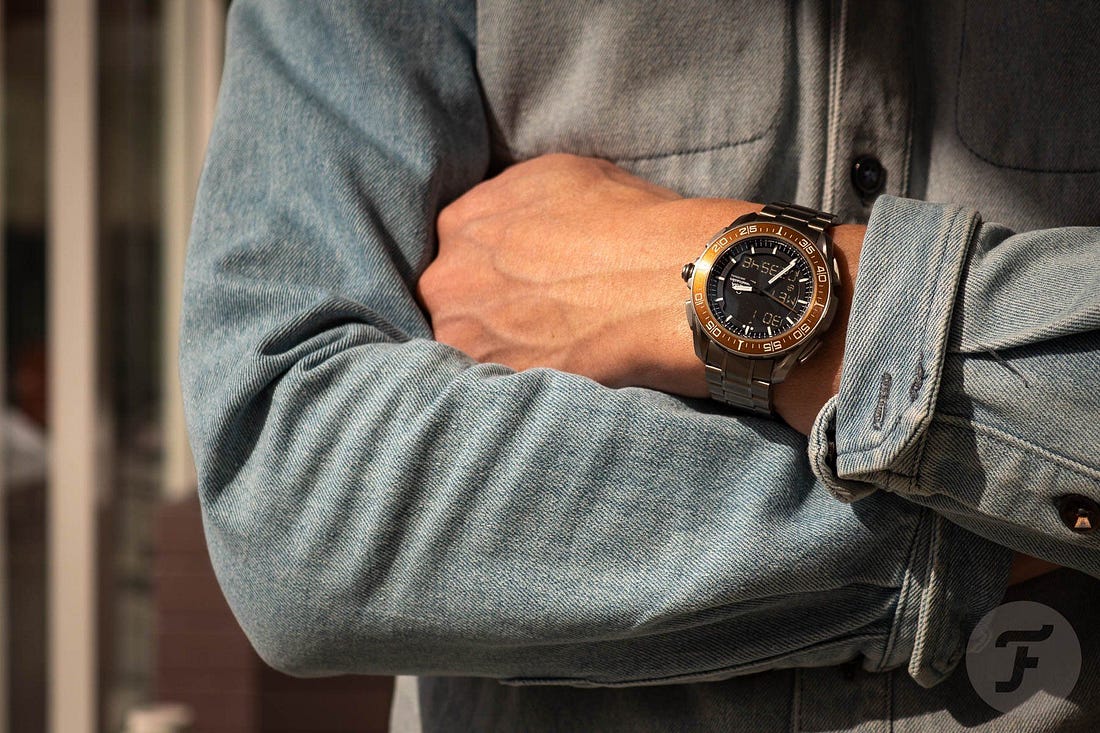
Omega’s Digital Speedmaster Disappears from the Consumer Catalog
Omega has removed the X-33 Marstimer and Skywalker from its public catalog, leaving consumers without a digital Speedmaster in the current offering. That closes a retail chapter in a watch family introduced in 1998 and developed around the requirements of astronauts and space agencies. The Marstimer extended that mission with specialized calculations for tracking time on Mars.
The operational story continues, however. The Gen 2 remains in production for space-agency requirements, and existing models can still be supplied on demand to NASA and ESA. Whether a future consumer X-33 will bring a clearer display, connectivity, or more customizable functions remains an open question. Its next chapter will have to balance the needs of actual spaceflight with the expectations of collectors on Earth.
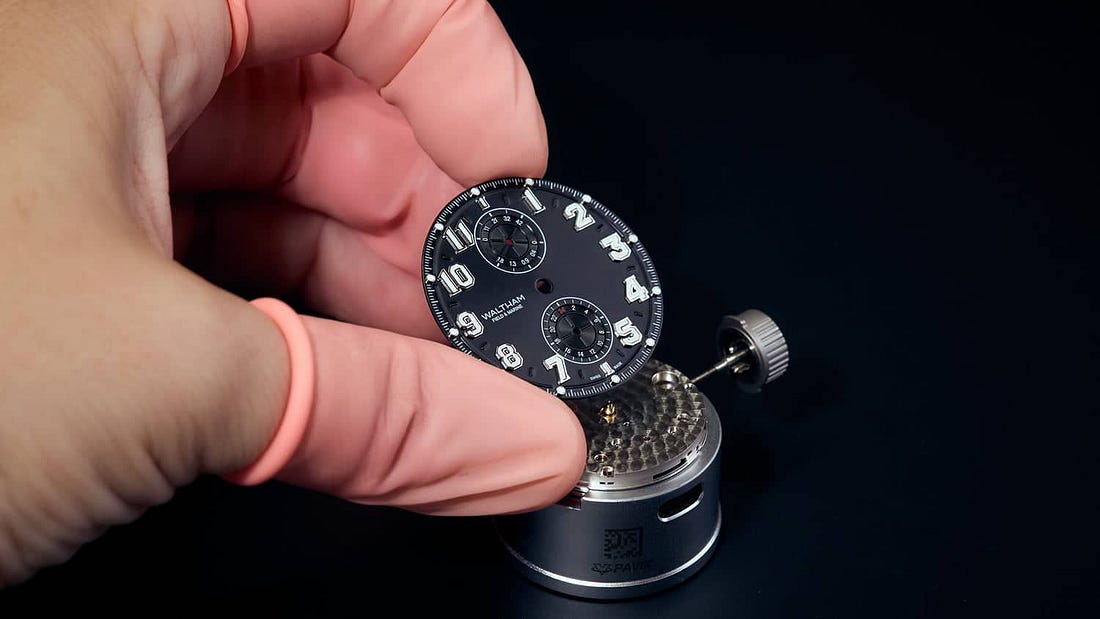
Waltham’s American Industrial Heritage Finds a Swiss Future
Waltham helped transform watchmaking through standardized, interchangeable parts, making accurate timekeeping available to a much broader audience. Its railroad watches became an important part of American industrial life, while the 1918 Field and Marine brought early waterproof wristwatch construction into its story. Approximately 40 million watches were produced before U.S. manufacturing ended in 1957.
The modern business operates from Switzerland, following Antonio DiBenedetto’s acquisition of a majority stake in 2011. Its challenge is to make the historical name meaningful in contemporary products. The expanded Field & Marine collection and Dual Time watches attempt that through modern materials, distinctive construction, and practical specifications, including water resistance of 30 ATM.
New Watches
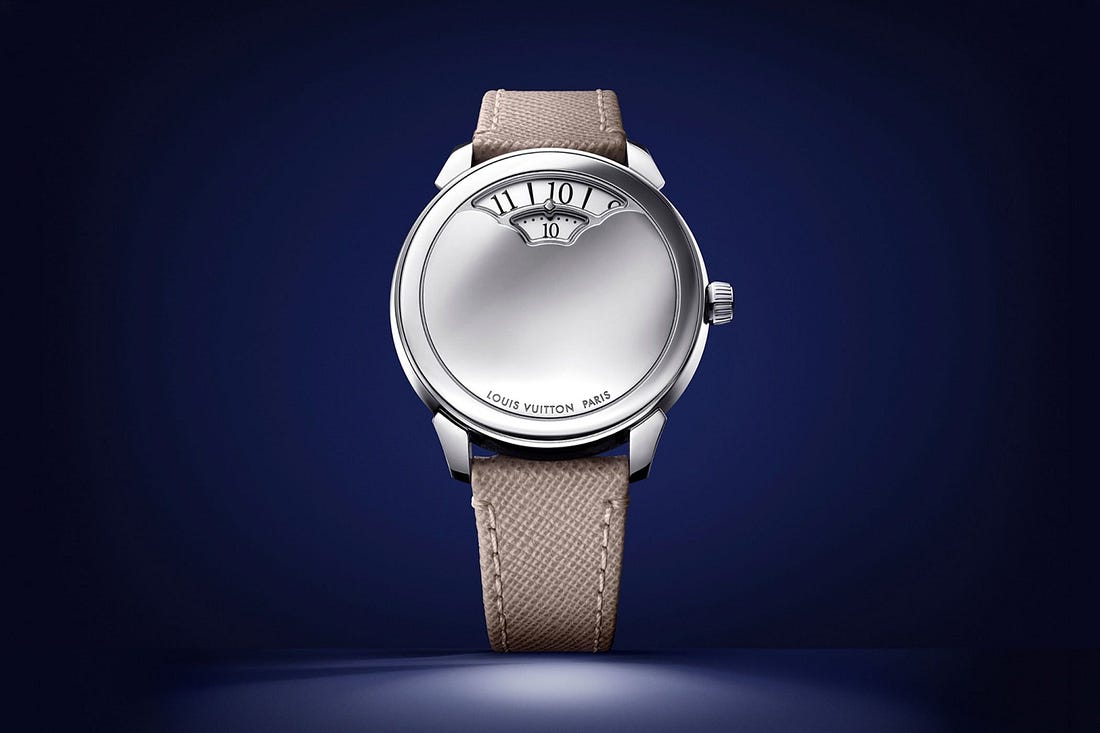
Louis Vuitton’s Tambour Convergence Gets a Mirror-Polished Steel Case
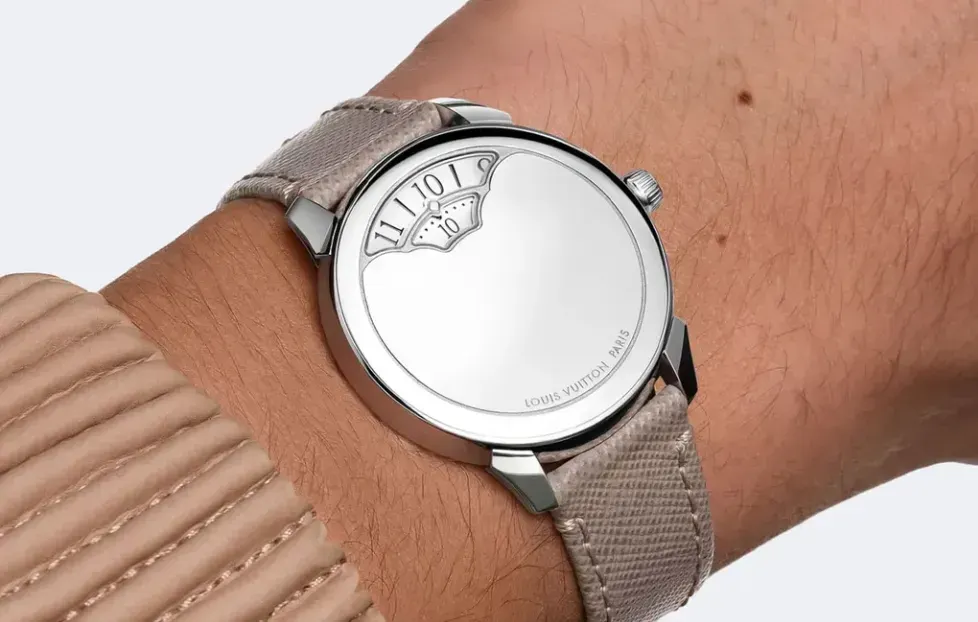
Louis Vuitton brings its compact guichet watch into hardened stainless steel, giving the Tambour Convergence a highly reflective surface around its arched time display. The 37mm case measures 8mm thick and has a reported surface hardness of 1,130 Vickers, while hours and minutes appear on rhodium-treated brass discs with black markings. A sapphire caseback reveals the automatic LFT MA01.01 movement and its 45-hour power reserve. The permanent-collection model comes on a gray Saffiano leather strap, with 30 meters of water resistance. Price: approximately US$29,065, converted from €26,000.
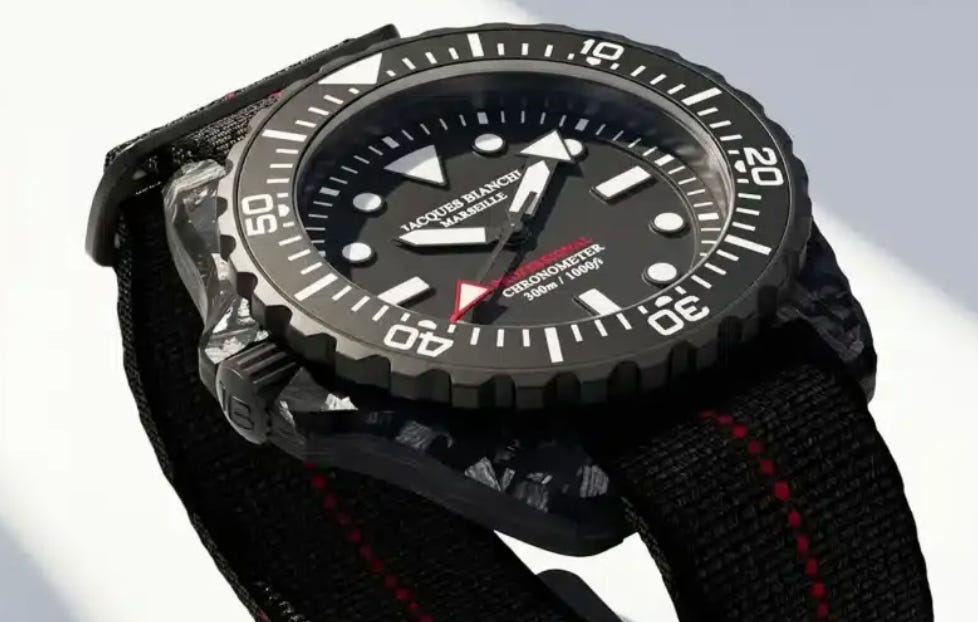
Jacques Bianchi Builds the JB300 Professional Around Combat-Diver Feedback
The Jacques Bianchi Marseille JB300 Professional was developed with former U.S. Navy diver Brock Stevens and informed by military divers’ experience. Its 41.5mm forged-carbon case surrounds a Grade 5 titanium inner core, with a black DLC-coated titanium bezel, fixed lugs, and a crown positioned on the left. Oversized luminous markers and broad hands emphasize legibility, while different lume colors distinguish the bezel’s opening 15 minutes. A COSC-certified Soprod P024 automatic movement and 300-meter water resistance complete the package, with 500 pieces divided between the Unit Watch Program and public sale. Price: US$1,950.
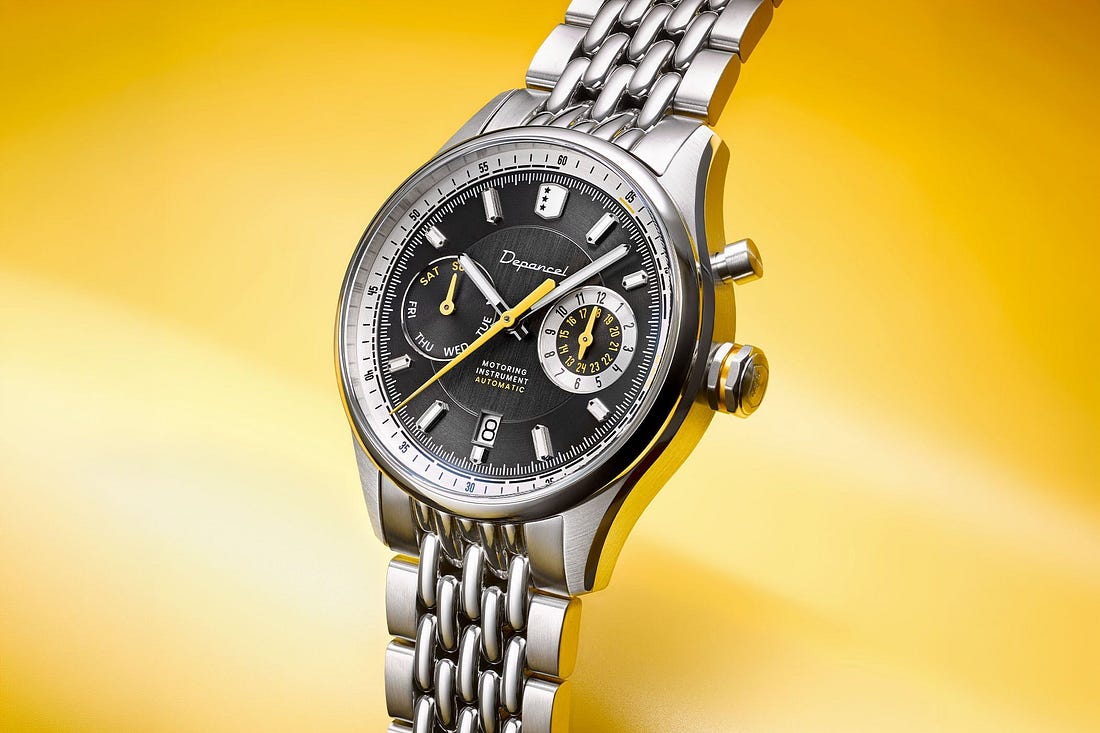
Depancel’s Autosport “2 Tours d’Horloge” Keeps an Eye on the Whole Race
Depancel’s 100-piece Autosport “2 Tours d’Horloge” celebrates a 24-hour historic-car endurance race at Circuit Paul Ricard. The 39mm steel watch combines a black-and-white dial with yellow accents and a 3 o’clock subdial that can track the race’s 24 hours, returning to month indication outside that setting. Its automatic Miyota 9122 also supplies day, date, and conventional time displays, with approximately 40 hours of power reserve. Buyers can choose a leather strap or Beads of Rice bracelet, with sales scheduled to begin November 5 at 4 p.m. Paris time. Price: from approximately US$889, converted from €795.
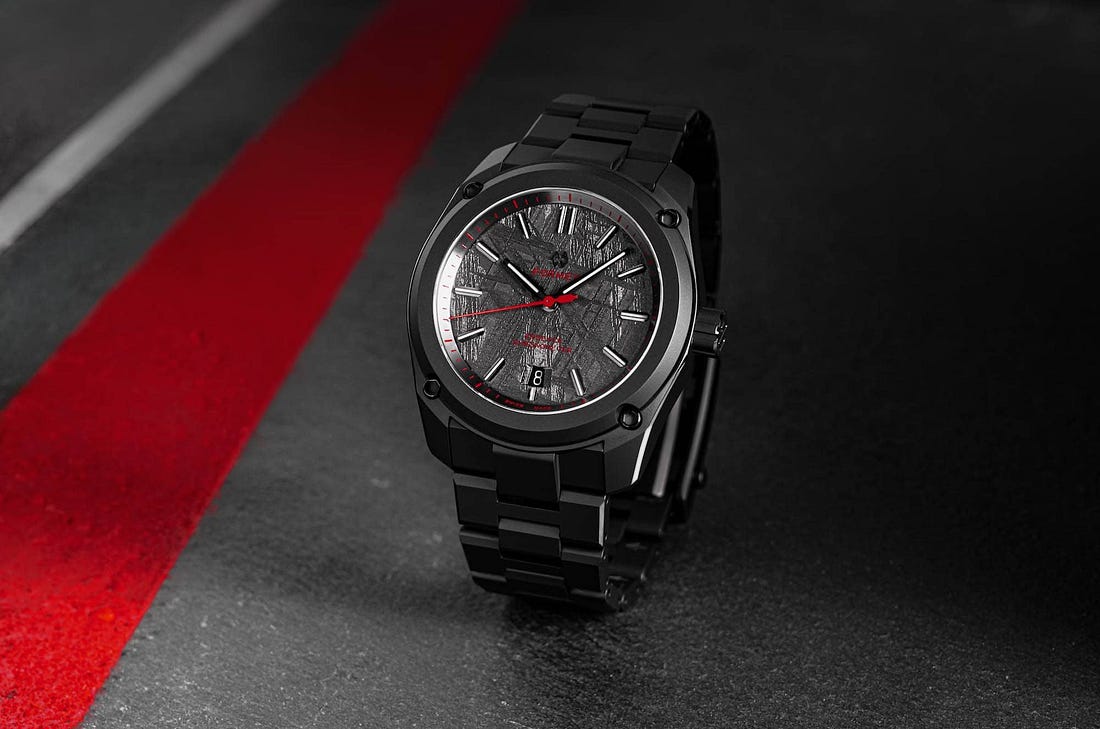
Formex Pairs Full Ceramic with a Dark Meteorite Dial
The Formex Essence Ceramica Dark Matter Red Shift combines a 41mm black zirconium-oxide case with a ceramic bracelet and clasp. Its black-gold-treated Muonionalusta meteorite dial moves between anthracite and near-black, with red accents adding contrast to the naturally patterned surface. The proprietary case suspension system remains part of the design, while a COSC-certified Sellita SW200-2 Power+ automatic movement provides the mechanical foundation. This is an ongoing model with production capped at 100 watches annually; first-year examples are individually numbered. Price: US$4,450.
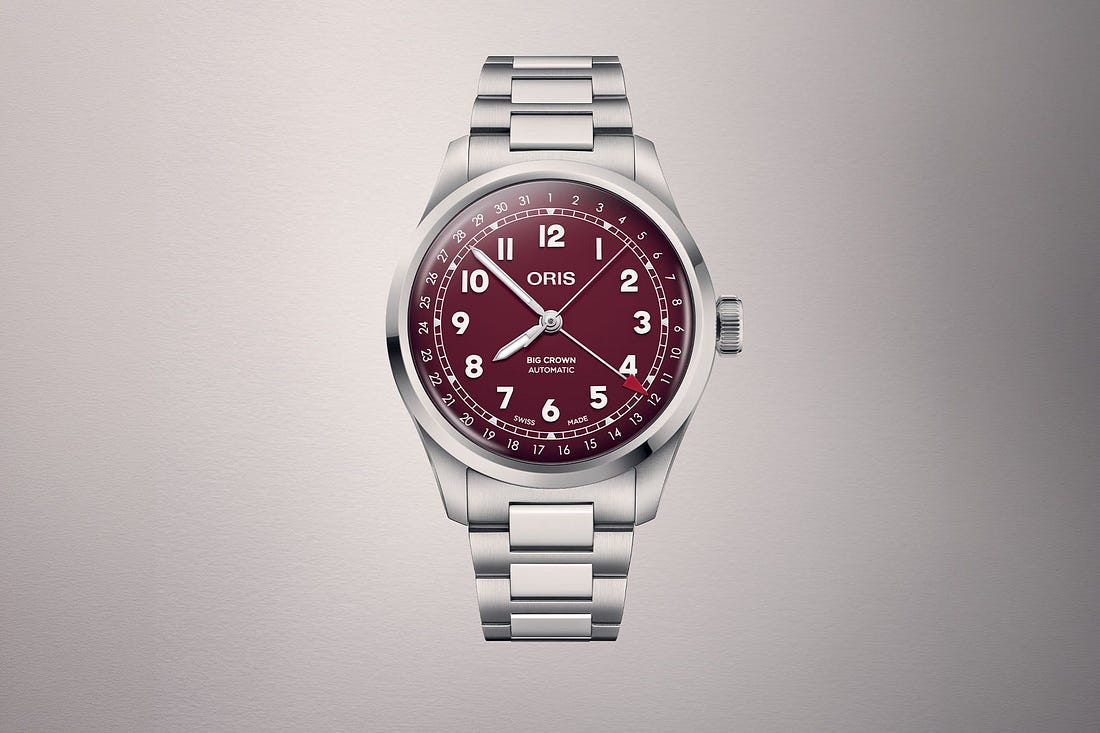
Oris Gives the Big Crown Pointer Date an Oxblood Dial
Oris adds a permanent oxblood-red option to its contemporary Big Crown Pointer Date collection. The 40mm stainless steel model pairs a smooth bezel and oversized fluted crown with a domed sapphire crystal and H-link bracelet. White Arabic numerals and luminous hands provide contrast, while the central pointer-date hand preserves the collection’s characteristic way of displaying the calendar. Inside is the automatic Oris calibre 754, based on the Sellita SW200-1, with a 41-hour power reserve; water resistance is 50 meters. Price: approximately US$2,439, converted from CHF 2,000.
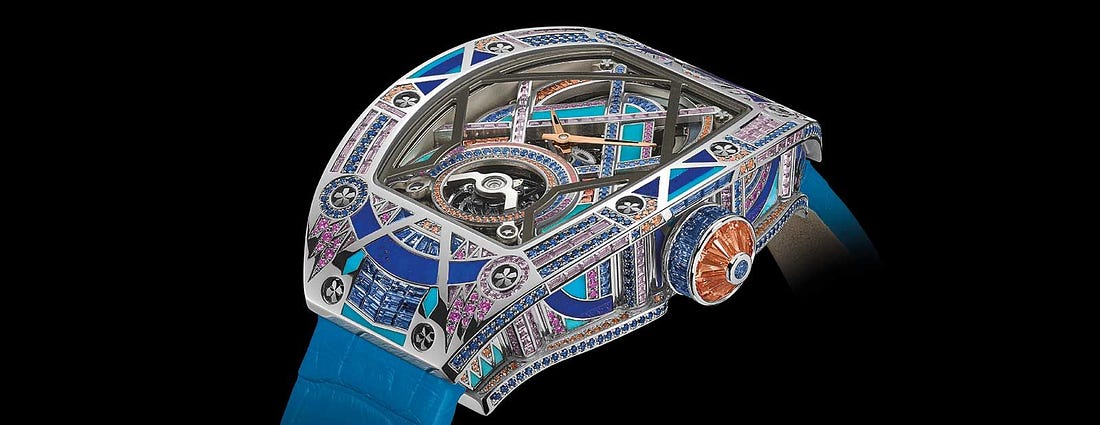
Richard Mille’s RM HJ-02 Makes Gem-Setting Part of the Architecture
Richard Mille’s second high-jewelry chapter comprises 12 unique RM HJ-02 watches organized around pink, violet, blue, and green color families. Designed under Cécile Guenat’s direction, each combines a gem-set white-gold tonneau case with a skeletonized automatic tourbillon movement. Across the watch, movement, and buckle, 1,399 precious and ornamental stones create an elaborate composition informed by Art Deco geometry. The in-house CRMT2 calibre supplies approximately 50 hours of power reserve, making the mechanical display an integral part of the jewelry design. Price in U.S. dollars: upon request; no public USD retail price has been disclosed.
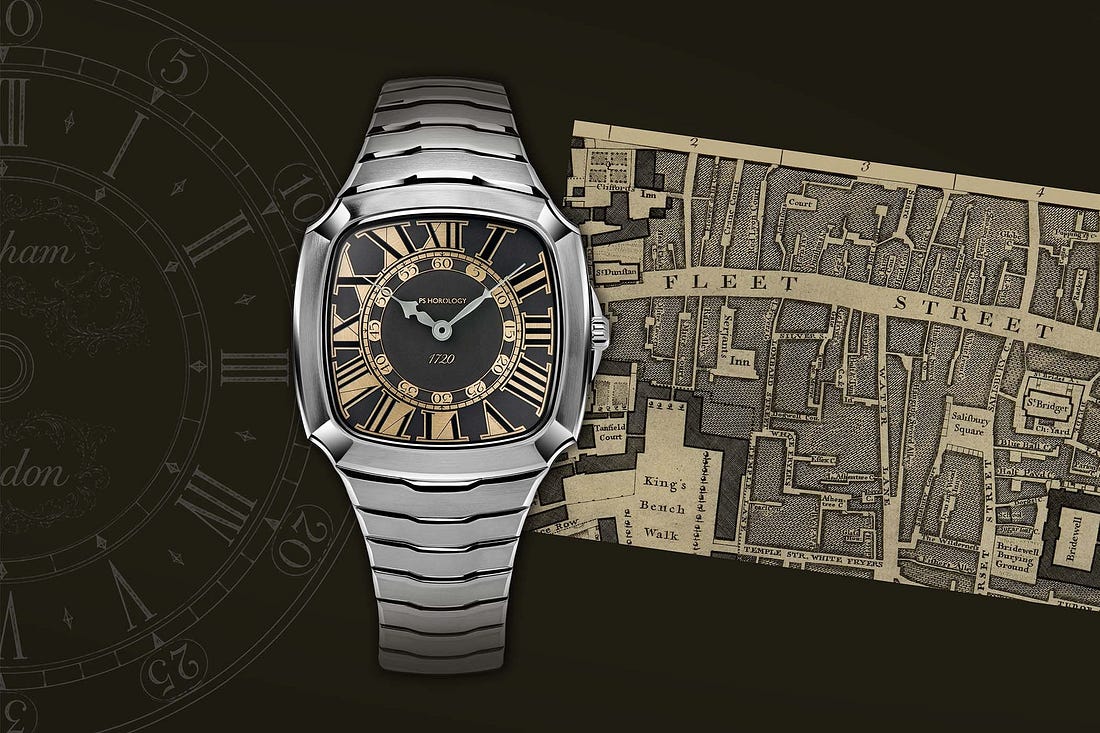
PS Horology’s Tsuba 1720 Brings George Graham into the Present
The PS Horology Tsuba 1720 draws on a George Graham pocket watch made in 1719–20, translating its gold dial, double chapter rings, Roman numerals, and beetle-and-poker hands into a contemporary integrated-bracelet watch. Peter Speake and creative director Farhana Safa place those references inside a scalloped cushion-shaped steel case measuring 38.3mm across and 8.91mm thick. An automatic Vaucher calibre 5401 micro-rotor movement provides 48 hours of power reserve, while the caseback carries a map and coordinates of Graham’s former Fleet Street workshop. Production is limited to 28 pieces, with delivery expected in February 2027. Price: approximately US$31,710, converted from CHF 26,000, excluding taxes and shipping.
Comparisons
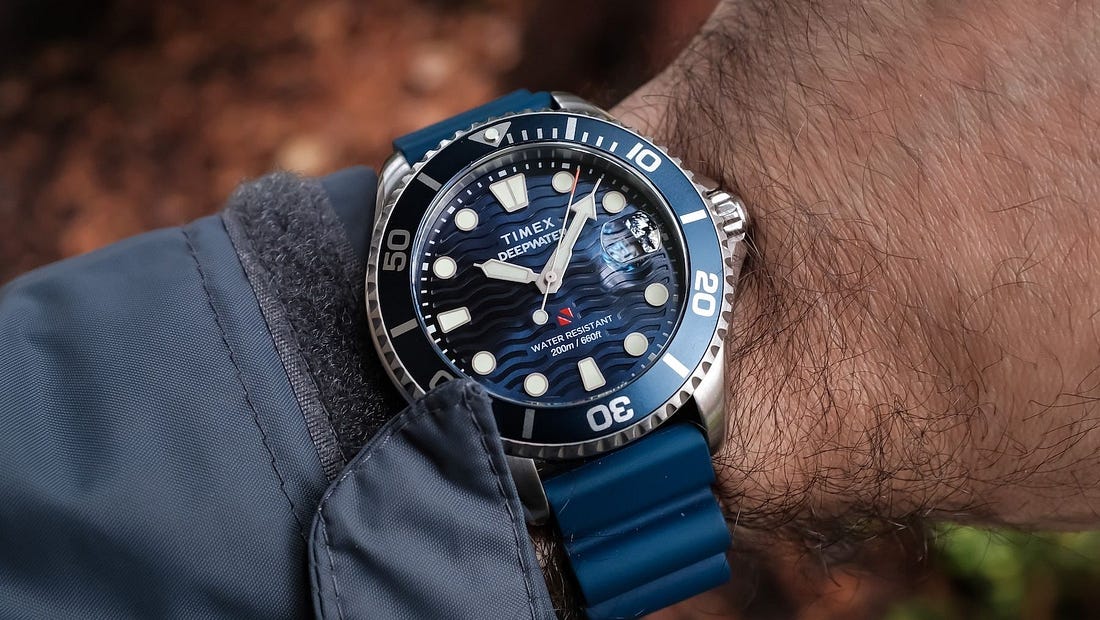
Seiko 5 Sports or Timex Deepwater? Choose the Qualities You Will Use
The Seiko 5 Sports SRPD51 and Timex Deepwater Meridian 200 approach affordable dive-inspired ownership from different directions. Seiko offers its familiar SKX-derived appearance and a hand-windable 4R36 automatic movement, accompanied by a Hardlex crystal and 100-meter water-resistance rating. Timex uses quartz power but adds a sapphire crystal, screw-down crown, and 200-meter rating.
The comparison favors Timex for practical water use, specifications, and low-maintenance ownership at its listed price. Seiko retains a strong argument for buyers who specifically want an automatic watch, enjoy the design, or value the possibilities for customization. The useful distinction is between the experience of owning a mechanical watch and the equipment that best supports the intended activity.
Reviews
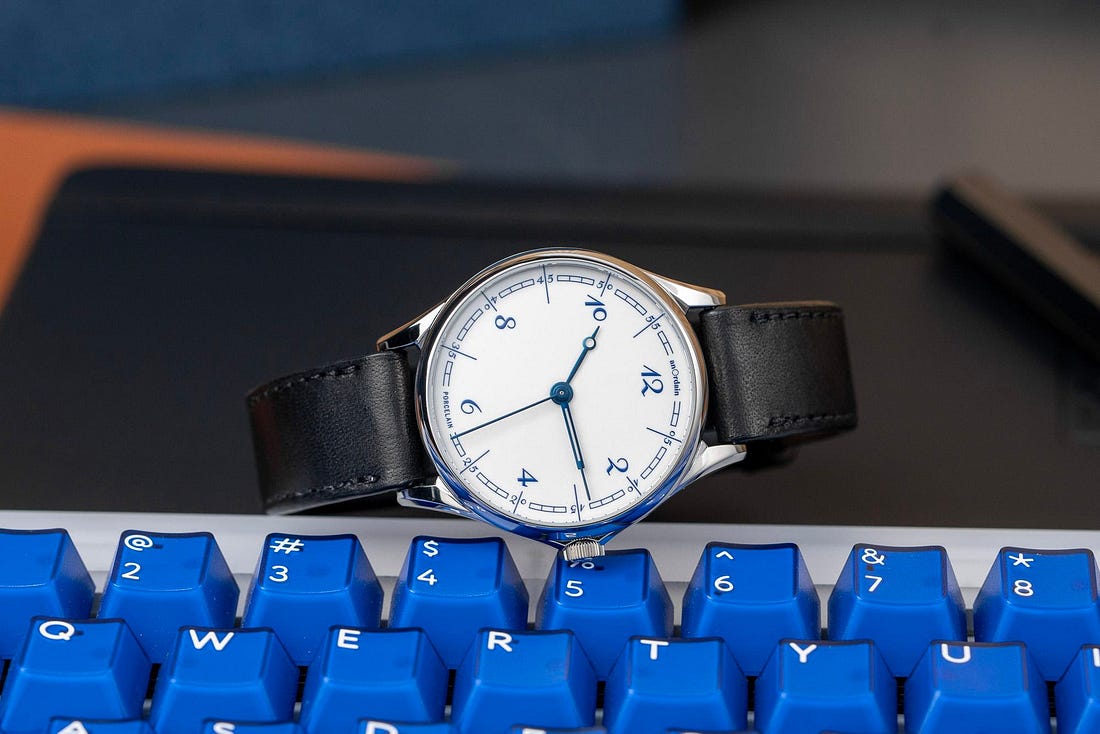
anOrdain’s Model 1 Porcelain Offers a Different Kind of Dial Craft
The anOrdain Model 1 Porcelain brings a lustrous white ceramic dial to the brand’s restrained 38mm steel watch. Its appeal lies in the finish, distinctive numerals, and small handmade irregularities that reward a closer look. Porcelain also changes the production equation: one craftsperson can reportedly make 30 to 40 dials a month, compared with roughly 50 enamel dials produced by a team of seven.
That greater capacity offers an appealing alternative to an enamel waiting list reportedly extending to 2030. The La Joux-Perret G101 movement can be ordered behind a solid caseback or with upgraded finishing and a sapphire display back. At US$2,950 or US$3,400, the Model 1 Porcelain gives buyers a choice centered on materials and execution, with a more achievable route to ownership.
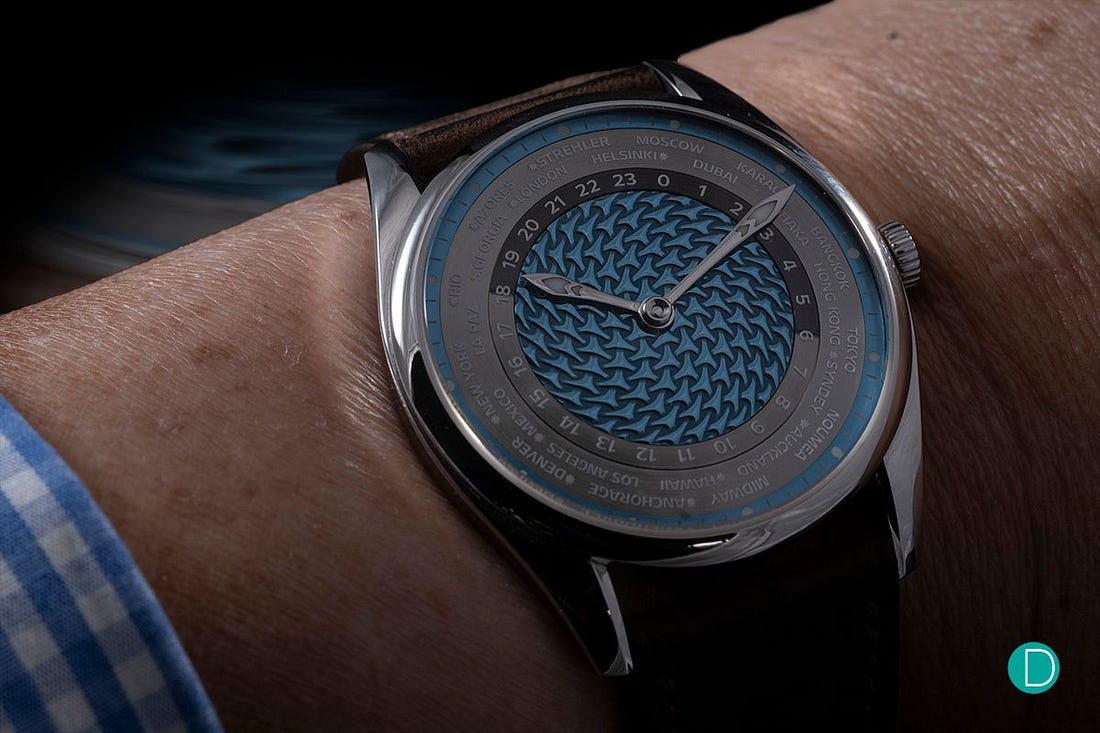
Strehler’s Säntis Worldtimer Makes Independent Watchmaking Practical
The Strehler Säntis Worldtimer brings a familiar Cottier-style world-time arrangement into an independently developed watch. Its rotating 24-hour ring and 24-city display sit within a 40mm steel case, with a laser-engraved, anodized titanium dial adding texture and color. The automatic SA-30W movement combines Strehler’s SA-30 base with a 41-component world-time module and at least 60 hours of power reserve.
At 9.7mm thick, with curved lugs and crown-operated adjustment, the watch gives its substantial mechanical content a wearable form. Dial colors can be customized, and city names can be altered at additional cost. Starting at CHF 24,750 before taxes—approximately US$30,185—the Säntis offers a more structured entry into Andreas Strehler’s work while preserving the attraction of independent authorship.
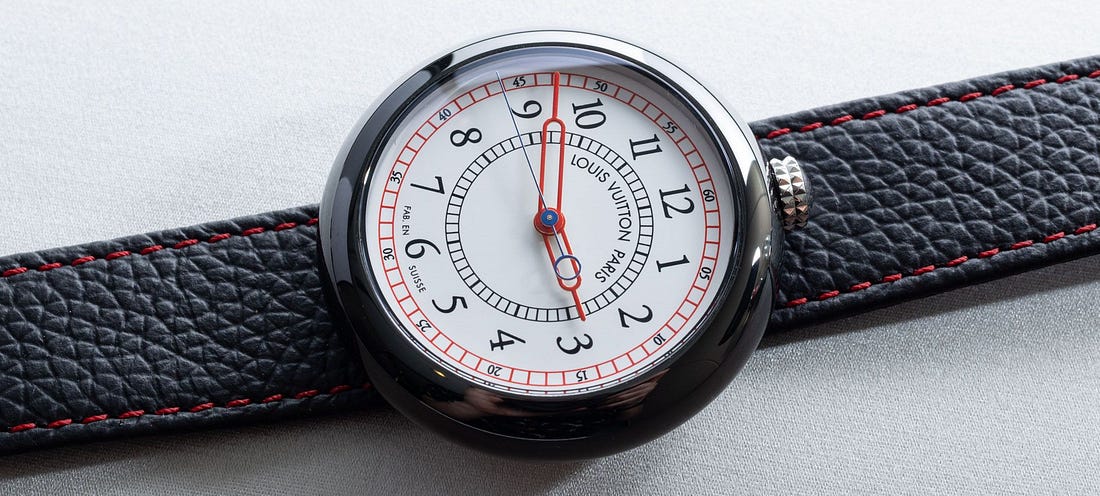
Louis Vuitton’s Monterey Ceramic Makes Room for Play
Louis Vuitton revisits its 1988 LVII design with the Monterey Ceramic, a 37mm lugless watch offered in polished black or deep green ceramic. The black version receives a white dial, while the green version pairs its matching dial with yellow hands. A crown at 12 o’clock and domed sapphire crystal reinforce the unusual silhouette.
An in-house automatic movement from La Fabrique du Temps gives the simple display a substantial watchmaking foundation. The detachable case can be worn on the wrist or attached to a leather tag, extending the design beyond conventional wristwatch presentation. Priced at US$22,900, the non-limited Monterey asks buyers to place considerable value on its shape, materials, and distinctly Louis Vuitton approach to wearing a watch.
Events
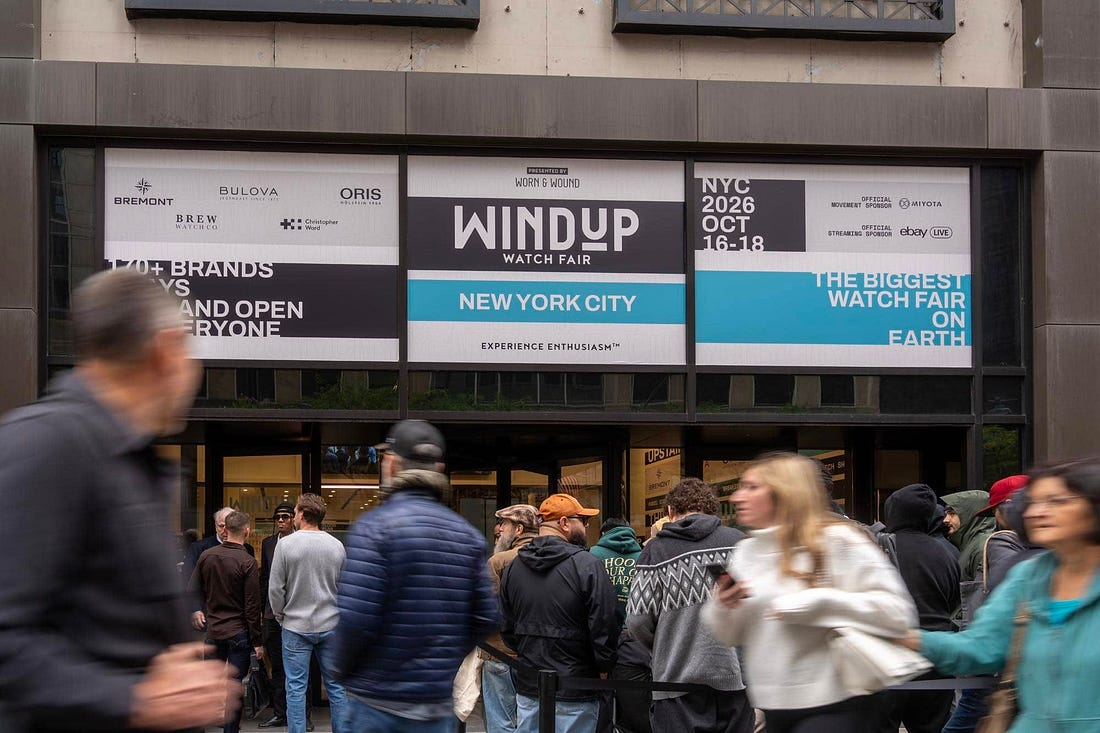
Windup New York’s Success Brings Growing Pains
The 2026 New York Windup Watch Fair demonstrated how far the event has traveled since its beginnings as a small SoHo gathering in 2015. More than 40 watches debuted, over 100 members of the press and creator community registered, and the fair helped anchor a broader New York Watch Week. Its growing scale reflects the strength of public interest in watches and the importance of meeting brands in person.
That popularity also exposed limitations. Venue occupancy restrictions created long lines, and some visitors were unable to enter. Organizers apologized, invited feedback, and promised better preparation for the next edition. The challenge now is to make access and organization keep pace with an event whose community has become one of its strongest attractions.

What Can US$250 Buy at Windup New York?
James Stacey and Tim Jeffreys turn a visit to Windup into a small spending competition, each working with a US$250 budget. With more than 160 watch, technology, outdoor, and travel brands represented at Center415, their choices extend beyond watches to straps, gadgets, and other accessories.
The exercise captures an accessible side of a fair where admission is free and discovery is part of the attraction. A limited budget encourages closer attention to the smaller purchases that can make collecting more enjoyable. Viewers get to compare the resulting hauls and decide who made the better use of the money.
Podcasts
Fratello On Air: Understanding Japan’s Watch Market
Michael and Balazs explore the opportunities and conventions that make Japan such an absorbing place to shop for watches. The conversation covers the country’s enormous selection, enthusiasm for limited editions, Japan-only releases, and its importance to brands such as Sinn. Both hosts draw on experiences buying in person and through online sellers.
Condition and expectations receive particular attention. Vintage examples can be exceptionally well preserved, while modern watches may have received a light polish to restore a fresh appearance. Prices are generally firm, and online shoppers should take seller ratings and the available buyer protections seriously. The episode offers useful context for understanding the market before treating an attractive listing as an uncomplicated bargain.
Videos
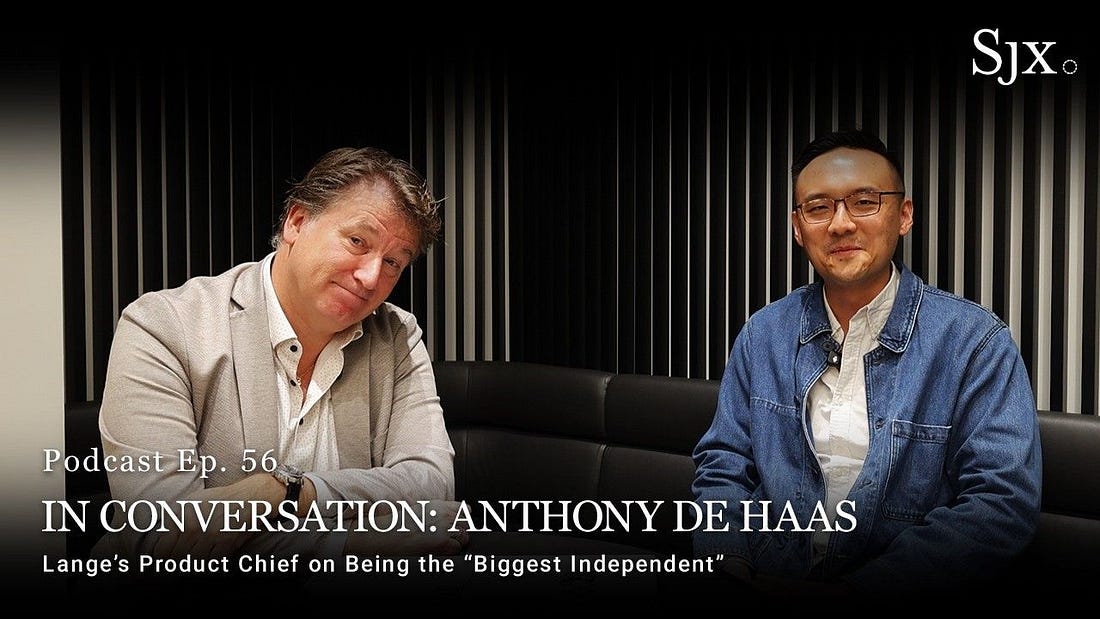
SJX Watches: Anthony de Haas on Keeping A. Lange & Söhne Distinctive
Anthony de Haas, Lange’s longtime head of product development, discusses how the brand approaches new watches and familiar complications. The Datograph Perpetual provides a starting point, with its platinum bracelet and discreet diamond indices demonstrating how a known model can take on a different character.
The conversation also considers Glashütte’s collaborative culture, movement design and finishing, and the challenge of retaining a small-manufacture identity within Richemont. Collector demand does not automatically translate into greater production, giving the discussion particular relevance for anyone wondering why desirable watches and bracelets remain difficult to obtain.
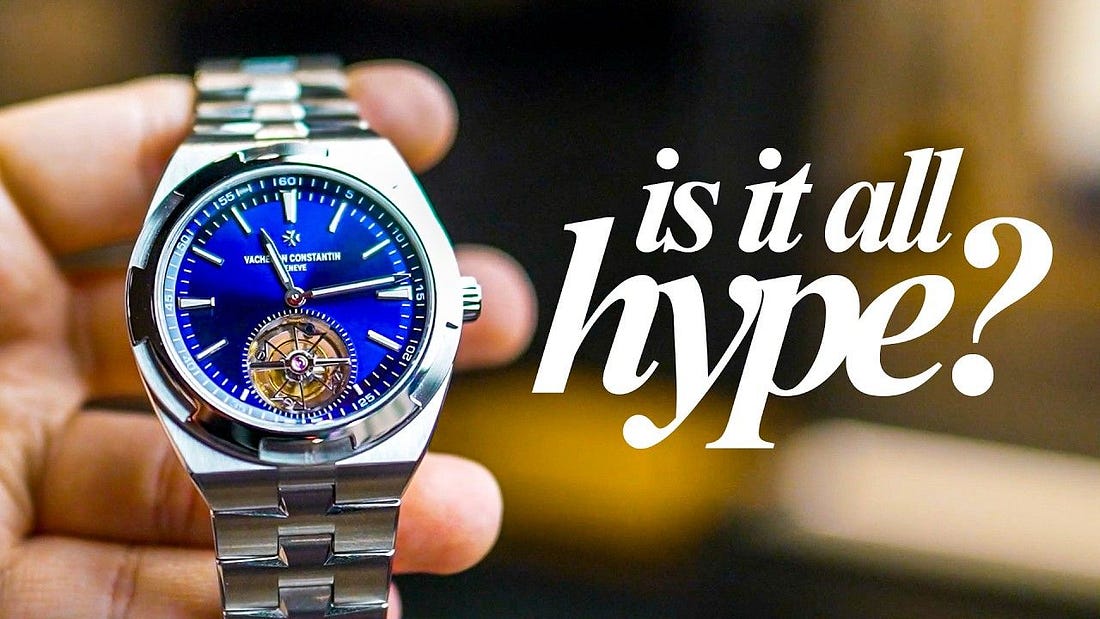
Burdeens Jewelry: A US$130,000 Aquanaut Against an US$80,000 Overseas Tourbillon
Burdeens compares the white-gold Patek Philippe Aquanaut Chronograph ref. 5968G with a steel Vacheron Constantin Overseas Tourbillon. The prices in the video’s framing create an immediate question: how should a collector weigh a highly sought-after sports chronograph against a watch offering a more elaborate regulating mechanism?
The discussion examines the influence of reputation, demand, and market enthusiasm on the way watches are valued. It is a useful prompt to identify which part of a purchase matters most—design, complication, wearing experience, or the confidence associated with a particularly desirable reference.
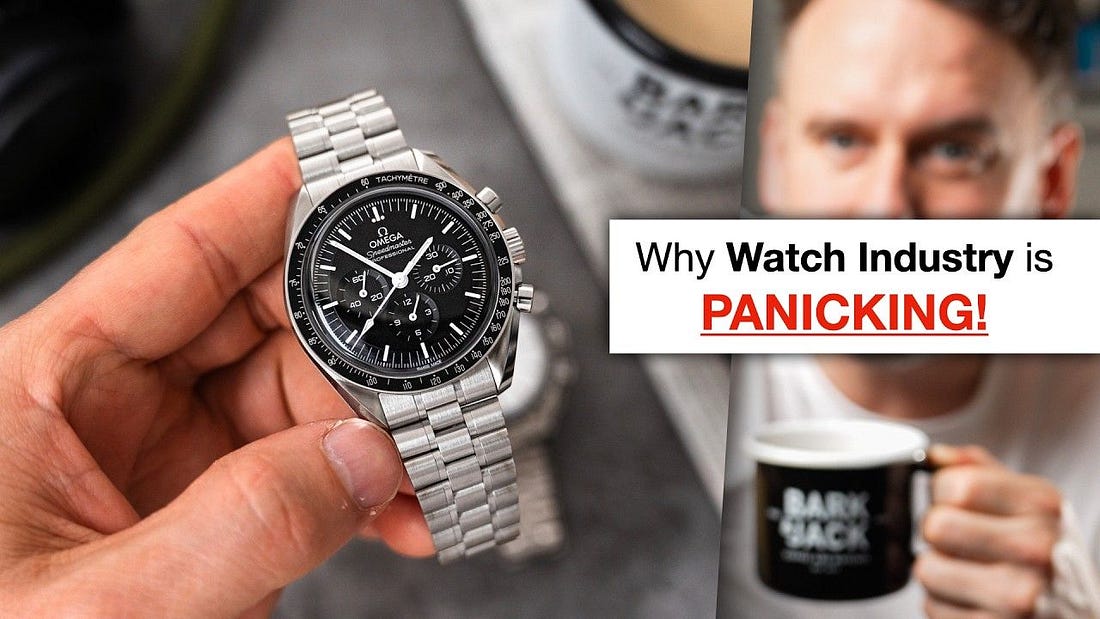
Adrian Barker: Why Luxury Watches Are Getting Cheaper
Adrian Barker examines how watch brands are responding to weaker enthusiasm after years of price increases. Panerai, Omega, and Zenith provide examples of changes in pricing and product specifications intended to renew buyers’ interest.
The larger question is what a more attractive price actually buys. Changes to movements, construction, materials, or positioning can alter the proposition even when the watch remains visually familiar. The video encourages collectors to examine those details when deciding whether a new offering represents better value.

A Podcast About Watches: The Brands That Deserve a Second Look
This discussion revisits brands whose reputations can obscure the breadth of their achievements. Longines’ precision timing and chronographs, Universal Genève’s wider design history, and Movado’s movement-making and curved-case watches all receive attention.
The hosts also consider Hublot’s design influence, Girard-Perregaux’s high complications, Zenith’s pursuit of accuracy, Ulysse Nardin’s experimentation, Chopard’s L.U.C. watchmaking, and Richard Mille’s engineering. The common thread is the value of examining particular watches and historical contributions before letting a broad brand stereotype settle the matter.
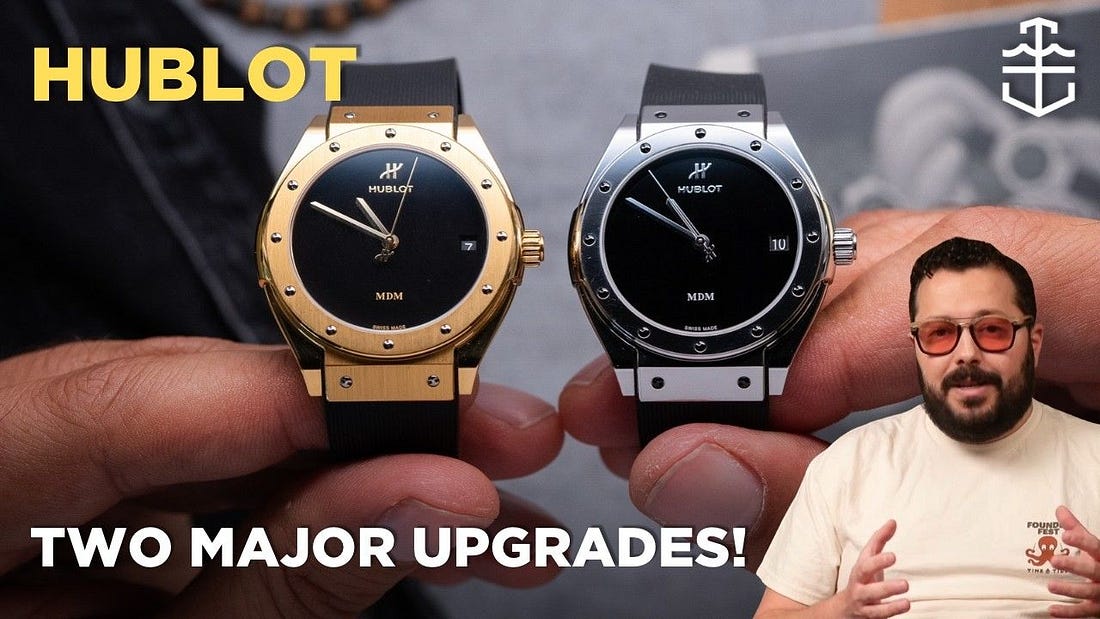
Time+Tide: Hublot’s Classic Fusion Tributo Returns to the Original Idea
The Classic Fusion Tributo revisits Hublot’s 1980 MDM formula: a gold case, black rubber strap, restrained black dial, date display, and twelve domed bezel screws. Its appeal depends on how clearly those original choices still communicate the brand’s identity.
The updates address everyday ownership as well as appearance. A Zenith Elite-based HUB1711 automatic movement provides 50 hours of power reserve, while the 38mm case measures 9.5mm thick and offers 100 meters of water resistance. Time+Tide’s hands-on examination considers how successfully the watch brings those improvements into the original design.

Britt Pearce: Six Watches That Remain Popular for Good Reasons
Britt Pearce revisits six enduring collector favorites: the G-Shock Square, Omega Seamaster Diver 300M, Tudor Black Bay family, Omega Speedmaster Professional, Cartier Tank, and Rolex Explorer. Their continued appeal comes from different combinations of practicality, recognizable design, versatility, and character.
The discussion also addresses the gap between judging a watch from a distance and trying it on. A model that initially appears too familiar, too small, or too straightforward can make a stronger impression on the wrist. These are watches whose popularity invites a closer look at the qualities that have sustained it.
BuyingTime at Auction
After a US$260,000 Richard Mille No-Sale, Patek Philippe’s 5204R-011 Tests the Market for Grand Complications
Yesterday’s November 3 auction saw the 2025 Richard Mille RM 65-01 Automatic Split Seconds Chronograph in carbon reach US$260,000 without selling. Today’s offering takes the split-seconds complication in a more traditional direction: a 2023 Patek Philippe ref. 5204R-011 in rose gold with a slate-gray sunburst dial. Located in the United States, the watch is offered with box, papers, product literature, and hangtags. The supplied condition report describes an excellent dial and minor wear to the case, bezel, and bracelet or fastening components.
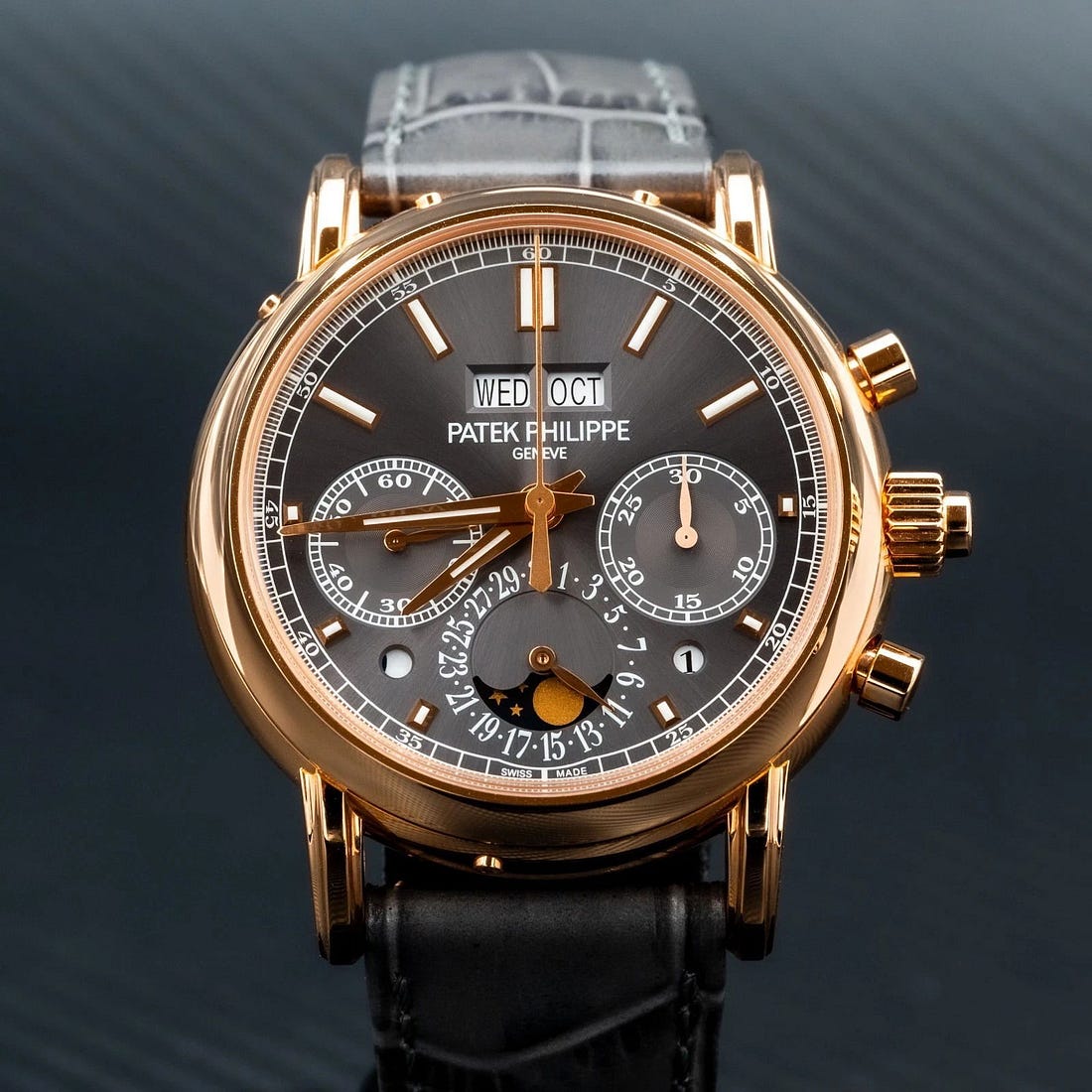
The 5204 family arrived in 2012, succeeding the ref. 5004 with Patek Philippe’s own manually wound perpetual-calendar split-seconds chronograph movement. The slate-gray 5204R-011 followed in 2021, pairing rose gold with a more contemporary dial and matching strap. Its calibre CHR 29-535 PS Q uses two column wheels and a horizontal clutch, combining traditional construction with patented refinements. Alongside the perpetual calendar and moon phase, its rattrapante mechanism allows one chronograph seconds hand to stop for an intermediate reading while the other continues, then catch up at the push of a button.
Published market references show why valuation requires care. A circa-2022 example of this same reference sold at Phillips in May 2024 for HK$1,587,500, approximately US$203,000 including buyer’s premium. A currently advertised dealer example is asking US$254,950. Those figures provide useful auction and retail context, but an asking price is not a completed transaction, and neither establishes the value of today’s watch by itself. Condition, service history, originality, and the completeness of its accessories can meaningfully affect the result.
For this example, the box and papers strengthen the presentation, while the reported minor wear should be assessed against case definition and any polishing. The supplied accessory list does not establish whether the additional solid caseback and calendar-setting tool are included, and the movement’s service history deserves attention given its complexity. The attraction is substantial: two demanding complications, a refined rose-gold case, and a dial that makes a dense display unusually approachable. The auction is scheduled to end at 12:05 p.m. Eastern today, Wednesday, November 4, 2026.
Current bid: $137,500
Losing Time
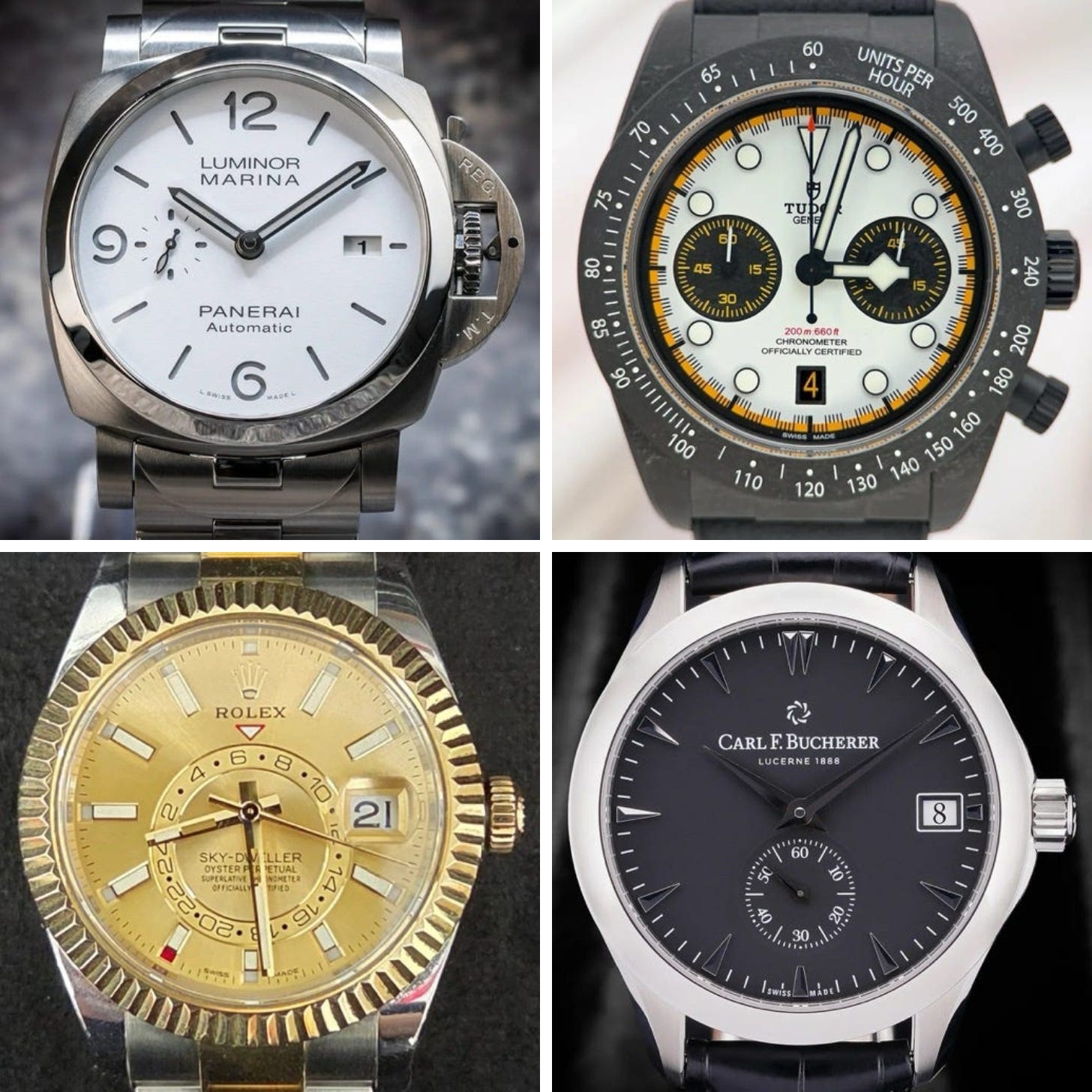
Today’s Big Losers at Auction on Grailzee
Four watches, four failed sales, and four reminders that an asking price is an expression of hope—not a binding agreement with reality.
The 2024 Panerai Luminor 44MM White Dial Steel Bracelet (PAM01564)attracted a $4,200 bid against a $7,800 ask, falling $3,600 short, or 46.2% below asking. The white dial may have been crisp, but the market’s response was positively frosty. Bidders offered barely more than half the seller’s target.
The 2026 Tudor Black Bay Chrono Carbon 26 “Racing Bulls” Limited Edition (79377KN) posted a $5,050 high bid against an $8,800 ask—a $3,750 shortfall, or 42.6% below asking. Apparently, carbon construction, racing credentials and limited-edition status could not get this one across the finish line. Exclusivity makes a good sales pitch; it does not automatically make an $8,800 buyer.
The 2021 Rolex Sky-Dweller 42MM Champagne Dial Two-Tone Oyster Bracelet (326933) drew $12,700 against a $21,500 ask, missing by $8,800, or 40.9%. That was the largest dollar gap of the four. It was also the smallest percentage miss, which qualifies as a victory only in a room full of unsuccessful auctions. Even the Rolex name could not bridge this particular gulf between expectation and bidding.
The Carl F. Bucherer Manero 40.6MM Black Dial Leather Strap (00.10917.08.33.01) received a $2,100 high bid against a $6,099 ask, leaving a $3,999 gap, or 65.6% below asking. Bidders reached just 34.4% of the target—the weakest showing here by a considerable margin. The seller brought a price; the room brought a different opinion.
Together, the four watches carried $44,199 in asking prices and attracted $24,050 in final bids, a combined 45.6% shortfall. These results suggest substantial pricing resistance among the bidders present, across both recognizable names and more specialized offerings. They do not establish each watch’s definitive market value, but gaps of roughly 41% to 66% suggest more than a little last-minute hesitation. For these four listings, the sellers and bidders were shopping in different price brackets—and nobody volunteered to cross the aisle.
Closing Time
Today’s watches offer plenty of reasons to look more closely: a carefully made porcelain dial, a practical combat diver, a familiar design seen with fresh eyes, or a movement whose complexity rewards years of study.
Find the detail that matters to you, enjoy the watch already on your wrist, and keep a little room for the next discovery.
Thanks for spending part of your day with Buying Time. We’ll see you tomorrow.


