Issue #287 | Buying Time - November 10, 2026
Geneva’s record auction, independent watchmaking’s creative pulse, and a Vacheron that puts its calendar on display.
BuyingTime in 45 Seconds
Phillips’ US$112.3 million Geneva sale delivers a spectacular headline, but the more revealing question is where collectors will spend next. New York is making its case as a destination for trophy watches, while smaller makers compete through distinctive materials, handwork, and designs that could scarcely be mistaken for anything else.
Today’s new watches range from Awake’s Vietnamese lacquer dials and Ming’s crystallised titanium dress watch to Bell & Ross’s airborne radar display and Garrick’s exceptionally scarce S8. Our reviews explore several approaches to exposed mechanics, alongside a Breitling diver with everyday compromises and a Sinn designed for emergency command teams.
Beyond the watches, we examine who controls creativity inside luxury brands, visit collector gatherings in New York and Miami, and hear how Nomadic is building an Irish watch business. Yesterday’s limited-edition Moser reached US$38,500 without meeting its reserve. Today’s auction features a 2024 Vacheron Constantin Traditionnelle Complete Calendar Openface in white gold, with bidding scheduled to end at 4:25 p.m. EST.
Time Graphing Today’s Watch Universe
The Price of Attention—and the Value of Looking Closer
A US$112 million watch auction has a way of taking over the room. The number is enormous, the watches are exceptional, and the results seem to offer a clear verdict on the health of collecting. People still want extraordinary watches, and some are prepared to pay extraordinary amounts for them.
That is certainly one message from Phillips’ record Geneva sale. Selling all 217 lots, establishing 24 world auction records, and averaging more than half a million dollars per lot is a remarkable performance. F.P. Journe’s contribution alone would have made a substantial auction. The appetite for the rarest and most distinctive objects remains formidable.
Yet a trophy sale answers a particular question: What will determined bidders pay for this selection of watches, on this occasion? It tells us less about the experience of buying an ordinary production watch, selling a recently purchased complication, or deciding whether a new release deserves a place in a collection. Those markets overlap, but they move at different speeds.
Our own auction result supplies a useful reminder. Yesterday’s Moser Pioneer Flying Hours attracted a US$38,500 bid and still failed to sell. That result can coexist comfortably with an extraordinary Geneva weekend. A desirable object still needs a buyer and seller who agree on its value.
Even geography now enters that calculation. The possibility that New York could challenge Geneva’s auction dominance reflects more than civic rivalry. Import duties, currency movements, and the location of a watch can influence what a collector is willing to pay. The romance may reside in the dial and movement, but the invoice includes the practical details.
The more interesting thread running through today’s issue is how watches earn our attention before a price is attached to them.
Consider Awake’s lacquer-and-silver-leaf dials. Their appeal depends on a process, a surface, and the changing relationship between color and light. Ming’s 51.01 Halo approaches the same challenge through material texture and restrained proportions. Garrick’s S8 invites us to spend time examining the mechanism and the handwork around it. Each offers a specific reason to look again.
That specificity matters. Watchmaking has an immense archive of successful designs, and the temptation to borrow reassurance from it is understandable. An original idea introduces uncertainty. It asks customers to respond to something they may not already recognize as desirable.
That is why today’s argument about the diminished authority of watch-brand CEOs deserves attention. If the people responsible for a brand cannot make meaningful decisions about its products, teams, or direction, where does creative conviction come from? A committee can approve a forecast. Giving an unfamiliar watch enough time to find its audience requires a different kind of confidence.
Collectors have responsibilities in that relationship, too. We say we want originality, then sometimes judge every unfamiliar design against the commercial success of a familiar one. We ask for smaller production and greater handwork, then become impatient with delivery schedules or prices. None of that makes criticism unfair. It does make understanding the object—and the circumstances of its creation—more rewarding.
The engraved-case roundup offers an especially appealing invitation to broaden our attention. Cases become canvases for landscape, mythology, regional craft, and architectural experimentation. The interest continues around the sides of the watch, beyond the photograph most likely to appear in a social-media feed.
And then there are the watches that become more interesting because someone wears them into a room. The Hodinkee Happy Hour report captures collecting as a shared activity, with vintage pieces, modern complications, and independent designs appearing together over beer and pizza. A conversation can explain an attachment that a specification sheet never will.
The Women in Watches discussions in Miami point toward the same lesson from the industry’s side: listen to people. Ask what they enjoy, what they need, and how they want to participate. Assumptions about customers are a poor substitute for knowing them.
Enjoy the auction records. They are part of the spectacle and history of this hobby. But save some attention for the lacquer worker, the case engraver, the small workshop, and the collector with an unexpected watch and a good story. The watch universe becomes much larger when we give ourselves more than one way to measure it.
-Michael Wolf
News
Phillips Geneva Delivers a Record US$112 Million Watch Auction
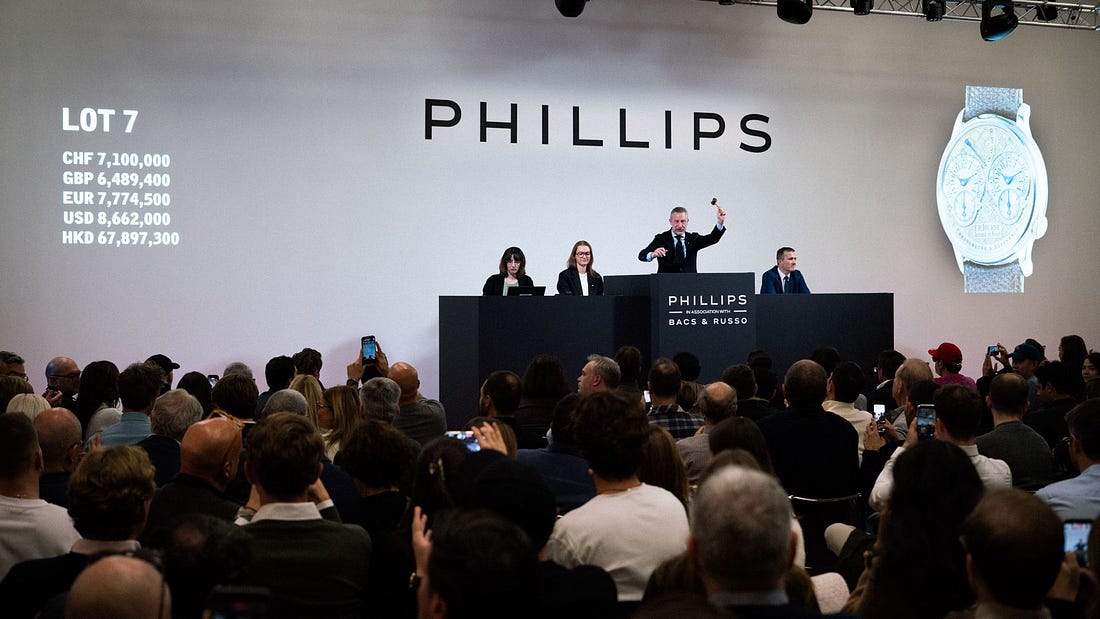
Phillips’ Geneva Watch Auction XXIV achieved CHF92 million, approximately US$112.3 million, with every one of its 217 lots finding a buyer. The sale established 24 world auction records and produced an average selling price above US$500,000. Seventeen lots exceeded CHF1 million, helping push the total to more than twice the comparable May 2025 sale.
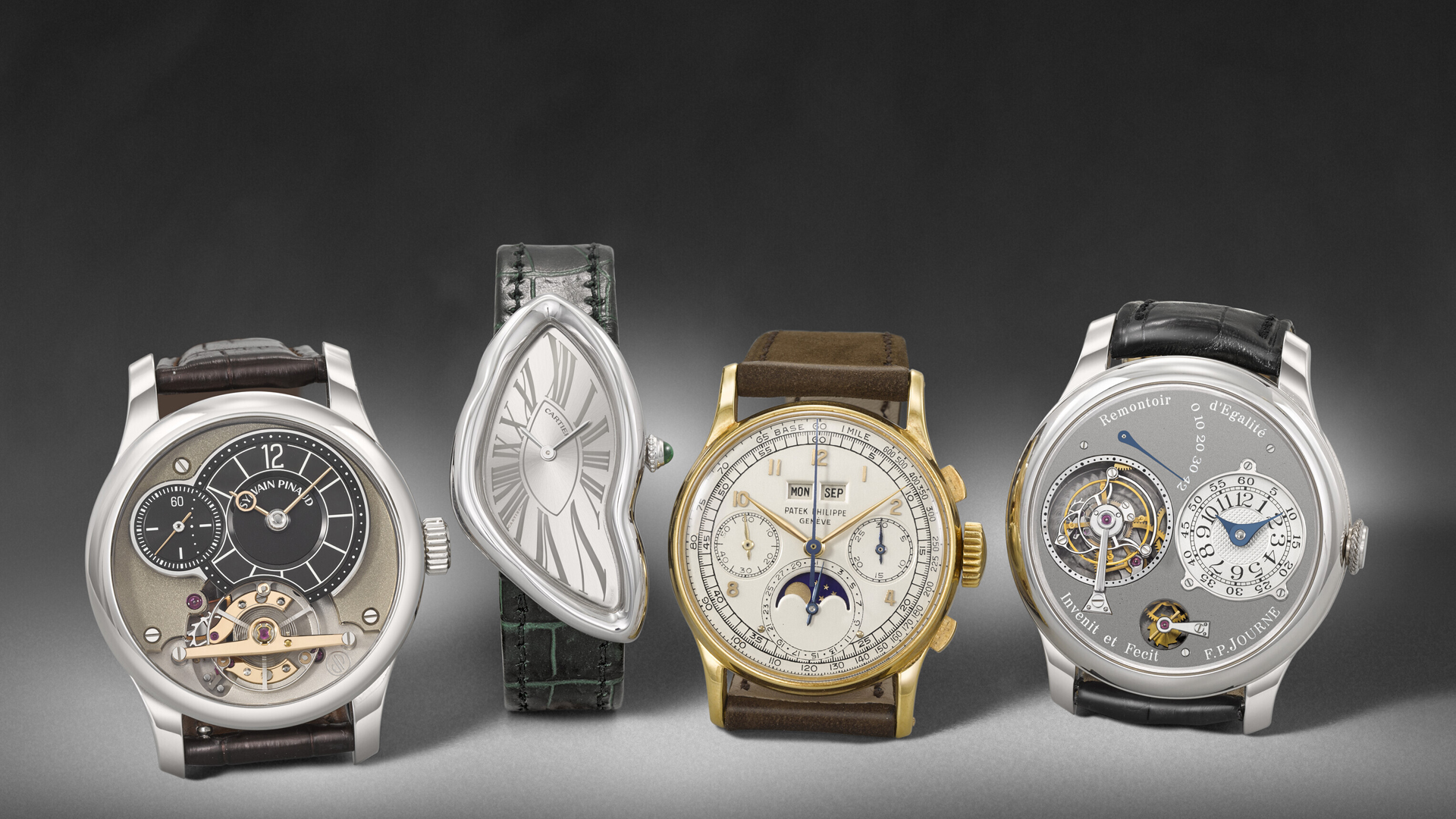
F.P. Journe supplied much of the momentum, generating CHF31.8 million across 13 watches. A platinum Chronomètre à Résonance “Régence” brought US$10.59 million, while other major results included US$7.64 million for a Patek Philippe ref. 1436, US$5.87 million for a Cartier mystery clock, and US$2.4 million for a Philippe Dufour Simplicity.
The results demonstrate the purchasing power still concentrated around exceptional watches. They also underline the importance of selection: a record trophy auction can flourish even while prices elsewhere in the rare-watch market become more measured.

Can New York Challenge Geneva for Trophy Watch Auctions?
Geneva has the latest record, but New York is building a compelling argument of its own. At Phillips’ spring auctions, New York’s average selling price reached US$479,792, ahead of Geneva’s US$430,036. That comparison predates Geneva’s latest blockbuster, but it illustrates the strength of American demand.
Import duties on Swiss watches and a weaker dollar may make watches already inside the United States more attractive to American collectors. Phillips has encouraged domestic consignments while reporting continued participation by American bidders in overseas sales.
Its December New York auction will provide an important test. With 196 lots, including significant Patek Philippe and F.P. Journe watches, Phillips describes it as the highest-value watch auction assembled in the United States. The question is whether favorable circumstances and exceptional consignments can translate into a lasting shift in the auction map.
Features
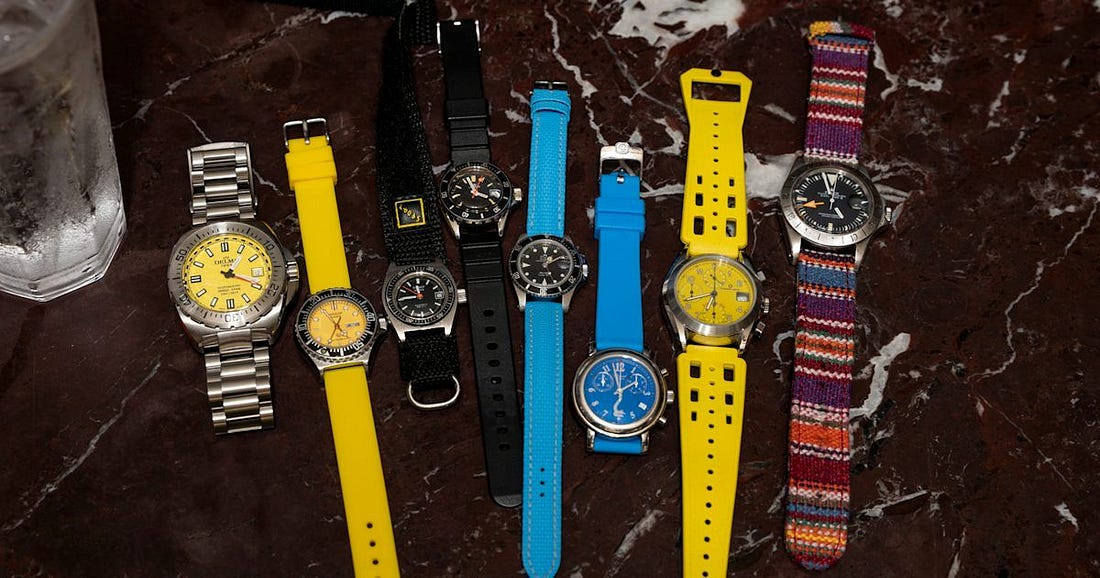
Watch Spotting at Hodinkee’s October Happy Hour
Hodinkee’s Happy Hour at Grotta Local brought a sociable interlude to New York Watch Week. Guests gathered for craft beer, pizza, and conversation amid a calendar that also included the FHH Watch Summit, WatchTime, Windup, and Indies.NYC.
The wrists supplied plenty of variety. A Vacheron Constantin Malte Dual Time Regulator and an A. Lange & Söhne Langematik Perpetual appeared alongside vintage Rolex, Universal Genève, Seiko, Audemars Piguet, and Movado. A Patek Philippe Nautilus Perpetual Calendar, Rolex Daytona “Panda,” and Ming 57.05 Comet added further range.
The pleasure of the report lies in that mixture. Familiar favorites and unexpected choices share the same setting, showing how much collecting expands when watches become a starting point for conversation.

Cool Cases: Four Watches That Tell Their Stories Around the Edges
A watch case can contribute much more than protection and a recognizable silhouette. This selection examines four approaches that give the exterior its own narrative, moving from traditional engraving to sculptural construction.
Ralph Lauren’s American Western Cushion uses aged, hand-engraved sterling silver and Southwestern motifs, with turquoise adding another dimension in one version. Grand Seiko’s platinum SBGZ011 carries waterfall-inspired engraving across both case and dial, creating a continuous decorative landscape.
Roger Dubuis turns to Arthurian legend for the engraved pink-gold Metamorph Merlin. Parivas takes another route with the Exo.1’s 3D-printed steel exoskeleton. Together, the watches encourage a closer look at the surfaces and structures surrounding the display.

According to Ariel: Why Watch-Brand CEOs Have So Little Power
Ariel Adams argues that the title of chief executive increasingly comes without the authority needed to give a luxury watch brand clear direction. Decisions about products, budgets, marketing, and hiring may be dispersed among owners, investors, and other stakeholders whose priorities do not always align.
That arrangement can leave a CEO responsible for results while limiting the decisions that shape them. It can also weaken the willingness to take creative risks—the very risks that can give a watch brand its identity and emotional appeal.
The essay makes the case for restoring meaningful authority to capable leaders. Its central concern is how an industry built on imagination can sustain originality when its management structures increasingly reward caution.
New Watches
Converted prices are approximate U.S. dollar equivalents using November 9 exchange rates. They retain the original quoted tax basis and are not U.S. retail quotations.
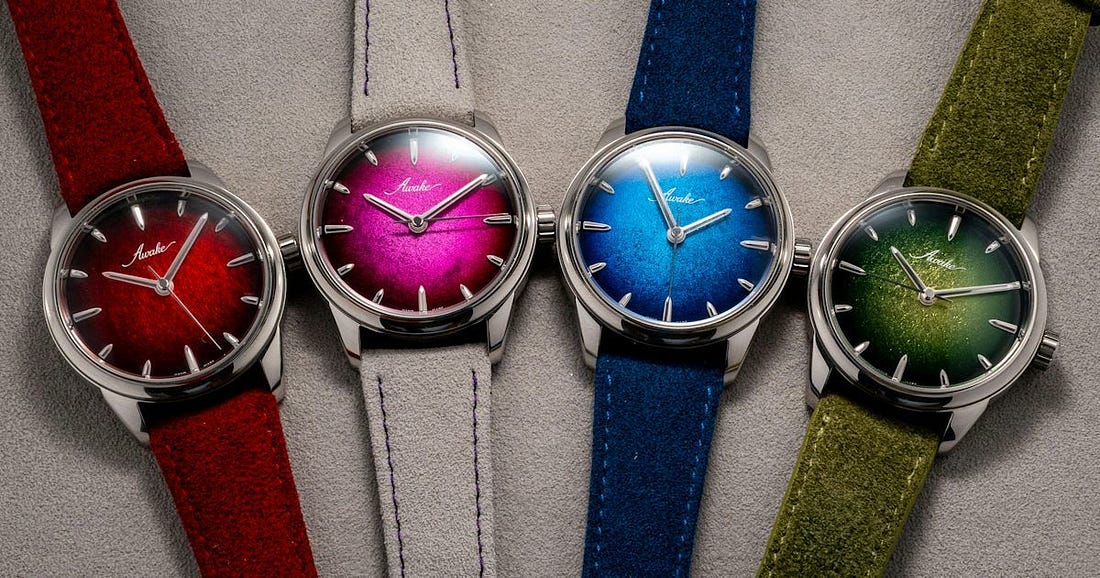
Awake Sơn Mài Silver Leaf: Vietnamese Lacquer With New Depth
Awake expands its Sơn Mài Silver Leaf collection with Java Green, Gentian Blue, and Indian Red as permanent colors, plus a Purple Viola edition limited to 200 pieces. Made in Hanoi, each gradient dial combines silver leaf with roughly twelve lacquer layers and more than ten hours of application and polishing. The redesigned 38mm steel case provides 100-meter water resistance, while sculpted markers sit above Super-LumiNova BGW9.
The automatic La Joux-Perret G101 supplies a 68-hour power reserve and features a tungsten rotor. Each watch comes with a handcrafted French strap and a micro-adjustable buckle, with deliveries expected to begin in late November. Production of each permanent dial color is approximately 100 annually, reinforcing the importance of the handwork behind the appearance. Price: approximately US$2,960, including the VAT contained in the original European price.
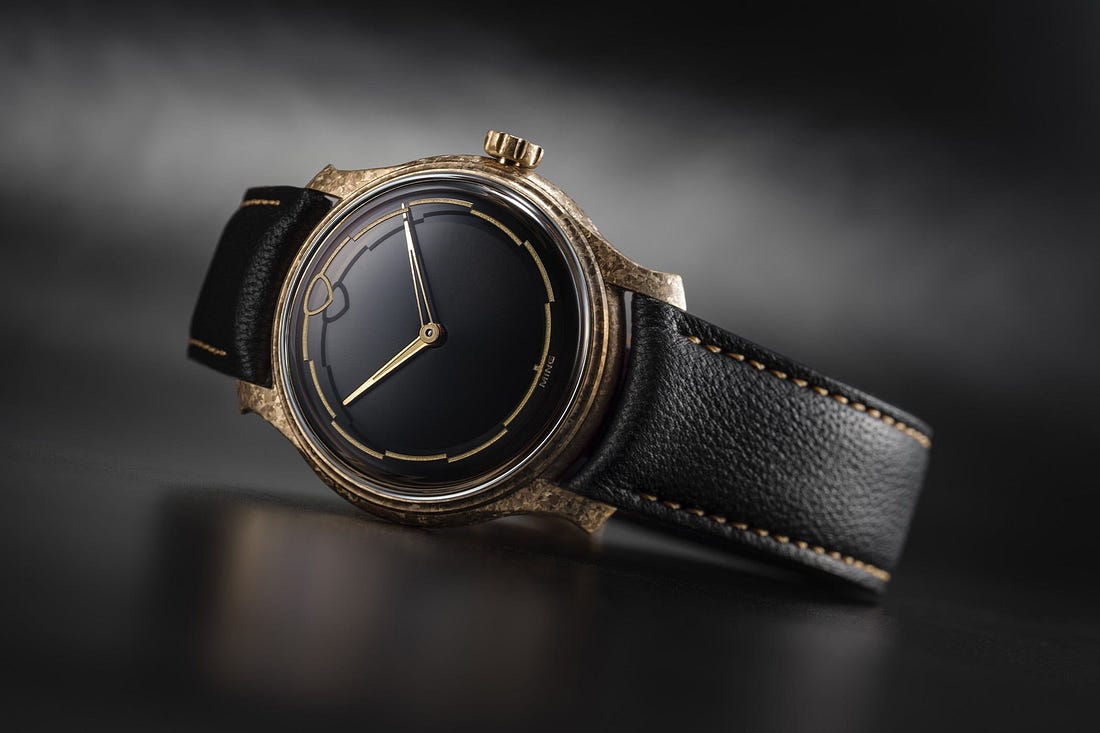
Ming 51.01 Halo: Crystallised Titanium in a Slim Dress Watch
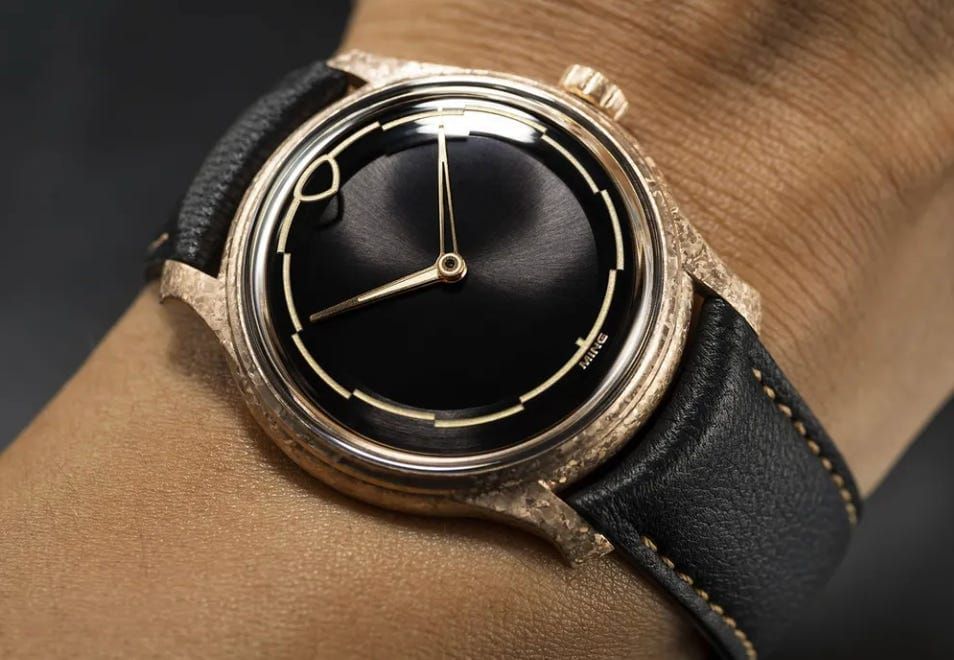
Ming’s 51.01 Halo combines a 37mm crystallised grade 5 titanium case with a warm rose-gold-toned finish and a minimalist black lacquer dial. At 8mm thick, it emphasizes compact proportions, with crystal-engraved indices and matching hands providing the essential indications. Ming omits luminescence, allowing the materials and surfaces to carry the visual interest.
The manually wound La Joux-Perret 7380.M1 measures 2.7mm thick and provides a substantial 90-hour power reserve. Darkened, skeletonised bridges and hand-finished details extend the design into the movement, while a black goatskin strap and matching textured titanium buckle complete the watch. Production is limited to 150 pieces, with orders opening today, November 10. Price: approximately US$13,300 before tax.
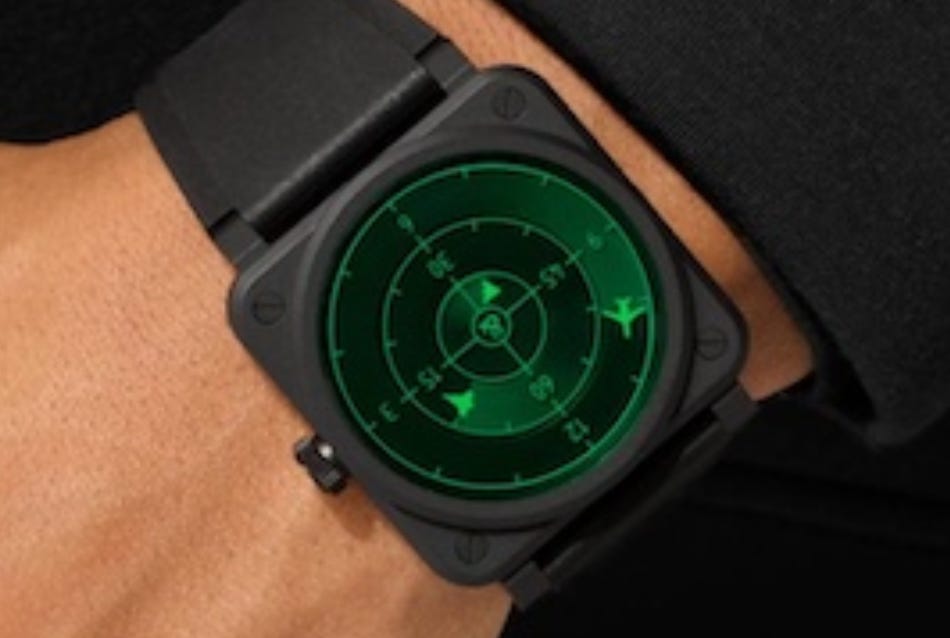
Bell & Ross BR-03 Green Radar Ceramic Clears the Runway
Bell & Ross returns to its radar-inspired display with a 41mm black ceramic watch dominated by luminous green. Three rotating discs carry aircraft silhouettes to indicate hours, minutes, and seconds, using a Falcon, a Rafale, and a Neuron drone. Concentric markings and luminous trails reinforce the impression of an aircraft moving across a radar screen.
The automatic BR-CAL.327 movement delivers a 54-hour power reserve, and water resistance is rated at 100 meters. Limited to 999 pieces, the watch includes both black rubber and synthetic fabric straps. It develops an idea Bell & Ross first explored in 2010 while giving the familiar square case a particularly theatrical display. Price: US$5,200.
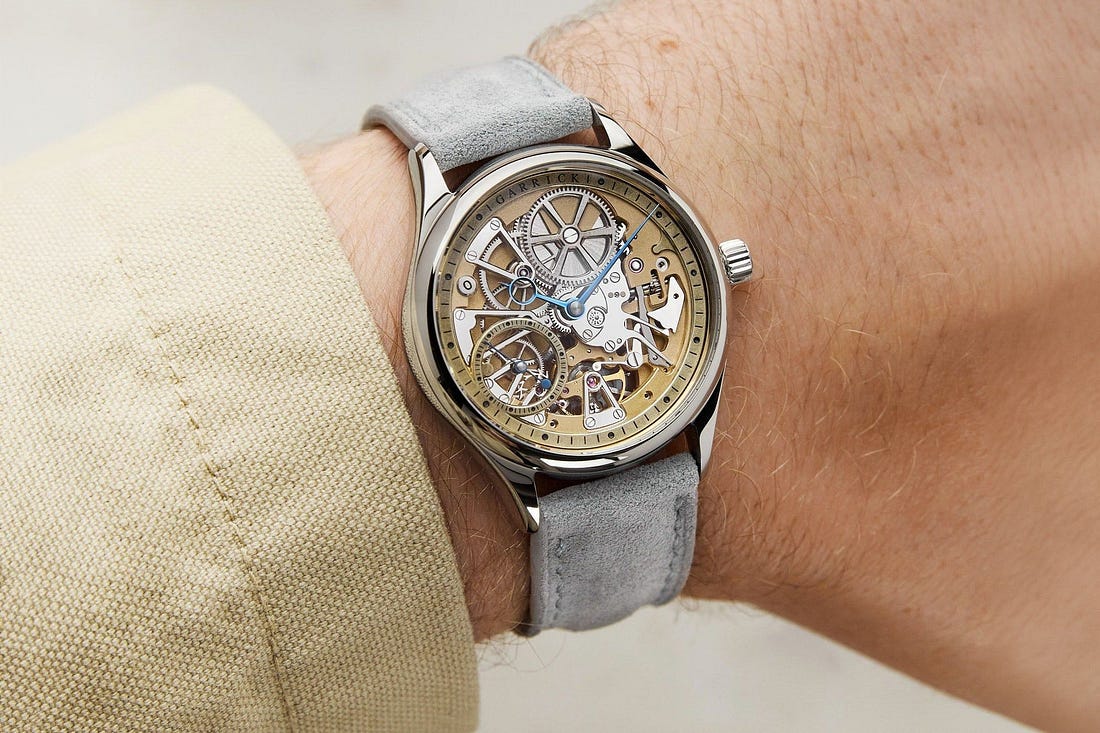
Garrick S8: A Smaller Stage for British Handwork
Garrick’s S8 brings the character of its S3 into a compact, time-only skeleton watch. The case measures 39mm across and 8mm thick, with options in 904L stainless steel or precious metal, polished or frosted finishes, and 100-meter water resistance. A chapter ring supplies the hours and minutes, while small seconds appear at eight o’clock.
The manually wound Garrick S8 calibre runs at 21,600 vibrations per hour and provides approximately 60 hours of power reserve. One watchmaker handles the finishing and assembly of each example over about eight weeks, with customization extending to the movement finish, wheels, balance, hands, and case. Production is made to order and capped at five watches annually, making personal specification an integral part of the offering. Price: approximately US$79,900 in stainless steel or US$98,000 in precious metal, excluding VAT.
Comparisons
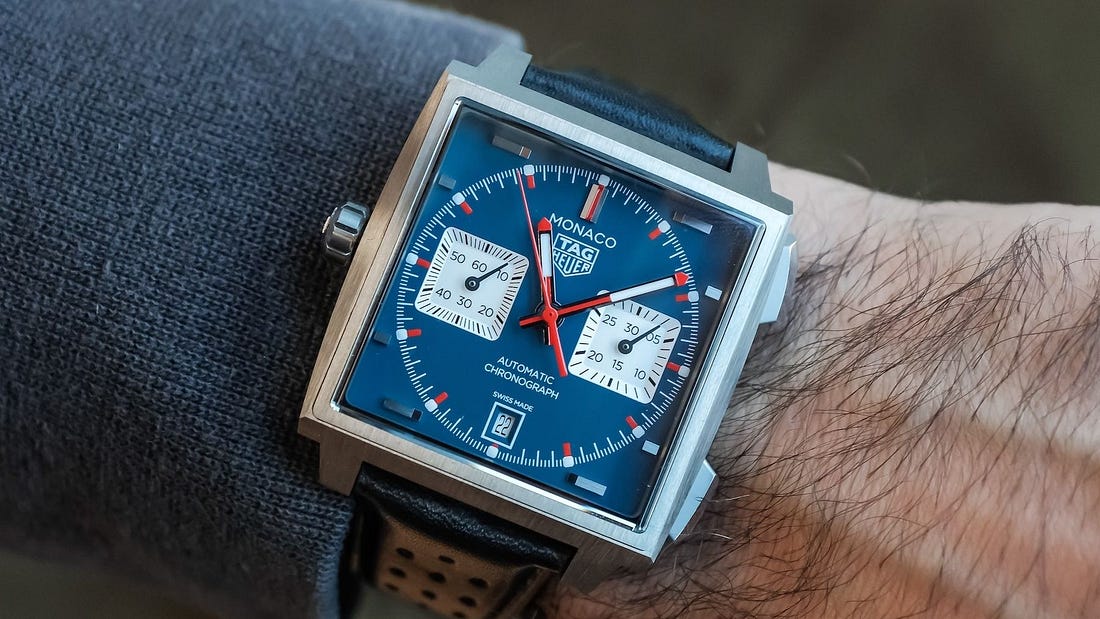
TAG Heuer Monaco vs. Carrera Glassbox: Racing Heritage Meets Wrist Reality
The Monaco and Carrera Glassbox share strong motorsport associations, automatic chronograph movements, 80-hour power reserves, and 100-meter water resistance. Their differences become more apparent once they are on the wrist.
The Monaco’s square 39mm titanium case and blue dial deliver the unmistakable appearance that has made it an icon. Its finishing impresses, but the reviewer found the broad, flat case difficult to wear comfortably. At US$9,350, that becomes a significant consideration.
The US$7,250 Carrera Glassbox offers a more accommodating 39mm steel case, a reverse-panda dial, and a domed sapphire crystal that gives the display depth. Inconsistencies in the hands and indices temper the praise, but its comfort and overall execution secure the reviewer’s preference for regular wear. The Monaco remains compelling for collectors whose wrists—and tastes—suit its distinctive shape.
Reviews
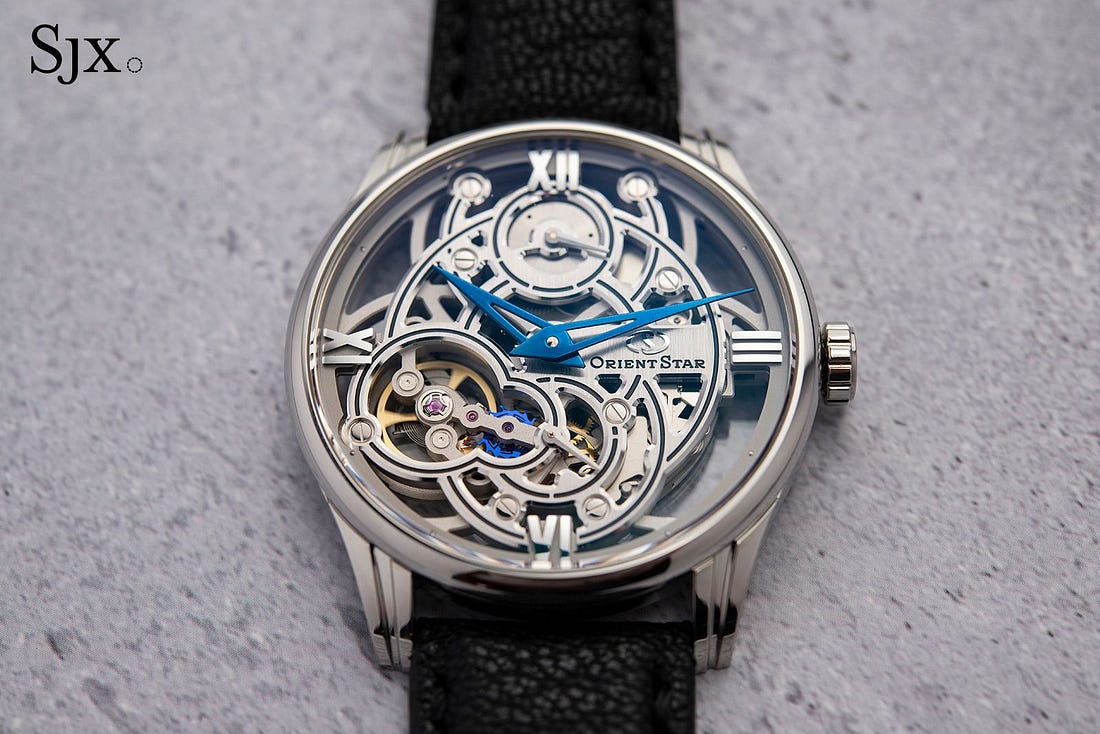
Orient Star Skeleton 75th Anniversary: A Flagship With a Long View
Orient Star marks its 75th anniversary, and 35 years of skeleton watches, with the limited-edition RE-BR0001N. Its 40mm steel case features zaratsu polishing, while the exposed dial architecture draws attention to hand-applied details, diamond-cut chamfers, and a blue silicon escape wheel.
The new hand-wound F9B82 calibre provides a 72-hour power reserve and a stated daily accuracy range of +10 to −4 seconds. At 9.5mm thick, the watch keeps its mechanical display within relatively restrained proportions, accompanied by a goat leather strap and 30-meter water resistance.
Limited to 130 pieces, it is scheduled for December availability at US$8,000 before taxes. A ten-year warranty and up to three complimentary full services give the anniversary model an ownership proposition extending well beyond its initial presentation.
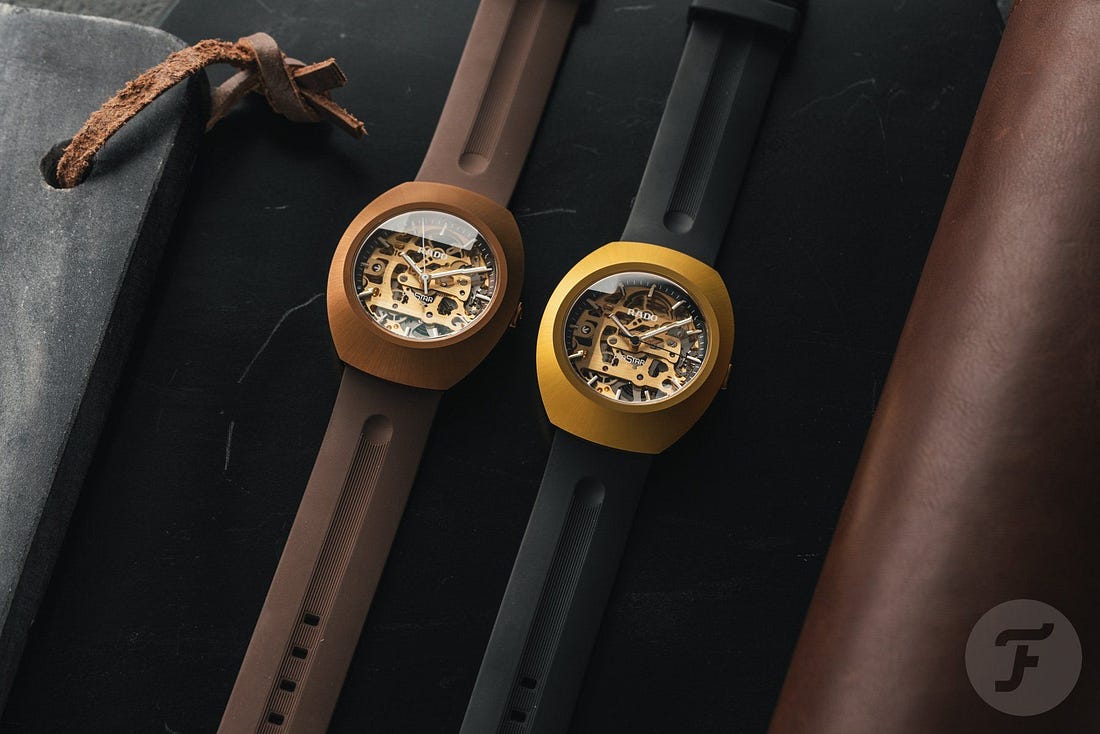
Rado DiaStar Original Skeleton: Two Golden UFOs
Rado’s DiaStar Original Skeleton revisits the unmistakable shape introduced in 1962, this time in yellow-gold-tone and rose-gold-hued versions. The 38 × 45mm steel case, faceted sapphire crystal, and Ceramos bezel create an appearance that sits somewhere between industrial design and jewelry.
The openworked R808 automatic movement is visible from both sides and combines an 80-hour power reserve with a Nivachron hairspring. Water resistance is a practical 100 meters. Black rubber accompanies the yellow-gold-tone model, while brown rubber adds warmth to the rose-gold version.
Both straps use Rado’s tool-free EasyClip system. At US$2,700 with a five-year warranty, these watches offer a distinctive way into exposed mechanics for collectors who enjoy a strong case design as much as an intricate dial.
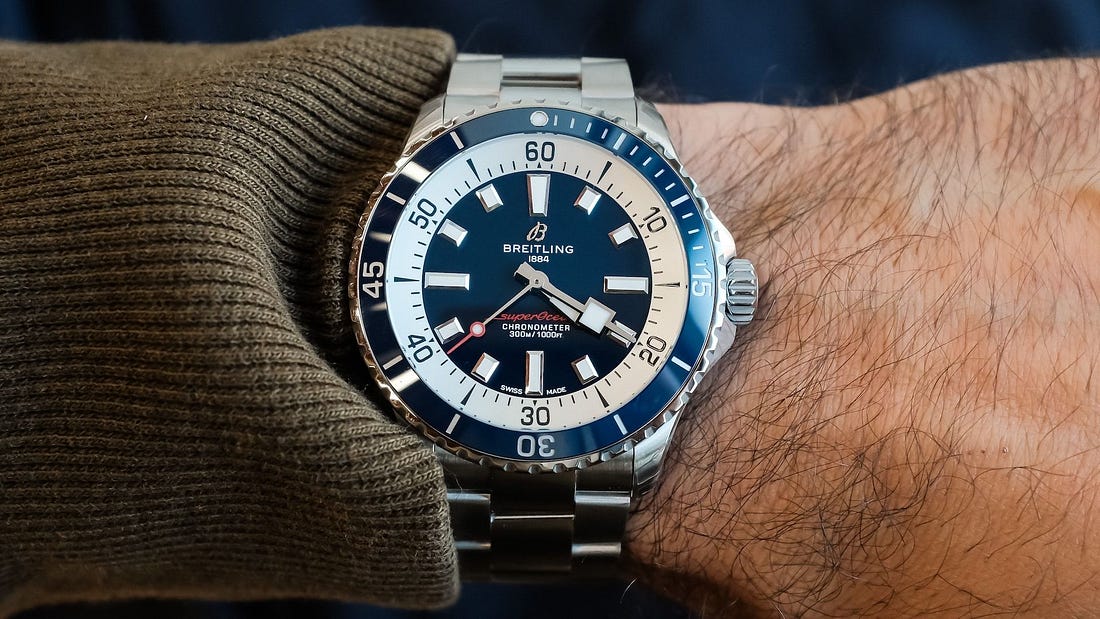
Breitling Superocean Automatic 42: Strong Design, Familiar Compromises
The Superocean Automatic 42 makes its strongest argument through the details encountered every time it is worn. Oversized geometric markers, a lollipop seconds hand, and clear legibility give the dial character, while the ceramic bezel earns praise for its grip and precise action.
Its 42mm steel case wears comfortably, and the combination of polished and brushed surfaces gives the watch a carefully finished appearance. The bracelet introduces a less welcome quality: considerable weight. The reviewer would consider the rubber-strap version for a lighter experience.
The Caliber 17 performed reliably, but its 38-hour power reserve feels modest at US$5,900. The result is a diver with a persuasive visual identity and enjoyable physical controls, accompanied by practical trade-offs that prospective owners should weigh.
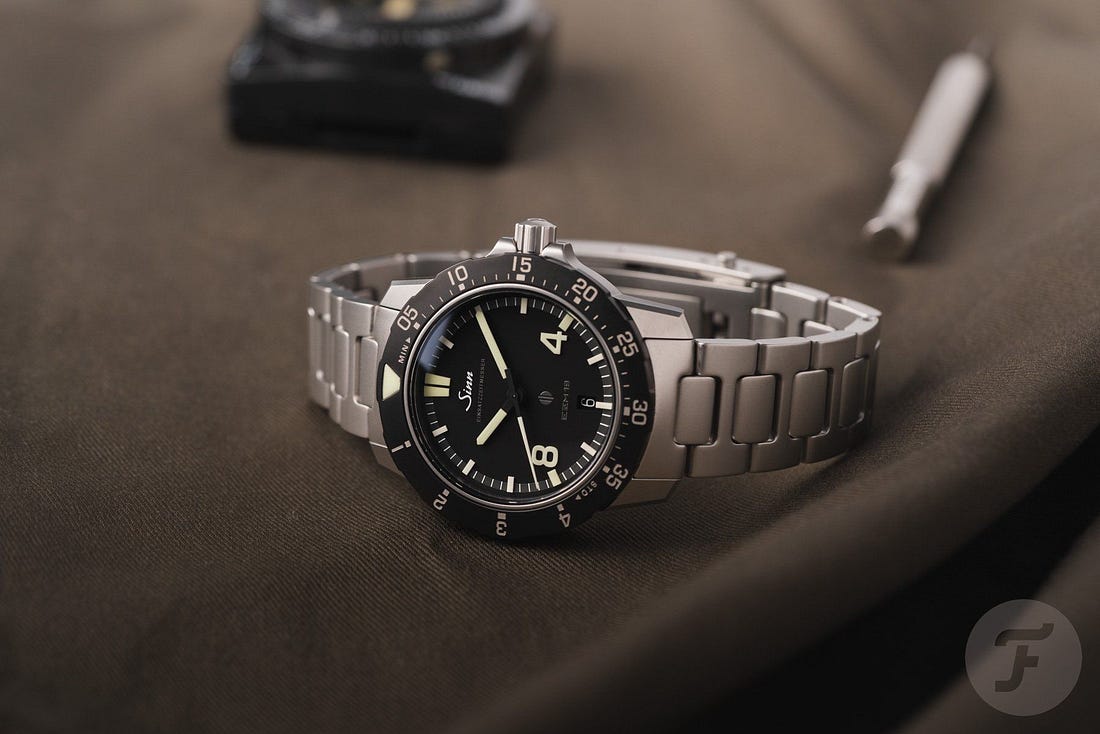
Sinn EZM 19: A Mission Timer for the People Running the Operation
Developed with Hattingen Fire Department director Tomas Stanke, the Sinn EZM 19 addresses the timing needs of emergency command staff. Its captive bidirectional bezel provides a 35-minute briefing scale and a four-hour operations scale, helping organize discussions, shifts, and handovers.
The 41mm steel watch uses the automatic Sellita SW300-1 and includes 200-meter water resistance, magnetic-field protection, and Sinn’s dehumidifying technology. A specified operating range of −45°C to +80°C reinforces its professional brief, while color-coded luminous elements support reading in difficult conditions.
Leather, textile, silicone, and steel options give buyers several ways to wear it. The quoted European range is €1,950–€2,300. Although its development began with emergency operations, the underlying idea—making blocks of time immediately visible—has obvious uses in ordinary working life.
Events

Time to Drive Miami Brings Cars and Watches Into the Same Lane
The inaugural Time to Drive Miami Car & Watch Fest brought approximately 25 watch brands, retailers, dealers, and collectors to Mana Wynwood on November 7–8. Cars supplied an additional attraction, drawing an energetic audience around shared interests in mechanics, design, craftsmanship, and heritage.
A VVIP lounge, cigar and drink service, and an Assouline Porsche book added to the lifestyle setting. The turnout suggested that organizers Lex Borrero and Perri Dash had identified an audience receptive to bringing the two collecting worlds together.
The panel discussions had a harder time competing. Noise, limited attendance, and a stage surrounded by busy booths reduced their effectiveness, with a separate discussion room emerging as an obvious improvement for a future edition. Even so, the debut established an engaging platform with room to develop.

Women in Watches Miami Focuses on Careers, Customers, and Better Questions
WatchPro’s Women in Watches gathering brought industry leaders, brand representatives, and watch specialists together in Miami on November 6. Held with headline sponsor WOLF, the event combined professional networking with discussions about how the industry recruits, develops, and understands its audience.
The first panel examined leadership, career progression, transferable skills, and routes into watchmaking’s broader business. The second considered what women want from watches today, including vintage designs, jewelry influences, social media, and the preferences of younger collectors.
A recurring message was the importance of listening to customers instead of designing around inherited assumptions. Supported by TIMELUXE, Marli NY, MadaLuxe, Timex Group, and Rado, the event connected that consumer conversation with the equally important question of who gets to shape the industry from within.
Podcasts
Scottish Watches #830: Nomadic’s Irish Watchmaking Journey With Peter McAuley
Nomadic founder Peter McAuley joins Scottish Watches to discuss building a Belfast watch brand from a background in mechanical engineering and business. Founded in 2021, the company takes its name from the SS Nomadic, the historic Belfast-built tender associated with the Titanic.
That local identity appears throughout the watches, from yellow seconds hands recalling the Harland & Wolff cranes to propeller-shaped rotors. The conversation follows the business into in-house assembly, an award-winning boutique and workshop, and an expanding range covering dive watches, GMTs, expedition models, chronographs, and dress watches.
Plans for a Dublin flagship with Weir & Sons, international events, and a United Rugby Championship timekeeping partnership give the discussion a forward-looking dimension. It is an opportunity to hear how a young brand turns a regional story into a wider business.
Videos
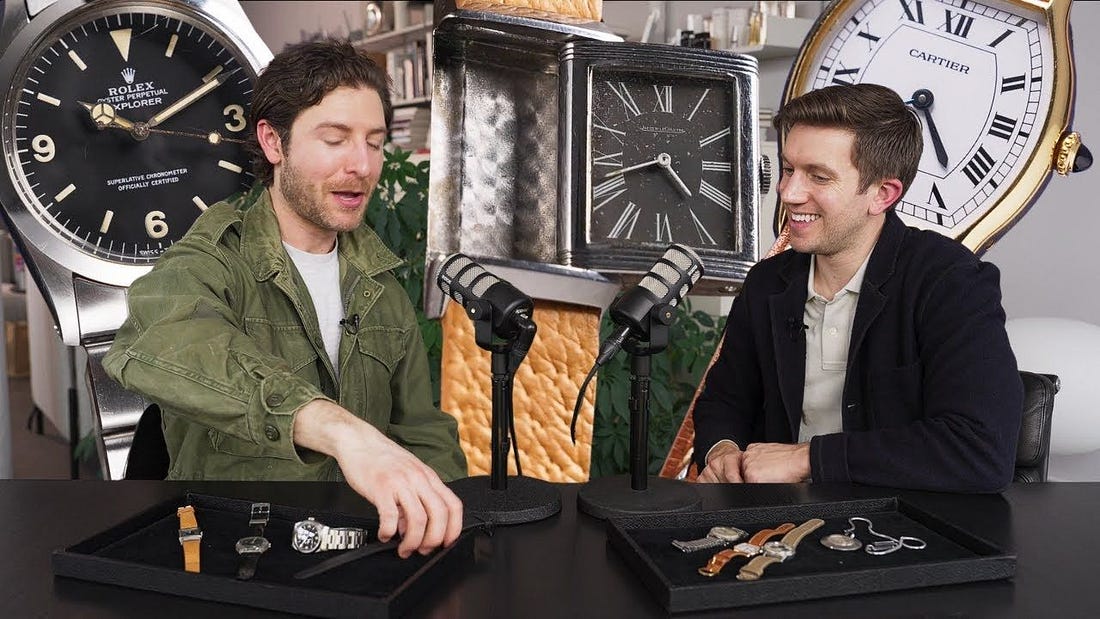
“Buy Once, Cry Once”: Tony Traina’s Personal Collection — Chrono24
Former Hodinkee editor and Unpolished creator Tony Traina opens up a collection shaped by personal curiosity and a largely vintage sensibility. Swatch and Seiko share space with Rolex, Jaeger-LeCoultre, and Cartier, creating a lineup whose interest comes from the choices connecting it.
A historically important, rarely seen Reverso adds a particular reason to watch. The broader appeal is hearing a knowledgeable collector explain what earned a place in his own collection, where professional familiarity meets personal attachment.

Glashütte Original Vintage Seventies Goes Slimmer — Time+Tide
Time+Tide examines three steel watches that bring more compact proportions to Glashütte Original’s Vintage Seventies collection. The cases measure 39mm across and 9.6mm thick, with a 43.7mm lug-to-lug span and 100-meter water resistance.
Embossed hexagrid dials draw inspiration from 1970s audio equipment, tweed-covered amplifiers, and vinyl records. Buyers can choose a fabric-textured rubber strap or an adjustable bracelet, with the Groove Lock system allowing tool-free changes.
An in-house automatic movement adds a silicon hairspring, traditional Glashütte decoration, and a 100-hour power reserve. The black-dial version is limited to 500 pieces.

The Brands and Watches You Should Be Considering Today — This Watch, That Watch
This Watch, That Watch turns to the question behind every shortlist: which brands and watches deserve closer attention today? The subject fits neatly with an issue spanning auction trophies, small independent workshops, and highly specialized tool watches.
Use the episode as another perspective on your own search—an opportunity to consider which makers you follow closely and which ones merit a fresh look.
BuyingTime at Auction
After Moser’s US$38,500 No-Sale, Vacheron Opens Up Its Calendar
The November 9 auction of the 2026 H. Moser & Cie Pioneer Flying Hours ref. 3240-0900, a 42.8mm red-gold model with an aventurine dial and Arabic numerals limited to 100 pieces, reached US$38,500 without meeting its reserve.
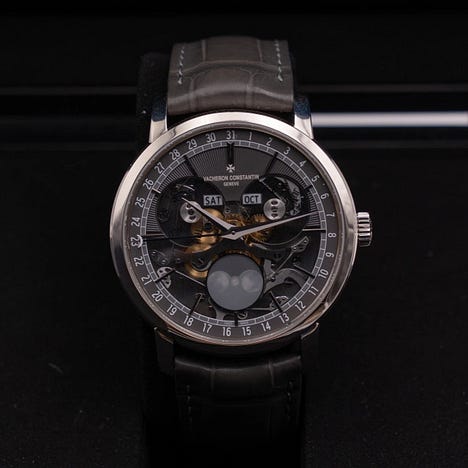
Today’s featured watch is a 2024 Vacheron Constantin Traditionnelle Complete Calendar Openface ref. 4020T/000G-B655. Located in the United States, the pre-owned white-gold watch comes with box and papers. The supplied condition report describes an excellent dial and minor wear to the case and bezel, with minor wear also recorded under the listing’s bracelet field.
Introduced in 2021, the Complete Calendar Openface gives Vacheron’s traditional calendar watchmaking a contemporary presentation. Its sapphire dial reveals the mechanism beneath, framed by slate-gray elements and classical dauphine hands. The 41mm white-gold case measures 11.05mm thick, preserving the stepped case details and formal proportions associated with the Traditionnelle collection. Although listings often describe the dial as skeletonized, the defining idea is the transparent view into the calendar mechanism, with the movement’s architecture forming part of the display.
The automatic calibre 2460 QCL/2 carries the Hallmark of Geneva and supplies approximately 40 hours of power reserve. It displays the day, date, month, and a precision moonphase, combining useful calendar information with considerable mechanical depth. This is a complete calendar, so the owner must correct it after months shorter than 31 days; it does not make the automatic month-length adjustments of an annual or perpetual calendar. Its appeal rests on the combination of established Geneva finishing, precious-metal construction, and an unusually revealing interpretation of a classical complication.
The model launched at a published U.S. price of US$47,300 before sales tax. More useful secondary-market comparisons include a US$32,500 result at Heritage in November 2023 and HK$228,600, approximately US$29,300, at Phillips’ spring 2024 Hong Kong online sale. Several currently advertised examples sit around US$39,000–US$46,000, although asking prices establish seller expectations rather than completed transactions. Those records suggest an auction benchmark around the low US$30,000s and a higher advertised retail range, with this watch’s 2024 date, accompanying documents, condition, service history, and original buckle relevant to its position within that spread. Buyer’s fees and taxes also affect the final comparison. Bidding is scheduled to end at 4:25 p.m. EST today, November 10, 2026.
Current bid: $30,750
Losing Time
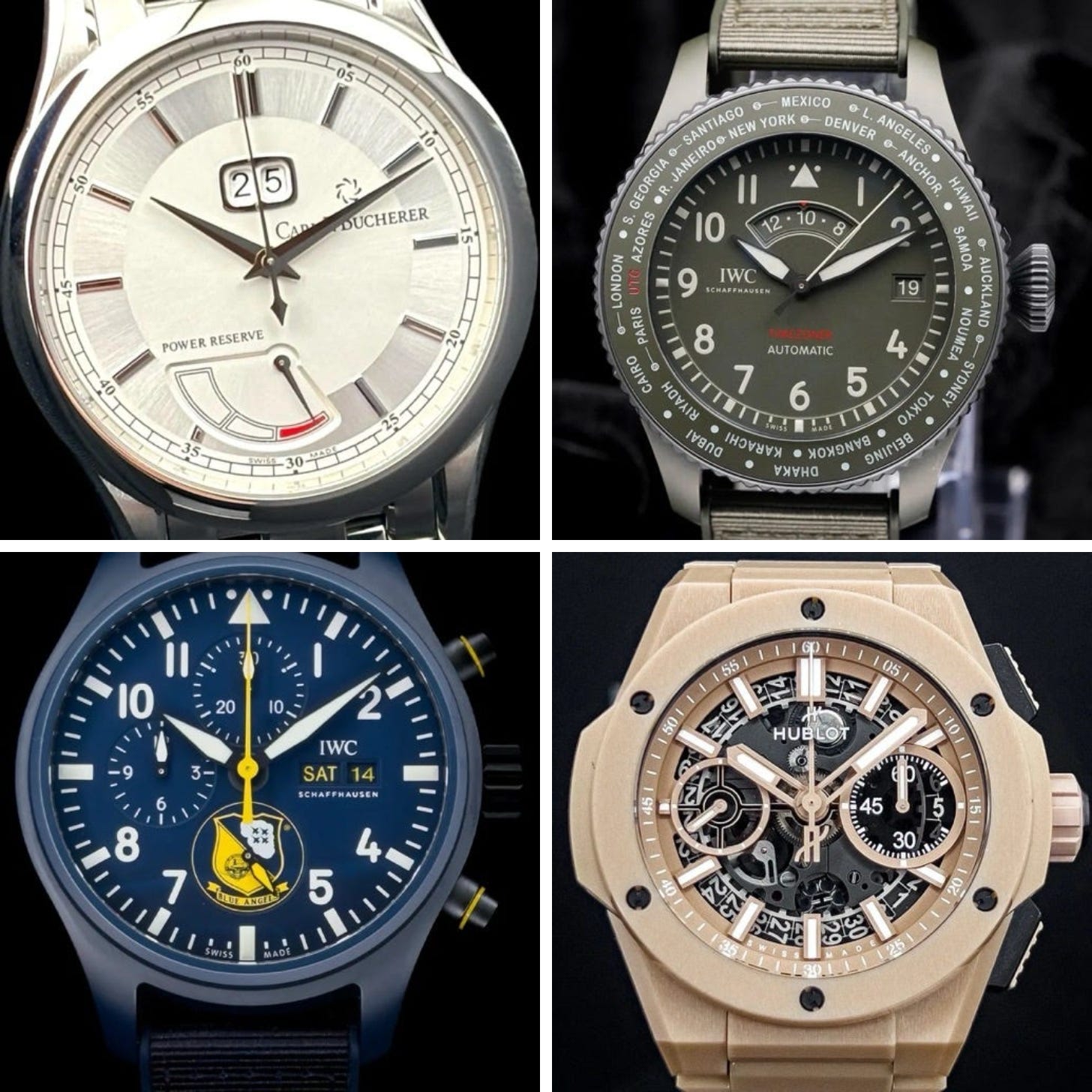
Today’s Big Losers at Auction on Grailzee
Four watches, four failed sales, and four reminders that an asking price is a wish until someone agrees to pay it.
The Carl F. Bucherer Manero Big Date 40MM had a $5,000 ask and attracted a $1,000 bid—an impressive 80% shortfall, leaving a $4,000 gap. The silver dial and steel bracelet may have been perfectly respectable; the distance between buyer and seller was considerably less so. Bidders offered just 20 cents on the asking-price dollar.
The 2024 IWC Schaffhausen Pilot Timezoner Top Gun “Woodland” 46MM aimed for $14,500 but topped out at $5,000. That’s 65.5% below asking, a $9,500 miss and the largest dollar gap of the four. Apparently, the camouflage worked a little too well on the buyers willing to meet that price.
The 2023 IWC Schaffhausen Pilot “Blue Angels” 44.5MM sought $8,500 and received a $3,351 bid, finishing 60.6% below asking with a $5,149 gap. The aviation branding promised altitude; the bidding stayed firmly on the ground. Alongside the Woodland result, this made it two IWCs whose sellers and bidders appeared to be consulting different flight plans.
The 2026 Hublot Big Bang Integrated Beige Ceramic Limited Edition 42MM came closest to its target, although “closest” is doing some generous work here. Against a $17,000 ask, its $9,500 high bid fell 44.1% short, leaving $7,500 unresolved. Beige ceramic and limited-edition status drew the highest bid of the group, but neither persuaded bidders to cover the remaining distance.
Collectively, the sellers wanted $45,000, while the final bids totaled $18,851—a $26,149 gap, or 58.1% below the combined asking prices. These results suggest more than a little room for negotiation: every watch missed its ask by at least 44%. The Hublot, for a change, showed the strongest bidding relative to its target; the Bucherer showed the weakest. Four failed sales cannot establish the broader market value of these watches, but they do establish that these asking prices found no takers in these auctions. The sellers brought expectations. The bidders brought considerably smaller numbers.
Closing Time
A record auction can tell us where the biggest money went. A good day of collecting offers something broader: a new maker to investigate, a familiar design to reconsider, or a detail that makes the watch on your wrist interesting all over again.
Today’s issue has plenty of all three. Spend a little time with something outside your usual shortlist, follow a story beyond the headline, and enjoy the conversations that make this hobby worth returning to.
Thanks for spending part of your day with BuyingTime. We’ll see you tomorrow.