Issue #292 | Buying Time - November 17, 2026
Gold gets cheaper, watches get more creative, and collectors get another opportunity to ask exactly what they’re paying for.
Buying Time in 60 Seconds
Gold has retreated, but luxury watch prices seem remarkably resistant to gravity. Today’s BuyingTime story examines why manufacturers were quick to explain increases through rising costs—and seem considerably less eager to discuss the reverse.
Citizen offers a different perspective on the business, reporting first-half sales up 30% and operating profit more than doubling. Hodinkee, meanwhile, is introducing a Zillion-powered insurance program, making the ownership experience part of the value conversation.
On the wrist, Hamilton brings forged carbon and a traveler’s GMT to $1,725, Kurono Tokyo prepares a colorful chronograph release, and Blancpain introduces a purpose-built zodiac calendar. Christopher Ward and Mr Jones turn a chiming mechanism into a bird, while our reviews range from an approximately $937 automatic chronograph to elaborate watchmaking from Chopard and Hublot.
Also inside: Gérald Genta’s enduring influence, independent watchmaking worth exploring, the economics of Subdial’s expansion, and a turquoise-accented Audemars Piguet Diver heading toward its auction deadline.
Time Graphing Today’s Watch Universe
What, Exactly, Are We Paying For?
The watch industry is exceptionally good at explaining why something costs more. Gold has risen. Manufacturing has become more demanding. Skilled labor is scarce. Distribution is complicated. The movement has another component whose name sounds expensive in French. Put enough of these explanations together, and the price increase begins to feel less like a commercial decision than an unfortunate act of nature.
The explanations become noticeably less fluent when costs move in the other direction.
That is the question behind today’s BuyingTime feature, Gold Has Come Down. Apparently, Your Watch Hasn’t Heard. It is not an argument that a gold watch should fluctuate like an exchange-traded commodity. A finished watch incorporates labor, development, distribution, inventory and profit, and the gold inside it is only one part of the equation. Purchasing arrangements and production schedules also introduce delays. But if precious-metal costs are important enough to explain an increase, customers deserve some explanation of what happens when those costs ease.
Otherwise, “gold prices” begins to sound suspiciously like a one-way mechanism: wonderfully responsive going up, apparently awaiting a replacement part coming down.
The broader question running through today’s issue is what manufacturers deliver in exchange for the money. Some answers are more convincing than others—and some of the best come from places that do not require an appointment with a boutique relationship manager.
Consider Hamilton. Its Khaki Pilot GMT Air Zermatt combines a forged-carbon case, an 80-hour automatic movement and an independently adjustable local-hour hand for $1,725. None of those features automatically makes it a better watch than something costing ten times as much. They do, however, make it relatively easy to explain what the buyer receives. You can point to the case, demonstrate the travel function and describe the practical benefit without first invoking an ambassador’s childhood dreams.
The approximately $937 Nezumi VM2 complicates the conversation further. Here is an automatic column-wheel chronograph at a price that would once have seemed improbable for this category. There are questions about long-term parts availability, and those questions belong in the assessment. Initial specifications do not cover an entire ownership experience. Still, its existence forces an interesting discussion about how much mechanical complexity needs to cost—and how much buyers will pay for reassurance about the decades that follow.
Then there is Christopher Ward and Mr Jones, whose Bel Canto Luciaoffers a different kind of answer. The appeal is not simply that it chimes. It is that the mechanism becomes part of an imaginative object: a bird’s tail serves as the hammer, foliage creates depth, and its mouth communicates the silent setting. The collaboration required real production effort, including dedicated capacity at Mr Jones. Here, creativity and execution are visible. The watch does not merely tell you that artistry occurred somewhere in the building. It lets you look at the result.
That matters because originality is one of the few things luxury can offer that a specification sheet cannot easily settle. The Vacheron ConstantinCopernicus Celestial Spheres is an especially persuasive example. Its miniature Earth circles a gold Sun through an astronomical display supported by engraving, enamel and other traditional crafts. Nobody needs this arrangement to find out whether lunch has started. Its value lies in the intelligence, skill and pleasure of making the arrangement exist. If the Vacheron is out of reach, you can get the same effect with the SpaceOne Tellurium Blue Titanium watch for about $3,000.
The same allowance should extend to brands collectors sometimes dismiss before examining the watch. Today’s Hublot Meca-10 review asks readers to consider the twin barrels, ten-day reserve, rack-and-pinion indication and case construction. You do not have to like its appearance. But judging engineering through a brand’s reputation is a particularly inefficient way to understand engineering. Collectors who demand open-mindedness about their own obscure favorites might occasionally extend the courtesy.
Citizen, meanwhile, supplies a useful reminder that commercial success does not depend exclusively on rarified complications. Its strong first-half results reflect demand across markets and product families, including mechanical watches, Promaster and Bulova. Yet there is a revealing detail beneath the growth: average unit prices have risen 42% since 2021. Even in the more accessible reaches of the industry, the business is moving toward getting more revenue from each watch. That can reflect a better product mix and stronger offerings. It also makes the customer’s assessment of value increasingly consequential.
Value continues after purchase, too. Hodinkee’s new insurance programfocuses attention on protection, service and replacement support. These subjects may inspire fewer wrist photographs than an unusual dial, but they become compelling the moment the watch disappears. A satisfying ownership experience includes what happens when something goes wrong.
The editorial about Subdial’s expansion applies a related test to the businesses serving collectors. Raising $20 million creates possibilities; it does not establish that an American expansion will produce profits. Inventory, infrastructure and ambition all have costs. The industry’s enthusiasm for growth can sometimes resemble a collector explaining that the next acquisition will finally complete the collection.
Today’s watches offer plenty to enjoy: a proper travel complication, an inventive bird, a miniature solar system, a serious chronograph and a reassuringly unnecessary quantity of turquoise. Enjoyment remains an excellent reason to buy. But buyers can enjoy the product and still ask manufacturers to explain the price.
If a company can describe the painstaking work behind its watch, it should be able to describe the commercial thinking behind its latest increase. And if gold helped justify the climb, asking about the descent seems entirely reasonable.
-Michael Wolf
News
Hodinkee Introduces a New Insurance Program With Zillion
Hodinkee’s new Zillion-powered program offers policies backed by AXA XL and Tokio Marine, with no deductibles, worldwide protection against covered theft, accidental damage and loss, and appreciation protection up to 150% of insured value. New applicants enter immediately, while existing customers will receive migration instructions as their policies become eligible; Washington State availability is anticipated in early 2027. Go Deeper
Citizen Reports a Standout First Half
Citizen’s first-half fiscal 2026 sales rose 30% to ¥207.1 billion, while operating profit more than doubled to ¥29.2 billion; finished-watch revenue increased 31% to ¥117 billion. Strength across major markets, mechanical watches, Promaster and Bulova supported the results, although the company expects slower second-half growth and also identified tariff refunds and higher average selling prices as factors. Go Deeper
BuyingTime Original Feature

Gold Has Come Down. Apparently, Your Watch Hasn’t Heard.
Luxury watchmakers repeatedly cited rising precious-metal costs as prices climbed, particularly for gold models. With gold retreating from its 2026 peak, we examine purchasing delays, manufacturing economics, margins and the awkward question of whether cost-based pricing explanations should work in both directions. Go Deeper
Feature
Cameron Green’s Rado Captain Cook Carries a Personal Scorecard
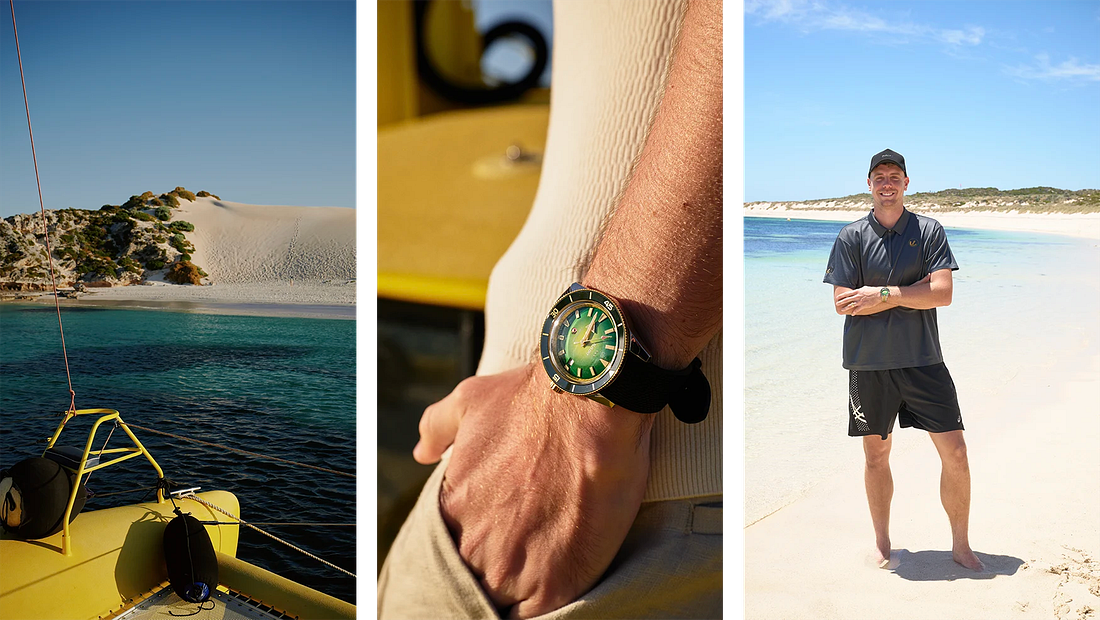
Rado’s Captain Cook x Cameron Green Limited Edition connects its green-and-gold design to Australian cricket, family support and Green’s own career, with production capped at 459 pieces to match his Test cap number. Launched during a Rottnest Island gathering, the steel diver combines a ceramic bezel, 300-meter water resistance and an 80-hour reserve. Go Deeper
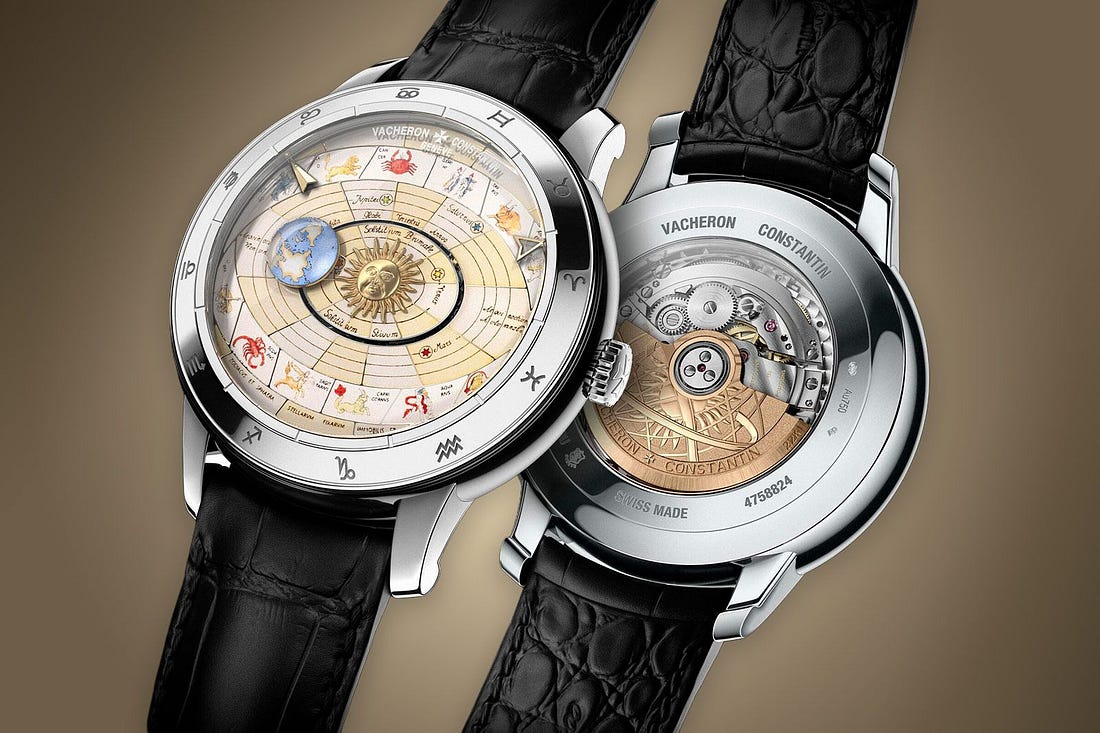
Vacheron Constantin Puts the Solar System on Your Wrist
Introduced in 2017, the Copernicus Celestial Spheres sends a miniature Earth around a hand-engraved gold Sun, combining astronomical mechanics with Métiers d’Art craftsmanship. Its three artistic interpretations—enamel, engraved gold and engraved sapphire—show how far watchmaking can travel beyond the basic business of displaying hours and minutes. Go Deeper
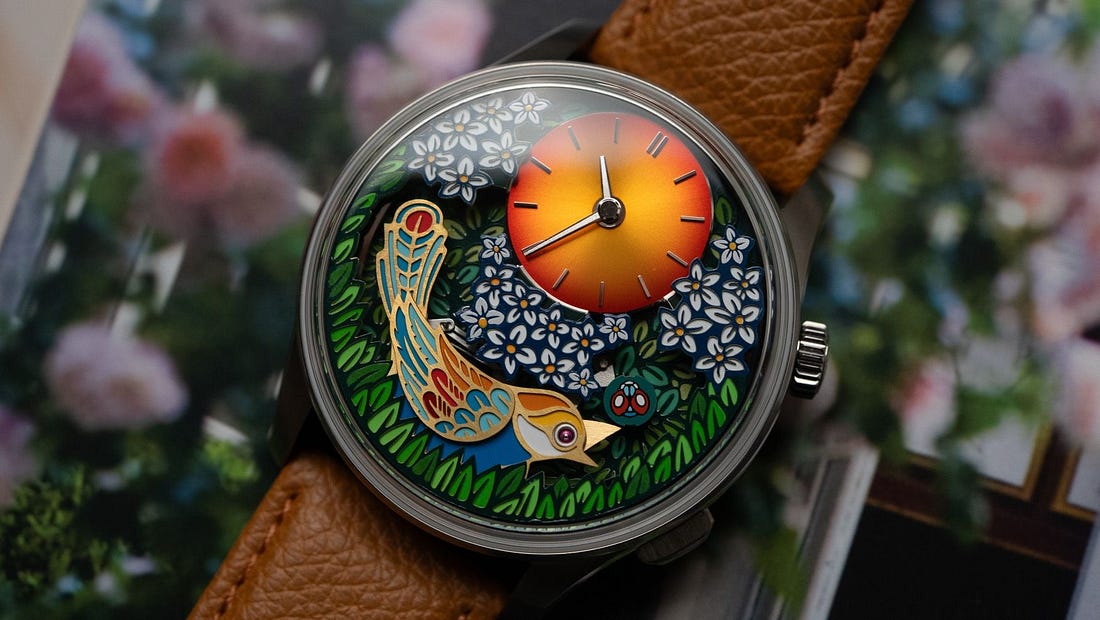
Christopher Ward and Mr Jones Give the Bel Canto a Bird’s-Eye View
The Bel Canto Lucia transforms Christopher Ward’s chiming watch into a layered miniature landscape, with a sculpted bird’s tail serving as the hammer and its mouth indicating silent mode. Available as a standard-production collaboration, the titanium watch starts at $5,550 on leather or $5,895 on a bracelet, making the artistic ambition something collectors can actually order. Go Deeper

Gérald Genta’s Ingenieur Took Its Time Becoming an Icon
Christian Knoop and Alexia Genta discuss the transformation of IWC’s antimagnetic instrument watch into Gérald Genta’s integrated steel design—and the careful decisions behind its 2023 revival. Their conversation explores creative freedom, proportion and why preserving the spirit of a design requires more thought than simply copying its old drawings. Go Deeper
Mann About Time Turns the Dealer’s Hunt Into a Book
Robin Mann’s 284-page, cloth-bound Mann About Time Volume 1 gathers exceptional vintage watches, atmospheric photography and contributions from figures in the collecting world. Limited to 300 copies, it celebrates discovery and custodianship rather than attempting to become another exhaustive reference manual. Go Deeper
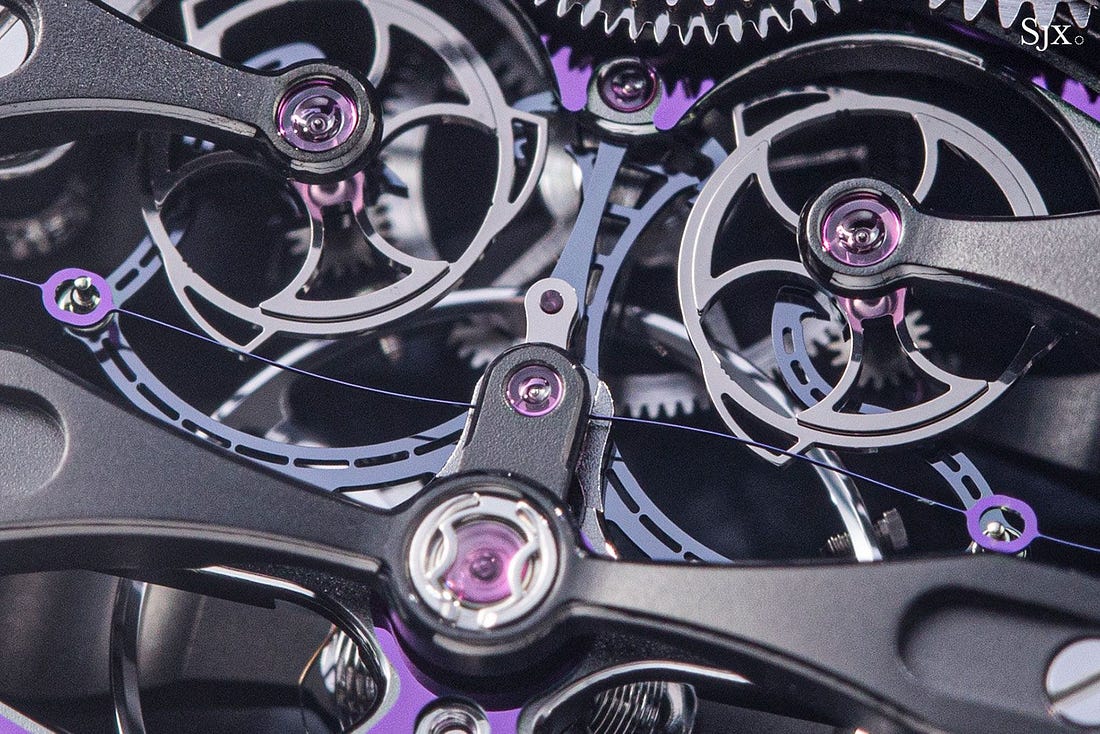
The Escapement Is Still an Unfinished Argument
The concluding installment of this technical series examines alternatives to the Swiss lever, including independent-wheel, indirect-impulse and mixed-impulse systems from major watchmakers. Girard-Perregaux’s NEO Constant Escapement illustrates how new materials and geometry can address energy delivery, even while the conventional lever remains an exceptionally practical incumbent. Go Deeper
Six Ways Into Independent Watchmaking
Habring², Trilobe, Ressence, Otsuka Lotec, Naoya Hida and Czapek provide six distinct entry points into independent collecting, from animated displays and industrial aesthetics to traditional finishing. The selection emphasizes finding a maker’s ideas compelling enough to live with—and the value of meeting the people responsible before committing. Go Deeper
Comparisons
Twelve Dive Watches With More Personality Than a Submariner
The Rolex Submariner’s familiarity is part of its appeal, but collectors seeking something less predictable have options from Vostok and Citizen through Doxa, Serica, Baltic, Omega and Glashütte Original. This selection compares different approaches to color, construction, proportions and utility rather than assuming every good diver must audition for the same role. Go Deeper
Affordable Chronographs That Keep the Price Below $1,000
Nine quartz, solar and meca-quartz chronographs demonstrate how much variety remains available between $229 and $750. Seiko, Tissot, Timex and others offer different balances of size, design and practicality, with lower servicing demands adding another argument for considering something beyond a mechanical movement. Go Deeper
Six White Dials, Six Very Different Personalities
White dials range from luminous and sporty to richly enameled and formally restrained, as this selection from Breguet, Glashütte Original, Laurent Ferrier, Fortis, Hamilton and Hermès illustrates. Surface treatment, contrasting details and surrounding materials make “white dial” a starting point rather than a particularly useful description of the finished watch. Go Deeper
New Watches
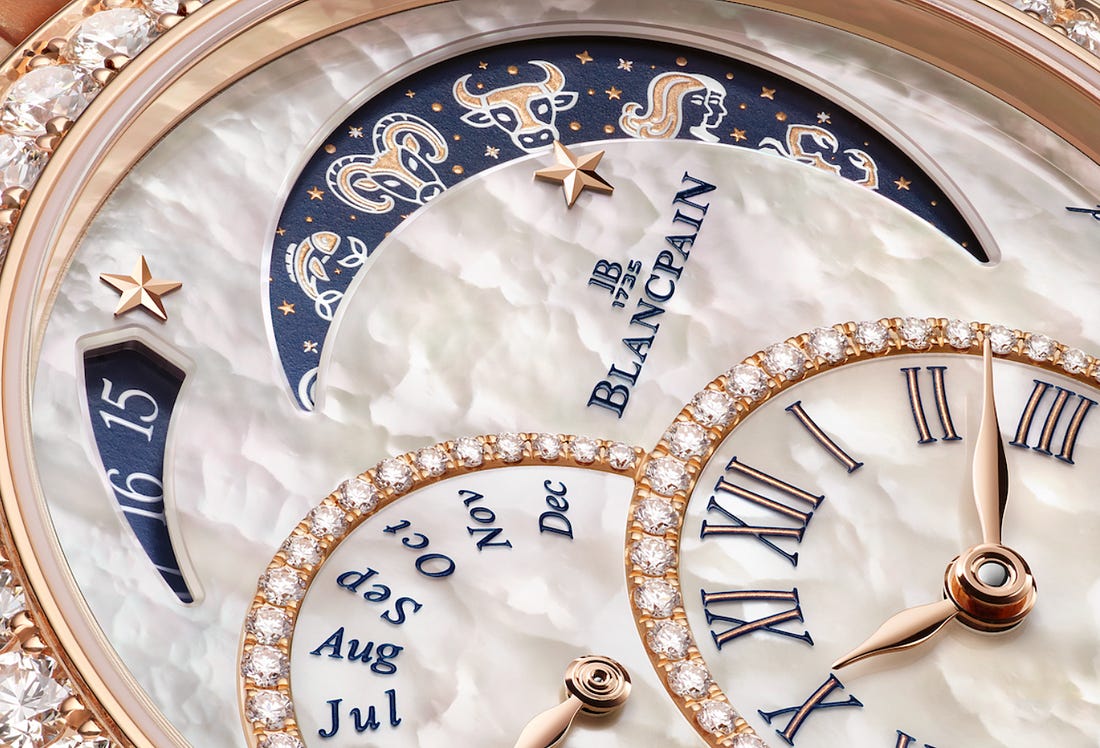
Blancpain Ladybird Colors Zodiaque Gives the Zodiac Its Own Movement
Blancpain’s Ladybird Colors Zodiaque introduces the patented automatic Calibre 2653QZ, combining off-center time indications with a date, retrograde month display and the twelve Western zodiac signs. The 34.9mm red- or white-gold case features diamonds, a nacre perlée dial and a sapphire display back. Its purpose-built movement delivers a 68-hour power reserve, and the watch joins regular production with a five-year warranty. Price: $57,200 with a pin buckle; $59,600 with a folding clasp. Go Deeper
Hamilton Khaki Pilot GMT Air Zermatt Brings Forged Carbon to Practical Travel
Hamilton marks 15 years with Air Zermatt through a 42mm forged-carbon GMT inspired by the rescue organization’s helicopters and cockpit instruments. The automatic H-14 movement offers an 80-hour reserve, a Nivachron balance spring and an independently adjustable local-hour hand, making this a traveler’s GMT. A red textile strap and additional black leather strap accompany the watch, which provides 100-meter water resistance. Price: $1,725. Go Deeper
Kurono Tokyo Structure Chronograph S1 Turns Up the Contrast
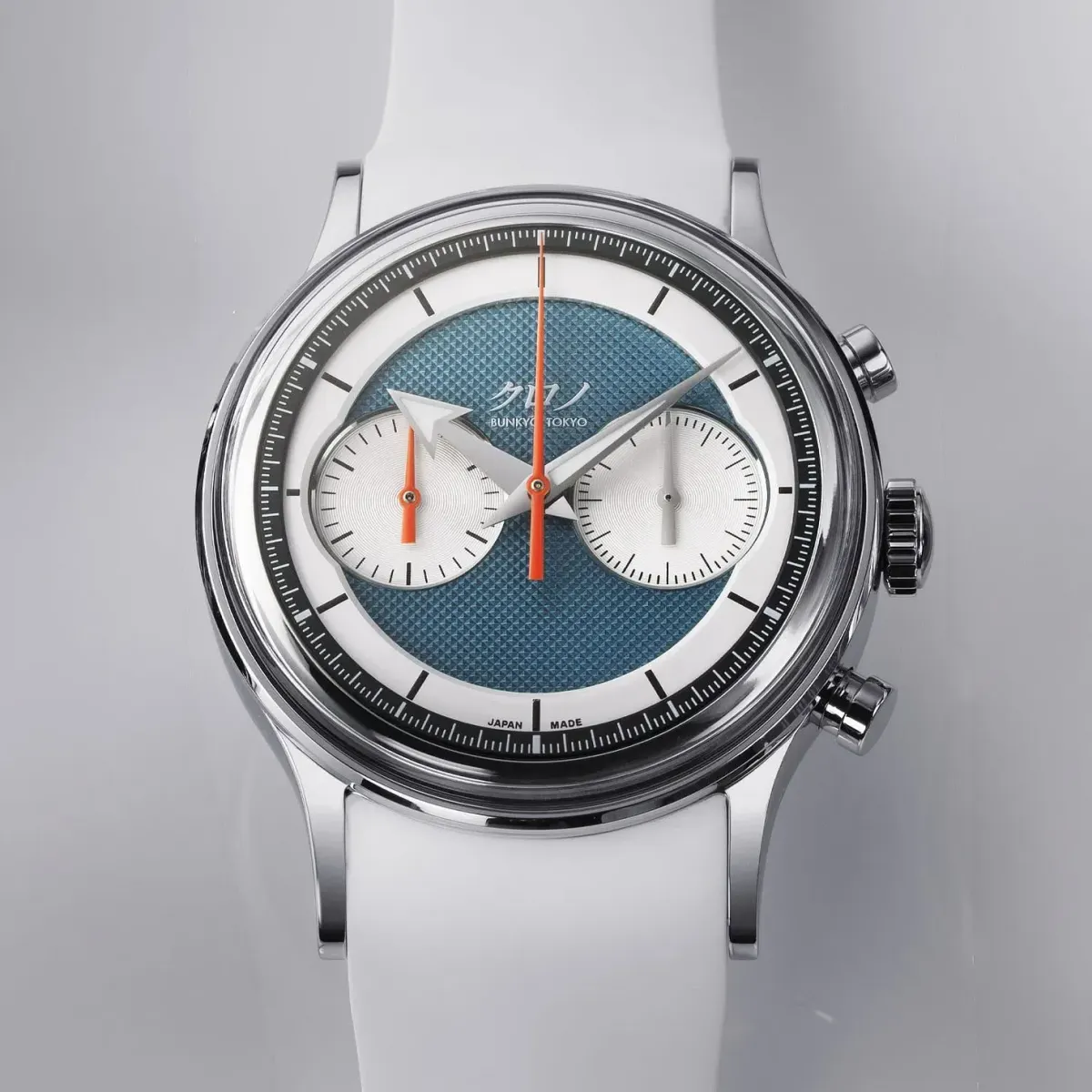
Hajime Asaoka’s new Structure Chronograph S1 introduces a sportier Kurono Tokyo design in teal, white or salmon, with contrasting white subdials and orange chronograph hands. Its four-layer dial brings hands and markers closer together to reduce parallax, while the polished 40mm steel case carries a box-shaped sapphire crystal and white rubber strap. The automatic NE86PWT combines a column wheel, vertical clutch and 45-hour reserve; online sales begin November 19, with deliveries expected from mid-December. Price: $3,690 before tax. Go Deeper
Simon Brette’s Confluence Ruby Is Already Spoken For
The unique Chronomètre Artisans Confluence Ruby places 270 rubies across a platinum case and elaborate dial, including stones cut into Simon Brette’s dovetail-key motif. Black surfaces, red hands and a translucent red sapphire seconds ring reinforce the commission’s dramatic palette. Inside the 39mm case is the hand-wound Chronomètre Artisans movement with a 72-hour reserve, but prospective buyers can put away their inquiry emails: this collector commission is already sold. Price in U.S. dollars: undisclosed. Go Deeper
Nordic Marine Instruments Havørn Makes a Slim Rectangular Entrance
Nordic Marine Instruments’ first dedicated dress watch pairs a modern rectangular case with faceted lugs, crown guards and a curved sapphire crystal. Measuring 29mm wide, 38mm lug to lug and approximately 7.6mm thick, the Havørn comes with Arctic Silver, Ember Red or Sky Blue textured sunburst dials. A Swiss Ronda quartz movement keeps the two-hand display slim and offers an approximately six-year battery life, while a leather-lined sailcloth strap supplies a less formal finishing touch. Price: $349. Go Deeper
Meia Lua Meridian Heads Toward a 2027 Launch
Lisbon-based Meia Lua introduces its first dive watch with a 39.5mm steel case, 300-meter water resistance and a choice of four textured fumé dials. The Meridian combines a domed sapphire crystal, unidirectional bezel and screw-down crown with an automatic Sellita SW200-1 offering a 38-hour reserve. Supplied on a steel bracelet, it is planned for a Kickstarter preorder campaign in the first quarter of 2027. Price: approximately $1,311, converted from €1,190; final U.S. pricing, taxes and import charges may differ. Go Deeper
Review
Chopard L.U.C 1963 Heritage Chronograph Prussian Blue Rewards a Closer Look
Limited to 25 pieces, this 42mm Lucent Steel chronograph pairs a restrained blue dial with a hand-wound flyback movement, column wheel, vertical clutch and 60-hour reserve. COSC certification and the Poinçon de Genève support the mechanical credentials, while an 11.48mm profile helps keep the substantial engineering wearable. Go Deeper
Nezumi VM2 Delivers an Automatic Chronograph at an Unexpected Price
The approximately $937 Voiture VM2 combines a comfortable 40mm steel case with a Peacock column-wheel movement and a racing-inspired dial that impressed during two weeks of wear. Crisp operation and strong legibility make the initial experience appealing, although long-term replacement-parts availability remains a consideration. Go Deeper
Bremont Supermarine 500 Deep Blue Faces the Value Question
Bremont’s 43mm blue ceramic diver offers a titanium inner case, 500-meter water resistance and a modified Sellita-based automatic movement with a 56-hour reserve. The review finds much to appreciate in its materials and execution, while asking whether the roughly $7,200 price remains persuasive in an increasingly competitive ceramic-watch market. Go Deeper
Hublot’s Meca-10 Deserves More Than a Familiar Punchline
The 42mm titanium Big Bang Meca-10 combines a layered case with an openworked movement, twin barrels and a ten-day reserve displayed through a distinctive rack-and-pinion mechanism. Its appearance will divide opinion, but the review makes a case for examining the construction and engineering before reaching for the usual Hublot joke. Go Deeper
Maen Grand Tonneau Jump Hour Makes an Unconventional Display Accessible
Four permanent-collection versions pair a jumping-hour and scrolling-minute display with a 34 × 45mm steel case measuring just 9.7mm thick. A modified automatic Seagull movement supplies a 38-hour reserve, with orders opening December 10 and shipping expected later that month. Go Deeper
TAG Heuer and Time+Tide Revisit the Sundowner in Titanium
The Aquaracer Professional 300 Sundowner II combines sandblasted titanium, a grey ceramic bezel and rose-gold-toned accents around a symmetrical, date-free black dial. Its COSC-certified movement offers an 80-hour reserve; production comprises 450 rubber-strap examples at $5,100 and 50 bracelet versions at $5,750, with the latter sold out at publication. Go Deeper
Editorial
Subdial’s Next Challenge Is Making Growth Pay
Subdial’s $20 million funding round creates room to expand inventory and pursue the United States, but this editorial questions whether a costly American launch should take priority over building a profitable UK operation. The cautionary examples of other ambitious watch businesses make a straightforward point: revenue growth and fresh funding are encouraging, but neither can substitute indefinitely for sustainable earnings. Go Deeper
Podcast
Scottish Watches #832: Studio Underd0g Explains the New 04 Series
Richard from Studio Underd0g discusses bringing assembly in-house, expanding the team and developing the new 04 Series with Seagull. The conversation explores its retrograde pointer date, moonphase and weekend indicator, along with the challenges of creating an exclusive mechanism at the brand’s price point.
aBlogtoWatch Weekly #247: Who’s Actually Running Luxury Watch Brands?
Rick, Ariel and David examine the constraints facing luxury-watch CEOs, debate the 2026 GPHG results and consider what affordable tourbillons mean for the market. Miami event highlights, Grand Seiko exclusivity and another round of Hit, Miss, Maybe round out a discussion about creativity, corporate control and price.
Watching Time
Justin Hast: Why I Bought the Bulgari Octo Finissimo 37
Justin Hast explains the appeal of the smaller Octo Finissimo, examining its architecture, proportions and wrist presence alongside familiar sports-watch benchmarks.
Good Times: Let’s Settle the Wearability Debate
Jake, Justin, Salim and Tim debate whether comfort comes down to diameter, thickness, weight, durability—or the moment you forget a watch is there.
Andrew Morgan Watches: The Watch Industry Is Broken
Andrew Morgan brings his personal perspective and familiar irreverence to an industry-wide provocation.
Britt Pearce: Watch Upgrades That Aren’t Worth the Money
Comparisons involving Rolex, Tudor, Longines, Cartier and Grand Seiko ask whether spending more improves ownership enough to justify the difference.
Tim Mosso: Ten of the Best Chronographs on the Market
Tim Mosso surveys chronographs across a broad field, from familiar everyday choices to ambitious independent and haute horlogerie creations.
Can a Watchmaker With 30 Years’ Experience Spot a Superclone?
A side-by-side examination of a genuine luxury chronograph and two advanced counterfeits tests what decades at the bench can reveal.
Auction Report
Yesterday’s November 16 auction ended without a sale for the 2023 AVENTI Ghost Tyamine Titanium / Skeletonized / Strap, reference A13-02. Bidding reached $5,200, but the watch did not meet its reserve. The movement was visible; a meeting of minds on the price proved rather harder to locate.
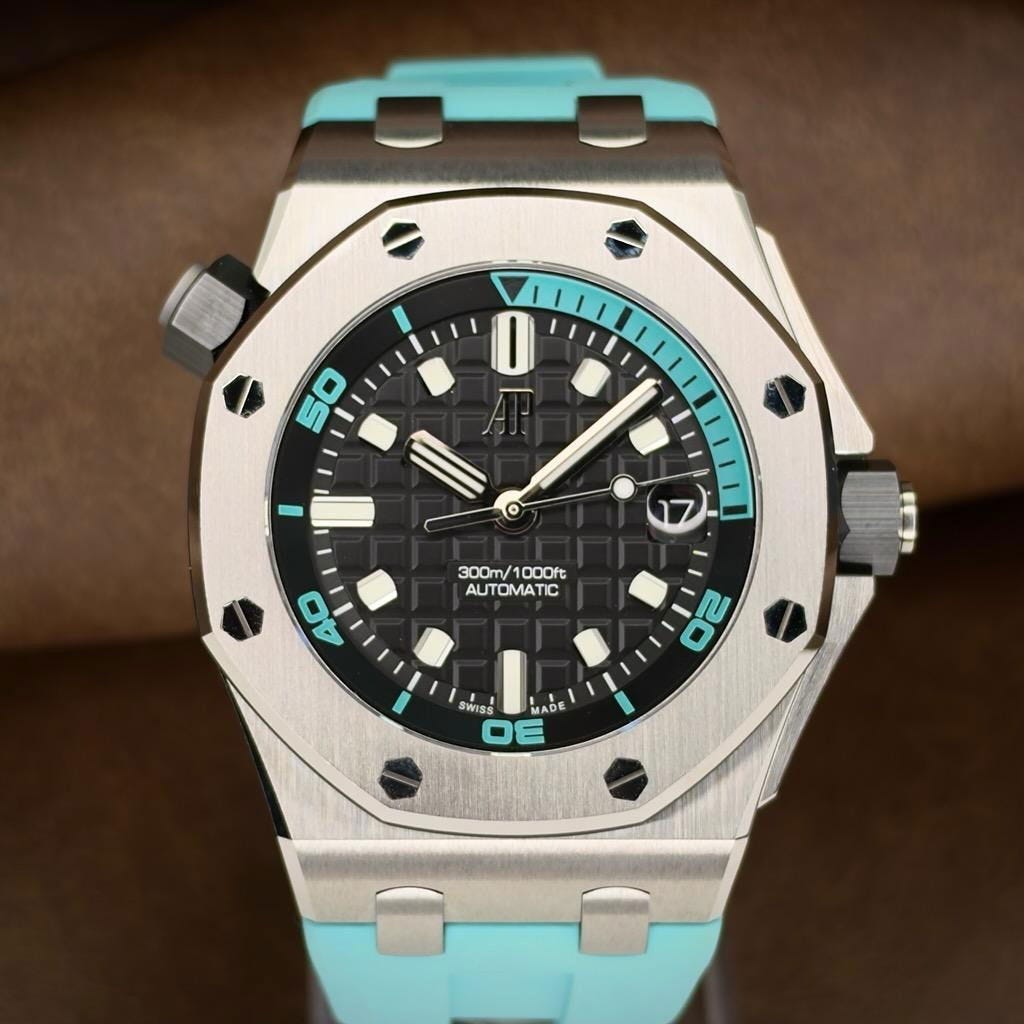
Audemars Piguet’s Turquoise Diver: Tropical Color, Serious Money
Today’s offering is the 2026 Audemars Piguet Royal Oak Offshore Diver, reference 15720ST.OO.A355CA.01. Despite the listing’s “turquoise dial” description, this configuration has a black Méga Tapisserie dial with turquoise diving-scale accents and a matching rubber strap. Its family history runs from the original Royal Oak Offshore in 1993 to the dedicated Diver introduced in 2010, followed by the updated 15720 generation in 2021. The turquoise-accented execution joined the collection in 2026, bringing a distinctly vacation-minded appearance to an otherwise substantial diving watch.
The 42mm stainless steel case is approximately 14.2mm thick and houses the automatic Calibre 4308, with a 60-hour reserve visible through a sapphire display back. Black ceramic screw-down crowns and an internal rotating diving bezel accompany factory-rated water resistance of 300 meters, although a pre-owned watch deserves a pressure test before that specification becomes a swimming plan. This example is described as having an excellent dial and minor wear to the case, bezel and strap. It comes without its original box or papers, which matters when comparing its price with complete examples.
Published U.S. retail is $32,900, while current dealer advertisements include unworn or complete examples around $33,500–$37,000. Those are asking prices; a complete 2026 example recorded as sold at $30,513 in an August auction offers another reference point. My buying assessment would place this worn, watch-only example below that complete-set benchmark, subject to authentication, mechanical condition and total buyer fees. An all-in price in the upper $20,000s could merit attention; approaching new, complete-set asking money would require considerable enthusiasm for turquoise and a remarkably relaxed attitude toward missing paperwork. The supplied closing time is 12:30 p.m. EST today, Tuesday, November 17, 2026.
Current bid: $14,500
Losing Time

Just a Handful of Today’s Big Losers at Auction on Grailzee
Four Watches, Four Sellers, No Agreement With Reality
The watches were available. The bidders showed up. The asking prices apparently arrived from a more optimistic auction.
The 2017 IWC Schaffhausen Pilot Big Spitfire (IW500917) carried a $19,000 asking price but attracted a final bid of $9,000—a $10,000 shortfall, or 52.6% below ask. That is a substantial disagreement over a substantial 46.2mm watch. The seller wanted nearly nineteen grand; bidders were willing to entertain something beginning with nine. The Spitfire had enough power reserve to keep running, but this negotiation ran out of fuel.
The Hublot Big Bang Commando Jungle Limited Edition (301.CI.8610.NR) offered camouflage styling and a $7,910 asking price. Its $3,100 high bid left a $4,810 gap, finishing 60.8% below ask—the largest percentage miss of the four. Apparently, the camouflage worked particularly well on the buyers willing to pay the asking price. They remained undetected. “Limited edition” may describe production, but it does not establish how many people want one at a particular price.
The 2023 Hublot Big Bang Unico Carbon Sky Blue Limited Edition (421.QL.1110.RX.JPN) sought $17,000 and received an $8,100 final bid. That left an $8,900 shortfall, or 52.4% below ask. Carbon construction, a skeleton dial and sky-blue accents supplied plenty of visual excitement. Financial excitement was harder to locate. The bidders valued the package at less than half the seller’s target, suggesting that exclusivity needs a willing audience before it becomes a pricing advantage.
The 2026 Omega Seamaster Planet Ocean 600M (215.92.46.22.01.007)had an $11,000 asking price and a $4,750 high bid—a $6,250 gap, finishing 56.8% below ask. Being a current-year watch did not persuade bidders to approach the seller’s number. Its 600 meters of water resistance was reassuring; its resistance to a substantial pricing haircut was less impressive.
Together, the four sellers sought $54,910, while the combined final bids reached $24,950. That is a $29,960 shortfall, putting the bids collectively 54.6% below the asking prices. Every watch finished below half its ask.
These results do not establish definitive market values: auction exposure, condition, completeness and bidder participation can all affect the outcome. But four misses of this size suggest more than buyers asking for a modest discount. Sellers and bidders were working from substantially different price expectations.
The practical lesson is that a complicated movement, a prestigious name and a limited-edition designation cannot make an ambitious asking price self-validating. Sellers can decline the bids and wait. What they cannot do is count their preferred number as a sale.
Closing Time
Thanks for spending part of your day with Buying Time. Buy what you love, understand what you’re paying for, and remember that “because we can” is a pricing strategy—not a complication. See you tomorrow.