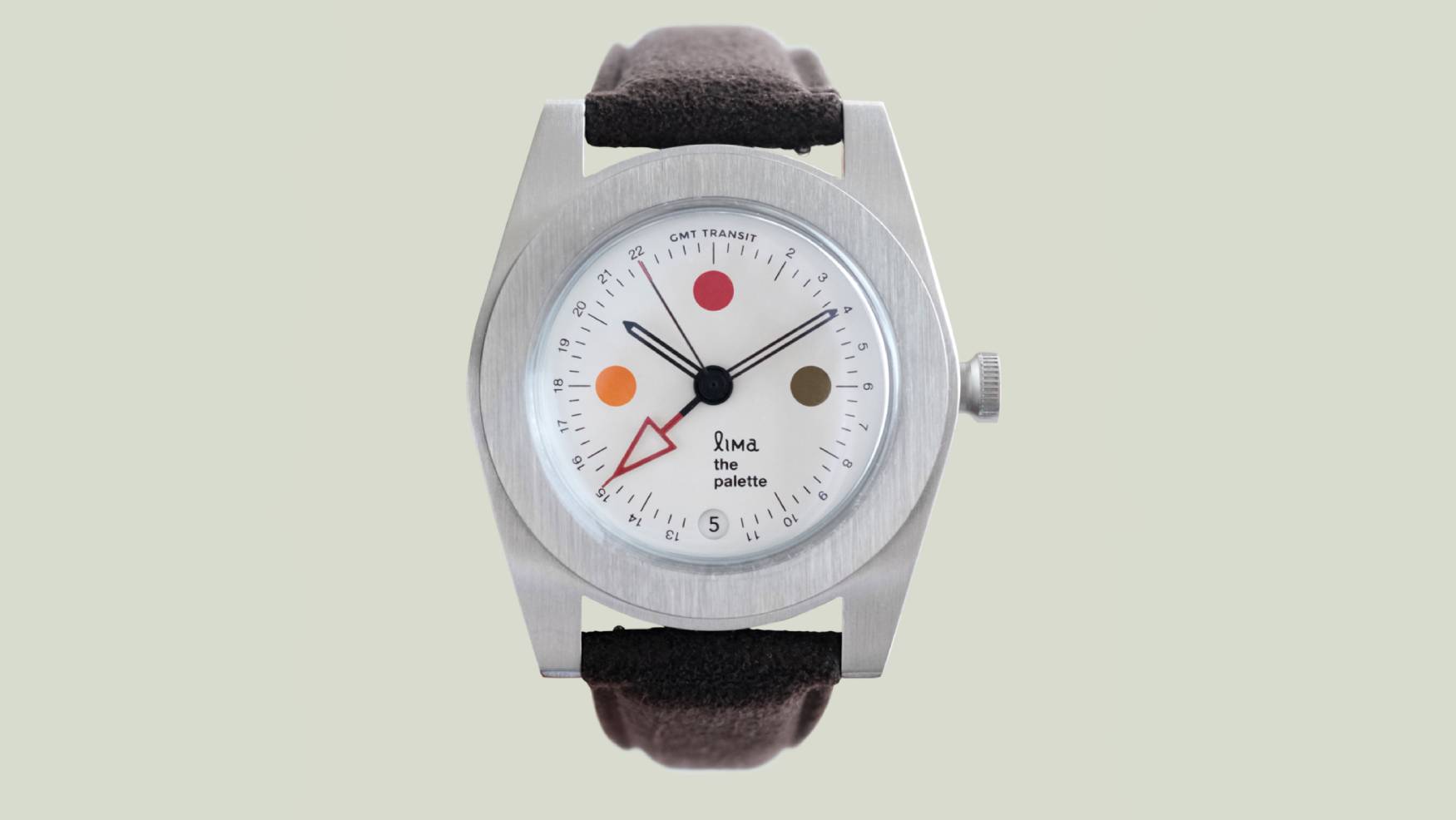
Lima GMT Transit: Design First, Function Perfected
Citizen’s Eco‑Drive technology, launched in 1976, revolutionized watchmaking by harnessing both sunlight and artificial light to power watches, dramatically extending battery life and reducing waste. Early models like the Crystron Solar Cell introduced eight silicon cells and a silver‑oxide battery, delivering up to five years of operation on a full charge. Subsequent innovations—such as amorphous silicon cells in 1986, radio‑controlled accuracy in the late 1990s, and the ultra‑thin 1 mm movements of 2016—have continually improved power efficiency, precision (down to one second per year with the 0100 calibre), and design flexibility, allowing watches to maintain performance even with opaque dials. Beyond performance, Eco‑Drive has evolved aesthetically, incorporating ring‑shaped solar strips, structural ink dials, and washi‑paper finishes that free designers from visible solar cells. Recent highlights include the limited‑edition ATTESA Light in Black Eco‑Drive 50th Anniversary model with satellite‑wave GPS functions, the robust Promaster Dive E365 offering deep‑water capability, and the premium THE CITIZEN collection featuring super‑titanium cases and perpetual calendars. These developments demonstrate how Citizen balances cutting‑edge technology with elegant design, positioning Eco‑Drive as a lasting solution for sustainable, high‑precision watches.
Buying Time Analysis: This story highlights the pioneering evolution of Citizen’s Eco‑Drive technology, demonstrating how decades of innovation have transformed light‑powered watches into highly accurate, long‑lasting, and design‑flexible timepieces that redefine sustainable watchmaking.