Swiss watchmaking’s furlough scheme unwinds as permanent cost cuts increase
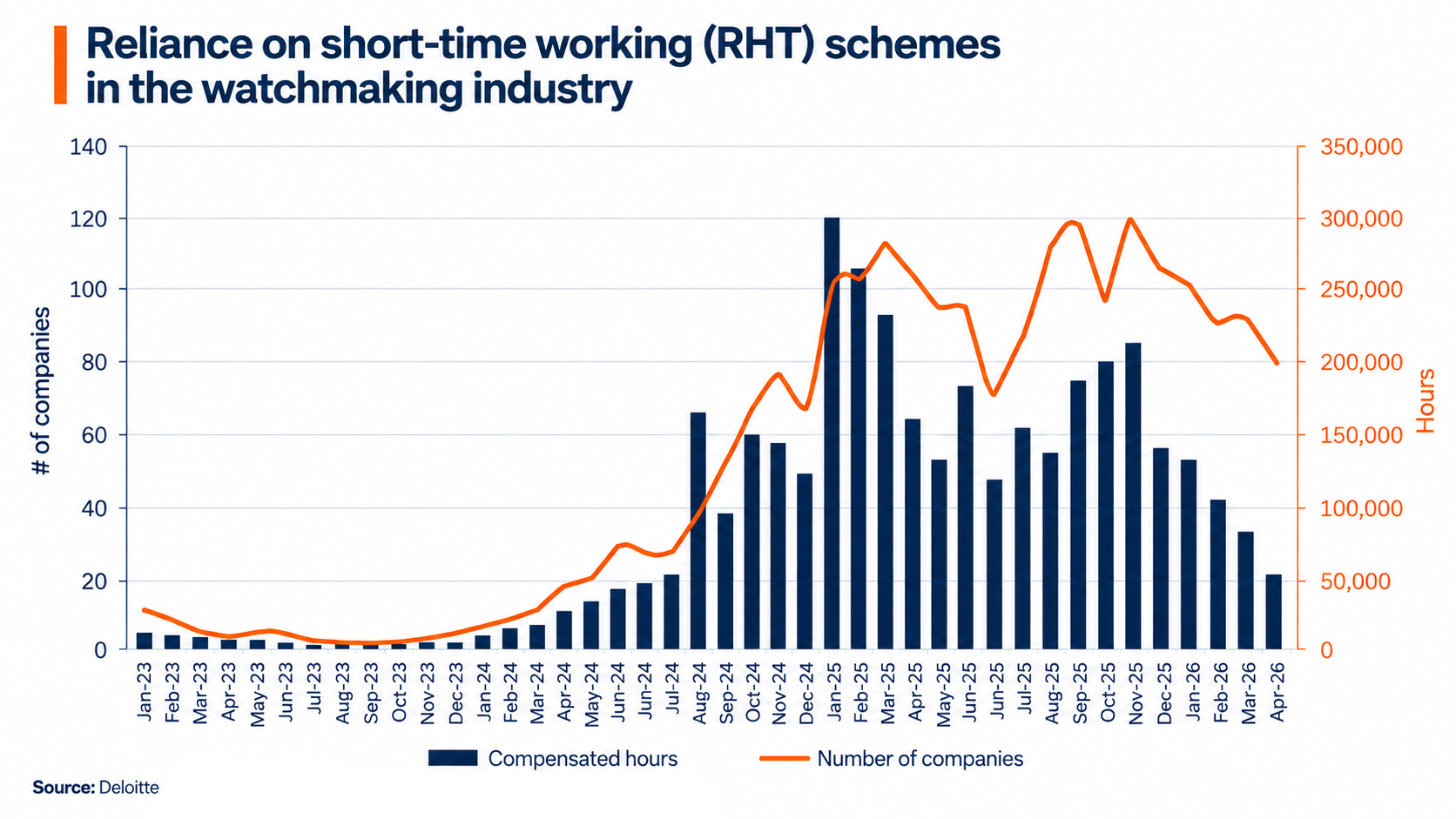
Reliance on Switzerland’s short‑time working (RHT) scheme has sharply declined as watch manufacturers and component suppliers shift toward permanent cost‑cutting measures, including reduced investment, lower production capacity and staff reductions. After peaking at around 120 companies in early 2025, usage fell to just over 20 by April 2026, and compensated hours dropped to about 200,000 in the same month. Deloitte’s 2025 survey showed that 70 % of component makers cut capital expenditure and 63 % relied on RHT, yet many have also trimmed permanent and temporary staff, indicating a broader restructuring beyond temporary hour reductions. Swatch Group stands out by deliberately avoiding short‑time work and redundancies, choosing to retain its workforce and capacity despite a negative operating result in 2025. This strategy allowed the group to quickly respond to a demand rebound, leading to accelerating sales in the first half of 2026 and improved factory utilisation. While the decline in RHT use may signal a recovery in the watch market, it also reflects that many suppliers have already adjusted to a smaller market through lasting cuts in investment, capacity and employment.
Buying Time Analysis: The article highlights how Swiss watchmakers are shifting from temporary short‑time work schemes to permanent cost‑cutting measures, revealing deeper industry challenges and signaling that the sector’s recovery may depend on strategic investments and workforce decisions.