Time Graphing: Today’s Watch Universe - July 6, 2026
Baume & Mercier changes hands, Trump Watches becomes a licensing story, and watchmaking keeps stretching beyond ordinary time display.

The watch world has always been good at preserving history. What feels different today is how aggressively it is trying to repackage that history into new ownership structures, new visual languages, new collaborations, and new commercial models. The industry is not just asking which brand has the better movement, richer archive, or more convincing heritage story. It is asking who can make those assets productive in a market that is becoming harder to impress.
That is the real story behind Damiani Group completing its acquisition of Baume & Mercier. Baume & Mercier has never lacked history. The problem has always been what to do with it. The brand has the age, the name recognition, the accessible-luxury positioning, and a collection structure that should make it a meaningful player. But inside Richemont, it often felt like a brand waiting for someone to make a sharper decision about its future. Damiani’s bet is that distribution, mono-brand retail, and more focused stewardship can turn a familiar name into something more commercially alive.
That matters because the mid-luxury watch sector is not short of brands. It is short of clarity. There are plenty of companies with archives, plenty with handsome cases, plenty with decent automatic movements, and plenty telling consumers that heritage still matters. What is harder is building a reason for the consumer to care right now. Baume & Mercier under Damiani will have to answer that question in a way that is more compelling than “we have been around for 200 years.” In today’s market, age is not strategy. It is raw material.
At the other end of the spectrum, Trump Watches shows that a watch brand does not always need traditional watchmaking depth to become commercially meaningful. The reported scale of the licensing operation is the point. This is not the collector’s fantasy of Geneva benches, hand-finishing, and movement architecture. It is the modern celebrity product machine applied to watches. Name, audience, emotion, direct commerce, scarcity cues, and margin. The uncomfortable part for traditional watch people is that it works.
The industry can pretend this is an outlier, but it is not. Watches have always been identity objects. The only thing that changes is the identity being sold. Sometimes it is aviation. Sometimes it is motorsport. Sometimes it is dive history. Sometimes it is old-world craft. Sometimes it is a political celebrity brand wrapped around Swiss-made language and patriotic design cues. The product may make purists roll their eyes, but the commercial lesson is obvious: distribution of attention is now as powerful as distribution of watches.
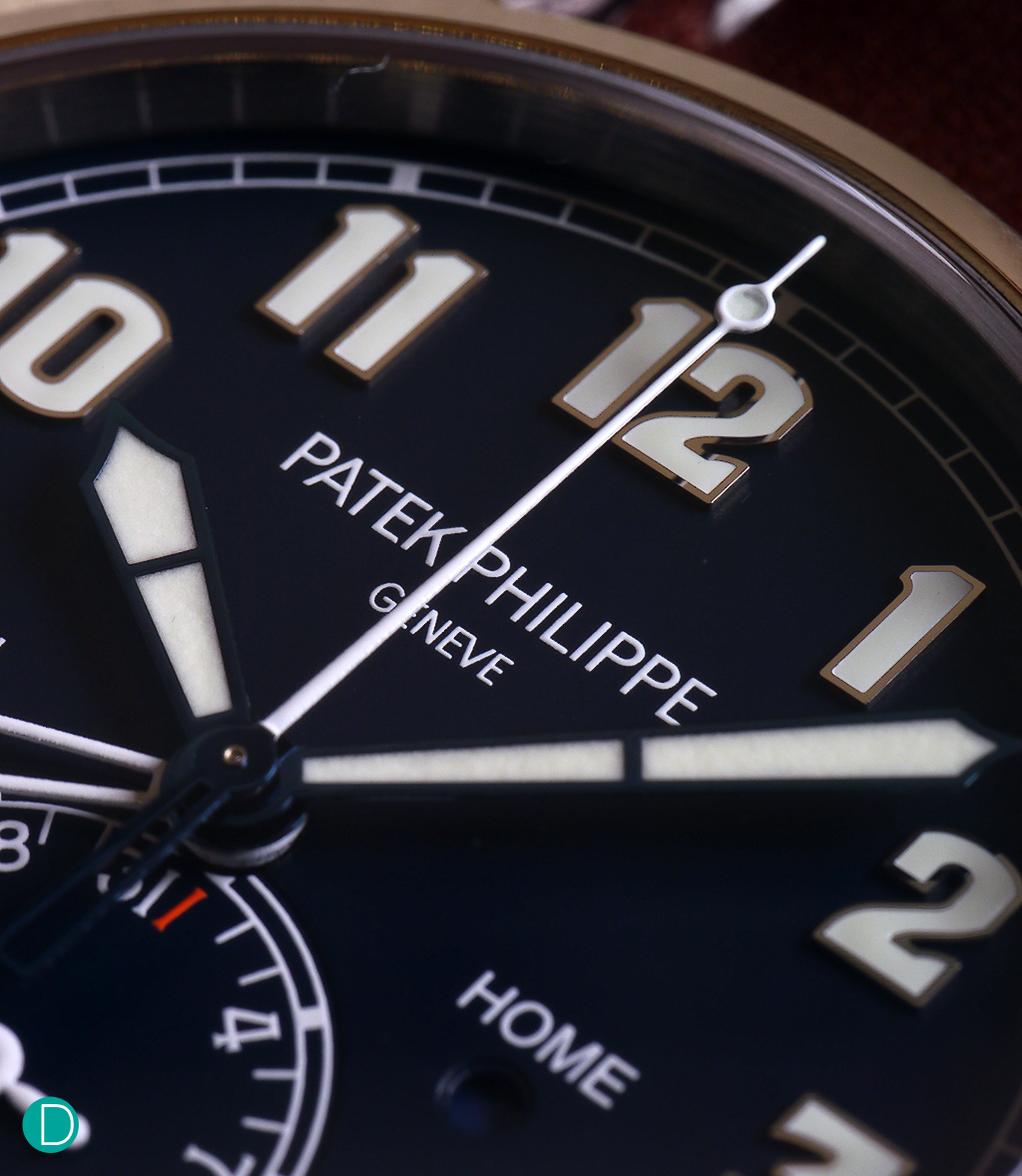
That same pressure to stand out is visible in today’s feature set. The ABCs of Time looks at watches that abandon central hands, tracing regulator displays, retrograde indications, off-center layouts, and single-hand concepts. This is not just a design essay. It is a reminder that the dial remains watchmaking’s most important storytelling surface. A watch can use the same basic function as every other watch and still feel completely different if it teaches the eye to read time another way.
That is why the article on why watch renders so often leave us underwhelmed hits harder than it might first appear. Renders are efficient, clean, and controllable. They are also often dead. Watches live through reflection, shadow, wrist presence, distortion, texture, and proportion. The closer the industry gets to launching products as digital images first and physical objects second, the more important honest photography becomes. A watch is not a logo file. It is a small machine that depends on light for much of its emotional effect.
The best brands understand this. Breguet’s Tradition collection works because it does not merely reference history. It turns history into visible mechanics. The bridges, barrel, dial placement, and exposed architecture make the watch feel like a modern wrist-worn argument for why Abraham-Louis Breguet still matters. That is very different from simply printing an old name on a dial and hoping collectors fill in the blanks.
Meanwhile, watchmaking’s increasing partnership with the art world suggests that the next frontier may be less about traditional brand collaborations and more about authorship. The most interesting artist watches are not just watches with decorative dials. They are objects where the artist’s idea changes the way the watch is understood. That is powerful because the watch industry, for all its obsession with craft, can become visually conservative very quickly. Art gives it permission to be strange again.
And maybe that is the thread running through the day. Baume & Mercier needs a new commercial frame. Trump Watches proves attention can be monetized with startling speed. Breguet shows that history works best when it becomes form. Moritz Grossmann, Seiko Astron, regulator displays, art collaborations, and even the critique of renders all point to the same truth: the watch itself is no longer enough unless the idea behind it is sharp.
The brands that win from here will not simply be the ones with the oldest archives or the loudest launches. They will be the ones that understand what their watches are supposed to mean before they ask anyone to buy them.
-Michael Wolf