Time Graphing: Today’s Watch Universe - July 8, 2026
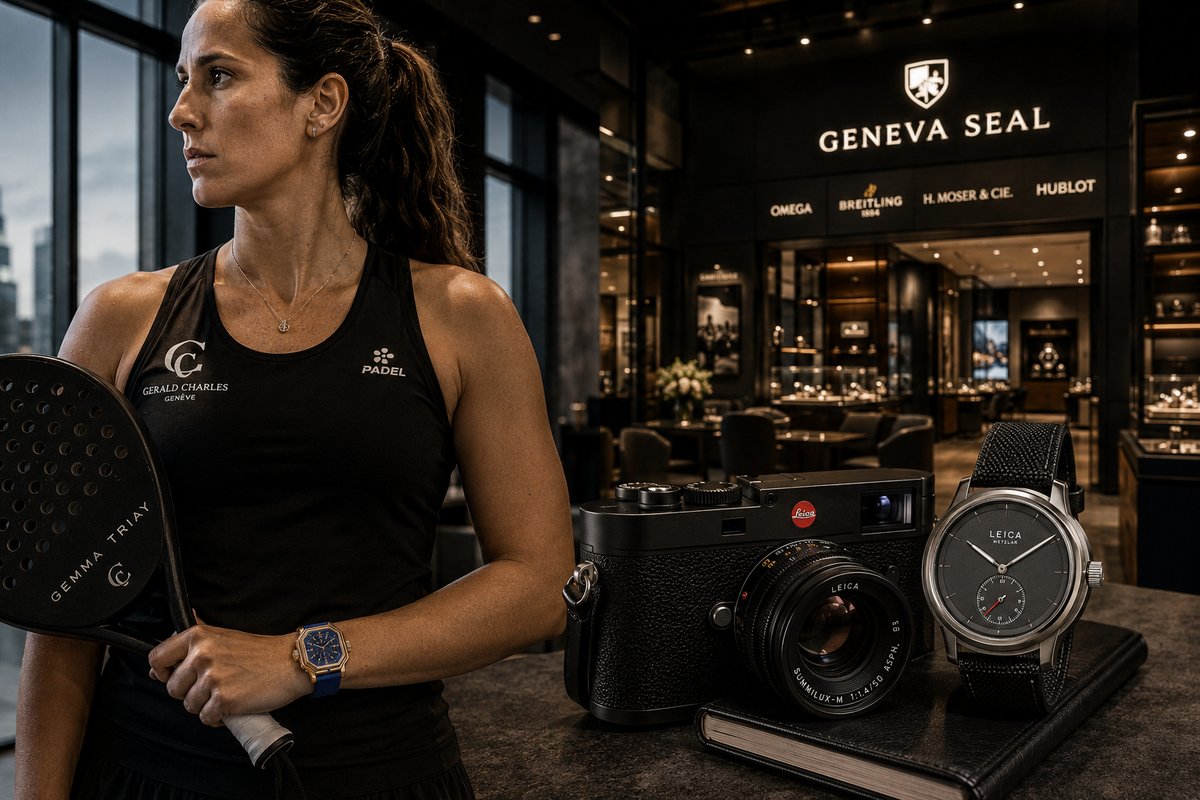
The watch business keeps telling us it is about product, but the better story right now is about context. A watch is still a watch, of course. It has a case, a movement, a dial, a bracelet or strap, and a price tag that may or may not make sense after a second cup of coffee. But increasingly, the object itself is only the beginning of the commercial proposition. The industry is trying to decide where watches belong: inside lifestyle spaces, inside sports culture, inside celebrity media, inside legacy brands that never started as watchmakers at all.
That is what makes Geneva Seal’s move to Fulton Market interesting. This is not just a relocation from Oak Street to a newer neighborhood. It is a bet that the modern collector wants a destination, not merely a counter. By putting Omega, Breitling, H. Moser & Cie., and Hublot into separate boutiques under one broader luxury-retail umbrella, while reserving the Geneva Seal Gallery as a more intimate appointment-driven space, the retailer is building something closer to a watch clubhouse than a traditional showroom. The implied message is clear: come in, stay awhile, have a conversation, look at art, talk about independents, and maybe buy something because the environment made the watch feel more meaningful.
The Gerald Charles announcement points in the same direction from a different angle. Signing Gemma Triay, the world No. 1 padel player, is not simply another athlete-ambassador deal. It is a brand choosing a sport that is still rising globally, still forming its luxury associations, and still available for a watchmaker to help define. Tennis has long been crowded with watch money. Padel offers a fresher court. For Gerald Charles, that matters because the brand is not just selling design heritage from Gérald Genta. It is trying to place that heritage into active, contemporary culture.
Then there is Leica’s watchmaking project, which remains one of the more fascinating examples of brand extension in the watch world. Leica watches make sense only if you accept that watchmaking is not always about watchmaking first. Sometimes it is about translating a design code. The ZM models are not trying to turn Leica into Rolex, Omega, or Grand Seiko. They are trying to give Leica people another beautifully machined object through which to express their existing loyalty to the brand. That is a narrower proposition, but not necessarily a weak one. In luxury, narrow can work if the audience is devoted enough.
The week’s celebrity watch moments are the louder version of the same idea. Whether it is Charles Leclerc with a Richard Mille, Andrew Garfield with an unreleased IWC, Roger Federer with a Rolex, or Harry Styles with a Cartier Tank, the watch is no longer a quiet accessory hiding under a cuff. It is part of the image architecture. It tells the audience what kind of taste, access, nostalgia, money, or insider status the wearer wants to project. Watches have always carried signals. What has changed is how visible, shareable, and instantly decoded those signals have become.
That leaves the industry in an interesting place. The old hierarchy still matters: movement quality, finishing, provenance, rarity, brand power. But those things increasingly need a stage. A watch may be technically excellent and still feel invisible if it has no cultural placement. A retailer may have great inventory and still feel dated if the experience feels transactional. A non-watch brand may have no historic claim to horology and still make the case if the design language is strong enough. And an emerging sport may suddenly become a useful luxury platform because the right ambassador gives it a face.
The watch world is not abandoning watchmaking. It is surrounding it with new forms of meaning. The boutique becomes a gallery. The athlete becomes a cultural bridge. The camera company becomes a watch brand. The celebrity sighting becomes product placement whether anyone admits it or not. The collector, meanwhile, is left to sort through the theater and decide which stories actually make the watch better, and which ones just make the marketing more expensive.
-Michael Wolf