Time Graphing: Today’s Watch Universe - July 9, 2026
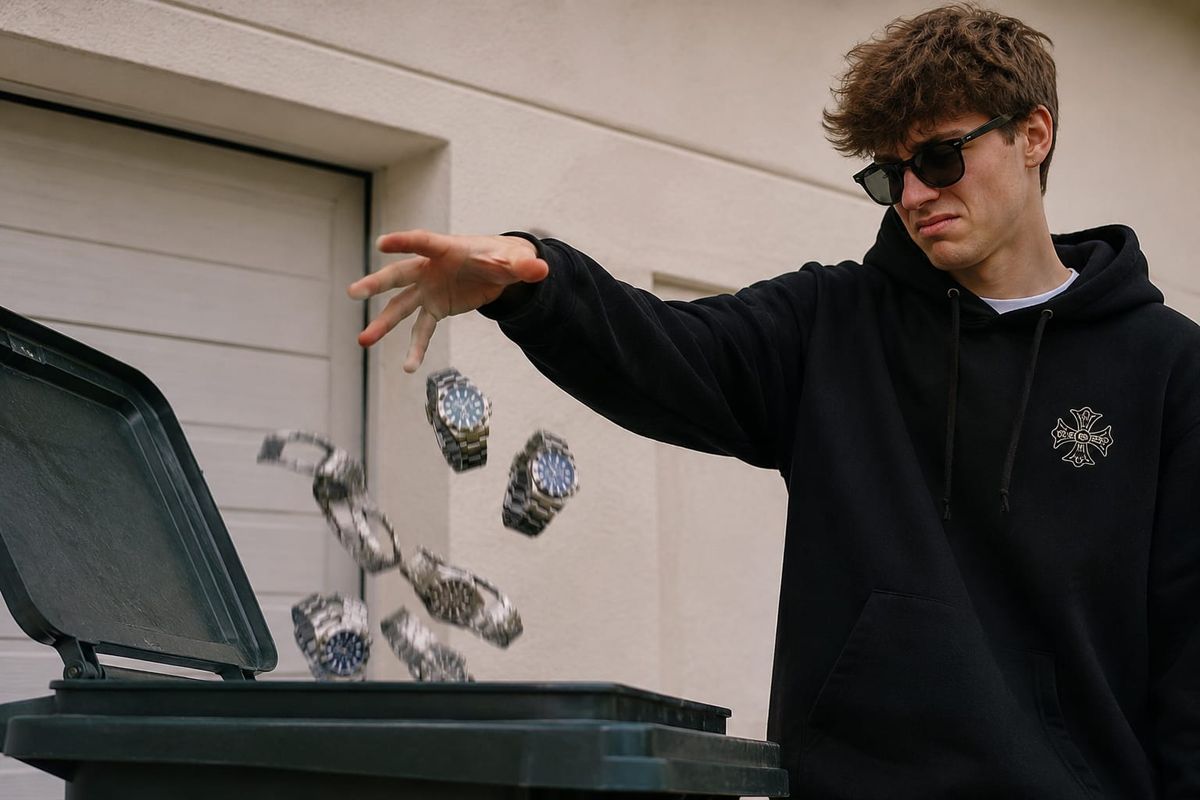
The luxury watch industry loves to talk about innovation, but innovation only matters if someone still knows how to build the thing being innovated upon. Technology is the easy story because it photographs well. Silicon escapements, exotic alloys, proprietary materials, ceramic cases and connected accessories all make clean headlines. Craftsmanship is slower, quieter and much harder to package. Yet today’s stories suggest that craftsmanship, not technology, may become the industry’s most valuable currency over the next decade.
That is the real warning inside British watchmaking’s skills crisis. The country’s independent revival has produced energy around names like Studio Underd0g, Bremont, Christopher Ward, Roger W. Smith and the Struthers, but growth exposes a much deeper problem. The industry is not running out of ideas. It is running out of people capable of executing them. Case makers, dial makers, engravers, restorers and other specialists represent knowledge accumulated over years, often passed directly from one person to another rather than written cleanly into a manual. Every retirement risks taking part of the craft with it.
This is why apprenticeships, training schools, QEST support and the Alliance of British Watch and Clock Makers’ Careers Hub matter. They are not just workforce-development programs. They are an attempt to prevent an industry from becoming all brand story and no bench strength. British watchmaking has a real chance to define itself around human expertise rather than scale, but that only works if the next generation can actually learn the work before the previous one leaves the room.
At the same time, Cartier’s rise among younger collectors shows that the market’s definition of value is changing. For years, luxury watch culture seemed trapped inside the steel sports watch monoculture: integrated bracelets, waiting lists, secondary-market premiums and a lot of wrist shots trying very hard to look casual. Cartier cuts across that noise because its appeal is not based on technical intimidation. The Tank, Santos, Panthère and Baignoire work because they are design objects with cultural memory. They have the confidence not to explain themselves.
That matters because Gen Z collectors appear less interested in inheriting the old hierarchy unchanged. A watch does not need to look like it can survive a submarine mission to feel important. It can be small, elegant, quartz, vintage, jewelry-adjacent or quietly strange. Cartier’s advantage is that it already made that argument decades ago. The market is simply catching up.
Hublot is trying to answer a different version of the same question. Its recalibration under Julien Tornare suggests that even the loudest brands eventually have to return to fundamentals. Better finishing, stronger quality control, more robust after-sales service and longer warranties may not create the instant dopamine hit of a celebrity launch, but they build trust. For a brand built on disruption, the most disruptive move may be proving that the product is better than the punchline.
Even the XBAND smart strap fits the pattern. It does not ask collectors to abandon their mechanical watches for a smartwatch. It moves the connected layer into the strap, allowing the traditional watch to stay on the wrist. That is the smarter form of innovation: technology serving habit instead of trying to replace it.
Across today’s issue, the through line is clear. The future of watches will not be decided only by who makes the most complicated movement, the boldest case or the loudest collaboration. It will also be decided by who preserves skill, understands cultural change and builds enough trust for collectors to keep caring. Luxury has always depended on scarcity. Increasingly, the scarcest thing in watchmaking may not be a limited edition. It may be the human ability to make something worth limiting.
—Michael Wolf