Vintage Look at the Longines Signet
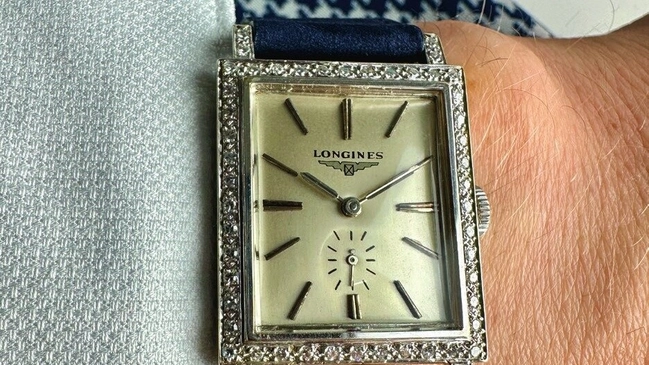
The Longines Signet, introduced in the mid‑1950s, epitomized post‑war luxury with its 18‑karat gold case, extensive diamond set‑bezels, and a clean, restrained dial. Priced at $495 in 1956—far above the average American annual income of $4,500—it signaled success for businessmen who wore it as a status symbol, contrasting with the later perception of diamond watches as primarily feminine. Its dimensions, just over 25 mm wide, 29 mm long, and 7.75 mm thick, offered a modest yet distinctly masculine profile, while the manual‑wound Caliber 9LT movement, featuring 17 jewels and Swiss‑made components, underscored the watch’s technical excellence. Production combined Swiss precision with American practicality: the movement was manufactured in Saint‑Imier, Switzerland, then shipped to the United States where cases and dials were locally produced to avoid heavy import duties and cater to regional tastes. This collaboration resulted in a watch that not only reflected the booming U.S. economy of the era but also highlighted Longines’ adaptability and commitment to quality, making the Signet a notable example of mid‑century horological craftsmanship.
Buying Time Analysis: This story highlights the Longines Signet as a hallmark of 1950s luxury and craftsmanship, illustrating how its innovative use of gold and diamonds symbolized post‑war prosperity and the cultural shift toward men’s high‑end dress watches, making it a pivotal example of horological history and design evolution.