Everything To Know Before Buying A Pilot Watch - YouTube - Teddy Baldassarre
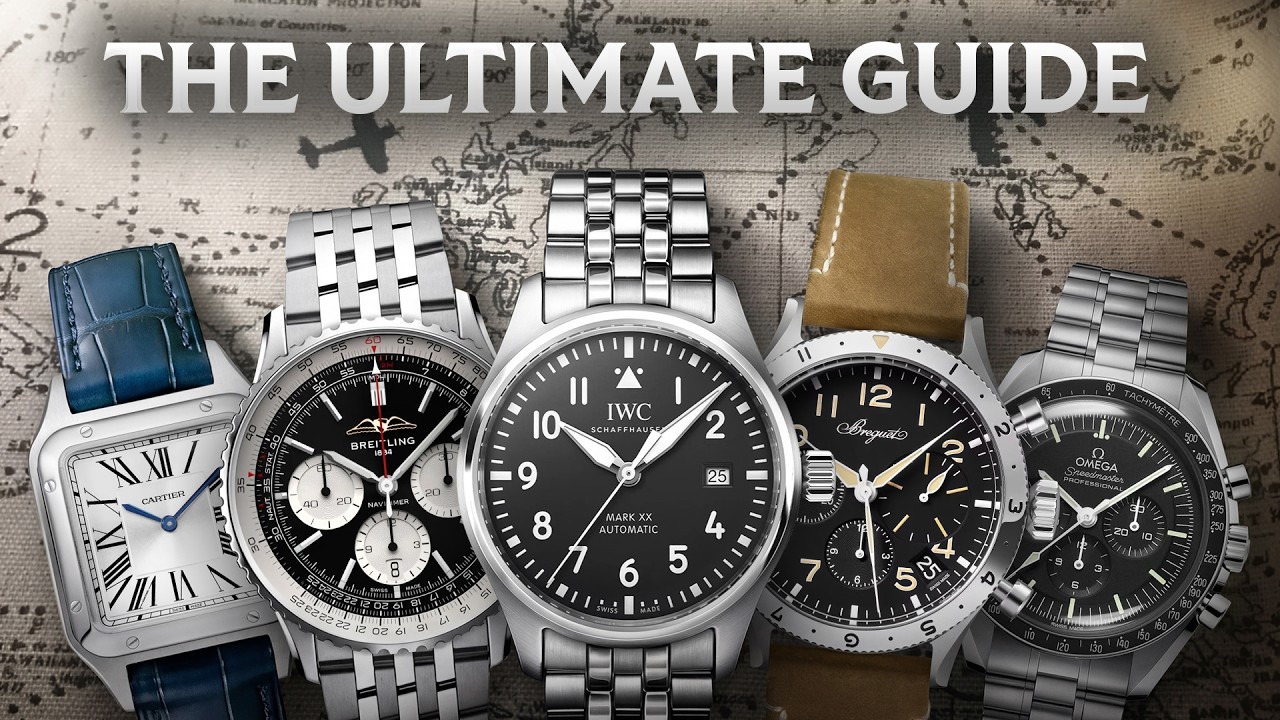
Pilot watches evolved from early aviation tools designed for legibility and durability, featuring oversized crowns, luminous markings, robust cases, and navigation‑oriented functions such as slide rules and rotating bezels. The genre began with purpose‑built wristwatches that replaced pocket watches in cockpits, progressed through wartime military specifications that cemented the flieger aesthetic, and later expanded into civilian aviation with brands emphasizing heritage and functional complications. Modern iterations reflect both historically faithful designs and contemporary lifestyle‑forward interpretations, incorporating quartz movements, advanced materials, and a range of practical features like dual time zones, chronographs, and date displays. When choosing a pilot watch, consider whether a classic flieger look, a slide‑rule navigation style, or a modern aesthetic best matches personal taste and intended use. Prioritize clear readability, comfortable size, and functional elements that will actually be utilized, while weighing brand heritage against value‑driven alternatives, as many models share the core design language despite differing histories and price points.