Time Graphing Today’s Watch Universe - July 17, 2026

The watch industry has found yet another way to make buying a watch more complicated than buying a house.
Swatch and Omega’s new Mission to the Moon 1969 is not merely limited, expensive by MoonSwatch standards and sprinkled with enough Moonshine Gold to inspire online arguments about melt value. It also requires applicants to complete a two-hour-and-fifteen-minute electronic examination covering brand history, space exploration and whatever other subjects Swatch believes should separate the deserving from the insufficiently committed.
Only 1,969 watches will be produced, which means the process is less like shopping and more like applying to a selective university where the diploma is a quartz chronograph made from bioceramic.
This may sound ridiculous, but it is also a clever recognition of how modern watch collecting works. Scarcity alone is no longer enough. Collectors want a story, an experience, a ritual and, preferably, something they can complain about online while pretending they are not desperate to be selected. Swatch has taken the familiar limited-edition frenzy and converted it into an admissions process. Anyone can stand in line. The truly committed will apparently write an essay.
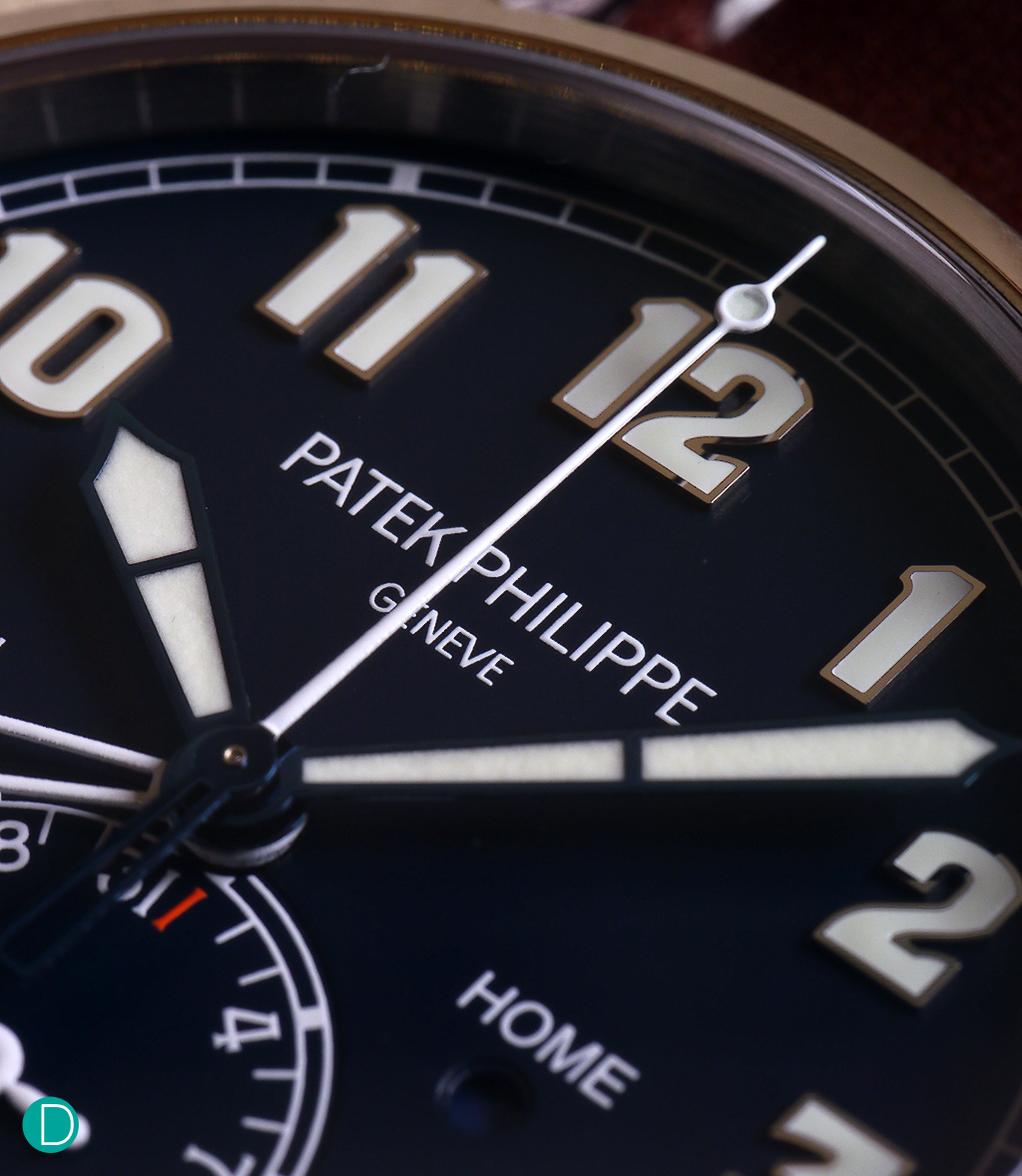
At the opposite end of the market, Patek Philippe has created a watch for buyers who already passed every imaginable financial examination. The Celestial Ref. 6105G displays civil time, sidereal time, lunar phases, the movement of the stars, sunrise and sunset, all inside a 47 mm white-gold case costing $437,610.
It took five years to develop, generated six patent applications and is calibrated around Geneva’s horizon. Buyers living elsewhere may need to adjust it manually, which seems reasonable. Anyone spending nearly half a million dollars on a wristwatch should probably be expected to know where Geneva is.
The Patek and the MoonSwatch appear to occupy different universes, but they are selling essentially the same thing: participation. The Patek buyer gains entry into the smallest and most financially insulated corner of haute horology. The Swatch buyer earns the right to explain how he completed an online application, survived internal review and was judged worthy of purchasing a $570 plastic-and-gold chronograph.
Both watches transform ownership into membership.
Meanwhile, Rolex has apparently decided that the desk clock should be physically exhausting. Its newly revealed inclined-plane clock is powered by gravity as it rolls down a sloped surface over seven days. When it reaches the bottom, the owner must lift it back to the top.
This is Rolex’s version of winding a clock: pick it up and carry it uphill.
The object is fascinating because Rolex rarely exposes this much mechanical theater. The skeletonized movement, Microstella balance and rack-and-pinion system are designed to be seen, not concealed. It is architectural, kinetic and likely destined for boutiques, executive offices and the homes of people who consider a conventional desk clock insufficiently athletic.
There is also something wonderfully appropriate about Rolex producing a machine that advances slowly, predictably and under the force of gravity. The company has built an empire by controlling supply, resisting urgency and allowing demand to roll toward it.
That demand remains remarkably durable. Even as the broader secondary market begins to recover, Cartier is now generating the most heat. According to Chrono24’s index, Cartier’s secondary-market momentum is rising three-and-a-half times faster than any other tracked luxury brand. Prices increased 5.9 percent in June and nearly 10 percent over six months.
Cartier watches still trade at an average 28.1 percent discount to retail, which may help explain the enthusiasm. Buyers appear to have rediscovered that a Tank, Santos or Panthère can be historically important, visually distinctive and substantially less expensive than the steel sports watches that dominated collecting for the past decade.
The important development is not merely that Cartier is rising. Ten of the thirteen brands tracked by Chrono24 moved higher. Patek Philippe, Jaeger-LeCoultre and others are participating in what increasingly resembles a genuine secondary-market recovery rather than a temporary bounce created by one fashionable reference.
Rolex, of course, remains Rolex. The discontinued Pepsi GMT-Master II continues to attract attention, because nothing stimulates watch demand quite like telling collectors they can no longer have something.
Oris CEO Rolf Studer is talking about a different kind of value. His continued emphasis on sustainability reflects an effort to position environmental and social responsibility as part of the company’s operating model rather than another commemorative dial color.
Studer points to partnerships supporting ALS research, oyster restoration and the Great Barrier Reef, while acknowledging that travel and logistics remain significant contributors to the company’s carbon footprint. That admission matters. Sustainability claims tend to become suspicious when brands describe themselves as having solved everything.
Oris has instead chosen persistence. The company keeps discussing the subject, keeps attaching watches to specific initiatives and keeps insisting that responsibility should survive beyond the launch campaign.
Taken together, today’s stories show an industry trying to manufacture meaning at every level. Swatch makes buyers prove themselves. Patek maps the heavens. Rolex converts gravity into a weekly ritual. Cartier demonstrates that design heritage can outlast speculative fashion. Oris argues that a watch company should account for what happens beyond the watch.
The product remains central, but increasingly it is asked to carry something larger: history, identity, access, responsibility, entertainment or a very expensive view of the night sky over Geneva.
Apparently, telling the time is now the easy part.
-Michael Wolf