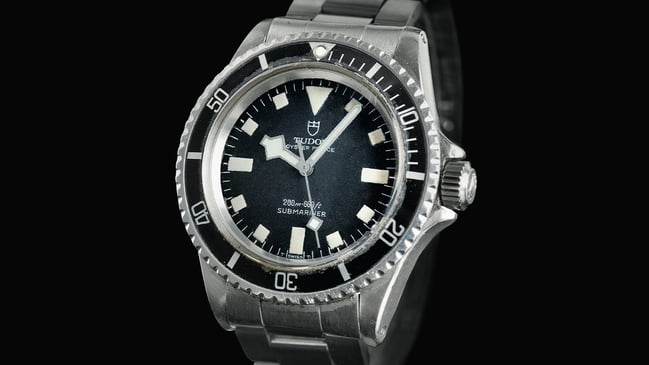
Issue #280 | Buying Time - October 30, 2026
Rolex puts a price on ownership, independents rethink the dial, and the auction market asks what originality is really worth.
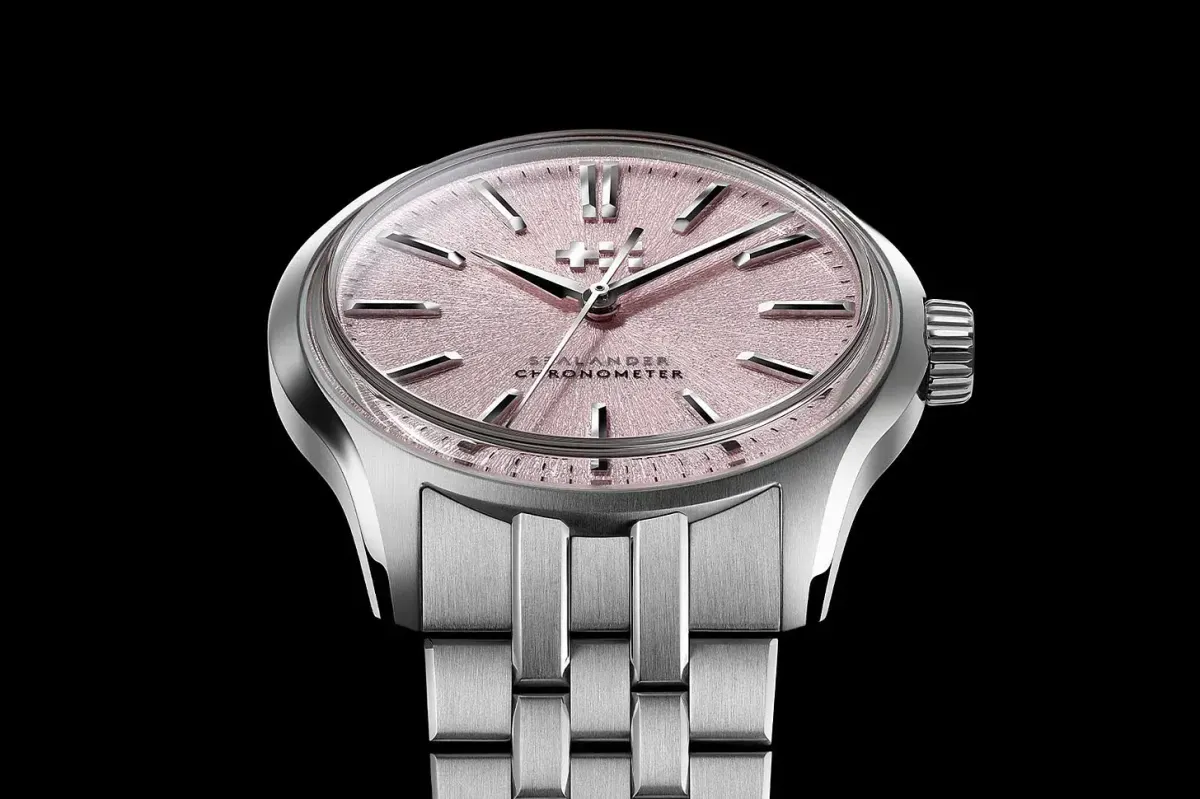
Buying Time in 30 Seconds
The purchase price is only the beginning. Rolex’s newly public servicing schedule puts actual numbers beside a long-term ownership obligation, while yesterday’s Breguet auction demonstrates the distance that can separate a seller’s expectations from buyers’ willingness to pay. The white-gold Tradition GMT reached US$23,500 and remained unsold.
Today’s new watches offer several competing definitions of value. Citizen combines a traveler GMT with Damascus steel and forged carbon. Christopher Ward refines the Sealander with textured dials and a slimmer case. Habring and SJX put a monopusher chronograph and perpetual calendar into a 38.5 mm watch, while Glashütte Original gives aventurine room to shine by reducing the display to two hands.
Elsewhere, microbrands challenge familiar classifications, two jumping-hour reviews demonstrate how differently the same complication can be interpreted, and Sinn’s U50 reminds us why an uncompromising tool watch still matters. Our auction spotlight turns to the MEC-1, a small-production independent with an unusual jumping-hour display and an original retail benchmark of approximately US$25,000. Its auction is scheduled to close at noon Eastern on Sunday, November 1.
Time Graphing Today’s Watch Universe
The Price of Being Different—and the Cost of Staying the Same
There are several prices attached to every watch. There is the price the manufacturer announces, the price a collector pays, the cost of keeping it running, and the amount another buyer will eventually offer. Those numbers can tell very different stories about the same object.
Today’s issue brings them unusually close together. Rolex is making the cost of maintaining a familiar watch easier to understand. Independent makers are asking collectors to assign value to unfamiliar designs. And the auction market continues to demonstrate that admiration, rarity and an original retail price do not necessarily produce a willing buyer at the seller’s preferred number.
Start with Rolex’s public servicing prices. Transparency is welcome because maintenance is part of ownership, whether or not it appears in the excitement of the original purchase. A watch sold with the promise of lasting for generations also carries an obligation to service it across those generations. Knowing the likely starting cost makes that promise more concrete.
It also changes the arithmetic of buying used. Two watches offered at the same price may represent different propositions if one has recently been serviced and the other has an unknown history. The less expensive listing can become the more expensive purchase after the first trip to the workshop. Collectors routinely debate a few hundred dollars in negotiating a sale; the service schedule suggests they should devote comparable attention to what happens afterward.
At the other end of today’s conversation is the question posed by our feature on microbrands. What, exactly, does that word tell us? Increasingly, it describes an attitude and a relationship with collectors more reliably than a production total or a price bracket. Small companies can make straightforward watches, technically ambitious watches, inexpensive watches and surprisingly expensive watches. The label offers an introduction. The individual watch still has to make its case.
That case becomes especially interesting when a maker changes the way we read time. The Sartory-Billard SB10 “Disco Ball” turns the display into mechanical theater, using transparent discs and a prominent central steel element to create something far removed from the usual arrangement of hands and markers. The Lesablier Temporis Sauterelle approaches the jumping hour through stone dials and a more accessible price.
Neither needs to imitate the other to justify its existence. That is one of the pleasures of independent watchmaking: a familiar complication can become the starting point for very different objects. The collector’s task is to decide whether the interpretation adds lasting pleasure, whether the execution supports the idea, and whether the maker can support the watch after the initial enthusiasm fades.
Our MEC-1 auction report brings those questions into the secondary market. Here is an uncommon watch with a distinctive display and a serious original price. Its appeal depends on someone wanting precisely what makes it unusual. A small production run limits supply, but it can also mean a small audience. Those two forms of scarcity should never be confused.
Yesterday’s Breguet result offers a related lesson from an established name. A white-gold Tradition GMT attracted a US$23,500 bid and still did not trade. That outcome does not erase the watch’s craftsmanship or its place in Breguet’s history. It tells us that this particular auction did not produce agreement between buyer and seller. The market can respect an object without accepting the number attached to it.
Meanwhile, Christopher Ward’s Sealander Yalos and Citizen’s new Series 8 GMT show how much can be offered without venturing into five-figure territory. One emphasizes proportion, surface treatment and refinement; the other combines useful travel functionality with unusual materials. Both invite a more specific conversation than whether a watch feels “luxurious.”
Then there is the Sinn U50, which makes its argument through legibility, compact dimensions and substantial diving capability. Its presence is useful in an issue filled with sparkling glass, stone, skeletonization and stars. Some watches earn their place by offering more visual interest. Others earn it by making themselves dependable companions.
The common thread is that value becomes clearer when we ask precise questions. What does this watch do for me? What will it cost to maintain? What makes its design worth returning to? How comfortable am I with its maker’s scale and service arrangements? And if I eventually sell it, am I prepared for the next collector to reach a different conclusion?
There is plenty of room in collecting for a familiar Rolex, an inventive jumping hour, a practical Sinn or a dial that resembles a night sky. The strongest purchase is the one whose appeal survives an honest look at all its prices.
-Michael Wolf
News

Rolex Makes the Cost of Servicing Easier to Understand
Rolex has published a public servicing price schedule, giving owners a clearer starting point for a significant part of long-term ownership. Modern time-only and time-and-date models begin at US$660, with many modern sports references at US$770 and models including the Daytona and Sky-Dweller at US$940. Five-digit references generally cost more, while specialized vintage work can reach US$8,810.
The listed service covers movement work and testing, with exclusions and additional charges depending on the reference and required repairs. Refinishing is optional, and owners should distinguish the standard service price from the final estimate for their particular watch. Completed servicing carries a two-year service guarantee.
The vintage analysis fee also needs careful reading: Rolex lists US$280 when an estimated vintage service is declined, rather than a universal rejection charge on every submission. For collectors comparing pre-owned examples, documented maintenance now has an especially tangible place in the buying calculation.
Go Deeper · Go Deeper: Rolex’s Published Schedule
Features
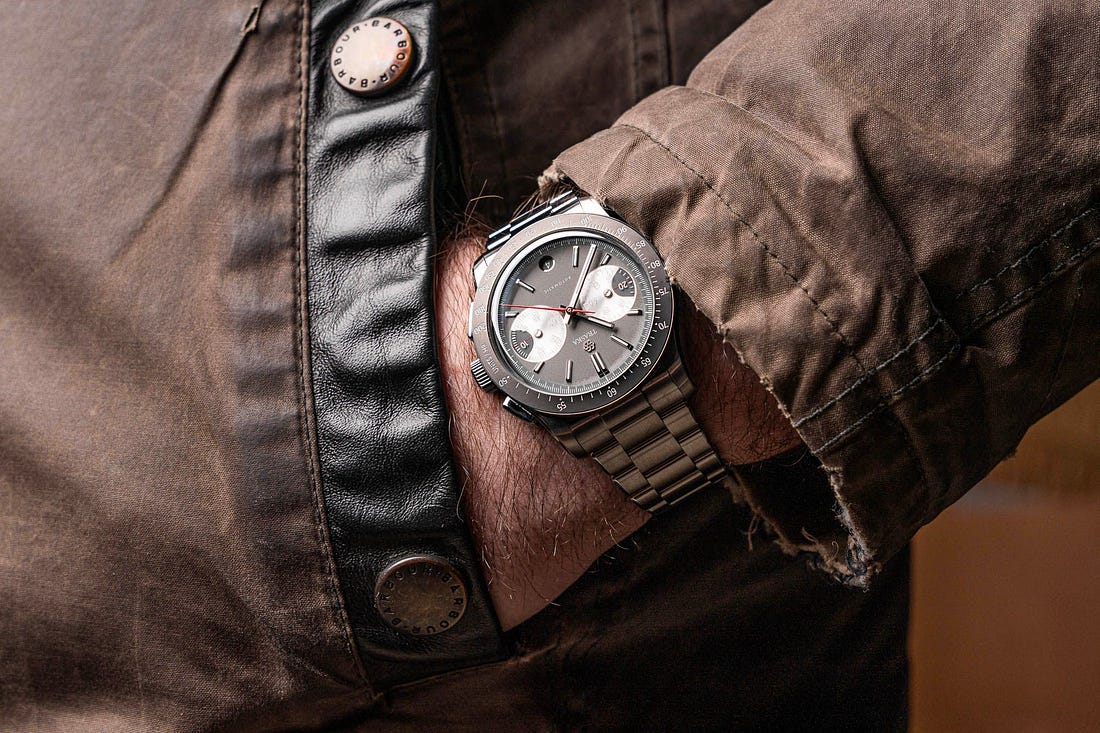
What Is a Microbrand? The Answer Has Outgrown the Name
“Microbrand” once suggested a relatively straightforward proposition: a small company, limited resources, modest production and a direct relationship with enthusiasts. Today, the term covers such a broad range of watches and business models that it functions increasingly as a cultural identity. Price, production volume and technical ambition no longer provide dependable boundaries.
What remains recognizable is the relationship between these brands and their audiences. Collectors often encounter the founders directly, follow development closely and participate in communities where unfamiliar names receive a hearing. That environment can support unusual designs and encourage people to explore beyond established luxury hierarchies.
The challenge is to keep the label useful without allowing it to substitute for judgment. A small operation still needs good design, competent execution and credible customer support. The healthiest contribution of microbrands is the variety they bring—and the reminder that a compelling watch can begin with an idea rather than a famous name.
New Watches
Approximate currency conversions use October 29 reference rates of €1 = US$1.113 and £1 ≈ US$1.332. Converted overseas prices retain the tax basis of the original quote and are not official U.S. retail prices.
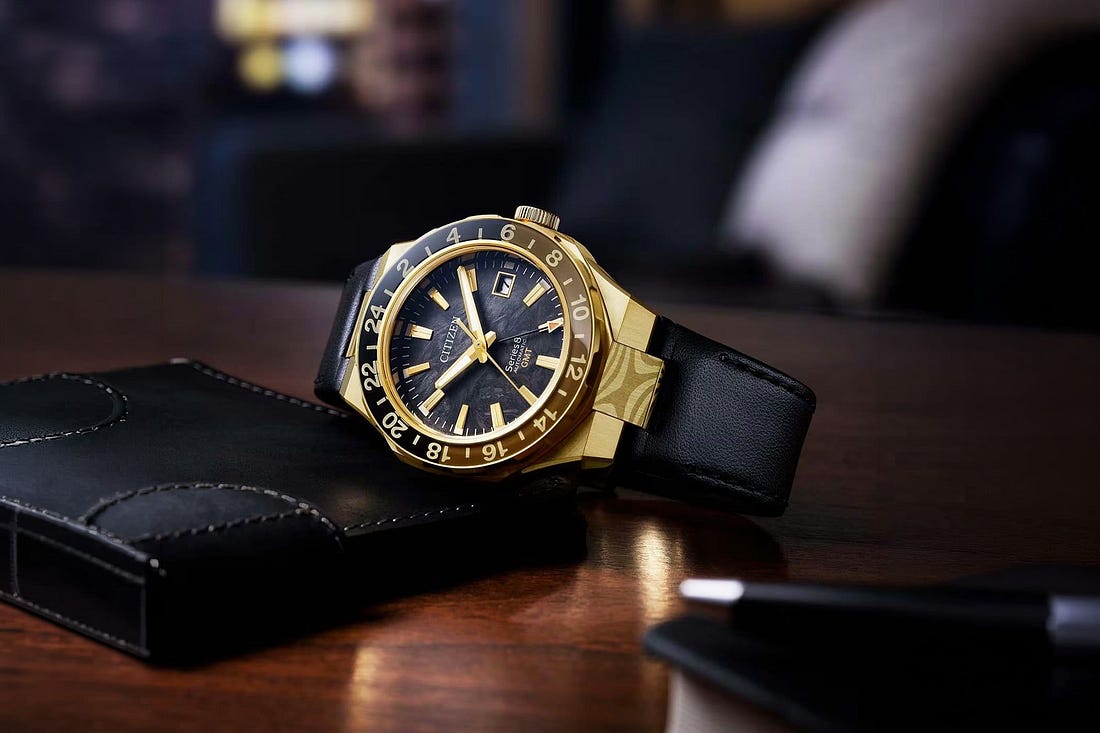
Citizen Series 8 GMT Pairs Damascus Steel With Forged Carbon
Citizen’s Series 8 GMT NB6092-01E combines a Damascus-steel case center with a forged-carbon dial, giving each example variations in pattern rather than relying solely on a limited-edition inscription. The 41 mm case uses yellow-gold-colored plating, while a black calfskin strap reinforces the contrast between the warm exterior and dark dial. Its automatic caliber 9054 provides approximately 50 hours of running time and traveler-style GMT functionality, allowing the local hour hand to be adjusted independently.
Water resistance is 100 meters, and the sapphire caseback offers a view of the movement. Production is limited to 1,300 pieces worldwide, making this an expressive variation on a genuinely useful travel watch. Projected U.S. price: US$2,200.
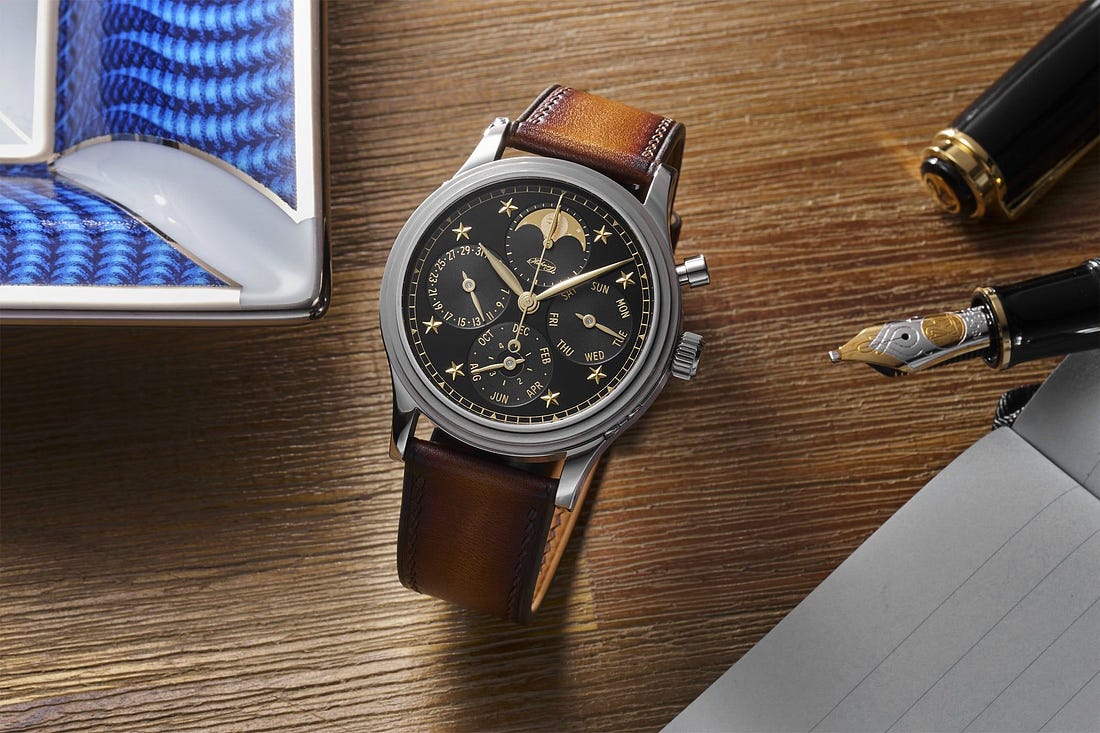
Habring² and SJX Put Stars Around a Chronograph Perpetual Calendar
The Habring² × SJX Chrono Felix Perpetual “Star” brings together a monopusher chronograph, perpetual calendar and a black lacquered dial decorated with eight gold-plated stars. Gold-plated hands and a matching moonphase disc give the display warmth, while the 38.5 mm stainless-steel case keeps a substantial collection of functions within restrained dimensions. A triple-stepped bezel adds definition without competing with the dial.
Inside, the hand-wound A11CP combines Habring²’s chronograph architecture with a Dubois-Dépraz perpetual-calendar module and delivers approximately 48 hours of power reserve. Only 30 individually numbered examples will be made, with ordering through SJX, a 40 percent deposit and deliveries scheduled for January and February 2027. A patinated brown calfskin strap completes a watch whose decorative personality is backed by considerable mechanical substance. Price: US$28,500 before taxes.
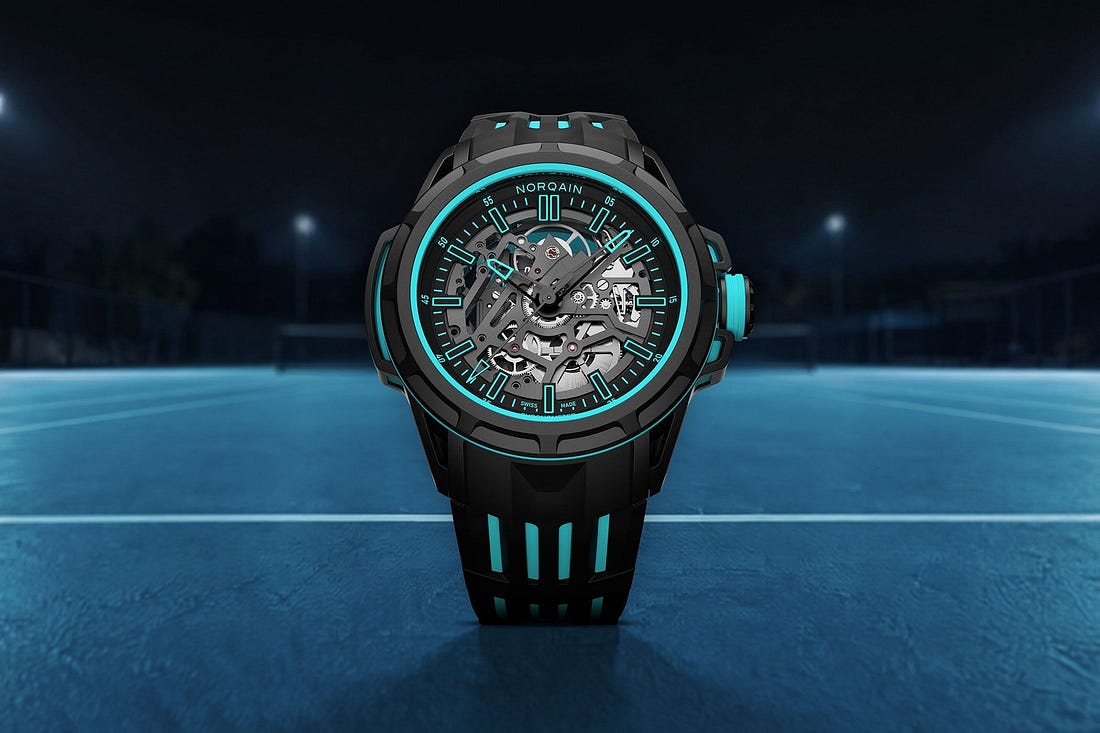
Norqain Wild ONE Skeleton X-Lite Turns Turquoise
Norqain gives its lightweight Wild ONE Skeleton X-Lite a turquoise treatment, applying the color across the watch’s exposed architecture and strap details. The 41 mm case combines carbon composites, titanium and aluminum, with a total weight quoted at approximately 45 grams including the strap. Despite that low weight, the construction is designed for substantial shock resistance and offers 100 meters of water resistance.
The skeletonized automatic 4K Manufacture caliber provides a 65-hour power reserve and COSC chronometer certification. Buyers can choose a black-and-turquoise rubber strap or a matching lightweight stretch strap, both of which suit the watch’s overtly contemporary character. Production is limited to 300 pieces, with the same price for either strap configuration. Price: approximately US$11,850, converted from €10,650.
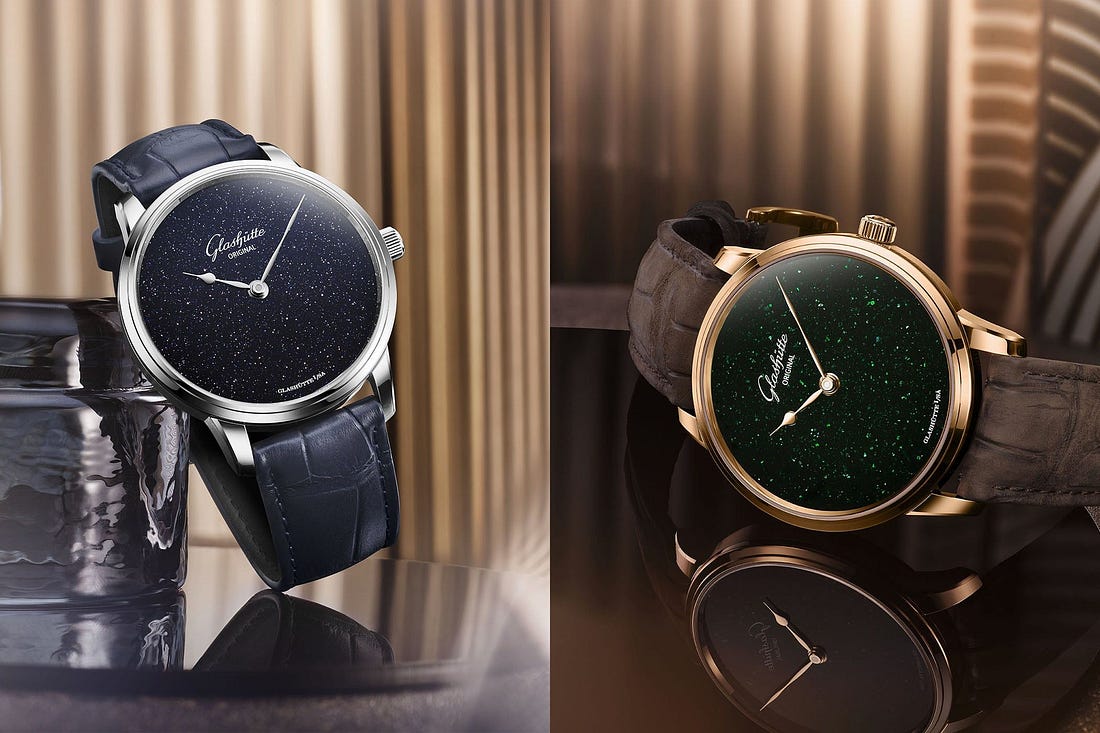
Glashütte Original Lets Aventurine Take Center Stage
Glashütte Original’s Senator Aventurine models give shimmering glass dials an unusually open setting, displaying only hours and minutes without indices, a date window or a seconds subdial. The Art Nouveau Green pairs green aventurine with an 18-karat red-gold case, while the Art Déco Blue uses blue aventurine and platinum. Both measure 40 mm across and 10.2 mm thick, with curved precious-metal hands providing the principal visual interruption to the dial.
The automatic caliber 36-16 supplies a 100-hour power reserve and a silicon hairspring, with traditional movement finishing visible through the sapphire back. Brown or blue alligator straps complete the respective models, which join the permanent collection rather than a numbered limited edition. Published European pricing provides a numerical benchmark even though the manufacturer’s website lists pricing on request. Prices: approximately US$38,845 in red gold and US$41,070 in platinum, converted from €34,900 and €36,900 including German VAT.
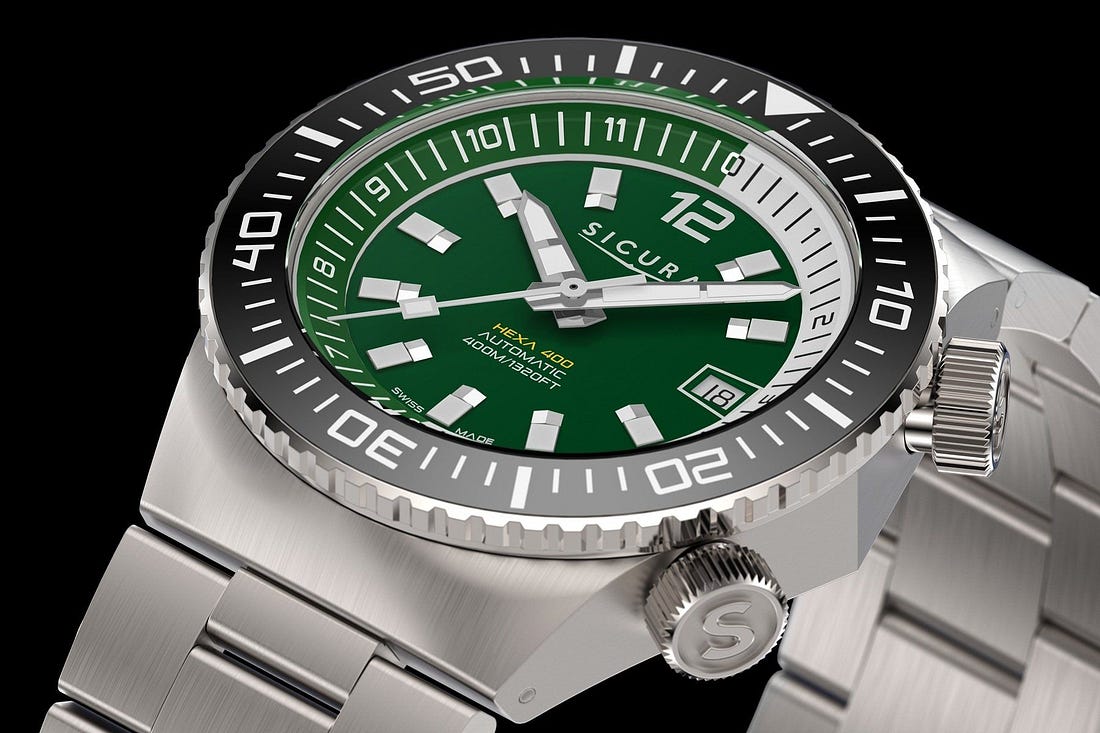
Sicura Hexa 400 Sea Green Revisits an Unusual Diving Heritage
The Sicura Hexa 400 Sea Green combines a 40 mm hexagonal stainless-steel case with an ocean-colored dial and an integrated three-row bracelet. Its angular outline gives the watch an identity beyond the familiar round dive-watch formula, while the dual-bezel arrangement adds a second-time-zone tracking option. A sapphire crystal and 400 meters of water resistance bring contemporary capability to a design inspired by Sicura’s historical diving watches.
The automatic Sellita SW200 supplies approximately 38 hours of power reserve. Behind the revived name is a history connected to Ernest “Teddy” Schneider and his later stewardship of Breitling, although the current Sicura proposition must stand on its own design and execution. For buyers drawn to vintage styling who want an alternative case shape, the Hexa offers a distinctive entry into the crowded steel sports-watch field. Price: approximately US$1,615, converted from €1,450.
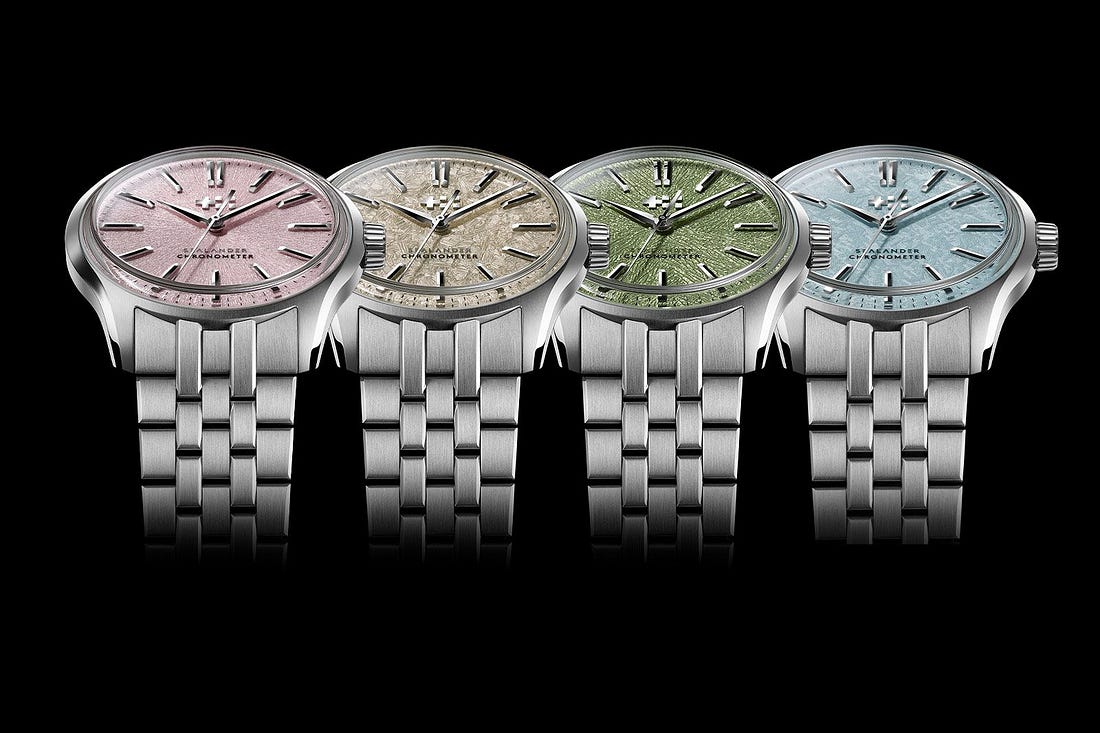
Christopher Ward Sealander Yalos Makes Texture the Main Attraction
Christopher Ward’s Sealander Yalos introduces Ice Blue, Salt Pink, Sand White and Sea Green dials produced through a multi-stage stamping and color-treatment process. The watches also receive solid central hands, uniform baton markers and a display without lume, moving the design toward a cleaner, dressier interpretation of the Sealander. A 39 mm case measuring 9.9 mm thick uses 904L stainless steel and can be paired with a revised five-link Consort bracelet.
The automatic Sellita SW300-1 is COSC certified and provides a 56-hour power reserve, with the movement visible through an exhibition back. Water resistance remains a practical 100 meters, so the visual refinement does not eliminate everyday versatility. Buyers can choose a suede strap or the steel bracelet, with the latter giving the case and textured dial a more continuous visual setting. Prices: approximately US$1,720 on suede and US$1,990 on the bracelet, converted from £1,290 and £1,495.
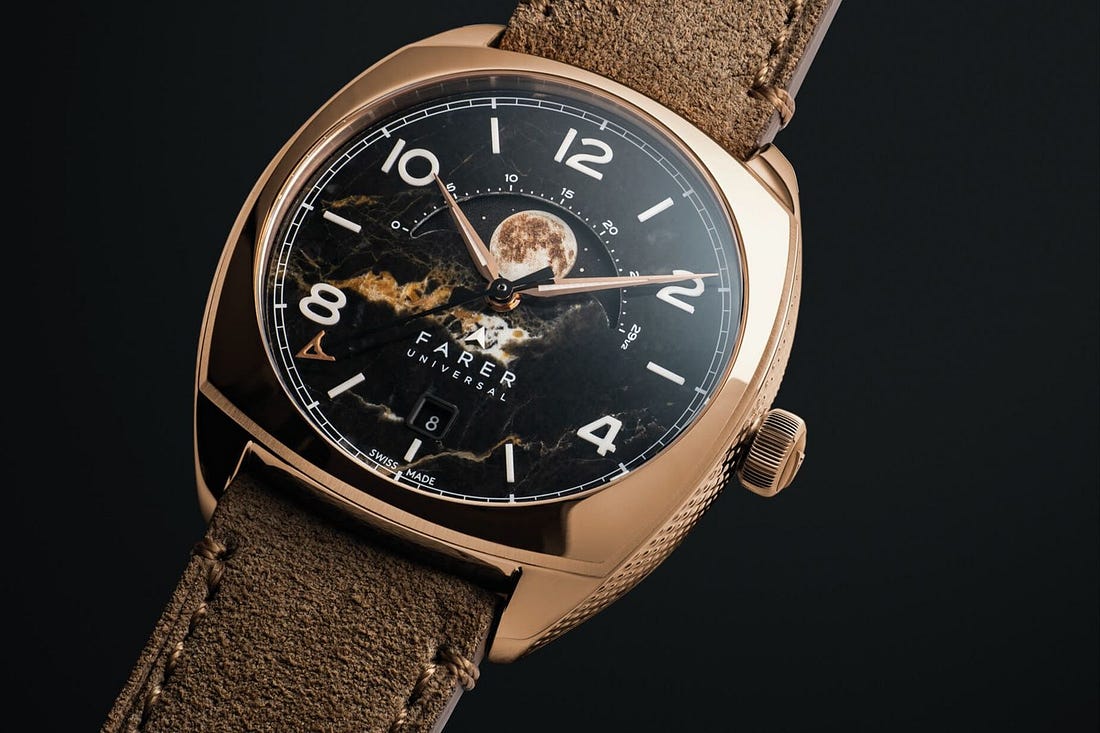
Farer Stratton II Gives Its Moon a More Realistic Surface
Farer’s Stratton II revisits the brand’s stone-dial moonphase with a photorealistic lunar disc created by Swiss specialist AJS Production. Laser micro-etching, layered paint and Super-LumiNova give the small moon a more convincing surface, adding detail to a display that was already the watch’s focal point. The black Eisenkiesel dial, luminous markers and gold-toned accents retain the original model’s distinctive combination of darkness and warmth.
The case measures 39 mm by 11.8 mm and houses an Elaboré-grade, hand-wound Sellita SW288-1 with approximately 45 hours of power reserve. Water resistance is 50 meters, and 20 mm lugs accommodate interchangeable straps. The edition is limited to 100 pieces, with initial deliveries scheduled from December 21 and further batches planned for 2027. Price: approximately US$2,525, converted from £1,895.
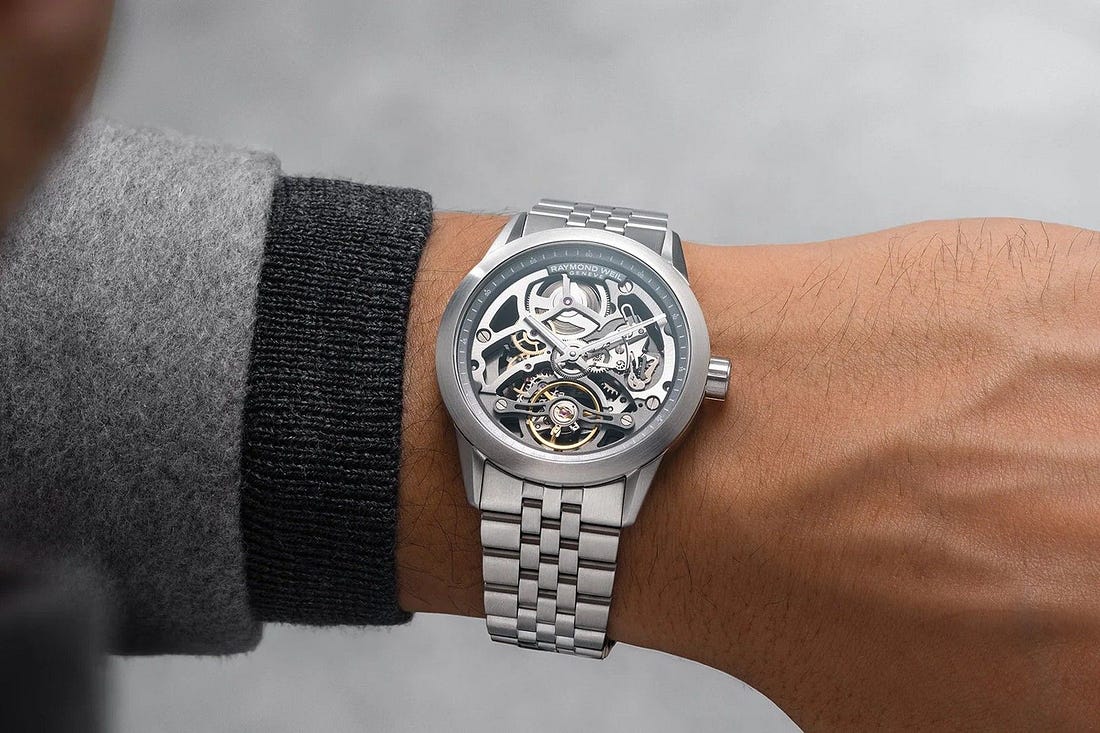
Raymond Weil Freelancer RW1212 Skeleton Finds a 40 mm Middle Ground
Raymond Weil’s latest Freelancer RW1212 Anthracite Skeleton places its exposed automatic movement inside a 40 mm stainless-steel case measuring 10.6 mm thick. The anthracite treatment gives the display a relatively unified background, allowing the gold-colored balance and gear-train elements, along with the movement’s rubies, to supply contrast. An open barrel near 11 o’clock adds another point of mechanical interest.
Developed with Sellita, the RW1212 offers approximately 41 hours of power reserve and an hours-and-minutes display. The watch has 100 meters of water resistance and comes on either a dark-blue calfskin strap or a five-link steel bracelet. Its proportions offer an intermediate choice between earlier Freelancer skeleton models while preserving the collection’s mix of polished presentation and visible mechanics. Prices: approximately US$4,520 on leather and US$4,655 on the bracelet, converted from £3,395 and £3,495.
Comparisons
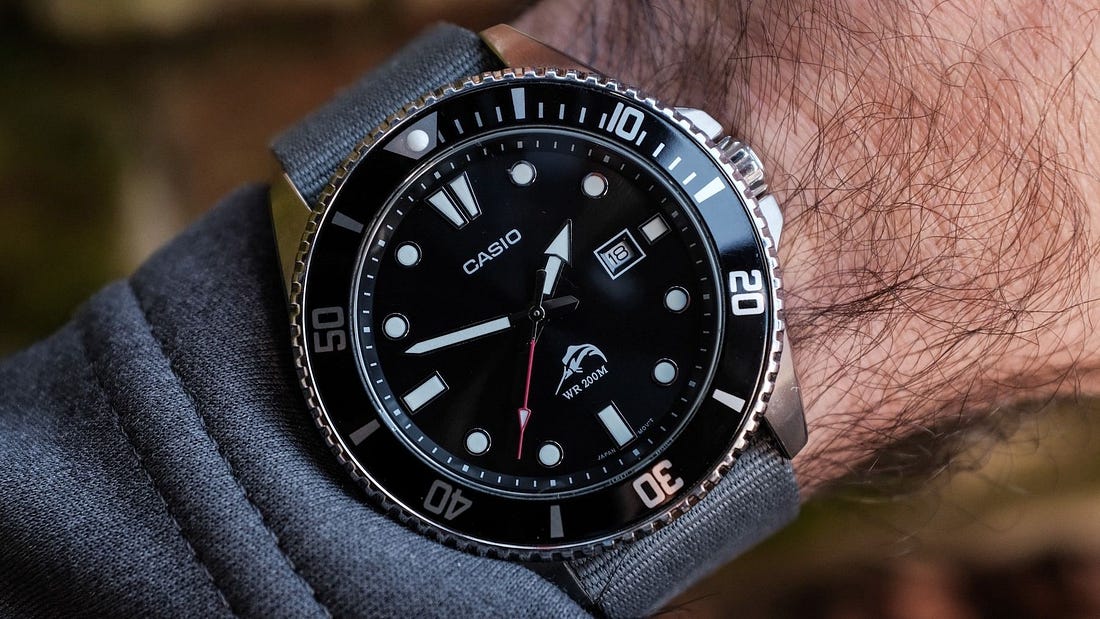
Casio Duro vs. Seiko 5 Sports: Two Different Answers to Affordable Everyday Timekeeping
The Casio Duro and Seiko 5 Sports SRPD51 may attract similar shoppers, but they make their strongest arguments in different ways. The Duro offers quartz convenience, 200 meters of water resistance and a straightforward dive-watch layout at a low price. Its appeal lies in being useful, easy to live with and inexpensive enough that ownership need not become an exercise in protecting an investment.
The Seiko counters with an automatic 4R36 movement, a blue sunburst dial, stronger lume and a display back. It gives enthusiasts the engagement of a mechanical watch, although its 100-meter water resistance and stock bracelet deserve consideration alongside its higher price. The comparison is most useful when treated as a choice between priorities: the Casio emphasizes convenience and cost, while the Seiko adds mechanical involvement and a different kind of visual pleasure.
Reviews
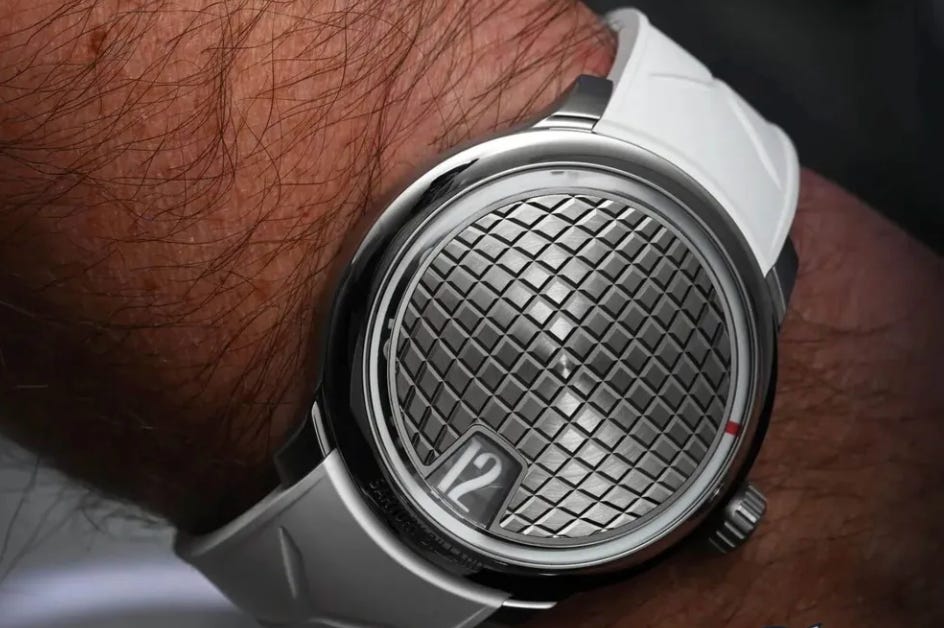
Sartory-Billard SB10 “Disco Ball” Turns the Jumping Hour Into a Performance
The Sartory-Billard SB10 Jumping Hour “Disco Ball” replaces the conventional dial-and-hands arrangement with transparent sapphire discs and a prominent engine-turned steel cabochon. The effect is deliberately theatrical: indications seem to float around a central object that gives the watch both visual and tactile character. It is a watch designed to reward a second look, and probably a third.
A modified La Joux-Perret G100 powers the patented jumping-hour mechanism, while a sapphire minute disc preserves the impression of an unusually open display. The 39.5 mm steel case measures 11.5 mm thick, with an approximately 55-hour power reserve and 80 meters of water resistance. At €3,800—approximately US$4,230—the SB10 asks buyers to value an original way of presenting time as much as the movement underneath.
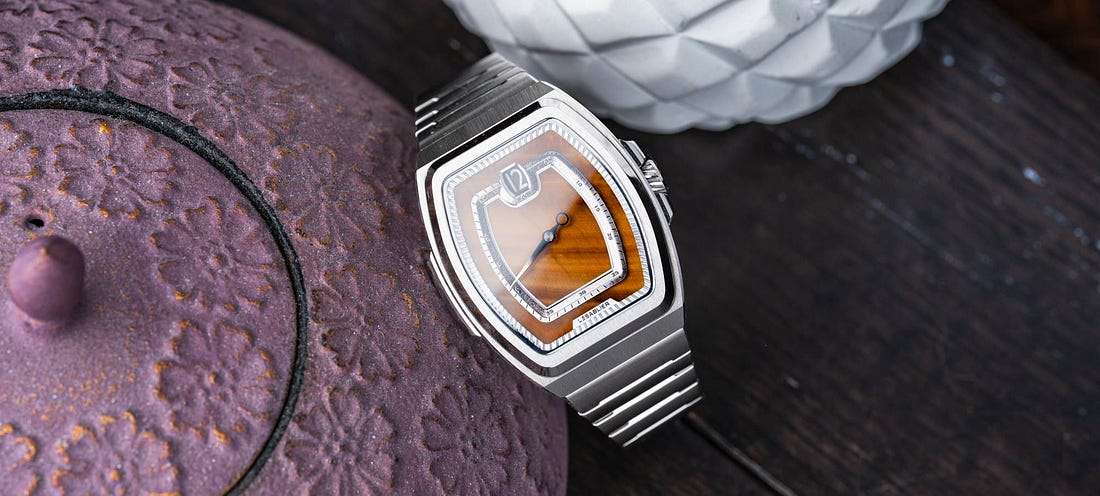
Lesablier Temporis Sauterelle Makes a More Accessible Case for the Jumping Hour
Lesablier’s Temporis Sauterelle brings a jumping-hour display to a watch built around stone dials, a 904L steel case and an integrated bracelet. The hour appears in a window at 12 o’clock, with the remaining display kept relatively restrained so the dial material can establish the watch’s personality. Choices include malachite, aventurine, lapis lazuli and tiger’s eye, alongside an openworked version.
The 39.5 mm case has a curved back and measures 12.1 mm thick. Inside, the LJ1 uses a Miyota 9015 base with a customized jumping-hour module, offering a quoted 36–42 hours of power reserve. Pricing of US$1,745 for the stone-dial versions and US$1,875 for the openworked model gives collectors a comparatively accessible route into a complication more often associated with expensive independent watchmaking.
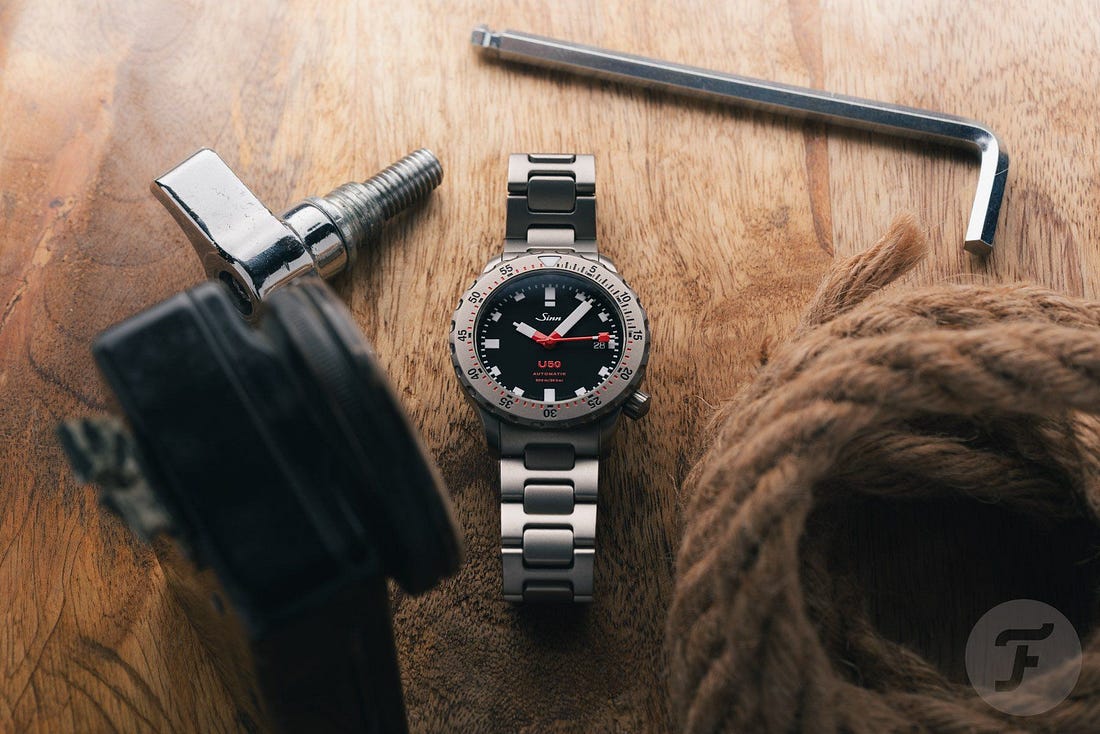
Sinn U50 Remains a Strong Argument for the Purposeful Dive Watch
The Sinn U50’s appeal begins with an unusually practical combination: a 41 mm case, 11.15 mm thickness and 500 meters of water resistance. Its matte black dial, blocky markers and red accents communicate the brand’s functional approach immediately. The dimensions make substantial diving capability compatible with everyday wear rather than requiring an oversized case.
The automatic Sellita SW300-1 provides approximately 56 hours of power reserve, while the available micro-adjustable bracelet adds a useful ownership improvement. This review places the U50 beside the more refined titanium T50 and finds considerable appeal in the older model’s directness and lower price. At around €2,800—approximately US$3,115—with the adjustable bracelet, it remains a compelling example of a watch whose specifications support a coherent purpose.
Podcasts
Scottish Watches #827: A Platinum Lange, a Divisive G-Shock and Questions About Zenith
Scottish Watches closes October with a broad discussion of releases and industry developments. The episode moves from A. Lange & Söhne’s platinum Datograph Perpetual to G-Shock’s controversial analogue design and Nomadic’s rectangular Dána 141. Together, they provide a useful cross-section of how differently brands are approaching attention, identity and product development.
The hosts also discuss reports concerning potential job cuts and a possible strategic shift at Zenith, treating an important industry question alongside the week’s new watches. Sinn’s anniversary 140 A.S. chronograph and Tissot’s skeletonized Damian Lillard PRX collaboration add further variety. It is a wide-ranging listen for anyone who enjoys connecting product announcements with the businesses and personalities behind them.
Videos
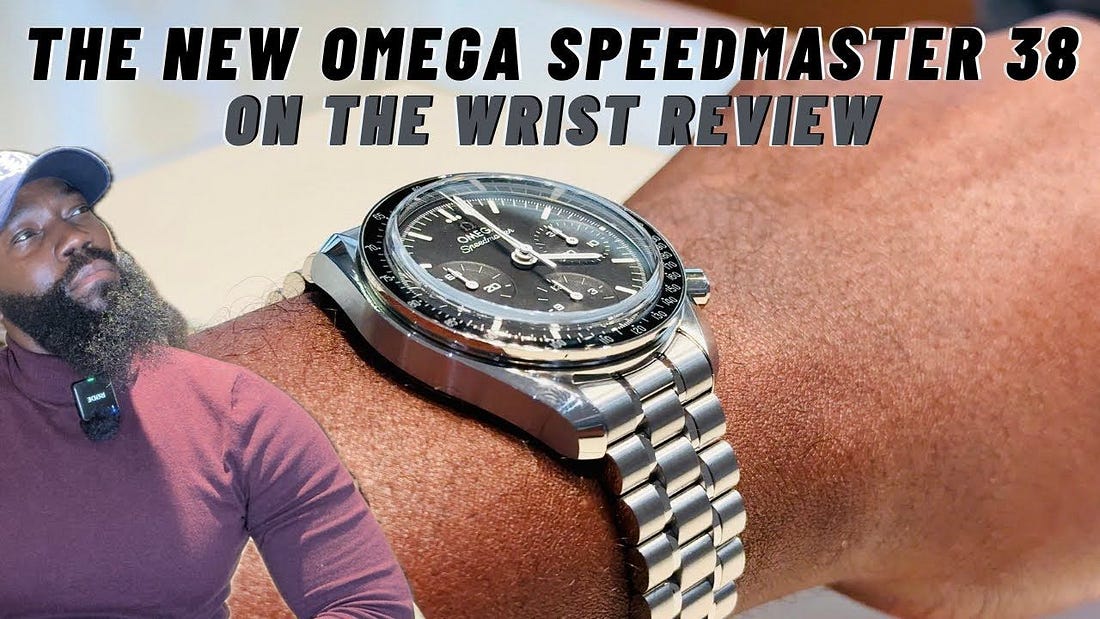
Omega Speedmaster 38: Does the Smaller Speedmaster Make Its Own Case? — The Wrist Club
The Wrist Club examines the Omega Speedmaster 38 through an on-wrist review, putting the emphasis on how the watch’s proportions and design work in use. For buyers considering the broader Speedmaster family, that perspective matters: a familiar collection name does not mean every version delivers the same wearing experience.
The review considers the watch’s features, appearance and price positioning, offering a starting point for deciding whether this particular interpretation suits your wrist and priorities. It is especially relevant for collectors who like the Speedmaster idea but want to assess the 38 on its own merits.

You’re the CEO of Your Favorite Watch Brand. What Would You Change? — Burdeens Jewelry
Burdeens Jewelry turns a familiar collector’s pastime into the subject of the conversation: imagining what you would do if you controlled a favorite watch brand. Product direction, heritage, innovation and market positioning all become more complicated when a preferred design change must fit a broader business.
The appeal is the invitation to think beyond a single release. A brand needs a recognizable identity, a persuasive collection and customers willing to support its decisions over time. Watch with your own answer in mind—and consider which trade-offs you would accept to make it happen.
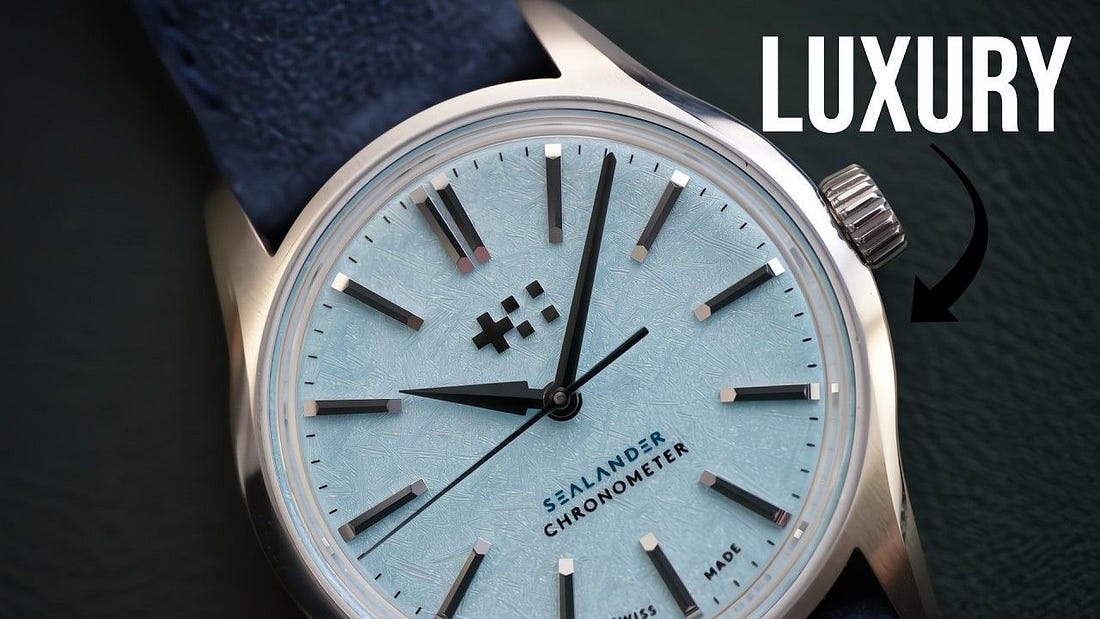
Christopher Ward’s New Sealander Gets a Closer Look — WatchChris
WatchChris examines the new Christopher Ward Sealander, providing a visual companion to today’s Yalos introduction. Dial texture, case proportions and the relationship between the watch head and bracelet are all features that can be difficult to judge from a specification sheet alone.
For existing Sealander owners, the question is how the newer presentation changes the collection’s character. For prospective buyers, the video offers another way to assess whether Christopher Ward’s move toward a more refined execution matches what they want from an everyday watch.

Seiko 5 Sports Field GMT HDB001 and HDB002 Go Hands-On — Time+Tide
Time+Tide takes a hands-on look at Seiko’s HDB001 and HDB002 Field GMT models, exploring the combination of a field-watch aesthetic and an additional time-zone indication. The format offers an opportunity to assess the watches as physical objects, where dial clarity, proportions and overall presentation can matter as much as the complication itself.
The useful buying question is whether the GMT function adds something you will regularly use. For collectors seeking an everyday Seiko with travel-oriented functionality, this review provides a closer introduction to the two models.
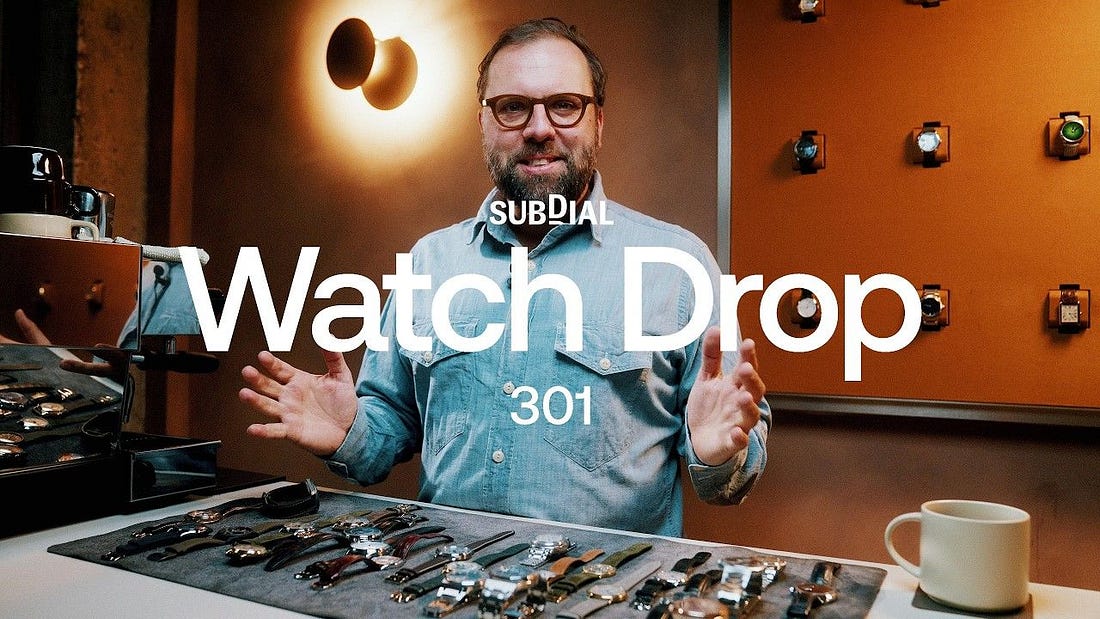
The £45,000 Omega Outside the Usual Conversation — Subdial
Subdial’s Drop #301 turns attention to an Omega presented at £45,000, placing the brand in a different conversation from its most familiar everyday references. The episode invites viewers to examine what distinguishes an unusual, expensive example and why a specialist audience might find it compelling.
A price at this level makes context essential. Identification, condition, rarity and comparable transactions matter more than the surprise of the number itself. The video offers an introduction to a less familiar corner of Omega collecting.

“AP Takes 20% to Sell Your Own Watch” — Luxury Bazaar
Luxury Bazaar examines the selling-cost question surrounding Audemars Piguet’s participation in the pre-owned market. The headline focuses attention on the gap between the amount a buyer pays and the proceeds an owner ultimately receives—a distinction that can be overlooked when collectors discuss resale values.
This is a conversation about Audemars Piguet, with the video’s commission claim central to its argument. For sellers, the relevant comparison includes the applicable fee, any preparation or service charges, the likely selling price and the time required to receive payment.
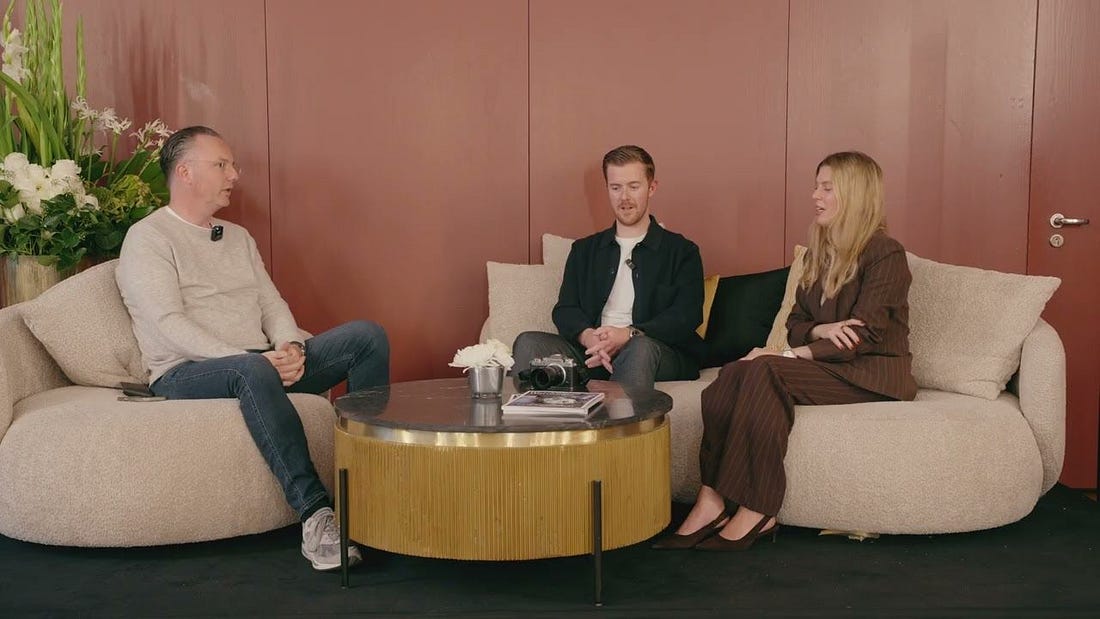
Live From WatchTime Düsseldorf With Daniela Pusch — Fratello
Fratello reports from WatchTime Düsseldorf with Daniela Pusch, bringing an event perspective to a daily news cycle often dominated by launch photographs and specifications. Watch gatherings provide a different setting for understanding the hobby: collectors can encounter watches in person and hear the conversations around them.
This video offers a window into that atmosphere and the people participating in it. For readers unable to attend, it is a chance to connect the watches appearing on screen with the broader community that gathers around them.
Auctions
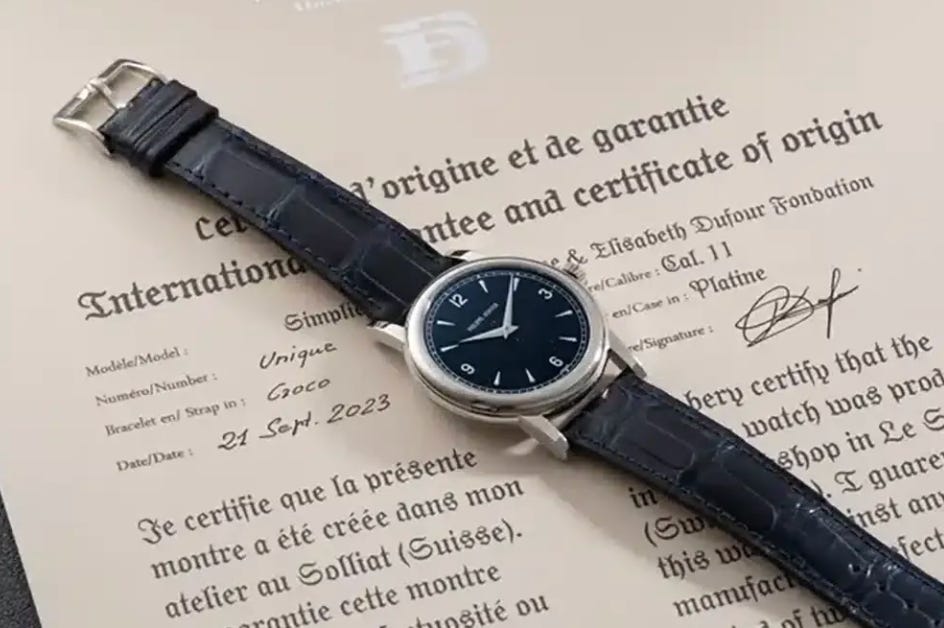
Marteau & Co.’s “The Blueprint” Builds an Auction Around Blue
Marteau & Co.’s first themed auction, “The Blueprint,” uses blue as the organizing idea for a selection of independent watchmaking. Running from October 30 through November 6, the online sale is scheduled to conclude with a live gathering in Geneva. The theme connects watches that otherwise span a substantial range of makers, materials and prices.
Highlights include a unique platinum Philippe Dufour Simplicity with an aventurine dial, Baltic’s tantalum Stepgraph “Polar Mother of Pearl,” and a collaboration between H. Moser & Cie. and seconde/seconde/. Other names include Voutilainen, F.P. Journe, Charles Frodsham, Goldpfeil, Lang & Heyne, and Toledano & Chan.
With estimates extending from CHF2,000 to CHF1.6 million, this is more than a collection of similarly colored dials. It is also a test of how collectors value distinctive contemporary independent watches when they enter the secondary market, where artistic appeal and actual bidding must finally meet.
Auction Results
White-Gold Breguet Tradition GMT Reaches US$23,500 and Remains Unsold
The October 29 auction of the 2024 Breguet Tradition 7067 GMT in white gold, reference 7067BB/G1/9W6, ended with a high bid of US$23,500 and no sale. According to the supplied seller history, the watch had also been offered on Grailzee last month at US$25,000.
The latest bid was US$1,500, or 6 percent, below that earlier asking figure. That comparison measures the gap between the new bid and the previous price expectation; it does not establish the reserve for this auction. The result leaves the watch unsold and illustrates how a respected name, precious-metal case and sophisticated movement can still fail to produce agreement on price.
Auction Report
MEC-1: A US$25,000 Independent Jumping Hour Faces the Resale Test
Today’s auction spotlight turns to the MEC-1, a distinctive steel jumping-hour watch from a young American independent. Developed during the pandemic and launched in 2022, the model was the first expression of a collaboration between collectors, design and watchmaking expertise. Its original steel souscription series was announced at just 50 pieces, with a launch price of CHF21,000; the approximately US$25,000 retail figure associated with it in 2023 provides historical context. That beginning makes the MEC-1 an interesting early chapter in a small maker’s story, although limited production alone cannot establish its present value.
The watch’s individuality extends beyond its scarcity. A smoked sapphire dial reveals the manually wound mechanism, with an instantaneous jumping-hour indication, a central minute hand and subsidiary seconds. The movement runs at 21,600 vibrations per hour and offers approximately 45 hours of power reserve. Its 39 mm stainless-steel case is only 9.5 mm thick, with 50 meters of water resistance and conventional 20 mm strap spacing. The result combines an unusual display with dimensions suited to regular wear, giving collectors something more specific to consider than an unfamiliar name and an openworked appearance.
The offered watch is located in the United States and is described as pre-owned, with excellent condition reported for the dial, case and bezel, and strap or bracelet category. It includes its box and extra straps but no papers. The listing’s “2023–present” year field should be understood as a model-era description rather than proof of this example’s production date. For a small-production watch with a specialized complication, confirmation of service arrangements, operating instructions and movement condition would add meaningful reassurance. Those details become particularly relevant when the documentation accompanying the watch is incomplete.
The available public market evidence argues for caution about treating the old retail price as today’s value. A separate MEC-1 catalogued for Heritage’s November 20 sale carries a US$5,000–US$6,000 estimate, providing a much lower auction benchmark, although an estimate is neither a completed sale nor a guaranteed outcome for this example. The comparison suggests that secondary-market buyers may place the watch well below its original retail positioning, with condition, completeness and confidence in future support influencing the final number. This is a purchase for someone who wants the MEC-1’s particular design and mechanics; the appeal of the discount should follow that conviction. Bidding is scheduled to end at noon Eastern on Sunday, November 1, 2026.
Current bid: $750.00
Losing Time
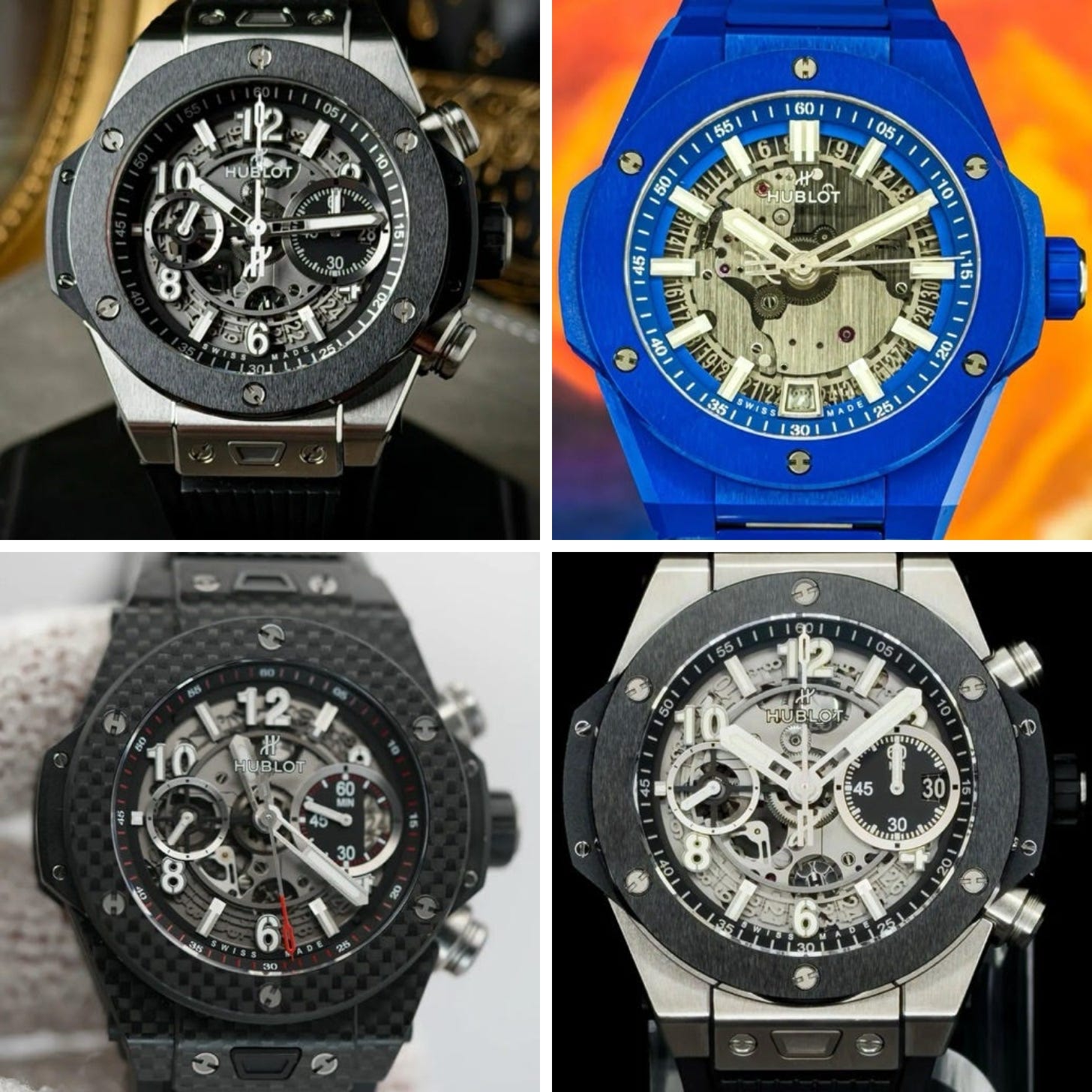
Today’s Big Hublot Losers at Auction on Grailzee
Four Hublots, four failed sales, and four reminders that an asking price is an expression of hope—not a binding agreement with reality.
The 2022 Hublot Big Bang Unico 44MM with skeleton dial and rubber strap (421.NM.1170.RX) carried a $12,500 askbut attracted a final bid of just $5,500. That’s a $7,000 shortfall, or 56.0% below asking. The seller envisioned five figures; bidders apparently admired the optimism more than the watch.
The 2026 Hublot Big Bang Integrated L.E. 40MM with skeleton dial and ceramic bracelet (456.EX.5129.EX) sought $17,000, against a high bid of $7,700. The gap is $9,300—or 54.7% below asking. Apparently, “limited edition” did not extend to limiting the distance between seller expectations and bidder enthusiasm.
The Hublot Big Bang Unico 45MM with skeleton dial and rubber strap (411.QX.1170.RX), with no year provided, delivered the widest percentage miss. Its $10,000 ask met a $3,500 final bid, leaving a $6,500 gap, or 65.0% below asking. That is less a negotiation than two parties shopping in different price brackets.
The 2023 Hublot Big Bang Unico 44MM with skeleton dial and rubber strap (421.NM.1170.RX) came closest—though “closest” is doing considerable work. A $7,200 high bid against a $13,500 ask left it $6,300 short, or 46.7% below asking. Winning this particular contest still meant missing the target by nearly half.
Together, the four watches sought $53,000 and attracted $23,900 in final bids, a combined $29,100 shortfall, or 54.9% below asking. The clear conclusion: these sellers’ expectations substantially exceeded what bidders in these auctions would offer. Neither a newer year nor a limited-edition designation closed that gap. These failed sales do not establish definitive market values, but they do suggest that completing a sale would require a meaningful price adjustment—or a considerably more enthusiastic room.
Closing Time
A watch can earn its place through useful engineering, an unexpected display, a beautiful dial or the simple satisfaction of wearing it every day. Today’s stories offer all four—and a reminder to consider the costs that arrive after the purchase as carefully as the excitement that comes before it.
Thanks for spending part of your day with Buying Time. Enjoy the watches you own, stay curious about the ones you haven’t met, and have a great weekend.