The Complete Story of Multi-Axis Tourbillons
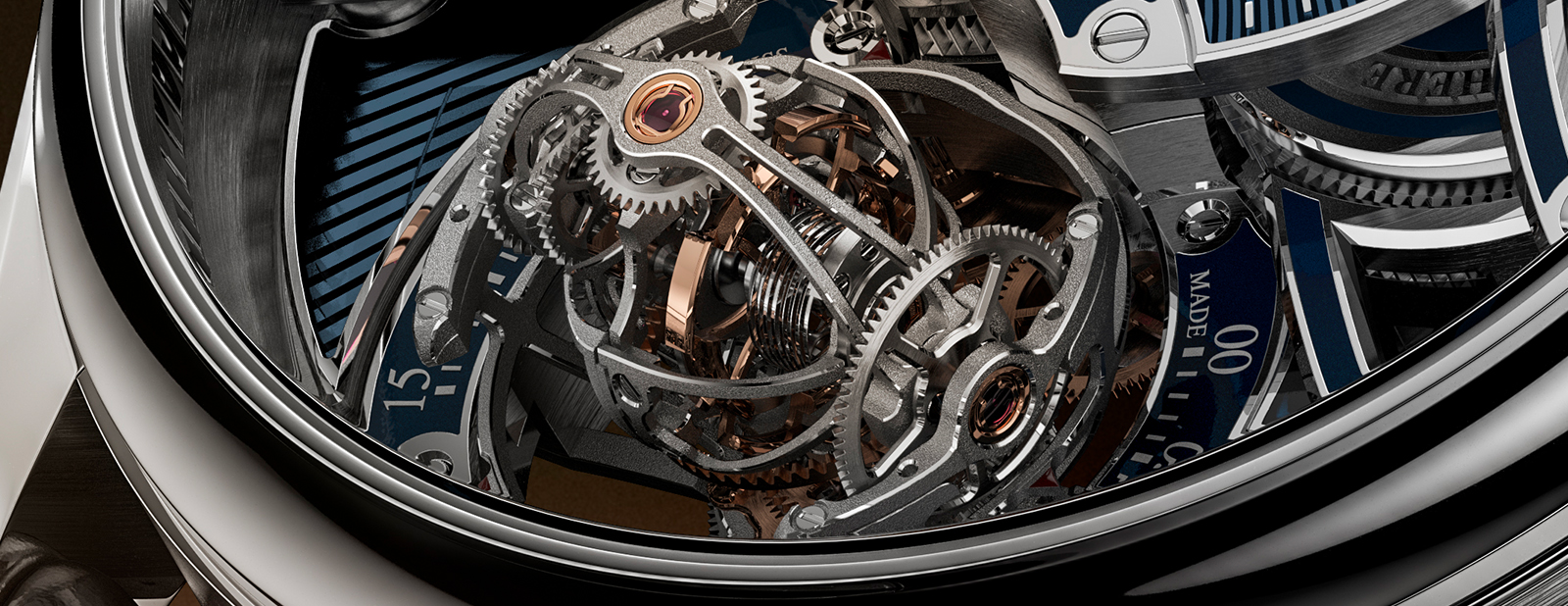
The narrative traces the evolution of the multi‑axis tourbillon from its conceptual roots in Anthony G. Randall’s 1978 patent and Richard Good’s carriage‑clock prototype to its modern incarnations across dozens of brands. Early pioneers such as Randall, Good, and later Thomas Prescher laid the theoretical and technical groundwork, while the breakthrough year of 2004 saw four independent houses—Thomas Prescher, Franck Muller, Jaeger‑LeCoultre, and Greubel Forsey—bring multi‑axis tourbillons into wristwatches, each employing distinct architectural solutions such as flying cages, inclined balances, and spherical differentials. Subsequent decades expanded the complication’s artistic and engineering horizons, with creators like Éric Coudray, Vianney Halter, Aaron Becsei, Jacob & Co., and the Chinese independent Fam Al Hut introducing novel cage geometries, extreme rotational speeds, chain‑and‑fusée constant‑force systems, and unprecedented aesthetic integrations. Competitive chronometry, notably the Concours International de Chronométrie, validated the accuracy benefits of well‑designed multi‑axis tourbillons, confirming that the pursuit of mastering gravity has become both a technical triumph and a form of kinetic art.
Buying Time Analysis: This story chronicles the evolution of the multi‑axis tourbillon, illustrating how pioneering ideas—from Randall’s early patent to Coudray’s radical designs—have transformed a technical solution to gravity into a celebrated art form that pushes the limits of horological precision and creativity.