Time Graphing Today’s Watch Universe - July 2, 2026
There are days in the watch world when the news is not really about watches at all. It is about control. Who gets to shape the story. Who gets to own the next chapter. Who gets to decide whether the future of horology will be built by institutions, independents, auction houses, celebrities, schools, or the brands that have spent decades turning themselves into cultural infrastructure.
Today is one of those days.
At the top of the issue, Antoine Pin’s arrival at De Bethune feels like more than a management appointment. De Bethune has always occupied one of the more unusual places in modern independent watchmaking: technically brilliant, visually unmistakable, intellectually admired, but still operating at a scale where leadership matters in an unusually personal way. Bringing in Pin, with experience across LVMH, Bulgari, Zenith, TAG Heuer, and Berluti, suggests that De Bethune is preparing for a more deliberate next phase. The question is whether an independent can scale without smoothing away the oddness that made collectors care in the first place.
That same question hangs over François-Henri Bennahmias and his new N3W5 project. Bennahmias did not leave Audemars Piguet quietly into retirement. He is trying to build something that sounds less like a conventional brand and more like a watchmaking platform: designers, dial makers, artisans, engineers, suppliers, and collectors brought together under one name. A second report on the N3W5 launch adds more shape to the ambition, including substantial backing, newly developed movements, and Anita Porchet’s involvement. The message is clear enough: the post-AP Bennahmias era will not be small, shy, or invisible.
Then there is the auction market, where Phillips’ $235 million spring season reminds everyone that the top of the market is not behaving like a hobby. It is behaving like a highly organized capital market for objects with history, scarcity, and mythology attached. When F.P. Journe sets records, when Patek Philippe world timers and perpetual calendars command extraordinary numbers, and when bidders from more than 70 countries participate, the market is not simply chasing old watches. It is deciding which names belong in the next canon.
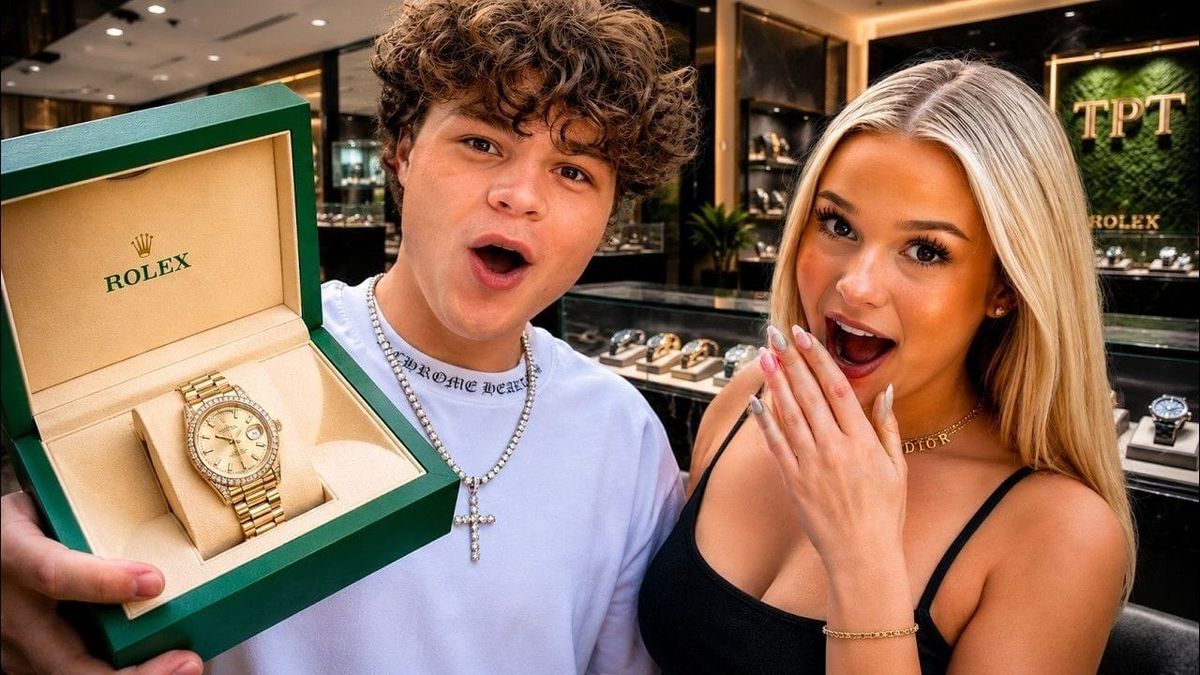
Rolex, meanwhile, is doing what Rolex does best: expanding its cultural perimeter without ever seeming to chase attention. Its deepened relationship with National Geographic through the transformed Base Camp and Museum of Exploration reinforces the brand’s long association with endurance, science, and exploration. But in another corner of the issue, Rolex is also showing a different face with its recent colorful dials. The Celebration dial, the Jigsaw Puzzle Day-Date, and the Jubilee motif Oyster Perpetual are not tool-watch Rolex. They are Rolex allowing itself to smile.
That may be the most interesting tension in the brand today. Rolex can still claim Everest, oceans, laboratories, and expedition history. But it can also sell bubbles, puzzles, emojis, and color. The collector world sometimes treats these as contradictions. They are not. They are proof of power. Only a brand this secure can afford to be playful without looking unserious.
Even the cultural stories point in the same direction. Hamilton’s role in Spielberg’s Disclosure Day shows how deeply watches continue to function as character shorthand on screen. Tom Cruise’s collection, heavy on Rolex but broader than many would expect, reminds us that public figures do not merely wear watches; they help translate them into popular mythology. And the story of America’s last full-time public watchmaking program is a reminder that none of this survives without people who can actually service, regulate, repair, and make these objects work.
So today’s issue is about power, but not in the blunt sense. It is about the subtle kind: the power to hire the right leader, launch a new brand, preserve a craft, shape a collector market, own an auction season, or make a dial covered in color feel like serious luxury.
The watch world keeps telling us that time is measured in seconds. But the business of watches is measured in who gets remembered.
–Michael Wolf